January 20, 2010
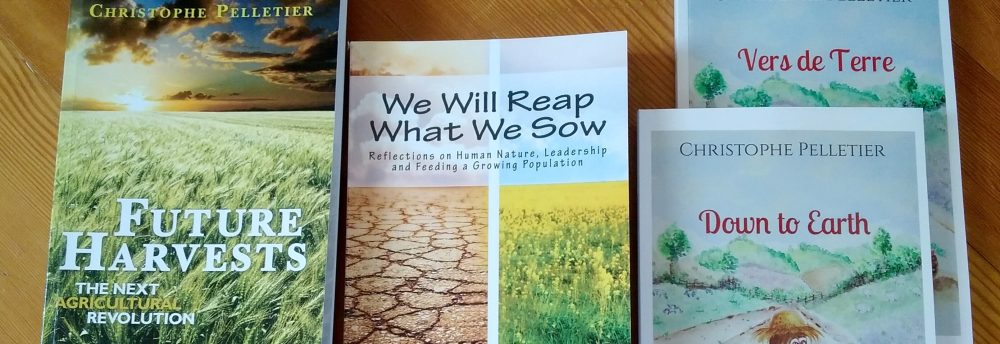
Over the last few months, I have been working quite a bit on writing this book about the future of agriculture.
I must say that compiling in one book a wide range of topics that, without any doubt, will be part of the future of our food production has been an exhilarating experience.
From demographics in full motion to the latest in technology, we can envision many different scenarios to set up the most efficient food production possible, as local farmers, industry NGOs and governments will need to find optimal solutions with the land, the water, the labor force and the capital available to them. Water and soil will be of vital importance, and their proper management is essential for the stability of many countries.
In the future, there will be no room left for wastage and inefficiencies, or we all will be punished if we get complacent. Similarly, we will need to change our thinking and accept that solving future problems will not be about transferring a one-fit-all model to very diverse situations. We might have had the illusion that it once worked, but it actually did not. We will learn from the mistake of the past to perform better. Sustainability is not an option; it is the only choice, because per definition what is not sustainable is doomed.
As food is a necessity, and since when we share between 9 billion people there is less left for each of us than when we shared between 4 billion, efficiency will be paramount. This will affect food prices and social stability. Technology is necessary but it is not the panacea in itself. The most needed resource for the future is strong visionary leadership to help us develop the plan for the next decades.
Let’s prepare ourselves for a deep change and we must accept the idea that we might have futuristic farms run by robots, satellites and computers in some regions as well as local urban gardeners in the heart of the cities, where 70% of the world population is expected to live. We will have small organic farmers and we will have large industrial farms using genetically engineered crops, but we also will have large highly efficient semi-organic farms that will combine the best of both worlds. We still will have specialized farms as well as mixed operations. Hydroponics and aquaponics will grow substantially in the future.
Today’s diet will be revisited and excesses will be out of place. Should we become vegetarians or do we simply need to eat less meat? Will aquaculture live up to the expectation and become the main source of animal protein? You will find out in the book.
Countries will have to think on how to guarantee food security to their populations. If it is not done well, this challenging task might end up in serious conflicts. Foreign and private investment in land and farming will continue in Asia and Africa. If managed properly, they will bring much prosperity to these regions, but if not managed properly, then we can fear the worst.
All these topics and many more will be presented in the book and I hope that it will help readers to understand all the variables that are at play, as well as it will help them get a more objective view of many controversial topics such as GMOs, nanotechnology or in-vitro meat. Once readers will have finished the book, they will be able to figure out whether and how we can feed 9 billion people. Thanks to examples from all over the world in as diverse countries as Uganda, Kenya, the USA, China, Indonesia, India, Brazil, Argentina, France, The Netherlands, Cuba, Kazakstan and many more, we discover a myriad of different situations and solutions that illustrate human ingenuity to produce food.
However, for now just a few more months of patience as I need to get through the process of publishing.
Leave a Comment » |
Agriculture, Aquaculture, Consumer Market, Economy, Fisheries, Oceans, Politics & Policies, Sustainability, Water | Tagged: Agriculture, Aquaculture, Economy, Environment, Fisheries, Food, Industry Future, Oceans, Politics & Policies, Production Systems, Sustainability, Water |
Permalink
Posted by Christophe Pelletier
January 7, 2010
Ilse Aigner made that statement during the “Green Week” held in Berlin early January, one of the largest shows about food and agriculture in the world.
This is quite remarkable to hear a Minister of Agriculture making such a statement, based on the recommendation of the German Nutrition Society that indicates that 300 to 600 grams (that is about 11 to 22 ounces for our American friends, who usually consume this amount in less than two meals…) of meat per capita per week is enough for a person to cover their nutritional needs. Yet, her statement was linked to environmental concerns, since it is fashionable to blame meat production for climate change issues.
From a nutritional point of view, this recommendation is correct. That is all we need. That is less than most of us want, but that is a very different topic. I had addressed this, mentioning that 30 kg per capita per year (equals 600 g per week) was plenty, in my earlier posting “The future price of meat and fish: up” a few months ago,. I also mentioned that if we ate only what we need, the West would free a quantity of meat large enough to feed a population as large as China’s.
It is unlikely that the Minister’s statement will change consumption patterns any time soon, but the future price of animal protein will. Considering the feed conversion ratio of farm animals and the increased competition between human consumption, animal feed industry needs and biofuels, the production cost of meat will increase. Feed is the main cost in those productions. Further, the amount of water required by farm animals and the manure issues that still linger with intensive animal husbandry, will add to the price pressure.
There is no need to become vegetarians, but the days of gluttony are numbered.
Leave a Comment » |
Agriculture, Animal Feed, Meat, Politics & Policies, Sustainability | Tagged: Agriculture, Animal Feed, Biofuels, Environment, Lifestyle, Meat, Politics & Policies, Sustainability |
Permalink
Posted by Christophe Pelletier
December 8, 2009
Last week, BioScience published an article based on the research of a group of researchers from the CSIC (Consejo Superior de Investigaciones Científicas), the Spanish High Council for Scientific Research.
They present their views on the potential of marine aquaculture to provide enough food for the growing world population. The authors of the report do not see fisheries as a significant option anymore, as the wild fish stocks are depleted, and the amount of time to replenish the stocks will be too long for fisheries to be able to meet the needs of the population. Aquaculture has gradually compensated the demand for fish that fisheries were not able to supply, and half of the seafood consumed today already originate from aquaculture. It is the fastest growing food supply activity and the projections for future growth are very strong. The researchers think that marine aquaculture could multiply its production by a factor 20 by 2050 and thus would play a major role in providing the world population with animal protein.
They bring up some interesting facts about agriculture and land animal farming. For instance, it takes 10 times more water per calorie to produce meat than it does to produce grains. Further, animal meat products represent only 3.5% of food production, but they consume 45% of the water used in agriculture. Considering demand for meat is expected to increase by 21% between 2005 and 2015, and will keep on increasing, this will only exacerbate this situation.
Another point that this group raises is the global nitrogen-use efficiency in animal productions. According to their sources, it is slightly more than 10% for land animals (5% for beef and 15% for pork), which makes their production a major source of nitrogen inputs to the environment. In contrast, marine animals have much greater nitrogen-use efficiency, at about 20% for shrimp and 30% for fish. Therefore, marine aquaculture culture releases two to three times less nitrogen to the environment than livestock production does.
From an environmental point of view, the idea of shifting the production of animal protein from the land where it uses scarce resources such as land and water, to the ocean where space and water are no limitations anymore sounds very sensible. From a nutritional point of view, replacing meat and dairy by seafood that is rich in healthy components such as omega-3 fatty acids is quite attractive, too.
They also notice that the land available for agriculture is shrinking, due to soil degradation and urbanism. Further, there is a growing scarcity of fresh water and increased competition for water as well. Therefore, activities on land do not offer the potential to grow all that much more food to feed the growing population. Even freshwater aquaculture faces these limitations. Freshwater aquaculture currently 57% of total aquaculture, therefore there is an untapped potential with marine aquaculture, as it does not use fresh water.
Of course, the main challenge to execute such a development of marine aquaculture production is to find the proper quality and quantity of feed. The researchers do not see the use of fishmeal and fish oil as an option anymore as they predict that the species used to make these products will not be able in sufficient quantities. Replacement by protein and oils from agriculture crops is an option for the short-term, but as aquaculture volumes would increase, the competition for these ingredients with meat production will make them too expensive, and for the reasons explained above, depending on land agriculture to feed marine species will face crop production limitations. Therefore, they prefer to envision a total new approach of aquaculture feeds, and recommend developing a new feed chain based on aquatic ingredients, such planktons, microalgae and seaweed. This approach makes sense, but the time lines to develop such a supply source and the cost of production of such an “aquatic” feed still need to be investigated. Several “seaweed farms” in production in China show interesting results and they seem to promise a strong potential of production for feed.
Another development that they expect is offshore aquaculture. Aquaculture operations located in coastal areas, although they are easier to access and generally in quieter waters, are very often located in zones where there are local issues to deal with, such as interaction with wild fish or recreational activities. Moving offshore can reduce these issues.
As you can see, developing the future of aquaculture is not simply a matter of growing fish in pens, but it requires a broader thinking that includes not only the oceans but agriculture on land, too. The future of food will require from us the ability to manage the whole planet!
Leave a Comment » |
Animal Feed, Aquaculture, Fisheries, Meat, Oceans, Sustainability, Water | Tagged: Animal Feed, Aquaculture, Fish, Fisheries, Industry Future, Production Systems, Seafood, Sustainability, Water |
Permalink
Posted by Christophe Pelletier
December 4, 2009
Hormel Foods issued a press release yesterday about their packaging waste reduction program, and the amount of packaging material that they saved is simply impressive. Reduction covers cartons, paper sleeves, thinner glass jars, plastic trays or shrink-wrap.
Not only this program has a direct effect on the packaging of Hormel products, but it indirectly also saves a lot of resources, such as a significant reduction of paper fiber, less trailers on the road using fuel and less petroleum for plastics of all sorts.
The only detail that do not mention in their press release is the money savings. You can be sure that they would not go through all this effort if it was not bringing significant savings.
Economy meets environment and vice-versa. This only proves that common sense and a clearly defined strategy deliver positive results.
Yes you can! You just need to want to!
Click here for the complete press release from Hormel Foods
Leave a Comment » |
Consumer Market, Meat, Sustainability | Tagged: Consumer Market, Economy, Environment, Industry Future, Meat, Packaging, Production Systems, Sustainability, Waste |
Permalink
Posted by Christophe Pelletier
December 3, 2009
Dutch researchers have extracted cells from a live pig and put them in a broth derived from the blood of animal fetuses. After the cell have multiplied, the researchers have obtained a mass of muscle tissue.
The texture is obviously not what they are looking for, but they are optimistic about the possibilities. They have not tasted it, but I think they should have, just to show that they believe in the quality of the meat. Nonetheless, they expect that such meat could be on the market within 5 years.
This project is backed by the Dutch government and by Stegeman, a Dutch subsidiary of Sara Lee that produces sausages and deli products.
After all, if such meat goes into processing, grinding and soaking, the physical properties of the meat do not have to match “true” meat, and it could be a good alternative to meat from a slaughtered pig. A cost analysis will be necessary to see if this indeed has a future. Moreover, it is quite interesting to see this project backed by the government of a country that produces and exports a lot of agricultural products.
Click here to read the article from Meat International
Leave a Comment » |
Meat | Tagged: Consumer Market, Innovation, Meat, Pork |
Permalink
Posted by Christophe Pelletier
December 2, 2009
The Ministry of Agriculture from Israel organized an architectural competition for the design of a new generation of layer hen houses for the North of the country.
It is interesting to see how much architecture is involved in the design of future systems, as it is the case of vertical farming that I mentioned in my article “The vertical farm”
The design had to integrate all aspects of production, including efficiency, energy, sustainability and dealing with waste. It can produce its own energy from litter, and it is equipped with solar panel and wind turbines.
The winning design meets European regulations on animal welfare, and is suitable for free-range production as well as more intensive systems.
The only thing that does not appear in this article is the financial aspects. They do not tell anything about the price of the house and of its cost of operation and maintenance, as well as the impact on the cost price of eggs.
Click here to read the whole article from WorldPoultry.com
Leave a Comment » |
Poultry, Sustainability | Tagged: Architecture, Environment, Innovation, Layer hens, Poultry, Production Systems, Sustainability |
Permalink
Posted by Christophe Pelletier
November 27, 2009
Nanotechnology is the technology of building structures from atoms, molecules or molecular clusters to make materials and devices that have new properties. It is a new field in agriculture and food production, but it offers a wide variety of applications that can help overcome a number of problems we are facing today. They can help improve food safety, traceability, reduce the use of chemicals and reduce waste.
Thanks to nanotechnology, agriculture and food production will be able to use very efficient devices and sensors that can help make better and faster decisions.
For instance, in “Controlled Environment Agriculture”, which is an intensive hydroponics greenhouse system used in the USA, in the European Union and in Japan, nanotechnology is a great fit for the already sophisticated computerized management that optimizes growing conditions.
There is also a lot of potential for precision farming, in which nanoparticles can be used to store and release pesticides and herbicides in a targeted and controlled manner. Nano-clay capsules can store fertilizers and release them slowly, allowing only one application during the cycle of the crop, thus saving time and fuel to the farmer. This helps reducing the use of chemicals, too. Further, nanosensors can be used to measure crop growth, help diagnose diseases even before the farmer can visually notice them, or help him carry out microbiological tests and get results within an hour. The use of nanosensors also helps the farmer make better decisions and act effectively faster than today, as they can help him monitor soil moisture, temperature, pH, nitrogen availability, and in the future could open the path toward a remote farm surveillance system.
In the area of pest control, using nanocapsules is useful in the system called “Integrated Pest Management”. Not only, the problems can be identified earlier, but also plants can be treated much more effectively. Giving treatment to farm animals also can benefit from this technology, which is already used in human medicine.
Nanotechnology is already used for water treatment, and there seem to be many possibilities in that particular field to help solve existing environmental problems. For instance, the American firm Altairnano from Reno, NV produces lanthanum nanoparticles that have the ability to absorb phosphates in water, which offers interesting possibilities to reduce algae growth in ponds and rivers.
Similar applications of nanotechnology can be used to decontaminate soils and groundwater by using iron particles that help break down dioxins and PCBs into less toxic carbon compounds. They also can help remove arsenic from drinking water, a problem that occurs in many regions.
Agriculture is not the only field where this technology can bring benefits, but the food production industry is very interested by the possibilities, too. Some nanodevices can be used to tags food items. This can be of great use to ensure traceability and to help optimize the supply chain. Large retailers like Wal-Mart and Tesco are investigating such devices made out of silicon, but it appears to be too costly at this early stage. We can be sure that this will change in the future.
Food packaging is an area with interesting potential, and there are new packaging materials in development. The nanotechnology helps reducing the risks of food contamination. Some systems reduce the ability for oxygen and gases to travel through the plastic wrap, which extends the shelf life of the product. Other food packaging systems are aimed at controlling the level of humidity, of oxygen, as well as reduce bacteria counts and eliminate any problems of odor and flavor. Antibacterial packaging using nanosilver particles is in development and the applications range from plastic cling wrap to plastic bags, containers, even teapots and kitchenware. Packaging containing nanosensors are made of carbon nanotubes or of titanium dioxide that can be activated by UV help detect microorganisms, toxic protein or food spoilage. The firm AgroMicron, from Hong Kong, has developed a spray which contains a luminescent protein that has been engineered to bind to the surface of microbes such as Salmonella and E. coli. When it is bound, it emits a visible glow, which allows the detection of contaminated food or beverages much more easily.
Developing “molecular food manufacturing” which consists of building food from component atoms and molecules is already a possibility that some are considering. Although such a development is far into the future, such a technology could allow a more efficient and sustainable food production in which less raw materials are consumed, and food that would be obtained would have a higher nutritional quality.
Nanotechnology obviously offers interesting possibilities for food production. Yet, some people express a number of concerns. This is what can bring the next controversy in the food business.
The problem is that nanotechnology in food is relatively new, and we know very little about the long-term effects of using these components. Moreover, because it is so young, food safety regulations are not properly written to deal with this, and the status of the nanoproducts is unclear. One of the concerns is that such particles are very active and very reactive because of their size; and by the nature of the chemicals that they are made of; they could bring health risks as well.
There are new very promising possibilities, but we must be vigilant and address the risks as well, and true progress is about to use this new technology, for our benefit.
Copyright 2009 The Happy Future Consulting Group Ltd.
2 Comments |
Agriculture | Tagged: Agriculture, Food safety, Innovation, Nanotechnology, Packaging |
Permalink
Posted by Christophe Pelletier
November 25, 2009
Coca-Cola will start selling its beverages in a special bottle, called the PlantBottle, which is made from PET plastic and from plant-based materials by the end of 2010. A first launch will take place in Western Canada during the Olympic Games held in Vancouver, BC.
In the US and Canada, the bottles will include 30% of plant material, and the bottles are 100% recyclable. The biological material will come from sugar cane by-products, originating from the production of ethanol, mostly from Brazil. Including this material in the PET plastic reduces the carbon footprint of the bottles, and reduces the dependence on oil-based materials. The benefits are both environmental and economic.
The ultimate goal of the company is to produce bottles that will be made of 100% non-food plant-based materials such as wood chips and wheat stalks.
For further details, read the Coca-Cola press release at http://www.thecoca-colacompany.com/presscenter/presskit_plantbottle.html.
Leave a Comment » |
Consumer Market, Sustainability | Tagged: Beverages, Bio-plastic, Bottles, Consumer Market, Environment, Innovation, Sustainability |
Permalink
Posted by Christophe Pelletier
November 18, 2009
Glad to read this statement!
Hopefully what Patrick Holden, director of the Soil Association is advocating in this article will come true.
It is high time for the partisan debate to end, for both sides to recognize that they do not know it all, and they both can learn a lot from each other; and for all of us to make the right changes. Yes industry, there will be changes, and some profound ones that will reshape your landscape. And yes environmentalists there will be changes and you will not have all that you want because eating is not an ideal, it is a necessity.
Goes along what I wrote in “Food production and environmentalists: time to co-operate“
Leave a Comment » |
Consumer Market, Politics & Policies, Sustainability | Tagged: Agriculture, Consumer Market, Environment, Industry Future, Organic, Politics & Policies, Production Systems, Sustainability |
Permalink
Posted by Christophe Pelletier
November 12, 2009
Here is an interesting article about how Uruguay works towards a healthier future.
Not only does the country invests a lot in renewable energy but it works in improving its beef, too.
Uruguay’s 100%-traceable, hormone-free, grass-fed beef farming is offering many answers to the concerns of today’s consumers, and the system rewards the farmers doing the right thing, too! Read the article at http://www.benzinga.com/36898/hamburgers-in-montevideo
Not the largest producer, but certainly among the smartest.
Leave a Comment » |
Beef, Consumer Market, Sustainability | Tagged: Beef, Consumer Market, Energy, Investing, Marketing, Meat, Production Systems, Quality, Sustainability, Traceability, Uruguay |
Permalink
Posted by Christophe Pelletier
November 11, 2009
While most of the discussions about the future of agriculture and food tend to focus about how to feed 9 billion people, and about whether it should be organic or industrial, one question seems to be left aside, though it is a very important one: who will be the farmers.
If the forecast of the UN is correct and by 2050 when we are 9 billion, 70% of the people will live in cities, while today this number is only 47%, this means that in fact the rural population will decrease by about 25% from the current numbers (2.7 billion vs. 3.6 billion today). This means that there will be a lot less farmers in the future.
So, who will they be and where will they be?
A lot of the good agricultural land is in the Northern hemisphere, and in areas where not only the population numbers are stagnating, but these are regions where the average age of the population is increasing from an already rather high level of about 50% of the population older than 37. These regions, North America, Western Europe and Eastern Europe are not likely the countries where we can expect a surge in urban population. This will happen mostly in Africa, Asia and Arab countries.
These Northern hemisphere countries already have large commercial farming structures and, unless they train many new farmers, the concentration trend is likely to continue, meaning even less farms, and larger farms than today.
In countries where the agriculture infrastructure is more fragmented and farms are smaller, which are the countries where the urban population is going to increase the most, there clearly is a need to rationalize production and increase yields to feed this new population that will have very little possibilities to grow food where they live. This means a “revolution” in the way agriculture will have to be organized and structured. Asia and South America have already engaged in this process for a few decades, yet depending on the countries they will face different challenges, mostly about access to water and ensuring the sustainability of their environment.
The continent where agriculture has stayed the most traditional is Africa, where a large share of the land is used for subsistence. Many African countries have struggled for years with poor policies and a lack of investment to help a proper development. This has resulted in lower yields over time. As such, this also means that Africa is the continent with the highest potential for improvement, although this would have to be managed very carefully, as climatic and socio-cultural conditions are very sensitive.
Therefore, we can conclude that in the future, not only will we have fewer farmers, meaning fewer farms, but also in the same time, we will need to increase production and train a new generation. All of this will require a fair amount of capital that many farmers alone cannot afford, especially considering how their income situation usually is.
This will be no surprise to see more capital coming from large corporations, investors and governments. This is already happening in Africa with the land purchases and leases, and we can expect his to happen. There is a huge (rather captive) market where demand probably is going to outpace supply, and there is a lot of capital waiting to enter markets where money can be made in trade activities.
Farmers wanted!
Copyright 2009 The Happy Future Consulting Group Ltd.
Leave a Comment » |
Agriculture, Economy, Politics & Policies | Tagged: Agriculture, Farmers, Industry Future, Investing, Land, Market |
Permalink
Posted by Christophe Pelletier
November 8, 2009
Leave a Comment » |
Aquaculture, Fisheries, Meat, Sustainability | Tagged: Environment, Fish, Meat, Production Systems, Sustainability, Value Chains, Waste |
Permalink
Posted by Christophe Pelletier
November 6, 2009
Satellites are the modern way of agricultural land assessment. Not only is it accurate, but it proves to be much more cost efficient than former techniques such as soil analysis.

The status of farmland at a glance!
By measuring the electro-magnetic radiation reflected from the ground, a whole region can be scanned at once, and farmers can have a review for their whole farmland area. On such maps, they can see the variations of their crop performance as well as soil and fertilization status. From there, they receive advice; they can set up their own action plan and time it with meteorological data.
Here is the link to the article of Economist.com for the whole story.
Leave a Comment » |
Agriculture | Tagged: Agriculture, Land, Production Systems, Soil, Technology |
Permalink
Posted by Christophe Pelletier
October 31, 2009
On October 29 2009, Avesthagen from India and Limagrain from France signed a cooperation deal. As such, nothing exceptional, except that it brings a leading seed selection company together with an agro biotech company.
This deal is about developing and selling genetically modified seeds that answer critical agricultural challenges such as the need for higher yields through drought resistance and high performance in soil with high salinity. The crops included in this deal are wheat, corn, maize, barley and sunflower.
This deal also illustrates my prediction in my article “Future approach of genetics in agriculture”, that is the combination of GM technology with traditional breeding. This is quite a step further, and a much more useful one, from a global food security point of view, than developing GM plants to increase sales of other agricultural input such as herbicides. In my view, these two companies, and their joint venture, are on the right track, and they will lead by example.
For the complete statement about this deal go to http://www.avesthagen.com/docs/oct292009.pdf
Leave a Comment » |
Agriculture | Tagged: Agriculture, Genetics, Grains, Seeds |
Permalink
Posted by Christophe Pelletier
October 29, 2009
Sweden has started presenting the carbon footprint of food on the labels for food products sold in supermarkets and on some restaurant menus. The Swedish National Food Administration is managing this program.
I was announcing this trend to inform consumers about the environmental impact of the food they consume, and as an aid to make their eating choices, in my earlier articles “Environmental performance on foods labels” and “The dining of the future“.
Here is the link to the article from fis.com with more details on how some food items, such as fish, beef, chicken or pork, perform.
Leave a Comment » |
Consumer Market, Politics & Policies, Sustainability | Tagged: Beef, Chicken, Consumer Market, Environment, Fish, Politics & Policies, Pork, Restaurants, Retail, Sustainability |
Permalink
Posted by Christophe Pelletier
October 26, 2009
Here is a think-out-of-the-box article about the “vertical farm”.
It is an interesting vision of a replacement of agricultural land, by indoor robot-tended hydroponic agriculture. They also envision the possibility of raising farm animals and developing aquaculture in the water used to grow the plants; and the fish waste would be used as fertilizer.
All of this would be grown in a 30-floor skyscraper located in the city, powered by the energy coming from city sewage, and the ground floor would be a food supermarket that would provide food for 50,000 people.
Such projects are under review in Abu Dhabi, South Korea, Seattle, WA and Las Vegas, NV.
It looks like science-fiction, yet there are some really interesting arguments in favor of such a development.
Leave a Comment » |
Agriculture, Aquaculture, Economy, Water | Tagged: Agriculture, Aquaculture, Consumer, Hydroponics, Industry Future, Innovation, Production Systems, Retail, Water |
Permalink
Posted by Christophe Pelletier
October 16, 2009

Is the good lifestyle under threat?
In the world of the many diets, the Mediterranean one has a special place. Although, the people of these countries have extensive meals, they never seem to get fat, and that is a great puzzle to the obesity-plagued America.
The specialists will tell you it is the garlic, and the olive oil, and the wine, etc… that all contain substances that help your metabolism and your health. And you know what? It is true. They all have very positive qualities, but there is so much more to explain why Mediterranean people do not get obese.
They have long and extensive but properly sized meals
With a meal that starts with a soup or a salad, you already start to fill your stomach with relatively low calorie food, so there is less room left for the higher calorie food. Our brain has two ways of getting the message that we have eaten enough. The mechanical message is a simple nervous transmission to the brain from the stomach, when this one is extended because of food intake. It is as if the stomach says: “I am full, stop sending food!” The second way is a biochemical one sending a message through blood content and pH that says: “there is enough fuel in the tank, you can stop now!”
The mechanical message is rather instantaneous, while the biochemical one has a lag. This is why the appetizer is so useful. If you start with a dish that is highly concentrated in calories, you will pass the amount of calories that you need before your stomach can say to the brain that it is full, and the excess calories will be stored in fat.
A three-course menu means that the portion of every course is smaller, and that contributes to less calorie intake. Who has a 9-oz (270 g) steak for dinner, except in North America?
When you have big meals, you do not snack
The other advantage of extensive meals is that you have enough calorie intake for another four hours, which in Mediterranean society is the time of the next meal. Therefore, they do not snack between meals. When you graze on snacks all day long, which by the way are all loaded with sugar and/or fat, you end up eating more calories than you would with two large better-balanced structured meals.
Snacking on a bag of chips or salted nuts or scooping from a bucket of ice cream while watching TV is not common in those countries.
They may drink wine, but they do not drink pop
Do not think that Mediterranean people drink wine like it is a medicine, but their consumption of soft drinks is much lower than it is in North America. They also tend to drink more water as part of the meal. This in terms of calories makes a quite a difference, too. My story of the mechanical and biochemical messages applies for this superbly; there is no mechanical message, and by the time the blood tells the brain, the subject will have drunk more than a pint (~ ½ litre) of a drink containing 10% of sugar. That is about three tablespoons of raw sugar. Try to eat that up straight!
The weather is warm and sunny
That is another difference with more northern countries. When the weather is warm, you eat less, because your body needs fewer calories for maintaining its temperature.
Moreover, in nice climates, people tend to drink more water and spend more time walking or riding their bikes, instead of driving around.
They cook their own meals
Another component of many Mediterranean countries is the fact that people tend to like cooking much more, probably because of much more diverse and fragrant possibilities that their cultures have developed. Further, eating in Mediterranean countries is much more a social happening than in Northern countries, and you do not serve guests with a frozen meal!
The advantage of cooking your own meal, next to the fact that it is cheaper, ids that you have the possibility of choosing the ingredients and you can decide yourself of how much you put in the recipe. This way, you can manage much better, the origin, the quality and the quantity of your calories.
When you buy ready meals, very often you do not have as much flexibility. Although the food industry has developed low sodium and low calorie meals, it has been quite good at using relatively high levels of salt, sugar and fat, because they are cheap ingredients.
Is everything fine under the sun, then?
Unfortunately, over the last decade, changes in lifestyle and especially the popularity of fast food with the younger generation is changing the picture somehow. The rate of obesity is increasing there, too. Maybe Mediterranean people will have to rediscover their own diet sometime in the future.
Copyright 2009 The Happy Future Group Consulting Ltd.
Leave a Comment » |
Lifestyle | Tagged: Diet, Lifestyle, Mediterranean, Nutrition |
Permalink
Posted by Christophe Pelletier
October 16, 2009
This year’s Nobel Prize of Economics to Elinor Ostrom and Oliver Williamson seems to have attracted more attention than previous years, and by reading the comments, I have the feeling that everyone saw signs of what they find important. I believe that the reason for this is that both recipients worked on broad subjects, that have become mainstream, thanks to the climate change issue and the Great Recession of 2008-2009.
The title in this week’s The Economist is “The bigger picture”, and the subtitle is “This year’s Nobel prize has rewarded the use of economics to answer wider questions”. This sounds to me like common sense having turned into some revolutionary concept for some people.
Per definition, economy is the management of natural and human resources to sustain human population. Therefore, it is the very essence of economy to address wider questions and the big picture indeed. To that extent, their receiving the Nobel Prize definitely makes a lot of sense, especially in a time when common sense (aka wisdom) has been widely forgotten and economy has been reduced to just money and profits. What we forgot in our drive for instant gratification is the long-term consequences, and the costs associated to those.
The definition of economy tells it all: it is about the Earth, money and people and it is sustainable. Well, this sounds a lot like the triple bottom line concept, doesn’t it?
Triple bottom line and sustainability are not ideological concepts, and those who try to make it so, are probably making as big a mistake as those who ignore them. Needless to say that reducing such concepts to PR and to marketing are even bigger mistakes, because such an approach only serves the short-term.
Economy, triple bottom line and sustainability are about just one thing: life and survival of our species; and that requires integrating the long-term vision of our societies. If we ignore the future, we will not have any. It is all back to the basics.
Copyright 2009 The Happy Future Group Consulting Ltd.
Leave a Comment » |
Economy, Politics & Policies | Tagged: Common sense, Economy, Environment, Human Resources, Marketing, Natural Resources, Nobel Prize, PR, Sustainability |
Permalink
Posted by Christophe Pelletier
October 15, 2009
Last week a survey was published in the US about whether fast food customers were using nutritional information to make their choice. The result was that although they could read how many calories their meal would include, they did not choose for a healthier lower calorie meal.
Apparently, this was a shocker. It was not to me, and this for a couple of simple reasons. First, people do not go to a fast food restaurant to nibble on a knackebrod. Secondly, information disclosed is never enough to make people change their habits, especially if they have a craving for what they buy. Otherwise, why do some people still smoke when they can read in big letters on the pack that it will kill them?

Parents play a crucial role in getting good eating habits
If we want to make people change their eating habits, information is necessary, but by far not sufficient. When it comes to food, we are dealing with many complex issues that have to do with psychology and with taste and a behaviour that we have acquired at a very young and developed as we grow up in the environment that our parents have provided. Further, we all know how skillfully marketing has use these psychological “weaknesses”.
In the US, there is currently quite a debate on health care and obesity is one of the main issues. In many ways, our eating habits are a reflection of our life style and of our society, as I have mentioned in my article “If we are what we eat, what will we eat in the future?” Therefore, trying to induce a change in our eating habits can only succeed if we make broader changes in the way we live.
Next to information, what consumers need is education. Unless they have an understanding of what the data they get really means, how can we expect them to act upon it?

Teaching children about nutrition will help them eat properly
We need to teach children about the basics of nutrition and of metabolism as early as possible, and this education must include their parents, too. There is no big mystery behind what causes obesity, diabetes and other food excesses related ailments. It is quite easy to explain what functions the different food groups fill and how to compose healthy meals, as it is really just a matter of adding up and keeping the right proportions.
It would be highly useful to educate everyone about where food comes from and how it is produced. A program like “Know your food, know your farmer” introduced in the US is useful, but “Know your farming” is just as needed.
What parents also need to understand is that it is their duty to give their children a balanced diet, although it might mean that they, too, should have one, but most importantly, when it comes to decide what is on the table, the children do not dictate what they want simply based on what they like.
Education, though, goes much further than just parents and schools, and retailers, restaurants and the agribusiness need to co-operate more than they currently do, even though some are more active than others in this field. If we want to solve a society problem, the whole society must participate. It is rather interesting to see how the meat industry in the US is reacting to the proposal of a meat-free Monday in school cafeterias. I can understand the resistance to government intervention in telling how people should feed themselves, although when this leads to many health issues, one could argue that if the people cannot make the right choices, maybe someone else should set stricter rules to help them. I also can understand that such a meat-free Monday is a bit threatening to the meat industry, as it means (a tiny little) bit less business in the short-term and maybe quite a bit more if it meant that the next generation might cut on meat consumption. On the other hand, what the meat industry in developed countries needs to realize is that there are plenty of people in other countries who are longing for meat, and these new markets have more than the potential to replace the volumes lost in their domestic markets.
Another great source of information is consumers’ organizations, like the ones I know in Europe. They are independent and they provide many surveys and comparisons on consumer products. They have been very useful in helping consumers gain more awareness about what they consume. Unfortunately, such open and objective information is not directly available in all countries and this is a weakness in the fight for health.
Copyright 2009 The Happy Future Group Consulting Ltd.
Leave a Comment » |
Consumer Market, Lifestyle, Politics & Policies | Tagged: Eating habits, Education, Health, Lifestyle, Nutrition, Restaurants, Retail |
Permalink
Posted by Christophe Pelletier
October 5, 2009
Food waste is one of those topics that rarely make the headlines while the numbers that come out surveys are simply stunning.

40% of food production does not reach the plate
Five years ago, the University of Arizona had published a report about the situation in the USA. Their estimate of food waste was almost that 50% of the food produced in the US never gets eaten. Although some losses are inevitable in the supply chain, their report estimated that 14% of the food bought but American households are thrown away, and even 15% of that amount is sent to garbage without even being opened. Not only, this is lost food that could have even eaten, but also the environmental impact of food waste is far from negligible. According to the University of Arizona research, cutting half of the food waste would reduce the environmental impact by 25%, because of reduced landfill use, soil depletion and application of fertilizers, pesticides and herbicides. Recent USDA studies indicate a level of 25% of food that never reaches a plate.
In the UK, research by the government’s waste reduction agency, WRAP, found that one third of all food bought in Britain is thrown away – of which half is edible! I read an amazing statement from Liz Goodwin, WRAP’s chief executive in a 2007 article from The Guardian: ‘If we stopped the amount [of food waste] that we could stop, it would be the same as taking one fifth of cars off the road.’ About a third of the food waste in the UK comes from households, food manufacturers account for about 20%, food service and restaurants for about 15%, and retailers just under 10%.
In Australia, it is estimated that food waste makes up half of that country’s landfill!
At the global level, estimates of food going wasted are that over half of the food produced globally is lost, wasted or discarded as a result of inefficiency in the human-managed food chain, finds a new study by the United Nations Environment Programme released in early 2009.
According to UNEP Executive Director Achim Steiner “There is evidence within the report that the world could feed the entire projected population growth alone by becoming more efficient while also ensuring the survival of wild animals, birds and fish on this planet.” This statement is a nice illustration of what I was presenting in my article The transition from a consumption society towards a maintenance society.
Let’s check if this is correct:
Today’s food production being 100 with waste of 40%, means that we actually consume 60. FAO claims that food production needs to increase by 70% to meet the needs of the population in 2050. This means available food must be 60 x 1.70 = 102, compared with 100 gross production currently. With no waste, Achim Steiner statement sounds consistent and correct!
If this is not food for thought, I do not know what is. Nonetheless, this is definitely a part of what we need to address for the future of food supply.
Copyright 2009 The Happy Future Group Consulting Ltd.

Leave a Comment » |
Agriculture, Consumer Market, Economy, Sustainability | Tagged: Consumer Market, Environment, Foodservice, Retail, Soil, Sustainability, Waste |
Permalink
Posted by Christophe Pelletier
October 2, 2009
The more as read about new certified sustainable foods sources, the more I start to wonder about how really sustainable they are. As I have mentioned before, I believe that sustainability is the only way forward because, per definition, what is not sustainable has no future, but I am beginning to have doubts about the credibility of some certification schemes.
There are two things bothering me:
- I thought that I had heard something about fisheries collapsing all over the world, but it sounds like more and more seafood is sustainable, and in such quantities that large retailers can offer it. Almost every week there is at least one new certified fishery and many more to come from what I hear. Does this really add up?
- Sustainable foods seem to follow the same logic as the consumption society that has brought us in such trouble already. The message seems to be: consume more of it because it is sustainable! I just miss the “consume with moderation” message.
Clearly, certifying sustainable food is a business, and definitely a big business growing further. Moreover, the more food programs certified, the more captive audit customers, therefore the more revenue, it produces.
In addition, it is very clear that there is a lot more “green” talk in business and marketing than actual improvement, at this stage.
Sustainability is a very serious matter, and therefore it is of the utmost importance that certification standards are above any suspicion. Only their credibility will allow us to make the proper progress towards a better future.
Funding and accountability to consumers are two important tools to guarantee such high standards and integrity. I like France’s Label Rouge model, because certification is carried out and supervised by the Ministry of Agriculture, therefore funded and accountable to the French people, their consumers.
Copyright 2009 The Happy Future Group Consulting Ltd.

Leave a Comment » |
Consumer Market, Sustainability | Tagged: Certification, Fisheries, Marketing, Retail, Seafood, Sustainability |
Permalink
Posted by Christophe Pelletier
October 1, 2009
Although it may sound like a bit of semantics, the difference between these two terms is quite important when it comes to agriculture and food production.
Since WWII, much progress has been made to increase food production, such as genetic improvement, production techniques and mechanization, use of fertilizers, chemicals and pharmaceuticals, the development of animal nutrition, and of course government incentives. This has resulted in our ability to produce more efficiently and face a previous doubling of the world population. It has helped reduce costs and made food more affordable to more, although unfortunately not to all.
The main driver behind this evolution has been to shift from a mostly labor intensive food production to a mostly capital intensive one, and this why it had to become intensive. The labor force moved to urban centers where they could find jobs in manufacturing and later in services. Thanks to mechanization, less people were needed to work on farms. This has led to a sharp drop of the population active in agriculture from above 50% of all actives to less than 5% in Western countries within 30 years. Moreover, as the standard of living increased, labor costs increased and made a labor-intensive approach too expensive to fit in the type of society that we created, and the only, apparent, solution has been to further intensify and mechanize.
The strong development of manufacturing that went along with the rise of the consumption society increased the standard of living and the disposable income. In the same time, in constant currency, food became relatively cheaper and much more affordable. This led to a change of diet from mostly starch-based to protein-based, and we have seen recently a similar trend in emerging countries.
Clearly, all of this has improved the quality of life, maybe a little too much too fast though. Intensification has brought its share of problems as well, as it always does with progress. For instance, I can mention soil erosion and loss of organic matter, soil fertility and ground water quality affected by manure (especially minerals) surpluses, reduced genetic diversity and possibly lessened resistance to diseases, to name a few. Of course, for each of the problems, we come with a solution mostly based on technology, which usually fits in and reinforces intensification.
Unfortunately, Nature does not work that simply. All it needs is time to process and eliminate problems through its cycles in the soil and in the water. Nature can handle quite a lot, but it can handle only that much. This is where the difference between intensification and efficiency becomes obvious.
Intensification tends to continuously load and overload the system, which is why we hear so much talk about sustainable agriculture nowadays. Food production cannot be sustainable if it does not allow its natural environment to process and eliminate the contaminants. Similarly, Nature cannot replenish on its own what we take out, unless we create the conditions for this.
Efficiency, on the other hand, integrates performance and sustainability. It allows having a high production, not so much by using massive amounts of water, fertilizer, energy or other production inputs, but by using them when needed where need and just as much as needed. This way, we can grow plants or animals with the minimum amount of waste and respect the ecosystem. Efficiency also comes from optimization, and to this extent, efficiency and intensification go hand in hand, up to that particular point when any incremental input does not produce more in the same proportion. More importantly, once we produce beyond the optimum, we take the chance of creating a stress. This is very clear in animal production, when densities exceed a certain point, the animals’ organism defence becomes weak and makes them vulnerable to diseases.
Copyright 2009 The Happy Future Group Consulting Ltd.
Leave a Comment » |
Agriculture, Economy, Sustainability | Tagged: Agriculture, Capital, Consumer Market, Economy, Ecosystem, Efficiency, Energy, Intensification, Labor, Production Systems, Soil, Sustainability, Water |
Permalink
Posted by Christophe Pelletier
September 28, 2009
The level of automation in processing plants have increased continuously over the years and the statement made above makes some sense.
This article from MeatPoultry.com reports of an interview with Jeff Burnstein, president of the Robotics Industries Association. Although there is no specific details of things, if any, that may come, other examples in other food industry can be an indicator of future possibilities.
Something to follow on.
Leave a Comment » |
Meat, Poultry | Tagged: Industry Future, Innovation, Meat, Poultry, Processing plant, Robotics |
Permalink
Posted by Christophe Pelletier
September 26, 2009
From all economic activities, agriculture seems to have a different status. While most of the polluting industries with unsustainable processes or products seem to look to a cleaner future through new technology, it sounds as if agriculture can have a future only by downsizing. Everyone seems to support and praise the move to green new technology in all industrial sectors, but when it comes to agriculture, the most vocal proponents of sustainability seem to reduce the possibilities to only organic and small scale farming. This in my view is very simplistic, and may fit in the North American city baby boomer nostalgia of things that never were, but it is not the solution for the future when we look at it from a global perspective. However, it is quite clear that food is loaded with emotional and psychological symbolism.
Of course, I am not the cross-industry sustainability guru, but I do not seem to hear the requirement for most other industries to go small scale. Where are the voices to demand that we get rid of large factories, and go back to small local workshops? Yet, for instance, that would hurt the toy industry in China for sure, although it could make sense as most of the production is bought in the West.
Why don’t we hear many voices to encourage the search of better practices that fit with modern and efficient techniques? We have reached a level of scientific and technical knowledge that we never have before. This can help us having the best of both worlds by combining old empirical techniques with new high-tech ones. We can be so precise and efficient in the use of water and fertilizer to feed the plants with exactly the right amount of what they need when they need it. By combining the old and new, we can protect and improve the fertility of the soils, we can reduce the amounts of pesticides and herbicides, and we can reduce the amount of antibiotics. We can do all the things that the small scale organic farmers currently do, just on a bigger scale, because, as I have mentioned in previous articles on this website, like it or not, feeding an increasing world population will require large scale agriculture, too. The main challenge that we are facing is to figure out the right economic model. A large-scale sustainable agriculture requires a shift in how we distribute the land, the capital and the labor. The only reason why manufacturing production units moved to other countries over time is purely because of lower labor costs. It has very little to do with proximity of markets, with location of raw materials, environmental or social reasons, or any other common sense thinking. The only reason is to maximize profits.
What we lack to make the move to the future is a plan. We tend to stick to the present, and to some extent to the past, too. We need people who, like me, will ignore the emotional baggage and figure out what are solid and successful models taking into account the local situations, and consider without prejudice the best possibilities that the knowledge that we have acquired through the millennia has to offer.
Copyright 2009 The Happy Future Group Consulting Ltd.
2 Comments |
Agriculture, Sustainability | Tagged: Agriculture, Capital, Industry Future, Labor, Land, Plan, Soil, Sustainability, Water |
Permalink
Posted by Christophe Pelletier
September 23, 2009
This question seems to keep many people busy, and this article sums up a number of conclusions drawn by the FAO about the subject.
The information that I find the most interesting is their estimate of the percentage of the world population living in cities, moving up from 49% today to 70% by 2050. Expressed in number of people living in rural areas, this means a drop from roughly 3.2 billion people today to roughly 2.9 billion people in 2050, or around 10% less! This clearly indicates that the future of food supply is not with small farms, but that large units will have to do most of the work in order to feed everyone.
When it comes to their estimate of a necessary increase of 70% of agricultural production to meet the food demand, I have some reservations about their expectations. I doubt that with such a tight supply, people will eat as much meat and animal products as they claim. I believe that money will talk and meat being more expensive that they expect, the diet will probably include relatively more vegetal products and relatively less meat than the numbers that they present.
As I showed at the end of my previous article titled “Price of fish and meat: up”, a healthy readjustment of the Western diet will free a lot of food to feed many more people. As per today, we already are much closer, theoretically, to be able to feed these 9 billion people than we think. I say theoretically because the main problems are:
- Guaranteeing access to food through proper infrastructure, which in large part rests on the shoulders of politicians, and
- Ensuring that people have enough money to pay for food.
For those who claim that we need three or even four Earths to deal with the problem, clearly, their assumptions are based on having the whole world on the American diet, but that will not happen. We have only one Earth and that will not change. Other things will, though.
Leave a Comment » |
Agriculture, Economy, Meat, Politics & Policies | Tagged: Agriculture, Economy, Grains, Meat, Politics & Policies |
Permalink
Posted by Christophe Pelletier
September 18, 2009

Food strategies around the world
In this article, the term hot does not refer to climate, but to strategic and active food producing regions. Not only is the population growing, but also the demographics vary greatly between regions and this will change deeply where from and where to the trade is going. Here are, briefly, the main changes as I see them happening as we go forward.
The aging and increasingly health-conscious West will not show any increase in consumption per capita, and very likely it even will drop, as older people need less food than the youth and also because the shift from quantity to quality will continue. Of course, immigration policies in these countries might offset this somehow. The direct consequence of this is that suppliers are going to have to look for alternative markets for agricultural products. They should not have to worry too much, as there will be plenty of people to feed in other regions.
Asia, with about half of the world population is definitely a huge market, although it presents a great variety of conditions and situations.
The largest economy in the region, China, is developing a middle class with more disposable income. This results in a change of diet, with relatively more protein, especially animal protein than by the past. Although being the largest meat producing country in the world, China is struggling to feed its population, and I expect that it will remain a net food importer. Further, the country has major challenges to overcome when it comes to availability and quality of water. However, in the long run, the past one-child policy will affect the Chinese demographics and influence their need for food, as well as the dynamism of their economy at large, by the way.
The second largest economy, India, is very dependent on the monsoon for its food supplies, and climate will remain a challenge. They seem to struggle to be able to secure their self-sufficiency, rural development is still a challenge and poverty remains a concern to reach prosperity.
Emerging South Asian countries, on the other hand, for instance Vietnam, show a different picture. They have a young population and want to benefit of the economic momentum coming from China. They are actively developing agricultural and aquaculture production for export purposes, and they keep on this policy. Aquaculture is very active, as some of these countries have a very extensive shoreline, like for instance The Philippines.
Although food security in the region remains uncertain, and the scare of last year’s food price increase, some countries are trying to establish structures to protect from such risks. For instance, a number of ASEAN countries are trying to set up a rice cartel, some sort of an OPEC for rice, in order to have more control on the market and the prices. Of course, we will have to see if this will work as planned.
Another region that is showing booming demographics is the Arab world and the Middle East. Many countries in the region are wealthy thanks to oil, but also have the disadvantage to be located in desert areas. Attempts to increase food production have met their limits, and they do not guarantee food security. The main reason is the shortage of water and trying to grow more food would create a drinking water crisis. This is why some Arab countries are developing other strategies to “outsource” their food production like mentioned in the article “The Great Unseen Land Grab”. Other countries, like Qatar, are considering investing in food companies in order to secure their food supplies.

Some players are already making their moves
I expect stronger ties between the Middle East and former soviet republics. Russia, Ukraine and Kazakhstan are joining forces in the “Black Sea Wheat Pool”, another agricultural OPEC. Although we will see how this combination works. Another area that I see booming in the future is the Mediterranean region, which is the interface between Africa and Europe. Although immigration has been a hot issue in the past, there is a great potential for a win-win situation for both sides if managed properly. The idea of creating an Economic Zone around the Mediterranean has already been brought forward and considering the demographics of the region, it makes quite a lot of sense.
Africa, although plagued by many problems, be it natural, social, political, humanitarian or health, as a huge untapped potential. The plans of Arab and Asian countries to lease land on this continent and develop agriculture for their needs, could give the necessary impulse to develop African economies. I also believe that South Africa has the potential to be the driver of the economic surge for the continent.
Last but not least. South America and Brazil in particular, is going to play a major role in agricultural production. They have an amazing potential, but also many issues to solve, especially on the environmental and political level. Their position of producers of basic commodities as well as high value products like meat gives them a strategic role in the international food trade, and the upcoming merger between JBS and Pilgrim’s Pride in the US and between JBS and Bertin is another step in the creation of agribusiness giants, following the merger between Perdigao and Sadia.
Copyright 2009 The Happy Future Group Consulting Ltd.
Leave a Comment » |
Agriculture, Aquaculture, Economy, Politics & Policies | Tagged: Agriculture, Aquaculture, Commodities, Consumer Market, Economy, Land, Mergers & Acquisitions, Politics & Policies, Trade |
Permalink
Posted by Christophe Pelletier
September 17, 2009
The more I read and hear about sustainability, the more confused I get about what the people making statements about it really mean, if they mean anything at all.
Very clearly, everyone now goes sustainable or green or whichever other term they choose. It is almost as if sustainability is a completely new revolutionary concept. No, it is not. That was the way people lived for ages, before we started thinking that we did not have to live by Nature’s laws. Yes, in the old times people would repair their socks instead of throwing them away. What were they thinking?
Two things really worry me about the current sustainability approach. The first one is companies appointing one person in charge of sustainability. Can sustainability be a separate entity in an organization or has what should be our most basic thinking been so forgotten that someone needs to reinvent it? I do not think so. Sustainability is everyone’s concern and if there is a CSO (S for you know what), it should be the person at the very top, imposing sustainability thinking to every employee in the company. This topic is too important to delegate. The second one is how quickly businesses that have shown some serious deficiencies in the sustainability area now come out very quickly with all sorts of announcement and even certification proving how well they are doing. Of course, on the other hand, there are the market watchers claiming that some of these claims are not true.
For instance, I am getting more and more confused by how quickly, and almost on a weekly basis, restaurants and supermarkets are able to source sustainable seafood. As such, this is great news. Yet, it makes me even wonder if there indeed was an overfishing problem. Something just does not quite add up.
There are those who seem to reduce sustainability in food production to organic or to small farms, almost as if the Amish way, with all due respect for the Amish, is the only way forward. I disagree with this rather reductionist thinking. I believe that with all the technology that we currently have, we can be sustainable and modern.
Therefore, for those who, like me, are confused about what they hear and read, here are a few statements about how I think about the subject, and I hope that they are not confusing to you.
- Per definition, what is not sustainable has no future. Therefore, just do it, instead of talking how you would do it.
- Everything that continuously depletes a source of our basic essential needs is not sustainable. Think about it before depletion reaches the point of no return!
- Everything that continuously increases the level of harmful components in what we breathe, drink or eat is not sustainable. Think about it before increasing water, air, soil and food pollution!
It is just this practical.
Copyright 2009 The Happy Future Group Consulting Ltd.

Leave a Comment » |
Agriculture, Fisheries, Foodservice, Retail, Sustainability | Tagged: Agriculture, Air, Certification, Fisheries, Foodservice, Restaurants, Retail, Soil, Sustainability, Water |
Permalink
Posted by Christophe Pelletier
September 16, 2009
Although the title of this article many sound a contradiction in terms, agriculture (in which I include aquaculture as well) needs cities and vice-versa. Rural development is more than just agricultural activities; it is about creating and improving a cluster of many economic activities that are necessary for the proper functioning of a community.
As such, this should not be a surprise, because in the history of man, human settlements always have been linked to drinking water and sufficient food supplies. By developing agriculture, the very first “farmers” created the conditions for sedentarism, instead of continuous migrations. On these sedentary communities, other activities developed later to cover the needs of the locals.
The hierarchy of the needs that we must fill can be easily identified according to the pyramid of Maslow: food and water, shelter and physical safety. Once this is achieved, adding other activities become more natural and simple.
This is why developing large urban centers is no guarantee of prosperity. Like all things in life, the key is about balance. Of course, over the last 150 years, the focus has been about growing the industrial capabilities and this has been the engine for a massive migration of population from the countryside to the cities. Although the conditions were far from stellar, many companies in the early industrial development were providing their employees with housing. Their ways may not always have been very social, but they were showing some level of social responsibility.
With the ups and downs of industries, cities have increasingly faced a problem of poverty, as the development did not include a sense of community anymore and company loyalty towards their employees disappeared as the workforce became expendable and factories could move to other countries.
This industrialization and urbanization have also affected the rural areas and the agricultural world. Many rural areas have faced and are still facing isolation and poverty. Although in many cases there have been many efforts made to improve this situation, the situation has not always improved.
Yet, we now see the challenges of feeding an ever-increasing population, we all recognize that we will need to cultivate more land and water, but this still does not seem to make things turn around.
In my view, the problem is that, too often, we restrict rural development to agricultural development, and by looking at this part in a separate way, instead of focusing on integrating agriculture in the development of the whole local economy, we just do not create strong enough chances of success. Having large urban centers with their problems on the one hand, and remote and depopulated rural areas with their problems on the other hand, should be the clear sign for all of us that our economic model is out of balance. There can be life outside a huge metropolis where everyone has become an anonymous person, resulting is a dislocated social fabric. What has made the success of our species has been our ability to act as groups. As isolated creatures, we probably would not have survived very long.
To rebuild the necessary social fabric in rural areas, we must create the conditions to have balanced and complementary activities. This is why, while some see the future of agriculture as urban farming, I believe that it has to be urbanizing the countryside, not with large impersonal cities, but with human size settlements where we can provide for all the needs. Isolated farmers with no direct connection with their markets and not getting the value for their products to make a decent living will look for alternatives. If we want more people to produce food, we must understand that they must make enough money to want to keep producing food. By creating a proper infrastructure around agricultural areas, we can create a more local market that will drive production. A profitable market for the farmers’ products also means more money in their pockets, which in turn means more spending power to develop demand for other business, be it for products or services. This is how we will be able to grow local economies and communities. This is not about a romantic or idealistic back to nature movement, or creating local farmers markets purely for marketing purposes, but this is a thorough and integrated process embracing modernity. In the current rural areas and probably in other regions, the future will about bringing the economy to the people before bringing people to the economy.
Copyright 2009 The Happy Future Group Consulting Ltd.
1 Comment |
Agriculture, Aquaculture, Economy | Tagged: Agriculture, Aquaculture, Economy, Land, Market, Urbanization |
Permalink
Posted by Christophe Pelletier
September 11, 2009
This article reports of Mr. Yiannas (VP Food Safety at Wal-Mart) speaking at the Grocery Manufacturers Association’s Executive Conference in Colorado Springs, Colo., and his views on this topic.
It just shows that there is a new trend coming in the US, as I happened to describe in my article of yesterday (Health and environment as the drivers of food production). There are growing concerns from consumers and the retail will probably be the catalyst for change. Wal-Mart as the leading retailer is going to pave the way forward, just like it does on sustainability. This certainly is going to mean some deep changes in the way the suppliers will have to run their businesses.
Leave a Comment » |
Consumer Market, Retail | Tagged: Consumer Market, Food safety, Health, Production Systems, Retail |
Permalink
Posted by Christophe Pelletier
September 10, 2009
Health concerns will gain more importance in the future in the decision process of consumers when they buy their food.
More and more, we can hear and read about concerns and even rejection of the current production systems. Although this bad publicity is not always based on the most objective facts, it has been able to find a growing audience.

It must be true, it was in the newspaper
Since most consumers have little or no knowledge of agriculture and food, their only source of information is in the popular media. On the other side of the discussion, the agri-food industry is not getting through, because its message tends to be too defensive and too technical. Unfortunately for the industry, errors from the past (for example, the use of DDT) or cases from other industries (for example, tobacco) contribute to cast a shadow on its credibility. As I wrote my previous article “Less controversy thanks to transparency”, the agribusiness will achieve much more by opening up and having consumers visit their premises so that they can tell what they saw. They must organize more Open House days.
Therefore, for now, consumers have a certain perception of how food is produced, and it is not so relevant to argue whether this perception is correct or not. Perception simply is reality, and consumers act according to what they believe is true.
There is a growing concern about environmental and health aspects of food production. About the environment, you can list very diverse things such as the depletion of wild fish stocks in the oceans, the interaction between aquaculture and wild fish stocks, manure and smell of intensive animal husbandry and impact of manure on soils and drinking water, deforestation of rainforest for ranching of beef or about growing GMOs (Genetically Modified Organisms). On the health side, consumers worry about food poisoning due to bacteria, such as E. Coli, listeria, campylobacter and salmonella, but also about residues of pesticides or antibiotics, as well as they worry about the use of hormones in animal productions. As the discussions get more animated in the US about the reform of health care and the cost of obesity, more and more people are wondering about whether the fast food diet is a proper one. Next to this, animal welfare is a growing concern by more and more consumers.
The answer to many of these worries has started to appear in the last few years with the growth of the organic market segment. When we see the growth and the performance of a retailer such as Whole Foods, there is no doubt that organic foods have a growing audience.
The concerns about the environment are forcing retailers, food service and businesses involved in the production chain of food to make changes. Some of the actions they have taken can be seen as marketing or PR, but they also have become mainstream. Just a look at how many restaurant and supermarket chains have already implemented sustainable seafood programs indicates how serious this change in consumer attitude is. Fast food chains are also actively working on reducing their environmental impact and set standards on where they source their meat, based on environmental concerns, such as no beef from ranches deforesting the Brazilian rainforest.
In the past, we have seen some examples of production methods that had to be abandoned, simply because no solution to cope with environmental problems could be found. This has been the case in The Netherlands where the level of intensification caused such manure surpluses and risks of animal disease to such a point that after many years of looking for viable technical solutions in vain, the government decided that the size of the national herds had to be reduced.
Similarly to what happened in Europe over the last decade, we can expect that much stricter rules in the use of antibiotics will be applied, and I expect a similar trend to a progressive elimination of the use of hormones in animal husbandry. About animal welfare, there should not be any surprise the day that only husbandry systems that allow enough “recreation” area for animals will be allowed. All of the above is going to have an impact on how and where food is produced. Systems will become less intensive, and progressively we will see more techniques to improve efficiency to compensate.

Past Food?
As I also had mentioned in another article (Future price of fish and meat: up), it is simple logic that with more people to feed, food is going to become more expensive. However, the relative prices of various food products also need to go along their relative health benefits. Today, it looks like only wealthy people can afford a healthy diet, as the price of “good” food is substantially higher than the price of what makes a nutritionally unbalanced meal. This clearly does not work in the direction of a healthier population at large.
The way consumers think will define the way we eat and produce our food. Many changes in consumption patterns, in production systems and in product offering are under way. I will get back later with more details on what my views are on this.
Copyright 2009 The Happy Future Group Consulting Ltd.
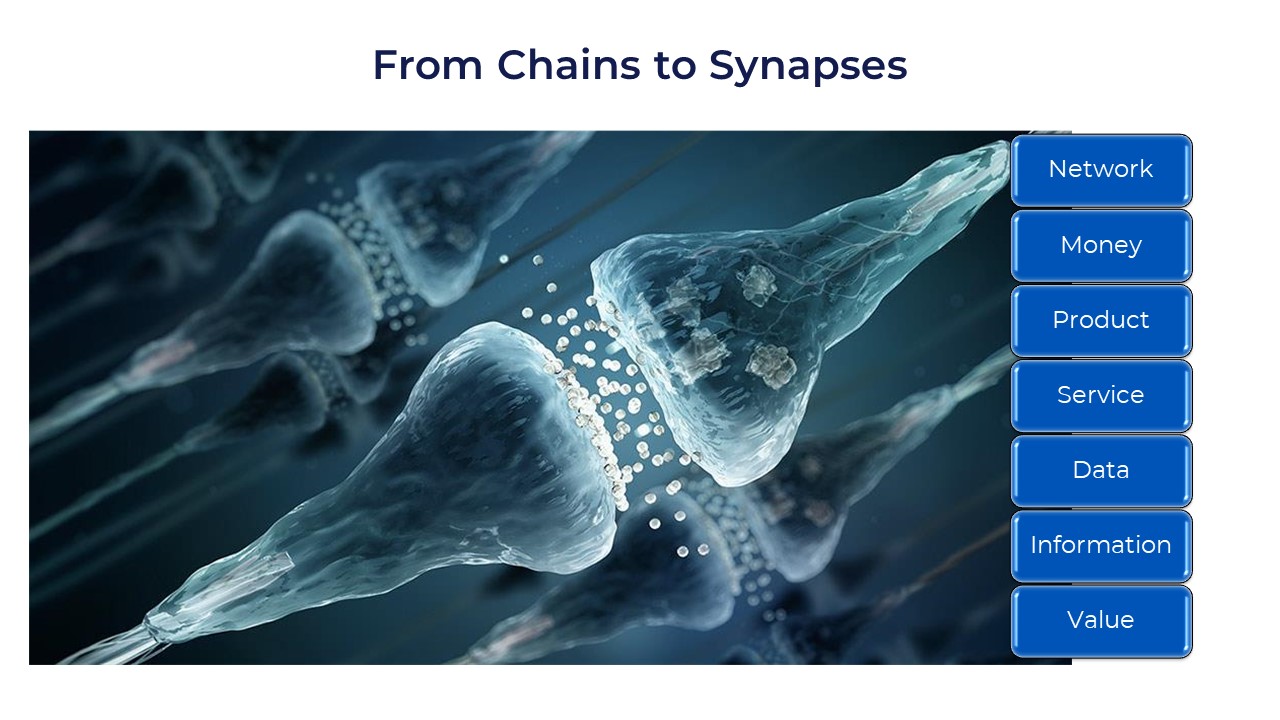
Leave a Comment » |
Agriculture, Aquaculture, Beef, Consumer Market, Fisheries, Foodservice, Meat, Oceans, Retail, Sustainability | Tagged: Agriculture, Aquaculture, Beef, Consumer, Environment, Fisheries, Foodservice, Marketing, Meat, Organic, Production Systems, Retail, Seafood, Soil, Sustainability |
Permalink
Posted by Christophe Pelletier
September 6, 2009
With the current development of software and technology on the one hand, and all the concerns that consumer express about food, health and environment, on the other hand, I believe that it is only a matter of time before we all can have the information and tools we need to make our own eating (and nutritional) choices.

May I eat this?
Today, we have nutritional information on all food items labels, but few of us use it much. This could soon change.
As many among us have computers at home, we can expect software to come on the market, and maybe even already installed with the computer at purchase, that will allow us to determine and set up our own diets.
Already numerous websites have interactive programs telling you, depending on your weight and life style, how many calories you should eat per day and other websites help you calculate the nutritional value of your meal if you enter the quantities of your menu’s components.
In animal nutrition, optimization programs to compose the feed ration by entering the nutritional value of the different possible ingredients and set limits to the level of inclusion of some ingredients based on nutritional and technical parameters have been in use for many years. Last, but not least, these programs also include the price of the different ingredients, so that the best-balanced “meal” that meets the nutritional needs can be composed at the lowest cost possible.
Therefore, it is just a matter of time before we all can have at home a system that will take into account, or weight, our age, our level of physical activity, our health risks and calculate for us what our meals could be made of and how much we should eat, depending on which menu combination we would like to have for that particular meal or day. The nutritional information could be either from a database or directly transferable from the nutritional value label present on the food packaging we bought.
Following the same idea, I expect most restaurants to present their menus with thorough nutritional information on the side, in a similar way as food labels show, with indication of health benefits or restrictions. There also would be the possibility for a customer to enter their personal information to have the meal tailor-made for them, with probably the relevant price adjustment when needed. All of the above includes of course the drinks as well, as they definitely can contribute to the overall nutritional value of the meal.
Any action encouraging healthier eating will be supported by the government and by health insurances, which should help accelerate the introduction of such programs.
As environment and sustainability are among the main concerns of consumers today, I expect food items in the retail and the dishes on restaurant menus to include environmental information, similar to the ones mentioned and appearing on the label shown in my article “Environmental performance on food labels“. Today, a number of restaurants have already joined programs setup by MSC (Marine Stewardship Council) to indicate they serve only sustainable seafood. Seafood is probably just the first item that will be followed with similar information and programs for other food sources.
We have entered the era of information, and we will eat accordingly.
Copyright 2009 The Happy Future Group Consulting Ltd.
Leave a Comment » |
Consumer Market, Foodservice, Lifestyle, Sustainability | Tagged: Consumer, Foodservice, Lifestyle, Meals, Programs, Restaurant, Retail, Sustainability |
Permalink
Posted by Christophe Pelletier
September 3, 2009
We all have heard about this rule across all industries, including agriculture and food. Eighty percent of the food would be produced on 20% of the farms and vice-versa. If it still applies in the future, it can indicate us how our food production and supplies will look like in the future. Of course, this is always a theoretical exercise, but it is quite convenient to elaborate on our thoughts.
As the population is expected to grow quite strongly in the coming decades, especially in urban areas, this could indicate two dominant trends:
• Further size increase of the largest farms and further industrialization of agriculture and food for global markets, although the number of farms in this segment would not increase strongly.
• Strong increase of the number of small farms involved in specific value chains and strongly linked with their local economy.
Industrial agriculture
This group will continue to be involved in mass production of commodities for global supplies, like this is the case today.
Yet, they will face an increased pressure to adapt to the requirements of sustainability, which technically is quite possible. New systems and more efficient technologies will be the pillars of its growth and development. They will have to find ways of reducing the amount of chemicals in crops and the amount of pharmaceuticals in animal productions
The requirements for capital will be quite high and the sector will be led by increasing larger corporations, by an increasing level of capital by large private investors and, last but not least, by some governments. This agriculture will innovate further and will be developed thanks to this capital. It will use automation and mechanization to reduce the dependence on labor. Mergers & acquisitions will continue in the agricultural sector and a few large blocks will remain, dominating their sectors.
Their mandate will be about more control the natural conditions of production and about reducing to a minimum their impact on air, water and soil, by using less polluting transport methods, water preservation, effluent treatment and soil preservation. They also will have to engage in maintenance of their environment.
The role of this type of agriculture will be to bring to market large amounts of affordable food for the masses, and should play an important role in strategies around food security, which is where corporations and government will interact on a regular basis.
Local food value chains
This sector should undergo a strong growth and be build in a market-driven approach. These are the farmers that produce specialty products aimed at serving either a very specific segment of the retail or foodservice market.
This trend, which has been already initiated around concepts such as organic or authentic, will evolve into a more integrated local economy, and the initial concepts will probably become less differentiated as food production in general, be it industrial or traditional, will use more sustainable techniques.
Contrarily to the common belief, this agriculture will be developed thanks to very efficient techniques, but will be centered relatively more about labor and relatively less about capital. In this case, efficiency does not necessarily mean intensification.
We must not underestimate the significance of this part of the food production, as it will play an important role. However, we must not expect this type of agriculture to be the solution to feed the world, and this is not the purpose of the farmers involved in such food production chains.
This type of farming will grow in two different environments:
- In “developed” countries to serve a increasing, but aging, population more demanding about the origin and the production methods, and who is ready to pay a premium for the perceived better quality. The angle will be about quality, transparency, sustainability, traceability and as close to zero a use of chemicals and pharmaceuticals. In some areas, it could help strengthening a local economy and local communities.
In emerging countries, the development of a local agriculture, and aquaculture, will be a key driver of economic development for under industrialized and/or under urbanized regions. It also will be a way of slowing down the migration of population to urban centers and limit social problems, by creating satisfying economic conditions and by securing food supplies locally. This farming will be about basic needs, before marketing.
Copyright 2009 The Happy Future Group Consulting Ltd.
Leave a Comment » |
Agriculture, Aquaculture, Consumer Market, Economy, Politics & Policies, Sustainability, Value Chains | Tagged: Agriculture, Air, Aquaculture, Commodities, Consumer Market, Economy, Environment, Industry Future, Innovation, Investing, Land, Marketing, Mergers & Acquisitions, Organic, Production Systems, Quality, Retail, Soil, Sustainability, Value Chains, Water |
Permalink
Posted by Christophe Pelletier
August 31, 2009
The agribusiness and food industry come regularly in the media with some bad publicity. As such, it does not differ from other industries, as criticism comes with the territory.
What is unfortunate is that the agribusiness mostly responds to this in a rather defensive manner, either by attempting to bring rational scientific facts or by denying the facts that their opponents bring forward.
Criticism of food and food quality is not new. When I started my professional life, I had been lent a book about how food in general, and animal husbandry in particular, are perceived. The introduction of this book was a long complaint about the quality of bread, and by then (in the mid 80’s) the arguments presented sounded quite familiar to me. The funny part of it was that in fact this text was, according to the author, a report written in Ancient Egypt, some 3,000 years ago.
Although bad publicity and criticism are obviously no novelty when it comes to food, it seems that the industry has a hard time fighting this battle.
As such, criticism is not a bad thing as long as it is not done in bad faith with the only purpose to bring damage. There is nothing wrong with consumers being concerned about the quality of the food they eat, and about the way it is produced. Being worried about whether and how antibiotics or hormones are used, about the potential problems to the environment linked to intensive production is quite legitimate when you are rather ignorant of production techniques. After all, nobody has ever claimed that any industry was perfect, and business is always work in progress. It is utmost important for all of us to have watchdogs in order to make sure that we do not get into excesses that can lead to irreparable damage.
Let’s also realize that only a tiny minority of people now work in agriculture and that most city residents have a very limited, if any, knowledge of how farms are operated. On the other hand, they have very strong, often idealistic and romantic, opinions on how they think farming should be, regardless of whether it is viable or if it can provide them enough food. Surveys with city kids have shown that many of them do not make any connection between eggs and hens, or between milk and cows and calves. For many, it is not even a clear fact that in order to get meat, one has to kill an animal.
Further, it is human nature to pick on the big guy, as we all love the story of David defeating Goliath. Moreover, bad news, the more sensational the better, always get more attention than good news, like the recent article published in Time. There is nothing like fear to get people glued to their TVs or reading reports in the papers or on internet. These psychological traits are quite difficult to deal with.
The problem with defensiveness, when dealing with bad publicity, is that it always brings the defendant in an awkward position. If this not handled properly, it can very easily come over as suspicious, which reinforces the poor impression.
In my opinion, the only proper way forward about information on agriculture and food is transparency. Only transparency can eliminate (or at least reduce to a minimum) negative publicity. Only by being candid and open about the way food is produced, can the agricultural community inform properly the public.
Remember that issues around food production are highly emotional, as they deal with much more than just nutrition. This is why responding with rational arguments has so little effectiveness. First, emotional concerns must be dealt with as emotions, not merely with cold scientific facts. Only once the emotional connection has been established, it is possible to bring the communication to more rational aspects and facts.
The better informed the public is, the easier it is to also discuss and address issues that come along the way. Candour is only the first step, the clearly expressed will to always improve the way food is produced is absolutely necessary, and this is not about vague promises. It must come with an open agenda of issues that the industry knows about and is (and will be) addressing without complacency. A clear commitment to a plan of actions with defined time lines is the best way to create and restore trust with consumers. And the best way to score in this is by taking the initiative and the lead. The industry and this includes any participant in the production chain and its watchdogs, from breeding to retail, needs to make these decisions, instead of having to react to changes in legislation, which very often is the result of pressure from the public opinion.
Copyright 2009 The Happy Future Group Consulting Ltd.
Leave a Comment » |
Agriculture, Consumer Market, Sustainability | Tagged: Agriculture, Communication, Consumer, Industry Future, Production Systems |
Permalink
Posted by Christophe Pelletier
August 31, 2009
Here is an article from fis.com about another type of high tech fish farm with some nice futuristic design.
Hawaii Oceanic Technology Inc. has created the Oceansphere. “These elegant, self-sustaining and untethered semi-submerged floating pods are a revolution in open ocean aquaculture technology”, according to the fis.com article. The system is operated without the use of fossil fuels, which makes it environmentally quite acceptable.
As mentioned in the article, the company’s “plan is to demonstrate the feasibility of this technology and, as Jacques Cousteau said, farm the ocean as we farm the land.”
Leave a Comment » |
Aquaculture, Oceans, Sustainability | Tagged: Aquaculture, Environment, Industry Future, Production Systems, Sustainability |
Permalink
Posted by Christophe Pelletier
August 30, 2009
Here is a report about a research of the University of Missouri on some agricultural prices through 2014.
Prices are not seen increasing much, which tends to confirm an earlier report of the FAO.
Corn: $ 3.47/bushel in 2009/2010 to $3.98 in 2014/2015
Soybean: $9.44/bushel in 2009/2010 to $9.74 in 2014/2015
Nebraska direct steers (1,100-1,300 lbs.): $85.07 in 2009 to $100.05 in 2014
Twelve city wholesale broiler price: $.80/lb. in 2009 to $0.91 in 2014
Leave a Comment » |
Agriculture, Beef, Grains, Poultry | Tagged: Beef, Commodities, Corn, Poultry, Soybean |
Permalink
Posted by Christophe Pelletier
August 27, 2009
Here is a nice illustration of what I meant with my article “Innovation and tradition shape the future“.
This is an article from WorldGrain.com describing the result of a test on a new harvesting system for grain carried out by the USDA. They tested the stripper header on millet and wheat.
The idea of this system is to strip away the grain and leave as long as possible a stubble, so that it protects the soil from erosion and enhances precipitation storage. So far results tend to indicate that yields are not affected by this harvesting method.
Just an example of using new technology and innovation to help improve a rather traditional method of getting organic matter in the soil.
Leave a Comment » |
Agriculture, Grains, Sustainability, Water | Tagged: Agriculture, Grains, Industry Future, Innovation, Production Systems, Soil, Sustainability, Water |
Permalink
Posted by Christophe Pelletier
August 25, 2009
Recently, Wal-Mart has sent a questionnaire to all their suppliers, including for food items, asking them to give answers to 15 questions about they actually do about sustainability.
I like this questionnaire, because it is simple, practical and straight to the point. Suppliers who have difficulties to figure out the answers definitely have quite some catching up to do, because this is not going away.
This is the first step to impose a change towards sustainable products, and we can expect that this document, although only the beginning, will soon become the standard for retailers, and therefore to industry. I believe that their approach will be much more effective than all the partisan talk that seems to create more division than help create a comprehensive plan for the general interest.
I recommend reading this article from GreenBiz, which explains quite well what the Wal-Mart questionnaire will concretely mean for suppliers.
Leave a Comment » |
Economy, Retail | Tagged: Environment, Industry Future, Production Systems, Retail, Sustainability |
Permalink
Posted by Christophe Pelletier
August 23, 2009
Sustainability is a bit like quality: everyone talks about it but few give a clear definition when it comes to practical and concrete specifications. Just as importantly, leadership is badly needed to transform the talking into effective action.
As long as the lawmakers remain slow to bring up the change and the clarity to give clear directions, we will need the leadership of some of the most influential players in consumer markets to get things moving.
Even environmental organizations and sustainability bodies have some difficulties to agree with each other. For example Greenpeace does not seem to think that the guidelines from the Marine Stewardship Council offer solid enough guarantees that products brought to market according to these guidelines truly are sustainable. Clearly, this is an area in continuous evolution and the ideal concept is still in the making.
The consumer themselves are both still under informed as well as overwhelmed by all sorts of contradictory messages to know clearly which choices to make, therefore some decide of what to buy either based on philosophical or on financial reasons.
Similarly, many businesses are trying to find their green way as they can, but there again the lack of a strong regulatory frame and the uncertainty of the return on the green investment do not help them. The result is that, although the awareness about sustainability among businesses has grown substantially over the last few years, many companies have taken rather timid steps so far, limiting their actions to the least costly possible and the most PR and marketing-driven. They claim to go green, they communicate a lot about it, but the progress is slow.
Yet, some companies take more initiative, show leadership and push to make the whole supply chain evolve to sustainable production systems. A very active sector in this area is the retail. Retailers in the UK such as Tesco or Waitrose, in Canada with Loblaw’s and Overwaitea Food Group, and of course especially Wal-Mart in the USA have definitely made their choice. They clearly understand that the future cannot be anything but sustainable and they are demanding that their suppliers now come with products that meet the requirements of tomorrow. Last month Wal-Mart demanded from all their suppliers to “develop comprehensive programs to promote sustainability and transparency – or else contemplate a future without Wal-Mart as a customer” (read article).
Tesco is now indicating the carbon footprint of milk products on the labels (see article “Environmental performance on food labels”); Waitrose, Loblaw’s and Overwaitea are going for sustainable fish products, adopting for example the SeaChoice specifications as their guideline. Wal-Mart stores have already implemented a number of measures to reduce their carbon footprint by reducing the energy consumption, and they have already have made some of their suppliers introduce different product presentation. For example, they were the first to demand laundry detergent to be more concentrated and packed in smaller containers. This saved water, it saved energy used to transport useless water, and it saved plastic used for the jugs and for the pallets on which the product was transported. Today, concentrated laundry detergent in smaller jugs is the standard. Without Wal-Mart pushing for the change, we probably still would use the old product in the old packaging.
Copyright 2009 The Happy Future Group Consulting Ltd.
Leave a Comment » |
Consumer Market, Economy, Retail | Tagged: Consumer, Energy, Environmentalists, Industry Future, Marketing, Production Systems, Retail, Seafood, Sustainability |
Permalink
Posted by Christophe Pelletier
August 21, 2009
From an agriculture that mostly was producing locally for a local market with a straight forward production chain, the organization of food production has become more complex and structured over time. As we moved towards always more integration, traceability and globalized markets, the roles and bargaining positions of the different actors has changed.

Facing the possibilities of more food riots in the future, if we are not in a position to make food affordable for all, we certainly can expect to see new power struggles emerge.
If we place ourselves in a scenario of food shortage, it is normal to assume that the power would be in the hands of whoever owns the food. But who is the owner, or better said who is actually in charge?
Is it the retailer? Is it the farmer? Is it the owner of the land on which the crops are grown? Is it the futures contract trader? Is it the seed supplier? Because without farmers, there is not much food in the stores; and without seeds, farmers cannot grow much food, and without food, no futures contracts to negotiate.
In the same way, who should decide where to the food would go? Does it belong to the country and the people who produce it, or does it belong to a corporation that prefers to sell it abroad? In a situation of shortage, this could lead to serious conflicts.
Corporations look primarily at markets and try to maximize their profit. That is their mandate.
Governments have a different look at things, as politicians want to have happy citizens, so that their position of power can continue. All they want is avoid social unrest.
Potentially, this can lead to new regulations and even to the possibility of nationalizations if companies and governments do not agree.
To get back to the example of seeds and genetics, there is a growing responsibility resting of the shoulders of breeding and genetic engineering companies. Not so long ago, let’s say a bit more than a century, there was much more genetic diversity in agricultural crops and farm animals. This diversity has shrunk quite significantly and we face the potential risk of not having the right genes available if we were to face a natural situation that would eradicate plants or animals as a result of inability to resist and to adapt to the new conditions these organisms must deal with. The genetic pool used to be a collective asset, but it has moved more and more into a private asset. About this, too, one can wonder who is in charge and who has ownership, and what could the consequences be.
As long as we are not facing any severe supply unbalance, the current situation will probably linger as it is a bit further, with the players having the most power trying to grow their position and influence other deciders to their advantage, but this kind of consensual vagueness about who is the owner of food will sooner or later cause some major shake-up.
Copyright 2009 The Happy Future Group Consulting Ltd.
Leave a Comment » |
Agriculture, Economy, Politics & Policies | Tagged: Agriculture, Economy, Farmer, Politics & Policies, Retail, Seeds, Trade |
Permalink
Posted by Christophe Pelletier
August 21, 2009
Here is an article of the National Geographic about “Giant Robotic Cages to Roam Seas as Future Fish Farms?”
This article addresses a number of very interesting and valid points, such as the possibility to move to better farming environment, or getting farms closer to consumer markets.
Having the ability to change location has several advantages. It allows finding areas where water quality is better as this varies with seasons and climate conditions. It also can allow farms to move away from the routes of wild fish and substantially reduce risks of disease and parasite contamination and spreading. Being closer to consumers market also has the advantage of reducing the amount of transportation and have the fish brought to market faster, therefore fresher, theoretically.
However, this article does not address a number of important aspects of fish farming. Going far offshore brings some organizational issues, such as rotating the crews working on farms, or dealing with rough weather. Probably some fine tuning would be needed to organize feed deliveries to such farms as well and the mobility must not happen at the expense of the life of equipment or the functioning of cameras and computers used for management purposes. As such, nothing that cannot be resolved, but it would come at a cost as well. Then it is to the farmers to weigh the pros and cons and make their decision.
Nonetheless, this is an interesting idea that shows that this industry is in full evolution and is adapting to the future.
Pioneering the oceans and robotizing aquaculture connects quite well with my previous articles “Innovation and tradition shape the future” and “The ocean, not Mars, is the next frontier“
Leave a Comment » |
Aquaculture, Consumer Market, Oceans | Tagged: Aquaculture, Consumer Market, Industry Future, Innovation, Production Systems, Seafood |
Permalink
Posted by Christophe Pelletier
August 19, 2009
Here is quite an interesting article from the FAO about the cost of weeds in agriculture.
According to their numbers, weeds limit crop yields to such an extent that the world misses yearly the equivalent of 380 million of wheat a year, or in money $95 billion. My first reaction was that there is an untapped market for herbicides producers, but the article describes ways of getting rid of the weeds that do not require the use of chemicals.
Compared with the medical cost of obesity in the US of $147 billion a year, or the contribution of the US meat and poultry industry of $382 billion per year to the economy, or the TARP funds for the banks of $700 billion, or the estimated financial toxic assets losses worldwide of $4 trillion, the $95 billion does not seem that big a number after all.
Yet, 380 million tonnes wheat equivalent represent, according to the FAO, half of the 2009 expected world wheat production!
Assuming simplistically that with this wheat we would feed people only a diet of bread, this could feed decently more than 1 billion people! This is all the more amazing as the FAO currently estimates the number of hungry people in the world at 1 billion. Clearly, there should be some possible solutions if policies and politics were targeted at the right goals.
Always interesting to put numbers in a different perspective…
Leave a Comment » |
Agriculture, Economy, Politics & Policies | Tagged: Agriculture, Economy, Herbicides, Politics & Policies, Production Systems, Weeds |
Permalink
Posted by Christophe Pelletier
August 18, 2009
Here is an article from Science Daily illustrating very clearly the issues I brought up in my earlier article “Managing water is paramount for the future of food production“.
According to Colin Chartres, Director General of the International Water Management Institute: “Asia’s food and feed demand is expected to double by 2050. Relying on trade to meet a large part of this demand will impose a huge and politically untenable burden on the economies of many developing countries. The best bet for Asia lies in revitalizing its vast irrigation systems, which account for 70 percent of the world’s total irrigated land”.
Leave a Comment » |
Agriculture, Water | Tagged: Agriculture, Irrigation, Trade, Water |
Permalink
Posted by Christophe Pelletier
August 12, 2009
In order to understand what changes are ahead of us, we need to realize that opposite forces are engaged in shaping the world of the future. As we all know, accepting change is always a slow and sometimes a difficult process. There are those who see the possibilities and those who see the drawbacks. The first train was going, supposedly, to get cows stop giving milk, but we now know that cows love to watch trains passing by. Probably, the first caveman who drew a picture of an animal on the wall was considered by some as a great magician and probably by others as pure evil. As such, such a struggle is very useful, as on the one hand it shakes immobility and open new doors, and on the other hand it prevents us to rush into the unknown without thinking first.
Change is part of our lives and that will not change. The problem that we face about change is actually about the pace of change, more than over the change itself. Over the last century, this pace has just increased steadily, thanks to more and more efficient technology.
If we look back the lifespan of the oldest living person, which brings us back to the end of the nineteenth century, just take a minute to think of all the changes that have occurred since then. There was no car industry, no antibiotics, no commercial airlines, no TV, no internet or cell phones, no supermarkets, just to mention a few things that we take for granted nowadays.
Although such a change is dramatic and has affected the way we live today, it has been a process that has needed time. Usually, it is said that more than 60% of the products that exist today did not exist 10 years ago and if we extrapolate this to decade to come, we can expect some even more spectacular changes.
Innovation is in constant motion and technology helps us to conceive and to use much faster than by the past. Yet, it is interesting to see that even with such a pace of change, traditions still play a very important part in our lives. Even with lots of modern gadgets, most cultures keep their specific characteristics. Their respective values do not evolve as much as our “things“, these just become part of the culture. This is an important point when it comes to innovation: what you offer must meet a need, if it does not, it will either fail, or at best be a fad.
Having a look at the future, you must wonder what the underlying trends of innovation are since it started. I can see several major constant areas of innovation:
- Reducing physical labor.
- Helping us live better and longer.
- Increasing efficiency.
- Helping communication.
- Increasing mobility.
- Offering more leisure and entertainment.
- Making some people a little wealthier.
What could this mean for food production in the years to come?
More technology to improve efficiency of water use, fertilizer use, animal feed use, land use, energy use (objective: zero waste).
- More mechanization, automation and robotising, especially in software more than hardware, working on precision (intelligent technology).
- Greater focus on health and natural solutions for food and for agriculture/aquaculture/fisheries (objective: zero residue and zero contaminants in water, air, soil, and food).
- Projects to repair environmental damage and include agriculture/aquaculture/fisheries in environmental management (restore and maintain sustainable food production).
- Policies, and politics, to increase food production (disease control, regulation, more government intervention at strategic level, incentives).
- Redistribution of markets with geographical shift of production and consumption areas.
- Shift from convenient to practical food solutions (bulk meal components).
- More education on agriculture, food and nutrition (balanced diets, food safety, traceability).
While such changes will come over time, consumers will still be looking for some level of tradition in foods. This can be about authenticity, regional specialties and recipes, or choosing to buy directly from farmers. Obviously, this is not a rational process, but it is more about the perception of “true” and “natural” production systems. After all, nostalgia is a constant of human emotions, too.
Copyright 2009 The Happy Future Group Consulting Ltd.
Leave a Comment » |
Agriculture, Aquaculture, Fisheries, Politics & Policies, Water | Tagged: Agriculture, Aquaculture, Fisheries, Innovation, Politics & Policies, Production Systems, Soil, Sustainability, Water |
Permalink
Posted by Christophe Pelletier
August 8, 2009
Here is an article I found on CNN about in-vitro meat. Of course at this stage there is no way of knowing whether this has a future or not.
There are some interesting arguments brought up in this article, that can make some think that in-vitro meat is a possible alternative. Yet, they do not mention anything about the cost of producing meat in such conditions, but my guess is that it will not be cheap, and certainly not cheaper than the lesser meat cuts it is supposed to replace; and the production cost of in-vitro meat is probably its main challenge for future marketing purposes.
My view is that animal protein will become much more expensive in the future (see my previous article “The future price of meat and fish: up”), and that Westerners do not need to eat as much meat as they currently do, anyway.
The irony is that in-vitro meat has the support of some environmentalists, while it depicts a situation where humans would almost not be in touch with nature anymore when it comes to meat. So much for natural food!
I will leave it up to you to decide what to think.
1 Comment |
Meat | Tagged: Industry Future, Innovation, Meat |
Permalink
Posted by Christophe Pelletier
August 6, 2009
A recent study from the UK concluded that organic foods are not nutritionally superior to “regular” foods. Of course, it did not take long for reactions to be published. The pro organics reject the protocol used and therefore the conclusions. The pro “industry” reacted satisfied. All of this is not surprising, and for a simple reason: people choose their foods greatly based on psychological reasons. Let’s face it the debate around organic food is largely about lifestyle and choices.
However, is the result of this survey a surprise? Not really, because in terms of nutritional value, the differences in production systems are not that different. When it comes to food safety, especially residues of chemicals, then it probably is a very different story.
What can affect the nutritional value of foods are the growth period and the timing of the harvest. Produce that grows fast and that is harvested before full ripeness contains relatively more water and therefore there can be a dilution of nutrients per kg of product. This is also true for meat products.
I do not believe that the real debate between” organic” and “industrial” should be so much about nutritional value as it should be about food safety. As consumers get more educated and have more choice, they will give the preference to something more natural and harmless, simply because it is common sense and the safe thing to do. On the other hand of course, agriculture must be in a position to offer affordable products. Organic foods are more expensive and this is what limits its market share to mostly well-off city residents.
If organic foods want to become the standard to feed people, it will have to work on its production costs and price. Retailers are playing a very important role in this, as they more and more dictate to suppliers how food should be produced. This is currently very obvious with seafood and the requirement set by supermarkets to buy only sustainable seafood.
My expectation for the future is that retailers will get more involved in agriculture and will impose on suppliers more restrictions on what kind of products they may use for crop treatment, more restrictions for better animal welfare. The market standards of the future will become “sustainable”, “natural” and “traceable”; not for emotional reasons, but for rational reasons. There will be pain to accept for producers to meet these requirements, and in the end the commercial negotiations will decide what the market price of “natural” foods will be.
Copyright 2009 The Happy Future Group Consulting Ltd.
Leave a Comment » |
Agriculture, Consumer Market | Tagged: Agriculture, Consumer, Consumer Market, Lifestyle, Organic, Production Systems, Quality, Seafood, Sustainability |
Permalink
Posted by Christophe Pelletier
August 5, 2009
A recent report showed that the annual medical cost of obesity reached $147 billion (see article). On the other hand the contribution of the meat and poultry industry in the US is $832 billion annually. Therefore, we can expect ongoing arguments between economic interest and health care costs for a while.
The simple fact is that too many Americans do not eat a properly balanced diet and that should change.
The most efficient way to improve eating habits is by understanding nutrition and educating children at an early age about health and food, and about diseases caused by either unbalance or excess. Food safety is not only about bacteria or residues, but also about handling food properly and eating right.
Leave a Comment » |
Economy | Tagged: Consumer, Health, Lifestyle |
Permalink
Posted by Christophe Pelletier
August 5, 2009
As everyone knows, fish stocks have been depleted to levels that are not acceptable. This is the result of short-term thinking combined with highly efficient but stupid fishing methods. Not only fish is a high value food source, but oceans are complex ecosystems that we cannot afford to lose. Although aquaculture claims to be the way to compensate the supply of wild fish, this is only true within limits, as some aquaculture species are fed with fish meal and fish oil, and replacement of these products is also limited by the quantities that agricultural crops can supply, and consequently their price.
As one of the points that I mention in my presentation “Twelve trends for the future of food production” (under Presentations tab), we can expect that programs will be set up to rebuild wild fish stocks and bring the volumes back to levels with which sustainable fishing methods and quotas will help provide us with more secure supplies. This will be some sort of a stimulus plan for seafood with all stakeholders involved: government, fishermen, aquaculture industry, retailers, food service and consumers.
A recent report published by the Pew Charitable Trusts has reviewed the possibilities and the economic impact of rebuilding fisheries in the Mid-Atlantic Ocean, as well as the downside of doing nothing. A Canadian research has worked in a similar direction and tend to show that rebuilding fish populations is possible, citing a number of successful cases (see article).
All that comes out from these reports is that the situation, although quite serious, is far from lost, but it requires political will and organization to make it happen. This is exactly why all parties involved from whichever country concerned will have to act in a coordinated manner.
Copyright 2009 The Happy Future Group Consulting Ltd.
Leave a Comment » |
Economy, Fisheries, Oceans, Politics & Policies | Tagged: Aquaculture, Economy, Ecosystem, Environment, Fisheries, Seafood, Sustainability |
Permalink
Posted by Christophe Pelletier
July 30, 2009

Genetic engineering, that we just mentioned, and traditional breeding and will be increasing intertwined in the future, as they will join their respective areas of expertise into combined genetic improvement programs. Actually, we can expect that these two disciplines will be merged into only one unified science of DNA. We can expect to see an increased number of joint ventures and mergers between genetic selection companies and biotech companies in the future.
So far, genetic engineering has been mostly known to the public opinion thanks to the development of GMOs (genetically modified organisms), and this has been a very controversial area. Genetic engineering will move from a support activity to, for instance, herbicides, to address much more real problems and bring much more real solutions to the challenges of the agriculture of tomorrow. GMOs have served the sales of herbicides produced by the same companies quite well, but of course, this will plateau rather soon, and there will be a need for something else to impress the financial markets. It should not be a surprise to see these corporations specialize in biotech completely, and divest their chemicals “heritage” at some point in the future. The real problems to solve include a broad range of topics. They include technical performance and yields of plants and farm animals. Genetic engineering will help increase the efficiency in the conversion of nutrients and water. It will help plants and animals to have a stronger resistance to diseases, in order to avoid severe production losses. It will provide alternatives to antibiotics, to herbicides and pesticides. It will find ways for plants to absorb or fix the nitrogen of the air to reduce the use of mineral fertilizers. Another area of research will be influencing the quality of final agricultural products, in particular producing healthier foods, and have plants produce medicines.
To solve such problems, the people in charge of such programs will have a very heavy moral responsibility towards society, as the choices they will make will affect the longer term and our ability to survive. The success criteria will go much beyond the financial performance of these companies. This will be translated in the type of bonus packages that the executives will receive. One can wonder whether the correct structure for such companies is to be publicly traded, since stock markets tend to induce a very strong preference to the short-term financial performance. The reflection on such programs will need to go through a serious test of “what ifs”. As per now, money still is the main driver, especially in the arguments of the producing companies and countries. For instance, they reiterate that the decision of the European Union to limit the production and use of GMO will make food more expensive in these countries. Then let’s ask ourselves what if the EU is wrong in their decision? Well, production systems and agriculture would not change much; their food might indeed be more expensive than somewhere else. The people will buy smaller cars and travel less far for their vacation. This is not a very threatening situation if you ask me. What if the ones in favor of GMOs are wrong and the EU is right? The debate is indeed very emotional and political, but this is simply because we lack long term testing of the effects of GMOs to have certainty. This is why the GMO producers have such a hard time convincing their opponents.

A better understanding and predictability of long-term effects is paramount in agriculture and food production. Agriculture is not just about producing a particular crop, it is also about managing the total ecosystem that a field is. Actions in genetics need to guarantee the long-term balance of these ecosystems (in which weeds, although of no economic interest, are a part of), because once an ecosystem has been altered, it has been changed forever. Genetic improvement programs must ensure to preserve, in whichever form, genetic diversity and survival of vegetal and animal species, because once extinct, they are lost forever. Long-term fertility of soils is another highly critical part of the protection of our food supplies, because once sterile, the land is lost forever.
So, as you see, we are facing many challenges and genetics is a key element of our food systems. By shifting away of rather superfluous projects, even though they have been quite lucrative for the producers; and by focusing more on true improvement and sustainability of production systems thanks to technical breakthroughs, a combined breeding and genetic engineering will bring constructive solutions. All it will require from the stakeholders is vigilance.
Copyright 2009 The Happy Future Group Consulting Ltd.
Leave a Comment » |
Agriculture | Tagged: Agriculture, Ecosystem, Environment, Genetic Engineering, Genetics, Industry Future, Plants, Production Systems, Quality, Soil, Sustainability, Water |
Permalink
Posted by Christophe Pelletier
July 17, 2009
With a world population increasing strongly and an agricultural area that will not grow accordingly, the law of offer and demand clearly indicates that agricultural prices will increase in the future. This is true for agricultural commodities such as grains, but the increase will be even stronger for animal products, such as meat, poultry, dairy and fish.
This will be the result of an increasing and very likely quite aggressive competition between the need to feed people with the basic commodities, the need to feed farmed animals and possibly for some time the need to produce biofuels.
Since it takes more than one and even several kilograms of animal feed to produce one kilogram of meat, the feed conversion ratio (FCR) will affect by which factor the price of the various animal products will increase.
Efficient productions like chicken will be successful and will remain quite competitive pricewise against other sources of animal proteins, thanks to its low FCR, to its low water use and to the good agricultural value of its manure. In the aquaculture sector, efficient productions such us tilapia and pangasius have a bright future ahead, as they can help feed a large population for an affordable price. In general, aquaculture has the opportunity to fill the huge gap left by depleted wild fish stocks, although it will have to solve some issues in order to be successful (see my article titled “The lessons of intensive animal husbandry to aquaculture“). In terms of price, the scarcity of wild fish will make these quite expensive for the future.
Less efficient species such as pigs and beef cattle will see the price of their products increase relatively much more. Pigs also have the disadvantage of producing low quality manure, which will limit the level of intensification. However, pork plays an important role in some cultures, and therefore, it will still show a reasonable volume growth, with geographical variations.
A high FCR species such as beef cattle will probably undergo the most dramatic change. Higher feed costs, linked to a relatively high capital need will probably push a number of farmers to shift to other more efficient productions. Highly intensive systems such the feedlots will also undergo major changes, as regulations on the use of antibiotics and hormones will make them financially inefficient. Further, their high impact on the environment because of the manure will also work against them. I do not expect the 99-cent beef burger to be here for all that much longer, burgers will continue to exist, but just quite a bit more expensive. On the other hand, I can see good possibilities for specialty beef products, such as grass-fed beef, but customers will have to pay the right price for it. Grass is the animal feed that we all seem to underestimate, yet it covers vast areas of very often fragile soil, and cattle is one of the few species that can transform it into high value protein.
In the aquaculture sector, a carnivore species such as salmon will also meet its own limitations. Although, salmon feed has shifted from mostly fish oil and fishmeal to a much more complex mix of vegetal oils, this production will see its production costs rise strongly. I expect salmon to become a luxury product again.
What will a higher price mean?
There again, simple economics tell us that this will influence the level of consumption per capita. The price increase will moderate the level of consumption and the price differential between the type of protein, as well as health concerns, will cause a shift between the respective consumption of the different products. In Western countries, people consume quantities of animal products that are substantially higher than what they actually need, and this has led to many health issues. The decrease in consumption will help make people healthier, and reduce the burden of health costs in that part of the world.
In developing countries, the situation is different, as consumption trends show an increase of consumption of animal products, from rather low levels, though. In these countries, consumption per capita will increase, but will not reach the levels that Western countries have shown, simply because prices will be too high to get to such levels.
The decrease of consumption per capita that we will see in developed countries does not mean that the meat industry will get into trouble. Less average consumption per capita in the West will be more than compensated by the growth in emerging countries, where population numbers are significantly higher, and this will lead to a higher global demand of animal products. The main change is that the consumers will be distributed geographically rather differently than they are today. This also means that production will be located in different areas than today.
Just as a teaser: if Western countries consumers were to reduce their meat consumption to just the necessary maintenance needs, it would free volumes enough to cover the maintenance needs of meat for the whole population of China!
Copyright 2009 The Happy Future Group Consulting Ltd.
Leave a Comment » |
Agriculture, Animal Feed, Aquaculture, Beef, Consumer Market, Economy, Grains, Meat, Pork, Poultry | Tagged: Agriculture, Animal Feed, Aquaculture, Beef, Biofuels, Commodities, Consumer, Economy, Environment, Fish, Fisheries, Grains, Land, Manure, Meat, Pangasius, Pork, Poultry, Production Systems, Salmon, Seafood, Tilapia |
Permalink
Posted by Christophe Pelletier
July 14, 2009
Here is an article by Bernd Meerpohl of Big Dutchman on poultry husbandry systems of the future. Not surprisingly, he did not present any revolutionary new developments for year 2034, but I miss some aspects that I believe will be important for the future.
Markets will be different, just because the consumers will not be located in the same as now. Different markets with different needs will mean further evolution in breeding strategies. We will deal with energy and environment in a different light, and this will affect production systems. Climate control, lighting systems, transportation, distance between producers and consumers, bird catching and bird processing, packaging systems will all evolve because of the need to preserve energy, food and water, as well as increase efficiencies.
Leave a Comment » |
Poultry | Tagged: Animal Feed, Consumer Market, Energy, Environment, Industry Future, Poultry, Production Systems, Water |
Permalink
Posted by Christophe Pelletier
July 8, 2009
Here is an article reporting about the World Nutrition Forum held recently in Austria.
It presents the future of animal productions quite along the same lines as I think.
Efficiency, innovation and location will become the key components for the future.
Efficiency will act as a “natural selection” between the species farmed, as an increasing need for protein combined with a limited volume of feedstuffs and water will decide what productions can grow the most and which ones might not be able to do so. Poultry is definitely a winner thanks to its low feed conversion ratio and to its relatively high water use efficiency, pork is uncertain, and cattle will have the toughest time, although cattle is the only production that can transform cellulose into animal products, so the production systems will likely change and offer a different kind of future for beef.
Location of production will follow the location of the consumer markets. With a population increasing strongly, as well as their standard of living is improving, Asia will become a very active production area. This probably will also be the result of a need to reduce transport costs, as well financially as environmentally speaking.
Innovation, as I have mentioned in previous articles, will be a key driver for the future of animal feed and of animal productions. I am quite glad to read that the industry is fully aware of this need, and also that they see their future in “creating value” more than just “cutting costs”.
Although the conclusions of this forum are quite encouraging and positive, the next step might be the challenging one: how to turn these great ideas into systems that will work and will ensure the long term future of the production side as well as of the consumption side? It will all be in the proper planning and execution that this will succeed.
Leave a Comment » |
Animal Feed, Beef, Consumer Market, Meat, Pork, Poultry | Tagged: Animal Feed, Beef, Consumer Market, Industry Future, Innovation, Pork, Poultry, Production Systems, Sustainability, Water |
Permalink
Posted by Christophe Pelletier
July 6, 2009
Here is an interesting article from the Financial Times describing the new approach from G8 countries towards food security. It connects with my previous posting, and shows how strategic agriculture is becoming. It is also nice to see that some world leaders look at this issue in a more sensible manner than in the past, shifting from “give a man a fish, he will have food for a day” to” teach him to fish and he will have food every day”. Well, that is if we manage to replenish our oceans, which is a topic on which I will write in the future.
Of course, it must be clear that if they choose this new approach, it is because they have an advantage in doing so.
Leave a Comment » |
Agriculture, Economy, Politics & Policies | Tagged: Agriculture, Commodities, Economy, Land, Politics & Policies |
Permalink
Posted by Christophe Pelletier
July 2, 2009
A couple of recent articles (Foreign cropland deals and Professional investors look toward overseas farmland) show clearly how much action there currently is about securing food sources in the future. Many players are involved, from countries buying or leasing foreign land, to investment firms and hedge funds.
Agricultural commodities have become quite hot and are expected to become even hotter.
In the future, we can expect to see more of such land acquisition, we will see more alliances, like the “Black Sea Wheat Pool” in which Russia, Ukraine and Kazakhstan are supposedly joining forces to build a strong wheat sort of OPEC. Although considering the relationship between Russia and Ukraine about natural gas, one can wonder what will happen with this.
We must expect strategies about food supplies that will remind us of what we have seen about oil supplies. Politics are going to play an increasingly important role. After all, we can live without oil, but not without food. There will be aggressive moves from countries that are not self-sufficient, first friendly like the land purchases and leases, but there probably will be a point when this might not be enough and regional conflicts will happen. Some exporting countries will also take a more aggressive stance on prices and on availability, but they also will have to be aware that too much arrogance might end up in serious tensions.
In my view, we are going to see very interesting tactics that will include food, energy, trade agreements, diplomacy and military threats as part of the whole bargaining process.
Similarly, we can expect to see more tensions between private firms involved in food and governments. Locally, we can expect nationalizations of land and factories. More regulations of the markets will take place, probably after excesses from privately owned money, investors and businesses will create another “bubble” with agricultural commodities futures contracts, that will end up destabilizing food markets in a somehow similar manner as the financial world has acted for many years before it faced a meltdown.
Copyright 2009 The Happy Future Group Consulting Ltd.
Leave a Comment » |
Agriculture, Economy, Politics & Policies | Tagged: Agriculture, Commodities, Economy, Energy, Investing, Land, Politics & Policies |
Permalink
Posted by Christophe Pelletier
June 24, 2009
Will we see science-fiction urbanism? Will we become urban gardeners?
As the population increases, so does the need for food. In the press, you can read statements like “we will need four Earths by 2050 to feed the world”, although some predict only three.
Fact is that we will not have extra planets to grow our food, and we will either find ways of increasing food production or the world population will regulate itself, be it through famine or wars.
Inevitably, there will come a time when all apparent arable land will be in use for agricultural production, and there will be a need for more. Already today, we have a vast area of good agricultural land, which is inaccessible, because it is located under cities and roads. This is even more important as the prediction is that the world population will increasingly live in urban areas.
Since the beginning or urbanization, human settlements have developed around the bare necessities, which are water and fertile ground. Today’s major urban centers have been growing from their original core, and they cover a lot of such fertile land. One of the dilemmas for the future will be to accommodate this increasing concentration of population in cities and to keep arable land available. In a later stage, we might have to find ways of recovering this land in some way or another.
In order to conserve arable land from further housing and infrastructure development, we need to think “vertical”. This could mean the end of the individual house, and the further development of higher housing building as the unique model. It is not unthinkable that we will restart agricultural activities in the cities themselves, by allocating some area for gardens both at ground level and suspended on top of buildings, and even the return of farms in the cities. So far, infrastructure had chosen the easy, cheapest and most obvious solution, which was to lay cities and transport on the ground as much as possible. Maybe, we will see an increased redevelopment of roads and transport lines on elevated structures, such as the bridges and the monorail lines that we know today. This could free a huge amount of land for food production. Of course, this sounds like a very costly solution, but food scarcity will make its price skyrocket even more. Another solution, although it seems to go against the trend generally accepted today would be to redistribute the population more evenly between urban centers and agricultural areas.
Copyright 2009 The Happy Future Group Consulting Ltd.
Leave a Comment » |
Agriculture, Economy | Tagged: Agriculture, Economy, Land, Soil, Sustainability |
Permalink
Posted by Christophe Pelletier
June 22, 2009
This is an article from World-Grain.com about a report from Rabobank on their outlook of a growth for meat of 50% between now and 2025 and its consequences on feed-to-food value chains.
Albert Vernooij, author of the Rabobank report ‘Changing Industry Landscapes’ says “The global feed-to-food value chain has switched from being supply driven with a long-term sustainable share for each link in the chain, to being demand driven. This is placing the retail and food service sectors in the leading positions, and farmers and abattoirs (slaughterhouses) have become the weaker links”.
Certainly the retail and food service, because they are the closest to the final consumer have the best position to connect to market demand, but I disagree with his statement that the value chains are demand driven. Most of meat products are commodities and retailers and food service companies buy at the lowest price a rather undifferentiated product. Most slaughterhouses and farmers are still purely production driven, or more accurately put, volume and cost driven, instead of being profit and niche driven. Only very few value chains are really market driven, although most are marketing driven, but that is not quite the same.
Leave a Comment » |
Animal Feed, Beef, Consumer Market, Grains, Meat, Pork, Poultry, Value Chains | Tagged: Animal Feed, Beef, Consumer Market, Grains, Pork, Poultry, Value Chains |
Permalink
Posted by Christophe Pelletier
June 22, 2009
This might sound contradictory, but one of the effects of globalization could very well be a new impulse for the development of a local economy, with energy as the main driver.
Let’s review a few things! One driver of globalization has been the search for low wages, therefore making corporations relocating their manufacturing units to the emerging countries. Another pillar of globalization has been the ability to transport goods across the world at a low cost, as energy has been in fact quite cheap. A clear effect of the success created by the above is an economic boom in the emerging countries, where employment has risen and where the standard of living has increased, on average. Currently, we are going through this difficult economic situation, but in the future, we very likely will face an increase in the price of oil. This is the energy effect that I just mentioned. Higher energy costs and food prices will drive inflation higher, although not to alarming levels. Nonetheless, this will be pushing wages up in the emerging countries, while unemployment will stay high for a while in the West, where the main consumer markets are. Therefore, we can expect to see the wage differential between those two groups of countries shrink, while transporting goods will become more expensive. In such a situation, it is not unreasonable to think that some manufacturing will come back closer to the Western consumers market. In addition, in the same time, emerging countries should have been able to develop a middle class that will drive domestic consumption, and thus sustain a certain level of economic momentum, even if their exports decrease in relative volume. An interesting consequence of the above would then be global trend towards a more local economy. The currently emerging countries would produce to satisfy their domestic markets and exporting lower surpluses, while the Western countries would repatriate some of the production units back home since it might be cheaper to produce and to transport goods that way to satisfy their own consumers.
Agriculture has followed the same pattern as other industries, and regions have specialized for the foods that they could produce at the cheapest cost. Of course, the cost of production and of distribution to consumers depends largely on the price of inputs, such as energy, fertilizers, animal feed, etc, but from a pure financial, and also climatic, point of view, it could not make sense to try to produce everything everywhere. Thanks to cheap fuel, the model was to go to global trade and transport foods over long distances. This is quite a change compared with the local agricultural model that dominated until the nineteenth century.
This search for the lowest cost of production will not go away, for a very simple reason. The overwhelming majority of the world population has a limited budget and keeping food affordable is an absolute necessity. We have seen during the sharp food price increase of 2008 that it would not take much to create a panic and riots, because even a slight price increase is almost unbearable for most people, especially in developing countries. This is quite a contrast with the wealthy Westerners who claim that cheap food is a bad thing, and that agriculture should be local and small-scale.
Another aspect that is not addressed very often is the actual carbon footprint of food transport. In the partisan debate, most of the arguments focus on the number of miles travelled, but they rarely look at the qualitative aspect of the transport. Depending on whether we transport food by road, by rail or on water, the results vary greatly. For instance, in Brazil, only 5% of exported products were transported by waterway in Brazil, compared to 61% in the U.S. Conversely, 67% of Brazil’s exported products are transported on highways, compared to just 16% in the U.S. In the European Union, almost 90% of the external freight trade is moved by water, and short sea shipping represents 40% of trade within the European Union in terms of ton-kilometers. As you can imagine, the consequences for the environment, as well as in terms of transportation costs differ greatly.
There are also significant differences between transporting fresh foods or frozen foods. A study carried out by Astrid Scholz, Ulf Sonesson and Peter Tyedmers on salmon showed that consuming frozen salmon transported by sea was the better environmental choice for salmon. To illustrate this, their conclusion was “If seafood-loving Japanese consumers, who get most of their fish via air shipments, were to switch to 75 percent frozen salmon, it would have a greater ecological benefit than all of Europe and North America eating only locally farmed or caught salmon.”
Another important parameter in the environmental impact of the distribution of food is the filling rate of the transportation unit. An efficient fleet of trucks that organize back transport for other goods is more efficient than a small truck used by a farmer to bring his products to the city’s farmers’ market 400 kilometers away and who drives back empty.
As you can see, in the choice between global or local, we need to think in pragmatic terms because the reality is more complex than it may seem at first.
Copyright 2009 The Happy Future Group Consulting Ltd.
Leave a Comment » |
Consumer Market, Economy, Energy, Politics & Policies, Sustainability | Tagged: Economy, Energy, Environment, Globalization, Local, Natural Resources, Politics & Policies |
Permalink
Posted by Christophe Pelletier
June 22, 2009
The days of our consumption society are numbered. We are going to have to find another economic system to prosper in the future as it is part of solving the climate change and CO2 emission issue. Over the last 60 years, all our economy has been based in encouraging consumer demand for goods that have been produced with relatively very cheap energy, very cheap raw materials and as cheap labour as possible, with as cheap credit as possible. This has lead us where we are, which is a group of very wealthy nations wasting very precious resources, to the point of exhaustion and suffocation.
Although some still try to resist and deny the obvious, this system is no longer sustainable and we must rethink what should drive our economy. In an earlier article, I made a reference of how previous generations used to be very cautious about what and how they consumed. The positive side of the last 60 years has been the incredible progress we have made in science, knowledge and technology, which offers possibilities unthinkable for the previous generations I was referring to. We understand our world and how it functions like never before. We have all the technological solutions to solve the climate issue, but the key is the will and the determination to change and to act. This cannot happen as long as we keep thinking the economy in terms of growth only. Growth will not go on for ever, simply because our space and our resources are limited. As there are more and more people needing more and more energy, food and other goods, the law of offer and demand will rule. Prices will inevitably go up and consumption will slow down. A new time has come. The priority must now be quality, not quantity, we must think about having enough, not having always more. This thinking is not a nostalgia to a past that also had its limitations. It is not about rejecting a market-based economy. It is about looking at the market that has always been here, but that has been pushed in the background for the easier approach of just producing more and selling it. What we will have to bring to market is not so much products as services. These services are the ones that are directly related to making all the natural and industrial cycles run harmoniously in a durable way. Just to name a few examples, I would mention all activities that are related to cleaning the damage we have caused, and recycling activities will become more and more important in our whole economy. In the same way, water treatment is going to be a crucial activity, even more so than it has been so far. Clean industries producing durable goods and services will prevail. This change will also make some jobs disappear and some appear or even reappear. As usual change always brings opportunities. It is to us to recognize them and to take them. The time has come to make the transition from this consumption society, based on wasting resources, and with no future, to a maintenance society, where wealth, and not growth, will be the economic success indicator. By acting today, we can ensure this process to happen in a smoother way than if we wait until we have no choice anymore.
Copyright 2009 The Happy Future Group Consulting Ltd.
2 Comments |
Consumer Market, Economy, Energy, Politics & Policies, Sustainability | Tagged: Commodities, Consumer Market, Economy, Energy, Lifestyle, Nature & Environment, Politics & Policies, Sustainability |
Permalink
Posted by Christophe Pelletier
June 19, 2009
Here is a link on a photo report published in World Poultry about the recent AgriVision 2009 held in the Netherlands.
Their objective was to answer the question of how to feed the world population by 2050, which is the basis of my own quest.
They seem to have come to rather optimistic conclusions. This is good news, but that will require the proper leadership as well from the world of politics as from the business world.
Leave a Comment » |
Agriculture | Tagged: Agriculture, Environment, Industry Future, Politics & Policies, Sustainability |
Permalink
Posted by Christophe Pelletier
June 18, 2009
Sometimes success stories do not happen at once. This is my feeling about cod farming. Cod products are in good demand, and unfortunately, wild stocks are in serious trouble, which leaves a huge opening in the market.
So far, farmed cod producers have not delivered good financial results and opinions diverge according to whom you listen. Culprit seems to be the “market”, but this is generally a very vague and inaccurate explanation.
Feed companies initiated cod farming, as an extension of the feed business, but not as a standout business. Moreover, the volumes that have been planned initially answered to a production driven approach, and not to a market-driven approach. Production was set up for quite significant volumes, without building up a solid sales plan from an already established market position for cod products. If you read my previous articles “Be always market-driven” and “The consumer must be the focus point of value chains“, you can understand why such an approach delivered poor results.
Recently, I was browsing through the web site of one of the farming companies and, although they claim to have set up a value chain, they have not quite done so. Their value chain needs to integrate much more strongly the marketing/customer end, and I think that they need to rebalance their bargaining position with feed suppliers and customers, in order to obtain a fairer distribution of profits. Today, there are people making good money out of cod farming, but the farmers are not.
Once they refocus their marketing mix to the right countries and the right type of customers, which they will have to do with a reduction of production volumes, then they can grow the business with and for the cod market by being in the driver’s seat.
Considering the demand for white fish and the depletion of the supply of the natural competitor (wild cod), cod farming’s future can only be bright. It would not surprise me if, in the future, cod farming could surpass salmon farming in production volumes. But first, one step back.
Copyright 2009 The Happy Future Group Consulting Ltd.
Leave a Comment » |
Aquaculture, Consumer Market, Value Chains | Tagged: Aquaculture, Cod, Cod farming, Consumer Market, Industry Future, Marketing, Value Chains |
Permalink
Posted by Christophe Pelletier
June 17, 2009
With an increasing population that needs more food and more water to live, we can expect that water is going to become a highly strategic and needed resource. As climate changes, the current rain distribution and geographic availability of water is likely to change dramatically, too. This increasing competition between agricultural areas and urban areas will bring major changes on how we use water for both personal use and for food production. On the personal side, we certainly can expect that current bathroom systems to disappear, as they use too much water. Every time we flush a toilet tank, we actually waste the daily drinking water needs of a couple of people, and local water reserves are gradually depleted as well. Clearly, this has no future. Similarly, we can expect the legislation on water use for lawn sprinkling and car washing to change.
Food production will become more and more focused on water efficiency. The main themes will be about taking what we need, but no more, and about collecting, conserving and recycling water. This will bring us to rethink our crop production, the watering systems we use and develop systems aimed at collecting and conserving water.
Our choice of crops will get under review. Some plants have such high needs for water that their production systems will have to be altered, or maybe even we will have no other choice of limiting them to small selected areas. The use of combined crop productions on the same field is likely to gain some popularity back, as this is a way of saving water and protecting the plants and the soil from excessive evaporation. This, of course, will mean a different look on yields and on harvesting systems.
More efficient irrigation systems will replace the old ones. Computerized systems are already in use in wine production, using sensors for humidity and temperature, to determine how much water the plants needs at the most optimal time of the day and deliver it at the exact spot. You can expect that such an optimization approach will prevail. The path that Monsanto follows with the production of genetically modified (GM) wheat that needs only a third of regular wheat varieties is quite interesting. The tricky part is the GM part, as on the contrary to natural “mutations”, such a process does not undergo natural selection, and therefore we do not know what possible side effects it might bring. Nonetheless, this is an attempt to deal with future water shortages. Hopefully, other less controversial solutions can be found that will deliver a similar result. Once again, we can shape our future through continuing innovation.
Food processing, such as slaughterhouses or washing stations for produce, uses large amounts of water. In these sectors, too, new more efficient systems will have to be designed to reduce water use, and they will have to guarantee to meet hygiene and food safety standards. Water treatment and recycling have already been in use for years and they will continue to gain market share.
Next to the above, which is mostly in the hands of individuals and companies, there is a need for political action to address water shortages and water quality issues that expand far beyond the local operations. A number of agricultural areas suffer from drought on a regular basis, such as Australia and some parts of Canada. Other areas have seen the flow of rivers drop dramatically, like for instance the Yang Tse River in China, which has more and more difficulties to reach the sea. In other areas, such in the Arabic Peninsula, the countries realize that traditional irrigation systems are meeting some serious limitations because of the competition between need for drinking water and need for irrigation. Some very interesting projects are in the works to offer alternatives. For example, there are studies to consider the use of floating islands covered with solar panels in order to produce on the spot the energy necessary to desalinize seawater, therefore providing these areas with water that does not originate from underground reserves.
These problems affect the availability, the quality of the water and strongly affect the environment. Failure to address and more importantly to solve such problems properly would have catastrophic consequences for large populations. A balanced plan to offer the availability to water for people, agriculture and industries is absolutely necessary.
Copyright 2009 The Happy Future Group Consulting Ltd.
Leave a Comment » |
Agriculture, Economy, Politics & Policies, Water | Tagged: Agriculture, Economy, Environment, Industry Future, Innovation, Politics & Policies, Production Systems, Quality, Sustainability, Water |
Permalink
Posted by Christophe Pelletier
June 9, 2009
The past 50 years have seen, at least in the Western world, the development of the consumption society. The emphasis has been on consuming always more, by having an apparently unlimited quantity of increasingly cheaper consumption goods available. This trend happened in the agriculture and food sectors just as well, and followed a rather simple patter, actually. Mass consumption has been coupled to mass production, thanks to intensification, technical and technological progress and, last but not least, marketing.
Technical progress improved yields and productivity, while marketing was aimed at creating more, and new, needs. Our food has become standardized, industrialized, and processed in a wide variety of forms. As the emphasis moved to lifestyle and convenience, which came along with the rise of mass distribution, cheap energy and suburbia, we lost the connection between ourselves, the origin of our food and nature. Food became just things you buy at the supermarket, already packed in plastic and cardboard.
Now, we have come to the realization that this high production of waste, be it packaging material, be it blemished product that do not look good anymore while still perfectly edible, be it the overproduction of manure and its minerals, or be it the massive use of antibiotics and pesticides is not sustainable. Of course, much progress has already done to reduce this waste and there is a growing trend towards organic and traceable, but at this stage it not clear yet whether this is a true change in our behavior or whether it has more to do with a social status and marketing issue.
However, what the current situation might be, the fact that we understand that we cannot keep on intensifying and wasting the way we did, will inevitably bring a more fundamental change in how we consume in the future.
Some people predict such changes as the astronaut diet made out of pills, the use of a computer to tell us what and how much of it we should eat based on our activity level, or the tissue culture to replace meat, and many other scenarios. Will any of those ever happen? Who knows?
Personally, I believe that food as a very strong psychological connotation. We associate food with experiences and, although there are differences between cultures, that emotional bond will stay.
Clearly, the consumption society with all its excesses is coming to its end, and maybe the current economic crisis, which also originated in the excess of having it all at any cost, could very well be the turning point.
The next evolution is probably going to be a balanced approach between consumption, which we need to some extent, and the necessity of preserving what keeps us alive. There will be different graduations of this balance between geographic regions, but sustainability is the only way forward, as I mentioned in my previous article (Sustainability: as natural as balance).
Intensification is showing its limitations, waste of manure and of packaging are also hitting a wall, energy is getting more expensive and makes the production and the transport of food more expensive, too. This will reshape how we want to consume our food, how and where it is produced, how it is presented to us.
We still are in a society where some people get obese by eating lots of food as quickly as they can, while they have less physical activity than the previous generations, thanks to automation. That food is produced on intensive farms and feedlots where the animals grow and fatten as quickly as possible, as they eat lots of food, while not having much physical activity. Similarly, in our society meat producers use hormones to boost growth and carcass quality, while body builders and sport professionals use steroids and growth hormone to boost their performance. Interesting similarities, don’t you think? We are indeed what we eat.
So, in a conservation society, should we expect the farms to be led by the need to preserve? This almost sounds like the farms we had at the beginning of the twentieth century. I think that there will be some of it, but the efficiency of production as well as the efficiency of preserving the environment will be much better, thanks to new technologies. We will have high yields, and at the same time, we will have highly efficient systems to use water, to recycle waste and preserve the fertility of our soils and the balance of our oceans.
Copyright 2009 The Happy Future Group Consulting Ltd.
Leave a Comment » |
Agriculture, Aquaculture, Beef, Consumer Market, Economy, Energy, Foodservice, Grains, Meat, Oceans, Pork, Poultry, Sustainability, Water | Tagged: Agriculture, Aquaculture, Beef, Consumer Market, Economy, Energy, Foodservice, Industry Future, Lifestyle, Marketing, Nature & Environment, Organic, Pork, Poultry, Production Systems, Soil, Sustainability, Water |
Permalink
Posted by Christophe Pelletier
June 6, 2009
Here is an article (Sustainable Aquaculture: Net Profits) about a fish farm in Andalusia, Spain, which has a different angle than industrial intensive fish farms.
It refers to a number of arguments, such as feces contamination and lower densities, that I had mentioned in a previous article (The lessons of intensive animal husbandry to aquaculture). It also illustrates what I presented in Value chains are a great way to develop a niche, as they market their fish as the pata negra of sea bass at a premium price.
Of course, this farm is an example showing a very specific situation in a very specific environment, and providing seafood to the world population might require more intensive systems. Moreover, not everyone can afford to buy the pata negra category of food.
Leave a Comment » |
Aquaculture, Consumer Market, Sustainability | Tagged: Aquaculture, Consumer Market, Environment, Marketing, Nature & Environment, Production Systems, Quality, Sustainability, Value Chains |
Permalink
Posted by Christophe Pelletier
June 6, 2009
On Earth Day, Meat & Livestock Australia unveiled its campaign about the eart-friendly character of their production (see the article).
One can wonder if this concept is more about PR and rethoric than it is about true higher standards. Hopefully it is, but since there is quite a bit of space in the production areas, planting a few trees and leaving areas for wildlife habitat does not really seem like a particularly challenging task. Unless the impact on the environment can be monitored and tangible results can be shown over time, this could just be no more than a marketing approach to ask a few pennies for their meat without changing the cost structure. The market will decide.
Copyright 2009 The Happy Future Group Consulting Ltd.
Leave a Comment » |
Beef, Meat, Sustainability | Tagged: Beef, Environment, Marketing, Nature & Environment, Production Systems, Sustainability |
Permalink
Posted by Christophe Pelletier
June 4, 2009
This is an interesting article, that shows that when you want to be market-driven, opportunities will come your way.
Here is the story of Canadian beef that might be sold in the EU, if the producers are willing to change their production system (by going hormone-free). While this means higher production cost, the sales price that they get makes them actually make a higher profit margin.
Story at http://www.nationalpost.com/related/topics/story.html?id=1658785
Leave a Comment » |
Beef, Consumer Market, Grains, Meat | Tagged: Agriculture, Beef, Consumer Market, Grains, Innovation, Marketing, Production Systems, Quality |
Permalink
Posted by Christophe Pelletier
June 2, 2009
With the increasing awareness about climate change and our endangered environment, sustainability has become a widespread concept through all industries and the food value chains have embraced it like everyone else.
Yet, I do not quite understand why sustainability seems to be such a “revelation”, or even almost a revolutionary idea. Sustainability is the way that our societies have lived for thousands of years, probably because scarcity of goods made conserving and recycling a necessity of survival. Only over the last 50 years or so have we seemed to forget about it, because of our consuming frenzy and the abundance of goods that we thought to be about infinite.
To put the importance, and the obvious need for sustainability, let’s just look at its definition. What is not sustainable disappears. There is no need for any further philosophical or political discussion. Survival can (note that I only say can) come only from sustainability. All processes in nature that deal with life are all about recycling of organic matter in one form or another, and about balance. If the environment is favorable for a particular species, you will see this species thrive and its population grow quite strongly, to the point that it exceeds its abilities to provide for itself in its original ecosystem. Then, it starts to use more and other resources that nature can replace at the natural pace and this always results in a strong reduction of the population, as the weakest cannot find food and perish, or as the population density helps the spreading of diseases much faster than it would otherwise. Does this sound somehow familiar?
There are many discussions in scientific, economic and political circles about whether we have reached such a stage either regarding pandemics or regarding food supplies. The specter of pandemics recently raised its head with the “swine flu” originating from Mexico. Last year, there were severe disruptions of food supplies in some parts of the world, not as much as the result of an actual shortage, but as the result of prices skyrocketing and fears that food would run out.
Are we about to run out of food? Malthus was warning about such a risk in the early nineteenth century, but since then, the world population has increased far further than he estimated was possible. Today, we probably are not in that dire a situation, yet the main food supply issue is more one of distribution between geographic regions. Some parts of the world are underfed while others die of all sorts of ailments related to overfeeding. This is more a matter of politics than purely of agricultural (including seafood) potential.
Sustainability is about allowing nature to do its work at its own pace. This is all about staying in balance and keeping natural cycles complete their courses. Since you cannot live without eating much more than 2 months, you cannot live without drinking for much more than 2 days and you cannot live without breathing for much more than 2 minutes, these cycles can be reduced to just a few critical areas for life:
- The cycle of air, necessary to remove, or to help nature remove the contaminants, so that air remains breathable.
- The cycle of water, necessary to remove, or to help nature remove, the contaminants that can make it undrinkable.
- The cycle of soils, necessary to preserve the fertility of the soils, and thus allow a continuous agricultural/livestock production to feed people.
This is why, with a growing human population, agriculture and food production at large, managed in a sustainable manner, will become increasingly strategic in the future, and sensible management of water resources will be a key factor for the success of agriculture as well.
Copyright 2009 The Happy Future Group Consulting Ltd.
Leave a Comment » |
Agriculture, Economy, Politics & Policies | Tagged: Agriculture, Air, Commodities, Ecosystem, Industry Future, Natural Resources, Nature & Environment, Politics & Policies, Production Systems, Soil, Sustainability, Water |
Permalink
Posted by Christophe Pelletier
May 27, 2009
Regardless which link in the value chain you represent, it is essential to always consider the “big picture”. In this picture, a key element is the end of the chain: the consumer.
As the final user, the consumer will always drive the activities and the profitability of the whole value chain. Although the interaction is left over to the retail sector, the consumer’s quality requirements will trickle down along all the links of the chain. If I take the example of meat for instance, what the consumer wants will have implications all the way back to genetics, and breeding companies know how critical it is for their survival to be able to anticipate these needs, as choices have to be made several years in advance. If you are a breeder, your end product is the consumer product, not just the animal that you produce. If you are a feed company, you do not simply produce feed for the farmer, you are an important element in the acceptance (or rejection) of your direct customer’s product. Your feed becomes eventually the consumer’s choice.
Understanding the consumer is what makes successful value chains, and there is very little acceptable concession from that statement. Many companies fail because they do not listen or understand the consumer market. Pretending to do so, with help from new product development, sleek communication or fancy marketing concepts may help for a while, but it will not stand the test of the consumer. This is why commodities always sell at market price: they do not represent anything to the consumer; therefore, the only differentiation with your competitor’s commodity is the price.
Your product will flow towards the consumer market, and your information must originate from there as well. When building a value chain, always spend time understanding the final link, because it is the strongest and most powerful link!
Copyright 2009 The Happy Future Group Consulting Ltd.
Leave a Comment » |
Consumer Market, Value Chains | Tagged: Consumer, Consumer Market, Marketing, Production Systems, Quality, Retail, Value Chains |
Permalink
Posted by Christophe Pelletier
May 26, 2009
Animal feed is one of the main costs in animal production. Therefore, any performance improvement that will come from the feed or from nutrition gives a competitive advantage.
As such, a feed mill is a rather simple process that feed producers know and master. To put it in simple terms, the recipe is prepared in a big kitchen blender. As a very standardized industrial process, the focus, for a given quality specification is to produce at the lowest cost possible. So, has feed become a commodity or are there ways of offering added value to farmers?
You can look at this at two levels: the feed itself and its usage.
Feed manufacturing itself can be incorporated in the production chain in different ways that will all have the same purpose: cutting cost. The feed company can be independent and market its own feed, or it can just produce as toll milling for a farmer or processing group, as this is already the case.
However, the true added value lies somewhere else: innovation. This plays already today and will increasingly be the strategic area of the future for feed companies. Innovation will continue to cover many areas, from biology, nutrition, to feed technology with the purposes of further improving feed efficiency, and provide raw materials that are more efficient.
In an age where availability of raw materials will become scarce, because of the competition between animal nutrition, human nutrition and possibly demand for biofuels, everything that will help saving and recycling resources will win. To achieve this, we will see new techniques to increase the digestibility of feed, to reduce the feed conversion ratio and create less manure, as well as improvement of the texture and other physical qualities of the feeds. We will see further innovations in the feed composition in order to have the animal use most of it, and for instance the use of enzymes will increase further. Other developments, such as a promising sesame seed extract that can help replicate omega-3 fatty acids in fish feed, can help reduce the dependence on scarce (and expensive) fish oil, and offer substitution possibilities with more types of vegetal oil. However, in this case fish would compete with other farm animals and humans for those oils, making them more expensive in the end. There is also the development of algae as a feedstuffs for farm animals. If successful will such algae be produced in ponds on in the sea, or will it remain an incubator-based production? Who knows? But expect many new ideas to come to the market, as the fight for resources will become fiercer in the future.
Companies that will possess the latest scientific and technical knowledge, combined with a strong innovative capacity and the talent to locate and purchase the very best mix of raw materials will in fact own intellectual property. Nothing of the above is new, but the future changes will have more to do with the allocation of the different activities in the feed value chain itself. This intellectual property is what they might need to sell in the future, instead of a feed that customers do not always perceive as a differentiated product. Feed and nutrition might become two distinct products and maybe even distinct businesses. Could feed mills become franchises of nutrition and feed technology centers?
Copyright 2009 The Happy Future Group Consulting Ltd.
Leave a Comment » |
Animal Feed | Tagged: Animal Feed, Commodities, Innovation, Production Systems, Quality, Raw Materials, Value Chains |
Permalink
Posted by Christophe Pelletier
May 24, 2009
The domestication of animals for food production started thousands of years ago, and has gone through a slow evolution since then. In the last 50 years, we have intensified productions systems to a very high degree. Aquaculture, although not unusual in ancient times, has really experienced an economic boom only rather recently, and future growth predictions are quite optimistic.
The development of intensive animal husbandry has helped provide people with high nutritional value products, and it also offered the possibilities to farmers to have a reasonable source of income. On the other side, it has brought a number of problems, many of which have not been solved and this has resulted in pressure to reduce the level of intensification.
With high densities of animal in some regions, animal husbandry has had to deal with a number of health issues, such as not long ago avian flu and swine fever. The presence of large number of animals in limited areas has increased the “disease pressure” on farms and regions, making epizooties quite devastating, considering the amount of culling that health prevention measures require. This always takes a heavy economic toll, and not only on farmers. This has forced many countries to review their policies about intensive animal husbandry and downsized the sector.
To prevent diseases and mortality, intensive animal husbandry has made a widespread use of antibiotics, which also appeared to promote animal growth. Unfortunately, over time it has appeared that these antibiotics found their way into our bodies and ultimately into our drinking water reserves. The main threat that has arisen from the massive use of antibiotics is the emergence of bacteria resistance to these antibiotics, with the potential risk of making them ineffective, should bacteria become resistant to all of them. The result of this would be to bring us back to the pre-penicillin era with all the consequences that we know. Many countries have now addressed the problems surrounding the use of antibiotics and restricted their use to curative purposes.
Another strong impact on the environment has been the manure surpluses in intensive regions. Next to the odor problem, the excessive manure production has resulted in heavy pollution of the soil and of water reserves. Phosphates and heavy metals coming from the animal feed endangered the fertility of the soil. More mobile minerals, such as nitrates, have entered our drinking water, making it in many areas unsuitable for pregnant women and infants. Sadly, the intensive regions get in trouble because of a surplus of minerals that originate from raw materials produced in other parts of the world, while on the farms producing the feedstuffs, the minerals are not brought back. They have to be replaced by chemical fertilizers instead of the manure that would originate from the animals, such as in a closed system mixed farm.
Husbandry systems have evolved, too. After years of high degree of confinement, regulations have changed and are still changing to take animal welfare more into account. As examples, I could give the stop on tethering of sows and hen cage ban. I have no doubt that animal welfare will become a growing issue in aquaculture, too.
The use of feed and its constant quest to reduce production costs has brought the industry to use some raw materials that can be questionable. An example of this was meat and bone meal use, after the mad cow disease hit Britain in the mid 1990’s. Next to the possible transmission risks to humans, it has also raised some questions about whether herbivores should consume meat derivates.
Intensive animal husbandry has made meat, dairy and poultry very affordable to most consumers, at least in the Western countries. This has led to a shift in the diet from mainly starch to a much higher proportion of protein and fat. Unfortunately, this shift has had some negative effect on health. Animal products are high value sources of protein and fat, but excessive consumption has negative effects. While an annual consumption of 30 kg of meat per capita would do just fine, most Western countries have passed the level of 100kg. Of course, there are many discussions between the different parties involved about where the truth lies, but there are good indication that a good diet should include more fiber, more produce and less animal protein and fat.
Therefore, above, I have tried to sum up the most noticeable results of intensification of land animal production. Clearly, there are lessons to be learned for the “new” aquaculture industry, and by this, I mean the intensive, high investment aquaculture. Most companies involved in this business have been inspired mainly by the evolution-and the success- in the chicken industry. They try to copy and adapt a similar model. Therefore, it is rather predicable that they will have to deal eventually with similar consequences.
Fish farms have very high densities of animals. Even if the area at the sea level is rather limited, each farm goes quite deep, and the biomass they contain would make many chicken farms look like “small” operations. If you add to this that they are very exposed to the natural environment, as the pens are open nets, there is no wonder that they are very exposed to disease and disease spreading. The current situation in the Chilean salmon farming sector facing ISA just shows how sensitive these farms can be to diseases. My expectations is that aquaculture will be confronted to situations as bad as swine fever and avian flu, and they will have to revise their level of intensification, their location (including possible rotation of site with fallowing as a standard procedure). Further, navigation rules will be strengthened to reduce the possibility of cross-contamination from a marine zone to another.
Very likely, the sector will also further sharpen its veterinary procedures and increase their control on prevention and on medication. About this part, it may seem that feces simply get flushed into the ocean, but that is not that certain. Feces always contain residues of medicines. The volume of feces produced is quite significant on such intensive fish farms and you can be sure that at some point, simply letting them go into the sea will not be allowed anymore. I foresee that fish pens will have feces collection systems in the future and the “manure” will have to find some use.
The feed industry is now diversifying it sources of raw materials to cope with the rising price of fish oil and fish meal, which is the result of higher demand from the fast growing aquaculture. They carry out lots of research to find the right profiles of oil to meet the fish flesh quality requirements (especially omega3) by using vegetal oil, but one can wonder whether this will be a sustainable approach in the long run. Maybe there will be a completely new industry to produce “farmed” fish oil and fish meal to meet the feed industry needs.
Copyright 2009 The Happy Future Group Consulting Ltd.
Leave a Comment » |
Aquaculture, Oceans, Pork, Poultry, Water | Tagged: Aquaculture, Industry Future, Pork, Poultry, Production Systems, Quality, Value Chains, Water |
Permalink
Posted by Christophe Pelletier
May 23, 2009
Biofuels is a topic that divides many people. To some, it is a solution to reduce dependence on oil, and to others it is an insane idea.
I do not think that biofuels will be a discussion topics for very long, and here is why.
Very likely, the future of cars will be electricity. Inevitably, at some point oil prices will rise again to very painful levels and stay there. This is what will make alternative energy sources economically interesting, even without government subsidies.
One of the major opposition to the electric car is being handled in a very smooth way by the Obama administration. General Motors and Chrysler were strong opponents of the electric car, and helped send it to the landfill for a while, but neither company is around anymore. The Obama administration just put an end to the outdated automobile gas guzzler model once and for all, with the new regulations on gas mileage and car emissions. Fact is that an important page has been turned for good.
Just realize that if all US cars have a similar mileage as their Europeans counterparts, the gasoline use would reduce to substantial amounts, in the vicinity of an equivalent of 80-100 million cars less (old US mileage standards). Normally, this should make the price of oil drop, therefore reducing the need for biofuels. And when oil prices increase again, then electricity will take over.
Other signs that biofuels do not have that much of a future is the lack of excitement from the investment community for it. Wind energy attracts investors (for instance think of Boone Pickens’s energy plan). Solar energy attracts investors. But biofuels? The main party that seems to be pushing for it is Brazil, for internal reasons mostly.
The fundamentals do not look good for biofuels, either. They score negatively on all three bottom line criteria.
As such, this is good news for food supplies. If biofuels made out of edible grains do not have much of a future, the situation is different when it comes to biofuels made out of cellulose. These probably have a decent future, as they do not compete with human consumption, and can be a good way of using and recycling materials that further would be of little interest.
Copyright 2009 The Happy Future Group Consulting Ltd.
Leave a Comment » |
Agriculture, Energy, Grains, Politics & Policies | Tagged: Agriculture, Bioethanol, Biofuels, Commodities, Economy, Energy, Grains, Investing, Natural Resources, Politics & Policies |
Permalink
Posted by Christophe Pelletier
May 22, 2009
Last year, we have had a flavor of things to come when the prices of oil and of agricultural commodities skyrocketed, creating inflation and in many places food related riots, even in Western countries’ supermarkets.
On the contrary to the “official” version that the media were presenting us about population increase, emerging countries economies growing, the spike in price was not all that linked to supply and demand of the commodities.
What was exploding was the demand for future contracts for these commodities, and that is demand for contracts on paper. Many players who were trading these future contracts were investment banks, financial institutions and private investors, mainly hedge funds. These people are not physically involved in the trade of the commodities. I cannot remember any oil tanker with a bank’s name on it, nor on trucks transporting corn or wheat.
Moreover, such transactions were highly leveraged. For oil, I have seen numbers varying between 11 to 22 times leverage. This means that the demand was artificially boosted on paper by people who are not physical buyers of the commodity they trade, but who want to create a momentum in the market so that the prices of the contracts increase significantly, with as only goal to take as much profit on the paper transaction as possible.
This would not be bad if the futures prices were not becoming the “official price” in the real economy. We have seen the result: strong inflation and social unrest for very fictive reasons, because we were not close to actual shortages.
Future contracts had been introduced as a tool for the producers of commodities to fix a price in advance for their production. As such, this is a very good system that offers more security, and especially more market predictability to producers.
The problem is that these futures contracts have now become an investment product that is not connected anymore to the real market numbers. They live a life of their own and they are priced by the market on paper with high leverage levels, but they can directly influence the prices of goods to consumers, and therefore skew the economic situation.
At some point in time, governments shut down a number of markets for basic commodity, in particular in India.
For the future, we can expect that a drop in the US dollar will encourage financial investors to “hedge” against inflation by rushing into futures markets; therefore, they will create inflation by giving the impression that there is a strong surge in demand for commodities. For investors (or more accurately I should say speculators), commodities have now become currencies, they do not represent actual products and the investors do not link them to the consequences that will hit the real economy because of that.
This will translate in major inflation, which combined with a very slow economic recovery could cause two recessions back to back, or extend this one much longer. In such a scenario, especially the USA will be hit quite hard.
Unfortunately, it probably will take much longer for governments to see how this loophole works and to act firmly to regulate the futures market. We might have a bumpy ride ahead of us.
Copyright 2009 The Happy Future Group Consulting Ltd.
Leave a Comment » |
Economy, Energy | Tagged: Commodities, Economy, Energy, Investing |
Permalink
Posted by Christophe Pelletier
May 22, 2009
This is always the right approach, even when the market is good. The alternative, being production-driven will only bring you gloom eventually.
A very recent and now famous example to illustrate this is the construction industry in the USA. Agricultural products tend to follow similar cycles and this story is just a reminder of the recurrent mistakes that occur.
The reason why they got into trouble is because they forgot to be market-driven. As their market was good, and easy, they became overconfident and instead of being business people, they actually became speculators. They assumed that the market was to never change, that the only way would be up, and they built more and more houses without having any contract at all, as they thought that there always would be buyers.
By ignoring how markets function, they created their own demise. First, markets always fluctuate; they never go up in a straight line, so they had to prepare for a downturn. Secondly, they ignored the simple law of supply and demand. By taking demand for granted, they did not anticipate the possibility of ending up with more offering than the market would absorb. And thirdly, they did not produce according to what they could sell, but they produced an inventory; that is the production-oriented error.
Of course, the number of mortgage defaults and foreclosures is pushing prices of houses down, but this is by far not the only reason why houses in the US are losing so much value. The inventories of unsold newly built houses are huge and the market will have to absorb the surplus.
By not being market-driven, the builders have brought themselves in a working capital crunch. Their accounts payable are going up (yes they have to pay their bills) and their accounts receivable are not coming in fast enough because of the inventories. So, in order to pay the bills and not get into bankruptcy, they have to move the inventories. Profit becomes second to cash. This is why they are selling much cheaper than they had speculated. If only they had been market-driven…
The US builder story is just a superb illustration of the advantage of being market-driven, but this is actually a very common story. Especially when a market is good, companies tend to think that this is the normal state of affairs. Add to this a normal dose of greed and then you have the perfect recipe for a disaster to happen.
Know your market and do not let yourself drag into overconfidence!
Copyright 2009 The Happy Future Group Consulting Ltd.
Leave a Comment » |
Economy | Tagged: Commodities, Marketing |
Permalink
Posted by Christophe Pelletier
May 21, 2009
In the food production world, just like in other business sectors, there are been two major successful strategies.
One is to produce a non-differentiated commodity at the lowest cost possible. The number of units compensates what is lost in margin per unit.
The other is to produce a limited and controlled volume, and to market it to people who will pay a premium for it as they see an added value in the product.
So far, nothing too revolutionary here.
Generally, other strategies seem to have failed, either because the niche started to expand too much and was losing its specificity. The product becomes something of a better commodity, but not a specialty anymore. More players start to enter the niche and very quickly, the margin per unit drops and so does profitability. The deathblow generally comes when people start to try to counter this decreasing margin by cutting costs in the wrong places, quality being the most obvious.
The mass commodity producers, who try to create an artificial differentiation, by creating an illusion of specialty, cause another type of failure. This marketing tactics usually fails because the difference is mostly an illusion and the customers realize that quickly.
Value chains are very useful for smaller producers who want to market a good superior product.
Often, they are local producers with limited resources. They know how to produce well, but they miss the marketing arm or the industrial arm of the value chain that they are in.
On the other hand, also at the local level, there are other businesses that have the other links of the chain, but that have no production of their own.
When these players join forces and truly collaborate to offer to the right type of customers the type of product that is right for them, the value chain can become very successful. In a previous article, there is a presentation of the Angus Beef story, which also started in such a way.
In order to be successful, a value chain needs a number of basic elements.
The product must indeed differentiate itself by recognizable and superior physical characteristics. Over time the mystique will be created, but do not expect to sell hot air for very long.
The partners need to indeed be partners and play together. This is a critical part of such a joint venture. The worst thing that can happen is a lack of commitment, or worse one of the partners trying to force his own agenda before the common interest. The most successful partnerships come from a balance of power between the parties involved, and also by the necessity of interdependence, as they all should miss – and not be able to easily replace – the other parts of the puzzle.
Another key element is the will to pursue, as very often, and mostly in the early stages, the progress will meet many setbacks. This discipline needs to be applied and someone must fill this role, to constantly enforce the quality specifications and all agreements that are need and made to make the value chain succeed.
Copyright 2009 The Happy Future Group Consulting Ltd.
2 Comments |
Agriculture, Aquaculture, Beef, Grains, Meat, Poultry, Value Chains | Tagged: Marketing, Production Systems, Quality, Retail, Value Chains |
Permalink
Posted by Christophe Pelletier
May 21, 2009
Here is an article I wrote a little more than a year ago.
With an increasing population, years of throwaway goods consumption, landfills full of garbage, the pollution of our drinking water reserves and a deteriorating of our air and atmosphere, there is no doubt that our survival will largely depend on our ability to clean and to recycle the waste we produce.
The recycling business has already been developing for quite some years already and the next step should be an increasing part of their products and services as the main source of raw materials for many industries.
What indeed would be the point of trying to get resources in more and more difficult conditions and at higher and higher costs and with more and more energy use while we are sitting on a mountain of metals, plastics, glass, wood, paper, etc… Those are available in many places literally in the open air. The raw materials for the raw materials industries are there. All it takes it to sort them all.
This potentially offers many jobs opportunities as the value of this waste will increase as a result of a growing population’s demand. More machinery will also become necessary to handle this waste in a faster and more importantly safer manner. Images of kids browsing on landfills in order to get a miserable income to feed their siblings and parents are not acceptable, and I bet that one day they will do this in better conditions and for decent wages, as we will have grown from a waste gathering approach to a structured and systematic waste treatment and recycling.
Down this chain, new industries will develop in the area of processing the sorted waste. Some will have as a function to clean, others to recover the main raw material, and others to transform it into semi-finished products or even reprocessed into finished goods. Most of such industries already exist, either as active waste processors or as goods producers that will over time have to adapt and just change the origin of their raw materials and use recycled products instead of “first production” raw materials.
The other main area of need is water treatment. More and more of our water reserves are being polluted by increasing industrial activity and by more intensive agriculture and animal husbandry. In many areas, water is no longer suitable for infants as the mineral content has reached dangerous level.
The level of pollution has created a strategic need to insure health and safety, and thus preserve the sustainability of the populations depending on these water supplies.
A growing need is in sight for water treatment facilities, either for large scale centralized ones as also for smaller scale even individual local solutions. Further, industries will need to provide us with more solutions on how to use less water. There already are many systems on the market to reduce water use in kitchens and toilets. Although, these systems have brought some solutions and relief, more must be done.
Just to name one example, I would like to make you think on how ridiculous, and therefore unacceptable, the amount of water that we flush in the bathroom every time compared with the amount of liquid we produce when we visit those premises. Clearly, this is out of balance, and imagine that by saving a gallon of flush water a day, we save more than our individual need for drinking water!
Copyright 2009 The Happy Future Group Consulting Ltd.
Leave a Comment » |
Agriculture, Economy, Energy, Water | Tagged: Agriculture, Economy, Energy, Natural Resources, Nature & Environment, Water |
Permalink
Posted by Christophe Pelletier
May 21, 2009
Our species has shown a tremendous capacity to understand its environment and develop all sorts of tools to thrive on Earth. Without a doubt, this is one of our greatest achievements.
Yet, this success might have brought one major drawback: because we have been able to overcome many of its challenges, we have lost the sense of how much we are connected to Nature.
We tend to take all our achievements over Nature for granted. For example, we can fly (in planes), we can swim underwater (with scuba diving equipment), or eat tomatoes all year round (thanks to greenhouses and artificial lights and climate). We just seem to forget that all of that is the result of tools and techniques that we have developed, but that are fundamentally linked to Nature providing all the components for us.
What worries me the most is that many people in the industrialized world have lost that connection.
It is simply stunning to read reports from polls among the city youth on food. When asked where meat comes from, they answer: from the supermarket. Many kids just do not realize that milk comes from cows, they do not make the connection between eggs and hens, and they do not even want to think that in order to eat meat, you have to kill an animal, which means lots of blood. No, they live in a world where they only want to consume.
Another absolutely stunning example of that disconnection came across to me on the street: a young mother (I realized her status a bit later) was loading stuff in the back of her car, while the car was running, spitting its amount of nasty fumes in her direction. I thought then: gas is too cheap since you let the engine run while doing something else. And then, there it was! When passing by the rear end of the car, I saw the buggy with the infant inside, next to the mother and just opposite to the exhaust pipe, breathing in his full load of toxic gases. Clearly, that woman has no clue of what a combustion engine produces. Just an isolated case, you may think. Well, recently and with the colder mornings, I can witness the army of those early morning windshields scratchers having their engines running, and filling enthusiastically their lungs with the fumes. Then, no wonder that some people smoke, when it says in bold letters on the package that tobacco kills them.
The funny part of all of this is that I live in a neighbourhood where there are more stores selling all sorts of organic stuff than there are butterflies. Yes, people around here are very environmentally conscious, which, by the way, I have never been able to link so far with the huge amount of SUV’s driving around.
These anecdotes just tell me one thing: we have lost touch with Nature, and I believe more and more that we will not wake up until we get punched in the nose really hard. What does not kill us, we have chosen to ignore. I am not too sure if that makes us stronger, though.
So, what to do to get back in touch with, and more importantly have the proper respect for Nature?
In my opinion, it can only come from education. Our curriculum should include a lot more of activities in which kids have to interact with Nature, and be able to physically experience it. Moreover, this should not be happening in school only. The kids and families should get assignments together as part of the education process, because many parents also need to get the basics taught to them as well. Education is the only voluntary way towards changing our lifestyle. And lifestyle is the key here. We are resisting the change because, let’s face it, our lifestyle in the industrialized world is very comfortable.
Rediscovering agriculture, working on farms, harvesting crops, dealing with farm animals, experiencing seasons and natural cycles, going fishing and hunting, learning on how to make bread, presenting in class full reports of their home energy consumption and energy saving tactics, calculating the carbon balance they produce, are just some examples of education topics that could help us reacting to the total lethargy that has been hitting us over the past few decades. We can preserve only what we know, understand and respect. It is all interconnected. If we do not respect Nature, then how can we respect others? It seems fairly obvious that if we just take from the Earth and do not give back (and on time), the “cookie jar” is going to run empty. In the end, nature is all about balance.
Copyright 2009 The Happy Future Group Consulting Ltd.
Leave a Comment » |
Agriculture, Sustainability | Tagged: Agriculture, Lifestyle, Nature & Environment |
Permalink
Posted by Christophe Pelletier
May 21, 2009
Interesting article from The Economist on how some countries are already organizing and securing their food supplies for the future. Major political-economic chess game in the running.
Buying farmland abroad – Outsourcing’s third wave
It connects quite well with my previous article about Jim Rogers buying land in Canada and Brazil.
And it also connects well with the move made by the Canadian investment firm Sprott Asset Management to secure a land lease of a million acres in partnership with First Nations on the Canadian prairies to grow crops as an investment in agricultural commodities.
Leave a Comment » |
Agriculture, Economy, Politics & Policies | Tagged: Agriculture, Commodities, Grains, Investing, Land, Politics & Policies |
Permalink
Posted by Christophe Pelletier
May 20, 2009
Only yesterday, two major mergers took place in the agribusiness world.
In Brazil, Sadia and Perdigao will now form the world’s largest poultry producer, as the new company is larger than Tyson Foods. That is not nothing.
In Canada, Viterra, formerly Saskatchewan Wheat Pool is acquiring the Australian ABB Grain.
As there is a growing awareness that agricultural commodities will play an increasing economic role, we certainly can expect more of such mergers & acquisitions.
With larger and more powerful players in the agribusiness, we will see a lot of strategic realignment and shift to gain more control in teh food production chains.
This will not only have an impact at corporate levels as well among suppliers as among the distribution and the retail, but this will also reshape the world map of the politics of food.
We saw two possible strategies here, although of course not new. One is the creation of a national giant in an emerging country with great ambitions as a major economic player in general and in agriculture in particular. The other is a multinational player specialized in their own specific industry, but now active in two very critical production areas.
Copyright 2009 The Happy Future Group Consulting Ltd.
Leave a Comment » |
Agriculture, Grains, Poultry | Tagged: Agriculture, Commodities, Grains, Mergers & Acquisitions, Poultry |
Permalink
Posted by Christophe Pelletier
May 19, 2009
From CNBC, March 3, 2009
See full article and video on http://www.cnbc.com/id/29477080
Commodities are still the best play for the long term, legendary investor Jim Rogers told CNBC, confessing that he has been buying farmland himself.
“We’re still going to eat, probably; we’re still going to wear clothes, probably. Farmers cannot get loans for fertilizers right now. So the supplies of everything are going to continue to be under pressure,” Rogers said.
He is the director of two funds which are buying greenfield land in Brazil and existing farms in Canada and starting to farm it. The funds are clearing the land, fertilizing it, irrigating it and hiring farmers and, Rogers said, some day will probably sell the land but that is a remote prospect.
“If I’m right, agriculture is going to be one of the greatest industries in the next 20 years, 30 years.
“Food inventories are at their lowest in 50 years, Rogers said, while the oil and mining sectors are also good bets.
“Even if demand goes flat or down, as it did in the 30s, as it did in the 70s, you can still have a nice market,” he told CNBC.Despite the recent rally, gold is still a good opportunity if investors choose the right time and way to get in, according to Rogers.
“I own some gold, of course I own some gold. If gold goes down, I’ll buy more,” he said. “The IMF is trying to sell their gold and if they do then they’ll drive the price of gold down a lot. If they do … that’ll be the last opportunity to buy gold in a long, long time.”
“You can buy coins, you can buy the real stuff, you can buy ETFs and ETNs on the exchanges, you can buy mining companies if you know what you’re doing…,” he added.
Earlier this year, Rogers said he liked the Swiss franc and the yen but gave up the Swiss currency. “I stopped buying the Swiss franc when the Swiss (central) bank bailed out UBS. I still hold the yen.”
Asked whether the current collapse in commodities prices worries him, he said: “You’re supposed to buy when they’re collapsing. I expect to own commodities for years, for a long time.”
Leave a Comment » |
Agriculture | Tagged: Agriculture, Commodities, Investing |
Permalink
Posted by Christophe Pelletier
May 19, 2009
Here is an article (http://www.cnbc.com/id/27828087) found on CNBC.com that challenges the claim that eating locally grown food is more environmental. True or false? Controversial? Up to you to decide.
Eating “Green”: Let’s Get The Facts Right Before We Nosh
Posted By:Cliff Mason November 21 2008
Many environmental activists claim that you can do your part to help fight global warming by eating locally grown foods. Sadly, that’s a myth, albeit one that environmentally conscious millennials, eager to reduce their carbon footprints, vigorously cling to.
My generation really cares about climate change, so the least we can do is get the facts right. The whole “eat local” movement is based on the logic that transporting food over longer distances results in greater carbon dioxide emissions. That’s undeniable, but it really doesn’t mean much by itself.
First off, how much more carbon intensive is it to buy food from the next continent over rather than the next county? Not all that much. In a Reason article called “The Food Miles Mistake,” Ronald Bailey lays out some of the facts about carbon emissions caused by the production and transportation of food.
As it turns out, a study done in the United Kingdom found that consumer shopping trips generated 39.38% of food miles, the distance food travels from the farm to your plate. Since the United States is a much more automobile friendly country than Great Britain, I’d imagine that the percentage is even higher here. The same study found that air freight, loathed by local food activists, accounted for less than 1% of food miles.
Think about those numbers. People driving to their local grocery store make up 40 times more food miles than airplanes shipping food from halfway across the world. The carbon emissions from your car when you go to shop for local foods are way more damaging to the environment than the jet fuel that gets burned shipping that food.
So eating local doesn’t really cut down on the aggregate distance food has to travel to get to our dinner table by a significant margin at all. Better to take a bicycle when you go shopping than to buy local.
Eating local can actually do more damage in terms of global warming than eating foreign. Depending on where you live, local foods may generate far more carbon emissions than foods grown far away. Why? Because transportation isn’t everything.
Here’s an interesting fact from Bailey: “In the United States, a 2007 analysis found that transporting food from producers to retailers accounted for only 4 percent of greenhouse emissions related to food.” Where do the rest of the emissions come from? Growing the food, and you driving to the store to pick it up.
Food production is an energy intensive activity. If your local fruits and vegetables were grown in a greenhouse or hydroponically, that uses a whole lot more energy and releases a whole lot more carbon dioxide into the atmosphere than growing them out in the sun somewhere tropical. In that case, NOT eating local is the green thing to do.
If you live in a temperate climate and you buy local foods that can be produced with far less energy in a tropical or sub-tropical climate, you’re actually doing your part to make the globe just a wee bit warmer. If you really want to reduce your carbon footprint, don’t buy local, buy tropical.
Questions? Comments? Send them to millennialmoney@cnbc.com
Leave a Comment » |
Agriculture | Tagged: Agriculture, Lifestyle |
Permalink
Posted by Christophe Pelletier
May 19, 2009
Story Highlights:
* New study finds organic foods are not necessarily more nutritious
* The organics market in U.S. to exceed $25 billion in sales this year
* Organic farming is becoming more popular in countries like India
Here is the link to the CNN article: http://edition.cnn.com/2008/TECH/science/08/19/organic.cooking.pv/i…
London (CNN) — If you’ve ever found yourself in your local supermarket agonizing about whether the organic apples will be a more nutritional and greener choice than the cheaper non-organic ones, you’re probably not alone.
A new study reveals organic foods are not necessarily healthier than non-organic food1 of 2 Year on year the organic food market grows as consumers look to make a greener and — often thought — more nutritional choice. A report by the UK’s Soil Association revealed that consumers there spent a record $3.7 billion on organic products in 2006, that’s more than 20 percent growth on 2005 spending on organic goods including food, drinks and health and beauty products.
It’s a similar story in the U.S. where — according to the Organic Trade Association — supermarket chains like Whole Foods have helped the organic food and beverage market grow from around $1 billion in sales in 1990 to around $20 billion in 2007. Total sales for organic food and non-food products in the U.S. are expected to surpass $25 billion this year.
However, one possible spanner in the works for the organic sector could be the results of a new study by the University of Copenhagen which revealed that organic foods contained no more nutrients than non-organic foods grown with the use of pesticides.Researchers studied five different crops — carrots, kale, mature peas, apples and potatoes — which were cultivated both organically (without pesticides) and conventionally (with the use of pesticides) and found that there was no higher level of trace elements in the food grown organically.
Study leader Dr Susanne Bügel said: “No systematic differences between cultivation systems representing organic and conventional production methods were found across the five crops so the study does not support the belief that organically grown foodstuffs generally contain more major and trace elements than conventionally grown foodstuffs.
“This study — published in the latest edition of the Society of Chemical Industry’s (SCI) “Journal of the Science of Food and Agriculture” — is the first to assess the nutritional value of organic fruit and vegetables. It should be noted that the study does not make conclusions about the comparative levels of pesticides or chemicals in conventionally and organically grown food or the health effects of consuming such chemicals.
The study results could be seen to support the idea that shopping organically is a lifestyle choice.
When the idea of organics being a lifestyle choice was floated in 2007 by then UK environment secretary David Miliband it drew fierce reaction from proponents of organic food, including the Soil Association, which represents organic producers.He told the UK’s Sunday Times newspaper in January 2007 that organic food represented a lifestyle choice consumers could make and suggested that the use of chemicals and pesticides in non-organic foods didn’t necessarily mean they were of inferior quality.So if organic foods aren’t necessarily more nutritional, are they better for the environment?According to the Intergovernmental Panel on Climate Change, traditional agriculture accounts for around 11 percent of global greenhouse gas emissions each year, and the nitrous oxide found in fertilizers contributes most to these emissions.
Even still, in 2006 the UK’s Manchester Business School assessed the environmental impacts of food production and consumption and concluded that there isn’t a clear cut answer to whether the environmental impact is greater on a trolley full of organic food compared to a trolley full of non-organic food.
Not so, was the response from the Soil Association. Do you believe organic food is more nutritional?
It countered that: “Overall, organic farming is better for tackling climate change than industrial agricultural methods. As well as lower average energy use, organic farming also avoids the very large nitrous oxide emissions from fertilizer manufacture.”
“Additionally, organic farming builds up soil carbon, removing it from the atmosphere. Organic farming also supports more local food marketing, reducing food miles.”
While the jury might still be out about whether organic farming is, on the whole, better for the environment, there is little doubt that it’s a booming industry which is starting to catch on in other parts of the world.
The United Nation’s Food and Agriculture Organization estimates that organic farming now accounts for around 4.1 million hectares in Asian countries like India, China and Russia.
In India where the Green Revolution in the 1940s helped transform it into an agricultural hub, organic farming is slowly expanding in specialist areas like tea and spices. Perhaps an indication of the potential of the organics market there is that the Prince of Wales is looking to expand his organic food business to the sub-continent by the end of 2008.
With a mandate of sustainability, The Energy and Research Institute (TERI) in India developed an organic farm in the small village of Supi in Uttarakhand in 2002. Here, local farmers are given the know-how and technical skills to develop their own organic enterprises.
“Local farmers are involved in cultivating oregano, parsley, thyme, peppermint, rosemary, rose geranium, artimisia, stevia, lemon grass, and several other herbal and medicinal plants,” TERI’s Madhu Singh Sirohi told CNN.
The herbs are commercially available to hotels and restaurants in the area and Hilton Hotel executive chef Kuntal Kumar was so impressed with the quality, he’s authored an organic cookbook which makes use of the herbs.
Chef Kumar told CNN that organic fruit and vegetables only make up around 14,000 tons of the two million tons of food produced by India’s agricultural industry, but that measures like the “Original Organics Cookbook” would help with wider awareness.
“Our approach is two pronged; firstly we are trying to build awareness about organic farming which is in its infancy in India and secondly we are trying to build awareness within the culinary industry in India.”
Kumar is sold on the superior taste, color and texture of the organic foods he uses in his kitchen, and he says the response from diners has been overwhelming.
“The response has been very positive; they are overwhelmed that we are going so close to nature and that their food is fresh from the farmland to the table.”
With increased consumer awareness perhaps it won’t be long before the choice between the organic and non-organic apples will be played out in markets across India
Leave a Comment » |
Agriculture | Tagged: Agriculture, Organic, Production Systems |
Permalink
Posted by Christophe Pelletier
May 19, 2009
Food is loaded with emotional symbolism. Therefore, this is no wonder that agribusiness industry and environmentalists regularly have conflicts.
After my graduation, I remember reading a book on such matters, which had as introduction about half a page of complaining about how low the quality of bread had gone. The funny part was that the complaint had been found on some ancient Egypt papyrus document!
The agribusiness, being a business, is about making money. As such, this is not shocking since this is what business is about. Of course, this is acceptable as long as this is does not imperil us, and this is, in my opinion, where environmentalists play a very important role. They balance the power and challenge what the food industry does. This is very useful, as it stimulates thinking about what we do, and it can help stopping us from making mistakes. The problem is when this debate slides into the dogmatic and doctrinal sphere. Then, this is no more about the general interest, but about partisan interests only. The debate shifts from the moral to the political.
On the one hand, we have aggressive opponents to the industry, unfortunately too often supported by the media, because sensation is good for ratings. On the other hand, we have the industry that tends to react too rigidly and too defensively, as they resist change very often because of short-term production costs increase, while on the long term they actually delay the possibility of securing their business. Moreover, they spend a lot of money for lobbying purposes, which could be invested in the systems of the future.
Clearly, neither approach benefits the general interest. The sad thing is that both sides always claim to possess the absolute science to demonstrate their points of view. The main result is that the public opinion is confused, which is normal, since unless you are a specialist of these matters, there is no way of knowing who tells the truth. Once, I was attending a conference organized by Marks & Spencer on public perception of animal husbandry and animal production practices. The master of conference then said one very relevant thing: the main source of scientific knowledge for the public over there was The Sun (very popular British tabloid), not Scientific American!
I believe that most has been said in the debate between the food industry and the environmentalists. They rarely say anything new, just the same old things being repeated over and over again.
Not everything is perfect in the agribusiness, as it is work in progress; and consumers deserve to be properly informed, so that they can cast their vote when they shop by electing the good products and rejecting the bad ones. Eliminating bad practices is exactly what can benefit us all.
This cannot be done through confrontation only. It is highly frustrating to hear people opposing something while not offering a solid alternative based on solid evidence, facts and thorough analysis.
The way of the future is a co-operation between the industry and environmental groups, by joining not only their knowledge and science, but also their financial and business understanding to develop and support sustainable solutions. By joining forces, they will help us develop a better agriculture and find the most sensible ways to feed nine billion people and preserve our ecosystems. Such an approach has already started, for instance with the WWF (World Wildlife Fund) and Unilever that created the MSC (Marine Stewardship Council), which certifies sustainable fisheries. The WWF is busy with a similar approach with aquaculture. In Brazil, the beef industry has agreed with Greenpeace on a moratorium on deforestation and they will not expand their ranches at the expense of the rainforest anymore. This type of co-operation needs to be developed to a much larger scale!
Copyright 2009 The Happy Future Group Consulting Ltd.
Leave a Comment » |
Agriculture, Aquaculture, Economy, Politics & Policies | Tagged: Environmentalists |
Permalink
Posted by Christophe Pelletier
May 19, 2009
Since the beginning of times, feeding a population has always been about balance.
When mankind was still in the stage of hunting, fishing and gathering, survival was about keeping resources at a level that would allow the group to keep on feeding from its close environment.
When agriculture started, followed by the domestication of what became farm animals, the idea was clearly to have more control on the resources and insure that they would be available on a more regular basis. Of course, there were times when this did not happen, but the principle has remained.
For many centuries, agriculture was a local activity. Farmers would grow a diversified group of products that insured a sustainable balance at local level. The different products were a reflection of seasons and of land diversity. They also would offer different activities, and some revenue, through the different times of the year.
Their productions were part of a cycle. For instance, farm animals would eat crops coming from the farm to produce meat, milk, eggs which are all related to the reproduction cycle and the continuation of their species. What would not be digested, as well by the farm animals as by the local human population would return to the land as manure (usually mixed with a crop by-product such as straw to provide and insulating litter), fertilizing the next round of crops. So basically, what was extracted from the Earth was returning to it, thus insuring the continuity of the system, for as long as the climate would support it.
With the growth of world population and the increasing mobility and later globalization of markets, this very local and sustainable system has evolved. Products are sold far away from their area of production; many farms have specialized and replace the manure cycle by purchase of fertilizers. Animals are fed with raw materials originating from the over side of the world. Genetics, crop engineering, technical progress have also allowed yields to sharply increase as well as the speed of the production of foodstuffs, vegetal and animal. This has benefited mankind on the shorter term because it provided more food at relatively cheaper prices, so more accessible to a larger group. This has benefited trade and business, but it has brought its toll on the balance that is the cornerstone of any biologically related activity.
For example, intensive animal husbandry was developed in poor regions, allowing farmers to have a decent revenue in areas were they could not have stayed, but as the animals were fed with non-indigenous feedstuffs, they produced massive amounts of manure that were much higher than the local ground could process. This has led to loss of soil fertility, as a result of excess phosphates in the ground, among other things. Water resources have been polluted with high level of minerals, such as nitrates making it risky to use for infants and pregnant women. The exclusive use of chemical fertilizers in crop areas, as a result of the disappearance of a mixed farming also led to lower levels of organic matter (which is crucial to fix minerals and make them fully available for plants) and has caused some severe erosion of very fertile soils. While these problems were growing in the West as we were putting too much back on the land, on the other side of the world the opposite situation was happening with an exhaustion of soils to produce crops aimed for export only, which resulted in taking more out of those soils and not returning it in the right form. Further, these regions developed very often these commercial crops on land that had been won from ecosystems such has tropical forests, which have very sensitive soils to rain, erosion and oxidation of metals such as aluminum and iron.
By bringing the natural cycles out of balance, we have weakened the Earth from providing us optimally with what feeds us. Our future and our sustainability will depend of our ability to manage this balancing act. As usual, what seems a challenge can also offer new opportunities!
Copyright 2009 The Happy Future Group Consulting Ltd.
Leave a Comment » |
Agriculture, Aquaculture, Economy, Politics & Policies | Tagged: Agriculture, Aquaculture, Ecosystem, Natural Resources, Water |
Permalink
Posted by Christophe Pelletier
May 19, 2009
The world population is increasing at an amazing rate.
From 6 billion people on the planet in 2000, we will be 9 billion by 2050; an increase of 50%; and we were only 3 billion in 1960.
By looking how much damage has been made to the environment and the huge depletion of natural resources that we have created in the last 50 years (or last time the population grew by 3 billion), one can wonder how we will be able to feed, shelter, provide water and energy to the whole population in 40 years from now.
When it comes to feeding the world, the first question that comes to mind is where can we produce 50% more agricultural products on a land area that will decrease as a result of more area needed for urbanism (unless, we grow cities in height) and 50% more demand for drinking water than now. And these percentages are actually very conservative if we think that the emerging countries are seeing their standard of living increasing, which unfortunately also means that more resources are wasted than just the incremental growth of 50%.
We need to feed 3 billion people more who on average will tend to eat more animal protein at the expense of grain and legumes. This demand for animal protein means more competition between humans and farm animals for the grains and legumes. So, we have less land available to grow so much more food of vegetal and animal origin.
We could consider increasing the agricultural area, but this means more deforestation and a strong reduction of natural habitats. More agriculture will mean more use of energy and water, which will have a huge impact on our environment and the price of commodities. And I am not even taken in the picture the fact that we also want to feed our cars with agricultural product, bio-ethanol.
On the other side of things, we hear more and more calls to restore more balance our environment, to use our resources more carefully. And this is the challenge, if not the dilemma of the coming years: we have only one Earth and it is not expandable, while our population is exploding.
How will we be able to meet both targets? Personally, I do not have the answer to this, but I am sure of one thing: a dramatic change must come, either of our own free will or forced by Nature, and we need to anticipate for this as this will require an adaptability as mankind has not known for a long time.
Copyright 2009 The Happy Future Group Consulting Ltd.
Leave a Comment » |
Agriculture, Aquaculture, Economy, Politics & Policies | Tagged: Agriculture, Aquaculture, Natural Resources, Water |
Permalink
Posted by Christophe Pelletier
May 19, 2009
Sorry to crush George W.’s and Star Trek’s fans’ illusions, but I believe that colonizing oceans could offer more interesting possibilities than outerspace. Mars… well that’s another story…
OK, so, let’s start daydreaming!
First, a look at the scenery.
Close to 70% of the Earth is covered by water.
Most of that volume is left unexploited, with exception of fisheries, which unfortunately deplete stocks, mostly because there is no efficient plan to manage fish stocks in a sustainable manner.
The timid colonization efforts are limited to fairly coastal activities.
Natural resources
While on the land, it has become more and more difficult to extract metals and minerals, there is a vast hardly explored potential for these natural resources lying at the bottom of the sea. Many open-sky mines have been exploited to almost full potential. Drilling and mining at deeper and deeper levels have resulted in higher and higher costs. All things considered, it is probably cheaper to drill through a layer of (soft) water than hard rock, and there are areas known where metals are available on the surface of the oceans bottom.
Energy
Tremendous energy potential is available in and over the oceans.We have huge reserves of hydrogen in there. Of course, to produce it we will have to produce the necessary energy to split the water molecules. Using fossil fuel cannot be an option, as the gas emissions would defeat the purpose.
The great thing is that the energy needed can be found in the oceans themselves. Why not think of having large wind or solar farms located on oceans (probably not too far offshore), dedicated to splitting water and producing hydrogen and oxygen. The hydrogen could be used in fuel cells, and the oxygen could be used to allow the people involved in underwater activities and settlements to breathe.
Further, more electricity can be produce by using the strong currents to run through turbines.
It could be also interesting to consider the possibility to create floating solar energy farms.
It such a scenario, it is not unthinkable that all our energy needs for cars, factories and industries could come from clean emission-free electricity.
Water
Water, and especially clean drinking water will be one of the biggest challenges that mankind is going to face in the future.
Of course, there is plenty of water in the oceans, but the main problem will be to make it drinkable.
Considering that in the fantasy I am writing here, I envision human settlements on (or in?) the oceans, there will have to be drinking water available.
Next to desalinization, the other most obvious source of drinking water is collecting rain.
Capturing carbon
There are projects of using minerals to change the pH of the sea with the hope that this would help absorb CO2 much faster than it naturally currently happens. Although, this might be our last resort if we do not get our emission under control. The problem is that we have about no idea on what the side effects on the ecosystems might be, and that is a scary thought.
Here, I want to focus on more positive ways to use ecological methods.
On the land, we are losing more and more trees as a result of our need for more and more land, and therefore we are losing the natural capacity to capture CO2.
Then why not think of replacing these lost trees by cultivating the oceans and develop large vegetal populations, in other words, grow aquatic meadows and forests?
This must be done with care of course as the ocean life is a three dimensional thing with depth playing a significant role, while on land it looks more like two dimensional (limited depth/height significance).
Another area of attention when developing such vegetal populations is to make sure they do not get out of control and impact the oceans ecology as many other species with interact with them, creating complete ecological systems and food chains.
Developing a whole new aquaculture
Here, I use this term in its literary meaning, which is cultivating the water, not just restricting it to the production of a few commercial aquatic species, as it is the case today.We should be able to cultivate the water en develop it in a similar way as we did with agriculture, but also by learning from the mistakes we have made in agriculture.The only way that the current aquaculture farms can survive is to produce (cultivate) the foodstuffs it needs in the oceans as well. Keeping on doing as today has probably not that much future, as the need for fish meal, and mostly fish oil will exceed by far the current production possibilities, and exhausting the wild stocks used for that clearly could not work. Further, replacing these foodstuffs by vegetal protein and fat from agricultural crops will not work, either, because there will be too much competition from the needs for land-based animal productions and the needs for human food. Clearly, the only way to meet the increasing needs for seafood is to grow the foodstuff in the sea.
This opens a tremendous project of picking which foodstuffs to produce in the sea, how to manage them, how to combine the mix of production and ensuring the sustainability of this new aquaculture, and at the same time ensuring that the marine ecosystems recover and function properly as well.
This will require an aquaculture of plankton, of algae, of aquatic plants, of fish, of shellfish, of mammals en maybe more.
So far we have depleted the food chains in the sea, now is the time to restore them, next to increasing our ocean-based food supplies.
The challenges
Well, you will say: that sounds all very nice but is it realistic?
And I would answer, maybe it is not quite realistic today, but if we work on it, quite a few things named above can be achieved. Actually, some have already started.
The main challenge I see is to cope with the tremendous forces that oceans can unleash, such as currents, storms, waves and pressure in the depths; and we would need to build in a way that can deal with such forces, if we want to avoid disasters.
But you have to agree that there is lots of space available on our planet this way and it here right here “at home”.
Copyright 2009 The Happy Future Group Consulting Ltd.
Leave a Comment » |
Energy, Oceans | Tagged: Aquaculture, Ecosystem, Energy, Natural Resources, Water |
Permalink
Posted by Christophe Pelletier
May 19, 2009
Opinions seem to be quite diverse about using bioethanol as a fuel.
So is bioethanol a solution or a problem?
My view is that it will not solve the CO2 emission problem. All it can do is to reduce dependence on fossile fuel, but that is a very temporary relief, which has more to do with politics.
It is quite likely that a massive production of bioethanol will have more negative consequences than positive ones.
Using agricultural land to feed our cars instead of meeting the increasing demand for food as the world population increases strongly rises questions, especially ethically ones. Of course, a way of coping with this would be to turn more land from its current use into agricultural land, but that probably will result in more environmental discussable practices such as excessive deforestation.
I would love to see a thorough and comprehensive study of all the consequences, positive as well as negative, to know where bioethanol might lead us. What will the impact be on gas emissions? What will be the impact on fuel costs? What will be the impact on agricultural and food prices? So far, I have only read opinions and I haven’t found such research.
As long as this stays this way, I will choose the principle of precaution and favor policies that encourage people to cut their energy use instead of getting massively and blindly in something that appears to me as an illusion.
Copyright 2009 The Happy Future Group Consulting Ltd.
Leave a Comment » |
Agriculture, Economy, Energy, Politics & Policies | Tagged: Agriculture, Bioethanol, Energy |
Permalink
Posted by Christophe Pelletier