Global Food & Agriculture Futurist & Strategist | Keynote speaker | Comprehensive vision for the future of food and agriculture | Accurate foresight | Successful strategies | Thought leadership | No nonsense critical thinking
As the next year is around the corner, it is a good time for me to present in a video what I see as my top five hot items that will keep the food and agriculture world busy for 2025.
To help you go directly to one particular item, here are the video timelines for the five topics:
Listen here to a Chrome AI-generated podcast type playback of the original article
With this post, I am going to start a new format on this blog. Since a growing number of people now prefer videos or audio to reading, I will post here the videos that I shoot, accompanied by the transcript of the video. I will try to make the videos relatively short, so that they can fit within the current level of attention span of most readers and viewers. You will tell me if this has been a good idea. My videos will also take a slightly more opiniated tone that my previous works. You can see all of my past videos on my YouTube channel.
To launch this new format, here is a topic that I have presented at conferences before, and that has been well received. I explain why emotions come first when communicating with the public. I also explain that beliefs always trump facts and science and why it is essential to focus first on the emotions of consumers to have an effective connection and gaining the public’s trust.
You know in agriculture there is one topic that comes back regularly in the conversation and it is how to connect and how can we really get the consumers listen to us and every time.
I’ve been involved in those conversations and I met the same problem.
The problem is that the industry of course is basically production-driven. It’s a technical activity and they always go back to the science and to the facts. I always tell them: you know beliefs always trump facts; beliefs always trump science. If the facts you present, even if they’re totally true, but it goes against the beliefs of the people who listen to you, they will say: Nah, I don’t believe that and that’s it. And then, you do not succeed.
So, how can you really get the message across? And what I say all the time is you have to connect you must not focus only on communicating; you must connect. Not connecting like it is on social media, I follow you and you follow me. That’s not connecting just teenage dreams.
To me, connecting means that you have to really get at the same level; and when we deal with issues, especially resistance in agriculture, we basically deal with emotional issues. That’s always the thing: people are all emotions but [we bring up] “the science says” or “the facts are”
The problem is that when you deal with emotions, you cannot talk about science and facts; you cannot bring the discussion at a rational level as long as you have not basically helped the other person process their emotions as long as you have not connected at that emotional level.
There is one thing that I’ve written in my second book and I give an example. I say imagine you have a child who has a nightmare and he’s screaming. The parents are coming in the bedroom and say: ok, what’s going on? and the child is all screaming and he say: there is a green monster under my bed and he wants to eat me.
Then, I say, here is exactly what you must do and what you must not do. What good parents would do is, well, they take the child in their arms. They would try to comfort him; they try to make him feel safe, bring a feeling that, you know, we’re here for you, don’t worry. If the monster comes, then we’re going to deal with the monster and then you basically ask the kid: ok what happened exactly? Now where is the monster? where is the monster? and says it is under my bed.
OK, and then, bit by bit, through questions you help the child to get the story out, and then you’re going to go and have a look under the bed. First, you can say: OK I’m going to have a look under the bed, you stay here you’re safe here let me have a look!
And then you can say: OK, I don’t see anything. You can take a stick, you know, a broomstick and under the bed and the child will see that the broomstick passes through and through under the bed and there is nothing probably and then, bit by bit, you’re going to be able to bring the child. Even, if you want. you say OK let’s have a look together under the bed and then that’s how you bring basically that very high emotional situation into a more rational one, bit by bit and then the child is going to realize there is no green monster under the bed. Then he’s going to feel safer, but it’s very possible that he doesn’t want to go in in the bed, or you can say: OK we’re going to leave the light on, or okay you come and sleep with us tonight. And tomorrow, we’ll have a good look at that and we’ll make sure that you know there is no monster at all. That’s the right way to do things. It’s connecting at the emotional level and, bit by bit, know making the child realize that it was just mostly in his in his head and it’s not real.
What unfortunately in my opinion the industry in food agriculture but all industries do is basically say to the child: “well, science has demonstrated that there are no such thing as green monsters living under children’s beds and eating them, so go back to bed because there is no reason for you to worry!”
But when you do that well what’s going to happen well your child is going of course he’s going to scream and to not trust you anymore. What do you expect? If you treat the emotions of a child that way, he is not going to trust you anymore. Unfortunately, because it’s not just about children having nightmares, in the industry if we want to really connect with consumers, if we really want to regain that trust, we have to connect first at that emotional level and only once we have done that, and bit by bit brought the conversation bit by bit, bit by bit, back to more a rational level, then we will be able to pass our message.
But, if we want to fight emotions with science and with facts, [if it is about] the message of the industry versus the emotions of the public, you will never win, so forget it! Don’t spend your money on PR on communication if that’s what you want to do. No, you have to have a little bit of empathy and you have to really help the consumers understand what you’re doing. You have to basically take the fear away but you have to do it bit by bit, both at emotional level and at the rational level.
Copyright 2024 – Christophe Pelletier – The Food Futurist – the Happy Future Group Consulting Ltd.
When I started The Food Futurist blog in May 2009, I just wanted to present my thoughts on the future of food and agriculture, as I was far from convinced by the narratives of let’s say official and influent sources. I also wanted to refocus my activities on food and agriculture, but had no clear and definite idea of what it should be, by then.
What an amazing journey this has been! Fifteen years of being invited to share my thoughts and bring a vision to many clients. I am proud of these fifteen years of accurate predictions, spot-on foresight and effective strategies
Thank you to all of you who have hired me during these years! I am very grateful for the opportunities you gave me and for the lasting relationships that have come from our collaboration.
However, this anniversary is only just that, an anniversary. Life goes on and all the challenges and possibilities that are emerging on our road to the future are confirmation that the material I produce is just as relevant and necessary as ever.
Full of energy and determination, I am looking forward to the next fifteen years of collaboration with you to develop more practical solutions that work and help you build a prosper and thriving future of food and agriculture.
Here is a short video I posted on my YouTube Channel, in which I talk a bit further on the next 15 years.
Listen here to a Chrome AI-generated podcast type playback of the original article
Recently, I accidentally came across someone’s self-description as a techno-utopian. Although it sounds cute, this concept does not really appeal to me. It lacks something I always look for in tech and what my clients always appraciate in my work: the essential stuff. Nonetheless, I felt compelled to look up the definition of utopia in the dictionary.
Utopia: an imagined place or state of things in which everything is perfect.
Then, right away it put things into place. “Imagined” is fine with me. Probably because as anyone who knows me would tell you that I have no shortage of imagination, and often just a little too much of it. The way I look at it, there cannot be enough of it. After all, imagination would not be imagination if we gave it boundaries and limits. The very core of imagination is that we can think of anything. In my work, I have been asked many times to brainstorm about how to use something new and what applications, even silly ones, it can offer.
The second part of the definition is a bit more of a problem. “Perfect” can simply not be defined. Nobody knows what it means. Being a perfectionist comes down to chase an illusion. In the meantime, some things need to actually happen. I understand and love excellence and the drive to always improve. I don’t care all that much for perfect. Clearly, I am not and never will be a utopian of any sort. I tried to think and find anything utopian that ever became reality… and I could not find anything. On the other hand, dystopia… Utopian thinking sounds great. Who wouldn’t want a perfect world, whatever that might mean? What’s not to like about utopian thinking? It sounds great, it doesn’t challenge anyone or hurt their feelings. It is totally risk-free and makes you look really nice, but more in a Miss Universe pageant sort of way, after a while. At some point, it’s time to come down teh cloud and start to actually solve real problems. When it comes to the future of food and agriculture, we better focus on adapting and improving, and certainly technology has an important role to play, but there is a time to dream and there is a time to achieve actual progress. During my professional life, I have heard time and time over about the many silver bullets that were going to fix all the problems. After almost 40 years of working in the food and agriculture sector, I am still waiting for any of such bullets. Actually, I still hear about the same problems. Yet, there have been many changes, many innovations and many ideas. Lots of things have happened and yet, I believe that we all can agree that despite all of that, our world is in more dire situation today than it was 40 years ago. If technology is the panacea, why don’t we succeed to solve problems, might you ask?
A large part of the answer lies in the fact that solutions are not solely of a technical or technological nature. That’s the mistake number 1 made by the tech people, and the techno-utopians. There is no shortage of technical and technological solutions, and there have never been. Actually, we have had all the necessary technologies available to fix our problems for quite some time. Of course, there is always room for better ones. We always can and must improve, as I mentioned earlier. So, what’s stopping us?
Well, it’s not technology or innovation. The dreamers and the visionaries have done quite well. No, what is stopping us is something I have discovered early in my professional life. Here is a quick flashback. When I started my career, if there was a hard-nosed all-rational science and tech believer and aficionado, that would have been me. I love the hard and cold facts of exactness. Subjective and more emotional stuff would not even be on my radar screen. It’s simply was not factual. Then, my career moved in the direction of sales and management. Then, I discovered that actually nothing happens unless it aligns with the subjective and emotional stuff. Facts, science and technology don’t make it if there don’t align with beliefs, values and the personal interests (usually those of a financial nature) of the users. Ha! There is the main hurdle!
The thing is, tech is more comfortable that jobs require dealing with people. Things don’t disagree. they don’t show anger and don’t challenge you. In tech, you’re in control. It feels rather safe. When dealing with people, you have to deal with differences of opinions, pushback, personal issues, negative emotions, even aggression and fights. It’s a lot more challenging and personal. Most people prefer the tech bubble to the real world. I understand why.
The limitation to solving problems is not technological. It actually plays at two main levels. The first one is the systemic level. If we don’t change the systems, actually meaning changing the way we think, technology is not going to break through. The second level is money, pure and simple. The numbers need to add up to succeed. As I said, technologically speaking we have all the tools we need. The problem is that often, it is not economically viable. It is not viable for several reasons. One is that it is indeed not economical. Another reason is that the math does not include externalities (the long-term costs and/or benefits) and the math is skewed, but nonetheless, the numbers do not look attractive on the short-term. Another reason is that the perceived value of the solution does not match its price tag.
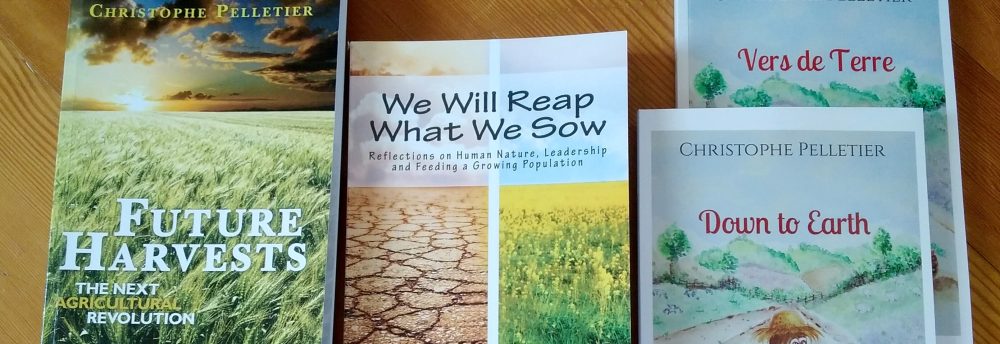
Here is where my self-description in the title of this post comes to life. I focus on the essential stuff, not just the “beauty” of technologies and innovations. In 2015, I wrote a post on this blog about why technology is much more that just the technical part. My second book, We Will Reap What We Sow, focuses specifically on human nature and how it can influence how our future will look like. I always take the human dimension in my analysis, simply because if people don’t buy the story, it does not happen. They don’t adopt the technology, don’t see the point of changing the ways of the present, and the system stays the same in its main lines. Same thing with the money. If there is no financial advantage, they do not adopt the new technology. This is particularly important when it comes to business-to-business. I like to categorize technologies into two groups: tools and gadgets. In a business-to-business environment, tech has to be a tool, meaning the tool user must have an advantage in using the technology. It either saves time or saves money, and ideally both. If not, even the most wonderful utopian tool in the world will end in the “museum of great ideas that never succeeded”. Next to the tools, there are the gadgets. Those are different. It is not as much about savings as it is about emotional aspects. Money is less important. From what I just described, to me agtech are tools. Foodtech could be tools, but most are really gadgets, especially when it comes to consumer products. Many novel foods do not come close to have the same nutritional qualities as the existing category of foods that they aim to replace. And then, they are surprised that the hype is short-lived, because there is a little something that tech people overlook: consumers are not completely stupid and the large majority can tell when they see nonsense.
I guess you might tell me that I am wrong when I say that tech people neglect the financial side. Well, yes and no. There are two groups involved in tech.
One group consists of let’s say the tech geeks who want to build a business. They are totally focused on the technical aspects. They neglect the human side of the business and overlook the need to get to profitability. Often, they have about zero understanding of business management and of marketing. They assume that because they develop something that looks great in their eyes, it should succeed. Unfortunately, not everyone looks at things through the same lens. Further, they tend to not think beyond their little bubble and have no idea of what possible problems they might create, but that’s the tech modus operandi: “Promise anything to get funding, think of consequences later”.
The other group consists of the investors. Those are really focused on the money. Their understanding of technology varies greatly, which is why they sometimes invest in total dogs. The weakness of the investing community is that they love money so much, they expect high and fast return. Food and especially agriculture do not show that kind of dynamics. Usually, it is a long slow process and the returns are often modest. Of course, there are sometimes lucrative niches but they are rare and once the niche is full, the potential for further growth is rather limited, and they get stuck. I guess the investing community must have come to that realization, as the level of investments in agtech and foodtech is dropping, as showed in these graphs I found on Agfunder. They speak for themselves. And it is not just agtech and food tech. Wall Street has started ditching ESG investments, too. Obviously, utopians don’t generate value, and the real world eventually focuses on the essential stuff.
Of course, raising interest rates play a role, as suddenly free money is no longer available.
Yes, utopia is still a long way away, but that is the very nature of utopia. Cute fairy tales populated with unicorns (as you probably know, a term used for successful start-ups) are nice but they are just that: fairy tales. Saying the you believe that technology is going to solve all the problems does not necessarily make it so. Beliefs and reality are two very different things. To me, the techno-utopian discourse sounds too much like what sect members very diligently like to tell around without exerting hardly any critical thinking. Realistic aspects seem to be optional in this approach. Many see themselves as evangelists (see the connection with pseudo-religion now?). It is so lame, it is actually ineffective, except for the select few (“the sect leaders”) who fill their bank accounts by using the gullible and the naive who relay their message. But that’s what the influencer concept is all about, and it works. In a way, I see techno-utopians as followers, and techno-realists as precursors. In psychology, it is known that two basic needs of human beings are attachment and authenticity, and these two needs tend to go against each other. The balance between the two is difficult to find and failing to do so has psychological consequences. Followers give the preference to attachment . Precursors choose for authenticity and attachment comes from the authentic self. I can find myself in this description.
Understand me well, I like making money. In my professional life, I have turned around business operations in six countries, so you can trust me for being financially quite sharp. I also know that it did not happen by telly cute fairy tales or wishful thinking. It happened with stark business realism.
The techno-realist in me is totally insensitive to fairy tales and hypes of all sorts. I guess I still have that hard-facts no-nonsense part of me inside, but paired with my sense for human nature and financial rigor, I used both my cerebral hemispheres, not just half. I can spot what has potential to work and what doesn’t. And I have in the past. Very quickly, I will list the most significant cases of where I did not share the utopian naivety here, and for which history proved me right.
Vertical farming. I always saw more potential for low-tech vertical farming. I have never been impressed with tech vertical farming for a few simple reasons. The fixed costs are so high, it can work only for specific niches with high-end restaurants for fancy greens. Problem is only a small share of consumers eat in high-end restaurants, and that the world can not be fed on arugula and basil only. There have been enough bankruptcies in the sector for me to rest my case.
Blockchain. I have never seen blockchain as taking over the way the tech world was trying to convince us. Frankly, the benefits were rather marginal, all the more so that many businesses still don’t have a clear idea of what traceability and transparency really mean for consumers, despite what they think. But the development of artificial intelligence could revert the situation by providing a much more dynamic and practical tool. AI can definitely boost the development of very useful super-ledgers.
Tech plant-based fake meat imitations. To me, everything has been wrong with that stuff since day 1, and probably even before. OK, I’ll admit the Silicon Valley billionaires have done excellent PR to create the hype, but as the saying goes “you can fool some of the people some of the time, but you cannot fool all the people all the time”, and as I said, consumers are not completely stupid. That has been one of the main mistakes, but I cannot think of anything that those companies may have done right. It has been such a demonstration of incompetence in all areas, I won’t comment any further. Substitutes for meat have potential, but the ones that succeed are mostly low-tech local businesses run by humble people, and that makes a world of difference.
Lab meat. Although I have always considered it can have some potential for certain applications, I still don’t think it will be near the kind of volumes they think and I have always doubted their timelines. When I was writing my first book, Future Harvests, in 2009, I had a conversation with some of the Dutch pioneers. By then, I was told that lab burgers would hit the store shelves in five years. We are now 15 years later and not any noticeable volume of lab burger in sight in the stores. Recently, I heard the claim that it will be in the stores in 10 years from now. I’ll be waiting to see. Further, still the same story about the cost reduction coming soon. It is always “soon”. “Soon” is a euphemism for “no commitment on when” and for buying time and keeping on living on the investors’ money. And time passes by. I also love the term “parity”. What does it even mean? Parity with which product? If they want to price it at parity with meat, just have them do so. Change the price and see if it sells. Further, stories like Upside Foods and their chicken lab meat just contribute to undermine any credibility that is left. No wonder, the money does not flow all that much anymore in that category.
Although still in development, precision fermentation is another sector that creates some buzz. It is the current flavor of the month, taking over from plant-based and lab meat in the spotlight, as interest has faded in these two catgories. “Precision” sounds good, doesn’t it? Actually, the term is PR, something the lab/cell/cultured meat still has not been able to find, yet. As such, precision fermentation is not even particularly new. I find people in that sector rather frustrating. As everybody else who promotes alternative protein, they are obsessed with the claim to replace animal farming, and farming altogether. For starters, animal products are not just protein, they are so much more. Yet, even the animal farming sector prefers to reduce itself to protein, as they are terrified at the idea of having t talk about fat, while with the right choice of feed ingredients they could provide top notch essential fatty acids profiles in their products. The foodtech sector doesn’t even know what the production volumes of dairy, meats and eggs are. They have no clue of how much production capacity would be required to replace animal farming and how much it would cost to build. If they did, the fairy tales would collapse in no time. Considering the level of funding they already need for rather minor volumes, they are in for a surprise. Other source of frustration for me is that I never get straight answer to simple questions, such as “are you profitable?”, “what is your cost compared with the animal product you claim to replace” how much can you produce per year with your current production unit?” Sorry but “several thousands of tonnes” is not an answer. Is it 3,000 tons or is it 30,000 tons? I don’t know. Apparently, neither do they. Perhaps, I have not met the right people. About the claim tech proteins require hardly any land, they finally very reluctantly admit that to feed the microorganisms, they need sugar and lots of it, and just as reluctantly they finally admit that it is not all that sustainable. Yep, that sugar has to come from intensive specialized agriculture. ironical, isn’t it? Anyway, I’ll give them the benefit of the doubt, but it does not sound all that utopian after all. One problem they will face is the fact that they produce only molecules. For liquid products such as milk or eggs, the challenge is easier. There is no particular need to texture the protein. Nonetheless, albumin is not egg. You have to add the yoke. Using an old cooking test with a New York City fancy 3-star Michelin restaurant as a reference is not the best way to appeal to the overwhelming majority of the population who can’t afford to go in such a restaurant. Limiting themselves to albumin and telling there is cholesterol in the yoke as a reason why people should eat only egg white is not going to work with consumers. Try to live without any cholesterol at all and then let me know how that worked out! Once again, consumers are not stupid and they know if the novelty is comparable with the original thing or not. Same thing with milk proteins (casein, beta-lactoglobulin and lactoferrin). They are not milk. Milk contains and provides many other nutrients. Those who claim eggs and milk will be replaced are just following the same path as the plant-based meat imitations. That said, I see a lot more potential for these molecules as ingredients. Nothing new here. It has already been happening in dairy and with egg products for quite some time. There is also good potential, from a profitability point of view, in the sectors of health and wellness. Those are more niche markets but with good volumes and good prices. But trying to go after low price commodities like eggs in the shell and generic milk and cheese, will prove much more challenging. There is probably also some serious potential as a source of protein for animal feed, especially with an eye on essential amino acids profiles. Also, I see some possibilities in the fish feed sector. That’s the irony of protein alternatives. They have more chances of success in the animal feed sector to produce animal products, and that is fine. Every shift is useful.
Insects. That’s another development for which I saw much better prospects as animal feed ingredient than for human consumption, especially in Western countries. Anyway, I wrote about that on this blog years ago.
GMO herbicides and weed resistance. I was describing 15 years ago in Future Harvests, that mono-usage of the likes of Roundup Ready GMOs were going to end with massive issues of weed resistance. That’s exactly what happened. Anyone with basics in biology and understanding of how organisms mutate and adapt to their environment could have figured out that one. If you want to follow the matter, just check what the same groups of people who produced that mess are now working on in the area of biological herbicides with all the (should I say utopian) promises that goes with the need for funding. I don’t expect a smooth process.
So, as you can see a bit of a long story, why techno-utopian may sound nice but it works as long as it is talk. Although imagining new options and alternative is absolutely necessary, it is even more necessary to give it a serious reality check in the real world. That’s why I will never stop at imagining a future, I want to confront it with realism because that is where the action really is. Recently, I posted a video on my YouTube channel in which I answer questions about technology from viewers. The three questions are:
whether technology the solution for the future
which technologies will solve our problems
if I agree with the people who say that food tech is a distraction that does not solve any problem
Copyright 2024 – Christophe Pelletier – The Food Futurist – The Happy Future Group Consulting Ltd.
It is just a month away from the 15th anniversary of The Food Futurist. In the course of these years, it has become increasingly clear to me that some areas need more attention and effective action for the food and agriculture sector to remain successful. Indeed, the future of food and agriculture is not just about what cute robots will do in the future and what funky foods scientists will figure out. It is much broader than that. It is about making the right things happen. In the end, it is not just about producing foods, but it is to produce them in ways that have a future, and also to sell them to increasingly critical and discerning consumers. This milestone anniversary seems like just the perfect opportunity for me to reflect and reshuffle my services to some extent. By doing this exercise, I have decided to introduce two new areas of services by May 1st 2024. These are areas where many organizations miss opportunities. These are also two areas in which I am quite qualified, for having delivered strong performance in my professional career.
The first one is centered on Regaining Trust
It is no secret that trust is eroding in many areas. It happens with politics, with traditional media and even with some social media outlets, and it happens with food producers, especially the larger companies. One of the challenges that many food and agriculture organizations have been facing for decades is the loss of trust from consumers. The reasons why are many. Some are justified and some are not. Regardless of that, the loss of trust is a challenge that is becoming more and more difficult to overcome. In my career, I have had to deal with this problem in many occasions, but I always found ways of breaking the vicious circle of mistrust. In my opinion, the difficulty for organizations is not so much that people distrust some food producers, as it is to find the right way of addressing the issue and of truly creating a connection for a further conversation. PR does not work all that much anymore, simply because about everyone knows how it sounds and spot the communication exercise in action, which further erodes trust. Also, the timing is too often wrong and it makes the connection much more difficult. As a practitioner of martial arts for many years, I also see attempts to regain trust much more as an exercise in strength as one in flexibility and agility, and that is usually a losing tactic.
As a teaser, here are the pillars that we will use to build the tailor-made programs. You need to Relate
R: Respect
E: Empathy
L: Listening
A: Authenticity
T: Truth/Transparency
E: Exchange
Trust is essential for an organization in order to have a solid future. In this respect, I believe that it fits very well with the activities of The Food Futurist.
The second area of service will be Second Opinion
From what I have seen during my professional life, I believe that this is the kind of service that most organizations need. The number of strategic errors or implementation planning missteps that happen every day is there to prove that getting a second opinion is not a luxury, but in fact can prevent many costly mistakes.
Sometimes, it is about getting things done in some rush to meet a deadline. Sometimes it is about an excess of optimism and self-confidence. Sometimes it is the lack of a new eye. You name it. There are many reasons why an organization overlooks some details, or is becoming somehow blind out of habit, or is too eager to jump an anything that looks like a trend out of fear of missing out. An independent and objective second opinion can save many headaches.
I see this service quite useful for established businesses, but also for young companies, and also for investors who might benefit from a second opinion before risking their money in the wrong concept.
This service, too, deals with the future and as such fits quite well with the activities of The Food Futurist. The format and scope of this service will be adaptable and tailor-made for the specific needs of the client.
Copyright 2024 – Christophe Pelletier – The Food Futurist – The Happy Future Group Consulting Ltd.
Listen here to a Chrome AI-generated podcast type playback of the original article
Over the years, there has been no shortage of publications and conferences about the theme of “changing the food system(s)”. Yes, like everything else, nothing is carved in stone and ongoing evolution is a part of life. Yet, it is obvious that change is slow and there are many reasons for it. Well, there is one main reason actually: the economics of food production. Money is always what makes or breaks change. In previous posts on this blog, I mentioned the importance of economics many times, and in particular the need to change the economics if we want to succeed with change. To change the economics, we must look at externalities. For those who follow my blog, you know that externalities is one of my recurring topics, simply because we cannot ignore them. We cannot ignore them because of their very nature, which is about identifying the long-term effects -positive and negative- of our activities. If in doubt, the reason for the demand to change food systems is obvious: it is about the negative long-term impact of food production on the very conditions that affect food production and our future ability to do so. Nobody argues that we must have sustainable production systems. The difficulty is to agree on what is sustainable and what is not. One of the main causes of the disagreement is that many people seem to confuse efficiency and intensification. I posted a video on my YouTube channel some time ago, in which I explain the between those two terms and why it is so important not to confuse them, because otherwise we end up with all sorts of misconceptions and keep disagreeing because we do not use the same definition. I encourage you to look at the video.
As I explain, it is all about finding the optimum point from an environmental point of view. Environment is not the only aspect to consider, though. The optimum also needs to match technical goals, especially meeting food production volumes. It must be optimal from an economic point of view, too. If the products become too expensive, consumers don’t buy, and if they are too costly to produce, farmers and food manufacturers will stop producing. Everything is possible but everything has a cost. Once, when I was working in the poultry industry, I had a customer who asked me for a product specification change. He wanted us to trim chicken fillets in rather drastic manner. As the conversation went on, I had told him just that: everything is possible. I added that we probably could even cut the breast fillets in star-shaped bits if he wanted to. I just added that it all came down to a matter of whether he would be willing to pay for the additional costs. Actually, it was a friendly conversation, as we had known each other long enough to trust each other. Yes, everything is possible. It just has a cost but is the customer willing to pay for it? That is an important part of the conversation about changing food systems. Is the consumer willing to pay the price for a more respectful product? Well, sometimes yes and sometimes no. And some consumers are willing to pay and others are not.
Really, externalities are essential. The additional costs for a better system are about internalizing the externalities. It is about pricing products the right price, not just from a money point of view but actually from a triple bottom line point of view. Further, externalities are not just about the unit that produces the final product. It is about the entire system. Too often, a link of the entire chain makes sustainability claims simply because it shifts the environmental and/or social problem to other links of the chain, but as a whole, the system has not really improved. The externalities -and the responsibilities- have moved in the chain but the problem remains. When this happens, the link claiming to be “sustainable” is just forgetting to look at the entire system. Of course, people with a bit of critical thinking will notice that the problem has not been eliminated but just simply shifted. That is when the accusations of greenwashing arise, and rightly so. One link of the chain looks cleaner and probably think it is all shiny, but the entire chain is just as dirty as before.
But the greenwashing issue is not just a matter of producers and industries. Governments do that, too. Often, governments try to internalize externalities with subsidies and taxes but it is often simplistic and just focused only one element of the entire system. They make the same mistake. Let’s face it, it is often the result of political calculations and trying to offer good optics, but it is often short-sighted, nonetheless.
Another problem with externalities is that they are extremely difficult to calculate with accuracy. Just to illustrate what I mean just take a look of diagrams that the food system specialists like to produce. They are very complex, and rightly so because the system includes many dimensions and aspects. Here is one I have found on Dalhousie University website. This one is relatively easy on the eyes. Some others can be quite a bit less readable.
Those who produce such diagrams of food systems should calculate the externalities for all the lines and arrows they put in the charts otherwise the chart is just some intellectual exercise that will not produce much progress, and they tend to be rather useless as long as no economic aspect is included. Without the externalities of the existing system that we wish to replace and those of the new alternatives, we are stuck into rather unproductive dynamics.
For how much industry and governments approach systems and how to replace them in often incomplete manner, NGOs and activists make the same mistake. Wishing to see something disappear and be replaced but something more appealing is not enough. Actually, it is more in the realm of wishful thinking, which is why progress is so slow and encounters so much resistance. About activists, I often say that they are quite good at identifying problems, but quite a lot less so at finding workable and viable solutions. Opposite to that, industry is really good at finding solutions despite lacking the proactive attitude to recognize and acknowledge issues on time. They tend to make work of it only when severely challenged by the activists. It is pretty easy to see where the synergies are, don’t you think? A piece of advice that I have given n a number of occasions has been: “Talk with people you don’t like! That’s the only solution”.
Trying to change the food systems also faces a more general hurdle, which is the entire economic system. The entire economy is built around growth. As such, there is nothing wrong with growth, as long as it is “good” growth. In previous posts of this blog, I have mentioned the need to shift from quantitative growth to qualitative growth.
Just let me illustrate this with simple examples. A common joke about the GDP, which is our indicator of growth, is that if we decide to take rocks and smash all the windows, the window industry will get a huge boost as everybody would ask for new windows, but in the end from a quality of the society point of view, we would not create any improvement. We would be back to where we were, nothing more. On the other end, thanks to the window industry boom, the GDP would show a nice jump. It would be quantitative growth but there would not be qualitative growth.
Now, let’s imagine than instead of enticing people to always eat more of everything, and in particular of poor-quality foods, we would make sure that they eat really good food and have really good diets, the impact would be noticeable. There would be a lot less diabetes, obesity, cardiovascular diseases and other forms of morbidity caused by bad diets and bad foods. Quantitative growth would probably suffer, but qualitative growth would be impressive. The externalities would shift from negative to positive ones. For one, the costs for health care would decrease significantly and since there would be fewer sick people, all the other medical procedures could be carried out faster and thus also affect people’s health positively. I know some will tell me that this would affect the pharmaceutical industry negatively. True, although it also would mean that they could refocus they activities on other more difficult diseases to tackle and also grow as they would expand in other medical areas. Anyway, I hope that you get my drift about the difference between quantitative and qualitative growth. On a personal note, I really think it would be much better to help people eat just to meet their actual nutritional needs, therefore eat less but eat better. Their health would be better. There would be less food waste as there would less of it stored as unnecessary and useless excess body fat. Food producers would have to change the way to remunerate themselves differently, which is what I also mean with changing the economics. Quality focuses more on margin and less on volume.
In the end, we can create our own problems or we can create the solutions. Let’s think quick because time is running out.
Copyright 2024 – Christophe Pelletier – The Food Futurist – The Happy Future Group Consulting Ltd.
It was something that I have had on my mind for some time but I will admit I have been guilty of procrastination. In the past, I had placed some videos on a YouTube channel but I had not pursued that avenue. These videos are actually still there and you can find them in different areas of this website. Since I have no recollection of how to access that old account and I have not been able to retrieve the necessary information, I have just decided to create a new one, called -you’ll never guess- “The Food Futurist”.
My purpose with this channel is to post short videos, of three to five minutes maximum, in which I will share my thoughts on whichever topic I will find useful. Of course, if anyone of you wishes me to address one particular subject, I will be happy to listen to your requests. My goal is primarily to provoke some thoughts from the viewers and have them reflect on some issues. It is meant to be entertaining, and hopefully informative as well. I am not interested in playing influencer.
You might wonder why am I doing this? I have several reasons:
I do keynote presentations on a regular basis. Therefore, a large part of my professional activities is about speaking. Sharing videos are just a logical step.
More and more, people prefer watching videos rather than reading. Perhaps, this is because watching is more convenient and requires less effort. Anyway, once again, videos are a logical step.
From my end, making short videos off the cuff requires less time for me than elaborating a written article. Also, since I am still in the process of writing the book on value marketing that I mentioned in a previous post, I can use a different form of communication with you.
Having my own channel will allow me to share my thoughts in a direct and (almost) uncut manner. It is more authentic and genuine. I have been regularly interviewed by media outlets since the beginning of this website (2009) and my works as “The Food Futurist”. I always found that exercise frustrating because the interviews last between half an hour and an hour but in the end, the journalists extract just a few sentences in their final articles. Then, most of what I said does not make it to their readers. The excerpts tend to miss context as they are isolated from the rest of what we discussed. Also, and perhaps the most frustrating is that usually the excerpts are not the most important and useful bits of what I told them. They are just the ones that resonate with the particular audience of that media outlet, and the interview ends up producing just a few catchy or trendy statements. At least with my own channel, I control the content, from producer to consumer.
Copyright 2023 – Christophe Pelletier – The Food Futurist – The Happy Future Group Consulting Ltd.
Listen here to a Chrome AI-generated podcast type playback of the original article
Although the topic is on everyone’s mind lately, I have been presenting my views on artificial intelligence at conferences for more than a decade, long before it became trendy. I developed my logo with AI, and I use AI tools in my work as well, so it is not that huge of a deal to me. I was not really planning on writing a post about it because:
1) there are already so many of them around;
2) I have done presentations including the subject for many of my clients for many years and I even mentioned it in one of my poems about technologies from Down to Earth, my poetry book that I published in 2021;
3) it is just not me to jump in and follow the herd just for the sake of getting some attention.
It is just that I read a recent article, which triggered me to change my mind and get at the keyboard.
The article was about the result of research carried out by Harvard Business School, Reskilling in the Age of AI. The part that I found quite interesting was that according to this research, artificial intelligence was to reduce the gap between mediocre consultants and the “elite” consultants. The mediocre ones saw a performance boost of 43% thanks to AI, while the performance increase for the top consultants was much more modest. My spontaneous reaction was to conclude that businesses should either work only with top quality consultants or just eliminate the middleman when it is one of the mediocre ones and just make the switch to AI themselves, which is kind of what I hinted at in the one of my answers when I set up my FAQ section many years ago.
Another anecdote that shapes my views on AI and digitalization is what happens if there is a slight mistake in an online order. If the system does not recognize something in the information submitted, then we are dealing with artificial stubbornness, which is second to none, not even the “natural” one. I am sure many of you have experienced the frustration of dealing with an automatized package tracking system, and the agony of finding a real person who might be able to fix the problem.
Let’s face it, AI is still in its infancy and there is a whole world to open up in the future. As an illustration, I post in this article two slides taken from some of my presentations, which were not about AI as such, but in which I indicated in what respect the current automation in food and agriculture differs so much from the previous mechanization from the 20th century and earlier. The “old” automation was basically to replace human -and animal- labour and allow one person to perform physical tasks that had required much more individuals before. Mechanization was really all about adding “muscle” to the farmer and the worker, and sometimes to replace them, too.
The 21st century automation, although still adds muscle, is much more about adding a nervous system. Satellites, sensors of all sorts, management software, robotics, driverless vehicles and the many new technologies, when combined, actually mimic the nervous system as we know it. There are limbs, contact organs, senses and nerves that transport and transmit information that the brain (the intelligence centre) will process and send instructions back to the entire system to take action in the field, in the factory, in the logistics or in the store or restaurant. As the flow of data is essential for effective performance, it is clear that the synapses are of the utmost importance for this artificial nervous system. This why all the new technologies must be looked at from a system point of view and how they interact with one another. Developing technologies independently is a mistake, as it will miss many points.
So, we are building a nervous system, and since it is in its infancy, the way forward is really to treat it as an infant and follow the same process and the same steps that are required to develop a new human being and bring it up into a well-functioning grown-up. First, it is important to develop its cognitive abilities by exposing it to many experiences as possible, under serious supervision, of course. This will help the development of the right connections and the right amount in the nervous system. That is essential for AI to be able to function and deal with new and unknown situations and problems that need to be solved. When I was a student, one of my teachers had defined intelligence as the ability to cope and overcome situations never met before. I like that definition. As the “subject” develops further, it will need to learn more and more and, of course, the way to learn is to get a solid education, which means gathering knowledge, understanding how the knowledge connects together, and to be able to exercise critical thinking, therefore discerning what are true facts from what is raving nonsense. The learning process must be built on serious sources and there, too, serious supervision is needed. Just like with education, the system needs to be tested for progress and when difficulties arise, there must be proper monitoring and tutoring to help the “student” achieve success. The “subject” is still young and can still be subject to bad influences that might undermine its ability to identify the correct information and reject the nonsense, and thus perform properly. Really, developing AI looks a lot like raising a child all the way into adulthood.
The user also must take proper action to adapt and grow together with the nervous system. The artificial brain may be much faster at processing data that a human brain but humans using AI must be able to assess whether the outcome of the data processing makes sense or not. We must be able to spot if something in the functioning of the system is wrong, should that happen, in order to stop it from causing further errors and damage. If you use ChatGPT, to name a popular AI system, to write an essay and you do not proofread it for errors, both in content and form, then you expose yourself to possible unpleasant consequences. Automation and AI are to do work with us, not instead of us. Our roles will change, but just as it was not acceptable before, laziness (OK, let’s call it complacency) cannot be acceptable in the future, either.
Of course, like with any innovation, we must make a clear distinction between tool and gadget. So, what is the difference between the two? A tool performs a task, which has a clearly define objective and a clearly defined result. It must be effective and efficient. A gadget is just for fun and distraction. Tools evolve to get more useful. Gadgets do not, and disappear when another gadget that is more entertaining comes along.
Earlier, I was pinpointing the need to discern good sources of knowledge and information from nonsense. The saying “you are what you eat” is actually rather appropriate when it comes to AI in its current form. Indeed, the data AI is fed on will strongly influence what it produces.
In the food and agriculture production, supply and distribution chain, using AI should normally use reliable data, as the data should originate from a well-known and reliable source. Although the data can be quite voluminous, it is limited to these reliable sources, often the data of the producers themselves. Therefore, and as a tool, AI will be quite useful to tackle all the challenges that the sector is facing now and for the future. If the AI system that you use picks its data and information from an uncontrolled source, like the internet, you must realize that unless it has very solid safeguards to discriminate between truth and falsehoods, it will end up compiling the good, the bad and the ugly and thus further spread poison. Therefore, close scrutiny and monitoring is of the highest importance.
Further, here is a video on the subject that I posted on my YouTube Channel:
Copyright 2023 – Christophe Pelletier – The Food Futurist – The Happy Future Group Consulting Ltd.
The idea of writing a book about marketing in food and agriculture has been on my mind for quite a while. Yet, I have been struggling with the style I wanted to use. I started writing several times over, as could not find the right tone. I would not want to write “just another” marketing book. There are already hundreds of thousands of them, if not even possibly millions. Especially, I did not want to write a theoretical and abstract book. From my experience, that is the main weakness of so many of them. I now have finally found the tone and style that I believe will be the most effective. I have tested it in several of my recent assignments and the feedback I receive tells me that I have now found the right path. It will be straight-forward and plain language. There will be as few complicated terms as possible, perhaps even a book without four or five syllable words.
The project also comes from my past experiences with the topic. How many times have I been told that price is not really that important, while my experience has always been that price always comes in the discussion and plays a major role in the customer’s decision to buy or not? Price is important! Of course, it is! Saying otherwise is simply delusional. But the price is always brought in relation with what the perceived value of the product is. And this Is why the book will be built around the idea of value, of what that word means, how flexible and fluid it is, how it relates for what the customer wants and/or needs, and what added value is really about.
And since the book will deal with value, I will go one step further and address values, too, because the perceived value finds its roots in the set of values of the customer, and also because sharing common or similar values significantly increases the chances of making the sale.
My area of expertise, for as much as I have one, is food and agriculture. Therefore, the book will focus on these business areas. Perhaps, it could be extrapolated to all sectors just as easily, but I will not be as presumptuous as to think it can. Marketing food and agricultural products is a specific exercise, as this category has its very own idiosyncrasies. The readers -and the future- will determine if extrapolating to other sectors is a possibility. I am quite comfortable in food and agriculture and my niche is there. I do not have a need to overreach but, just as everything else I do, I will do what I do best where I do it best, at least to start.
In my work, I regularly meet with food producers who are always looking for better business and for ways to strengthen their future. They all ask me the same question: “Is there a market for this product?” That is why the book will have a clear practical angle (I wish to strongly insist on that aspect) aimed at food producers who want to sell in better markets and find better customers.
The theory on marketing will be limited to a strict minimum. Emphasis will be on avenues that will help the reader develop and implement an original new sales and business strategy, in particular how to close the deal with the customer.
I have already identified more than 30 topics to cover in this book. I have made some good progress but the road ahead is still long. I will keep you posted in the future as I will come closer to completion and reach some important milestones towards its final publication.
Copyright 2023 – Christophe Pelletier – The Food Futurist – The Happy Future Group Consulting Ltd.
Although I never really had made a specific logo for The Food Futurist, it seemed that the time had come for something that illustrates what I do and who I am in this occupation. I used some help from an artificial intelligence design program. It took many trials before I found this logo, which made me click.
So, here I proudly present you the new logo!
What does the logo show, you might ask? Several important aspects, actually:
From all the feedback I have received in the course of my life, it would appear that I have a brain that works rather well, fast and rationally.
It also appears that I have an unusual and amazing ability to connect the dots quickly and accurately.
It is simple and straightforward, as I am.
Thanks to the above, I set clear, realistic and workable visions of the future and I always look forward and challenge traditional thinking and opinions.
The logo emphasizes my “sixth sense” for foresight and the colors reinforce confidence as your trusted futurist, Advisor and strategist”.
Further, developing this logo made me think about the style and the content that I want to offer in the future and I believe that it will appear clearly rather soon. As the slogan mentions, I have devoted myself to the future of food and agriculture since 2009. Not only am I very proud of the products and services that I have provided during this period, I am also very proud of their lasting relevance, in particular of my books and blog. I am looking forward to keep delivering this same quality in the years to come.
You will find me in the real, the solid and the useful, not in the fantasies, the path of least resistance or the hype.
Looking forward to the future!
Yours truly, your humble servant.
Copyright 2021 – Christophe Pelletier – The Happy Future Group Consulting Ltd.