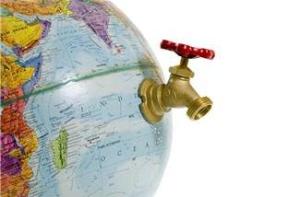
Consumers shape food production systems

Although it is tempting to think that food production systems are created by agribusiness, they depend greatly on the choices and the attitude of consumers and society. For humans, food is not just about nutrition, but it is loaded with a high emotional content.

Consumer choices are highly irrational. To demonstrate this, here are some examples.

When the mad cow disease, or BSE, hit the UK in 1996, beef consumption dropped, but the behavior of consumers was odd. A leading retailer put British beef on sale at 50% off the normal price. They had their best weekend sales ever by then. When asked why they had bought beef, while there were concerns about health risks, some consumers gave answers such as “At that price it is worth taking the risk” or, even better, “ I will freeze it and eat it once the mad cow crisis is over”! At the same time, customers’ visits to the leading fast food chain drop sharply and beef burgers were not in demand, although their beef was from the Netherlands, a country free of BSE by then.

In Europe, mostly in France, consumers used to demand veal to be white. Not slightly pink, just plain white. To achieve this, calves were fed a milk powder diet, which kept them anemic. Yet, at some point, consumers denounced this technique as being against proper treatment of animals. The demand of white meat with a normal diet could not be reconciled. It took years before consumers finally understood that veal was supposed to be pink.

For most customers, white eggs are perceived as being from intensive cage production, while brown eggs are perceived as being more “natural”. Everyone with knowledge of the industry knows that the color of the shell has nothing to do with the nutritional quality of the egg. The belief that the egg color indicates a difference persists, though.

Some blind tests carried out between “industrial” and free-range chicken meat carried out in the Netherlands in the 1980s showed interesting results. When consumers were not told which was which, they could not clearly taste a difference, while when they knew which meat was from which production system, they overwhelmingly gave the preference to the free-range chicken.

Here, in Vancouver, there is a strong trend towards organic foods produced locally. Farmers markets flourish and the environmentally conscious consumers choose to buy their “natural” food on these markets. Ironically, many of them drive in their gas-guzzling SUVs to go there. So much for caring for the environment.

Who, with a rational mind, would choose to eat junk? Yet, junk food is quite a popular item in North America, and it has been a growing trend in many European and emerging countries as well.

In the case of tobacco, not a food, but an agricultural product nonetheless, the warning on the package is quite clear. Yet, some people decide to smoke.

The list could continue and I am sure that everyone has more examples of irrational behavior. Consumer demand (both the rational kind as the irrational one) determines what farmers and food companies produce and sell. In this regard, consumers also share a responsibility in what is produced, how it is produced, where it is produced and how it is distributed to them. Blaming retail or the agribusiness alone for the kind food systems that are in place is unfair.

Of course, it would be interesting to imagine what people would eat if they were rational, and what impact on our food production this would have. A rational diet would follow proper nutritional recommendation, and to this extent would follow the same principles as those used in animal nutrition. However, this would not have to be as boring a diet as what animals are fed. A rational diet does not need to be a ration. After, the human genius that is cooking would help prepare delicious rational meals. It would be like having the best of both worlds. The emotional, social and hedonistic functions of food would remain. The key would be about balance and moderation. If people were eating rationally, there would not be any diet-related illnesses. There would not be obesity. There also would be a lot less food waste. This would improve the level of sustainability of agriculture.

Will consumers become more rational in the future? I do not think so, but I believe that they will become better informed and more critical over time. Especially with the rise of social media, information circulates much faster and trends can gather momentum faster than in the past. More programs for healthier eating are currently running and action is taking place at many levels. In particular, schools are a place where much can be achieved. One can wonder how long the “lunch money and self-service system” will last. Having schools placing vending machines selling items that are highly unbalanced foods and leaving the decision over to kids to decide what they want to eat was of course a disaster waiting to happen. I cannot believe that anyone would expect kids to consciously making the choice of spending their lunch money on broccoli and mineral water. Kids will choose what they like best, not what is best for their health. They need adults for guidance.

Attitude towards food is changing all over the world. Currently, I can see two major trends growing. One is taking place in North America and the other is happening in emerging countries.

In North America, consumers are waking up and starting to question the way their food is produced. This is a major change compared with their attitude until a few years ago. When I moved to this part of the world in 1999, I was amazed by how easy consumers, and retailers, were for the food industry. Consumers simply seemed to consume without trying to know about production methods. Hormones, antibiotics or GMOs (genetically modified organisms) seemed to be accepted. This was a sharp contrast with what I had known in Europe, where all of the above was meeting strong resistance from consumers and retailers. What I currently see happening currently in North America reminds me strongly of what I had seen happen in Europe 20 to 30 years ago. The similarities are almost disturbing. Consumers are losing trust in government agencies, and retailers seem to be the ones to champion food quality, traceability and production methods. This will have much more profound consequences in the way food is produced in the USA and in Canada than the agribusiness seem to realize, or is willing to admit. The population is aging, the generations are changing and the values about food are shifting. The current opposition is not a short-term fad. Consumers will make different choices. Some food producers see that and are already adapting, but many producers still seem to think that opposition will pass. I believe that they are in for a surprise. The expressed plan of Wal-Mart to buy more from small and mid-size farms, to reduce waste, and to develop sustainable sources of agricultural products is a very clear signal that business is changing!

In emerging countries, consumers are changing their eating habits, too, but for a different reason. They now have better wages and more disposable income. The previous “”subsistence” diet made of mostly grain, such as rice, wheat or corn, are now including more animal protein, as well as fruit and vegetables. In these countries, consumers are not overly critical of their food production and distribution systems, but issues that arose in developed countries affect the way food is produced, especially in the area of food safety. These consumers probably would like to experience the same level of food security and affordability of food as in the West over the past 5 decades, but the growing population, and the financial markets will temper this trend. Food prices will be firm at best and they are more likely to increase in the future on an ongoing basis.

There is no doubt in my mind that consumers and retailers are increasingly going to put the emphasis on sustainability, health, food safety and transparency. This may sometimes lead to conflicting objectives with the need to produce more food globally. This does not need to be a problem, but this is why the world needs strong leaders to show the way towards meeting both the objectives of better food and of more food.

Copyright 2010 – The Happy Future Group Consulting Ltd.

How to attract people to food production?

With the population increase, food production becomes an increasingly strategic activity. Yet, the food sector does not seem to have the appeal it deserves, and attracting new people appears to be a challenging task.

In countries where the percentage of the active population in agriculture is low, many young people simply have never had any exposure to food production. Their food knowledge is limited to their visits to the local supermarket. Since one can love only what one knows, this seriously restricts the number of potential candidates. In a previous article, “Who will be the farmers of the future?“, I had already asked the question of who would be the farmers of the future. To get the attention of the youth, the food sector needs to become more visible and more approachable. There is a need for more interaction between education and visits to farms and food processors. As I mentioned in “Nutrition basics should be taught in school”, such activities should be part of the normal curriculum. Understanding food is understanding Nature, and understanding Nature is understanding who we are. Food, together with water and air, is the one thing that we cannot live without. This should make clear beyond any doubt how important food production and food supply are for the future of our species.

To attract new people to the food sector, it is also quite important to tell what kind of jobs this sector has to offer. These jobs need to be not only interesting, but they also must offer the candidates the prospect of competitive income, long-term opportunities, and a perceived positive social status. Many students have no idea about the amazing diversity of jobs that agriculture (including aquaculture) and food production have to offer. This is what both the sector and the schools must communicate. Just to name a few and in no particular order, here are some of the possibilities: farming, processing, logistics, planning, sales, marketing, trade, operations, procurement, quality, customer service, IT, banking and finance, nutrition (both animal and human), agronomy, animal husbandry, genetics, microbiology, biochemistry, soil science, ecology, climatology, equipment, machinery, fertilizers, irrigation, consumer products, retail, research, education, plant protection, communication and PR, legal, management, knowledge transfer, innovation, politics, services, etc…  Now, you may breathe again!

All these types of activities offer possibilities for work that can be both local and international. These jobs can be indoor or outdoor occupations. Employers are both small and large businesses. Jobs are available in industries, in government agencies, in not-for-profit organizations. Agriculture and food are about life science, and life science is about life. Not many economic sectors can offer such a broad choice of professions.

This said, getting more students in the field of food production will require relentless communication about the present situation as well as about future perspectives. It is necessary for colleges and universities to envision the future. Educating students today must help making them operational for the challenges of the future. Education is nothing less than developing the human resources that will increase the prosperity, the stability and the dynamics of the society of tomorrow. Attracting new students goes further than just agriculture and food production at large. Within food production, every sector also competes to attract new people. Some healthy competition should benefit the whole food chain.

Clearly, there is a need to identify future trends, future challenges and future needs to produce better food and more food. This will require a practical approach. Identify future needs is not an intellectual exercise. It is about providing people with food on a daily basis for the years to come. Identifying future challenges is a team effort between education, research, farmers, businesses and governments. All must work together to create a more secure future. If we want to avoid suboptimal solutions, there cannot be walls between the links of the food production chain.

In my opinion, the most effective way to work towards developing the proper curriculum and attracting students for the jobs of the future is to have a market-driven approach. The question is not only what type of jobs will be needed, but also where will they be needed? To be effective in this process, it is necessary to develop a vision of the things to come for the coming 10 to 20 years, which is the purpose of The Food Futurist (see mission statement). In our fast-changing world, today already belongs to the past. Developing a curriculum on current issues will not prepare students properly for their professional lives, and neither will it serve society properly. Only by identifying what skills will be needed is it possible to offer the best job perspectives for future food professionals, and being able to overcome future challenges. And feeding 9 billion people by 2050 is quite an objective! Identifying the challenges of the future indicates where the best job opportunities are. The action plans to develop tomorrow’s curricula will depend greatly on geographic location. Clearly, India will face with very different demographic, environmental and economic situations than North America, Europe or Brazil will. However, when it comes to food, we will become even more globally interdependent than we are today. This offers many opportunities to train people for work abroad, too.

As my head teacher in Animal Production, the late Julien Coléou, taught us in the first lesson of our final year at the Institut National Agronomique Paris-Grignon: “To live is to learn, to create and to fight”. When it comes being prepared for the future, these three pillars of life all need to be on the curriculum.

Copyright 2010 – The Happy Future Group Consulting Ltd.

The importance of values in value chains

When it comes to looking for partnerships as part of a value chain, one area tends to be neglected. Usually, business people will develop their business plan properly, identify their market and their source of supplies, and make sure that the math is solid. Beyond the numbers, there is always the human factor that will play a role. Every company, therefore every partner in the chain has its own specific culture. This is important to realize, because when cultures, and values, do not match, the relationship will always bring some hardships at some point.

This is not a simple problem to solve, and usually, only few potential partners share your values. It is also important to realize that the word “values” does not necessarily imply good ethics and honesty. After all, hyenas move in packs. Sometimes, the partner that can help grow your business the fastest might not be the right one for the long-term, but it might be the best choice for now.

Depending on in which region of the world you do business, the sense of time, sometimes even of urgency, can vary a lot. For instance, North Americans tend to want to start business immediately, while the Japanese will take all the time they need to find out whom they do business with, and build enough of confidence in their potential partner before starting business. In the land of the rising sun, it can take several years before the first transaction takes place.

What are the risks of a mismatch of values? It can have serious consequences, depending on how much of your business is engaged with the “wrong” partner. It can range from dissatisfaction about the profitability of your business, constant disagreements and tensions with your business partner, to your being ripped off. One thing is sure: there will never be complete trust and loyalty when values are not aligned.

Several years ago, I developed a quantitative system to evaluate the value of a business partnership. It is rather simple in its design and very powerful in its implementation. It helps identify the strengths and the weakness of the business relationship, and it is an amazing to tool to use to address potentially damaging issues over time, and create clarity for future dealings. By realigning values, both business partners can develop a plan of action and look beyond the price negotiations alone.

Copyright 2010 – The Happy Future Group Consulting Ltd.

Regaining the consumer’s trust

I read many blogs, articles and opinions about food on a regular basis. Yesterday, I came across an interesting blog post on Meatingplace.com. Yvonne Vizzier Thaxton, an authority in the US poultry industry, wrote the article, titled “Consumer trust” after she found out about a survey carried out by the Center for Food Integrity. Basically, the survey concluded that as farms were growing in size, consumers started to wonder if they still had the same values, and although small farms still have the public opinion’s trust, large-scale farms are looked at with suspicion.

That article brought me to think about trust, how it works, and what to do to win it back once it has been lost.

Instead of trying to figure out which group of the population to influence, as the author suggests, I prefer to go back to the basics. If I stop trusting someone, what would he/she have to do to convince me that he/she is trustworthy again? The empathic exercise is a much better way to find out what might work or not. In my opinion, that is exactly what the food sector should do first, instead of pushing the same message without much success.

First, people stops trusting when they are disappointed, when they feel betrayed or when they feel unsafe. By finding out which one of the above caused the loss of trust, and what more specific reasons made the public change their minds, the food sector will already make huge progress.

The second thing to keep in mind is regaining trust is even much more difficult than winning it in the first place. The baggage will stay in the way for a long time. Therefore, a lot of patience is required. There will be no quick fix. A cute video clip, well-thought press releases will not be enough. Far from it. Trust is not something that can be forced, it must be earned. Trust is the result of consistent and positive behavior that benefits the other party.

Once people have lost trust, per definition, they do not believe anything they hear from the distrusted party. In fact, they will hardly listen. Therefore, words will have little impact, unless they go along with actions that confirm that the message is true. If the food industry does not want to change and hopes that communication will be enough to change the public’s mind, nothing will change. When you want someone to prove to you that he/she is reliable, you want to see tangible proof that something is changing in your favor. The most powerful communication tool that really works for regaining trust is the non-verbal communication. The distrusted one must sweat to win trust back. This does not take away that verbal communication must continue. It will keep the relationship alive, but it will not be the critical part for turning around the situation.

Here is just an example to illustrate this. The US meat and poultry sector has undergone many recall procedures about bacterial contamination over the years, and at this day, this problem seems to continue. The industry takes measures to solve the problem, because such recalls are very costly, but as long as there will not be an obvious change in food safety, and recalls keep on happening, consumers will keep doubting how their meat is produced.

Food suppliers have no other choice than to listen to the consumers. The customer is always king. The customer is always right, even when he/she is wrong. A lot of this is about perception. Here is an example of the above. Last June, Greenpeace came with a ranking of Canadian retailers about their seafood procurement, and in particular about their sustainability score on seafood. Costco scored poorly, and their first reaction was to dismiss Greenpeace’s assessment, by basically saying that they are professionals who know what they do, and that they do not really need advice from Greenpeace. Yet, a few weeks later, Costco reorganized its seafood assortment from 15 species back to seven sustainably produced seafood species. That is successful non-verbal communication.

Regaining the consumers’ trust will require transparency, integrity, honesty, a lot of patience and communication, and most of all action towards change that meet the market’s demand. This does not mean that all consumers wishes can be met. After all, life is a continuous negotiation. Food producers and the public need to meet somewhere halfway. Market-driven always trumps production-driven.

Copyright 2010 – The Happy Future Group Consulting Ltd.

Farming a better future by learning the lessons of the previous Green Revolution

After the facts, the Green Revolution of the 1960s has been criticized for having caused negative consequences on farmland. It is true that some intensive agricultural practices have brought serious damage to soils and water reserves, but it is also true that the actions taken have increase food production and they averted the risk of a devastating famine in India.

Today, humanity is facing another major challenge to meet agricultural production to meet the demand of an increasing population. The term “agricultural revolution” has come back in the news and this is a good opportunity to reflect on how to handle future actions.

This time, there is one major difference. With 9 billion people in sight by 2050, the consequences of our actions will have much more impact, negative as well as positive, depending on where we live. In 1950, there were “only” 2.5 billion people on Earth. Compared with today, one could argue that there was some margin for error by then. This margin for error is now gone. Therefore, it is necessary to think ahead and consider all the things that might go wrong. We must anticipate before we have to react.
What can we learn from the Green Revolution, then?

The first lesson is that when humans decide to put all their knowledge together and give themselves the means to succeed, good things happen. Food production increased and people were fed.

The second lesson is that our actions have consequences and that we need to be vigilant about what we do and how we do it.

Of course, it is always easy to criticize after the facts. Pinpointing the negative effects of the Green Revolution is only relevant to a point. Using the mistakes from then as an argument to not engage in further modernization and progress is at least as destructive as bad practices implemented without thinking. Not taking action to develop new practices, new techniques and new technologies –three very different concepts- comes down to giving up. This is not acceptable. This is not possible. To meet future food demand, farmers and all the players involved in food production will need to be innovative and daring. Being innovative and daring does not mean being reckless. We cannot accept this behavior, as the consequences could be too serious.

When looking back at the Green Revolution, the question is not so much “What did they do wrong?” as it is “Did they know something wrong would happen?”

We know today that heavy mechanization, intensive monoculture and use of chemicals caused soil erosion, loss of fertility and soil and water contamination. Is that something that the farmers and the agribusiness of that time realized was happening? Did they have a possibility to know it? Some might answer “No” and others will say “Yes, I told you so”. Could have things been done differently, and helped feeding the people while not damaging the farmland?

For the future, we need to asks ourselves similar questions and develop a plan that helps us 1) succeed, 2) limit risks and 3) have alternatives in the case problems come up.

To figure out what can go wrong, the best is to listen to the opponents of the practices, techniques and technologies considered to be used. In a very short time, it is possible to set up a whole list of potential problems. To do this, it is also important to keep an open mind, because the past has shown that often what actually goes wrong had been mentioned at some time in the debate, even it might have sounded irrelevant. “The Lorax”, the movie by Dr. Seuss gives a good representation of debate between industrialists and environmentalists. The question to answer is “What if the risks actually happen?” and to develop an extensive action plan to restore control on the situation as soon as possible. In food production, the control has to occur within a limited number of areas: soil fertility, water quality, climate (to some extent), weeds, pests, diseases, bacteria (including the good ones), insects (including the good ones), worms, all animals that live on and interact with “farmland” (on the land and in the oceans) and their habitat, genetic diversity, and ability to living organisms to reproduce.

Every time progress is made, there is a struggle between the enthusiastic and those who fear change. There is a tension between action and precaution. This is very human and normal. It is necessary to take the time to review the whole process thoroughly and accept that things do not change as fast, or not as slowly as some think they should. In the end, progress must help humanity improve and prosper, and not just on the short term.

The key is preparing ourselves, and as the saying goes: “The failure of preparation is the preparation of failure”.

Copyright 2010 – The Happy Future Group Consulting Ltd.

Insects on the menu

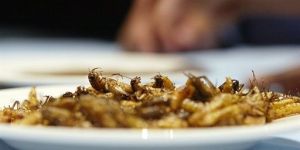
I came across a very interesting article from the French newspaper Le Monde, titled “Insects, the steak of the future”.

Photo: AFP/Mario Tama

The article reviews the potential of using insects as a food source to complement the traditional food production in order to meet the needs of the increasing world population.

Here are the main points.The nutritional quality of insects is high. They are a source of protein, fats, minerals (especially iron and zinc) and vitamins.

The production performance of insects out performs the one of traditional livestock, with a feed conversion ratio (number of kg of food to produce 1 kg of insect) ranging between 1 and 2.

There are already 1,400 species of insects consumed regularly in Africa, Asia and Latin America. Among the favorites, they name beetle larvae, ants, caterpillars, locusts, crickets, silkworm chrysalis, scorpions and spiders (although the two latter ones technically are not insects).

In most cases, insect consumption is the consequence of food shortage, but there is also a festive consumption of the bugs. The author mentions that in the old Roman Empire, caterpillars were a delicacy. Of course, in some Western countries, some restaurants offer insects at a premium price for a certain self-proclaimed sophisticated elite… After all, a lobster looks very much like a large aquatic bug.

However, trying to convince Western consumers to switch to insects and other bugs for their protein will be a tough call, especially when served in their original form. An possible alternative would be to process them into sausages and ground patties. There also could be the possibility to texture the protein in similar ways as it happens with soy.

Another interesting potential for insect is to use them as a raw material for animal feed. Bugs and worms can also be a good source of protein for poultry and pigs. After all, in nature, this was a regular part of their diet. Similarly, for many fish species, insects are a natural source of food. Currently, fish feed is made of increasingly expensive raw materials, such as fish meal, fish oil and vegetable oils, for which they compete with human consumption, or are used for feed destined to other farm animals.

There are talks about organizing the first congress on insect as a food source as early as 2012.

Copyright 2010 – The Happy Future Group Consulting Ltd.

Aquaculture: the solution to feed 9 billion people?

Last week, BioScience published an article based on the research of a group of researchers from the CSIC (Consejo Superior de Investigaciones Científicas), the Spanish High Council for Scientific Research.

They present their views on the potential of marine aquaculture to provide enough food for the growing world population. The authors of the report do not see fisheries as a significant option anymore, as the wild fish stocks are depleted, and the amount of time to replenish the stocks will be too long for fisheries to be able to meet the needs of the population. Aquaculture has gradually compensated the demand for fish that fisheries were not able to supply, and half of the seafood consumed today already originate from aquaculture. It is the fastest growing food supply activity and the projections for future growth are very strong. The researchers think that marine aquaculture could multiply its production by a factor 20 by 2050 and thus would play a major role in providing the world population with animal protein.

They bring up some interesting facts about agriculture and land animal farming. For instance, it takes 10 times more water per calorie to produce meat than it does to produce grains. Further, animal meat products represent only 3.5% of food production, but they consume 45% of the water used in agriculture. Considering demand for meat is expected to increase by 21% between 2005 and 2015, and will keep on increasing, this will only exacerbate this situation.

Another point that this group raises is the global nitrogen-use efficiency in animal productions. According to their sources, it is slightly more than 10% for land animals (5% for beef and 15% for pork), which makes their production a major source of nitrogen inputs to the environment. In contrast, marine animals have much greater nitrogen-use efficiency, at about 20% for shrimp and 30% for fish. Therefore, marine aquaculture culture releases two to three times less nitrogen to the environment than livestock production does.

From an environmental point of view, the idea of shifting the production of animal protein from the land where it uses scarce resources such as land and water, to the ocean where space and water are no limitations anymore sounds very sensible. From a nutritional point of view, replacing meat and dairy by seafood that is rich in healthy components such as omega-3 fatty acids is quite attractive, too.

They also notice that the land available for agriculture is shrinking, due to soil degradation and urbanism. Further, there is a growing scarcity of fresh water and increased competition for water as well. Therefore, activities on land do not offer the potential to grow all that much more food to feed the growing population. Even freshwater aquaculture faces these limitations. Freshwater aquaculture currently 57% of total aquaculture, therefore there is an untapped potential with marine aquaculture, as it does not use fresh water.

Of course, the main challenge to execute such a development of marine aquaculture production is to find the proper quality and quantity of feed. The researchers do not see the use of fishmeal and fish oil as an option anymore as they predict that the species used to make these products will not be able in sufficient quantities. Replacement by protein and oils from agriculture crops is an option for the short-term, but as aquaculture volumes would increase, the competition for these ingredients with meat production will make them too expensive, and for the reasons explained above, depending on land agriculture to feed marine species will face crop production limitations. Therefore, they prefer to envision a total new approach of aquaculture feeds, and recommend developing a new feed chain based on aquatic ingredients, such planktons, microalgae and seaweed. This approach makes sense, but the time lines to develop such a supply source and the cost of production of such an “aquatic” feed still need to be investigated. Several “seaweed farms” in production in China show interesting results and they seem to promise a strong potential of production for feed.

Another development that they expect is offshore aquaculture. Aquaculture operations located in coastal areas, although they are easier to access and generally in quieter waters, are very often located in zones where there are local issues to deal with, such as interaction with wild fish or recreational activities. Moving offshore can reduce these issues.

As you can see, developing the future of aquaculture is not simply a matter of growing fish in pens, but it requires a broader thinking that includes not only the oceans but agriculture on land, too. The future of food will require from us the ability to manage the whole planet!

Copyright 2010 – The Happy Future Group Consulting Ltd.

World meat consumption up by 21.3% between 2005 and 2015

According to research from GIRA, meat consumption will increase by 21.3% during the period 2005-2015. Two third of the increase will take place in China only!

Poultry and pork show the strongest increase.
Poultry will increase with 24 million tonnes to 105 million tonnes (+29.6%).
Pork will increase with 21 million tonnes to 125 million tonnes (+20.2%).
Beef will increase with 8 million tonnes to 70 million tonnes (+12.9).

Who will be the farmers of the future?

While most of the discussions about the future of agriculture and food tend to focus about how to feed 9 billion people, and about whether it should be organic or industrial, one question seems to be left aside, though it is a very important one: who will be the farmers.

If the forecast of the UN is correct and by 2050 when we are 9 billion, 70% of the people will live in cities, while today this number  is only 47%, this means that in fact the rural population will decrease by about 25% from the current numbers (2.7 billion vs. 3.6 billion today). This means that there will be a lot less farmers in the future.

Farmer of the futureSo, who will they be and where will they be?

A lot of the good agricultural land is in the Northern hemisphere, and in areas where not only the population numbers  are stagnating, but these are regions where the average age of the population is increasing from an already rather high level of about 50% of the population older than 37. These regions, North America, Western Europe and Eastern Europe are not likely the countries where we can expect a surge in urban population. This will happen mostly in Africa, Asia and Arab countries.

These Northern hemisphere countries already have large commercial farming structures and, unless they train many new farmers, the concentration trend is likely to continue, meaning even less farms, and larger farms than today.

In countries where the agriculture infrastructure is more fragmented and farms are smaller, which are the countries where the urban population is going to increase the most, there clearly is a need to rationalize production and increase yields to feed this new population that will have very little possibilities to grow food where they live. This means a “revolution” in the way agriculture will have to be organized and structured. Asia and South America have already engaged in this process for a few decades, yet depending on the countries they will face different challenges, mostly about access to water and ensuring the sustainability of their environment.

The continent where agriculture has stayed the most traditional is Africa, where a large share of the land is used for subsistence. Many African countries have struggled for years with poor policies and a lack of investment to help a proper development. This has resulted in lower yields over time. As such, this also means that Africa is the continent with the highest potential for improvement, although this would have to be managed very carefully, as climatic and socio-cultural conditions are very sensitive.

Therefore, we can conclude that in the future, not only will we have fewer farmers, meaning fewer farms, but also in the same time, we will need to increase production and train a new generation. All of this will require a fair amount of capital that many farmers alone cannot afford, especially considering how their income situation usually is.

This will be no surprise to see more capital coming from large corporations, investors and governments. This is already happening in Africa with the land purchases and leases, and we can expect his to happen. There is a huge (rather captive) market where demand probably is going to outpace supply, and there is a lot of capital waiting to enter markets where money can be made in trade activities.

Farmers wanted!

Copyright 2009 The Happy Future Consulting Group Ltd.

More action needed on food waste

Food waste is one of those topics that rarely make the headlines while the numbers that come out surveys are simply stunning.

40% of food production does not reach the plate

40% of food production does not reach the plate

Five years ago, the University of Arizona had published a report about the situation in the USA. Their estimate of food waste was almost that 50% of the food produced in the US never gets eaten. Although some losses are inevitable in the supply chain, their report estimated that 14% of the food bought but American households are thrown away, and even 15% of that amount is sent to garbage without even being opened. Not only, this is lost food that could have even eaten, but also the environmental impact of food waste is far from negligible. According to the University of Arizona research, cutting half of the food waste would reduce the environmental impact by 25%, because of reduced landfill use, soil depletion and application of fertilizers, pesticides and herbicides. Recent USDA studies indicate a level of 25% of food that never reaches a plate.

In the UK, research by the government’s waste reduction agency, WRAP, found that one third of all food bought in Britain is thrown away – of which half is edible! I read an amazing statement from Liz Goodwin, WRAP’s chief executive in a 2007 article from The Guardian: ‘If we stopped the amount [of food waste] that we could stop, it would be the same as taking one fifth of cars off the road.’  About a third of the food waste in the UK comes from households, food manufacturers account for about 20%, food service and restaurants for about 15%, and retailers just under 10%.

In Australia, it is estimated that food waste makes up half of that country’s landfill!

At the global level, estimates of food going wasted are that over half of the food produced globally is lost, wasted or discarded as a result of inefficiency in the human-managed food chain, finds a new study by the United Nations Environment Programme released in early 2009.

According to UNEP Executive Director Achim Steiner There is evidence within the report that the world could feed the entire projected population growth alone by becoming more efficient while also ensuring the survival of wild animals, birds and fish on this planet.” This statement is a nice illustration of what I was presenting in my article The transition from a consumption society towards a maintenance society.

Let’s check if this is correct:
Today’s food production being 100 with waste of 40%, means that we actually consume 60. FAO claims that food production needs to increase by 70% to meet the needs of the population in 2050. This means available food must be 60 x 1.70 = 102, compared with 100 gross production currently. With no waste, Achim Steiner statement sounds consistent and correct!

If this is not food for thought, I do not know what is. Nonetheless, this is definitely a part of what we need to address for the future of food supply.

Copyright 2009 The Happy Future Group Consulting Ltd.