
The level of automation in processing plants have increased continuously over the years and the statement made above makes some sense.
This article from MeatPoultry.com reports of an interview with Jeff Burnstein, president of the Robotics Industries Association. Although there is no specific details of things, if any, that may come, other examples in other food industry can be an indicator of future possibilities.
Something to follow on.
Category Archives: Future of Agriculture
The hot regions of the future

Food strategies around the world
In this article, the term hot does not refer to climate, but to strategic and active food producing regions. Not only is the population growing, but also the demographics vary greatly between regions and this will change deeply where from and where to the trade is going. Here are, briefly, the main changes as I see them happening as we go forward.
The aging and increasingly health-conscious West will not show any increase in consumption per capita, and very likely it even will drop, as older people need less food than the youth and also because the shift from quantity to quality will continue. Of course, immigration policies in these countries might offset this somehow. The direct consequence of this is that suppliers are going to have to look for alternative markets for agricultural products. They should not have to worry too much, as there will be plenty of people to feed in other regions.
Asia, with about half of the world population is definitely a huge market, although it presents a great variety of conditions and situations.
The largest economy in the region, China, is developing a middle class with more disposable income. This results in a change of diet, with relatively more protein, especially animal protein than by the past. Although being the largest meat producing country in the world, China is struggling to feed its population, and I expect that it will remain a net food importer. Further, the country has major challenges to overcome when it comes to availability and quality of water. However, in the long run, the past one-child policy will affect the Chinese demographics and influence their need for food, as well as the dynamism of their economy at large, by the way.
The second largest economy, India, is very dependent on the monsoon for its food supplies, and climate will remain a challenge. They seem to struggle to be able to secure their self-sufficiency, rural development is still a challenge and poverty remains a concern to reach prosperity.
Emerging South Asian countries, on the other hand, for instance Vietnam, show a different picture. They have a young population and want to benefit of the economic momentum coming from China. They are actively developing agricultural and aquaculture production for export purposes, and they keep on this policy. Aquaculture is very active, as some of these countries have a very extensive shoreline, like for instance The Philippines.
Although food security in the region remains uncertain, and the scare of last year’s food price increase, some countries are trying to establish structures to protect from such risks. For instance, a number of ASEAN countries are trying to set up a rice cartel, some sort of an OPEC for rice, in order to have more control on the market and the prices. Of course, we will have to see if this will work as planned.
Another region that is showing booming demographics is the Arab world and the Middle East. Many countries in the region are wealthy thanks to oil, but also have the disadvantage to be located in desert areas. Attempts to increase food production have met their limits, and they do not guarantee food security. The main reason is the shortage of water and trying to grow more food would create a drinking water crisis. This is why some Arab countries are developing other strategies to “outsource” their food production like mentioned in the article “The Great Unseen Land Grab”. Other countries, like Qatar, are considering investing in food companies in order to secure their food supplies.

Some players are already making their moves
I expect stronger ties between the Middle East and former soviet republics. Russia, Ukraine and Kazakhstan are joining forces in the “Black Sea Wheat Pool”, another agricultural OPEC. Although we will see how this combination works. Another area that I see booming in the future is the Mediterranean region, which is the interface between Africa and Europe. Although immigration has been a hot issue in the past, there is a great potential for a win-win situation for both sides if managed properly. The idea of creating an Economic Zone around the Mediterranean has already been brought forward and considering the demographics of the region, it makes quite a lot of sense.
Africa, although plagued by many problems, be it natural, social, political, humanitarian or health, as a huge untapped potential. The plans of Arab and Asian countries to lease land on this continent and develop agriculture for their needs, could give the necessary impulse to develop African economies. I also believe that South Africa has the potential to be the driver of the economic surge for the continent.
Last but not least. South America and Brazil in particular, is going to play a major role in agricultural production. They have an amazing potential, but also many issues to solve, especially on the environmental and political level. Their position of producers of basic commodities as well as high value products like meat gives them a strategic role in the international food trade, and the upcoming merger between JBS and Pilgrim’s Pride in the US and between JBS and Bertin is another step in the creation of agribusiness giants, following the merger between Perdigao and Sadia.
Copyright 2009 The Happy Future Group Consulting Ltd.
Health and environment as growing drivers of food production
Health concerns will gain more importance in the future in the decision process of consumers when they buy their food.
More and more, we can hear and read about concerns and even rejection of the current production systems. Although this bad publicity is not always based on the most objective facts, it has been able to find a growing audience.

It must be true, it was in the newspaper
Since most consumers have little or no knowledge of agriculture and food, their only source of information is in the popular media. On the other side of the discussion, the agri-food industry is not getting through, because its message tends to be too defensive and too technical. Unfortunately for the industry, errors from the past (for example, the use of DDT) or cases from other industries (for example, tobacco) contribute to cast a shadow on its credibility. As I wrote my previous article “Less controversy thanks to transparency”, the agribusiness will achieve much more by opening up and having consumers visit their premises so that they can tell what they saw. They must organize more Open House days.
Therefore, for now, consumers have a certain perception of how food is produced, and it is not so relevant to argue whether this perception is correct or not. Perception simply is reality, and consumers act according to what they believe is true.
 There is a growing concern about environmental and health aspects of food production. About the environment, you can list very diverse things such as the depletion of wild fish stocks in the oceans, the interaction between aquaculture and wild fish stocks, manure and smell of intensive animal husbandry and impact of manure on soils and drinking water, deforestation of rainforest for ranching of beef or about growing GMOs (Genetically Modified Organisms). On the health side, consumers worry about food poisoning due to bacteria, such as E. Coli, listeria, campylobacter and salmonella, but also about residues of pesticides or antibiotics, as well as they worry about the use of hormones in animal productions. As the discussions get more animated in the US about the reform of health care and the cost of obesity, more and more people are wondering about whether the fast food diet is a proper one. Next to this, animal welfare is a growing concern by more and more consumers.
The answer to many of these worries has started to appear in the last few years with the growth of the organic market segment. When we see the growth and the performance of a retailer such as Whole Foods, there is no doubt that organic foods have a growing audience.
The concerns about the environment are forcing retailers, food service and businesses involved in the production chain of food to make changes. Some of the actions they have taken can be seen as marketing or PR, but they also have become mainstream. Just a look at how many restaurant and supermarket chains have already implemented sustainable seafood programs indicates how serious this change in consumer attitude is. Fast food chains are also actively working on reducing their environmental impact and set standards on where they source their meat, based on environmental concerns, such as no beef from ranches deforesting the Brazilian rainforest.
In the past, we have seen some examples of production methods that had to be abandoned, simply because no solution to cope with environmental problems could be found. This has been the case in The Netherlands where the level of intensification caused such manure surpluses and risks of animal disease to such a point that after many years of looking for viable technical solutions in vain, the government decided that the size of the national herds had to be reduced.
Similarly to what happened in Europe over the last decade, we can expect that much stricter rules in the use of antibiotics will be applied, and I expect a similar trend to a progressive elimination of the use of hormones in animal husbandry. About animal welfare, there should not be any surprise the day that only husbandry systems that allow enough “recreation” area for animals will be allowed. All of the above is going to have an impact on how and where food is produced. Systems will become less intensive, and progressively we will see more techniques to improve efficiency to compensate.
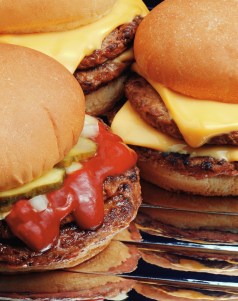
Past Food?
As I also had mentioned in another article (Future price of fish and meat: up), it is simple logic that with more people to feed, food is going to become more expensive. However, the relative prices of various food products also need to go along their relative health benefits. Today, it looks like only wealthy people can afford a healthy diet, as the price of “good” food is substantially higher than the price of what makes a nutritionally unbalanced meal. This clearly does not work in the direction of a healthier population at large.
The way consumers think will define the way we eat and produce our food. Many changes in consumption patterns, in production systems and in product offering are under way. I will get back later with more details on what my views are on this.
Copyright 2009 The Happy Future Group Consulting Ltd.
The dining of the future
With the current development of software and technology on the one hand, and all the concerns that consumer express about food, health and environment, on the other hand, I believe that it is only a matter of time before we all can have the information and tools we need to make our own eating (and nutritional) choices.

May I eat this?
Today, we have nutritional information on all food items labels, but few of us use it much. This could soon change.
As many among us have computers at home, we can expect software to come on the market, and maybe even already installed with the computer at purchase, that will allow us to determine and set up our own diets.
Already numerous websites have interactive programs telling you, depending on your weight and life style, how many calories you should eat per day and other websites help you calculate the nutritional value of your meal if you enter the quantities of your menu’s components.
In animal nutrition, optimization programs to compose the feed ration by entering the nutritional value of the different possible ingredients and set limits to the level of inclusion of some ingredients based on nutritional and technical parameters have been in use for many years. Last, but not least, these programs also include the price of the different ingredients, so that the best-balanced “meal” that meets the nutritional needs can be composed at the lowest cost possible.
Therefore, it is just a matter of time before we all can have at home a system that will take into account, or weight, our age, our level of physical activity, our health risks and calculate for us what our meals could be made of and how much we should eat, depending on which menu combination we would like to have for that particular meal or day. The nutritional information could be either from a database or directly transferable from the nutritional value label present on the food packaging we bought.
Following the same idea, I expect most restaurants to present their menus with thorough nutritional information on the side, in a similar way as food labels show, with indication of health benefits or restrictions. There also would be the possibility for a customer to enter their personal information to have the meal tailor-made for them, with probably the relevant price adjustment when needed. All of the above includes of course the drinks as well, as they definitely can contribute to the overall nutritional value of the meal.
Any action encouraging healthier eating will be supported by the government and by health insurances, which should help accelerate the introduction of such programs.
As environment and sustainability are among the main concerns of consumers today, I expect food items in the retail and the dishes on restaurant menus to include environmental information, similar to the ones mentioned and appearing on the label shown in my article “Environmental performance on food labels“. Today, a number of restaurants have already joined programs setup by MSC (Marine Stewardship Council) to indicate they serve only sustainable seafood. Seafood is probably just the first item that will be followed with similar information and programs for other food sources.
We have entered the era of information, and we will eat accordingly.
Copyright 2009 The Happy Future Group Consulting Ltd.
How much can the rule of 80-20 tell us about the future?
We all have heard about this rule across all industries, including agriculture and food. Eighty percent of the food would be produced on 20% of the farms and vice-versa. If it still applies in the future, it can indicate us how our food production and supplies will look like in the future. Of course, this is always a theoretical exercise, but it is quite convenient to elaborate on our thoughts.
As the population is expected to grow quite strongly in the coming decades, especially in urban areas, this could indicate two dominant trends:
• Further size increase of the largest farms and further industrialization of agriculture and food for global markets, although the number of farms in this segment would not increase strongly.
• Strong increase of the number of small farms involved in specific value chains and strongly linked with their local economy.
Industrial agriculture
 This group will continue to be involved in mass production of commodities for global supplies, like this is the case today.
Yet, they will face an increased pressure to adapt to the requirements of sustainability, which technically is quite possible. New systems and more efficient technologies will be the pillars of its growth and development. They will have to find ways of reducing the amount of chemicals in crops and the amount of pharmaceuticals in animal productions
The requirements for capital will be quite high and the sector will be led by increasing larger corporations, by an increasing level of capital by large private investors and, last but not least, by some governments. This agriculture will innovate further and will be developed thanks to this capital. It will use automation and mechanization to reduce the dependence on labor. Mergers & acquisitions will continue in the agricultural sector and a few large blocks will remain, dominating their sectors.
Their mandate will be about more control the natural conditions of production and about reducing to a minimum their impact on air, water and soil, by using less polluting transport methods, water preservation, effluent treatment and soil preservation. They also will have to engage in maintenance of their environment.
The role of this type of agriculture will be to bring to market large amounts of affordable food for the masses, and should play an important role in strategies around food security, which is where corporations and government will interact on a regular basis.
Local food value chains
 This sector should undergo a strong growth and be build in a market-driven approach. These are the farmers that produce specialty products aimed at serving either a very specific segment of the retail or foodservice market.
This trend, which has been already initiated around concepts such as organic or authentic, will evolve into a more integrated local economy, and the initial concepts will probably become less differentiated as food production in general, be it industrial or traditional, will use more sustainable techniques.
Contrarily to the common belief, this agriculture will be developed thanks to very efficient techniques, but will be centered relatively more about labor and relatively less about capital. In this case, efficiency does not necessarily mean intensification.
We must not underestimate the significance of this part of the food production, as it will play an important role. However, we must not expect this type of agriculture to be the solution to feed the world, and this is not the purpose of the farmers involved in such food production chains.
This type of farming will grow in two different environments:
- In “developed” countries to serve a increasing, but aging, population more demanding about the origin and the production methods, and who is ready to pay a premium for the perceived better quality. The angle will be about quality, transparency, sustainability, traceability and as close to zero a use of chemicals and pharmaceuticals. In some areas, it could help strengthening a local economy and local communities.
 In emerging countries, the development of a local agriculture, and aquaculture, will be a key driver of economic development for under industrialized and/or under urbanized regions. It also will be a way of slowing down the migration of population to urban centers and limit social problems, by creating satisfying economic conditions and by securing food supplies locally. This farming will be about basic needs, before marketing.
Copyright 2009 The Happy Future Group Consulting Ltd.
Ownership of food: the seeds of future conflicts
From an agriculture that mostly was producing locally for a local market with a straight forward production chain, the organization of food production has become more complex and structured over time. As we moved towards always more integration, traceability and globalized markets, the roles and bargaining positions of the different actors has changed.

Facing the possibilities of more food riots in the future, if we are not in a position to make food affordable for all, we certainly can expect to see new power struggles emerge.
If we place ourselves in a scenario of food shortage, it is normal to assume that the power would be in the hands of whoever owns the food. But who is the owner, or better said who is actually in charge?
Is it the retailer? Is it the farmer? Is it the owner of the land on which the crops are grown? Is it the futures contract trader? Is it the seed supplier? Because without farmers, there is not much food in the stores; and without seeds, farmers cannot grow much food, and without food, no futures contracts to negotiate.
In the same way, who should decide where to the food would go? Does it belong to the country and the people who produce it, or does it belong to a corporation that prefers to sell it abroad? In a situation of shortage, this could lead to serious conflicts.
Corporations look primarily at markets and try to maximize their profit. That is their mandate.
Governments have a different look at things, as politicians want to have happy citizens, so that their position of power can continue. All they want is avoid social unrest.
Potentially, this can lead to new regulations and even to the possibility of nationalizations if companies and governments do not agree.
To get back to the example of seeds and genetics, there is a growing responsibility resting of the shoulders of breeding and genetic engineering companies. Not so long ago, let’s say a bit more than a century, there was much more genetic diversity in agricultural crops and farm animals. This diversity has shrunk quite significantly and we face the potential risk of not having the right genes available if we were to face a natural situation that would eradicate plants or animals as a result of inability to resist and to adapt to the new conditions these organisms must deal with. The genetic pool used to be a collective asset, but it has moved more and more into a private asset. About this, too, one can wonder who is in charge and who has ownership, and what could the consequences be.
As long as we are not facing any severe supply unbalance, the current situation will probably linger as it is a bit further, with the players having the most power trying to grow their position and influence other deciders to their advantage, but this kind of consensual vagueness about who is the owner of food will sooner or later cause some major shake-up.
Copyright 2009 The Happy Future Group Consulting Ltd.
Asia faces food shortage by 2050 without major water reforms
Here is an article from Science Daily illustrating very clearly the issues I brought up in my earlier article “Managing water is paramount for the future of food production“.
According to Colin Chartres, Director General of the International Water Management Institute: “Asia’s food and feed demand is expected to double by 2050. Relying on trade to meet a large part of this demand will impose a huge and politically untenable burden on the economies of many developing countries. The best bet for Asia lies in revitalizing its vast irrigation systems, which account for 70 percent of the world’s total irrigated land”.
Innovation and tradition shape the future
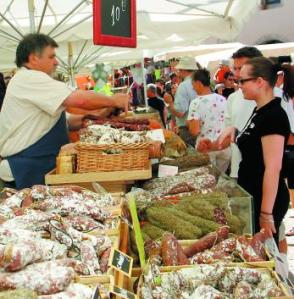 In order to understand what changes are ahead of us, we need to realize that opposite forces are engaged in shaping the world of the future. As we all know, accepting change is always a slow and sometimes a difficult process. There are those who see the possibilities and those who see the drawbacks. The first train was going, supposedly, to get cows stop giving milk, but we now know that cows love to watch trains passing by. Probably, the first caveman who drew a picture of an animal on the wall was considered by some as a great magician and probably by others as pure evil. As such, such a struggle is very useful, as on the one hand it shakes immobility and open new doors, and on the other hand it prevents us to rush into the unknown without thinking first.
Change is part of our lives and that will not change. The problem that we face about change is actually about the pace of change, more than over the change itself. Over the last century, this pace has just increased steadily, thanks to more and more efficient technology.
If we look back the lifespan of the oldest living person, which brings us back to the end of the nineteenth century, just take a minute to think of all the changes that have occurred since then. There was no car industry, no antibiotics, no commercial airlines, no TV, no internet or cell phones, no supermarkets, just to mention a few things that we take for granted nowadays.
Although such a change is dramatic and has affected the way we live today, it has been a process that has needed time. Usually, it is said that more than 60% of the products that exist today did not exist 10 years ago and if we extrapolate this to decade to come, we can expect some even more spectacular changes.
Innovation is in constant motion and technology helps us to conceive and to use much faster than by the past. Yet, it is interesting to see that even with such a pace of change, traditions still play a very important part in our lives. Even with lots of modern gadgets, most cultures keep their specific characteristics. Their respective values do not evolve as much as our “things“, these just become part of the culture. This is an important point when it comes to innovation: what you offer must meet a need, if it does not, it will either fail, or at best be a fad.
Having a look at the future, you must wonder what the underlying trends of innovation are since it started. I can see several major constant areas of innovation:
- Reducing physical labor.
- Helping us live better and longer.
- Increasing efficiency.
- Helping communication.
- Increasing mobility.
- Offering more leisure and entertainment.
- Making some people a little wealthier.
What could this mean for food production in the years to come?
 More technology to improve efficiency of water use, fertilizer use, animal feed use, land use, energy use (objective: zero waste).
- More mechanization, automation and robotising, especially in software more than hardware, working on precision (intelligent technology).
- Greater focus on health and natural solutions for food and for agriculture/aquaculture/fisheries (objective: zero residue and zero contaminants in water, air, soil, and food).
- Projects to repair environmental damage and include agriculture/aquaculture/fisheries in environmental management (restore and maintain sustainable food production).
- Policies, and politics, to increase food production (disease control, regulation, more government intervention at strategic level, incentives).
- Redistribution of markets with geographical shift of production and consumption areas.
- Shift from convenient to practical food solutions (bulk meal components).
- More education on agriculture, food and nutrition (balanced diets, food safety, traceability).
While such changes will come over time, consumers will still be looking for some level of tradition in foods. This can be about authenticity, regional specialties and recipes, or choosing to buy directly from farmers. Obviously, this is not a rational process, but it is more about the perception of “true” and “natural” production systems. After all, nostalgia is a constant of human emotions, too.
Copyright 2009 The Happy Future Group Consulting Ltd.
Rebuilding fisheries is a must for the future
 As everyone knows, fish stocks have been depleted to levels that are not acceptable. This is the result of short-term thinking combined with highly efficient but stupid fishing methods. Not only fish is a high value food source, but oceans are complex ecosystems that we cannot afford to lose. Although aquaculture claims to be the way to compensate the supply of wild fish, this is only true within limits, as some aquaculture species are fed with fish meal and fish oil, and replacement of these products is also limited by the quantities that agricultural crops can supply, and consequently their price.
As one of the points that I mention in my presentation “Twelve trends for the future of food production” (under Presentations tab), we can expect that programs will be set up to rebuild wild fish stocks and bring the volumes back to levels with which sustainable fishing methods and quotas will help provide us with more secure supplies. This will be some sort of a stimulus plan for seafood with all stakeholders involved: government, fishermen, aquaculture industry, retailers, food service and consumers.
A recent report published by the Pew Charitable Trusts has reviewed the possibilities and the economic impact of rebuilding fisheries in the Mid-Atlantic Ocean, as well as the downside of doing nothing. A Canadian research has worked in a similar direction and tend to show that rebuilding fish populations is possible, citing a number of successful cases (see article).
All that comes out from these reports is that the situation, although quite serious, is far from lost, but it requires political will and organization to make it happen. This is exactly why all parties involved from whichever country concerned will have to act in a coordinated manner.
Copyright 2009 The Happy Future Group Consulting Ltd.
Future approach of genetics in agriculture

Genetic engineering, that we just mentioned, and traditional breeding and will be increasing intertwined in the future, as they will join their respective areas of expertise into combined genetic improvement programs. Actually, we can expect that these two disciplines will be merged into only one unified science of DNA. We can expect to see an increased number of joint ventures and mergers between genetic selection companies and biotech companies in the future.
So far, genetic engineering has been mostly known to the public opinion thanks to the development of GMOs (genetically modified organisms), and this has been a very controversial area. Genetic engineering will move from a support activity to, for instance, herbicides, to address much more real problems and bring much more real solutions to the challenges of the agriculture of tomorrow. GMOs have served the sales of herbicides produced by the same companies quite well, but of course, this will plateau rather soon, and there will be a need for something else to impress the financial markets. It should not be a surprise to see these corporations specialize in biotech completely, and divest their chemicals “heritage” at some point in the future. The real problems to solve include a broad range of topics. They include technical performance and yields of plants and farm animals. Genetic engineering will help increase the efficiency in the conversion of nutrients and water. It will help plants and animals to have a stronger resistance to diseases, in order to avoid severe production losses. It will provide alternatives to antibiotics, to herbicides and pesticides. It will find ways for plants to absorb or fix the nitrogen of the air to reduce the use of mineral fertilizers. Another area of research will be influencing the quality of final agricultural products, in particular producing healthier foods, and have plants produce medicines.
To solve such problems, the people in charge of such programs will have a very heavy moral responsibility towards society, as the choices they will make will affect the longer term and our ability to survive. The success criteria will go much beyond the financial performance of these companies. This will be translated in the type of bonus packages that the executives will receive. One can wonder whether the correct structure for such companies is to be publicly traded, since stock markets tend to induce a very strong preference to the short-term financial performance. The reflection on such programs will need to go through a serious test of “what ifs”. As per now, money still is the main driver, especially in the arguments of the producing companies and countries. For instance, they reiterate that the decision of the European Union to limit the production and use of GMO will make food more expensive in these countries. Then let’s ask ourselves what if the EU is wrong in their decision? Well, production systems and agriculture would not change much; their food might indeed be more expensive than somewhere else. The people will buy smaller cars and travel less far for their vacation. This is not a very threatening situation if you ask me. What if the ones in favor of GMOs are wrong and the EU is right? The debate is indeed very emotional and political, but this is simply because we lack long term testing of the effects of GMOs to have certainty. This is why the GMO producers have such a hard time convincing their opponents.

A better understanding and predictability of long-term effects is paramount in agriculture and food production. Agriculture is not just about producing a particular crop, it is also about managing the total ecosystem that a field is. Actions in genetics need to guarantee the long-term balance of these ecosystems (in which weeds, although of no economic interest, are a part of), because once an ecosystem has been altered, it has been changed forever. Genetic improvement programs must ensure to preserve, in whichever form, genetic diversity and survival of vegetal and animal species, because once extinct, they are lost forever. Long-term fertility of soils is another highly critical part of the protection of our food supplies, because once sterile, the land is lost forever.
So, as you see, we are facing many challenges and genetics is a key element of our food systems. By shifting away of rather superfluous projects, even though they have been quite lucrative for the producers; and by focusing more on true improvement and sustainability of production systems thanks to technical breakthroughs, a combined breeding and genetic engineering will bring constructive solutions. All it will require from the stakeholders is vigilance.
Copyright 2009 The Happy Future Group Consulting Ltd.
 The Food Futurist Solutions - Anticipate, Adapt, Succeed