248. The future is not for the timid. Winners will be bold, ambitious, determined fighters!

Listen here to a Chrome AI-generated podcast type playback of the author’s article article

As the population keeps increasing, so does the strategic role of agriculture. In particular, geopolitical strategy will become even more prevalent in the future than it is today. Trade and influence will shape the future. In this environment, competition is going to be fierce. Like with any competition, there will be winners and there will be losers. For the future, the winners will be the conquerors!

The question, before considering who the winners might be, is really about to identify what will make some countries, industries and companies fare better than others. So, let’s review which components will play a role for future success.

Have a clear vision

To succeed, it is essential to know what the game is, what the rules are and how to navigate them. It all starts (or ends) with leadership. It is equally essential to have a very clear idea of what one wants to achieve and of how to thrive in a competitive environment because, like it or not, life is competition. Different people aim for the same goal, but only a select few will win it.

Money

As Cicero wrote “Money, endless money, is the sinews of war”. There is no doubt that the winners will be the ones who can fund their ambitions. They will be the ones who give themselves all the means they can find to succeed. To win, one has to think big and prepare accordingly. Those who think small will only obtain only even less than their goal. This is the role of the vision I was mentioning earlier. Being timid with funding for the future will only lead to defeat. I would compare it as preparing for the Olympics. Even the best athlete in the world would fail if not having the proper support.

Resourcefulness

I believe it was Anthony Robbins, the famous motivational speaker, who said something like it is not necessarily the ones who have access to the most resources who succeed, but the ones who are the most resourceful. This is true. Many successful entrepreneurs often started with hardly any money and had to gamble all of their meager savings and even their family stability. Yet, they found ways of generating interest and cash flow in order to keep going. On the other end, there is no shortage of startups that were (over)abundantly funded and yet failed. The difference was in the character of the entrepreneur.

Strong sense of identity

Those with a clear idea of who they are, what they represent and what role they can play in tomorrow’s world will be at a great advantage. Identity sets their values. It also boosts confidence and helps overcome setbacks. Thanks to identity, they will never take no for an answer and pursue their goals until completion. This does not mean that they will be the nicest ones or the best choice around, but a strong sense of identity will make them winners. If you have any doubt, just look around and you will see that all those who do not have a clear identity are on the decline.

Policies for success

Of course, one could argue about the definition of success but that does not serve anyone well in a competition in which the contenders all have their very own. In my recent article about whether the EU might become a museum, I address the necessity of making a clear choice. Do policies support farmers to succeed or are they undermining their chances of success in the global competition? To elaborate on my previous example about athletes in the Olympics, the metaphor would be about whether the policies are providing athletes with everything they need to express their full potential and go for gold, or does the “coach” tie their shoelaces together, leading the athletes to trip and hit the ground probably even before the game has started.

Spirit

Like with any competition, it is never over until it is over. The difference between champions and the rest is that champions never give up. They might suffer as much as the rest but the difference is in the spirit. It is about mental fortitude. It is about never giving up the fight. There always are ups and downs. This is life, once again like it or not. Winning the future starts with attitude. Never doubt when you face headwinds because everybody else does, but also never get cocky when things go well because complacency or mental superiority complex are deadly poisons. Never lose your sight of the objective.

Agility

Keeping the course is good, but sometimes the itinerary needs to change. Once in a while, life likes to create some detours. The winners of the future are also the ones who know that nothing goes in a straight line. Changes and adjustments are always necessary. The difference between the winners and the others is that winners are swift to adapt, yet not lose track of where the end line is. On the contrary, those who get distracted by setbacks will end up like the proverbial headless chicken. In that regard agility and spirit go hand in hand.

Not being too nice

In the geopolitical environment, it is clear that not all contenders play fair. Let’s face it, quite a number of them are actually nasty. This is a fact of life (yes once again, like it or not). To be among the winners, especially with that kind of competitors, it is clear that it is necessary to show some teeth once in a while. Be subservient and you will be bullied out of the game. It is just that simple. The answer of course is not necessarily to become one of them, either. It is possible to stick to proper values, but any way you might choose, there will be a fight. There also will be low blows and all sorts of dirty fighting going on. Just be prepared and train to be strong and to deal with that. Also build your own little arsenal to strike back and stun the bullies. You will need it.

Copyright 2025 – Christophe Pelletier – The Food Futurist – The Happy Future Group Consulting Ltd.

245. Is EU food and agriculture about to become a museum?

Listen here to a Chrome AI-generated podcast type playback of the author’s article

I was speaking recently at an event in Spain and by the end of my presentation, I had a slide on which I indicated which regions I saw as the winners of the future. The title and subtitle of the slide were:

“Winners: Conquerors

Bold, ambitious and determined fighters”

Being in Spain with many Europeans in the audience, I got the question of why I did not mention the EU among the winners. Fair question, and by the way, Canada, my second country of citizenship, did not appear among the winners, either.

About the case of the EU, I shared my concerns about EU policies which I find counterproductive. Although I find the idea of a Green Deal to make agriculture more sustainable a good idea full of good intentions, I do not have the same enthusiasm about the policies and means used to achieve improvements. I find the policies too much into the ideological and dogmatic and not enough into the practical and realistic, as I mentioned some time ago in one of my YouTube videos on the subject.

As the conversation was progressing with the audience, I lamented that the future would not be for the timid and that in particular that the EU does not seem to know how to stand up to the Putins and Trumps of this world. The EU has a leadership problem. Everyone can see that every day. I went as far as to say that if the EU does not wake up soon, it will end up being a museum. Apparently, this statement had impact. It obviously created a shock, and from a few one-on-one conversations I had later, it sounded like it was a useful shock. The argument of the quality of foods from the EU and their heritage was raised and I confirmed that I, for one, always appreciate these traditional products. Since we were in Spain, I mentioned one of my all-time favorites which is the Jamón Ibérico (I truly am a total fan). Every time I am in Europe I certainly love to go shopping on markets and I love the quality of the foods that I find.

My point about the EU turning into a museum was not that I do not consider the EU as a future winner because of its quality of foods. My point was because of the policies, EU farmers and producers are less competitive and will not be able to grow. The EU market share and influence will decrease because of such policies.

And this is a huge pity because European farmers are at the top when it comes to efficiency, high technical performance, low waste and, yes, product quality. European farmers and the associated industry are actually incredibly innovative and resourceful. Unfortunately, they often do not have access to the same amount of resources or of political support as in some other regions of the world. Personally, it really hurts my feelings when I see such top farmers being bought out and leave agriculture mostly for dogmatic reasons. Just imagine a company where the Human Resource Department would systematically get rid of its top performers for reasons that have nothing to do with performance. It would be stupid, wouldn’t it? Well, truth is that such idiotic actions actually happen in some companies, but that is another story. What is the result down the road? It is a leveling down of the sector, which follows by a weakened competitive position, a loss of market share, of presence and eventually of viability. And that is exactly what I fear is going to happen to EU food and agriculture.

The original European food and agriculture policies were about food security, which made a lot of sense after the harsh time of World War II. It is a good philosophy. It must never be removed for the top priority of the EU, or of any country that wants to play an influential role. I have been thinking of whether there ever was an economic powerhouse that did not have food security, and I cannot think of any. Often, it feels like the critics of food and agriculture take food for granted and do not even understand what it takes to bring it onto tables. My advice here is simple: do not ever take food for granted and make sure that those producing it can keep doing so!

For these reasons and to be among the winners, the EU must have bold, ambitious and determined food and agriculture policies. The food and agriculture sector must be vocal about this and must force every EU politician to answer a simple question: do they want to support their farmers or do they want to set them up to fail? It is either one. I cannot be both or neither. Just that simple. Further, the EU should also distantiate itself from the UN FAO goals of all sorts, most of which are more anchored in wishful thinking and ideology than they are in pragmatic reality. Fact is that most of them are lagging and will not be met on time. It is good to have goals, but when they are not realistic or attainable, they should see it as a duty to amend them and readjust goals and timelines. Just a look at the state of the European automobile industry is enough to see the damage that wrong policies, as I describe above, can generate. That nonsense simply must not happen to EU food and agriculture.

So, how to make the EU among the winners and avoid it to become a museum? Well, a couple of principles must be applied:

  1. The EU must produce the quantity (and quality) of food that the EU consumers need, so that there is less need for imports. A market-driven approach is key. Unfortunately, all food and agriculture policies always seem built from a production-driven angle.
  2. EU farmers and producers must be supported by their politicians, so that they are at least as competitive as their counterparts from third countries, which would make it easier for EU buyers to choose EU products first. Saying “choose EU” or “EU has the best food in the world” has about no impact with buyers. In the end, price always plays a major role and often is the major parameter. When it comes to competition, things are very simple: those who do not have a strong competitive position will lose. Like it or not, that is the way it is. And it is even more so with undifferentiated commodities for markets such as foodservice and processing industry for which the product is only an ingredient. For niches such as traditional products or regional specialties, it is possible for producers to protect their turf better, but such niches are not the lion’s share of consumption. Such niches will make a great museum, but what about the bulk of the EU market?

Nonetheless, there might be a silver lining about some of the policies. For example, The Netherlands have struggled with their nitrogen emissions reduction policies. After spending a few years persisting in error and wasting several billions of Euros with no result by buying out farmers and for those who could continue trying to force them into a rigid frame of rules telling them what is allowed and what is not, policymakers are rethinking the approach. Of course, anyone who understands farming knows that such rigid frames based on dos and don’ts simply do not work because agriculture is the opposite of rigid. It constantly faces changes, fluctuations and unexpected events. The Dutch farmers knew that. They wanted a more pragmatic and feasible approach, and opposed the policies but to no avail. Personally, I find essential to involve farmers to work on solutions fir a better agriculture. That was the topic of another video of mine. Farmers know the work. They know what works and what does not. Yet and too often, policymakers do not seem al that interested in listening to their input. That is a mistake.

In The Netherlands, the approach is now changing. Instead of imposing a script, the government now wants to focus on goals of nitrogen emissions reduction and leave it up to farmers to decide how they want to achieve the goals in the most effective manner. They will have to show progress and depending on the results might have to take corrective action if needed. To me, this makes sense. It is about results and that is all that matters. The how is secondary. Now, the thing is that elections are coming next month in The Netherlands and, depending on who wins, the new policies might be abandoned. We will see.

Copyright 2025 – Christophe Pelletier – The Food Futurist – The Happy Future Group Consulting Ltd.

The trust challenge

Lately, the topic of trust seems to receive more attention. In my opinion, it is a good thing, as I personally consider it one of the biggest challenges the food and agriculture sector is going to have to face in the future. Actually, trust is not going to be an issue for food and agriculture only. It will for about all areas of society. Trust is eroding in about everything, from businesses to politics, non-profit sector, media and even social media and technology such as artificial intelligence. I have addressed it in a number of conferences in the course of this year already.

Today’s world is filled with anxiety and considering all the environmental, societal and geopolitical pressures, it is only natural to expect this anxiety to only increase over time. I thought I would share some thoughts, and some ideas to restore some trust, on my YouTube channel. Here are two videos that I have made recently. I hope you will enjoy them.

Copyright 2025 – Christophe Pelletier – The Food Futurist – The Happy Future Group Consulting Ltd.

And another COP passed by

After so many COP conferences, it was not particularly difficult to predict the outcomes, the process and the reactions before, during and after. Below, I embedded a thread of tweets about my take on what I expected to happen. I guess I was not too far off with my facetious messages.

But more seriously, I think the main reason why progress is so difficult and so slow is just that nobody tells us what the world after (the beautiful sustainable and livable future) is supposed to look like. The so-called fear of change has never been about change as much as it is about fear of loss. By focusing only on what must stop, and indeed many things need to be halted and replaced by better alternatives, the message that comes across is mostly a message of loss. That, of course, is the best recipe to trigger resistance and opposition at all levels, from individuals to businesses and governments.

So, how does the world after look like? Is it indeed better? Can the COP leadership sell us a vision that eliminates this fear of change, simply by bringing us hope instead of fear. Clearly, fear does not cut it. It has very little impact at this stage. So, please, leaders of the world, show us (not on metavers, although this might be the refuge of the future for many) what you think life will be if we accept the sacrifices you ask, and most of all show us a world that has appeal! If the goal is to save life and Nature, make it look natural and alive!

Copyright 2021 – Christophe Pelletier – The Happy Future Group Consulting Ltd.

Some lessons from an unusual year

Well, 2020 will probably remain in our memories as something rather different. Unlike most commentators, I would not refer to it as “unprecedented”. It is a great word, though. It makes one sound like an expert. Since nobody can know everything on any particular subject, I do not know what an expert is, really. Although there have been many inconveniences during this year, I believe that previous events such  the Black Death, the Spanish flu, both world wars and, any war really, have been much worse than this. So, there have been precedents. For all the crises and drama that has occurred, there is always something to learn from it. Here follow some of what struck me the most.

Since my primary focus is on food and agriculture, the first reaction I noticed was that even in countries of plenty, people felt food insecure as all the panic buying and hoarding showed. They were afraid of shortages, while there was absolutely no reason to think that way. At no point in time, was there any food shortage. Empty shelves in stores were the result of the hoarding that messed the normal smooth supply chain planning. Of course, these unexpected disruptions sent shock waves through the system and it needed some time to adjust, and it eventually did. The system adapted and the disaster scenarios did not happen, simply because they had no reason to occur.

Colorful 2020 - 3D rendering

Creator: carlotoffolo Credit: Getty Images/iStockphoto

The ability to adapt is another lesson from this year. Adapting is not new. It has been our way of life and an absolute necessity since the beginning. What I noticed is that many small businesses were much more agile and much faster to adapt than the heavier multi-layer organizations. In particular, food retailers have been lagging and still are. In particular, I think that it would only make sense for online sales, pick-up and home delivery to stay and grow further. They have some work to do in that area. They could reshape their activities in such better ways than today’s model but I think their problem is that they do not think like consumers, which is rather ironic for retailers. If businesses adapted rather quickly and in a rather disciplined manner, I cannot quite say the same about consumers who seemed to have a hard time to accept rather soft disruptions and making slight sacrifices. What I also found remarkable was the lack of structured strategy from about all levels of society. The main theme seems to have been knee-jerking, and that is for those who really had a strategy at all. My area of business also adapted. Conferences and speaking engagements moved to a virtual format. I thought that was gone but 2020 turned out in line with previous years in that area.

At the beginning of this post, I was mentioning experts. Everyone seems to have become a Covid expert. I have read and watched so many opinions about the future after Covid-19. It is amazing how quickly we get to have all sorts of extrapolations about something we know almost nothing. The future of work and the total reshuffle of food systems seem to have been rather popular. Yes, people have worked remotely and organizations have accommodated that because there was not much choice. But is that really a trend? What I see is that many organizations would like to have their staff come back to the office, with perhaps a mix of office presence and remote work, but claiming that remote working is the future is quite a step I will not make. What I see is that a lot of urban professionals would love to work remotely and live on the countryside, in theory. If executives from high-wage countries can perform their jobs remotely, what would be the reason not to move these jobs to people from lower-wage countries. There are many capable and very well-educated people in these countries who could do the work. If remote becomes the standard, those who dream of having the best of both worlds between urban life with high pay and the lifestyle of retirees might end up being just retired and unemployed. Be careful what you wish for. As for a total redesign of food supply chains, if there has been some talk about it, although that has faded as food producers made the proper adjustments, I do not see any significant action. There is some very locally, often for PR and marketing purposes but it does not go far. There is a simple reason for that: the farms and the farmers are just not there anymore near large consumption centres. The arable land has been paved and the land is too expensive. Dreaming is nice but we do not live in village scale anymore and we are talking about serious volumes that have to be produced. Further, about the topic of change, what clearly shows is that a lot of people just want to go back to where things were before the pandemic, with perhaps some minor adjustment, but priority number one seems to be leisure and breakaways with friends.

Crises always get the best and the worst out of people and the Covid-19 crisis is no exception. There has been lots of mutual support between individuals, but also some serious examples of selfishness. We have heard a lot about rights and freedom from the crowds, much less so on their duties and responsibilities. In my second book, I had a passage about humans looking at themselves more as legal entities than as biological entities. There have been many examples of this. Covid-19 is a biological event, and the legal decorum has no grip on any virus. The crowds were angry. Of course, there is always anger when there is change because when there is change, there is loss, but some really got over the top. For example here in British Columbia, there have been quite a few cases of customers insulting store staff and health care workers as well. People spat on store clerks because they were asked to put a mask on, or even assaulting and beating up staff for the same reason as it happened in a Wal-Mart store. Racial prejudice also came to the surface really quickly. Civilization is only skin-deep, and there are quite a few folks out there with a really thin skin. Of course, when some leaders enable this kind of moronic behavior, it should not be a surprise that followers follow.

Generosity, as usual, has not always been the come from the wealthiest. Since I am talking about money, one has to agree that all of a sudden, there has been plenty of money made available, as if it actually grew on trees. I am not too sure where it came from, how we will repay it and if the proper amounts have been distributed to the proper recipients. Money that before this crisis was lacking, as many programs could not be funded or worse had been cancelled. It is tempting to conclude that the reason why poverty has not been eradicated is simply because we have not had the resolve to get it done. People have been generous, as usual. Yet, the so-called philanthropists (cute euphemism for the Scrooge McDucks) with their billions, not so much. It is surprising considering how much their net worth shot up this year thanks to the solid stock markets, another sign that this crisis has not been all that disastrous. Regarding the wealthy, generosity came mostly from show business and sports personalities. Another example of disturbing priorities is this large Canadian retailer which temporarily had paid their staff a bonus for working in the front line at the beginning of the Covid-19, but ended it as the summer came and restrictions were loosened. Well, they decided not to reinstate this bonus as the virus flared up again since the fall, but in almost the same sentence as they were announcing their refusal to reinstate the bonus, they were also announcing a dividend increase to the shareholders. Very moral. Not.

Technology has been on everybody’s mind as being the solution for all of our problems. Well, technology certainly has helped a great deal during this crisis. It has helped many businesses to survive by bringing in remote working and virtual interaction. Also, it is a great help in speeding up substantially the possibilities to find a vaccine. Just think of the same problem 20 years ago. Things would have been much more difficult by then. Technology is a big part of our future for a better world, but technology alone will not be enough. We also have to rethink our behaviour in many areas if we want to succeed. If we do not make this inner change, technology will not solve much. And there is a lot to think about our behaviour and attitude. Just think at how extreme polarization and division have become, about how the most twisted and idiotic conspiracy theories and alternate reality take root and gain ground. Supposedly, we are the intelligent species, but that means that we must keep this ability to reason and reject nonsense. Responsibility is the ability to respond. Here, I would make the same remark about some leader and the followers I already made above.

Speaking of this leadership, the world moved on and found new directions for the future around the special case of the US. In the agriculture sector, China reoriented its sourcing of commodities to Brazil and Argentina, US farmers needed to get compensated with billions to keep afloat (that’s kind of socialism to rescue people who overwhelmingly vote republican,  bit ironic). The Chinese are quite astute people. I am quite baffled by how this country is still looked down by some Western countries that do not seem to realize how much China has changed. It is the same attitude as with Japan in the 1960s and 70s, which saw having these same Western countries being outcompeted in markets, cars in particular, and had to end up learning quality systems from the Japanese. Asian countries and Australia and New Zealand finalize a trade agreement, which is a reworked version of the TPP that the US shot down (or better said, one single American did). These countries no longer consider getting the US, which has a long coast on the Pacific, as being an indispensable partner. The world is moving on, the boat is sailing. Too bad for those who missed it. A cherry on the cake of the poor display we had to witness of the last couple of months. For as much as I love the US, and I really do, I must admit that my head has been hurting lately.

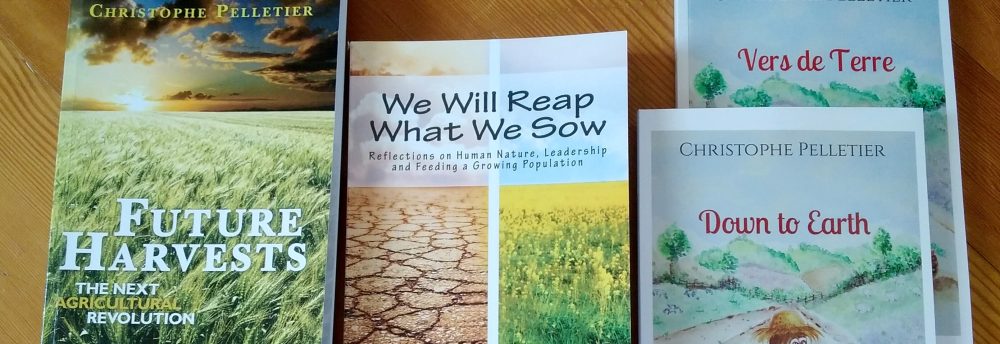
Since, I did not want to write a book on the topic, I will end it here. We have seen human nature express itself perhaps more clearly this year. We have seen the best and the worst. It is nothing new, but adversity always makes the contrast appear more clearly. Even though, Covid-19 has been quite disruptive, for most of us it was manageable with discipline and modest sacrifices. As I wrote in my introduction, I do not see this crisis as “unprecedented”, but I am pretty sure that we will face much worse ones. In particular, if we do not decisively take action to curb the effects of climate change, 2020 will look like a year in heaven in comparison. For those who had a hard time to accept wearing mask or just keeping distance, I believe that they will lose it completely when the serious problems take place. Just look at 2020 as being a gentle signal from Mother Nature. It was just a dry run to see how prepared we were to face much tougher challenges. I guess it has been pretty obvious that we are not prepared one bit. In my second book (We Will Reap What We Sow) that I mentioned earlier, I also had a passage in which I warned that Nature does not do politics, does not do PR and does not care if we are part of it or not. The dinosaurs went extinct, but the universe did not freeze because of that. Actually it processed the dead reptiles into fossil fuels, which we use to possibly repeat history. Since the time I published the book, some new concepts have developed and I should add that Nature does not do conspiracy theories, does not function in an alternative physics, either. The choice of our future is ours. We can succeed or we can fail. It truly is a case of We Will Reap What We Sow.

Copyright 2020 – Christophe Pelletier – The Happy Future Group Consulting Ltd.

Why we are not solving the climate challenge

The latest report on climate change published last week was not cheerful. Instead of making progress towards the goals, it appears that we are off course and actually deviating further away. None of the G20 countries will achieve their goals. The world has had plenty of notice and time to act, but clearly success is further away than before, but probably less so than next year and the years after. Why is it so difficult to do the right thing, then? Well, there are a number of reasons for this and this does not bode well. Here they are, in no particular order.

Reason #1: We are not scared, yet

Whenever a devastating climatic event hits us, it is not really perceived as a threat for those who have not been affected. Like any dramatic piece of news, people read about it, think how terrible it is for a few moments and then move on and forget. It is a bit like car accidents. Everyone thinks that it won’t happen to them. Even if you are a good driver, you never know when a bad one will cross your path, and it is the exact same thing with climate. The consequences do not stay within the borders of the countries that produce emissions. It takes only one bad neighbour to spoil it for everybody. The consequences go all over to the neighbours just as well. In my book We Will Reap What We Sow, I addressed the denial and procrastination by making a comparison with Pharaoh in the movie The Ten Commandments by saying that the leaders of the world may pay attention when their first born will be killed in such a natural disaster and just like in the movie, they might grieve for some time and then decide to taunt fate again. I believe that is exactly where we are heading.

Next to that, as long as insurances are willing to cover the damage, a false illusion of protection will still exist. Be assured that if insurers decided to not cover climate change related damages, the debate would change rather quickly. Last summer, there was a wildfire rather close to my place. It was the second year on a row that the region had been hit by forest fires. I can tell you that this time, considering the location and the direction and strength of the wind, I was seriously worried. We were lucky and the fires were eventually contained. We had to breathe very smoky air for weeks and our air quality was worse than Beijing or Delhi, though. In my opinion, we should be a bit more scared by what is going on than we currently are.

It is difficult to scare people by talking about just a couple of degrees in 80 years from now. Presented in those terms, it sounds benign. That, too, is part of the procrastination problem. We need to hear where there is going to be devastation, how big it will be and how much it will cost. If the problem is big and serious, it must sound that way.

Reason #2: We have no real vision for a different, better world

It is nice to look at alternative energies and all sorts of innovations, but they will not happen unless the numbers (meaning the $$$) work out well. That is the problem. Technically, everything is possible. We could replace fossil fuels rather quickly but the economics as stated today do not stimulate change. To change the economics, it would be nice to start by stopping subsidizing the disaster, but we do not do that. The problem with climate a change and economics is that there is a simple reality: it will cost money and we all will have to pay a share. The worst part about this is that the longer we wait to invest in our future, the more expensive it will get.

But beyond the boring money concerns, what we need is a vision of our future world. How will it look like? How will people be able to have a decent standard of living (oops, money matters again)? What are the jobs of the future and which ones will disappear? Will it be a safe or dangerous world? There are many questions to answer if we want to create good will for change. There is no such thing as fear of change as such. Fear of change is actually the fear of loss. What I might lose is the primary concern. To alleviate this concern, clear and reliable vision is a prerequisite, and we do not have any at this moment. There is too much focus on problems and not enough on solutions. Without a vision that speaks to people, there is no reason why they should get excited about change.

Reason #3: There is no plan

Since there is no clear and strong vision, there cannot be a plan. When it comes to climate change, all we hear is an abstract-sounding target of limiting temperature increase to 2 degrees maximum, even though it sounds specific. What does that mean concretely for our daily lives, starting today? Who is supposed to do what and by when? All the climate agreements have been non-binding, which means that, in terms of determination, they compare with the average person’s New Year’s resolutions. It is obvious why the agreements are non-binding. If they were, there is not one single country who would commit. Countries have goals. It almost sounds like a plan, except that the goals are not really specific. Indeed, which sectors of society, business, governments and non-governmental organizations are supposed to do what? Does any industry have goals to achieve? Not really. Look at the car industry. Since the economy runs better, they have decided to stop the production of small cars and focus on larger cars, mostly SUVs and trucks, which consume more fuel  than the smaller sedans. Why? Just because the profit margin on larger vehicles is higher. At least, during the Great Recession of 2008 and the following years, when gas prices were much higher and the economy was hurting, sales of small economical cars were out performing the big gas guzzlers. Maybe economic hardship is what is needed to fix the problem. We just never really learn, it seems. Let’s face it, we have no plan and everybody does what is in his/her best interest, or just suits them best, on the short term.

If we and all the leaders in all sectors of society had a plan, there would be clear instructions about what is required from us. Nobody is giving instructions to people like me about how I should and could reduce my environmental footprint. There is a lot of PR and marketing, though, but the underlying message from businesses is really the same as before: buy as much goods as you can from me. It is all about volume, while the solution is to replace volume to shift from always more to always enough.

The most important part of the plan would be the transition plan. Setting targets without defining all the concrete practical steps and how to measure progress is rather pointless. How do we get from situation A to situation B? How long does it take and how do we ensure progress? Let me know if you know because I do not see anything of the kind.

Reason #4: There is no collective coordination

Besides the goals, a good plan would indicate clearly what the respective responsibilities are of all organizations and individuals. It would be clear what the contribution of each entity needs to be. This is essential for a plan and in particular for the transition plan. Since we are all in this together, success is about team work. Everybody must be motivated, must believe it is the right thing to do and participate. How many of you have received clear goals and a mandate to participate?

Yes, we can fix the problem. We did fix the hole in the ozone layer, didn’t we? We also fixed acid rains, didn’t we? How did we do that? Simply by defining very clear and specific goals and allocating them clearly. The team knew what to do, who had to do what… and they did it. Regarding climate change, we are just 25 years late. Countries reject the blame on each other instead of finding good agreements on how to fairly solve the problems and help each other out of trouble.

Reason #5: We prefer to blame than to fix

As I mentioned earlier, emissions from one country travel all around the Earth. Eventually, we all own and share all emissions, not just the ones we create. We are collectively responsible and the problem can be solved only collectively. That is tricky in a world where individualism spreads everywhere. The result is that we focus much more on who is to blame than on fixing the problem. We have limited time to fix the problem, but once it is fixed, we will have ample time to figure out who was to blame if we think it is a useful way to spend time.

Let’s face it, everyone who indulges in the consumption society is to blame, but of course, as Jean Paul Sartre wrote “Hell is the others”. Unfortunately, we have created a society in which we all feel so entitled to pretty much everything; we have lost the sense of what the value of things really is. Our entire economic system is about more for me here and now. Of course, changing this philosophy will not be easy because to fix the problem is going about to give up something and that is tough. Of course, we can choose not to act and Mother Nature is going to fix it for us. I suspect that then all the consumption aficionados will turn to their mother (nature) and say angrily that is it not fair and that they hate her. That is always how it goes when mommy decide to clean the little one’s messy bedroom. So who will fix it:  we or Mother Nature? The choice is ours.

Reason #6: Short term prevails

This is a basic human nature trait. The short-term always comes first, before the long-term. It is certainly interesting to try to bring a message of responsibility about future generations but the human animal is not wired that way. Only very few people are truly altruistic and have the willingness to give up their own interest. The only way to get people to have a balanced approach between the short term and the long term is by creating a trade off that is worth it. Here, the key word is trade. If we want people to give some of their short-term comfort for future generations, we must give them something in return. Give and take is a very basic human characteristic, too. So what can we trade off? Let’s not be naive, what will work is always something of a material nature, in particular money. As time runs out, there is not much time for cute negotiations. We are going to have to bribe the current generations to do something for the future ones. It is just that simple. Of course, somebody is going to have to pay for it. My guess is that it will be all of us, present and future. There is no real alternative to that, and it is time we all realize this it is what it is going to be.

Reason #7: Lame leadership

I wish I did not have to say that, but it is truly part of the problem. Our leaders are not really leading when it comes to climate change. As I mentioned earlier, they have not presented a vision of where our world is going and how our lives, private and professional, will be in the coming decades. They have no detailed specific plan to transition to the future and they do not have the gut to enforce change. They mostly give lip service. I understand that. When you have to face elections every so many years, you do not want to upset the voters. You do not want to put their jobs at risk and you do not want to cause a recession or worse. That, too, is very human. But the job of governing is not about trying to please all the time. Just as there is a difference between being friends and being parents, there is a difference between being a head of state and being a demagogue. In exceptional times, tough decisions come with the territory. As a leader, if you cannot take the heat, get out of the kitchen! Being a leader is first of all to take good care of your followers so that they can make it to the destination. Communication is a crucial part of leadership, especially when it comes to change. A leader must explain what must change, how it must change and what it will take to succeed. There is never enough communication about change. It is the only way of making it sink in the people’s minds. They have to get acquainted with the idea and they also must be part of the conversation to develop a sense of ownership of where things are going. About the climate change issue, the communication has been insufficient by far. This lack of communication is largely responsible for the lack of trust in politicians and why the people think their leadership is disconnected with the reality of their daily lives and concerns. Leaders must reassure people. Instead, they too often worry them. Other important thing to mention is that every society has the leaders it deserves.

Reason #8: There are powerful opponents

Not everybody is pleased with the potential change that the climate change challenges are calling for. This is the main reason why they work hard to discredit the scientists who report about their findings. As I said earlier, fear of change is really about fear of loss and the climate change deniers are no different than the average man about that, even when they happen to be millionaires or higher. What are they afraid to lose? Well, it is always about the same: money. Either because they would have to accept higher costs of operation or possibly seeing their business die or simply lose their jobs and livelihoods. I can understand such a fear when the person in question could lose his/her job and not find employment easily and land into financial hardship. I find it much more difficult to understand that from billionaires who have nothing to worry about in terms of financial security. Actually, I would expect from true captain of industries that they see opportunities in new business activities and venture into them for both their benefit and society’s. Perhaps, it depends if they are billionaires by hard work or just by birth.

Reason #9: We are addicted to materialism

The so-called consumption society has been acting like a drug dealer in a way. Most people are so hooked on buying stuff that they can’t stop. The banks have contributed greatly to the problem but lending money too easily so that people who cannot afford stuff can go to the mall and buy just like the rest. The flip side of this addiction is that withdrawal is not easy. Everything is about tempting the client. It is not just businesses that lure consumers but peer pressure joins into pushing people into buying more stuff. Perhaps, it is easy for me to say this because I must have some sort of a temptation resistance gene. Marketing leaves me completely cold and I buy something only if I need it, not because someone wants to sell it to me. My wife calls me a minimalist. I am not sure what that means but maybe I am. All I know is that I live happily and I do not have any creditor breathing in my neck. Along with this personality trait of mine, I also have no problem making sacrifices if needed. I can wait to buy something. In a way, my motto could be “if you don’t need it don’t buy it/if you can’t afford it, don’t buy it”.

About climate change, sacrifice will be part of the game one way or another. I believe that it will be quite useful to realize that life cannot be about instant gratification all the time and that happiness can be found through many other ways than through buying “stuff”. Of course, such an approach is going to conflict with our dominant economic model.

Reason #10: The economy and financial system is all about growth

All our economy revolves around always more. In a finite world, it is just a matter of time before such a model comes to an end. In biology, there is a distinction between growth and development. And it is a very important distinction.  I believe that when it comes to economy and finance, the distinction between the two terms has blurred out and it might very well be the root of a misunderstanding that might prove very costly in the future. I am all for development, but I have mixed feelings about growth. As an example, I would mention an animated graph that has been circulating recently on social media about the variation of GDP per country between 1961 and 2017. It is a cute animation, but I do not find it all that interesting because the GDP depends for a part of the size of the population. A graph showing the GDP per capita would have been a better indication of the wealth of the inhabitants of the different countries, although an average does not say much about distribution. I also would have preferred to see a graph showing the distribution of that wealth with the people of the countries, as this would be a good indication of whether the countries takes good care of their people or not. I also would have liked to see the graph with the ratio debt/GDP and deficit/GDP. I suspect those graphs would have told very interesting stories. For a country, the GDP is just the same as what the sales revenue is for a business. It is not a particularly good indicator of the profit or of cash-flow.

Growth is also the magic word for stock markets, and in particular of the share price. Since the entire financial system is locked in stocks directly and indirectly, any stock market crash will affect everyone, because even people who do not own stocks depend on the markets (just think of how deep in stocks some pension plans are).

This is why the climate is tricky to handle because if company stocks from environmentally damaging companies or industries crash, the entire system can potentially implode. The best way to prevent this would be to have a plan, and in particular a transition plan ready so that company could transition smoothly and thus avert a market crash, but we haven’t got that. As we all know, there is a lot of short-term activity on stock markets and there, too, short-term prevails over long-term. Speaking of short term, CEOs have to present their results quarterly to financial analysts. Compare that with elections only every 4 or 5 years!

Reason #11: We are increasingly disconnected from Nature

This is a consequence of how our societies and economies have evolved since the first Industrial Revolution. Today’s most obvious consequences are mass production and mass consumption, which relocated human populations from rural and agricultural areas into urban centers and the trend, continues. There are a couple of generations who have never really been in much contact with Nature. Surveys for city people about where they think food comes from are always revealing. In particular, with animal products, it is amazing to see how many people do not make a connection between eggs and hens or between milk and cows, or even between a live animal and its meat. I strongly believe that when we lose the connection with nature, we also lose a sense of where we come from and what we are about. If we do not understand how Nature works, it is difficult to respect it and when we do not understand our biological nature, we also lose respect for life. Unfortunately, we look at ourselves less and less as biological entities and more and more as legal entities. This trend worries me.

In a way, the so-called primitive societies (which I am less and less sure that they were that primitive at all) had a strong respect and fear for the forces of Nature. The term Mother Nature that I have used above is reminiscent from this respect and fear. We would not mess with it because we understood that we could be punished. Once the connection with Nature fades, the punishment part fades too. Then, we are just too happy to take and not give back and this is a serious mistake. Sustainability and circular economy are all about giving back so that the cycle can continue. This part we tend to have forgotten and this is why we shifted away from always enough to always more and that we will have to revert to the original concept because always more is not sustainable but always enough is. Here is your challenge!

Reason #12: We put too much faith in technology

Understand me well, I am all for technology and innovation. That said, technology is only as good as how we use it. I have mentioned in earlier articles how important this subtle distinction is. I am convinced that as of today we already have all the technology we need to mitigate climate change and have happy lives. So, why don’t we solve the problem? Once again the magic word is: money. For many of these technological solutions, the economics do not favour them, but favour the current destructive system. A part of the problem is in the allocation of where subsidies go. We encourage non-sustainable systems to survive while we do not reward enough sustainable solutions. Another important aspect of whether technology can help us overcome the challenges lies in our behaviour and that is independent of technology. Technology can only help us if we want to help ourselves first. Keeping our same bad habits of wasting and overconsumption and hoping that some new technology is going to clean the mess for us without us having to make any effort of any sort is completely delusional, not to say completely immature. There cannot be any solution if we do not change ourselves. I could paraphrase both Einstein’s quote saying that insanity is doing the same thing and expecting a different result and Ghandi’s saying that we must be the change we want to see.

Copyright 2018 – Christophe Pelletier – The Happy Future Group Consulting Ltd.
Perhaps the ultimate challenge

There certainly is no lack of challenges on the path to feeding a growing world population, but a successful future does not just stop with food volumes. Beyond quantity, it is necessary to ensure that people eat balanced diets. Of course, this is true for those who are food insecure and need help to be able to access more food, but it just as true for the overweight and the obese. The health cost to society is high and is so the cost to the environment. Although excess calories end up as body fat and not in landfills, overweight and obesity should be looked at as food waste nonetheless. After all, body fat is food that has been produced but not consumed for any useful purpose. The problem is only getting bigger as rates of obesity are increasing among the population of emerging countries and are reaching alarming levels. It is not a Western countries’ problem anymore. It is a global one. There is no one particular cause to explain this trend, but it is a combination of lifestyle, example at home and education about the basics of nutrition. We are what we eat and we eat what we are. Diets are undoubtedly a reflection of society and its values.

One of the drivers of today’s economies is growth and too often this concept is restricted to quantitative growth. We must be honest and recognize that our food and agriculture systems still are greatly production driven. Although the idea of a market-driven approach is widely spread, the practice seems to differ, and it looks like it is only translated in marketing-driven instead, always with an underlying production-driven thinking. About all food sector and companies always look for ways to sell more volume. There is competition within any particular industry, but also between industries. For example, in the animal protein sector, poultry, pork, beef and fish are always trying to get a higher stomach share at the expense of one another. Usually, the main decision factor for consumer to make their purchase is the relative price of one type of protein versus the others.

The main message that consumers receive every day is: eat more of this or more of that. Then, it is only normal that they do just that. Why expect any other behaviour? The result is a value system of always more, without really thinking about how it all adds up, while it should be about always enough. Overconsumption leads to waste and to unbalanced diets. Waste is the number one enemy of sustainability, and educating the public about proper diet is actually an important weapon in fighting waste, but it is a difficult one. Although good habits are generally not any more difficult to adopt than bad habits, it seems that the latter group is more attractive. Changing eating habits is all about education. It starts at home and in school. Actually, it is rather easy to learn about the proper ratios between protein, fats and carbohydrates –both fast and slow ones- that are needed in a balanced diet. Information is everywhere, but unfortunately, the lack of education and therefore knowledge about nutrition results in many consumers having no idea how to read labels and how to compose proper meals. If our lifestyles and our needs have undergone major changes over the past five or six decades, physiology of digestion and nutritional metabolism have not changed much at all over the tens of thousands of years that humans have been roaming the planet. It would seem obvious that such an essential element of life should be common knowledge, but it is not. An interesting experiment is to ask people at random what the nutritional needs of an average human being are. Usually, people have an idea about how many calories a person should eat on a daily basis. When it comes to how many grams of protein and even more so fat, then the faces tend to turn blank. Another even more interesting experiment is to ask the same question to people working in food and agriculture. Just go ask how many calories, how many grams of protein and fat. It is an eye opener.

It is possible to make consumer behaviour change from harmful to healthy. There are lessons to be learned from the example of tobacco. To change, consumers need the proper incentives, but the bottom line is that people change only if they perceive the change to be an improvement. Since eating habits rest on powerful psychological triggers, the difficulty is in finding the right triggers and creating a perception of reward. Food producers have a critical role to play in this transformation, and it has to be a collective and collaborative effort with all other stakeholders as well.

Copyright 2017 – Christophe Pelletier – The Happy Future Group Consulting Ltd.

Critical thinking in a world of fake news

Nothing seems to be more in the news lately than the concept of fake news. The issue of fake news is a great example of how technology in the wrong hands can create a lot of confusion and damage. Internet and social media are great tools that can serve the larger good if used with discernment, but they are so powerful that human nature can also express its darker sides in just as an effective manner. In We Will Reap what We Sow, my second book published in 2012, I explored how leadership and human nature could influence the future of food and agriculture. In one chapter, I was warning that the global digital village would follow the same dynamics as the regular physical little village, but with the potency of the speed of light. The Twitter and fake news mania that we are currently witnessing with the recently elected new world leader unfortunately illustrates my comparison. In the traditional village everyone would know about everything about everyone else and there would be no shortage of rumours and gossips. In the 7-billion people village, the exact same is happening. The difference is the reach and the speed at which it spreads. Human gullibility does not depend on the size of the population. The flip side of this medal is that distrust is spreading at the same pace. Paranoia becomes the counterpart of gullibility. Everything that does not please must be fake, right?

Over the years, the public trust in governments, corporations and more recently science and journalism has been only fading. Opposite to that, people have a blind trust in what they find on Internet, Facebook and other social media, as shows how swiftly and easily they share nonsense that becomes the new truth. The village dynamics create a new type of clans and tribes that rest on their own sets of beliefs and, more worryingly, their rejection of the other tribes’ beliefs. It feels like we are regressing into digital feudalism where the truth does not matter, even if it could mean self-destruction. If you have any doubt about the reborn tribalism, there is a social media engagement platform called trib.al. If you still have doubts , check the following picture I found on Twitter.tribe

Why approach the future of food and agriculture in such terms? The future is not about tribes. It is about collaboration and cooperation between ALL stakeholders regardless of their particular views on the subject. That is the beauty of democracy. Collaboration has always brought prosperity. Tribalism has only resulted in chaos, as we can see every day, unfortunately.

In the food and agriculture sector, controversies have been around for quite some time and there are new ones coming all the time. In the sector, we have been dealing with many opinions, ranging from criticism to plain fake news. And let’s face it there has been some of that on both sides. The food fights have been lingering too much on problems and positions and not enough on solutions and cooperation. How to revert from tribalism to universalism in a world stuck between tribalism and paranoia? It is not easy but it is not impossible, either.

critical-thinking

Interesting chart I found on kariecolgy.blogspot.com

In my opinion, the solution is critical thinking. It feels too often that at some point in time, common sense has disappeared and that choosing a set of beliefs is more important than finding the truth. One of the reasons may be that tribalism is more comfortable and less threatening than being proven wrong. Whichever the reasons may be, it is time to reinstate common sense and its twin: critical thinking. Humanity will only progress and solve the many future challenges only by accepting reality and rejecting delusion. It might not be as comfortable in the short-term but it is the only way. If we do not want to see the problems as they are and choose for safe before sorry, it is highly likely that we will end exactly that: sorry. To reinstate critical thinking, it is essential to also make the distinction between critical thinking and criticism. Too often, these two are confused for one another. It is a mistake. Critical thinking is about taking nothing at face value and double checking the facts. It is the search for errors in the thought process to develop a better one. Criticism is only the first step of this process and it generally is received as negative, and sticks there. Critical thinking starts with positive attitude.

There is great value in challenging and being challenged. It stimulates thinking and more and better ideas pop up because of that. This is only a problem if what counts most is whose ideas these are, but ego is rarely of factor of progress. No athlete will ever win the Olympics if he/she is not challenged by competitors, and the competition for being the best is what pushes them to push their limits always further. The role of critical thinking in the process of making progress and improving ourselves and the world around us is just that: forcing us to push our limits and be better. Half truths, or worse fake facts, actually keep us from improving, as they divert our energy in the wrong direction. I am lucky that in my Alma Mater, one of my teachers taught us critical thinking. He was passionate enough to turn me into a fan and, although it sometimes landed me in arguments, it helped me, my staff and my customers achieve more than we would have otherwise. For the future’s sake, let’s practice critical thinking and encourage others to do the same!

Copyright 2017 – Christophe Pelletier – The Happy Future Group Consulting Ltd.

Who’s afraid of Brexit?

Brexit is a hot item. I am asked regularly what I think about it and I have to admit it is rather difficult to answer with any kind of certainty today. I hear and read all sorts of points of views and their opposites. The financial markets sent their messages and legions of experts have given their opinions but I see two main forces in what they tell us. The first thing is a lot of subjectivity. Most predictions I read seem to be more the result of spite, particular agendas or wishful thinking. It sometimes sounds more like what the pundits would like to happen to the UK and to the EU than the result of a solid analysis. The fluctuations of the Pound Sterling are also more the result of a lack of clarity than of a long-term view, but that is how financial markets work. Uncertainty opens the door to all sorts of rumours and speculations. When the crystal glass is too blurry, everyone develops his/her own scenario, which of course adds to the confusion, the uncertainty and the nervousness.

The only way to dissipate uncertainty is for political and business leaders to come out and say clearly what they are going to do and how. They also must explain what will change and that includes the good, the bad and the ugly. Brexit is about change and change always brings fear, which is really the fear of loss, as gains are usually never perceived as threats. The missing bit in the Brexit issue is the lack of clarity and communication about what the political leaders will do. Even the date of initiating the process seems rather fluid, not to mention those who say that it will not happen after all. As long as clarity and determination seem to still be missing, confusion will prevail. I believe that the situation remains vague simply because the leaders do not have a clear idea themselves of what to do with that referendum outcome they did not expect and therefore never really thought about what the next step should be. Just imagine what the reactions would be if the UK had the Euro as a currency and were part of the Schengen area…

road-for-the-ukWill the UK face an economic crisis or a recession? Maybe but maybe not. That would not be the first time and eventually the UK has always recovered. I do not see why this would be any different. I remember when Black Wednesday took place in 1992. By then, I was in charge of the UK market for a Dutch poultry processing plant. The UK was the main destination of breast fillets, our most expensive product and overnight the company turn-over was headed to a major nosedive. The Brexit excitement of today feels nothing like the panic of then. Regardless of how stressful it was, the Black Wednesday situation delivered some good lessons in term of business strategy that I am sure would be beneficial in today’s situation.

The first lesson for us by then was that having many of our eggs in the same basket was quite risky. The exchange rate and the law of supply and demand showed us that less attractive national markets became more attractive and we developed breast fillets sales outside of the UK, while the UK was more competitive outside of its borders. Markets dynamics changed but life went on. One of the most important functions of a sales department is to generate alternatives all the time. No alternative means there is no choice but to accept what the other party offers. The second lesson may be the most important. We had a good marketing strategy. We served the most demanding segment in terms of quality and we offered top-notch service. This made us the last suppliers our customers would want to eliminate and it gave us a solid leverage to renegotiate deals and compensate the loss due to the exchange rate. They wanted our product because it was supporting their business and they would not want to throw that value away. The third lesson is a correlation of the second one. We had chosen a specialized and growing market. By being market-oriented we were able to stay in demand and weather short-term market volatility much better than many of our undifferentiated competitors, both from the UK and the EU.

Because I have seen the benefit of a market-oriented value marketing approach, I can only recommend it as a choice in regards with Brexit. Even in a changing environment, if you have what the market wants, the market will want you. Crises are useful. They help eliminate businesses that are not adapted and not adaptable. The key is to find the customers with a future and help them to be so by delivering them superior value.

Copyright 2016 – Christophe Pelletier – The Happy Future Group Consulting Ltd.

Curiosity: it’s where the future starts

The challenges ahead are bigger than ever before, and be assured that they will bigger in the future. The good news is that progress and new developments in science and technology are bigger and faster than ever, too. From a technical point of view, I would dare to say that the solutions to the challenges already exist or are very close. Often, the problem is that these solutions are not immediately economically viable. In such a fast-changing world, curiosity is undoubtedly one of the most desirable qualities to adapt timely and find new ways of running the business.

Perhaps, it is because a lot of my work is about finding as much information and gathering as much knowledge as possible about all sorts of technologies, facts, systems, science and experiences that I find curiosity quite natural. Perhaps it is also because I have a curious nature. In my daily activities, I find that people are relatively not curious enough. I also can see that the ones who have that quality are always ahead of the pack. What is really amazing is how much is already out there. The trick is to find it and to know about it. Often, the information originates from very different business sectors or comes from other parts of the world or is available in a different language. I can see regularly a lot of organizations busy reinventing the wheel, going through the pain of setting up research and spending vast amounts of time, money and resources to find out results that are already available and that they could have taken over and adjusted to their particular situations. Curiosity can deliver huge savings.

Curiosity is quite time consuming. That is a fact and its main drawback. This may be the reason why it does not happen enough. The quest does not always deliver, although for those who have a proper strategy, the yield is quite good. Curiosity, for a business, cannot be a random activity. It has to be structured and carried out with discipline. There is quite a similarity between curiosity and access to food. There are those who know where to find the tasty mushrooms in the woods and those who get lost in the forest. It is the same thing when going out there to find knowledge. Some are talented and find it often and fast and others just wander endlessly without spotting anything significant. Just as it is important to know the right spots to find food when hunting and gathering, there are some places where the good knowledge is. As with food, it is important to know the supplier and know the origin of the knowledge. To pursue the comparison with mushrooms, some knowledge is good and some can be toxic. The supply chain is just as important, especially considering how fast and far social media can replicate and distribute information. When it comes to knowledge, the reliability, seriousness and quality of the sources is of utmost importance. A discerning knowledge consumer must be critical about what they find. A solid critical sense is of the utmost importance. Regardless of whether the knowledge is found through a hunting/gathering activity or comes from a knowledge farm, it is essential to double-check its validity. The packaging can be deceiving.

Next to focused curiosity activities, it is also important to encourage what I would call open curiosity, in which there is no particular objective but just letting new findings lead to new discoveries. There is no business discipline involved. It more often research you would do in your free time. One piece of information generates interest to know more and you just follow. It is similar to a child-like exploration in which each answer triggers the next “why?” question. It is pure learning. There is no way to tell when or even whether the new learned knowledge will be useful, but there is no such thing as too much knowledge. The trick is to be able to retrieve it when it is needed.

Another important aspect of curiosity is to link experience to knowledge. Usually, knowledge is the result of certain protocols. The knowledge itself takes its full dimension and value only through the use we make of it. Some people make good use and others do not. When gathering new knowledge, it is essential to also learn about the lessons from the experience of those who used it. Why did certain things work in certain conditions and others did not? Which factors influenced the outcome and how would different conditions or a different environment affect the outcome? Getting the big picture is a very important part of curiosity. Expanding the scope and seeing how the pieces of the puzzle come together are the foundation of future successful strategy and adaptation.

Curiosity is a great asset when it comes to face and prepare the future. It is not the whole story, though. Food and agriculture are not intellectual exercises. They must deliver concrete products and results. It is nice to be curious but what do you do with that? The answer to this question is quite simple: action.

According to the saying, knowledge is power. Knowledge is true power only when it is active and circulates. Knowledge that remains in a brain or in a drawer is not very useful for the greater good. The first step that I advise curious people to do is to share what they learn. It is even easier today with the Internet, and there is a lot of knowledge out there. By sharing, I do not mean simply copy and paste or click the share button. Before sharing, it is essential to make sure that what you share is quality. There is too much information that is spread on social media while clearly not critically reviewed, not to say not even read, as it is quite often the case. The mindset here is a mix of enthusiasm, critical thinking and practical service orientation. The knowledge must be correct and the message must come over. It also must be useful to the recipients. It must connect to their needs and add value to them. The final result has to be better food through more efficient and sustainable systems that are financially viable. In the food and agriculture sector, it must lead to always more collaboration and knowledge transfer in all directions within the entire value chain. Often, the weakness of communication is that it stays too long in the same circle and other links, consumers in particular, are kept too long out of the loop. It results too often in misunderstanding, distrust and erroneous perception.

Through collaboration and brainstorming, curiosity helps create a more accurate and achievable vision of the future, on which action can further be carried out to shape the future. From this angle, it makes no doubt that collaboration between all stakeholders is an ongoing process. This is especially true with technology. There are new developments all the time and it certainly takes a curious mind to be able to keep up with novelties. It actually takes many curious minds, considering how huge the quantity of knowledge and information is. It also takes minds that can connect all the dots, and also connect with each other. Although time consuming, the back and forth collaboration, together with ongoing feedback about performance and new demands, allows all links of the chain to know better what the objectives are and how to foster ongoing improvement. As many new technological developments come from outside the food and agriculture sectors, I believe it is critical that the food producers be proactive in the development of technologies and applications, but stating clearly what they expect from technology suppliers and tell them what they expect from them. It is never too early to let them know what your problems, limitations and/or objectives are, so that they can work on it as soon as possible. Being proactive will help speed up the development of the right products, systems and applications.

In this process, leadership is of the essence. Leadership is essential to create the right dynamics to make knowledge transfer happen, fast and well. The role of leaders here is to make knowledge transfer attractive and stimulating for others, so that more stakeholders participate in the development of innovation. The more pressure they will be on suppliers to bring better solutions to the food sector, the higher the chances it happens, indeed. Leaders must also foster connections and networking across the disciplines, even or actually especially with partners outside of the food and agriculture sector. A vision that includes the bigger picture will have more chances of stimulating the cross-discipline and cross-sector collaboration. At the same time, it is crucial to stay practical. The goal is to produce food, and that must be in the minds of all participants.

Curiosity is really the starting point. It feeds an entire chain of ideas and decisions that are the basis for improvement. There is no doubt that fortune favors the bold. In the never-ending quest towards better foods and better agricultural practices, such a process becomes an illustration of “the best way to predict the future is to create it”. This saying may have not been so true as today. Progress and food security depend on it.


Copyright 2016 – Christophe Pelletier – The Happy Future Group Consulting Ltd.