In the years before the current economic crisis, the non-profit sector was already creating more jobs than the for-profit sector. Last year, the total of all operating budgets of non-profit organizations passed the US$1 trillion mark. This makes non-profits the eighth economy in the world. This amazing number seems to have been rather unnoticed, yet it has quite some significance for the way economy might evolve in the future. They are a force to be reckoned with.
 They are perceived as independent, although this is not necessarily the case, and this tends to give them a higher moral status, especially compared with the for-profit sector. As I had written in a previous article, nobody has the monopoly of morals, but non-profits have a PR advantage in this area. A part of their strength comes from the loss of trust in government, science, industry and politics by the general public. In the food and agriculture sector, the influence of non-profit organizations is growing, and it challenges the way food is produced.
Just like in the for-profit sector, the size of non-profits as well as the quality of their message varies. Similarly to many corporations, the integrity of some non-profits is questioned. However, in order to motivate individuals and organizations to donate money, they need to have and to keep enough credibility. Competition exists in the non-profit sector, too. Only the ones that do the best job can survive. Nonetheless, non-profits have been instrumental for many changes in food production. It is also clear that change and improvement comes only from being challenged. In this article, I just want to name a few examples of the power of non-profits and their ability to cause visible change.
First, here is an example as recent as last week. The HSUS (Humane Society of the United States) came out with video footage of what they called inhumane treatment of pigs at a Smithfield Foods pig farm. For those who may be unaware of who these two organizations are, the HSUS is a non-profit organization strongly opposed to intensive animal husbandry. They want to end factory farms. Smithfield is the world’s largest pig processor. The HSUS and the US meat industry are no friends. They have opposite views on animal husbandry and meat production. They accuse each other of the usual shortcomings and lies, as is the case between industry and its opponents. What I found quite interesting in this case, though, was the communication of Smithfield about the “crisis” on Twitter. Here, I can only speak about my perception, which was that Smithfield was quite nervous about this matter. Obviously, the HSUS scares them, and not just a little bit. The pork company came with numerous tweets about the problem, and in my opinion too many messages. As long as the investigation is not completed, any communication is unnecessary, and potentially confusing. I got confused to the point that I even wondered how they actually implement the procedures about animal welfare that I believe they have. They even communicated that they would have emergency audits from authorities in the field of animal behaviour and animal handling, such as Temple Grandin and Jennifer Woods, from Alberta, Canada. The farm is in Virginia. That sounds rather drastic if all procedures are in place and followed. The end of the story, at this day, is the report of the Virginia State vet, who did not notice any violation during his visit. There is no way of knowing whether something bad actually happened. The vet’s reports also mentions that the farm will have to be monitored, which makes sense in the context. Smithfield also communicated to have fired three employees for violation of animal welfare procedures, which tends to confirm that the HSUS had put their fingers on something true. Of course, the background of the story is that the HSUS finds that Smithfield does not make the move to banning gestation crates for sows fast enough, as the company had announced a few years ago. They compare Smithfield with other US hog producers who have already implemented change of husbandry systems. Regardless of this specific case, the reaction of the world’s largest pig producer tells me that the HSUS is going to win its battle to reform substantially the US meat industry. It will not happen overnight, but it is just a matter of years.
Another example, still in the pig sector, comes from The Netherlands. The largest supermarket chain, Albert Heijn, part of Ahold, the fourth largest retailer in the world, will sell only pork produced in animal friendly conditions, according to a protocol set up together with Vion, The Netherlands’s largest pork producer and Dierenbescherming, a non-profit organization dedicated to humane animal treatment. I remember when I used to work in the pig industry in the late 1980s in The Netherlands; Dierenbescherming was considered a rather extremist organization that supposedly did not get the realities of meat production. How things can change in 20 years!
Greenpeace is one of the most active organizations that try to change how food is produced. The agriculture lobby is not too enthusiastic about their actions, but Greenpeace gets things changed. They addressed the issue of beef production in Brazil and its relation to deforestation. They achieve more than the Brazilian government by reaching agreements with beef producers in a region where the “law of the gun” tends to prevail, but also mostly with the beef producers’ customers. The main fast food companies (McDonald’s, Burger King, etc…) and retailers like Wal-Mart have pledged not to buy beef that would be produced at the expense of deforestation. Be assured that something like this has quite some leverage. A similar situation has happened about the production of palm oil in Indonesia and Malaysia. Greenpeace’s action to save the orang-utans’ natural habitat has resulted in large users such as Nestle and Unilever to purchase only sustainable palm oil products. This has more impact than government action. I had mentioned a few weeks ago, the ranking for seafood sustainability by Greenpeace of retailers. Costco, which came last, first tried to contest the results. However, within a couple of weeks they reduced their seafood assortment from 15 to only seven, sustainable, species.
Another non-profit with influence on food production is World Wildlife Fund (WWF). They created in 1997, together with Unilever, the Marine Stewardship Council, which role is to set sustainability standards and conduct certification of fisheries. In 2009, the WWF created, together with the Dutch Sustainable Trade Initiative, the Aquaculture Stewardship Council, which has a similar mandate as the MSC, but for aquaculture.
Another typical example came with the wish list of a prominent seafood industry representative for 2011. On that list, he chastises environmental organizations for their negative and critical picturing of the seafood industry. Especially Greenpeace and the WWF are on his “bad guys” list. That is not surprising, but the irony is when he expresses his wish for further development of clean energies to stop the risks of pollution by oil spills and other contaminants. When it comes to other industries than his, he sounds very much to me like a Greenpeace and WWF supporter.
These are just a few examples, but they show without any doubt that the message of non-profit organizations has an audience, and with environmental issues becoming common media material, their influence will only increase. It is also clear that, more and more, retailers, foodservice and, to a lesser extent, consumer goods manufacturers are joining them. The businesses with direct contact with the consumers (aka the public) are leading this change, as I had mentioned in “The quiet revolution of food retailers”.
The next step that I foresee to enforce more transparency is the development of WikiLeaks-like activities that will make public confidential internal memos and other information not destined to publication. This will bring deep changes in the way food is produced. Of course, where there is change, there is resistance, too. The food industry’s reaction is normal in this process. The winners of tomorrow will be the companies that understand where the business environment is heading, and that will see the opportunities to implement change faster and better than their competitors.
Copyright 2010 – The Happy Future Group Consulting Ltd.
 This movement is rather popular here in Vancouver, British Columbia. The laid-back residents who support the local food paradigm certainly love their cup of coffee and their beer. Wait a minute! There is no coffee plantation anywhere around here. There is not much barley produced around Vancouver, either. Life should be possible without these two beverages, should not it? The disappearance of coffee –and tea- from our households will make the lack of sugar beets less painful. This is good because sugar beets are not produced in the region. At least, there is no shortage of water.
 If there is a never-ending feud in the food industry, the one here in British Columbia (BC) about farmed salmon certainly should be put on top of the list. The fight between salmon farmers and environmentalists has been going on for as long as the industry has been around, and it looks as if it will keep lasting for a long time to come.
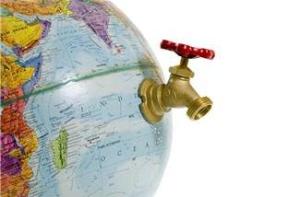 neglected. The quantity and the quality of water available are absolutely crucial for the future production of food. It will influence where and what type of food we can produce. It will define food security and world politics. Since 70% of fresh water use is for agricultural purposes, it is clear that water will soon be power.
 To attract new people to the food sector, it is also quite important to tell what kind of jobs this sector has to offer. These jobs need to be not only interesting, but they also must offer the candidates the prospect of competitive income, long-term opportunities, and a perceived positive social status. Many students have no idea about the amazing diversity of jobs that agriculture (including aquaculture) and food production have to offer. This is what both the sector and the schools must communicate. Just to name a few and in no particular order, here are some of the possibilities: farming, processing, logistics, planning, sales, marketing, trade, operations, procurement, quality, customer service, IT, banking and finance, nutrition (both animal and human), agronomy, animal husbandry, genetics, microbiology, biochemistry, soil science, ecology, climatology, equipment, machinery, fertilizers, irrigation, consumer products, retail, research, education, plant protection, communication and PR, legal, management, knowledge transfer, innovation, politics, services, etc… Now, you may breathe again!
 fact, they will hardly listen. Therefore, words will have little impact, unless they go along with actions that confirm that the message is true. If the food industry does not want to change and hopes that communication will be enough to change the public’s mind, nothing will change. When you want someone to prove to you that he/she is reliable, you want to see tangible proof that something is changing in your favor. The most powerful communication tool that really works for regaining trust is the non-verbal communication. The distrusted one must sweat to win trust back. This does not take away that verbal communication must continue. It will keep the relationship alive, but it will not be the critical part for turning around the situation.
 Opponents of agribusiness tell a lot about their opinions, they also show a lot of pictures, documents or footage of what they criticize, and they certainly are very active involving as many people as they can. The agriculture and food sector, including aquaculture, also tells a lot, shows some, but not enough about their daily operations, and they seem to have a hard time involving enough outsiders of the industry.
 Those who are not familiar with the salmon issue in BC need to know that for 20+ years, a war between environmentalists and salmon farmers have been waging. Although all the participants in this debate claim to base their statements on science, Nature is just throwing facetiously some oil on the fire. Environmentalists have accused salmon farms of being the cause for the (apparent) depletion of wild salmon stocks. Much of the accusations rested on research carried out by a local environmentalist who linked her sea lice counting and mortality of juvenile pink salmon to fish farms. Until last year, she seemed to have something of a case, as returns of pink salmons into BC rivers were low. Last year, though, the pink salmon returned in large numbers, which contradicted her theory. For years, the fish farming industry did what it had to do. It always denied any responsibility in the decreasing numbers of pink salmon, using the selected relevant science to support its case.
 The Food Futurist Solutions - Anticipate, Adapt, Succeed