Adapting our thinking to the future – part 2

At the end of part 1 of this article, I had mentioned how our elders used to make progress by blending the modern with the traditional. It is quite important to keep this way of looking at our life environment quite alive. How we evolved to where we are today determines very much why we have the current possibilities available. They are the direct result of our history. Whether we like it or not, our future has its roots in our past. The art is to improve what we have, and to improve, we need to learn from the mistakes of the past. Rejecting solutions for the simple reason that they are old-fashioned or not based on science is really excluding diversity, while diversity is the fuel of progress. Reducing diversity comes down to reducing options to move forward. As someone who looks toward the future and tries to find out what is likely to come as well as what is desirable to create, I find this balance between past and future especially interesting. I often am surprised to see how many people are actually busy reinventing the wheel, while they think that they are busy innovating. Many projects and research that I see taking place have actually already been carried out in some way either in another place or in another industry. I regularly have to tell some of my contacts about similar projects that took place years and sometimes even decades ago. This is why I always insist on the need to be curious. For the future, curiosity is an asset. I could never urge anyone enough to have an open mind for anything that happens anywhere and in any industry. Maybe, I am doing some sort of transfer about this and I wished others would be as curious and eager to learn as I am, but this is so helpful to foresee the changes to come, that anyone who is interested in the future should be wired like that. Unfortunately, I find most people to not be really curious. They seem to be interested in what will serve them directly in the short term, but much less for what may serve others now but also in the future. Until someone can tell me that it is better to limit one’s perception and understanding of the world and of its possibilities, I will keep being curious and open-minded.

People really need to expand their horizons. Not only is it useful to be prepared for the future, the main reason is that it is incredibly fun to learn to know new things and new people. For the sake of humanity, it is time to open up towards others. The attitude of future business will not be about pushing new products and services to others, but to have a “what can I do for you “ and “how can I help you” mindset. The business of the future is the one that delivers solutions. In the future, successful products will be at least as much about the service included as it is about the actual physical product. This is what circular thinking will deliver. In a future where others are really what matters the most, the social perception will also change. “Old boys clubs” (which are nowadays just as much girls clubs) and other clans are not really the most dynamic organizations. There is no doubt that they are incredibly comfortable, because they are basically made out of clones. Everyone thinks the same, shares the same values, comes from the same university or social group, lives in the same country or region, has the same feeling of importance, and looks to the outsiders just as such: outsiders. There is a lack of diversity; therefore there is a lack of progress. A new interesting development that, to me, shows the quality of networks has appeared recently on LinkedIn. They visualize how much of your network belong to which organizations. I recently have seen some of the apparently very social individuals that have close to 40% of their network linked to only one company, and the second organization in his network only 1%. To me, that does not spell open network. And I thought that the main organization in my LinkedIn network was already high at 5%. Personally, I prefer by far those who have a balanced distribution of their networks. The chances are much higher that people who have a more balanced distribution of their networks have been exposed to more diversified experiences, and are likely to be more open and more flexible to different or challenging ideas. For a successful future, we must not think in terms of networks, but we all should be interconnected in the same one that would be the complete integration and interaction of all the ones that exist. My customers have demonstrated this to me. About all of my business has come from my being on the web with this blog and my books. They caught my customers’ attention who decided to get in contact with me. None of them knew me personally beforehand. The result has been business. Actually, I have not prospected once for the Food Futurist services. I just found a way of being visible beyond any limitation of network boundaries. The Food Futurist has become part of that global web.

One of the main differences between nowadays and yesterday lies in how intricate our world has become. In the past, things used to be more compartmented. Today, the whole world has opened. Knowledge travels fast and is accessible from almost anywhere on the planet. The level of interaction between industries and technologies is much higher now than it used to be. Most innovation that will help progress in food and agriculture in the future will not originate from the food and agriculture community, but from many different fields such as robotics, nanotechnologies, telecommunications, software development or medicine, just to give a few examples. Although technology will definitely play a major role in improving what we do, it will be important to not see technology as a panacea with dictatorial tendencies. I always underline the importance of the balance that we must maintain between technology and steering human nature for the best. In the end, technology is only as good and useful as the way we use and master it. Just take the example of gun powder. When the Chinese started to use it, they made fireworks for entertainment purposes. The “white man” chose to use it to kill others. Clearly, a similar technology used with different philosophies of life will serve different purposes. This is still true with today’s technology and it will be true with tomorrow’s. It will depend on the leadership. Technology needs to pass the test of morals and ethics, unless we accept that it might serve to be used against us. Technology and leadership go together, just like science and philosophy do. It is important to not forget it. If curiosity is an asset for the future, clearly, so is having a critical mind for the reasons just presented. It is essential to keep control on what we do and that we address concerns. Of course, this may delay some valuable financial objectives for some, but the quality of the future will depend on us doing the right things. The debate that results from critical thinking may be time-consuming, but open debate is an integral part of the democratic process. Open debates protect us from going back to dark ages. Looking back how what such ages have caused in human history, and unfortunately still do in some parts of the world, the need to learn from the past is clearly essential for a prosperous future.

Thinking ahead like a chess playerOther advantages of critical thinking are that it stimulates reflection and is a source of ideas. It is also important to make clear that critical thinking is not about criticizing but about questioning. Sterile boring criticism is just as useless for our future as not thinking at all. Let’s face it, critical thinking is not easy. It requires emotional distance. It is about accepting that what we may have believed appears to be wrong, or that they are better ways and beliefs. To be a good critical thinker, one needs to have enough confidence to overcome disappointment and to accept to change the course. Not that many people are willing to deal with such challenges. Yet, if we want to prepare for a prosperous future, we will have to accept that exercise, because, the future will be quite different, and in particular our interaction with our environment and the world will change and evolve further. Critical thinking actually requires a rather Zen mindset. One needs to have the calm and openness to observe and listen before speaking. One needs to accept being wrong as the debate that arises from the exercise will also show the value of other people’s points of views. Critical thinking is an exercise in humility. Humility is a highly valuable, yet often neglected quality. Yet, it is essential to be humble when thinking about the future. The challenges are quite serious and dealing with natural forces that may or may not be about to unleash upon us will not be an easy task. We will need to understand our relationship with Nature and accept the idea that, in spite of all our cool technologies, we are vulnerable and mortal. One of the arts of future thinking will be about pushing the system while knowing where the limits are that we must not transgress. That is what sustainability really is about. We really do not want to open Mother Nature’ Pandora’s Box. To be equipped properly to face the future, we need leaders that will think like chess players. We need leaders in all areas of society that can understand how the consequences of their decisions and of their vision will trickle down through the system. They must be able to foresee what may happen when they make their moves. Many already hardly can foresee what comes next. Those we need are the ones who can visualize what happens two, three, four and more degrees ahead, so that they can adjust their choices and already develop alternatives before troubles arise. A good plan A always includes a plan B, and preferably even a plan C. Plans that lack alternatives are not plans, they are merely wish lists.

Copyright 2013 – The Happy Future Group Consulting Ltd.

Just for fun, a bit of science fiction

One of the issues that I regularly raise during my presentations is the one of the farmers of the future. As about everywhere in the world, the average age of farmers is increasing, this brings the question of who will take over and what effect it will have on the future of agriculture and future production systems.

One topic that generates interest from audiences is the possibility of having farming robots. Surprisingly, the same intrigued enthusiasm comes from audiences that have a bias against industrial large-scale agriculture. Yet, the prospect of robots roaming the fields does not seem to be a cause for concern.

Because of the lack of interest by the youth to take over farms, the Japanese are actively working on setting up farms that could be run by robots, instead of humans. In many other countries the aging farming population with the limited interest from younger people to become farmers, also linked to the rising price of agricultural land, raises the question of how big farms might become, and how to manage them.

Currently, the many developments in the field of robotics, of satellite applications, of field sensors and of computer programs make a futuristic picture of farming become more realistic.

With the expected rise of the cost of energy and of the price of all compounds made with massive use of fossil fuels, precision agriculture is the future. The name of the game will be zero-waste. Future economics will not allow for wasting energy, water or fertilizers or any other input. It will be imperative to get the most out of the least, not just simply producing more with less.

The use of satellites to map fields and indicate the variation of the content of fertilizing elements in the soil is already a reality. The use of GPS for harvest is now common with modern equipment. We are really only one step away from having computers processing all this data and operating fertilizer spreaders by automatically regulating the distribution of fertilizer on the field, based on the soil scan assessment. This will avoid overuse of fertilizer in zones that already contain enough nutrients. With the expected exhaustion of phosphate mines, and the large variation of phosphate contents in soil, it will pay off.

We are also only one step away from having tractors, harvesters and other agricultural equipment doing the fieldwork without drivers. A company in Iowa is already developing such a technology by linking the position of a tractor to the harvester via GPS. Such an approach makes the use of human operators less of a need than it used to be. This would allow farmers to manage much larger areas from one remote location. Their role would become more one of process controller, monitoring and steering the fieldwork by ways of cameras and remote control. This also would require less physical work, thus allowing aging farmers to manage at least as much production as they would have at a younger age. This would become even more of a possibility, as farming robots would be developed to replace humans for the physically more demanding activities.

Developments in the area of sensors also offer many possibilities in terms of farm and risk management. The ability of monitoring variations of temperature, humidity, plant growth, the presence of diseases, fungi and other pests in real-time would help make use of resources much more efficiently. Current developments of biosensors used in food packaging are amazing. Some of such sensors have the ability to turn fluorescent in presence of food pathogens. They can help prevent risks of food poising. Sensors help to detect undesirable “visitors”. Sensors also would help farmers detect potential threats at an earlier stage, even before they actually become visible by the human eye. This would allow starting treatment before problems could take proportions that would threaten production. This has the potential to help farmers produce more optimally, and to produce higher yields than they would otherwise. Linking such sensors to devices that can release the necessary amounts of water, nutrients, pesticides and possibly herbicides would help produce quite efficiently, and would reduce the use of inputs. This would help reduce waste, work towards more sustainable farming methods and reduce the use of chemicals, as they would be used only at the right time, at the right place and in the right quantities, instead of being applied systematically to the whole fields, including areas where they are not needed. The use of airplanes to spread chemicals could be eliminated, which would also reduce the use of fossil fuels. Instead of airplanes, it is possible to envision the use of drones that would have a “patrolling” function to detect anomalies or the extension of pests in the fields. By bringing the huge amount of data that these robots, sensors and drones would produce, fields would be monitored on a 24/7 basis and decision-making would be faster than today. Corrective action could be implemented automatically just as well.

By adding more monitoring functions and developing ecological modeling, this futuristic approach would be a way of managing the interaction between the crop itself, which is the purpose of food production, and the need to manage the ecosystem surrounding the fields, to ensure that production is carried out in an environmentally sustainable manner. Monitoring living organisms in and outside the fields would help optimizing production. The farmer would know the status of soil organisms, mostly worms, insects and microorganisms. He would be able to deal with pests in a targeted manner, almost in a similar way as the images of surgical strikes that we can see in the news. Mapping the extent of weeds through such devices would also allow their control in a targeted manner and with minimal use of potentially harmful compounds. The emphasis would be about control and management, not on killing out everything that seems a threat.

Further, monitoring fields as described above would support the environmental steward’s role of farmers, while making it easier to execute as well. Farmers would be informed timely about production effects on groundwater quality and possible residues in the soil and the crops.

Of course, all of the above sounds like a bit of science fiction, but considering the amazing innovations taking place in the all the areas mentioned, together with the constant miniaturization of devices and the increased processing abilities of computers, it might not be as far-fetched as it may sound today. Although many of these developments are not taking place in the agriculture sector as such, they are real and happening faster than one could imagine. Farming in 50 years from now will probably look different from it does today.

Copyright 2011 – The Happy Future Group Consulting Ltd.

The math and the myth

No, this is not one of those “are in a boat” riddles. Those who have read my articles or my book know that I like to bring some perspective by crunching numbers and double checking statements that seem beyond any discussion.

During National Agriculture Week held last week in the US, one of such statements popped up in most of the social media dedicated to agriculture: In 2010, one US farmer provided on average for the needs of 155 people, while in 1960 this number was only 26!

Of course, if you follow social media, you know that, immediately, the partisans, mostly in the Midwest, spread the good news as fast and as much as they could. To them, this number of 155 is the best proof that large-scale industrial technology and mechanization driven agriculture is the best there is, and US farmers are the best in the world! So that the world knows it this time!

That is clear. Or is it really? Then let’s look at the numbers a little closer and do some math.

Knowing that China became the first export destination of US agricultural goods since only last month, finally passing Canada and its gigantic 35-million population, I had some doubts.

First, one statistic that is not mentioned in the 155 per farmer is the total number of farms. This number dropped from 4 million in 1960 to 2.2 million in the latest (of 2007) census mentioned on the USDA website. Going from 26 to 155 would have been very impressive if the number of farmers had been stable, but this is not the case.

In 1960, 4 mio x 26 = 104 million people fed.

In 2010, and by keeping the number of 2.2 million farms, the calculation is 2.2 mio x 155 = 341 million people fed.

Instead of increasing 6-fold (155/26) as the fans try to make believe, the actual improvement of US agricultural production has increased only 3.3 times. Over a period of 50 years, this represents an average year-on-year increase of people fed by US agriculture of only 2.4%. It is higher than the average year-on-year increase of the world population over the same period, but it is not stellar, either. As an indication for comparison, the world’s food production has increased by 3% year-on-year over the same period.

This becomes interesting when comparing with other parts of the world. I choose India, because, it is often presented, especially in the Anglo-Saxon press, as a country that does not tackle agriculture properly. According to those articles, India should be a lot more like the US, going big and industrial, instead of keeping their large rural population.

India has 1.2 billion inhabitants, and statistics indicate that 200 million people are malnourished. This implies that 1 billion people are fed reasonably. Now, let’s compare another number that rarely appears in analyses. The population density of India is 10 times higher than the American population density. This means that if the US had the same population density as India, there would be 3 billion Americans, and only 341 million of them would have food. In such conditions, they would not eat much meat, they would not suffer from obesity and they certainly would think twice before growing food to feed their cars. If India had the population density of the US, there would be only 120 million Indians. India would probably be the largest food exporter in the world.

Maybe this comparison is not the best to make. After all, the Indian diet is rather different from the American one, and India still needs imports to feed its people. Let’s try something that is closer to America in terms of eating situation: the EU.

There rarely passes a day by without some article from a US industrial agriculture supporter that criticizes Europeans to resist the American model, especially GMO crops. According to the biased pundits, Europe is losing ground because of this shortsighted stubbornness. There again, some math can help. Once again, the population density will provide us with insight. If the US had the population density of the EU, there would be 1.1 billion Americans. Once again, that is much higher than the 341 million that US farmers can feed. As far as the EU is concerned, the region is self-sufficient, and in most European countries, the yearly per capita consumption of meat is close to 100 kg. There is no food security problem in the EU. In this case, we are not comparing meat eaters and vegetarians. Just as it looked that India was doing not such a bad job at feeding its people, the EU actually delivers a nice and enviable performance.

The math shows us that the number of people fed by one farmer is not a good indicator of the actual performance of the national agriculture. I would compare it with bragging about the number of horsepower in one’s car engine without looking at how far that car can take you. Gas mileage is more important. In the case of the US, the 155 only indicates that there are very few farmers, and that they have to manage very large farms. It is not an indicator of yields. Bigger, more intensive or more technology do not necessarily mean more efficient. It has to be the right size, the optimal level of intensification and the proper use of the right type of technology.

A much more relevant number is the number of people that one hectare (or one acre) of land can feed. With this indicator, the performance of the US is average. The key is the yield. In the case of wheat, which is grown in most regions, the yield in the EU varies between 6 and 9 tons per hectare, depending on the country. In the US, the yield is of only 3 tons/hectare, which also happens to be the world average.

What the math really shows is that the world is very diverse. It is diverse from demographic, economic, sociocultural, climatic, agricultural points of view. Agriculture is not mechanics. It must consider all these parameters and be adapted to the specific environment to meet food demand optimally. There is no universal model, and there does not need to be any. We simply must focus on producing high yields in a sustainable manner, meaning that this performance can be repeated indefinitely for the generations to come. To grow food, we need good seeds, fertile soil , proper financial resources and skilled farmers!

Copyright 2011 – The Happy Future Group Consulting Ltd.

Investing in agriculture requires thorough research

Since the price hike of food and other commodities in 2008, agriculture is one of the hot topics in the investment community. This is also fuelled by the perception that the world might face a food crisis. For those looking at investing in the food sector, there are many possibilities, but in this sector as in many other investment types, caution is required. The investment community is a pool of sharks, and the name of the game is to sell at a profit. Beware of the salesperson!

According to Jim Rogers, a famous investor and former partner of George Soros, farmers will be the ones driving Maseratis in the future. He believes firmly that, in the future, those who actually produce the commodities, instead of brokers, will make fortunes. It is a very interesting point of view, although history tends to show that the power in food value chains is in both ends of the chain: genetics and marketing to consumers. Becoming a farmer is not an investment. It is a job, and a busy one. Farmers need to generate cash on a regular basis to provide for their families and keep the farm in business. Land is not liquid. Investing is about reaping the profit when selling at a higher valuation.

For those interested in owning farmland, there are possibilities to buy large acreage in many countries. A recent article published in CNBC presents some strategies.  Large private investors seem interested in Brazil, Argentina, Uruguay and Canada. Prices of farmland have been firming up in the US. There are people advertising for Brazilian farmland who promise you a yearly guaranteed (not clear how, though) of 12%. In the former communist Eastern European countries, many farms are for sale. Net importing countries such as China, India and Arab countries choose to invest and develop farmland in Africa. For investors with a strong stomach, Africa may be a place of choice. The continent is pretty much for sale. However, the ownership of the land is not always very clear and the rules of engagements may vary. If you only wish to lease land, you might be interested in Ethiopia: the country is offering 100-year leases for $1 per acre. Although some offers may seem irresistible, buying farmland or a farm is a complex endeavour. Many factors weigh and things may not be as they seem. What is the quality of the soils? How is the climate, and in particular are there risks of floods or drought?  Is there proper access to water? What are the local regulations in the country where you are thinking of buying? How much bureaucracy should you expect? Who are the suppliers, and how they deal with their customers? Is there access to quality supplies? What are the banking facilities and what type of credit can you get? How are the infrastructures for storage and logistics? What access to markets do farmers have, and how is the marketing chain organized? Today’s situation may not be a good predictor of the future, and problems may loom ahead, as Jason Henderson, vice president and Omaha Branch executive of the Federal Reserve Bank of Kansas City told in an interview to Agri-pulse.

If farming or owning farmland is not your thing, there is always the possibility to invest in commodities with futures contracts. Instead of buying the hard commodity, which would take quite some space in your garage, you just do the same but on paper only. This is a risky business though and it should be left to the pros. Originally, futures had been introduced to give farmers the possibility to fix in advance the selling price for their crops, instead of waiting for the spot market at harvest time. Futures contracts have been taken over by the Wall Street geniuses who brought us the Great Recession. Also realize that nowadays the future contracts prices reflect the supply and demand situation of paper contracts, not of the actual physical market. The result is that futures markets are all about speculation and most transactions are made with borrowed money. Speculation may be about the weather, planted acreage, expected yields or plant diseases. Any news is cause for rumours and markets may change direction without warning. If agricultural commodities interest you, you may prefer to invest in funds that include these commodities, and therefore offer a lower risk. Another possibility to get money at work in the agriculture and food sectors is by buying shares of companies involved in agricultural value chains. For instance, when commodity prices increase strongly, the logical (?) thinking of stock investors is that the next food crisis is ahead and that the world is about to run short of food, which will stimulate farmers to plant more and therefore require more inputs. Especially shares of fertilizer suppliers always shoot up in such situations, all the more so as there are just a few of them. This gives them a strong bargaining position, and they pass on sharp price increases to the farmers… which is why the margins of farmers usually suffer after a year of high commodity prices. In the agricultural sector, it is important to remember what I said about which links in the chain have the strongest position, as this will affect their bargaining position and their ability to get, or to keep, the added value. Weak links will always underperform, while the stronger ones will outperform compared with the average of the sector, that is for as long as these companies are managed properly. Investing in stocks always require a thorough financial analysis, as well as a good understanding of the quality of the management. How does the future look like for a particular company? Does it have a sustainable competitive advantage? How does the future look like for the sector of activity of this company? What is the track record of performance? Does it depend on world market prices or is it more predictable than that? How is the valuation of the company?

Another type of investment that is gathering momentum in the agri-food business is new technologies start-ups. With worries about the future of oil, and especially oil prices, and the challenge of providing enough water to produce crops, many new technologies try to find their way to market. The sector of new technologies attracts many investors, probably because it seems reminiscent of what happened in the tech sector, therefore giving hopes of high return. I come across such ventures regularly, and every time I hear enthusiastic stories from the owner or from the venture capitalists involved. In many cases, the story is about how this new technology is going to revolutionize the way food is produced, or even it will be the solution to hunger. Returns on investments always sound amazing, making one wonder why this has not been on the market for some time already. For such projects, too, it is essential to do the proper research on the claims that the owners and financiers are making. In many cases, I find difficult to get the proper background to support the financial results that they claim. In even more cases, I do not see any real thorough market research, and instead of explaining in which niche they will operate, the market story is about macroeconomics. The macroeconomics may be true, but except for the unlikely event that the particular technology would indeed take over the world within a few years, they are not a relevant description of the actual market possibilities within the foreseeable future. Of course, there are also projects that have strong cases, but they are a minority.

In all cases, a number of simple rules can save you from a very painful experience.

  • Do not invest in something you do not understand.
  • Do not mind hypes and tips.
  • Take all the necessary time to do your research, and do it thoroughly.
  • When in doubt, do not invest.
  • Ask as many questions as possible. When investing, information is power, and lack of information is weakness.
  • Ask independent third parties, and never ask advice from someone who has a vested interest in your transaction.
  • Buy low, sell high.
  • If it sounds too good to be true, it probably is exactly that.
  • Investing is not mandatory, and if you miss an opportunity, there will be other bargains later again.

Copyright 2011 – The Happy Future Group Consulting Ltd.

Future evolution of genetic engineering

Genetically modified organisms (GMOs) are one the most, if not the most, controversial aspects of modern food and agriculture. So far, the focus had been on offering farmers alternatives to pesticides and herbicides. The proponents of GMOs praise the progress made and they claim that agriculture production benefits from this. Opponents warn about all sorts of potential disasters in health and environment. The reality is that GMOs have been around for about a decade and a half, and they are here to stay. There is currently no sign that they would be banned from the Earth, especially since genetic engineered traits have been found outside of farm fields, as I had mentioned in a previous article.

At his juncture, and to think of how this technology –and business- will evolve, it is worth asking a few questions.

Has the use of GMOs been successful for agriculture and food production?

There are several levels in this question, actually. From the yield point of view, it is rather difficult to answer objectively, as there is little possibility to compare the respective performance GMOs and non-GMOs. From what I gather, it would appear that the Bt cotton may have delivered better results. For corn, the picture is much less clear. Actually, some varieties have proven to have rather disappointing performance. For instance, the genetically engineered corn from Monsanto failed to produce in South Africa, and recently their SmartStax variety (developed together with Dow) has had lower results than expected. This forced the company to drop the selling price per unit from US$24 down to US$8! The stock market did not appreciate. Clearly, GMO producers can make mistakes, and this is not particularly reassuring.

However, GMOS have delivered some benefits, too. In Argentina, the use of glyphosate-resistant soybean has allowed the production of soybeans to recover strongly from the brink of disaster. After many years of intensive monoculture of soybeans, the soil had been damaged to a nearly point of no-return, With the use of glyphosate-resistant plants, combined with no-tillage technique, farmers have been able to rebuild the level of organic matter in their soils. The result has been a huge increase of production, as farming conditions have been restored.

Opposite to this success story, a study from China concluded that the use of Bt cotton changed the ecosystem in such a way that pests that are naturally not sensitive to the Bt toxin thrived in cotton fields. This forced farmers to use other regular chemical pesticides to fight them, and the overall use of pesticides was actually higher than before the introduction of Bt cotton. The number of glyphosate-resistant weeds is a growing concern in many areas of the USA, and farmers need to use other methods to eliminate the weeds. Currently, the situation has come to a point that Monsanto is offering a rebate to its customers to buy and use herbicide from their competitors, so that at least they keep buying their genetically engineered glyphosate-resistant seeds, because they do not have the solution of the problem in-house. These two examples demonstrate a simple fact: genetic engineering is not a panacea that solves all the problems. It must be used as a part of a well-thought set of techniques. Producing one type of crop with the included traits without understanding the ecosystem that a field is, simply does not work. A field is not a dead zone. A biologically very active system resists constantly the attempts of humans to get it under control. Since the odds of developing a resistance for all available products is statistically close to zero, rotating herbicides and pesticides strongly increases the chances of eliminating the “super weeds” and the “super bugs”. Of course, companies would rather not promote their competitors products by advising farmers to rotate herbicides and pesticides.

Are GMOs necessary?

Considering the rather mixed results, it is quite difficult to answer this question with certainty. The technology of genetic engineering is useful because it offers the possibility to introduce desirable traits in plants. However, genetic engineering deals with genes, and the actions of the genes, as well as their interactions with other genes, are very complex. This is still a field where we have much to learn. Caution is required. Genetic engineering is only one of the many ways we have to increase and improve production. It certainly is not, as some would like to make believe, the only way. This is also important to keep in mind when it comes to developing countries. In these countries, the problem is not that all other techniques have reached their potential. Many farmers do not even have access to just good seeds. If they had, together with proper financing, access to input and adequate techniques, they would achieve much better yields. Since they are poor, how could they even afford to buy GMOs? In my previous article, Hunger is about more than just food production, I indicated how Africa could become a net exporter without GMOs. On the other hand, in developed countries, such as Europe, where farmers achieve outstanding technical results, for instance wheat yields 2.5 to 3 times as high as in the USA, what could be the incentive? Europe is food secure, actually several European countries are among the world’s largest exporters of food and agricultural products. Why would consumers be hungry for GMOs, while food is already affordable? People may not always be rational, but there is always a strong logic about why they do what they do.

Are GMO safe or not?

In all objectivity, there is no certain answer to this question, either. Until this day, there has not been any proven disaster linked to GMOs. Since in biology things may take a long time to come out, there cannot be any certainty that something is not already changing, either. This debate is between those who think that progress always brings some new uncertainties that should accept, and those who think that we should not take chances. Genetic engineering is still a young science, and 15 years is a very short period in ecological terms.

A related question about this is: “Is there a moral issue about GMO?” There certainly is something about morals in the debate. There is the theme of playing to be God. There is the theme of corporate profits vs. people and environment. There is the theme of the control of food by a select few, and that is about power. There is the theme of secrecy vs. transparency. This is also about a certain vision of the world, and about which values should prevail. There is the New World set of values vs. the “Old World’s”. None of these themes has much to do with science, but they are quite important to many people, and they will remain so for a long time. The controversy and the debate are far from over. The food retailers, such as the giant Carrefour, are now entering the debate. A new interesting element is the awakening of the US consumers who start to question food production; while until recently, they were rather passive in that area. Many things will happen and change. At this stage, it is rather difficult to say what will emerge.

What is at stake?

Next to the themes that I have just mentioned, the most at stake is money, and a lot of it. This industry would never have developed if they had not been granted the possibility to apply for patents and collect royalties on their intellectual property (IP). Without IP, there are no GMOs. Patenting life is in itself a controversial topic. This is especially more so when a whole plant becomes private property while only a tiny part of it has been altered. The original whole plant was the collective property of humanity. Without asking permission to mankind, and not even offering to pay a rent for this collective property, GMO producers have managed to become the owners. For many people, there is a feeling of wrong entitlement.

The key element is IP. This is understandable, because most GMO companies are spin-offs from molecule makers, from the chemical and pharmaceutical industries. Their business has always been about investing large amounts of money in R&D to put new molecules on the market. Their philosophy behind GMO production is the same. They think like molecule makers, not like farmers. The objective is to develop products for which they can collect royalties to pay back for the R&D expenditure. The driver for this is the need to develop high margin products to satisfy the expectations of the shareholders. This is why GMOs were a logical step to replace gradually the chemical herbicides and pesticides, for which margins have been eroding. Something else needed to be developed to bring out solid financial results and future prospects. With the patent period ending soon, the existing GMOs will become generic products that will no longer be IP. This forces the producers to think of new traits to include, thus generating more IP for royalties. This leads to a new generation of GMOs

What will be the next phase?

We will see two different paths for genetic engineering. One is a market-driven genetic engineering aimed at solving actual problems that farmers need to overcome. This will not be so much about IP and royalties, but it will be about practical and affordable solutions. This area will be taken over gradually by plant breeders and to some extent with government support. They will focus on issues such as drought resistance, flood resistance, ability for plants to grow in saline soils, and ability to transform solar energy more efficiently into food by enhancing photosynthesis processes. An interesting case to follow is China. Over there, the government is already leading a nationwide restructuring of the currently fragmented seed industry to make it more efficient, and deliver solutions that will help the country improve its food self-sufficiency. Since China is quite involved in farming investments in Africa, we can expect to see Chinese seed producers become more aggressive on that continent, too. China has also clearly expressed that genetic engineering is a part of their new approach.

The molecule makers, as I like to call them, will choose a different path. They will look for sophisticated products for which they can receive a high margin in the market. Their objective will be to introduce as many traits as they can in plants and help them produce… molecules. They are more interested to produce high-tech novelties. They will become the Apple of biology. Chemical synthesis will be replaced by biotechnology. Their areas of interest will be pharmaceutical production and health, more than agriculture. The industry will introduce genes in plants to produce medicines that can be used to treat all sorts of diseases, such as diabetes, cancer, possibly Aids, and many others. They will also focus on the development of healthy nutritional components, such as high Omega-3 fatty acids content in oil seeds and the elimination of allergic components in current foods.

This next phase will see a change in the landscape of GMOs. Companies will make strategic choices about which segment they want to operate. There will be divestment of activities, and there will be new Mergers & Acquisitions, too. It is very likely that GMO producers will focus on biotech and sell their herbicides and pesticides activities to the companies that will choose to specialize in chemicals only. Pharmaceutical companies will get closer to GMO producers, and we can expect to see a new generation of biotech start-ups that will aim at being taken over by larger corporations. Some companies will choose for business-to business, while others will choose for consumer products. For pharmaceuticals and nutraceuticals, companies will subcontract farmers, while remaining in charge of the marketing of the molecules.

Copyright 2010 – The Happy Future Group Consulting Ltd.

Helping farmers produce better

Meeting food demand depends for a large part on the ability of farmers to produce adequate quantities of the food products of the right quality. To achieve such an objective, farmers depend on their business partners. To feed an increasing world population, helping farmers succeed is not an option; it is a necessity.

There is no argument against producing better. A market-driven and more efficient production reduces the amount of waste, and it increases the amount of food available for consumers. It reduces the impact on the environment and it actually reduces the cost of production. However, it is important to realize that actions to produce better often are investments, as the effect is not always immediate.

From a value chain point of view, efficient production starts with high-quality ingredients. If the world wants farmers to produce higher volumes, they must have access to good genetics. Seeds that have the potential to deliver high yields, or farm animals that can produce and grow fast, while using feed and water efficiently, are an absolute necessity. Genetics and agriculture must also take genetic diversity and sustainability into account, but with poor genetics, farmers will not be able to meet food demand, and they will not be financially viable for the long-term. Vision and proper strategy are the elements to deal with this dilemma.

Farming inputs, such fertilizers, pesticides, herbicides and animal feed, must help plants, and farm animals, to express as much of their genetic potential as possible. Suppliers can play a very important role in helping farmers use the proper products in the right amounts, in the right place, and at the right time. The same principle applies for food processors and distributors. It is their role to help farmers deliver what the market needs when it needs it. They must encourage this by rewarding financially the farmers who do things right. This is in the interest of all the parties involved. Farmers make more money with their products. Processors get products that are more efficient to process, thus saving on costs. Distributors gain market share because they offer the right product to their customers, thus increasing customer satisfaction, appeal and loyalty. The advantage of doing things right is that it becomes more difficult for business partners to switch to a competitor. By being the best partner in business, the need for complicated contractual and legal agreements becomes a little less relevant. It is about loyalty and mutual security.

To achieve this kind of ideal situation requires a lot of effort, commitment and communication. Market needs must be translated in clear product specifications. The knowledge on how to be able to meet the required standards needs the proper channels to be transferred to farmers. Access to information has become much easier with the development of communication tools such as Internet and cell phones. Smart phones are helping further, and now farmers, anywhere in the world, have much faster access to market and technical information than by the past. This helps them make faster and better decisions. However, better technologies and better communication tools are not enough. Extension services are crucial. In my book, Future Harvests, several examples show how positive this is for food production. One is the policy of the Ugandan government that resulted in a boom in rice production, making the country a net exporter of rice. The second example is about the extension services of a food corporation, McCain Foods, in India, that helped farmers produce a better quality of potatoes, meeting market requirements, and earning substantially more this way. Another illustration of the positive effect of knowledge transfer is about the farming leader in Burkina Faso who helped increase food production with simple techniques, and stopped the exodus of population. Proper education and on-going training is part of the food production of the future. The human factor in knowledge transfer is as important as ever. Only people can know what the specific situation of a farmer is. Knowing the farmer is the best way to help them set up plans and strategies to improve their technical and financial performance. A farmer being independent business owners, their main concern is to generate enough revenue to stay in business, and to offer a decent standard of living and a secure future for their families. Helping them in these objectives is the way to get their attention and loyalty. Extension services need to offer the most effective solutions by taking into account the level of skills of the farmers, as well as their financial situation. Some farmers can afford and use high-tech solutions easily. Others may have money, but lack the skills to use certain techniques or technologies. Others may be technically savvy, but may lack the money. Extension service people are the ones who can help farmers make the best choices. They also must assist farmers to get the proper financing if this is the limiting factor, for as long as the money would used to deliver the proper return.

As Cicero stated, “The sinews of war are… endless money”. This tends to be overlooked by many who talk about increasing food production. If farmers do not have access to enough money to be able to produce the food the world needs, they simply will not. Developing agriculture requires serious investments, either from individuals or from governments. Asian and Arab countries know this and this is why they spent massive amounts of money in African and Asian countries, and even in Brazil and Argentina. If farmers cannot buy the basics to produce efficiently, they will have poor harvests. If farmers cannot be profitable, they will stop farming. This is important to realize that being a farmer must be attractive financially, too, if we want to motivate the next generation to be in agriculture. Money is important, but just for food production, more is not necessarily better. To get good results, we must ensure to have the right amount of money at the right time at the right place for the right purpose. The money must be aimed at producing for the market. Financing agriculture is about meeting food demand, not to produce blindly. Just like there is a need for efficient market-driven precision agriculture, the future of agriculture financing must evolve to efficient food-market-driven precision financing.

Copyright 2010 – The Happy Future Group Consulting Ltd.

Farming a better future by learning the lessons of the previous Green Revolution

After the facts, the Green Revolution of the 1960s has been criticized for having caused negative consequences on farmland. It is true that some intensive agricultural practices have brought serious damage to soils and water reserves, but it is also true that the actions taken have increase food production and they averted the risk of a devastating famine in India.

Today, humanity is facing another major challenge to meet agricultural production to meet the demand of an increasing population. The term “agricultural revolution” has come back in the news and this is a good opportunity to reflect on how to handle future actions.

This time, there is one major difference. With 9 billion people in sight by 2050, the consequences of our actions will have much more impact, negative as well as positive, depending on where we live. In 1950, there were “only” 2.5 billion people on Earth. Compared with today, one could argue that there was some margin for error by then. This margin for error is now gone. Therefore, it is necessary to think ahead and consider all the things that might go wrong. We must anticipate before we have to react.

What can we learn from the Green Revolution, then?

The first lesson is that when humans decide to put all their knowledge together and give themselves the means to succeed, good things happen. Food production increased and people were fed.

The second lesson is that our actions have consequences and that we need to be vigilant about what we do and how we do it.

Of course, it is always easy to criticize after the facts. Pinpointing the negative effects of the Green Revolution is only relevant to a point. Using the mistakes from then as an argument to not engage in further modernization and progress is at least as destructive as bad practices implemented without thinking. Not taking action to develop new practices, new techniques and new technologies –three very different concepts- comes down to giving up. This is not acceptable. This is not possible. To meet future food demand, farmers and all the players involved in food production will need to be innovative and daring. Being innovative and daring does not mean being reckless. We cannot accept this behavior, as the consequences could be too serious.

When looking back at the Green Revolution, the question is not so much “What did they do wrong?” as it is “Did they know something wrong would happen?”

We know today that heavy mechanization, intensive monoculture and use of chemicals caused soil erosion, loss of fertility and soil and water contamination. Is that something that the farmers and the agribusiness of that time realized was happening? Did they have a possibility to know it? Some might answer “No” and others will say “Yes, I told you so”. Could have things been done differently, and helped feeding the people while not damaging the farmland?

For the future, we need to asks ourselves similar questions and develop a plan that helps us 1) succeed, 2) limit risks and 3) have alternatives in the case problems come up.

To figure out what can go wrong, the best is to listen to the opponents of the practices, techniques and technologies considered to be used. In a very short time, it is possible to set up a whole list of potential problems. To do this, it is also important to keep an open mind, because the past has shown that often what actually goes wrong had been mentioned at some time in the debate, even it might have sounded irrelevant. “The Lorax”, the movie by Dr. Seuss gives a good representation of debate between industrialists and environmentalists. The question to answer is “What if the risks actually happen?” and to develop an extensive action plan to restore control on the situation as soon as possible. In food production, the control has to occur within a limited number of areas: soil fertility, water quality, climate (to some extent), weeds, pests, diseases, bacteria (including the good ones), insects (including the good ones), worms, all animals that live on and interact with “farmland” (on the land and in the oceans) and their habitat, genetic diversity, and ability to living organisms to reproduce.

Every time progress is made, there is a struggle between the enthusiastic and those who fear change. There is a tension between action and precaution. This is very human and normal. It is necessary to take the time to review the whole process thoroughly and accept that things do not change as fast, or not as slowly as some think they should. In the end, progress must help humanity improve and prosper, and not just on the short term.

The key is preparing ourselves, and as the saying goes: “The failure of preparation is the preparation of failure”.

Copyright 2010 – The Happy Future Group Consulting Ltd.

Since we cannot beat Nature…

It is convenient to paraphrase the saying “if you cannot beat them, join them”. This applies to our dealing with Nature just as well.

As a species, we have been very successful in conquering our environment and exterminating what threatens us. Actually, we have been successful up to a certain point. The very success that generated the current pace in human population increase brings the next challenge. Sustainability is just as much about the population increase as about how we use the resources. In 1950, there were “only” 2.5 billion humans on Earth. Compared with almost 7 billion today and the expected 9 billion in 2050, it sounds almost like a desert. How does this relate to sustainability? When 2.5 billion people behaved badly, from an environmental point of view, it had consequences, but there was room and time to correct the situation. When 7 or even 9 billion people consume, possibly waste precious resources, damage the environment and pollute beyond what is acceptable, the consequences are a lot more serious and a lot faster to hit back at us.

Sustainability is not just about production techniques, but it is at least as much about our attitude. Sustainability is even more a moral and behavioral necessity than one of a technological nature. The natural instinct when facing a problem is to look for the fastest and easiest way of solving it. This preference of the present tends to make us forget about the long-term effects of our actions. This behavior also tends to ignore how Nature works.

The first rule to remember is that Nature simply does not care whether we exist or not. Nature was there long before us, and it will be there after us, too. The calls to “save the planet” are in fact calls to save humanity. Nature is an open field where evolving life forms compete and fill the spaces left available. This is also what mankind has done since the beginning of its existence: compete, fight and conquer new habitats.

Nature does not care whether a particular species goes extinct. Only some people do. When a species disappears, others compete to take over the vacuum left, and life goes on. Nature is all about creating balances between species. This is why when a species’ population grows fast because of favorable conditions, it always becomes victim of its success. Even insects deplete food resources beyond what could have sustained them. When the food is gone, they simply die by the millions. As far as Nature is concerned, if climate changes, if the nitrate content of drinking water is too high, if soil is eroded, it does not matter. Let the best species win!

This ability of Nature to constantly adjust to changes in populations of life forms also explains why our efforts to kill threats in agriculture and food production will never be quite successful. Farmers may kill lots of pests and weeds thanks to chemicals, pharmaceuticals and now genetically engineered crops, they also create a vacuum for others or better organism to conquer. This is why we face antibiotic-resistant bacteria or herbicide-resistant weeds. This is simply the result of natural selection and evolution happening right before our eyes. Organisms mutate constantly and when a trait helps them survive some of our techniques and products, they thrive. The problem for us is that if forces us to find more specific treatment products as we go on, and this is getting more and more difficult. Are we going to have to fight ever increasingly resistant and strong superbugs, super bacteria and super weeds? If so, we are facing an uphill battle, because we are always at least one step behind new mutations and natural selection. It is not impossible for us to keep the upper hand, though, but the margin of error when looking for solutions will become thinner and thinner.

To stay ahead of the game, farmers and all the people involved in food production need to thinks like ecologists. Science and technology will be the basis for progress, but thinking only like chemists is too limiting. Managing ecosystems is one of the underlying principles of sustainability in food production. We will succeed only by understanding the big picture and thinking like chess players, and anticipate what the several following moves will be, as well from Nature’s side as from ours. We cannot make Nature checkmate, but Nature can do that to us.

The secret ingredient is long-term responsible thinking, even if this goes against the short-term interests of shareholders.

Copyright 2010 – The Happy Future Group Consulting Ltd.

Science taken hostage (cont’d) – The genetically engineered vines

Another example of what I had presented in my previous post about the “killer canola” is the case of the genetically engineered vines in France.

Last week, a group of opponents to GMOs went into a trial field of the French Agricultural Research INRA and pulled out vine plants. Two associations reacted strongly to this act of vandalism. The French Association for Scientific Information and the French Association for Plant Biotechnology stated that this act demonstrated that “science and technology are the targets” of such action groups. Of course, this statement is “colored” with some bias, and a little bit of paranoia always adds to the dramatic effect. What I see here is just that instead of a constructive debate about the use of genetic engineering, the rhetoric slides into partisanship and name-calling. Clearly, science does not really weigh much in this. The reality is that two groups with different views on how the world’s future should like oppose each other. The debate is more about politics than science. The people who pulled out the vines just do not want GMOs. Period. Nothing will convince them otherwise. The scientists and technicians see such an act as a threat to their jobs and to their beliefs as well. They will fight back. You can find more details in the article from the French agricultural magazine La France Agricole.

Interestingly enough, the French Minister of Research spoke during an interview about the matter. One of the arguments she brought up was that the “vandals” should be fined the value of all the work involved, meaning all the materials and salaries of the researchers. INRA is a state-owned research institute. As such, that is an interesting idea. Although, she is the Minister and she could use her position to press charges. However, there is no mention of such action from her part, at least explicitly. Would her indignation be only for political reasons? Another interesting aspect of this story is that France, although conducting research on GMOs is one of the fiercest opponents of the use of GMOs in agriculture. Where does science fit in all this?

The thing with science is that it does not take sides. Science is not biased. The same statements apply to Nature, too. It only serves to explains why things are the way they are. Technology, on the other hand is man-made, and therefore assists their users to pursue their agenda and goals. Another aspect about science, especially research is its cost. Conducting research is quite expensive and requires large amounts of funding. Since getting funding is quite similar in its process as selling a service or a product, researchers need to convince. Using drama and even fear works rather well and “polishing” scientific results and conclusion to get the yes to funding is not an unusual practice. The “climategate” story using the emails from researchers telling that they overstated the consequences of climate change is just an example of what extremes scientists sometimes need to go to be able to continue their research and in some cases keep their jobs. Sometimes, scientists are just so convinced about their own conclusions that they also report slightly beyond the truth. Mendel, the “father” of modern genetics supposedly “improved” the results he got with the crossing of his peas to demonstrate how characteristics were passed on through genes.

Copyright 2010 – The Happy Future Group Consulting Ltd.

The next agricultural revolution

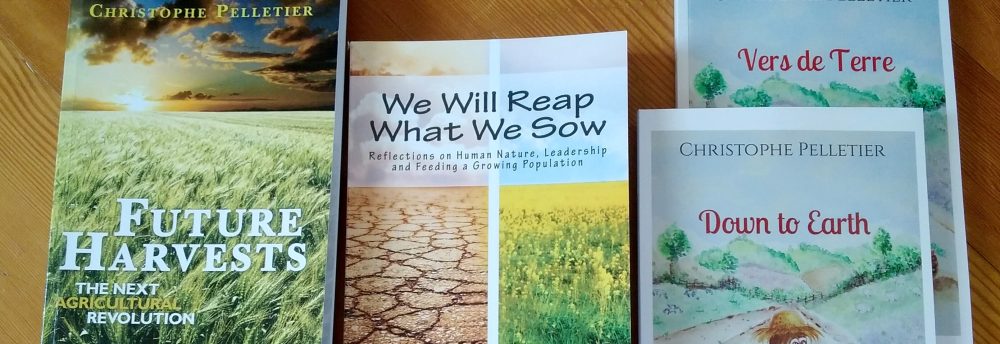
(Excerpt from my upcoming book, Future Harvests)

The next agricultural revolution to feed nine billion people will be different from the previous one. After World War II, agriculture advanced thanks to chemistry and petroleum. This time, biology and renewable energies will lead us to progress. It will not be just a revolution in science and technology. It also will be a different way to think about the economy and the environment. Knowledge and communication will become increasingly important, even more so than today.

Agriculture is a life science. Biological solutions will gradually replace chemical applications. All sorts of organisms will be involved to improve the way farmers and the food industry will produce.

Bacteria and viruses will help fight pests and diseases. They will help us reduce our use of chemical herbicides and pesticides dramatically. Genetic engineering will evolve and, as a business, it will mature. DNA science will focus on eliminating flaws and on increasing the metabolic efficiency of living organisms. Genetic engineering cannot continue to be about intellectual property and patents. Soon, seed companies all over the world will know how to do the same. Competition and market forces will determine which model will survive. Governments will not allow a select few to control food. They will get involved in genetic engineering programs and they will break monopolies. Genetic improvement will become collective property again.

Ecology will be a part of food production. Agriculture will manage ecosystems, and economy will become the management of the planet. Living organisms on land and in water will assist us. Farmers will think in terms of systems and cycles. Instead of isolating the field, they will integrate environmental parameters as well.

Organic matter will become central in the future agriculture. Farmers will recreate the cycles to improve the structure of the soil and its fertility. Agriculture will help fixing carbon. The use of mineral fertilizers will decrease sharply.

The economics of agriculture will be different, because the economics of energy will be different. New technologies will come. Solar power and wind energy will become common sources of energy. The economics of water will change, too. The management of water will reshape our food production. Water will become substantially more expensive and only systems that save and preserve water will survive.

Information technology will help make decisions faster than ever before. Portable computers will give the farmer the ability to get data almost instantly about the status of the crops, markets, health status and conditions of production. It will allow them to optimize inputs and outputs better and faster. It will save time, inputs and money. Knowledge and information will be our best tool to act efficiently and to improve our food production.

Transparency will become the rule. There will be no secret because consumers will be better informed and because there will be nothing left to hide.

The most critical part of the next agricultural revolution is leadership. Having a responsible long-term vision is critical, but it will not be enough. The world will need leaders that will make the right things happen. In all sectors of the society, there will be a need for such leaders who can muster the energies and who make the general interest and the long-term come first. The need for food security will alter our governance systems, in government as in business ethics. A challenge will be to manage greed and fear. First, there will be greed. Then, there will be fear. Until this day, humans have done a poor job of feeding the world. Famines have come and have gone and there still are hungry people. Humans have done a poor job at preserving their environment, too. With nine billion people, such a poor performance will have much heavier consequences. Procrastinate or being sloppy are attitudes the world cannot afford anymore. The proper leadership will come, but the change will not happen per accident. There will be a heavy crisis first.

Agriculture will regain its place in the economy as the most important activity. A change in the attitude towards funding and investments will also be part of the revolution. More players will engage in agriculture because returns will be higher for all.

The revolution will not just be for farmers and the other players in agriculture to carry out, but consumers will have their share to deliver. A change in mentalities is necessary. Wasting food is not acceptable. Selfishness will not work anymore. Food security is not a given, it is work in progress.

Copyright 2010 – The Happy Future Group Consulting Ltd.