Global Food & Agriculture Futurist & Strategist | Keynote speaker | Comprehensive vision for the future of food and agriculture | Accurate foresight | Successful strategies | Thought leadership | No nonsense critical thinking
Listen here to a Chrome AI-generated podcast type playback of the author’s article
Manure is probably the underrated part of farming, animal farming in particular, paradoxically. It is considered as waste and as a burden. It sounds like everyone would love manure to not exist. Big mistake.
It used to not have this negative image, though. Here is an old picture taken in the Lorraine region of France. There, villages are laid out along the main street. They are called villages-rue, which can be translated as a street village. Houses are on each side of the main street and that is about it. The particularity of this region is that in the old days, the houses were piling the manure in the front, right by the street. You might not realize it right away, but having the pile of manure in front of the house had some major significance and was actually playing an important social function.
The boys of the village would be quite interested in courting the girls coming from homes with the most manure. Apparently, manure was rather sexy in those times. The reason is simple. The more manure, the more cows and therefore the bigger the farm and the wealthier the family. Manure was the promise of a nice dowry. In a way, manure was a status symbol, a bit like a big expensive SUV on the driveway nowadays. In those times, people valued manure. This is no longer the case today. Yet, it is high time to reinstate it at its righteous place. We need to rediscover the sexy in manure.
Why is that, you might ask?
First of all, manure is extremely valuable because it is very rich in nutrients and is a formidable fertilizer. That said, manure is at its best only if we know how to produce it properly. In the old days, farms were mixed. They produced both crops and animal products. The crops -and pastures- would feed the animals and the manure would be used to fertilize the land on the same farm. In the modern times, farms have specialized. They produce either crops or animals. The circular system between plants and animals has been broken open. Crop farms use mostly synthetic fertilizers and animal farms store manure without having the land where to spread it themselves, and that is one of the issues of modern manure. I explained that in one of my YouTube videos: The importance of closing back the loops.
Circularity is one of the fundamental pillars for sustainability. By keeping loops open, and especially by keeping the system linear instead of circular, there is no true sustainability. We can delude ourselves by giving the impression that it is. The reality is that on the long term, a linear system that needs to be refilled constantly at one end will never be sustainable, like it or not,
In the case of agriculture, this is where manure plays its essential role. Manure is the interface between crop farming and animal agriculture. Crop farms crave fertilizers and organic matter. Manure, if well done, is the answer. By creating circularity, manure is at the very core of sustainability and of regenerative agriculture, which is too often more of a buzzword and a renaming of the term sustainability, which has been more and more accused of being mostly greenwashing. I have another YouTube video (A thin line between greenwashing and excessive enthusiasm? Example of regenerative agriculture) in which I go into more details about this.
As I said, the key about manure is to do it right. What does this mean?
It means that we need to look at the quality of the manure. Manure is one of the products coming out of an animal farm and as such, farmers should have a similar quality approach to manure as they have to their other products, be it milk, eggs, wool, meat or livestock. Manure quality is of the essence. The most detrimental assumption about manure is to look at it as an inert product. It is definitely not. It can evolve and ripen and that is what changes everything.
How does this work? Manure is nitrogen-rich product but it is carbon-poor. That is the weakness of “modern” manure compared to the one that attracted boys as much as flies. The carbon-rich components can be found in crops by-products. Think here as products like straw. The “old-fashioned” manure from mixed farms mixed the nitrogen-rich excrement of animals with the carbon-rich components from crop residues.
This is where magic happens!
When nitrogen and carbon are brought into balanced proportions, the bacteria present in the manure are going to make it ripen and mature, transforming it into a wonder product, at no extra cost. In this process, nitrogen and carbon are going to create an amazing synergy. By letting manure ripening, several things will happen with the final product.
There will be less ammonia emissions into the atmosphere, which reduces the impact on climate change.
The manure will smell much less, which no doubt will be appreciated by the neighbors.
The ripe manure has a lower water content than liquid manure (higher dry matter content), which means less transportation of useless water, and the costs associated to it.
The ripe manure will ensure a much better water retention in the soil, reducing the need for irrigation.
It will reduce the mobility of minerals, reducing the need for additional use from synthetic fertilizers and reducing the risk of minerals leaching into the waterway system and into the environment.
The stable organic matter will reduce the risk of soil erosion, thus preserving the soil potential and reducing the need for future amendments.
There you see, the formula of balanced nitrogen-carbon ripe manure (the good old-fashioned kind if you wish) is:
1+1>6
In modern specialized animal farming, the only manure that has such quality is from broiler production, just because carbon-rich material, such as wood shavings, is used as litter on which the birds drop their feces.
Farmers who might use carbon-rich material in productions for which specialization has hindered the use of such material probably end up with better manure than their counterparts.
For farms where no or little carbon-rich material is available the synergy formula cannot apply. The same thing is true for farms that do not use manure. They may use cover crops but those tend to be high in nitrogen. They may use liquid unripened manure but it lacks the synergies from the carbon. In all those situations, their formulas can be 1+0=1 or 1+1=2, but no more than that. That is far from the 6+.
Conclusions and further thoughts
The most important conclusion is that good manure is the best there is. The second most important conclusion is that we should take good care of manure and that animal farming is essential for the sustainability of food and agriculture at large. A world without animal farming would only lead to a massive additional use of synthetic fertilizers that have a major environmental footprint.
An interesting person to follow about manure management is Twan Goossens, a Dutchman who has broad knowledge of the topic, especially since The Netherlands have been struggling for some 50 years with manure surpluses and have been struggling the past few years with their own nitrogen legislation, which is horribly convoluted and so far rather ineffective. So far all they seem to have achieved is spending billions on buying out farmers without really getting benefit from it. Recently, the Dutch government started to change course on their approach to ammonia reduction in farming. They started to look at the issue in more pragmatic and practical terms, instead of using standards based on averages -and also on ideology- that depicted quite poorly the reality of farms. The recent elections of October 2025 brought a change of government and the future will tell which direction the coming cabinet will choose.
The main mistakes that the Dutch have made over the past decades have been:
To look at manure only as an inert mineral solution instead of looking at it for what it is: a living and evolving product.
To not realize that manure quality is key.
To confuse intensification and efficiency (see my previous post).
To not think circular.
To focus on expensive technologies that turned out to not be economically viable, instead of letting Nature do the work at low cost (just feel the temperature of a manure pile to realize that microorganisms actively work for free).
Another interesting source of information is the Wageningen University and Research agro-innovation center De Marke, which focuses on solutions to make animal farming sustainable and where manure management is one of their research areas.
You might have your own opinions about animal farming. The real issue is not animal farming as such but how we can close the loops again between crop farming and animal farming. The production system is really what matters. Specializing farms does not mean that it is impossible to close the loops. We need to be creative. India exports cow dung over long distances to overseas countries, even to the US. If they can do that, then has to be possible to move both carbon-rich material (high dry matter) and ripened manure (higher dry matter content than liquid manure) between regions. If you look at Europe, North and South America, just to take to obvious examples, the distances between crop production regions and animal farming regions are not that big, and certainly less than between India and the US.
One last thought, though.This article was about animal farming, and animal farming exists for a reason. We must not forget what is probably the least circular part of the entire food chain: people. In the end, food ends up in the homes of consumers, and then what does happen to the “human manure”? It does not return to where the food has been produced and it does not fertilize anything, not to mention the incredible amounts of water wasted to flush the stuff. Human poop and pee, being the end destination of the food chain also accumulates all sorts of contaminants. Think here of all sorts of pharmaceutical and chemical compounds people use. Those would be a challenge to recycle. It will only get worse, as the population is not only going to increase and will be increasingly concentrated in urban centers, making the consumer end of the food chain even less circular.
Next week’s article: Three key Technologies that will transform Food and Agriculture, plus a bonus one
Copyright 2025 – Christophe Pelletier – The Food Futurist – The Happy Future Group Consulting Ltd.
Listen here to a Chrome AI-generated podcast type playback of the author’s article
In my previous blog article, I was mentioning the growing population. This topic has been keeping many people busy for a long time. By the end of the 18th century-early 19th century, Thomas Malthus predicted that the human population would exceed the amount of food it can produce to feed itself. By then, the world population was less than one billion people. His views, so far, have proven wrong, although there indeed could be a maximum number of people that is viable. What is this number? Nobody knows for sure but there are many opinions out there.
A quick exercise I did recently as part of a presentation about the future of food production and consumption was to make people think about how we use agricultural land. My purpose was to take distance from all the usual narratives and provoke some thoughts in a playful manner. It is not so much about some hard numbers, as it is about thinking differently and looking at the world and the future from a different angle. I brought up a few topics.
Technical performance
There is a debate about extensive and intensive agriculture. In my opinion, this is the wrong debate in the sense that these are just two qualitative adjectives. They are not quantitative, so everyone can use them as they please. They do not tell what the acceptable limit of intensification is.
I prefer to speak of efficiency. Many people, even in academia, seem to confuse intensification with efficiency. That is a serious mistake. The key is to find the particular point of the maximum intensification that does not compromise sustainability. I discuss that in one of my YouTube videos, which I also have a shorter version just focusing on what I think sustainable intensification means.
To make a long story short, and from a perspective of sustainable intensification, better yields mean less land necessary. Same thing with animal farming: higher productive animals need less feed per kg of final animal product relatively because the energy needs for maintenance are lower, therefore less land. And from a perspective of the so popular cow burps as they are called nowadays, let’s take a simple example. Let’s compare one cow producing 9,000 liters of milk vs. three cows producing 3,000 liters each. It is rather obvious that the one cow will burp less than three cows combined, therefore less methane, therefore better from an environmental point of view.
The main lesson from this is simple: genetics play a critical role for sustainability.
Biofuels
An interesting study by the Institut für Energie und Umweltforschung (Institute for Energy and Environmental Research) from Heidelberg, Germany has been published in 2023. In their conclusion, the authors determined that the farm area used in the European Union for crops destined to the production of biofuels (ethanol and biodiesel) represented an area the size of the entire island of Ireland and could feed a population of about 120 million people. This is interesting, especially considering that the EU strives to go full electric on vehicles. Obviously, this could free major volumes land and therefore of food to feed the future. Just keep this number in your mind as an indicator but be careful to not extrapolate too quickly for the rest of my story because not all agricultural lands are as good as those used for crops in the EU and not all climates are as favorable.
Another similar comparison to make is to take a look at the USA. There, it is estimated that about 40% of the corn is used for the production of ethanol as a biofuel. If you take 40% of the area planted in corn, you get the size of two Irelands. Somehow ironically, this is also the size of the State of Iowa which is the top corn US state, and also for soybeans, 49% of which are used for biofuels. In the US, the ethanol mandate plays an important role for corn farmers. This is especially true since the US and China had a little disagreement during the first Trump administration, which resulted in China nearly buying no corn or soybean any longer from the US. This is still the case in 2025. The recent agreement on soybeans between China and the US might alleviate some of the pain but considering what a roller coaster this relationship is, let’s wait and see. US farmers cheered as the US recently increased volumes for the ethanol mandate. This is understandable, as US corn volumes have been quite high with about zero alternative market. It is actually to the point that the US is coming close to have a shortage of storage space for grain. Clearly, ethanol is not going to go away, unless the Midwest farmers decide to produce entirely different crops in the future. For water reasons, some have switched to sorghum as an alternative to corn for animal feed, but that goes only so far. Clearly, there will be little incentive to push too hard for electric vehicles as this would affect the domestic ethanol market. Without the ethanol market, it is not unreasonable to say that US crop farmers would all go bankrupt in a heartbeat. Even with the mandate, they are already in rough shape. This is the cost of losing your best customer. The old rule of thumb saying that it costs between 10 and 20 times more to lose a customer than to make some compromise sounds like it is still very relevant.
Of course, the EU and the US are not the only biofuel producers. There is more, like sugar cane ethanol in Brazil or even India making fast strides with bioethanol, but I will not include them in the calculation.
Anyway: about 2 Irelands with US corn ethanol.
Food waste
It is well known that about a third of all food produced is lost or wasted in some way. It is also true that most of the wasted food consists of crops. In developing countries, crops rot in the fields or in poor warehousing, or are eaten by vermin. In developed countries, the top two wasted products are bread and produce, both groups from plant origin, too. So, just for argument’s sake, let’s just consider that the food waste is just from arable land. Let’s forget the grasslands in this calculation. According to the UN FAO, the world arable land area is of about 1.38 billion hectares. A third of that is 460 million hectares, which is slightly more than the area of the EU as a whole, or slightly more than half the size of China or the US.
Expressed in Irelands, a third of the world arable land represents about 65 Irelands.
Warmer climate in Russia and Canada
Now, this is the fun part of the exercise. It is fun because 1) it is very speculative and 2) the result will blow your mind. Here is what I calculated: imagine a narrow strip of land of a width of 50 km across both Russia and Canada, which are both 9,000 km long from East to West. As summer are warming, it is not inconceivable that another 50 km to the North could be put in production for crops. These 50 km multiplied by two times 9,000 km is 900,000 km2 or 90 million hectares.
That narrow strips is roughly 20% of the EU area, or 13 Irelands.
Others
I will let you dig further where there is potential. Of course, there are challenges ahead. Climate change will also put yields under pressure. As I indicated, my purpose is mostly to make you think about whether the Earth is maxed out or whether we can still create of world of plenty. The answer will depend greatly on us and on our leaders. Do we want to cultivate the Earth for success or are we going to make pricey mistakes? That was the purpose of We Will Reap what We Sow, my second book, by the way.
Conclusion
This is a lot of Irelands!
Copyright 2025 – Christophe Pelletier – The Food Futurist – The Happy Future Group Consulting Ltd.
Listen here to a Chrome AI-generated podcast type playback of the author’s article
I was speaking recently at an event in Spain and by the end of my presentation, I had a slide on which I indicated which regions I saw as the winners of the future. The title and subtitle of the slide were:
“Winners: Conquerors
Bold, ambitious and determined fighters”
Being in Spain with many Europeans in the audience, I got the question of why I did not mention the EU among the winners. Fair question, and by the way, Canada, my second country of citizenship, did not appear among the winners, either.
About the case of the EU, I shared my concerns about EU policies which I find counterproductive. Although I find the idea of a Green Deal to make agriculture more sustainable a good idea full of good intentions, I do not have the same enthusiasm about the policies and means used to achieve improvements. I find the policies too much into the ideological and dogmatic and not enough into the practical and realistic, as I mentioned some time ago in one of my YouTube videos on the subject.
As the conversation was progressing with the audience, I lamented that the future would not be for the timid and that in particular that the EU does not seem to know how to stand up to the Putins and Trumps of this world. The EU has a leadership problem. Everyone can see that every day. I went as far as to say that if the EU does not wake up soon, it will end up being a museum. Apparently, this statement had impact. It obviously created a shock, and from a few one-on-one conversations I had later, it sounded like it was a useful shock. The argument of the quality of foods from the EU and their heritage was raised and I confirmed that I, for one, always appreciate these traditional products. Since we were in Spain, I mentioned one of my all-time favorites which is the Jamón Ibérico (I truly am a total fan). Every time I am in Europe I certainly love to go shopping on markets and I love the quality of the foods that I find.
My point about the EU turning into a museum was not that I do not consider the EU as a future winner because of its quality of foods. My point was because of the policies, EU farmers and producers are less competitive and will not be able to grow. The EU market share and influence will decrease because of such policies.
And this is a huge pity because European farmers are at the top when it comes to efficiency, high technical performance, low waste and, yes, product quality. European farmers and the associated industry are actually incredibly innovative and resourceful. Unfortunately, they often do not have access to the same amount of resources or of political support as in some other regions of the world. Personally, it really hurts my feelings when I see such top farmers being bought out and leave agriculture mostly for dogmatic reasons. Just imagine a company where the Human Resource Department would systematically get rid of its top performers for reasons that have nothing to do with performance. It would be stupid, wouldn’t it? Well, truth is that such idiotic actions actually happen in some companies, but that is another story. What is the result down the road? It is a leveling down of the sector, which follows by a weakened competitive position, a loss of market share, of presence and eventually of viability. And that is exactly what I fear is going to happen to EU food and agriculture.
The original European food and agriculture policies were about food security, which made a lot of sense after the harsh time of World War II. It is a good philosophy. It must never be removed for the top priority of the EU, or of any country that wants to play an influential role. I have been thinking of whether there ever was an economic powerhouse that did not have food security, and I cannot think of any. Often, it feels like the critics of food and agriculture take food for granted and do not even understand what it takes to bring it onto tables. My advice here is simple: do not ever take food for granted and make sure that those producing it can keep doing so!
For these reasons and to be among the winners, the EU must have bold, ambitious and determined food and agriculture policies. The food and agriculture sector must be vocal about this and must force every EU politician to answer a simple question: do they want to support their farmers or do they want to set them up to fail? It is either one. I cannot be both or neither. Just that simple. Further, the EU should also distantiate itself from the UN FAO goals of all sorts, most of which are more anchored in wishful thinking and ideology than they are in pragmatic reality. Fact is that most of them are lagging and will not be met on time. It is good to have goals, but when they are not realistic or attainable, they should see it as a duty to amend them and readjust goals and timelines. Just a look at the state of the European automobile industry is enough to see the damage that wrong policies, as I describe above, can generate. That nonsense simply must not happen to EU food and agriculture.
So, how to make the EU among the winners and avoid it to become a museum? Well, a couple of principles must be applied:
The EU must produce the quantity (and quality) of food that the EU consumers need, so that there is less need for imports. A market-driven approach is key. Unfortunately, all food and agriculture policies always seem built from a production-driven angle.
EU farmers and producers must be supported by their politicians, so that they are at least as competitive as their counterparts from third countries, which would make it easier for EU buyers to choose EU products first. Saying “choose EU” or “EU has the best food in the world” has about no impact with buyers. In the end, price always plays a major role and often is the major parameter. When it comes to competition, things are very simple: those who do not have a strong competitive position will lose. Like it or not, that is the way it is. And it is even more so with undifferentiated commodities for markets such as foodservice and processing industry for which the product is only an ingredient. For niches such as traditional products or regional specialties, it is possible for producers to protect their turf better, but such niches are not the lion’s share of consumption. Such niches will make a great museum, but what about the bulk of the EU market?
Nonetheless, there might be a silver lining about some of the policies. For example, The Netherlands have struggled with their nitrogen emissions reduction policies. After spending a few years persisting in error and wasting several billions of Euros with no result by buying out farmers and for those who could continue trying to force them into a rigid frame of rules telling them what is allowed and what is not, policymakers are rethinking the approach. Of course, anyone who understands farming knows that such rigid frames based on dos and don’ts simply do not work because agriculture is the opposite of rigid. It constantly faces changes, fluctuations and unexpected events. The Dutch farmers knew that. They wanted a more pragmatic and feasible approach, and opposed the policies but to no avail. Personally, I find essential to involve farmers to work on solutions fir a better agriculture. That was the topic of another video of mine. Farmers know the work. They know what works and what does not. Yet and too often, policymakers do not seem al that interested in listening to their input. That is a mistake.
In The Netherlands, the approach is now changing. Instead of imposing a script, the government now wants to focus on goals of nitrogen emissions reduction and leave it up to farmers to decide how they want to achieve the goals in the most effective manner. They will have to show progress and depending on the results might have to take corrective action if needed. To me, this makes sense. It is about results and that is all that matters. The how is secondary. Now, the thing is that elections are coming next month in The Netherlands and, depending on who wins, the new policies might be abandoned. We will see.
Copyright 2025 – Christophe Pelletier – The Food Futurist – The Happy Future Group Consulting Ltd.
Listen here to a Chrome AI-generated podcast type playback of the original article
Over the years, there has been no shortage of publications and conferences about the theme of “changing the food system(s)”. Yes, like everything else, nothing is carved in stone and ongoing evolution is a part of life. Yet, it is obvious that change is slow and there are many reasons for it. Well, there is one main reason actually: the economics of food production. Money is always what makes or breaks change. In previous posts on this blog, I mentioned the importance of economics many times, and in particular the need to change the economics if we want to succeed with change. To change the economics, we must look at externalities. For those who follow my blog, you know that externalities is one of my recurring topics, simply because we cannot ignore them. We cannot ignore them because of their very nature, which is about identifying the long-term effects -positive and negative- of our activities. If in doubt, the reason for the demand to change food systems is obvious: it is about the negative long-term impact of food production on the very conditions that affect food production and our future ability to do so. Nobody argues that we must have sustainable production systems. The difficulty is to agree on what is sustainable and what is not. One of the main causes of the disagreement is that many people seem to confuse efficiency and intensification. I posted a video on my YouTube channel some time ago, in which I explain the between those two terms and why it is so important not to confuse them, because otherwise we end up with all sorts of misconceptions and keep disagreeing because we do not use the same definition. I encourage you to look at the video.
As I explain, it is all about finding the optimum point from an environmental point of view. Environment is not the only aspect to consider, though. The optimum also needs to match technical goals, especially meeting food production volumes. It must be optimal from an economic point of view, too. If the products become too expensive, consumers don’t buy, and if they are too costly to produce, farmers and food manufacturers will stop producing. Everything is possible but everything has a cost. Once, when I was working in the poultry industry, I had a customer who asked me for a product specification change. He wanted us to trim chicken fillets in rather drastic manner. As the conversation went on, I had told him just that: everything is possible. I added that we probably could even cut the breast fillets in star-shaped bits if he wanted to. I just added that it all came down to a matter of whether he would be willing to pay for the additional costs. Actually, it was a friendly conversation, as we had known each other long enough to trust each other. Yes, everything is possible. It just has a cost but is the customer willing to pay for it? That is an important part of the conversation about changing food systems. Is the consumer willing to pay the price for a more respectful product? Well, sometimes yes and sometimes no. And some consumers are willing to pay and others are not.
Really, externalities are essential. The additional costs for a better system are about internalizing the externalities. It is about pricing products the right price, not just from a money point of view but actually from a triple bottom line point of view. Further, externalities are not just about the unit that produces the final product. It is about the entire system. Too often, a link of the entire chain makes sustainability claims simply because it shifts the environmental and/or social problem to other links of the chain, but as a whole, the system has not really improved. The externalities -and the responsibilities- have moved in the chain but the problem remains. When this happens, the link claiming to be “sustainable” is just forgetting to look at the entire system. Of course, people with a bit of critical thinking will notice that the problem has not been eliminated but just simply shifted. That is when the accusations of greenwashing arise, and rightly so. One link of the chain looks cleaner and probably think it is all shiny, but the entire chain is just as dirty as before.
But the greenwashing issue is not just a matter of producers and industries. Governments do that, too. Often, governments try to internalize externalities with subsidies and taxes but it is often simplistic and just focused only one element of the entire system. They make the same mistake. Let’s face it, it is often the result of political calculations and trying to offer good optics, but it is often short-sighted, nonetheless.
Another problem with externalities is that they are extremely difficult to calculate with accuracy. Just to illustrate what I mean just take a look of diagrams that the food system specialists like to produce. They are very complex, and rightly so because the system includes many dimensions and aspects. Here is one I have found on Dalhousie University website. This one is relatively easy on the eyes. Some others can be quite a bit less readable.
Those who produce such diagrams of food systems should calculate the externalities for all the lines and arrows they put in the charts otherwise the chart is just some intellectual exercise that will not produce much progress, and they tend to be rather useless as long as no economic aspect is included. Without the externalities of the existing system that we wish to replace and those of the new alternatives, we are stuck into rather unproductive dynamics.
For how much industry and governments approach systems and how to replace them in often incomplete manner, NGOs and activists make the same mistake. Wishing to see something disappear and be replaced but something more appealing is not enough. Actually, it is more in the realm of wishful thinking, which is why progress is so slow and encounters so much resistance. About activists, I often say that they are quite good at identifying problems, but quite a lot less so at finding workable and viable solutions. Opposite to that, industry is really good at finding solutions despite lacking the proactive attitude to recognize and acknowledge issues on time. They tend to make work of it only when severely challenged by the activists. It is pretty easy to see where the synergies are, don’t you think? A piece of advice that I have given n a number of occasions has been: “Talk with people you don’t like! That’s the only solution”.
Trying to change the food systems also faces a more general hurdle, which is the entire economic system. The entire economy is built around growth. As such, there is nothing wrong with growth, as long as it is “good” growth. In previous posts of this blog, I have mentioned the need to shift from quantitative growth to qualitative growth.
Just let me illustrate this with simple examples. A common joke about the GDP, which is our indicator of growth, is that if we decide to take rocks and smash all the windows, the window industry will get a huge boost as everybody would ask for new windows, but in the end from a quality of the society point of view, we would not create any improvement. We would be back to where we were, nothing more. On the other end, thanks to the window industry boom, the GDP would show a nice jump. It would be quantitative growth but there would not be qualitative growth.
Now, let’s imagine than instead of enticing people to always eat more of everything, and in particular of poor-quality foods, we would make sure that they eat really good food and have really good diets, the impact would be noticeable. There would be a lot less diabetes, obesity, cardiovascular diseases and other forms of morbidity caused by bad diets and bad foods. Quantitative growth would probably suffer, but qualitative growth would be impressive. The externalities would shift from negative to positive ones. For one, the costs for health care would decrease significantly and since there would be fewer sick people, all the other medical procedures could be carried out faster and thus also affect people’s health positively. I know some will tell me that this would affect the pharmaceutical industry negatively. True, although it also would mean that they could refocus they activities on other more difficult diseases to tackle and also grow as they would expand in other medical areas. Anyway, I hope that you get my drift about the difference between quantitative and qualitative growth. On a personal note, I really think it would be much better to help people eat just to meet their actual nutritional needs, therefore eat less but eat better. Their health would be better. There would be less food waste as there would less of it stored as unnecessary and useless excess body fat. Food producers would have to change the way to remunerate themselves differently, which is what I also mean with changing the economics. Quality focuses more on margin and less on volume.
In the end, we can create our own problems or we can create the solutions. Let’s think quick because time is running out.
Copyright 2024 – Christophe Pelletier – The Food Futurist – The Happy Future Group Consulting Ltd.
Since today is Black Friday, it is no surprise that in these times of concern for the climate and the environment, people come with their takes on this big sales promotion day.
I found two interesting articles about the topic. One is from The Netherlands and the other from France. I find these articles interesting because they seem to connect to what I have mentioned in some of my previous articles about a new economic model and how economy and ecology compare.
It focuses on the sectors of fashion, furniture, and electronics, or more precisely on what they call the wegwerpmaatschappij, or in English the throw away society, being all about products that have a cheap price tag but do not last and end up in no time in the landfills. The article hints toward moving away from fast fashion and fast furniture and at looking at buying better products of much higher quality. It is interesting to notice that while food and agriculture are often presented as the source of all evils, they are not mentioned in this article. Yet, there certainly is a lot to say about food waste, overconsumption, crappy, unnecessary and useless products. Anyway, I will let you read it and as there is a chance you cannot read Dutch, just translate the page with Google and you will find the content.
It describes a difference of opinion between the Minister of Finance and the Minister for Ecological Transition. The latter criticizes Black Friday, presenting it as a symbol of hyperconsumption. He is not wrong although there are also people who take advantage of the Black Friday discounts and offers to buy products that they actually need. Even though we buy and consume way more than we should, and therefore waste of lot of resources to produce these items, sometimes purchases are about necessary stuff. There is a risk in brushing everything with the same brush. The Minister of Economy is, of course focused on the GDP (Gross Domestic Product) and does not fancy the idea of refraining from buying stuff (the essence of GDP) all the much. Anyway, they bicker at each other. In the conversation, other aspects are brought in, such as online sales versus brick-and-mortar stores. Online sales are a regular pet peeve of French governments, and Amazon in particular, or anything that has to do with American corporations. Overconsumption is overconsumption, and cheap crap is cheap crap, regardless of where you buy it. Nonetheless, this is an interesting article to read, as it shows the struggle of how to reconcile economy and environment. Both the Dutch and the French articles touch the concept of quantitative growth vs. qualitative growth, and the need of always enough vs. always more, about which I wrote earlier on this blog.
Justre to recap my articles on the subject, here are the links:
After so many COP conferences, it was not particularly difficult to predict the outcomes, the process and the reactions before, during and after. Below, I embedded a thread of tweets about my take on what I expected to happen. I guess I was not too far off with my facetious messages.
But more seriously, I think the main reason why progress is so difficult and so slow is just that nobody tells us what the world after (the beautiful sustainable and livable future) is supposed to look like. The so-called fear of change has never been about change as much as it is about fear of loss. By focusing only on what must stop, and indeed many things need to be halted and replaced by better alternatives, the message that comes across is mostly a message of loss. That, of course, is the best recipe to trigger resistance and opposition at all levels, from individuals to businesses and governments.
So, how does the world after look like? Is it indeed better? Can the COP leadership sell us a vision that eliminates this fear of change, simply by bringing us hope instead of fear. Clearly, fear does not cut it. It has very little impact at this stage. So, please, leaders of the world, show us (not on metavers, although this might be the refuge of the future for many) what you think life will be if we accept the sacrifices you ask, and most of all show us a world that has appeal! If the goal is to save life and Nature, make it look natural and alive!
Here's my take on COP26
Act 1 Delegates gather in grim atmosphere for this last chance, stakes never been so high Act 2 Discussions very difficult, differences seem irreconcilable, we're in an impasse omg omg
Act 3 (half a day before end of conference) Wait! Delegates have agreed for extension through the night and next morning for what might be our last hope Act 4 Yes, gimmer of hope! A document is now in review. Could be the breakthrough
Act 5 Indeed agreement at very last moment. Delegates accepted a diluted non binding way forward. This document will be the basis for decisions that will be made at COP27. Tears of joy and hugs among Delegates
Act 6 Comments. Governments and industry cheer despite conceding more than planned Environment organizations very disappointed, this agreement doesn't go far enough, we're doomed Greta gives an angry speech: I hate you, bastards!
I recently had the honour to be the keynote speaker at the 5th Aegean Economic Forum. Below you will find the video of the session dedicated to agriculture (my presentation starts at 23:45 and lasts until 26:00). This was the first time I had an assignment with a Turkish organization and I encourage you to watch the video if you have 2 hours available. It was an outstanding session and I was quite pleased to be involved with a group that focused on essential topics before focusing on first world problems and first world solutions, unlike it often is the case in North America or Europe. I have added the text of my presentation below the embedded video, and I have highlighted in bold letters my main messages.
Text of my presentation:
Tonight, I will quickly tell you what changes I see coming and what is needed to adapt to a different future.
We have gone a long way since the beginning of agriculture. For centuries, agriculture worked in local and closed systems at the level of a region. With the development of industrialization, we started to open the loops, and not just in agriculture. We actually created two problems, not just one. On the one hand we have depleted natural resources and on the other hand, we have created piles of waste. We went from a circular to a linear system.
To make it worse, we never looked at the long-term effects and costs of this linear system. We never included these externalities in the production costs. So, waste became an accepted part of consumption society. And we waste lots. In the case of agriculture, the number that comes back regularly is that 30 to 40% of the food produced never gets eaten.
The issue of food waste is twofold. In developed countries, it is a behavioural and organizational problem at consumer, retailer and restaurant level. In developing countries, the main cause is post-harvest, either rotting on the field or because of poor storage and logistics. It is an infrastructure and money problem.
Regardless of the causes, food waste is not just about food, it is about all the water, the energy, the money and the land used to produce, transport, process and sell it.
For consumers, it is about throwing away a third of their food budget. For a household spending 12% of its budget on food, it means that they voluntarily throw 4% of their budget in the garbage bin. That is rather silly, isn’t it? The total price tag of the wasted food alone amounts to about one trillion US Dollars worldwide. But beyond the money, let’s just think about what a third means.
A third of the world agricultural land is about 10 million km2 wasted (Added note: world arable land is about 14 million km2 and grasslands twice as much, so 10 million km2 is a conservative number, out of caution). This is 60% the area of Russia; it is the area of Canada or the Sahara; it is slightly bigger than the USA or China or Brazil; it is 2.5 times the size of the EU and 3 times the size of India. Because of waste, we need to put more land in production. So, indirectly, food waste is a significant source of deforestation.
Now, if we look at a third of the world population, we are talking about 2.6 billion people. It is almost the combined population of China and India, and more than twice the population of Africa.
Where else than by solving food waste, do we have 33% room for improvement in food and agriculture? It is only a behavioural, an organizational and an infrastructure investment issue. It is not rocket science. All it takes is money and discipline.
Right now, people are gathered at COP26. Unlike what they claim, what is at stake is not the planet, it is the biosphere, which is soil, water, organic matter, climate and of course life.
There is not only one food production system. There is a huge diversity of production systems and they do not pollute equally. There are huge differences between the different regions of the world. Even within one particular system, different farmers have different production and environment performances, and impacts. We need a targeted approach.
The proper way is to look at the different situations and through innovation and knowledge transfer level up the playing field and help producers improve. We must do more to help farmers succeed. They know the problems; they often know the solutions, but often lack the needed support. There is great potential in this field, especially with the introduction of new technologies.
Previous periods of modernization of agriculture were about adding muscle, first with animals, and then with machinery, it literally and figuratively was about adding horse power. The current transformation of food and agriculture is about adding a nervous system and synapses. Drones, satellite imaging, robotics, driverless vehicles, sensors, artificial intelligence and data collection are all extensions of the farmer’s senses and brain, but far beyond human capacities. The principle of precision agriculture is about taking the right action at the right time at the right place. This actually offers the best of all worlds. It helps producing the highest yields by using the very strict minimum of inputs. It helps reduce the use of fertilizers and pesticides; it helps reduce the amount of energy, therefore reduce greenhouse gases and it helps reduce the use of water. These technologies go beyond production alone. They also can help monitor the environment and help detect possible impact on the environment immediately. The main issue with implementing new technologies is their cost.
New technologies and precision are the ideal tools to address waste, simply because waste and efficiency are two sides of the same coin. When we reduce waste, we are more efficient, as we need less input for the same output. It really comes down to producing more with less.
In my opinion, there is no reason to sacrifice yields. Not everybody agrees. The USA think along the lines of increasing efficiency and producing more to meet future world demand. The EU, with its brand-new Farm to Fork policies seems to prefer to reduce production as the way to reduce greenhouse gases. Personally, I am surprised by the EU’s choice. The EU has a highly efficient agriculture, with some countries being the very top, and its carbon footprint is relatively low compared with many other regions of the world. Indeed, the EU, like all other regions, needs to reduce the use of inputs but in my opinion, the EU’s agriculture problem is not so much a carbon footprint one as it is a problem of distribution of productions, in particular a few areas having too high a density and concentration of intensive animal farms. They mostly need to rebalance animal farming and crops. The reason is, as I mentioned earlier, that loops that have been opened.
The future will be about repairing the damage done. We will have to replace the consumption economy, which is about quantitative growth -about “always more”- by a maintenance economy, which focuses on qualitative growth, or on “always enough”.
Closing the loops is about the biosphere, with a financial element on the side. It is about preserving and regenerating soil, water, organic matter, while mitigating climate and by including the externalities. This means changing the economic equation. The economy is a combination of three components: resources, labour and capital. Next to this economic equation, markets determine prices through supply and demand. The math for both the economic equation and the markets are influenced by policies which set the rules of the game through rewards and penalties, and future choices of the reward/penalty system will strongly influence how agriculture will be organized and how it will perform, because producers will choose what returns them the highest income. A change I expect is the implementation of taxes on some product categories and production systems, mostly because governments need more money. To some extent, it will also influence consumers’ choices although consumers are subject to many more stimuli to make their choices.
Setting new rules require thinking carefully about how they change externalities and therefore what the long-term consequences will be. It also means looking at the bigger picture. Climate change will affect the food world map. Some regions will not be able to keep producing what they produce today. They will have to choose for different crops and combinations thereof. Other regions will be more suitable to take over. Water availability will be a crucial factor in the future food map. How long can regions that produce and export large volumes of water-rich products to far away markets, from which the water will never return can continue to do so?
New strategies are required. It can be the adoption of new and better varieties that can resist drought. It can be the use of different production systems, such as the use of cover crops, the use of mulch and organic matter. It can be the development of plants that use fertilizers more efficiently or that have higher photosynthesis efficiency. It can be different irrigation systems and move to a crop-by-drop approach. It also can be production systems that reduce evapotranspiration, for instance by combining a low-level crop under a cover of trees. It also can be desalination of sea water for irrigation purposes.
The list of solutions is long but the redistribution of the world food map will have consequences far beyond the field. It will redefine geopolitics. All countries will have to rethink both old and new alliances. Feuds and partnerships combined with new natural conditions, and therefore trade, will affect food security.
It is also important to realize that food security, food sovereignty and self-sufficiency are different concepts. It is impossible for all countries to produce everything, simply because of different natural conditions. With more extreme climatic conditions, choices will have to be made. This is why I think that trade will be essential not only for food security, but also to mitigate the effect of climate change.
Until now, the economic model has been “to produce where it is cheapest to produce”. As such not a bad idea, except that it opened the loops and did not include externalities. True sustainability means closing the loops and including these externalities. In the future, the concept must evolve to “producing where it is the cheapest to produce sustainably”. And this word, sustainably, is going to make all the difference. It will affect availability; it will affect costs and it will affect prices. And as always when prices increase, it offers opportunities for alternatives and also for resourcefulness.
An example is urban farming and there are all sorts of projects. It is estimated that 20% of all food produced in the world is produced in urban areas. Next to food production, it also has a social function and can help mitigate some of the effects of climate change. The question is often to figure out how to organize urban farming. There can be community gardens, people can also use their balconies to grow food, or old buildings can be transformed into farms. In cities, the roof surface is huge and roofs can be an ideal location to set a garden. Actually, some supermarkets are already growing perishables such as tomatoes, lettuce and strawberries on their roofs and sell them day-fresh to the consumers visiting their stores.
On the consumer end, there is plenty of activity, too. Suppliers offer products with green claims, true or not by the way. There are campaigns of information as well as disinformation about the impact of various food groups. Protein is one of these areas, and the fight to meet the need for protein is on between animal farming and alternatives.
But what do consumers want? They want food to be available, affordable and safe. There is also strong demand for natural, although natural is a rather unclear term, and most of the time, it means “not artificial”. They want healthy foods, and the rise of obesity and diabetes reinforces this demand. Because of climate change, consumers have become more discerning or at least try to be about which products they consider responsible or which ones they see as harmful for the environment. Production methods will matter more and more and a good example of this is the growing concern for animal welfare. Another strong trend is authenticity, which is also an unclear term rooted in some nostalgia and often means that it must not be “industrial”, or at least not be perceived as such.
Other areas that consumers look for are value and values. Value is not new but it becomes more complex. It is rooted in perception and psychology, not to say ego and status. Values have become increasingly relevant with the presence of social media. Consumers buy from suppliers that are aligned with their values. They are keen on knowing the food producers’ views on their role in society and environment. For a food producer, this can be tricky, as often it will take only one word or message that goes against the consumer’s values and they decide to stop buying. Social media have made people extra sensitive and touchy and bad publicity spreads like fire on social media platforms. This is a new dimension that food producers need to consider very carefully. Social media can make you and can break you in a heartbeat.
Transparency is important. Most suppliers see it has providing consumers with every bit of information but this is a herculean task and one can wonder if this is the right approach. Let’s face it, only very few consumers want to know everything from beginning to end about the history of the product they buy. Transparency is not so much about information as it is about trust. They want to know enough about the producer to feel confident buying the product. They want to have the assurance that the producer has nothing to hide and will answer honestly all questions. The food producer’s business needs to be on display as if it were behind a clear –transparent- window where consumers can look at anything they want in complete freedom.
Traceability is a cousin to transparency. It is essential to trace the source of a problem, should one arise, but it must be much more than that. It must be a proactive tool. Knowing why something went wrong is nice but it is after the facts. A good traceable quality assurance system is what producers need. This is where new technologies – “the nervous system”- can be useful by allowing a full online in real time quality control that has the ability to flag any deviation and stop the production line immediately. Having a proactive system that will prevent quality issues to be sent to the customer will spare many frustrations and save lots of money.
But next to better production methods and new technologies, one area that needs to improve in the future is to help people eat better. It should be the moral duty of food producers to take good care of their customers. In this area, we are still in an era of marketing-driven business, which is about having consumers buy more. It will have to change from quantity to quality, and the promise will have to be kept, indeed. An advantage of social media is that it will expose those who make false claims and false promises. Consumer information is going to be another front for suppliers. A system like NutriScore is drawing more and more criticism. It seems to have become a marketing tool and is no longer a true nutrition tool. If it does not get fixed, it will lose all credibility and in fact reinforce the feeling that the industry is always trying to deceive consumers.
So, what segments can be the winners of the future?
The points I have presented before, such as quality, clean, healthy, authentic will do very well. Foods and recipes that are rooted in nostalgia and tradition have great potential. This is especially true in mature markets that I see evolve into a mosaic of niche quality specialties. Of course, because not everybody is wealthy, there still will be a large market for low-cost staple foods sharply priced, but with increased standards about health, environment and ethics.
Over the last few years, perhaps the most disputed battlefield has been protein. Animal farming is being challenged. A lot of investor money flocks to tech protein alternatives. Plant-based imitation meat and seafood has received a lot of publicity. Many claims have been made about their potential. So far, they come short of those claims. The segment has room to grow but it will not replace animal farming. Performance on the stock markets is poor and the investors’ money is now moving somewhere else. I see better potential for smaller private producers with a low profile, catering to the need of consumers with wholesome products instead of high-tech meat imitations. If the stigma is currently on meat, the next category to be demonized will be ultra processed foods. Investors have also moved into what used to be called lab meat, a product that still struggles to find its name. Although they make regular claims about readiness to deliver large market quantities and being price competitive, it is still not really clear whether it will happen on a large scale. Other alternative protein sectors include the use of bacteria to produce specific protein. Perhaps, it will have some potential for animal feed, but more surely in the medical field. And of course, there are insects. There has been a lot of publicity but success is slow to materialize. One problem is the price. Just like all the other alternative proteins, they are not price-competitive with animal products. Producers of insects try to push it in Western countries’ markets but this is not the right place. There, people do not want to eat bugs. Westerners like soft and meaty. That is why lobster and shrimp are in demand. They are large aquatic insects really, but their look does not matter because they contain lots of flesh. Crickets don’t. It is that simple. I see insects having more potential for animal feed, if it can be price competitive.
The protein fight is useful. It has put animal farming on the spot and forced producers to find solutions to reduce their environmental impact, and it works. The sector has already come with innovations to reduce its methane emissions, and although there still is a lot of work ahead, the improvements are getting noticed. This is the beauty of the fight between industry and environmentalists. As long as the industry does not feel threatened, the initial reaction is always : “no, it costs too much”, but when the industry sees that it will lose business and it will cost them dearly, they are actually amazingly innovative, fast and cost efficient.
Perhaps anecdotal is the fact that Bill Gates, who has been an investor in alternative protein and a man behind the claim that it would replace animal farming in a decade, which is not going to happen, has now invested in a cow milk producer (Note: the company’s name is “Neutral”) that gets the milk from farms where new technologies are being used to reduce methane emissions. He is pragmatic and he is moving on. Others will follow him.
As animal products are concerned, all the forecasts for the long term show a further increase of consumption. In particular, poultry is by far the biggest winner. Aquaculture could do very well, too, if consumer prices become more affordable. You are in an area with great potential for the production of fish, shellfish, crustaceans and seaweed.
To conclude,
Feeding a population of 10 billion individuals is a huge challenge. It will require changes in the way we produce and in the way we consume.
My main concern is that the conversation has become more and more polarized and intolerant. Instead of opposing systems and points of views, we need to listen and think carefully. Nothing is black and white and there is no one-fit-all solution. There is no silver bullet that will solve the problems so that we do not have to change. Instead, we will solve the problems through a combination of many solutions. Some will be of a technical nature but technology is only as good as how we use it. Technology is not only about high-tech, and innovation is not only about technology. The key is the way we think, and we need to be flexible with thoughts and ideas.
Pragmatism will be essential. Whatever works is good, even if it is sometimes goes against our prejudices. Remember what Deng Xiao Ping said when he changed the course of China 40 years ago. “It does not matter if the cat is white or black, as long as it catches mice”.
Our attitude will make all the difference. I expect that we are going to rediscover old wisdom and that many solutions will come from the past but in a modern jacket, as it is already happening. Money will make a difference, too. There is plenty of it around. All it will take is some effort.
Succeeding will also require humility and cooperation. Nobody knows everything and nobody can solve all the problems on their own. Engaging in a positive and constructive dialogue is what will shift the conversation from a sterile win-lose debate into a win-win vision.
You can read more about my thoughts and views about the future of food and farming on my website blog and my books.
I thank you for your attention and I wish you a fruitful session.
Copyright 2021 – Christophe Pelletier – The Happy Future Group Consulting Ltd.
Listen here to a Chrome AI-generated podcast type playback of the original article
When it comes to sustainability, the debate always shifts to the respective weights of money, people and environment. As we all know, these three areas are always tricky to reconcile. Here, I am going to give my views on why that is. In fact, it is not that difficult to understand. It comes down to the concept of externalities that I have addressed many times in previous posts. You can see the list of all these posts at this link I am really amazed how absent this term of externalities is from conversations about sustainability and about the future, because externalities are the very cornerstones that will determine our future. Talking about sustainability without mentioning and digging into externalities is purely and simply a useless exercise. Externalities being the long-term effects of human activities, it really raises the issue of the me/here/now vs. the others/somewhere else/later. This simple statement sums up the dilemma about both future and sustainability. In my opinion, not talking about externalities when addressing sustainability and future comes down to not taking the topic very seriously. Another area of discussion that I do not hear enough is the idea of closing the loops. Our materialistic consumption society based on always more has grown by opening the loops and ignoring externalities. To have a future we must close the loops again. The discrepancy between the me/here/now and the others/somewhere else/later is another expression of that.
To clarify, just have a look at the picture below. I compare Nature’s accounting with man-made financial accounting. I believe it makes everything much clearer. The way humans have organized their financial accounting is about having a snapshot of the financial situation of an organization or of an individual. Since it is a snapshot it is limited in time. We look at the financial situation over a defined period (week, month, quarter or year). As it is a snapshot, it is frozen at a particular moment. A few minutes later, another snapshot would show a different financial situation. Everyone who has had to do some accounting knows that. We allocate things in certain ways, most of which are arbitrary and dealt with just to make sure the snapshot looks good. It is just like having a portrait taken. Accounting makes sure that the subject is showing its best profile and under the nicest light possible. But because of this moment frozen in time, man-made financial accounting is of a linear nature, which also fits very well, or at least accommodates itself quite well with a system in which the loops have been broken open. Financial accounting, as its names tells, is about money and money only. The social and human balance-sheet does not appear in there, and neither does the impact on the environment. They are externalities. They are matters that are neither limited in time, nor linear and which are way beyond money only. Just imagine how things would look different if instead of our current currencies, we all shared one same currency, which would be CO2. Just think what it might do for the way we internalize the environmental externalities.
That is what Nature kind of does. Our little accountant bee from the picture could tell us more about that. Nature’s accounting is not based on a snapshot, it is an ongoing process. It is not a photograph, but it is a movie! And a very long one that has no beginning and no end. What can be more circular than that? And to be this circular is must have closed loops all interacting with each other. That is how Nature works. Humans, on the contrary, look at accounting of organizations as independent units from each other. The interactions are not factored in. There is no comprehensive accounting for the entire system, which makes each organization focus only on itself and leaves the others deal with their own. Human accounting limits co-responsibility and collaboration on our long-term impacts.
Instead of practicing creative accounting, Nature’s loops just constantly rebalance themselves. Nature works according to the most fundamental market liberalism there is. If something is out of balance, it readjusts itself. If that means that some populations see their numbers being decimated, so be it. That is the price of rebalancing life with resources. It is brutal but it is highly sustainable. Nature’s does not print money, does not maintain an imbalance for the sake of not affecting populations. Nature does not play musical chairs with its economy, as we do. For example, in financial accounting, there is always the game of improving the working capital for the closing date of the fiscal year, one part of this being to postpone payments to suppliers for just after the end of the fiscal year, but try to get the customers to pay their bills before the end of that fiscal year. That way, the working capital is lower and the numbers look better. That is the beautiful portrait snapshot approach I mentioned earlier. What we do with working capital, we do with externalities, too. We try to pass the inconvenient hot potato to others. In man-made economy, we also fight “natural’ market forces as much as we can. And even liberal capitalistic countries who champion free-market economy do this. Just see how much money has been printed pumped and into the economy after the subprime crash of 2007-2008. Just see how much money has been printed and pumped into the economy to deal with Covid-19, just to try to keep the economy (herewith I mean the GDP) afloat as much as possible. Just also look at all the subsidies of all sorts to keep systems running while they have no future, and the food and agriculture sector is no stranger to that. In our consumption society system, we have done nothing else than subsidize activities that produce negative externalities, and we can read “subsidizing” as actually “rewarding”. While Nature rebalances to function at the lowest energy level possible, we fight the rebalancing with the highest energy level possible. Should we really be surprised that this cannot go on?
Actually, human economy and its financial accounting do not work in parallel with its ecological counterpart. All the money we print to support our gigantic consumption levels is nothing but a loan that we take at Nature’s bank. All that printed money is used to use (well deplete and burn mostly) natural resources, while we have not earned that money, which is actually the right to use these resources. On top of that (literally), with broken-open loops, we pile up mountains of waste with the resources we deplete. Breaking the loops is not one problem, but it consists of two problems. One is running out of useful resources, the other is accumulating waste that kills us. We do this for the “me, here and now” and just like we play with working capital, we play the exact same game between generations. The generations that have benefited from this world of abundance are playing musical chairs with the following generations. The former do not want to factor the externalities in their lifestyle and just pass them on to their children and grand children. This is why, in terms of environmental impact, we are using resources much faster than we should. The problem is that Nature’s patience is not unlimited (here, read “resilience” for “patience”). It is a matter of time before Nature’s is going to ask us to pay the interest. The boomers won’t pay the interest. They leave it to their offspring. Nobody wants to take ownership of the externalities. It has become part of our culture. It is only fair for the young ones to push back now. They have started realizing that they are going to be left with the bill to pay, possibly in a system where Nature’s approach to economy will be stronger than the man-made system.
My purpose is not to depress you, although we all know that we are running out of time and climatic events certainly are cause for perplexity, to put it mildly. There are not many ways to rebalance our environmental impact. The most important is to reduce waste, which means reducing consumption volumes, From the 3 Rs (Reduce, Reuse, and Recycle), Reduce is not popular because it means lower GDP and our politicians and economists freak out at that thought. At least, reuse and recycle leave some hope for GDP. Even the word Recession is unbearable. It is now called the R-word instead. As a society leader, if you cannot say the word recession and accept that it happens once in a while, because recessions are good, they are like slimming down after the excesses of Thanksgiving and Christmas, to get back in better shape, you have no place as a leader. Actually, you are a liability to society.
We are seeing more and more attempts to internalize the externalities. Unfortunately, they are always referred as taxes, which is another word that nobody wants to hear. So much for the quote “taxes are the price we pay for a civilized society”. Perhaps, it is no wonder that we see an increase in incivility. To make our world sustainable, which means having a future, we cannot keep the same economics as now. Then, we must change the economics. We must change the way profit is built up. We must change the way we organize taxes. Money always talks and people will always welcome change if they make more money. Considering the amount of money printed, as I mentioned above, we clearly have the ability to put money at work to solve the challenges that we are facing. Yet, everybody seems to wish that when the Covid-19 problem is behind us we can revert to where it was before the virus hit us. Why on earth should we revert to a system we know leads to disaster? There was a great opportunity for our leaders to organize a shift of economics for before and after the pandemic, by putting money at work to create a healthier economy. No, most of that money has gone to the stock markets instead. We are missing an opportunity to change economics. We are missing an opportunity to reward good behaviour while penalizing damaging activities. Money talks and rewards are even more important than penalties to get acceptance for change. People always manage to dodge penalties and they do not cooperate. Opposite to that, people love rewards and cannot get enough of them. Not only do not they dodge rewards, they actively look for more. Here is a sadly underused potential: more rewards for good behaviour! As we can see, the solution lies in our behaviour and how we want to deal with adversity. This is quite important to underline. Technology alone will not deliver much if we do not want to change. Those who say otherwise are just salespeople trying to make some bucks. If we think that technology will do the work for us, while we do not make efforts to succeed, like spoiled lazy brats waiting for their parents to clean up their bedrooms, we just as well can cut the charade right now and accept the fact that Nature will go on but without us. The planet will be fine, no need to feel self-important by claiming to save it. What we need to save it humanity and life.
Copyright 2021 – Christophe Pelletier – The Happy Future Group Consulting Ltd.
I looked up in my books what I had written about my concerns regarding epidemics, as it is a topic that I raised quite a few times at conferences and other assignments in the past. To me, high density of people and animals are just a disaster waiting to happen as I also believe that sooner or later some epidemics will be passed from animals to humans, and there are suspicions that the current coronavirus may have originated from animals. Here are excerpts from Future Harvests, the book I published 10 years ago.
[…] the high density of human population with a high density of farm animals causes issues of manure smell. There are also fears of animal diseases and potential risks for public health in the case of outbreak flu-related epidemics […]
[…] In the mixing of urban and agriculture, one activity will require special care, though. As the risks of epidemics and of transmission of viruses between humans and farm animals exist and increase, local governments will need to set up appropriate measures to prevent diseases and their spreading. A high density of people, together with a high density of animals, could have catastrophic consequences […]
So, I am not surprised with the CoVid19 pandemic, all the less so as I found initial reactions from developed countries rather inadequate. Pretty much, their message sounded as if it were merely a Chinese problem, or even an Iranian one and their claim was that the chances that the virus comes here was low (look up for their early statements). With the little bit of understanding of diseases that I have gathered from my years in intensive animal husbandry, I found that kind of statement a bit cavalier, to say the least. Considering the mobility level of people and the speed at which virusses propagate, I would not share their optimism. I believe that their assessment was biased with some prejudice and some superiority complex. I won’t go into much details about my thoughts about this here, but I was much more prudent. The world can say a big thank you to China for acting swiftly and with determination like they did. I am sure that there was quite some denial going on from Western governments, as is usual with such things. same thing would be true about the attitude of financial markets that were more concerned about GDP issues than the actual lives of Chinese citizens, but as we saw, reality started to catch up and they went from denial to depression at record speed and might – just only might yet – be close to acceptance. Governments have reached acceptance, but not quite all of their citizens, though.
The current crisis brings some interesting information to light. In particular, satellite imaging and monitoring of greenhouse gasses emission levels since transports and economic activity has slowed down show a noticeable reduction. Interesting because, with such correlation, it will be hard to claim they are not related. The crisis also brings up some reflection of the organization of work, communication and economy. Something to chew for futurists.
For how contagious the virus might be, I believe that it is fair to state that we are not dealing with the Black Death here, neither are we dealing with the Spanish flu, well as long as we are disciplined and use our communication tools effectively. About that, of course and as with everything these days, everyone on social media seems to be an expert on everything, although we must realize that having an opinion and being an expert are two very distinct concepts. A few days ago, a news outlet in the region where I live here in British Columbia came with some weirdly cooked up math to explain why we would have thousands of death soon, while there are no recorded cases in the region and Canada has very few cases altogether. That article was complete nonsense written by a so-called journalist with clearly zero understanding of viruses and how diseases spread. Fortunately, after some strong rebuttal from people who know about the stuff, they came out with apologies in good old Canadian fashion (sorry, eh!) stating that it was poor journalism. Indeed it was and totally counter-productive, too. I just hope they will fire the bozo who wrote that piece. He has no credibility any more. In my opinion (I have one, too), the only advice to give would have to be about the precautionary principle because it is always safe. A better advice to the self-proclaimed newly found experts is to just admit they know nothing and are not qualified to give advice and shut up. Just leave it to the true experts.
As far as I am concerned, the epidemics has affected me in my work, as a number of speaking engagements have been cancelled. Pity, but c’est la vie! I am just going to enjoy life at home for a while. Anyway, it’s time to do some work in the vineyard. I read a couple of great books, both about the dehumanization of the work place and of education by the introduction of so-called rational management methods and metrics of all sorts. The books are from the beginning of this century and they are spot on, as I can see happening around about every day. One is in French, from Jean-Pierre Le Goff, “La Barbarie Douce” (The Sneaky Barbary), and the other is in Dutch by Jaap Peters, formerly from E&Y, titled Intensieve Menshouderij (Intensive Human Husbandry). Too bad they are not in English, but if you speak the languages, I strongly recommend them.
To fill the gap, and because I am not one of those types plugged on their digital umbilical cord day in and day out, I have started a book of poems about food and agriculture a few weeks ago and since when I decide to go after something, I turn the turbo on, I am about finished with the writing. There will be between 85 and 90 poems. Originally in my previous post, I had mentioned 70 to 75, but hey that’s me, I like to perform above expectations. even when they are my own. Now, I have to read them again and edit them. That is the tedious phase. The writing has come out nicely and I think it will be a good book. I will keep you posted soon with the preface and the list of poems.
In the meantime, enjoy life, protect yourself and others and you will see that this, too, shall pass.
Copyright 2020 – Christophe Pelletier – The Happy Future Group Consulting Ltd.
Listen here to a Chrome AI-generated podcast type playback of the original article
As I explained in previous articles about protein, the future of animal farming looks rather good, actually. This does not mean that current productions systems are perfect. They are not, and many changes are necessary. Four drivers are going to make animal farming evolve towards systems that meet future requirements in term of environment, health, sustainability and consumer demands. They will not affect only farms, but the ways entire value chains are organized and even future flows of animal protein in international trade.
Two pillars of sustainability are externalities and the necessity to close the loops. Strangely enough, these two fundamental topics rarely ever get mentioned. Yet, they will define the future. I mentioned externalities quite a few times on this blog and if you are interested to read what I say about it, just do a search on the search window on the right side of this page. Basically, externalities are the long-term economic effects and in particular long-term costs of repairing the damage that any human activity causes. Closing the loops is simply following the basic principle that nothing ever disappears or get created, but that everything gets transformed. These two pillars of sustainability are going to force us to review how balanced -or not- productions systems are. Greenhouse gases and minerals balance from manure will force a change in location of animal productions, in regard to the location of production areas of ingredients for animal feed, feeding programs, logistics of both feed ingredients and animal products, in particular in terms of transport. Distance between markets will be only one part of the equation. Transportation systems will weigh even more. Will trade rely on road transport, rail or water ways? Different transportation systems have very different carbon footprints and this will affect the future of some industries depending on how they are organized and where they are located. It will also force countries to invest heavily in their infrastructure, which is another topic that is too often ignored and yet so critical for the future. Of course, infrastructure is not as sexy as tech start-ups and more importantly, it does not have the same appeal for investors. After all, infrastructure is an expense that benefits all, while the current thinking about money is more about individualising profits. Yet, infrastructure will have more impact than tech. Location will also be influenced by water availability, as water will become an increasingly influential aspect of sustainability. Just as an example, California has been struggling with water availability for decades. Yet, it keep sending water-rich produce to other regions, thus exporting its already scarce water. On top of that, California produces about a quarter of American agriculture. See the danger ahead? For the future, the economic paradigm will shift from “producing where it is the cheapest to do so” to “producing where it is the most sustainable to do so”. The main reason for the shift will be externalities as we will have no choice but internalizing the externalities (sounds fancy doesn’t it?… try to place that one in a cocktail party when you have a chance).
Location is one of the changes, but of course when it comes to greenhouse gases, there will be other solutions to reduce the impact. Feed programs are one, and gas capture from manure will be another one. Tech and innovation will play their roles in those areas. Markets will do to, and I expect manure to become a highly valued co-product, and not a by-product anymore. Just as manure is a side effect of intensification and high densities, so are diseases. Last year saw the huge outbreak of African swine fever in China, which so far has lead to the destruction of 25% of the world’s pigs. That is the perfect example of what can happen again. It is not the first outbreak. There have been other ones before of the same disease and of avian influenza. The risk of diseases and their huge cost will also contribute to a readjustment of location of animal production, in terms of production centers, in terms of density of farms and also of densities on the farms themselves. So will the prospect of possible transmission of diseases from animals to humans.
Next to such production issues, consumer demands will also change the way animal products are produced. The pressure for better animal welfare is increasing and will not weaken. It is just fair and it also makes a lot of economic sense. In my times in the pig industry, the poultry industry and in aquaculture, I did quite some research on the topic and the numbers spoke chapters. Treating animals with the proper respect pays off big time. Yet, I also faced a lot of resistance when I tried to show my conclusions by then. I guess that it did not fit in the thinking of the times. The future proved me right, though. The need for better animal welfare will also contribute to a change in production systems, housing and feeding in particular. Animal densities on farms will also be reduced. This trend is already taking place in Europe and there are more and more farming programs that go in this direction. And so do government policies. Along with animal welfare, environmental concerns from consumers will also push towards more “natural” methods of farming. Intensive animal husbandry is not going to disappear but its excesses will. The problem is that too many people tend to associate intensification with efficiency but it is only true to a point. When we reach that point, any incremental intensification does not lead to incremental efficiency anymore and the further we pass this point, efficiency actually decreases and externalities increase substantially. The future will be about finding the optimum between intensification, animal welfare, environmental impact and long-term effects. Next to that, as consumer markets mature, especially when people already eat more than they really need, demand shift from quantity to quality and we will see more and more quality programs appear. It will be good for consumers, for health, for the environment, for the animals during their life and for the profit margins of farmers.
As the graphs from my articles Cow farts, or quite a bit of hot air? and What’s ahead for plant-based foods? show, demand for animal products is expected to increase and a number of products will do quite well. As I mentioned in the same article, ruminants actually play a important role in the management of grasslands and I mentioned their importance for a healthy environment, I believe that responsible animal production systems will help mitigate climate change. Of course, this means that the necessary changes be carried out as I mentioned earlier on in this article. I also believe that animal productions will play an important role in economic development, especially in developing countries and in regions where the population is expected to increase the most. It is nice to expect that the urban population will increase, but it is essential for a prosperous future that we also make sure that people in rural areas can be prosperous and that we do not end up with a demographic desertification of regions that can contribute to a prosperous future. Just as animal productions, although they were intensive and have had a negative impact on the long term, have helped many European young farmers stay in their regions and make a decent living for themselves, it can play the same role in rural areas in developing countries. It is true that mistakes have been made in the past and grave ones. We cannot change the past, but we can learn form past mistakes and make sure not to make them again. Productions that I expect to be successful and popular as economic development tool are poultry (meat and eggs) and aquaculture. Poultry and chickens in particular have the advantage to have a short production cycle and this helps farmer getting a quick cash-flow, which is essential to limit the need for capital. Aquaculture can have the same advantage with fast-growing species but less with species that have a longer production cycle as capital requirements can be heavy, although this can be attractive to investors. Two big pluses for aquaculture are the strong deficit between supply and demand and the health aspect of aquaculture products. The world is quite short of healthy seafood.
I see many areas of success for certain types of animal productions and I have summed them up in the following illustration. In particular, I would like to emphasize is my expectation for the future to see a surge of grass-fed beef with special breeds in semi-intensive systems in which there will be a minimum amount of high energy feed and no hormones at all. For all productions, I expect to see more and more of old-fashioned “authentic” products and recipes, and also a lot of “happy animal” products to be marketed more aggressively than has been the case so far.
Copyright 2020 – Christophe Pelletier – The Happy Future Group Consulting Ltd.


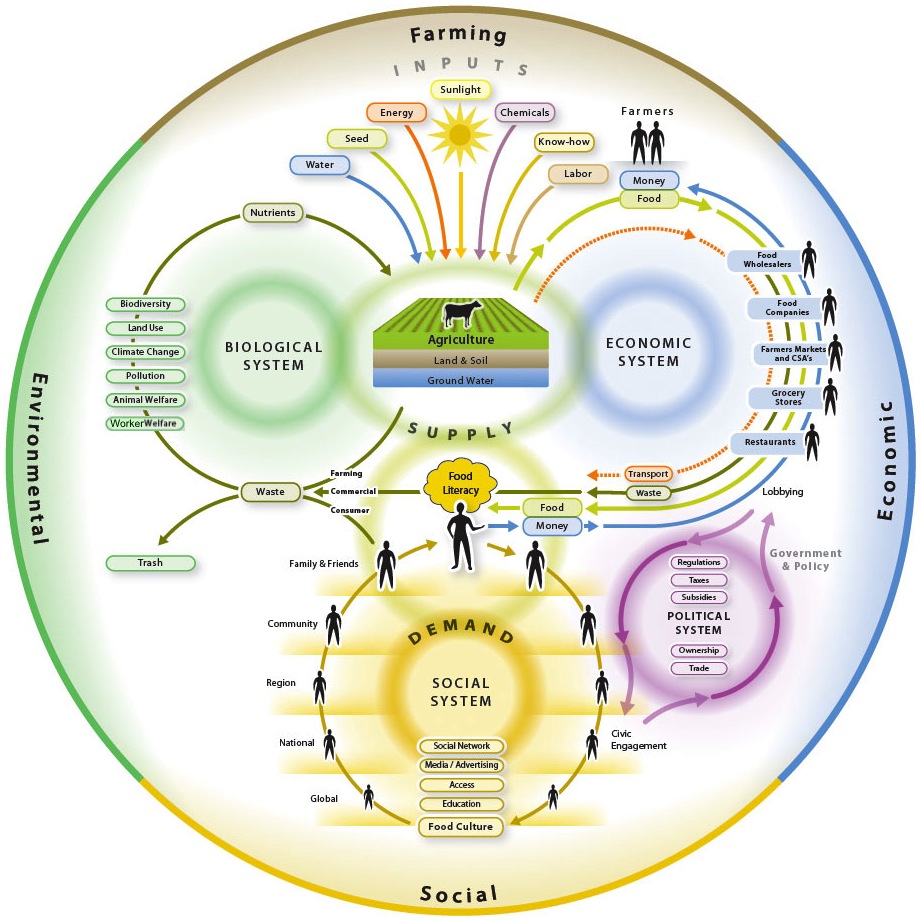




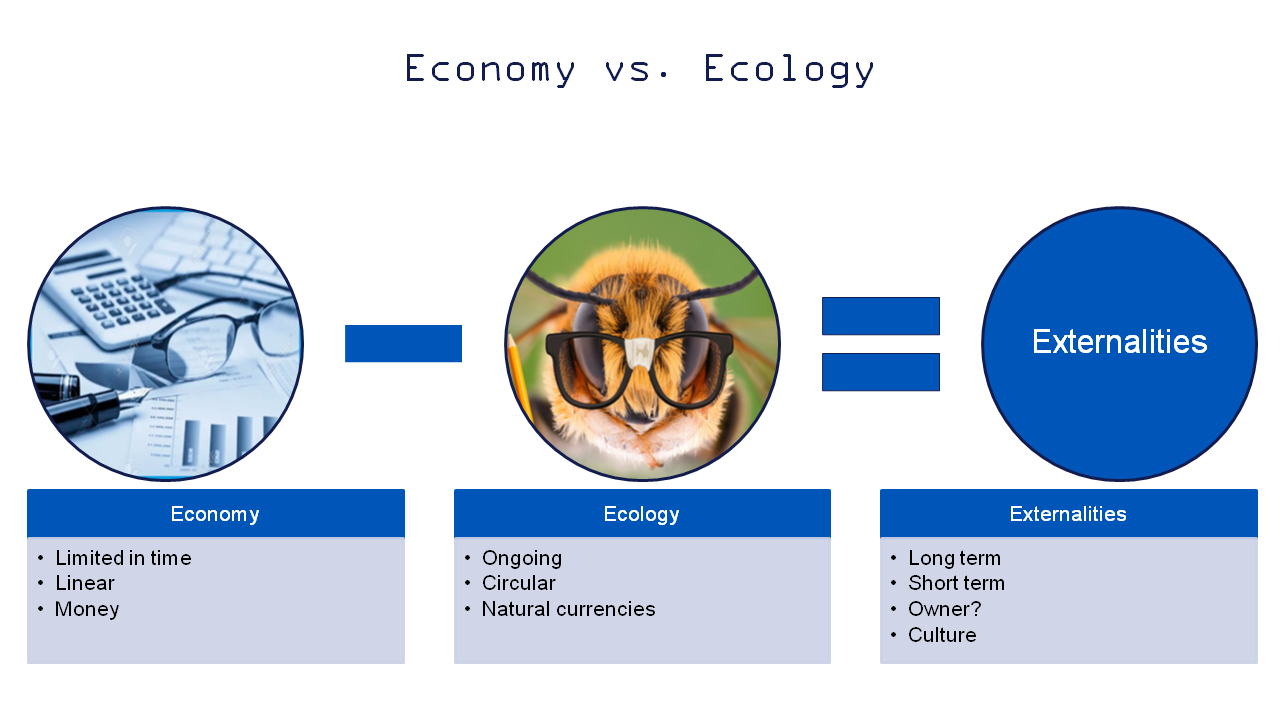


 The Food Futurist Solutions - Anticipate, Adapt, Succeed