Perhaps the ultimate challenge

There certainly is no lack of challenges on the path to feeding a growing world population, but a successful future does not just stop with food volumes. Beyond quantity, it is necessary to ensure that people eat balanced diets. Of course, this is true for those who are food insecure and need help to be able to access more food, but it just as true for the overweight and the obese. The health cost to society is high and is so the cost to the environment. Although excess calories end up as body fat and not in landfills, overweight and obesity should be looked at as food waste nonetheless. After all, body fat is food that has been produced but not consumed for any useful purpose. The problem is only getting bigger as rates of obesity are increasing among the population of emerging countries and are reaching alarming levels. It is not a Western countries’ problem anymore. It is a global one. There is no one particular cause to explain this trend, but it is a combination of lifestyle, example at home and education about the basics of nutrition. We are what we eat and we eat what we are. Diets are undoubtedly a reflection of society and its values.

One of the drivers of today’s economies is growth and too often this concept is restricted to quantitative growth. We must be honest and recognize that our food and agriculture systems still are greatly production driven. Although the idea of a market-driven approach is widely spread, the practice seems to differ, and it looks like it is only translated in marketing-driven instead, always with an underlying production-driven thinking. About all food sector and companies always look for ways to sell more volume. There is competition within any particular industry, but also between industries. For example, in the animal protein sector, poultry, pork, beef and fish are always trying to get a higher stomach share at the expense of one another. Usually, the main decision factor for consumer to make their purchase is the relative price of one type of protein versus the others.

The main message that consumers receive every day is: eat more of this or more of that. Then, it is only normal that they do just that. Why expect any other behaviour? The result is a value system of always more, without really thinking about how it all adds up, while it should be about always enough. Overconsumption leads to waste and to unbalanced diets. Waste is the number one enemy of sustainability, and educating the public about proper diet is actually an important weapon in fighting waste, but it is a difficult one. Although good habits are generally not any more difficult to adopt than bad habits, it seems that the latter group is more attractive. Changing eating habits is all about education. It starts at home and in school. Actually, it is rather easy to learn about the proper ratios between protein, fats and carbohydrates –both fast and slow ones- that are needed in a balanced diet. Information is everywhere, but unfortunately, the lack of education and therefore knowledge about nutrition results in many consumers having no idea how to read labels and how to compose proper meals. If our lifestyles and our needs have undergone major changes over the past five or six decades, physiology of digestion and nutritional metabolism have not changed much at all over the tens of thousands of years that humans have been roaming the planet. It would seem obvious that such an essential element of life should be common knowledge, but it is not. An interesting experiment is to ask people at random what the nutritional needs of an average human being are. Usually, people have an idea about how many calories a person should eat on a daily basis. When it comes to how many grams of protein and even more so fat, then the faces tend to turn blank. Another even more interesting experiment is to ask the same question to people working in food and agriculture. Just go ask how many calories, how many grams of protein and fat. It is an eye opener.

It is possible to make consumer behaviour change from harmful to healthy. There are lessons to be learned from the example of tobacco. To change, consumers need the proper incentives, but the bottom line is that people change only if they perceive the change to be an improvement. Since eating habits rest on powerful psychological triggers, the difficulty is in finding the right triggers and creating a perception of reward. Food producers have a critical role to play in this transformation, and it has to be a collective and collaborative effort with all other stakeholders as well.

Copyright 2017 – Christophe Pelletier – The Happy Future Group Consulting Ltd.

Two legs that make humanity move forward

The tremendous progress that the human species has made since its apparition on Earth is not the result of just good luck. Two qualities have driven our success: innovation and collaboration. There is no doubt that these two characteristics will be essential for our further ability to adapt and overcome future challenges. In this regard, the current dynamics bring some good news and some- not-quite-as-good-yet news as well.

The good news is that innovation is probably livelier than it has ever been in the past. There is not a day that goes by without hearing of some new idea being brought into action somewhere in the world. They will not all succeed, but in the grand scheme of innovation that is the price to pay to benefit from the ones that will make it. Every problem and every limitation is an invitation for a solution and always better ones, too. Since the human brain started to analyse its surroundings and look for better tools to deal with it, innovation has been driven by a number of rather stable incentives:

  1. Survival or just live better and longer
  2. Reducing physical labor
  3. Increasing efficiency, which reduces waste
  4. Helping communication
  5. Increasing mobility and speed
  6. Offering more leisure and entertainment
  7. Making some people a little wealthier

Many of the future challenges fall in these categories, and number 1 and 3 are probably the most critical ones in our dealings with the environment.

If innovation is doing well, the second leg –collaboration- is not at its optimum. In this column, I have expressed my wish to see more collaboration, cooperation and exchanges, several times in the past. Although it does not always appear that way, collaboration is one of the cornerstones of life. Just look at all the examples of symbiosis. It occurs everywhere. It is what an ecosystem is all about; it is the combination of all sorts of individuals that are interdependent for their survival. In the agriculture sector, we know that collaboration happens in the soil; we know it also happens inside the roots of legumes and in the food sector we know how the bacterial interacts with our digestive system. For all these reasons, collaboration should receive as much attention and praise as innovation. After all, good innovations are usually the result of active collaboration. Many ideas come from interacting with others, by listening to what they know, to their experiences and through the feedback they give to our own knowledge and experiences. In my opinion, the risk for sub-optimal collaboration is the result of an always increasing emphasis on competition. Competition is good, as I have written here before, but the key is to find a good balance between competition and collaboration. In Nature, both coexist but with a slight difference with the human attitude. In Nature, the competition is about survival, but the winner takes only what it needs. The “always more” concept does not apply. It is just about “always enough”. If you look at it, it provides a sound basis for a sustainable system, as long as supply can follow that is. And that was the original idea of agriculture: finding a way of adjusting food supply to the needs of the community. Agriculture rebalanced the relation between collaboration and competition. This original principle is somehow too often overlooked. To look at it from the triple bottom thinking, there is another analogy with sustainability or the lack of it. The strong emphasis on competition is mostly the result for always more financial profitability. Social and environmental issues are the result of the imbalance with the other two bottom lines.

To get the best of the combination between innovation and collaboration, the altruistic approach is often the best one. Innovations succeed only if they are profitable, too. From the technical point of view, most solutions to our future challenges already exist. It is just that the numbers often do not add up. In the end, innovation must deliver an added value. Often, the added value is monetary, but not always. On some of the innovation drivers from the previous bullet points, it is clear that time, convenience or quality of life also weigh in what added value represents. Sometimes it is of a quantitative nature, sometimes it is qualitative, and sometimes it is both. The beauty of adding value to others is that their adopting your innovation will add value to the supplier, as long as the innovation is priced properly of course. Innovations that truly add value just about sell themselves. Adding value just brings the supplier in a pull marketing situation, which is much easier, fun and lucrative than the push approach.

The magic word when collaborating is “how can I help you”, mean exactly that and then deliver!

Copyright 2017 – Christophe Pelletier – The Happy Future Group Consulting Ltd.

Feeding the future with focus on health and environment

In my opinion, the food and agriculture sector does not receive enough praise for its performance. Over the past four decades, the world population increased by 80%, which means that farmers have been able to supply food for an additional 3.3 billion people during that same period. Unfortunately, the number of hungry people has remained about stable, around a billion people. Every person who is hungry is a hungry person too many. There cannot be any discussion about that, and there still is a lot of work to be done. This is no small feat. Clearly, there is plenty of room for improvement, especially when you consider that about a third of the food produced is wasted but that means that the potential to supply future food demand is there.

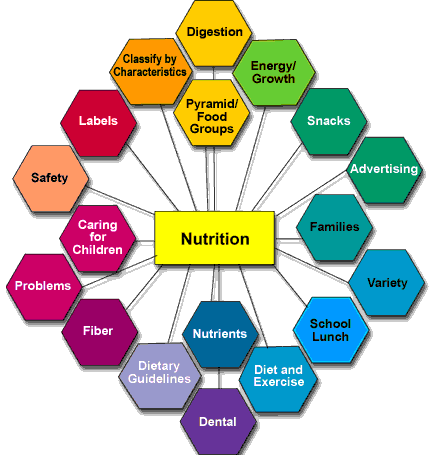
nutrition

Image created by Paula Nettleton Source: Educational Materials Center (EMC), Central Michigan University

The discussions about meeting future food demand always tend to focus on production volumes. Of course that is the minimum requirement but to meet all other challenges, it is necessary to broaden the scope beyond volumes. Production is only half the equation. The other half is consumption. There is a lot of work to help consumption patterns contribute to a balanced future between supply and demand. The ongoing increase of obesity and diabetes are at least as worrying as hunger because of the negative health, environmental and economic consequences. One of the most important roles in the future for the food and agriculture sector will be to help people feed themselves properly. There is a need for this and it goes far beyond a marketing exercise. The basis for success will have to be education about nutrition and home economics. There already is action in these areas but it will be necessary to move towards a collaborative education, centred on physiological needs and how any particular food product contributes –or not- to healthy meals. The purpose will not have to be about enticing consumers to eat more volumes but to make educated decision and pick the right ingredients. Changing the focus from always more to always enough will also require a change in which foods to produce and what their future physical and organoleptic qualities will have to be. It also will change the dynamics of markets and on which criteria farmers get paid. Collaborative education will have to be carried out by and with full involvement of all stakeholders. It will have to place human physiological needs as the primary focus. Consumer well-being will have to come first, before particular interests and before volume.

Making future food and agriculture sustainable requires that we address both production and consumption. Waste and excess do not fit in a sustainable future. Food waste is only a part of the total picture. When food is wasted, all the inputs required, such as water, energy, fertilizers, crop protection and money, are all wasted in the process. Overconsumption is not a sustainable strategy either. It takes a lot of resources to produce all the excess calories and protein than end up producing nothing else than excess human body fat. Until the rise of mass consumption, our grandparents knew what sustainability meant. It was about saving and about moderation. These two concepts vanished from the moment that consumption goods became so cheap that and consumers lost touch with scarcity and long-term negative effects, also known as negative externalities. It would be an eye opener to quantify these externalities and include them in the cost structure of consumer products. The consumer price and/or the producer margin would look different! Although it is quite a difficult exercise to quantify the externalities, just carrying it out would give some good insights about the limitations of the current economic model and in which areas it needs to change. Such a calculation would help rethink many of the existing financial incentives that drive the economics of food and agriculture, in particular many subsidies that find their origin in times where the objectives were quite different than the ones of the future. For example, health issues related to food should be considered as externalities. Many governments have calculated estimates of the cost generated by these two diseases. If society were to be able to quantify what part of the amount should be factored in food, as well as lifestyle and distributed between the entire chain from farm to patient, and to try to estimate the relative part of responsibility between the different links of that chain, it certainly would give a good indication of how to look at future economics of a healthy and satisfied society. The price of food would change but the key would be to have it change in a way that helps a better nutrition and better health while keeping good food affordable.

Copyright 2017 – Christophe Pelletier – The Happy Future Group Consulting Ltd.

Changing economics to overcome future challenges

First, a personal story

A year ago, I moved away from Vancouver to the Okanagan Valley Region some 300 miles east from Vancouver. There, I bought a property with a decent yard where I will have a garden and with a small vineyard. In some way, it is an illustration of what is necessary to foster sustainable practices. The parallel is obvious with some of the global challenges the world is facing and will continue to face in the future. For eight months of the year, the area looks and feels quite similar to the Mediterranean. Precipitations are not abundant with an annual quantity of only 337 mm. Clearly, water is scarce and needs to be preserved, even though an extensive system of lakes fed by mountain snow ensures an adequate supply of water. The region is quite agricultural with many orchards and vineyards, all thanks to irrigation. There are also many lawns in the area and the estimate is that about 25% of the water consumed in the region is just to keep the lawns green.

My plan is to install rain barrels to collect the water from rain and snow and use it for the yard. This is where the economics do not go in parallel with all the talk from politicians about sustainability. Around the house I would need five rain barrels. The lowest and best retail price I can find is of about $80 for a 200 liter barrel. To set up my water collection system, it will cost me $400 to provide me with a 1 cubic meter storage capacity. In comparison, the price for a cubic meter that the municipality charges for water is $0.30 per cubic meter. In the most ideal situation, that is if I were able to collect all the rain and snow through my five barrels, I would at most collect about 30 cubic meters per year. In money, it comes down to a saving of roughly $10 per year. To break even, I’d better hope that the barrels will last 40 years, which they might, but considering my current age, there is a fair chance I may have moved to a much smaller underground dwelling by then. Of course, my example is about quite a small investment and if the return is lousy, it will not change my life. At least, the barrels will help me save water.

The point of my story is that the comparison between cost and benefit would deter most people to consider buying rain barrels. It just does not make financial sense, if money is what matters. I always say that money talks and what it says here is to forget about being sustainable. One of my neighbours also considered installing solar panels on the roof of their house. After comparing the price of the panels plus installation and maintenance with the electricity savings, they discovered that it would last twice the life of the panels to break even. In terms of money, solar panels are a different kettle of fish than my five rain barrels. Recently I saw the price of a propane generator that produces 3650 watts for Canadian $350 while a solar panel that produces 100 watts is sold for Canadian $250. I can understand people decide to not pursue the solar option.

The economics of water and energy savings that I just described can be extrapolated to the much larger picture. All through the food and agriculture value chains, many changes for more sustainable systems face the same kind of dilemma. What makes sense from an environmental point of view often does not make sense financially in the current economic environment. Demanding more sustainable production system is quite legitimate and sensible, but the conditions must also be there to make it happen. The numbers have to add up for farmers and businesses to make the switch. As usual, money is of the essence and it can come from different sides.

First, the purchase price and the cost of operation of alternatives have to come down and be competitive. Either suppliers are able to drop their prices or offer more efficient systems. Governments also can help through subsidies to ease the pain. Subsidies, being public money for the general interest, it is only fair that we all must pay if what we want is a sustainable. Subsidies must of course be set up properly and be effective

Second, the customers, which in a fair value chain would be eventually the consumers, have to pay for extra cost of the better production systems, simply because our consumption societies with their sense of entitlement have to understand that there is no such thing as a free lunch. Such a realization also means that producers also understand that mass production that only deplete resources do not fit in the long-term picture and that value will have to replace volume.

Searching for a new economic model

With the many challenges arising from a growing world population, it becomes more and more obvious that the economic model of the past six decades needs some refreshing. As such providing consumer goods at an affordable price for the masses is not a bad idea. Helping people to have a more comfortable and pleasant life is certainly welcome by most of us. The problem is that the so-called consumption society is not so much aboutpillars-of-economy consumption as it is about people buying and giving their money to someone else. In the current system, consumption is optional. Research has shown that consumers use 75 to 80% of the goods they buy no more than once.  What really matters is the act of purchasing the goods. It is good for growth and the GDP, currently the leading metrics for the state of the economy. The problem is that mass production has gradually shifted from affordability to cheapness and from value to price. It has focused mostly on volume and has not taken into account that consumers would have to get rid of what they bought after usage. Negative externalities have been kept external indeed. Short-term financial results have had the preference and long-term impact has been ignored. The system is hitting a wall and issues of greenhouse gases emissions and waste of resources are now becoming urgent matters to address. All industries will be affected one way or the other. Food and agriculture will be no exception.

The big question is how to change the system without having it implode. That is not an easy one to answer but sooner or later it will have to change. Vision and leadership are crucial to manage the transition. I wish I had seen more of it. So far, I see and hear more about pro this and anti that. It is highly insufficient and produces more noise than results.

In my opinion, the problem is not so much about growth as it is about what growth means. Over the past decades, growth has been mostly about volume numbers. It has been a quantitative growth. I believe that the best transition towards the next model is to focus on what I call qualitative growth. It is not so much about volume as it is about adding value to the buyer. For consumers and countries, qualitative growth would be to quantitative growth what EVA (economic value added) is to turn-over for a business. It is about prosperity.

For food producers, such a shift will lead to a different approach. The most valuable areas of value added for consumers and society lies probably in providing good and enjoyable nutrition, yet affordable, through advice and education. The industry will have to help consumers eat better and help them have healthy diets. It will go beyond just supply food. Consumers will also have to rediscover what proper nutrition is. Initiatives such as the Global Access to Nutrition Index can play a pivotal role in helping food producers make the transition towards quantitative growth. The food sector has also an important role to play in keeping our environment livable. The trend towards transparency is an important part of the evolution on both health and environment fronts.

Of course, such a change of economic model means that the economics must change, too. It is also essential that those who do the right thing must be rewarded. A new reward system must be introduced in the set of rules and regulations so that producers get the proper incentive to make the shift because adding the type of value that I mention to consumers also requires a different price tag in the store, or at least a different breakdown of costs and benefits along the entire chain from producers to consumers. How to distribute fairly the cost tag of the change is still open for debate. The reward system has to apply for the business activity by allowing margins to be comparatively competitive in the new situation. Consumers doing the right thing must also be rewarded. The reward system should also apply at the remuneration level. In particular, the share of qualitative improvements in companies’ bonus systems will have to increase at the expense of qualitative growth targets.  The adjustments needed in the food and agriculture sectors will not end in this sector. They will have to include other area of government. In particular the health sector will have to be involved, as the consequences of the quality of nutrition on health are obvious for individuals and society both at the personal as at the financial level.

I also believe that such a shift in economic model will mean that business partners within the value chain will have to challenge each other to carry out the transition and it will become a critical point in choosing with whom to do business in the future.

Copyright 2016 – Christophe Pelletier – The Happy Future Group Consulting Ltd.


Curiosity: it’s where the future starts

The challenges ahead are bigger than ever before, and be assured that they will bigger in the future. The good news is that progress and new developments in science and technology are bigger and faster than ever, too. From a technical point of view, I would dare to say that the solutions to the challenges already exist or are very close. Often, the problem is that these solutions are not immediately economically viable. In such a fast-changing world, curiosity is undoubtedly one of the most desirable qualities to adapt timely and find new ways of running the business.

Perhaps, it is because a lot of my work is about finding as much information and gathering as much knowledge as possible about all sorts of technologies, facts, systems, science and experiences that I find curiosity quite natural. Perhaps it is also because I have a curious nature. In my daily activities, I find that people are relatively not curious enough. I also can see that the ones who have that quality are always ahead of the pack. What is really amazing is how much is already out there. The trick is to find it and to know about it. Often, the information originates from very different business sectors or comes from other parts of the world or is available in a different language. I can see regularly a lot of organizations busy reinventing the wheel, going through the pain of setting up research and spending vast amounts of time, money and resources to find out results that are already available and that they could have taken over and adjusted to their particular situations. Curiosity can deliver huge savings.

Curiosity is quite time consuming. That is a fact and its main drawback. This may be the reason why it does not happen enough. The quest does not always deliver, although for those who have a proper strategy, the yield is quite good. Curiosity, for a business, cannot be a random activity. It has to be structured and carried out with discipline. There is quite a similarity between curiosity and access to food. There are those who know where to find the tasty mushrooms in the woods and those who get lost in the forest. It is the same thing when going out there to find knowledge. Some are talented and find it often and fast and others just wander endlessly without spotting anything significant. Just as it is important to know the right spots to find food when hunting and gathering, there are some places where the good knowledge is. As with food, it is important to know the supplier and know the origin of the knowledge. To pursue the comparison with mushrooms, some knowledge is good and some can be toxic. The supply chain is just as important, especially considering how fast and far social media can replicate and distribute information. When it comes to knowledge, the reliability, seriousness and quality of the sources is of utmost importance. A discerning knowledge consumer must be critical about what they find. A solid critical sense is of the utmost importance. Regardless of whether the knowledge is found through a hunting/gathering activity or comes from a knowledge farm, it is essential to double-check its validity. The packaging can be deceiving.

Next to focused curiosity activities, it is also important to encourage what I would call open curiosity, in which there is no particular objective but just letting new findings lead to new discoveries. There is no business discipline involved. It more often research you would do in your free time. One piece of information generates interest to know more and you just follow. It is similar to a child-like exploration in which each answer triggers the next “why?” question. It is pure learning. There is no way to tell when or even whether the new learned knowledge will be useful, but there is no such thing as too much knowledge. The trick is to be able to retrieve it when it is needed.

Another important aspect of curiosity is to link experience to knowledge. Usually, knowledge is the result of certain protocols. The knowledge itself takes its full dimension and value only through the use we make of it. Some people make good use and others do not. When gathering new knowledge, it is essential to also learn about the lessons from the experience of those who used it. Why did certain things work in certain conditions and others did not? Which factors influenced the outcome and how would different conditions or a different environment affect the outcome? Getting the big picture is a very important part of curiosity. Expanding the scope and seeing how the pieces of the puzzle come together are the foundation of future successful strategy and adaptation.

Curiosity is a great asset when it comes to face and prepare the future. It is not the whole story, though. Food and agriculture are not intellectual exercises. They must deliver concrete products and results. It is nice to be curious but what do you do with that? The answer to this question is quite simple: action.

According to the saying, knowledge is power. Knowledge is true power only when it is active and circulates. Knowledge that remains in a brain or in a drawer is not very useful for the greater good. The first step that I advise curious people to do is to share what they learn. It is even easier today with the Internet, and there is a lot of knowledge out there. By sharing, I do not mean simply copy and paste or click the share button. Before sharing, it is essential to make sure that what you share is quality. There is too much information that is spread on social media while clearly not critically reviewed, not to say not even read, as it is quite often the case. The mindset here is a mix of enthusiasm, critical thinking and practical service orientation. The knowledge must be correct and the message must come over. It also must be useful to the recipients. It must connect to their needs and add value to them. The final result has to be better food through more efficient and sustainable systems that are financially viable. In the food and agriculture sector, it must lead to always more collaboration and knowledge transfer in all directions within the entire value chain. Often, the weakness of communication is that it stays too long in the same circle and other links, consumers in particular, are kept too long out of the loop. It results too often in misunderstanding, distrust and erroneous perception.

Through collaboration and brainstorming, curiosity helps create a more accurate and achievable vision of the future, on which action can further be carried out to shape the future. From this angle, it makes no doubt that collaboration between all stakeholders is an ongoing process. This is especially true with technology. There are new developments all the time and it certainly takes a curious mind to be able to keep up with novelties. It actually takes many curious minds, considering how huge the quantity of knowledge and information is. It also takes minds that can connect all the dots, and also connect with each other. Although time consuming, the back and forth collaboration, together with ongoing feedback about performance and new demands, allows all links of the chain to know better what the objectives are and how to foster ongoing improvement. As many new technological developments come from outside the food and agriculture sectors, I believe it is critical that the food producers be proactive in the development of technologies and applications, but stating clearly what they expect from technology suppliers and tell them what they expect from them. It is never too early to let them know what your problems, limitations and/or objectives are, so that they can work on it as soon as possible. Being proactive will help speed up the development of the right products, systems and applications.

In this process, leadership is of the essence. Leadership is essential to create the right dynamics to make knowledge transfer happen, fast and well. The role of leaders here is to make knowledge transfer attractive and stimulating for others, so that more stakeholders participate in the development of innovation. The more pressure they will be on suppliers to bring better solutions to the food sector, the higher the chances it happens, indeed. Leaders must also foster connections and networking across the disciplines, even or actually especially with partners outside of the food and agriculture sector. A vision that includes the bigger picture will have more chances of stimulating the cross-discipline and cross-sector collaboration. At the same time, it is crucial to stay practical. The goal is to produce food, and that must be in the minds of all participants.

Curiosity is really the starting point. It feeds an entire chain of ideas and decisions that are the basis for improvement. There is no doubt that fortune favors the bold. In the never-ending quest towards better foods and better agricultural practices, such a process becomes an illustration of “the best way to predict the future is to create it”. This saying may have not been so true as today. Progress and food security depend on it.


Copyright 2016 – Christophe Pelletier – The Happy Future Group Consulting Ltd.

Food fights will go on and it is a good thing

A funny thing happened to me when I moved from Europe to North America in 1999. In Europe, I was used to having demanding customers. Issues about how food is produced have been rather common during pretty much my whole life (I will turn 55 later this year so that you have an idea of how long it has been).

When I came to North America, I dealt with a completely different situation. I did not get some of those 30-page product specification documents from retailers, foodservice and manufacturers with all the do’s and don’ts of how to produce food. I just got some 30-page disclaimers and liability documents, for the customer to dodge any heat should there be a law suit some time down the road instead. Before, I left Europe, I remember my Managing Director from the poultry company I worked for telling me how lucky I was because “over there (North America), customers hardly ask anything, you just sell them what you produce”. I remember looking at him and thinking that it could not be possible. I was wrong and he was right. For as much as European consumers were picky on all things such as hormones, antibiotics, GMOs, animal welfare, feed composition and origin, North American consumers, and retailers as well, seemed totally uninterested about production methods. It was almost eerie and to be quite frank, it was boring, because I could not see any challenge. One of my American colleagues enjoyed telling that it was the way it was and that it would never change because that is how Americans are. I disagreed but it certainly appeared he was right for a few years. Things have changed now. The American consumer has become more demanding and the dynamics of the discussions have become quite similar to what I had known in Europe for decades. It is actually rather easy for me to “predict” the future as I am living in an ongoing déjà vu nowadays.

The debate about food has indeed evolved into food fights. If there is one thing that I always found remarkable in my professional life in the food and agriculture sector is the issue of the producer-consumer relationship. Maybe it comes from my family background, but I have never understood why the food industry is so defensive when challenged by consumers or any organizations. My father used to be a butcher and I spent quite a bit of time around the shop and with him on the markets. I discovered very early that customers would ask the weirdest things but that what matters is not the factual truth but whether they trust the supplier. If you cannot deal with that fact, I suggest you do something else than producing food. Food is loaded with emotions and that is that. If consumers were rational, there would not be any diversity in foods and other consumer goods. They always would do the right thing and would not pay attention to all the marketing efforts that support the world economy. If consumers were rational, I bet you that they would deconstruct any PR by spotting all biases. If consumers were rational, they would focus on nutrition only and they also would reject anything that is unsustainable. I have a feeling that a lot of people who resent consumers’ emotions would actually be out of business because they would deal with a much tougher audience than the current consumers. Be careful what you wish for. Further, it is also clear that those who criticize consumers for not being rational, are not rational themselves in their consumption patterns, either. Nobody is.

Last year, a book titled No more food fights hit the shelf. Considering the author is actually supporting the conventional agriculture and has a problem with consumers and activists who challenge the food system, it is actually ironic. It reminded me of the words of my Managing Director about the North American market. What could be better than the good old days when the agribusiness could push their products to lethargic consumers? It sure must have been a good time, but it is gone. The book’s author, just like the agriculture sector, does not want anybody questioning the food system. They don’t want anyone looking over their shoulders and find out the bad and the ugly, at the risk of not showing the good either. I do not understand the food producers’ reluctance. If you are proud of what you do and what you produce, as they claim, you are proud to show the world and to share that goodness. You are also willing to always improve and make your customers satisfied. In my opinion, the attitude is really more about being production-driven –or should I say production-centred- than market-driven. The difference is that the former is about oneself and the latter about others. That difference actually reflects quite well in term of whom consumers trust. They trust the latter group, but are very distrustful of the former. I can understand both attitudes because I have filled functions that were more oriented towards technical operation as well as commercial functions.

I started my professional life in a position in a technical and scientific field, which suited me well by then because I was a hard-nosed rational fellow with a tendency of not accepting unfounded non-sense. Then, by accident, I got myself involved in a commercial role, which opened me new doors, and my eyes, too. The successful experience led me to other commercial positions and the lessons that I had learned in my father’s shop, I rediscovered on a daily basis in the multinational company. There is a huge gap of perception of the customers between the different departments of a company. Very often this discrepancy is reflected in the dynamics of the sales and operations departments of a business. One wants to say yes and the other wants to say no.

Food fightPersonally, I find being challenged a very good thing that can happen to a producing company. I would agree that negative feedback is never pleasant, but even though the message can be rough, it is feedback after all. In this regard, it should be handled in the same way as customer complaints, the good kind of handling that is, not the denial kind. The latter is usually more of a reason for a customer to drop a supplier than the problem that occurred in the first place. Business, like it or not, is first of all about human interaction. Money is only a means to secure it. In the course of my career, I had to deal with “consumer resistance” in quite a few occasions, but what it put into motion brought me most interesting and rewarding experiences. They helped me to learn about business and to understand the complex dynamics of entire value chains faster than ever. They helped me grow and that experience has made me one of those who understand the ins and outs of marketing, production and management in a variety of discipline the best. I am thankful to my “difficult” customers forever.

The reason is simple. By being very demanding, customers forced us to be better than ever and be resourceful to find ways of both meeting their expectations and allow us to remain profitable. Quality only improves through pressure from customers and a competitive environment. It very rarely happens as the result of a voluntary decision, simply because there is a cost at first. In the case of my past professional experience, needless to say that adjusting to consumer demands was never an easy process internally. On the one hand, there was the source of the company’s revenue – in other words salaries – at stake, and on the other hand, the natural drive to keep production costs under control. The key was to not lose our focus on the one essential parameter: the margin. Margin management with market vision really delivered amazing results in such situations. Another essential point was to negotiate everything and always get something in return for any effort made on our part. I remember some very tense conversations with Marks & Spencer in the time the talks were about the removal of meat and bone meal from animal feed. We showed them the impact of their demand on our bottom line and made clear that if they helped out on the bottom line we would go along. Because we were offering top quality chicken, we were able to find an agreement. For as much as we could not afford to lose their business, they did not want to lose us as a supplier, either. The willingness to accept challenges from the market and the drive to always improve our products and service served us. We would not have been in a position to ask anything in return if we had produced a basic commodity. By aiming at being the best, we had a sustainable competitive advantage. Finally we were able to have them accept to buy more from us so that we could dilute the extra cost over a larger volume and have more efficient logistics. The result for us was actually more volume of above average margin products. The customer had to say goodbye to some suppliers who were not ready to go the extra mile for them, and we also said goodbye to customers who would not support us in the cost effort. In the end, a very tough challenge ended up in a strong long-term profitable win-win situation. We came out of a crisis that could potentially have destroyed us stronger and more respected than ever. This is only an example of a tough market challenge. I went through similar situations in the various sectors –feed, pig, poultry and aquaculture- in which I have worked. The added value got in the millions per year each time.

Food fights are good, but they work only by picking the right partners in the market. As a producer, you need to have customers and make the right choice to achieve this goal. As a consumer, you need to find a producer that listens to you and meet your expectation. They will be disagreements along the way, but in the end both parties can benefit, but it will not just fall on your lap. Fights are a part of life. On the first day of my last year in the Agricultural University, the head teacher had a short presentation. He said that life is about:

  • Learning
  • Creating

Those two points were very well received by the students. Of course, it fits quite nicely with a crowd of intellectuals. The third point was received by the chilliest silence I can remember. The third point was…

  • Fighting!

Yes fighting is an integral part of life. We all fight all the time. We fight with competitors, with other drivers, with customer service representatives, with sales people, with the tax man, with retailers, waiters. You name it and it you will find an example of fighting. So no more food fights? Forget it, it won’t happen. In my experience, the only reason why anyone asks for a fight to stop is when they are losing. In this case, if they are losing, it is more because of their refusal to listen to where the market is going than because of those bad irrational consumers. The smart food producers, big or small, have all made moves in the direction of consumers’s demands because they know that is where the growth and the future are.

Copyright 2016 – Christophe Pelletier – The Happy Future Group Consulting Ltd.
What future do you want?

What future do you wantUsually, when my customers contact me, their purpose is to have me tell them my vision of the future. Since the dawn of time, people have always had the secret hope that someone can tell them about their future. People have always sought to reduce uncertainty and looked for a more predictable future, be it in the stars, in a crystal ball, in cards or goat insides. If the purpose is the same, there are different attitudes and expectations when it comes to the future. I would identify four main types of requests.

Some are interested in what I would call Fantasy Future. Their expectation is not so much to have a realistic view of the future but they want to see a picture of unlimited possibilities. Their focus is primarily on the potential of new and as futuristic as possible technologies. They want to stimulate their imagination as much and as possible. Presentations that sound a bit like science-fiction fit quite well for such audiences. Whether such a future is actually possible and viable is secondary. Escaping from hard rational reality of day-to-day operations is a great way of getting new hopes, see new opportunities and building a dream about how thing might be. There is no real timelines for when that future might take place and it is fine, as it is not so important in this context.

Another form of future that is also in the realm of fantasy but more dangerous is what I call Wishful Thinking Future. For as much as with the Fantasy Future, it is clear that the predictions are quite speculative and the tone is more one of entertainment, those who tend towards Wishful Thinking Future have the tendency to think that, just because they believe in a particular scenario, it will and must happen, regardless of whether it makes any sense from a technological, practical or economic point of view. Usually, those who look at the future from the wishful thinking angle rarely do a thorough analysis of the actual possibilities and of how sensible their scenarios are. Quite often, they do not have the thorough set of skills and knowledge to carry out such an analysis. They seem more interested in pushing their dogma on others and they generally have a hidden agenda. The danger here is that it misleads and even possibly deceives the public. In the end, it is a major waste of time and money. Unfortunately, Wishful Thinking Future is much more common than one may think and unfortunately not that rare with some so-called influencers with some ego, and that is where the danger lies.

I enjoy some Fantasy Future once in a while. It is entertaining and, usually, the audiences that are interested are quite relaxed and curious. There is always a good energy in such meetings. However, I always present the futures scenarios in a very practical way to connect my story to the day-to-day activities of my clients. I also always present the limitations and what I think the odds of such scenarios are to actually concretize, so that my clients keep in mind what to expect. I do not engage and cannot stand the Wishful Thinking Future. Making people believe things that are not realistic, not possible or, worse, not true, is not in my DNA. I have exposed some non-sense quite a few times in the past, which is usually rather simple with the help of grade 6 math. Yet, I am always surprised how non-critical most people are and many fallacies get spread quickly and reach large numbers of people through social media. Fortunately, there are more alternatives to sketch a more sensible future. We live in a world where many one-eyed try to be king of the blind, I see my function to get my clients have 20/20 vision.

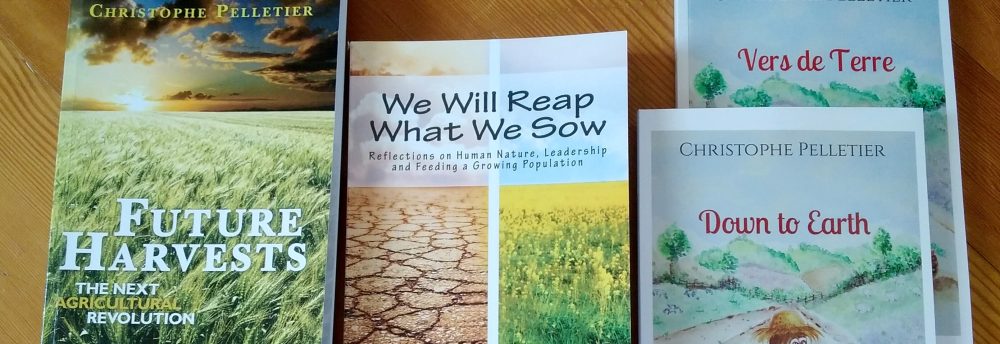
One approach towards realistic future scenarios is what I call the Likely Future. It is based on actual trends and historical patterns. The scenarios are the result of a rational analysis and usually such scenarios have a high probability to realize. In a sense, it is a cautious approach of the future. On the one hand, it takes into account facts and data and on the other hand the emotional and psychological aspects of human behaviour. It has little to do with fantasy and absolutely nothing with wishful thinking. It is based on verifiable facts and the scenarios can be discussed in a rational manner. It may not be the most exciting exercise but is creates the basis for the development of alternative scenarios and to assess their feasibility and assumptions by identifying areas of uncertainty. I wrote my first book, Future Harvests, with this approach in mind. What was the result? Pretty good because most of the issues that have now gone mainstream were all mentioned in the book, which I wrote in late 2009 and early 2010. Many other issues mentioned in the book certainly would deserve to get the same exposure but getting the message to the average person is a baby step process. Clearly, my approach of likely future works. I wanted to see whether the world could feed 9 billion people. I just wanted to get to either Yes or No, and I found the answer, and I also debunked a lot of myths and fallacies in the process. To me, the Likely Future is a good first step towards a strategy, but it is only a first step. By connecting such scenarios with resources, ambitions and desires for the future, it is possible to go to the next approach of the future, in my opinion the most interesting but also the most challenging: the Desirable Future.

The Desirable Future is really a lot of fun to investigate. It mixes the Likely future with the development of a vision. In this regard, it makes both brain hemispheres work. It combines a rational approach with strategy, creativity and leadership. By using the Likely Future as a basis, it aims at not taking the outcome as inevitable. It is a matter of finding out what will be if we act “normally” and then challenge it to deliver a better prospect. It leads towards a positive, collaborative and stimulating vision of the future. It is an extensive exercise that includes many disciplines and many stakeholders. Futurists mostly like to talk about technologies, but building the future depends much more on leadership and managing human nature than it does on technology, which will only offer tools to achieve future goals. Technology is only as good as the use we make of it, as I explained in a previous article. Earlier on, I mentioned both brain hemispheres having to work together, but the cooperation goes beyond what is inside. It calls for a collective approach. It requires enthusiasm and respect of others. It is about building a better world for all and not just for a few. There will not be a better world if a select few build a future for themselves only. The Desirable future is by far my favourite approach. It is energizing and an endless source of hope and happiness for me. This is why I sketched quite a few avenues about the Desirable Future in my second book, We Will Reap What We Sow, which was ahead of its time when I wrote it and still is (unfortunately?) and still will be for years to come (that’s fortunate for me!)

So, dear reader, what future are you most interested in? The answer is important because it will shape yours!

Copyright 2016 – Christophe Pelletier – The Happy future Group Consulting Ltd.

Transparency is a market-driven exercise

Among all the trends in food markets, transparency is a tough demand to meet. As such, it is only natural that consumers have questions about what they buy and want to be sure that they buy something they feel comfortable with. In times when the food economy was local with everyone knowing each other in small communities, the food supply chain seemed transparent. With the separation of rural areas and urban centres and the increasing distance, both geographical and relational, between consumers and the different links of the chain, the distance in trust increased, too. Add to this a few scandals through the years and the result is a feeling that something is broken in the world of food.

The renewed desire for transparency is nothing than a cry for trust. Since the personal relationship with suppliers in many cases no longer exists, trust cannot be just a matter of knowing the farmer, the baker or the miller. Today’s transparency is about verifiable facts. Today’s consumers, unlike their parents or grandparents, do not want to be told a story anymore. If they don’t trust you, they won’t believe you anyway. They are used to search online for everything, with more or less success when it comes to the truth, but they nonetheless want to find out for themselves and figure out on their own what to think. Today’s concept of transparency is replacing PR, which is a one-way push communication technique. Today’s consumers want a one-way pull information platform. That is all the difference. PR is obsolete, but most food producers still have not come to this realization.

The prospect of having to collect, update and disclose all information through the chain from DNA to retail store or restaurant seems a daunting task and for many food producers, it feels like an overwhelming request. It seems and feels that way because it is. It is rather close to some Herculean task. One of the questions I often get is how much do consumers want to know and should everything be available? My answer is that in theory, consumers want to know everything and so it all should be available indeed but in practice, it is somewhat different. Consumers do not really want to know everything about how their food is produced. Well, maybe some do but they are very few. Most consumers do not even read nutritional labels, so they won’t bother spending hours or more to learn everything about the bread or the chicken they just bought unless something serious triggers it. So, what do the large majority of consumers really want? They don’t want to know everything but they want you to be able to answer them any question they have. They want the certainty that, should they have a question about their food, they will get an answer, the truth and that nothing will be hidden from them. Transparency is much more about trust and truth than it is about hard data. Yet, the way to get there is through data and open access.

TransparencyThe amount of data that can be collected is huge and so is the task to set up your transparency system. However, regardless of how much data you collect and share, your transparency performance will always depend first on making transparency one of the pillars of your organization. By that, I mean have the genuine willingness to engage in a candid and honest interaction with your customers and consumers. Genuine, candid and honest are key words when it comes to transparency. People will sense if you are so indeed. If they sense the opposite, you will not gain trust and the perception of your company will further deteriorate. Consumers will forgive honest mistakes when you admit you made one and are willing to do what is needed to correct it, both inside your organization as towards your customers. Consumers will accept that you do not necessarily have all the answers ready but that you are willing to do the research and come back diligently to them with the information. Although immediate response has become an expectation in the digital world, people understand that sometimes a bit of time is needed. Although data is important for transparency, attitude is at least just as much. By being responsive and handling difficult conversations in a mature manner will get you a long way. In a transparency approach, there is no need for defensiveness. You open the doors and you get out of the way! Of course, the mix of transparency and data brings the issue of boundaries. There is a fine line between what is useful information for customers and what is critical information about the company and information that affect competitiveness. Consumers will understand that some information is sensitive enough to not be disclosed. In this process, too, it is essential to be genuine, candid and transparent as long as it is not an attempt to hide something. Remember, transparency is a tool to increase the consumer’s trust and loyalty!

Copyright 2016 – Christophe Pelletier – The Happy Future Group Consulting Ltd.

Nature will reshape food value chains

The recent climatic events, in particular droughts, have attracted more attention on future challenges for food production, and rightly so. Unfortunately, the mainstream media cannot help presenting the as all gloom and doom. Certainly, there are very serious reasons for concerns, but solutions can be found. I wish the media would present more examples of positive actions to face and overcome the challenges.

It is not easy to deal with a changing environment, especially when it is impossible to predict accurately what the change will be. Predictions about temperature increases are useful but they are quite insufficient. An increase of 2 degrees on average will be different if the standard deviation is 1 degree or if it is 20 degrees. Other factors such as hours of sunlight and precipitations (including their nature, frequency and intensity) will impact agriculture at least as much as average temperatures. Changing climatic conditions will not only affect plant growth and development, but they will change the ecology of weeds and pests as well and that needs to be factored in future forecasts and models

Nature will reshape food value chainsA special attention on water is necessary. Without water, there is no life. Unfortunately, over the past few decades, wasting natural resources has been a bit of a way of life. The issue of food waste has finally received the attention it deserves, but the waste is not just about food. It is about all the inputs such as water, energy, money, time, and fertilizers. Water is still wasted in large quantities. Just compare how many liters a human being needs to drink compared by the amount of water that is flushed in bathrooms every day. Before the housing crash of 2008 a study in the US had estimated that lawn watering used three times as much water as the entire national corn production. But the issue of water is not just about waste. It is also about preserving water reserves. The late example of the drought in California illustrate what water scarcity may mean for food value chains. California is not only a major agriculture power house, but it exports a large part of the production outside of the state’s borders. The issue of water scarcity and the dwindling level of the Colorado River are not new for Californian agriculture. It has been known for a couple of decades that problems were coming. California produces a lot of water-rich fresh produce by means of irrigation. It actually has been exporting its water in the form of lettuce, spinach, melons, strawberries and citrus far away to places from where the water will never return to California. The water loop has been broken wide open and that is why, among other reasons, the system is not sustainable. If California can no longer supply its current markets, it will have to rethink its target markets. At the same time, other regions, that may not be competitive with California today, because externalities are never included in the cost of production, will eventually take over and replace the Golden State as suppliers for some productions. Unfortunately for the future, California is not the only region with a water problem. Saudi Arabia changed its food security policy a couple of years ago as the country leaders realized that trying to produce all its food would lead to a severe depletion of its available drinking water reserves. Instead of pursuing food self-sufficiency at all costs, the country chose to find other supply sources through international trade and through the purchase of farmland in foreign countries. The examples of California and Saudi Arabia demonstrate how natural –and demographic- conditions shape food value chains. The issue of water is not just about produce. Animal productions require usually more water than vegetal ones. In the future, water availability will surely affect where which kind of animal products are produced. New regions will arise and old traditional ones may review their strategies from volume-driven to higher margin specialty animal products market opportunities because of environmental constraints.

Climate change and water scarcity show how international trade can actually contribute to food security when done responsibly and with long-term vision. The prevailing model of producing where it is cheapest to produce without taking into account negative environmental externalities is facing its own contradiction and demise. The next model will be to produce not only where it is the cheapest to produce but where it is sustainable to do so. When water runs out, it is no longer possible to ignore the externalities of a production. When water becomes scarce, it gets more expensive. The law of supply and demand commands. When inputs get more expensive, several things happen. The economic model shifts. Priorities and externalities change, too. At first, producers try to find ways to increase efficiency and eliminate waste. The benefits outweigh the additional costs. Uncertainty stimulates innovation. New systems, or sometimes old ones that found a second youth, replace the current ones. If that does not work well enough, then producers start considering producing something else to ensure the continuity of their operation and find new business.

It is not the first time that our natural environment changes. Finding successful solutions to deal with it really are about our ability to adapt and to preserve our future, as it has been the case in the past. The challenges may be of a magnitude like never before, but so are our knowledge, our technical abilities and the tools present and future.

From an agricultural point of view, adapting to a new environment is about finding the type of production that thrives under new conditions. It may mean different areas of production for some species. In North America, there is already a shift for corn. Iowa has traditionally the main grower, but the corn production area is now expanding north. Minnesota is now producing more corn than in the past and so are the Canadian Prairies. Similarly, the production area for soybean is shifting north. Minnesota is growing an increasing volume of soybean and even in the province of Manitoba in Canada, soybean production attempts have been carried out since a few years.  It is the result of better production conditions and the development of new varieties that can adapt to new less favorable climatic conditions. Because of the local supply for soybean, the development of aquaculture with local soybean products for fish feed is now considered a long-term possibility in Minnesota among others. In Europe, corn production regions also saw a shift to the north for corn during the 1970-80s thanks to the development of new varieties, which largely contributed to the growth of dairy production in these new areas through the widespread use of corn silage. For the future, there is no doubt that genetics will contribute again to ensure food security. There is currently a lot of work done to develop varieties that can withstand droughts, floods or soil salinity. The ability to know the complete genome of species, to spot genes through gene markers, to be able to create new varieties that are less sensitive to diseases help speed up the development of crops that can thrive under future conditions. The recent developments in synthetic biology are quite interesting. Research conducted at the IRRI (International Rice Research Institute) on the development of rice varieties that can have a higher photosynthesis efficiency and thus higher yields could open new perspective for a more productive and more sustainable production.

Next to the development of better and more adapted seeds and genetic material, the development of new technologies that I described in a previous article will bring a number of effective solutions as well. In particular the rise of precision agriculture is certainly quite promising. The ability to deliver to the crops exactly what they need when they need it at the right time and at the right place in the right quantity will help reduce the environmental impact of agriculture while offering the possibility of delivering higher yields. Similarly, in animal production, there still is room to improve feed efficiency. It can happen through further genetic improvement, the use of more efficient feed ingredients and feed composition and through better farm management. The latter is definitely an essential facet of a better future for food production. Better and updated skills for food producers will help being more efficient, more productive and more sustainable at the same time.

An area that is often forgotten when it comes to the future of food is the functioning of markets. If demand for certain products, and in particular animal products, increases faster than supply, price will go up and there will differential increases between the different types of products. As most consumers, unlike what marketers sometimes tend to make believe, still choose what they eat depending on the price of foods, there will be shifts. Some productions will thrive while others will struggle.

As prices still will be an essential driver of the location of the various vegetal and animal productions, markets and environmental constraints will increasingly have a joint effect. In the future, the dominant economic model of producing where it is the cheapest to produce will evolve. As the pressure on water supplies, soil conditions and pollution issues will keep increasing, the model will include an increasing share of negative externalities. They are the long-term costs that are never factored in the production costs but that will affect future production economics. Externalities are the hidden side of sustainability and they will determine the future map of agriculture, as it will no longer be possible to ignore them. Choices will have to be made between short-term financial performance and the long-term ability of various regions to be able to produce, and to keep producing, the volumes and the quality specifications that are needed by the different food markets of the future.

A friend of mine told me a couple of years ago after a trip to Asia how she could see from the plane the large plantations of palm oil trees, and how they had replaced the jungle. She described her impression as the view resembled the strategic game of Risk to her. Yes, climate change and water availability in particular, will reshape food value chains because agriculture, regardless of it scale, is a strategic activity. It is about life and death. It is about peace and war. Future strategies for both global commodities as well as for local food value chains will integrate Nature’s new deal of precious resources and conditions of productions. Together with the geography of future consumption markets, world agriculture will readjust, relocate and the Earth will look different once again.

Copyright 2015 – Christophe Pelletier – The Happy Future Group Consulting Ltd.
Beyond just technology… the human factor

Early July the SeaFest 2015 event was held in Ringaskiddy, Co. Cork, Ireland. The Our Ocean Wealth conference was aimed at showing the potential of the sea as part of a successful economic development for Ireland. I had been invited by BIM (Bord Iascaigh Mhara, the Irish Seafood Development Agency) as a speaker and my presentation was about future technologies and how they will change seafood production, both in fisheries and aquaculture. One of my previous articles, “Robots, sensors, drones and big data are coming to the sea, too” had caught some attention.

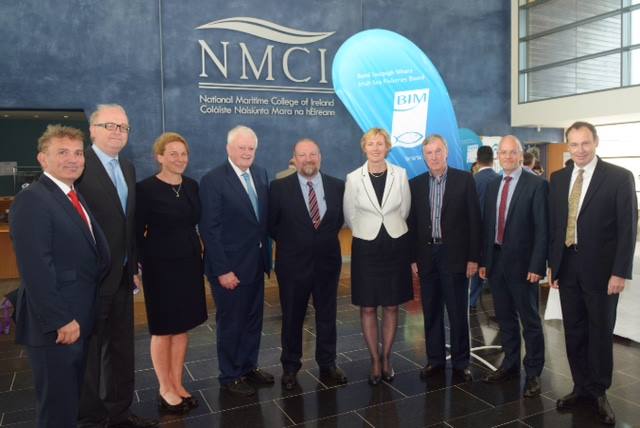
From left to right: Joe Gill (Goodbody Stockbrokers), Susan Steele (SFPA), Kieran Calnan (BIM), Donal Maguire (BIM), Helen Brophy (UCD Smurfit Business School), Eddie Power (Green Isle Foods), Øyvind Oaland (Marine Harvest) and Yours Truly

From left to right:
Peter Marshall (RS Standards), Joe Gill (Goodbody Stockbrokers), Susan Steele (SFPA), Kieran Calnan (BIM), Donal Maguire (BIM), Helen Brophy (UCD Smurfit Business School), Eddie Power (Green Isle Foods), Øyvind Oaland (Marine Harvest) and Yours Truly (Photo: BIM)

The agricultural sector is currently implementing many new technologies at an amazing pace. The comparison with precision agriculture is quite useful for the seafood sector. The development of robotics, sensors, satellite imaging and analysis, unmanned vehicles such as drones and driverless tractors, data software, artificial intelligence and interconnected devices are already revolutionizing many sectors of food production and it is just the beginning. The picture of the future that I have in mind is amazing and the possibilities seem almost endless. Imagine if fishing vessels do not need operators anymore. Would they need to float or should they operate as submarines? What would the effect it be on their size, their shape and the way they fish? Imagine robots equipped with sensors replacing divers on fish farms, executing the current tasks and at the same time being able to inform about water quality and other production conditions, presence of contaminants or diseases. Imagine fish farms being connected to such robots and to global satellite and data collection systems making them move or change configuration to get to better production conditions or to avoid negative interaction with wild marine life, thus constantly optimizing production performance and reducing –maybe eliminating- long-lasting environmental impact. Carrying out an “Imagine Exercise” is not only useful but it is fun.

While the previous generation of automation was about adding muscle to operators, the new technologies are adding extensions to the operator’s senses and creating a nervous system. The muscle era was about strong, big and fast, but it required an operator. The nervous system era is about smart, adaptable, much faster, and decision and action will be taken without human intervention.

By combining the possibility to monitor production parameters with the ability to detecting faster than ever before the environmental impact of production activities, new technologies will play a prominent role in helping food production become more efficient and more sustainable. They will help reduce the use of resources and save money. The interconnection of databases for both production and environmental monitoring will allow many possibilities for forecasts, simulations and comparison of scenarios. They will be outstanding tools for decision making and policy making. New technologies are going to offer a platform for collaboration between all stakeholders, be it businesses, governments and NGOs. Similarly, as the data will be made available, all the links of food value chains will be able to access and exchange information like never before. The potential to reconnect consumers and producers is amazing. Transparency and interaction are the way of the future and the tools that are coming will make it so easy. The global village is going to be exactly that. Virtually, everybody will have the possibility to know about everything they need to know about everybody else. Just like in old-fashioned villages, keeping secrets will be quite difficult and social control will prevail. Just see the reactions to inappropriate statements on social media to realize that this trend is already on. Communication and behavior of food producers will have to adapt to this new form of relationship, because there always will someone watching and telling.

Adjusting to a new technological world is a necessity. Food producers need to approach the future with the right mind. After all, technology is only as useful and effective as those who use it. I like to illustrate that statement with the example of gun powder. When the Chinese invented it, they used it for fireworks and entertainment. When the Europeans discovered it, they decided for quite a different use: weapons and killing people. Current technologies and future ones will also depend on who will use it and how. In my work, I always wish to make my clients realize the importance of the human factor on the future outcome of technologies and innovation. The outcome will depend on the intentions behind the development and the use of technology, but even if the intentions are pure, the outcome will depend on the skill of the users. Continuous training is essential to get the most out of technology. As I wrote in my first book, Future Harvests, there are several recurrent drivers of innovation:

  • Reducing physical labor.
  • Helping us live better and longer.
  • Increasing efficiency.
  • Helping communication.
  • Increasing mobility.
  • Offering more leisure and entertainment.
  • Making some people a little wealthier.

However, these drivers are not sufficient by themselves. An essential part of successful innovation lies in its practical use. I always insist in my presentations on practicality of technology. Innovation is not an intellectual exercise. When it comes to business, innovation must actually fulfil one or more of the drivers mentioned above and it must also be financially viable and advantageous. In other words, to be adopted, innovation and technology must add value. Although they may be fun, cute and exciting, gadgets do not really belong in that category.

For the future, we need to look beyond just technology. Giving the proper importance to the human factor and focusing on the practical side of new developments are two essential aspects of success. This is why the second book I published, We Will Reap What We Sow, is subtitled “Reflections on Human Nature and Leadership and Feeding a Growing Population”. Getting people to do the right things right through clear vision and solid leadership is what will eventually make the difference between prosperity and trouble. A number of qualities will help a long way towards a successful future.

Curiosity will be an invaluable quality. Innovation is taking place is all areas and many innovations can offer useful applications. It is necessary to follow what is happening elsewhere. In the past, innovations came from the own sector. It is no longer the case. Now it happens in start-ups that have nothing to do with food. The potential lies in creating applications for a particular purpose. There is much to learn from other food sectors, but also from the military, the medical sector, the tech sector, and not just in Silicon Valley. Another essential quality will be pragmatism and openness. Disruptive technologies will bring disruptive solutions. Tomorrow’s way will be different, technologically and philosophically. It will be useful to regularly brainstorm and review how things should be if they were to be set up from scratch all over again, by using all the latest knowledge and also from the experience, successes and mistakes from the past. To tackle the challenges of the future effectively with new technologies, it will be crucial to be practical. Applications must serve a purpose and deliver the solutions to the problems we face. It is not an intellectual exercise. A spirit of collaboration will be one of the keys for future success. Nobody can solve future problems alone. Wanting to help others succeed and not being shy to ask for solutions to succeed will get us a long way. Even though we seem to live in a world where pointing fingers, blaming and punishing is the preferred choice to deal with problems, it is necessary to approach the future with a 180 degree angle and reward and praise those who do things right and solve problems.

Copyright 2015 – Christophe Pelletier – The Happy Future Group Consulting Ltd.