
Recently, I joined a group on LinkedIn called “Future of Agriculture”. One of the discussion topics, which caught my attention, was “What’s your dream for the world with agriculture as a theme?” Of course, this is quite a broad topic. I decided I would write here my thoughts about the discussion as concisely as possible. Therefore, here is what I believe is important for the agriculture of the future.
Agriculture must provide food today and tomorrow. Keeping the potential to feed the world for future generations is not an option; it is a necessity. Agriculture must produce in a sustainable manner. It must meet both the demand for food, but also be able to continue meeting future demand. It must take all necessary actions to ensure there will be enough water, enough soil, enough organic matter and enough nutrients to keep producing. It must also make sure that it does not contaminate the water and the soil. Agriculture must be sustainable from an environmental point of view, but it also must prove sustainable financially and socially. Without agriculture, there cannot be prosperous societies. To have agriculture, the world needs farmers. Farming must be an attractive occupation that allows those who practice it to make a decent living. This is more important today and in the future than it has ever been before.
Future food production must be innovative. Innovation is essential to solve current and future problems. It is the main trait of the human genius. Finding new ways of doing a better job and meeting all the future needs is a must if humanity wants to succeed in feeding its growing population. However, innovation is not the same as high-tech. Innovations do not need to be complicated and expensive. Innovation must integrate science, experience, common sense and practicality. Innovation does not oppose the past and the present or the future. It comes for the search of the best of all worlds. Innovation is useful only when it solves actual problems. It is not a doctrine of its own. The purpose of innovation is not about R&D for the sake of new products that help boost sales of those who market them. Its primary purpose is really about helping others succeed. Innovation must start from the market. What does the customer need to do a better job? The answer will be much more successful and better accepted if it starts from the market end, instead of being pushed onto the customers. This leads me to the next point: the necessity of being market-oriented.
Market orientation is the best approach for any type of business activity. It is true for R&D, but it is true for farming, too. Developing and producing by investing large amounts of money are much more effective and cost-efficient when the markets and the infrastructure are there. Offering what customers need has a much higher level of success than trying to convince buyers who are not very interested. The prices and the margins are always higher in a pull strategy. Market orientation also means that the infrastructure to bring the goods to the final users exists and that it actually works. One of the main scandals in today’s agriculture supply chain is the postharvest losses. It is outrageous that food that has been produced at the high cost of money, labor, water, energy, inputs and the farmers’ time rots in the fields or in deficient storage while it is good for consumption. It is the responsibility of all partners in production, supply chain and government to co-operate by organizing operations, so that food reaches those who need it.
The agriculture of the future needs to be developed in a pragmatic manner. There is no fix-it-all agricultural system. Food production depends on climate, landscape, soil types, water availability, need for sustainability, land rights, as well as the cultural, social, economic and political environment. The types of crops and animal production will depend on these factors. If systems cannot always be transferred from one place to another, knowledge and skills can be. Human intelligence and sharing is what spread progress. If farmers and all players in food production must be pragmatic and choose among the arsenal of tools and techniques what fits best in a particular situation, there are no boundaries in helping others to succeed. The energy must be spent to level up performance, not on defending a system for ideological or mercantile reasons. If the agriculture of the future succeeds, all of humanity will succeed. If it fails, humanity will have to deal with unrest, riots, hunger and possibly wars. Pragmatism is what will help the farmers of the future optimize food production around the world by making decisions that are in the best interest of all the partners from farm to table. Pragmatism is also what will deliver the highest financial return for them. However, for pragmatism to beat partisanship, bias and short-term interests, outstanding leadership will be paramount.
The leaders of the future will identify the right actions and execute them. They will cut the rhetoric and focus on delivering result on all fronts: financial, social and environmental. They will crystallize the energies around the objectives that serve all on the short term and on the long term. This will not be an easy task as the reasons to choose the path of least resistance are many. It will take courage, vision and the ability to convince the opposition. In history, great leaders have always sacrificed their personal interests, their personal safety and comfort for the good of the group. Such leaders are rare, but they exist, at all levels of society. They need to rise and improve the way we currently do things. They will succeed only if the average person is willing to make the right changes, too. This is not an easy task, either, but the alternative is even worse. The great leaders of the future will show the rest of us how things can be. They will give others the courage to implement the change and make them believe in the future. They will have to lead by example. They will have to reconcile instead of dividing and polarizing. When it comes to food production, they will not only help develop an efficient and sustainable agriculture, but they also will make sure that consumers change their eating habits where it is needed. They will help educate consumers about proper nutrition and moderation, while keeping food a positive experience, as well for the senses as for it social purpose. They will ensure that proper nutrition protects the health of their people. They also will give agriculture its rightful place in society and ensure that producing food is a respected and attractive occupation. They will take all actions to help food producers to succeed. They will reconcile urban and rural areas. They will make sure that people understand where food comes from and what it takes to feed for prosperity. They will work against waste.
Every waste is a loss of efficiency. With a population of 9 billion coming in the next few decades, waste will not be an option anymore. As the number of people increases and their needs have to be filled, the margin for error will shrink. The consequences of 9 billion behaving badly will be much worse that when there were only 3 billion people on Earth doing that. Every waste of resources will be quite costly, financially, socially and environmentally. The only way to reduce waste will be by being more efficient. This will be true for food, as well as for water, for energy, for agricultural inputs, for soil, for organic matter and for biodiversity. Preserving and replenishing will protect humanity from a situation of depleting resources, which is where it is currently heading. The consumption and depletion society has no future. Future food production and consumption must be aimed at maintaining and preserving the potential of agriculture.
Those who are familiar with my work know that sustainability, innovation, market orientation, pragmatism, leadership and efficiency are the 6 principles that I had gathered under the acronym of SIMPLE in my first book, Future Harvests. In my second book, We Will Reap What We Sow, I developed and discussed the characteristics of proper leadership and the vision required to rethink food and farming to succeed in the future.
Even if future solutions need to be adapted to their specific local situations, these 6 principles apply everywhere and need to be implemented in a concerted manner by all regions.
Copyright 2012 – The Happy Future Group Consulting Ltd.
 Every activity that pollutes without cleaning the contaminants is a negative externality. Everything that damages physically the environment and undermines the sustainability of food production is a negative externality. Every activity that depletes essential resources for the production of food is a negative externality. In this highly industrialized world, the consequences of economic and human activities, slowly add up. Nature’s resilience makes it possible for damage to remain unnoticed for quite some time. However, the ability of Nature to repair the damage shrinks, as the damage is continuous and exceeds Nature’s ability to cope with the problem. As the population increases, the level of human and economic activities intensifies further. There will come a time when Nature simply cannot handle the damage and repair it in a timely manner anymore. The buffer will be full. When this happens, the effect of negative externalities will manifest immediately, and it will include the cumulated damage over decades as well. It will feel like not paying the bills for a long time and then having all belongings repossessed. Humanity will feel stripped and highly vulnerable. The advisory services company KPMG published a report in 2012 stating that if companies had to pay for the environmental cost of their production, it would cost them an average 41% of their corporate earnings. These costs are currently not included in the pricing. That is how high negative externalities can be. Looking at it from the other way, companies would still deliver 59% of their current earnings. Repairing the damage and still generate profits shows that sustainability is financially achievable. On average, the profits would only be lower, but the impact would vary substantially between companies. Businesses that create high negative externalities will show much bigger drops in profits, than business that do the right thing. The only ones who would have to get over some disappointment would be Wall Street investors and all those who chase capital gains on company shares. The world could live with that. Investors should put their money only in companies that actually have a future.
 A consequence of the specialization between crop farms and intensive animal farms is the rupture of the organic matter cycle. Large monoculture farms have suffered soil erosion because of a lack of organic matter, among other reasons. In soils, the presence of organic matter increases moisture retention, increases minerals retention and enhances the multiplication of microorganisms. All these characteristics disappear when the quantity of organic matter decreases. A solution to alleviate this problem is the practice of no-tillage together with leaving vegetal debris turn into organic matter to enrich the soil. This has helped restore the content of organic matter in the soil, although one can wonder if this practice has only positive effects. Tillage helps eliminating weeds. It also helps break the superficial structure of the soil, which can develop a hard crust, depending on the precipitations and the clay content of the soil. Possibly, in the future the use of superficial tillage could become the norm. Deep tillage, as it has been carried out when agriculture became mechanized, has the disadvantage of diluting the thin layer of organic matter in a much deepen layer of soil. This dilution seriously reduces the moisture and mineral retention capacity of soils, thus contributing to erosion as well, even in organic matter-rich soils.
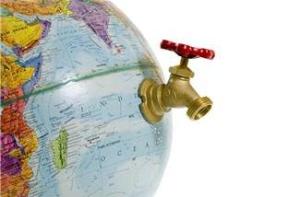 neglected. The quantity and the quality of water available are absolutely crucial for the future production of food. It will influence where and what type of food we can produce. It will define food security and world politics. Since 70% of fresh water use is for agricultural purposes, it is clear that water will soon be power.
 This time, there is one major difference. With 9 billion people in sight by 2050, the consequences of our actions will have much more impact, negative as well as positive, depending on where we live. In 1950, there were “only” 2.5 billion people on Earth. Compared with today, one could argue that there was some margin for error by then. This margin for error is now gone. Therefore, it is necessary to think ahead and consider all the things that might go wrong. We must anticipate before we have to react.


 The Food Futurist Solutions - Anticipate, Adapt, Succeed