Ten human factors that may hinder feeding nine billion people

The road to ensure food security for all is still long. Although humans are very creative to solve and overcome their problems, when it comes to food production, they still lack control on many parameters. Since the beginning of agriculture, farmers have watched towards the sky to see what the weather would bring them. Rituals to call for friendly climatic conditions and soil fertility have been common in all cultures. Droughts, floods, never-ending rainfall, frost and other climatic events have happened on an ongoing basis and, climate change or not, they still will happen in the future. If natural events are out of our control, we can influence another parameter, although mankind’s history has shown that it is a difficult one to tackle: the human factor.

Here follows in condensed form my top ten human limitations to succeed in feeding nine billion people by 2050:

#10: Fear

Although fear is a defence mechanism, it will not protect humanity against food shortages. There are many fears that play a role in our understanding (or lack of it) of food production. The problem is not so much fear itself, but the inability to overcome it and to start bringing effective solutions to the problems. The other risk that fear brings is its ability to spread and to evolve into panic.

There are many challenges ahead, but we need to keep our heads cool, and address the issues practically and rationally, at least as much as we can. Inaction, which is a symptom of fear, will not be helpful. To feed nine billion we cannot be passive.

#9: Greed

Greed is fear’s twin sibling. It is a strong driver that makes people take risks for the sake of material reward. As such, a little bit of greed is good, as it stimulates action and entrepreneurship. It stimulates the need for action that I just mentioned. Speculation, the purest form of greed, will have to be brought under control. Its consequences in terms of social unrest and on the stability of societies are too serious. The risk with greed is that all the focus is on the short-term financial reward. It is also essential to ensure the continuity of food production for the long term, and we should not engage in solutions that can undermine future food security. A little bit of fear will help bring some balance.

#8: Not addressing the right issues

This, together with the slow disappearance of common sense, is a growing tendency. Too often, the focus is on eliminating the symptom rather than the cause of the problem. This usually results in creating a new set of unnecessary problems. By eliminating the cause of a problem, the solution does not create any new problem. We just have to deal with other problems and their causes. In the case of food security, an example of mistaking the cause and the symptom is hunger. The cause is poverty, not the lack of food. The food is there, but the poor cannot afford it. In our world of information overflow where the media are more interested in the sensational and the “sexy”, true and thorough analysis has gradually become less interesting to the public. Although analysis may be boring indeed, it is an absolute necessity if we really want to solve problems.

#7: Lack of education/training

Here is a topic that rarely makes the headlines in the media. Farmers, and candidates farmers, need to have access to proper education and training. In order to improve and produce both more and better, they need to have the knowledge and have the possibility to update this knowledge. This may seem obvious in rich countries where education and training are well organized, but in many developing nations, usually plagued with food insecurity, this is not the case. Too often, even the most basic knowledge is missing. For these populations to succeed and to contribute in increased food security, it is necessary to have education high on the list of priorities.

#6: Lack of farmers

This topic does not get much publicity, although it is of the highest importance. In many countries, the average age of farmers is above average and there seems to be little interest from the youth to take over. We need farmers if we want food. To have farmers, we need to make the profession attractive and economically viable. Two weeks ago, the US Secretary of Agriculture announced measures to make it easier to start up a farm. He mentioned that his country needs to find 100,000 new farmers. In Japan, they are developing robots to do the farmers’ work as there is too little interest from the youth for agriculture, and they face a serious risk of not having enough farmers. In the EU, there are more than 4.5 million farmers older than 65, while there are fewer than 1 million farmers younger than 30. This is how serious the situation is becoming.

#5: Lack of compassion/Indifference

In our increasingly individualistic and materialistic societies, the focus has shifted towards the short term, and even to instant gratification. Our attention span has shrunk dramatically, and unless other people’s problems affect us, we tend to forget about it. When it comes to food security for nine billion people, this will not work. There are many possibilities to produce enough food, as I have shown in previous articles, but to achieve this goal, we still have a lot of work to do. Mostly, we have to change a number of bad habits.

Throwing large amounts of food in the garbage is one of those bad habits. By changing this, we can save amazing quantities of food. First, we must lose the I-do-not-care attitude.

Large quantities of food are lost before reaching markets in developing countries. All it takes to solve the problem is to make the funds available. Compared with the stimulus packages and bank bailouts, the amount is ridiculously low. There too, the not-my-problem attitude is improper.

Another example is Africa. With the size of Australia of unexploited arable land, and low yields because of lack of proper seed and proper support, the potential for food production is huge. We need to help Africa succeed. The attitude of the West towards Africa, and Africans, needs to change.

Humans are social animals. This behaviour is an evolutionary advantage aimed at ensuring the survival of the species. Hard-nosed individualism and indifference go in the opposite direction. They work only in period of abundance. By showing some compassion and helping others succeed, the fortunate ones actually increase their own odds of survival. In our globally interconnected world, any negative food security event affects us all, eventually. We feel a pinch while we are “only” seven billion. This says how painful it would be by being nine billion.

#4: Interest groups

A better name should be self-interest groups. There is not a day that goes by without showing us the total lack of interest they have for those who are not affiliated to them. For as much as it is essential that all opinions and philosophies can express themselves, it is just as essential that they also have empathy and respect for those who think differently. Interest groups do not appear to do that. They express the behaviours that I indicate under #10, #9, #8 and #5. Their objective is to influence policies by bypassing the people who elected the representatives who depend on these groups for their political funding. Would that sound accidentally reminiscent of corruption and banana republic?

#3: Lack of long-term commitment to the vision/plan

There are many plans for food security out there. About every government has one. Industry groups come out with their vision as well. So do environmental groups. The problem in many cases is not the lack of objectives; it is the failure of execution.

To achieve food security, proper execution is paramount. It requires much more than a vision and a plan on paper. It requires a clear allocation of responsibilities and a schedule for the delivery of the objectives.

Often, what undermines the execution of a plan is the lack of a sense of ownership of the mission. All the actors of food security need to be involved as early s possible in the process. This makes them participate in the set up of the plan and this increases their level of commitment. There is nothing worse than a plan developed by a limited group that tries to push it on those who actually must make it happen. When people are not involved and committed, they feel no ownership of the plan. They simply will not participate.

#2: Ego

There is nothing like some good old-fashioned ego to thwart the general interest. Unfortunately, ego is a rather common component in higher circles of government, business and organizations. Some of the symptoms include the inability to say “I don’t Know”, the inability to admit being wrong, the tendency to wage turf wars, and the unawareness of the win-win concept. Acknowledging one’s ignorance is the first step to learning, therefore improving. Believing to be always right is simply delusional and shows a lack of sense of reality. Turf wars may end up with a winner, but usually it is a Pyrrhic victory.  Thinking that one can win only if the others lose is just an illustration of point #5. When it comes to food security for nine billion, a short-term victory at someone else’s expenses will soon be a defeat for all.

#1: Poor leadership

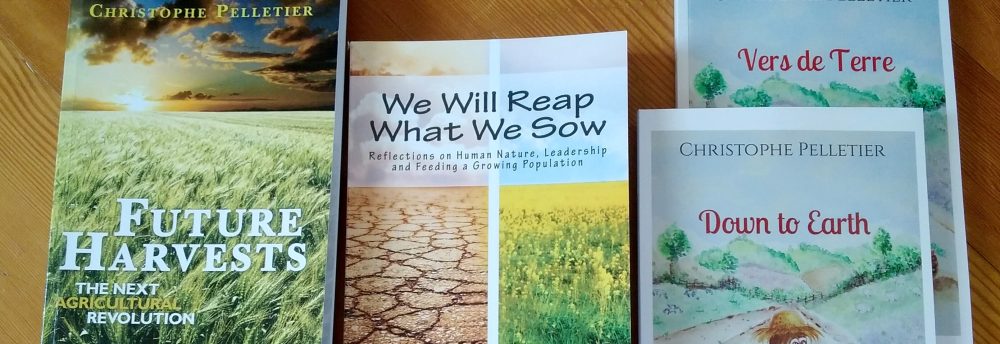
Leadership is paramount in any human endeavour and feeding nine billion is quite the objective. While I was writing Future Harvests, I constantly came across the importance of leadership. I have no worries in our technical abilities.

All the success stories that I could learn from had all in common having a strong leader with a clear vision of what needs to be done. The leader also had the ability to gather all the energies behind him and get a consensus on the objectives and the path to follow.

Similarly, all the failures stories also had leadership in common. Usually, it shows a despotic leader who acts more out of self-interest than for the general interest, who does not accept being wrong and change course before things go haywire.

In order to succeed and meet food demand by 2050, we will need leaders, at all levels of society, who have the following qualities. They will overcome fear, keep greed under control, address the right issues, will foster education, will encourage farmers’ vocations, will be compassionate, will work for the general interest, will involve and commit all to succeed, and will not put their egos first.

Copyright 2011 – The Happy Future Group Consulting Ltd.

An Interview with The Food Futurist: 100 Answers about the Future of Agriculture

Following up on the recent publication of the report “100 Questions of Importance for the Future of Global Agriculture” by a group of experts from all over the world under the lead of Jules Pretty of the University of Essex in the United Kingdom, I wanted to react candidly and spontaneously on every of these 100 questions.

Since giving extensive answers would represent several months, if not years, of work for a single individual, I chose for the interview format. I gave myself just a couple of minutes to say what came to my mind.

The result is this document: 100 Answers – An interview with the Food Futurist

I hope it will be as enjoyable for you to read as it was for me to write. I hope that it will trigger reactions, as this is more a first attempt to initiate a forum discussion.

The questions were quite interesting. However, I missed a few elements tat I believe to be quite important in the challenge of feeding a population of nine billion by 2050. The initial report did not raise enough questions about the issue of water. Water is essential to agriculture, and the challenge of accessing enough water is even more urgent and more critical than improving food availability. Similarly, the initial report did not reflect much on urban farming. Estimates of today’s urban food production are of 15-20% of the total world food production. Considering that about 50% of the population lives in cities, this means that 30-40% of all the food consumed in cities is produced in urban centers. This is far from negligible. As the urban population is expected to double by 2050, urban farming will be an essential part of our food supply. I had also expected more attention to aquaculture, which is the fastest growing food production.

The initial report focuses more on production aspects and systems than it does focus on the human factor. Population increase, distribution and especially the quality of leadership will be crucial for the way food security strategies can be set up. As I mention in one of my answers, our future will be as bright as our leaders.

Writing this document, and reacting to questions asked by highly qualified experts, was a good way of assessing the book “Future Harvests” that I published in August 2010. I was quite happy to see that the book addresses all the concerns of the thinkers and policymakers.

I wish you happy reading.

Why we will change our eating habits, one way or the other

In the discussion about producing enough food for the 9 billion people the world will have by 2050, one of the sensitive issues, especially in the overfed world, is about what to eat and how much of it. There always is resistance to change, and changing eating habits may be even among the most difficult challenges we have. Eating habits are developed unconsciously since early childhood, and switching to conscious choices is not easy to achieve. It requires will power and self-discipline.

Most of the gloomy scenarios about the challenge of feeding the world are based on the assumption that the diet model would have to be the Western diet, and in particular the American diet. This is far from certain. Actually, do not expect this to be the case.

Changing eating habits will happen in two ways. One will be voluntary and the other will be a consequence of food prices.

There is a growing awareness of the health consequences due to overconsumption of food. All the stakeholders seem to blame each over for obesity, diabetes and other heart conditions, and try to convince the public that they are not the cause of the problem. Whose fault is it? Is it meat? Is it corn syrup? Is it fast food? Is it salt? Is it lifestyle? Is it the parents’ fault? Is it the schools with their vending machines offering snacks and soft drinks? We all have read such statements. Here is a scoop: overweight is caused by consuming more calories than are burnt through physical activity. Ailments are the results of rich and unbalanced diets. Eating (and drinking) too much, and too much of the wrong things is bad for you. There is a reason why gluttony is one of the seven deadly sins! Actually, our societies should have a close look at that list, because we might be in trouble.

In Western countries, we eat too much, and that should not be a surprise to anyone. Obesity and diabetes are becoming society problems in the USA, but other countries are following the same path. Europe and China have a rising percentage of obese people, especially young people. Even in Africa, there seems to be an increase of the number of overweight people. A recent study confirmed this (click here for the interactive chart). Awareness about health problems has already generated action. There are government campaigns. Food producers are reviewing their formulas and are working toward healthier products, in particular by lowering the content of salt and sugar of their foods. More and more consumers are also adjusting their eating habits, mostly by changing what they buy and where they buy it. The trend towards healthier and more natural food is growing and it will not stop. Only biotech companies seem to ignore this fact. This food trend is not just in Western countries but in China, too, the demand for natural and organic foods is increasing. After all, nobody really feels happy with being fat or unhealthy. If some people are taking action to improve their diets and its impact on the environment, this voluntary choice is still about a minority of the population, today. One of the reasons for this is that healthy diets seem more expensive than the junk fattening eating habits. I say seem, because those who can cook know that it is quite simple to make delicious balanced meal for less than the supersize combo deep fried so-called menu.

Money matters. That is a fact. This is why money is probably the best incentive for change. And the future will bring us plenty of incentive to change our diets. The current concerns about food prices, and the food riots of 2008, have created awareness about food supply. Although the price hike is more the result of investors, not necessarily speculators, looking for a safe haven for their US dollars through transactions in futures contract, the reality is that the commodity markets, even on paper, becomes the “official” market price. This enters the real economy and affects the price of food for households all over the world. The poorer countries are more sensitive to food price inflation, and this has the potential to cause very serious unrest.

Regardless of the current causes of food price increase, simple economics show that when demand increase, while supply has difficulties to keep up, prices increase. And this is exactly what will happen. In a previous article, I showed that the potential for meeting food demand, or I should say the demand for nutritional needs, of 9 billion was there. Quite easily. However, in this calculation, I indicated the road to success includes reducing food waste and a reduction of the quantity of meat in the diet. This means that we need to change our behaviour towards food.

If there is a sensitive topic about diet, this has to be meat. Opinions vary from one extreme to another. Some advocate a total rejection of meat and meat production, which would be the cause for most of hunger and environmental damage, even climate change. Others shout something that sounds like “don’t touch my meat!”, calling on some right that they might have to do as they please, or so they like to think. The truth, like most things in life, is in the middle. Meat is fine when consumed with moderation. Eating more than 100 kg per year will not make you healthier than if you eat only 30 kg. It might provide more pleasure for some, though. I should know. My father was a butcher and I grew up with lots of meat available. During the growth years as a teenager, I could gulp a pound of ground meat just like that. I eat a lot less nowadays. I choose quality before quantity.

The future evolution of the price of food is going to have several effects. The first one is the most direct. As food becomes more expensive, consumers look for the more affordable alternative first. If their budget is tight, they buy slightly smaller portions. People will slightly reduce their food intake. Those who were over consuming might actually benefit from a positive impact on their health. For those who already were struggling, this will be more difficult to deal with. From all the food sorts, animal protein will be the most affected by an increase of the price of food commodities. Already today, there are clear signs from the meat and poultry companies that the price of feed is seriously squeezing their margins. As usual, passing the price increase to consumers will take time, as retailers will resist. If the price of agricultural commodities is to stay high, consumers will inevitably have to accept price increases for food in general, and for meat and other animal products in particular. The price of meat is going to be affected by other factors than just feed prices. The need for more control on food safety issues, the stricter environmental regulations that will come for animal husbandry, on the land and in the sea, a change in animal husbandry practices, especially a lower use of antibiotics and farms with lower densities of animal will all contribute to an increase in costs. Energy will become more expensive, too. A whole system based on cheap commodities is about to change, simply because there will not be any cheap commodity anymore. These are all adjustments to rebalance our consumption behaviour from the unbridled overconsumption of the past decades, when consumers were not thinking about the consequences of their actions. The industry will figure out how to increase efficiency to contain some of the cost increases, but the change of farming practices will make meat significantly more expensive than it is today. The price of ad-lib cheap meat is ending. The future dynamics of food prices as presented here will be ongoing. A long as we will not have adjusted our diets to a new equilibrium, meat will keep increasing faster than other basic food staples, until meat consumption, and therefore meat production, will reset to different levels. Do not expect this to happen overnight. It will be a gradual process. There will not be any meat or fish riots. If food riots happen, they will be about the basic food staples, simply because the first ones to riot will be the poorer among us, and their diet is composed mostly from rice, wheat, corn, cassava or potatoes. Should the situation become dire, governments will intervene to ensure food for the poorest. Such price systems are already in place in many developing countries, and they are likely to be maintained, and even strengthened.

The same critical factors to keep food prices in check are very much the same as the ones that I presented in the previous article that I mentioned earlier: food waste reduction, moderate meat consumption per capita; and economic development, especially in Africa.

For more on similar topics, please visit my other website The Sensible Gourmet

Copyright 2011 – The Happy Future Group Consulting Ltd.

Feeding nine billion is an exercise in leadership

In a previous article, “Hunger is about more than just food production”, I showed how much more potential we have to feed the world than we commonly think. However, having the potential to do so does not mean that we will do it. Human nature has the habit of fluctuating between its best and its worst. Therefore, whether we will actually feed nine billion is far from done. In this article, I am going to reflect to what it would take to be successful at making it happen.

In my book, Future Harvests, I present the six principles that are critical to meet future food demand successfully: Sustainability, Innovation, Market Orientation, Pragmatism, Leadership and Efficiency. I had regrouped these principles under the acronym SIMPLE. While I was writing the book, I always came back to the same observation: success or failure to feed nine billion simply depends on us all. Someone needs to set the course and create the conditions to take the proper actions. The world needs leaders that will make food production potential the reality by 2050.

The job description is, interestingly enough, rather reminiscent of food production and genetics. In order to express the full potential of its genes, an organism needs the proper environment. This is exactly the role of the future leaders. They must create the conditions that will allow farmers to produce efficiently, yet sustainably.

The starting point will be about making the right decisions for both the long term as for the short term. We must preserve the potential to produce for future generations, but we must not forget to provide for today as well. Proper leadership will need to take into account the interest of many different groups and manage a balanced approach between money, people and environment. For sure, future leadership will be a balancing act. This will be easier to achieve if the leaders can sell the world their plan, which means that they must have one.

Leaders come from all layers of society. They are in government, in industry, in non-profit organizations, they are independent farmers, or they come from non-food related occupations. Adequate food supply is the very fundament of societies. Where there is hunger, there is no prosperity. Without food, there is not life, and just as importantly, without water there is no food. Developing food security is not an option; it is probably the most important policy sector of any society. This is something that we must not take lightly, even in rich countries where we seem to take food for granted. Things may change.

What story do our leaders need to tell and execute? The points that I raised in the article mentioned at the very beginning are a good place to start. The scandal of food waste, because it really is a scandal, must be dealt with and fixed. In developing countries, this is caused by a lack of infrastructure. It is only a matter of money. If world leaders have the will to get that money at work, it will happen. For some reason, they do not do it. Maybe it is a sign that things are not that critical after all. Compared with the amounts of money thrown at financial bailouts and stimuli of all sorts, the cost of infrastructure development looks ridiculously insignificant. Such projects would actually create jobs and increase the wealth of the populations where it takes place. This would not be artificial GDP boosting, but actual poverty reduction and increased food availability. In rich countries, food waste happens at the consumer end. What leaders of these countries need to communicate is a sense of responsibility. Wasting food is simply immoral, just like any other waste. If we take the example of nitrogen, the waste by leaching is estimated at about half the nitrogen spread on crops. This is huge and very damaging for two reasons. One is that the nitrogen ends up in the drinking water making it harmful, especially for pregnant women and infants. The other is that the production of nitrogen fertilizers uses half the world’s agriculture natural gas consumption. Efficiency is not a luxury, but it is a necessity. When efficiency increases, the amount of waste decreases. This works towards a higher sustainability, too. Food waste is one thing, but food consumption excesses or unbalanced eating habits are another area of work for our leaders. Eating more food than one needs is not only detrimental for that person’s health, it is also food that is less available to others. This pushes food prices up, too.

The effectiveness of leaders depends on their ability to communicate and get the message over to their dependants. Changing habits and infusing a sense of solidarity and responsibility requires patience, communication and proper education programs. Defining vague objectives or using hollow populist slogans and expressions will have no effect. Only charismatic leaders with strong convictions about what ensures the future of their people, even if it means sacrifices, will be able to bring such a change. It is not easy to do when your country is not on the verge of a terrible crisis. An interesting example about unilateral leadership is the decision of the Chinese government to slow down the number of new car registrations. They consider that there are enough cars. Getting a licence plate will be difficult in the future. In 2008, they decided to ban the use of disposable plastic bags in supermarkets, thus saving an estimated 100 billion bags and the equivalent of 37 million barrels of oil per year. Similarly, China is now the world leader in renewable energies. What actions did the Western democracies take about new car sales and supermarket plastic bags? When children died because of tainted milk, the Chinese authorities arrested all the people involved, and even executed two persons. Of course, the use of melamine in the milk was intentional, making the case extreme. However, in the West, I do not recall anyone being arrested or considered personally liable after deaths by food poisoning. My point is not to demand imprisonment of CEOs as a standard operating procedure, but I am sure that if executives of food companies felt that they could be personally liable for food poisoning, the precautionary principle would apply much more systematically. Leaders need to make understand that doing something wrong comes with consequences. Although there is much to say about China’s political system, one must admit that not having to think in terms of elections every four years and not having political campaign funded by any industry of NGO of any sort can help politicians focus on the long-term, too. Maybe the fact that China is plagued with so much pollution in the air, in the water and in the soils also makes the issue more acute for the leaders to resolve.

If the stick is one option to make people do what is right, the carrot is, at the very least, as important. Nothing stimulates people more than being rewarded for doing a good job. People are at their best when they know that others appreciate what they do, and that what they do makes the world a better place. Then, they do not see their occupations as “have to” activities, but as “want to” ones. Subsidies, bonuses, tax credits are all motivating tools to make people do the better thing, but the key is to have incentives that meet the goals without having harmful side effects.

Leaders also need to be innovators. Considering how fast our world changes, and the quantity of new knowledge made available about on a daily basis, many new possibilities will be available to solve old problems. Innovation is the child of human genius and, to cope with future challenges, creativity and adaptability will be major assets. It is the leaders’ role to foster innovation, yet by keeping in mind all long-term implications.

The ideal leader would have the qualities described by Plato in “The Republic”. Although it is an ideal, having committed leaders matching his description would increase our odds of success.

Copyright 2011 – The Happy Future Group Consulting Ltd.

Future evolution of genetic engineering

Genetically modified organisms (GMOs) are one the most, if not the most, controversial aspects of modern food and agriculture. So far, the focus had been on offering farmers alternatives to pesticides and herbicides. The proponents of GMOs praise the progress made and they claim that agriculture production benefits from this. Opponents warn about all sorts of potential disasters in health and environment. The reality is that GMOs have been around for about a decade and a half, and they are here to stay. There is currently no sign that they would be banned from the Earth, especially since genetic engineered traits have been found outside of farm fields, as I had mentioned in a previous article.

At his juncture, and to think of how this technology –and business- will evolve, it is worth asking a few questions.

Has the use of GMOs been successful for agriculture and food production?

There are several levels in this question, actually. From the yield point of view, it is rather difficult to answer objectively, as there is little possibility to compare the respective performance GMOs and non-GMOs. From what I gather, it would appear that the Bt cotton may have delivered better results. For corn, the picture is much less clear. Actually, some varieties have proven to have rather disappointing performance. For instance, the genetically engineered corn from Monsanto failed to produce in South Africa, and recently their SmartStax variety (developed together with Dow) has had lower results than expected. This forced the company to drop the selling price per unit from US$24 down to US$8! The stock market did not appreciate. Clearly, GMO producers can make mistakes, and this is not particularly reassuring.

However, GMOS have delivered some benefits, too. In Argentina, the use of glyphosate-resistant soybean has allowed the production of soybeans to recover strongly from the brink of disaster. After many years of intensive monoculture of soybeans, the soil had been damaged to a nearly point of no-return, With the use of glyphosate-resistant plants, combined with no-tillage technique, farmers have been able to rebuild the level of organic matter in their soils. The result has been a huge increase of production, as farming conditions have been restored.

Opposite to this success story, a study from China concluded that the use of Bt cotton changed the ecosystem in such a way that pests that are naturally not sensitive to the Bt toxin thrived in cotton fields. This forced farmers to use other regular chemical pesticides to fight them, and the overall use of pesticides was actually higher than before the introduction of Bt cotton. The number of glyphosate-resistant weeds is a growing concern in many areas of the USA, and farmers need to use other methods to eliminate the weeds. Currently, the situation has come to a point that Monsanto is offering a rebate to its customers to buy and use herbicide from their competitors, so that at least they keep buying their genetically engineered glyphosate-resistant seeds, because they do not have the solution of the problem in-house. These two examples demonstrate a simple fact: genetic engineering is not a panacea that solves all the problems. It must be used as a part of a well-thought set of techniques. Producing one type of crop with the included traits without understanding the ecosystem that a field is, simply does not work. A field is not a dead zone. A biologically very active system resists constantly the attempts of humans to get it under control. Since the odds of developing a resistance for all available products is statistically close to zero, rotating herbicides and pesticides strongly increases the chances of eliminating the “super weeds” and the “super bugs”. Of course, companies would rather not promote their competitors products by advising farmers to rotate herbicides and pesticides.

Are GMOs necessary?

Considering the rather mixed results, it is quite difficult to answer this question with certainty. The technology of genetic engineering is useful because it offers the possibility to introduce desirable traits in plants. However, genetic engineering deals with genes, and the actions of the genes, as well as their interactions with other genes, are very complex. This is still a field where we have much to learn. Caution is required. Genetic engineering is only one of the many ways we have to increase and improve production. It certainly is not, as some would like to make believe, the only way. This is also important to keep in mind when it comes to developing countries. In these countries, the problem is not that all other techniques have reached their potential. Many farmers do not even have access to just good seeds. If they had, together with proper financing, access to input and adequate techniques, they would achieve much better yields. Since they are poor, how could they even afford to buy GMOs? In my previous article, Hunger is about more than just food production, I indicated how Africa could become a net exporter without GMOs. On the other hand, in developed countries, such as Europe, where farmers achieve outstanding technical results, for instance wheat yields 2.5 to 3 times as high as in the USA, what could be the incentive? Europe is food secure, actually several European countries are among the world’s largest exporters of food and agricultural products. Why would consumers be hungry for GMOs, while food is already affordable? People may not always be rational, but there is always a strong logic about why they do what they do.

Are GMO safe or not?

In all objectivity, there is no certain answer to this question, either. Until this day, there has not been any proven disaster linked to GMOs. Since in biology things may take a long time to come out, there cannot be any certainty that something is not already changing, either. This debate is between those who think that progress always brings some new uncertainties that should accept, and those who think that we should not take chances. Genetic engineering is still a young science, and 15 years is a very short period in ecological terms.

A related question about this is: “Is there a moral issue about GMO?” There certainly is something about morals in the debate. There is the theme of playing to be God. There is the theme of corporate profits vs. people and environment. There is the theme of the control of food by a select few, and that is about power. There is the theme of secrecy vs. transparency. This is also about a certain vision of the world, and about which values should prevail. There is the New World set of values vs. the “Old World’s”. None of these themes has much to do with science, but they are quite important to many people, and they will remain so for a long time. The controversy and the debate are far from over. The food retailers, such as the giant Carrefour, are now entering the debate. A new interesting element is the awakening of the US consumers who start to question food production; while until recently, they were rather passive in that area. Many things will happen and change. At this stage, it is rather difficult to say what will emerge.

What is at stake?

Next to the themes that I have just mentioned, the most at stake is money, and a lot of it. This industry would never have developed if they had not been granted the possibility to apply for patents and collect royalties on their intellectual property (IP). Without IP, there are no GMOs. Patenting life is in itself a controversial topic. This is especially more so when a whole plant becomes private property while only a tiny part of it has been altered. The original whole plant was the collective property of humanity. Without asking permission to mankind, and not even offering to pay a rent for this collective property, GMO producers have managed to become the owners. For many people, there is a feeling of wrong entitlement.

The key element is IP. This is understandable, because most GMO companies are spin-offs from molecule makers, from the chemical and pharmaceutical industries. Their business has always been about investing large amounts of money in R&D to put new molecules on the market. Their philosophy behind GMO production is the same. They think like molecule makers, not like farmers. The objective is to develop products for which they can collect royalties to pay back for the R&D expenditure. The driver for this is the need to develop high margin products to satisfy the expectations of the shareholders. This is why GMOs were a logical step to replace gradually the chemical herbicides and pesticides, for which margins have been eroding. Something else needed to be developed to bring out solid financial results and future prospects. With the patent period ending soon, the existing GMOs will become generic products that will no longer be IP. This forces the producers to think of new traits to include, thus generating more IP for royalties. This leads to a new generation of GMOs

What will be the next phase?

We will see two different paths for genetic engineering. One is a market-driven genetic engineering aimed at solving actual problems that farmers need to overcome. This will not be so much about IP and royalties, but it will be about practical and affordable solutions. This area will be taken over gradually by plant breeders and to some extent with government support. They will focus on issues such as drought resistance, flood resistance, ability for plants to grow in saline soils, and ability to transform solar energy more efficiently into food by enhancing photosynthesis processes. An interesting case to follow is China. Over there, the government is already leading a nationwide restructuring of the currently fragmented seed industry to make it more efficient, and deliver solutions that will help the country improve its food self-sufficiency. Since China is quite involved in farming investments in Africa, we can expect to see Chinese seed producers become more aggressive on that continent, too. China has also clearly expressed that genetic engineering is a part of their new approach.
The molecule makers, as I like to call them, will choose a different path. They will look for sophisticated products for which they can receive a high margin in the market. Their objective will be to introduce as many traits as they can in plants and help them produce… molecules. They are more interested to produce high-tech novelties. They will become the Apple of biology. Chemical synthesis will be replaced by biotechnology. Their areas of interest will be pharmaceutical production and health, more than agriculture. The industry will introduce genes in plants to produce medicines that can be used to treat all sorts of diseases, such as diabetes, cancer, possibly Aids, and many others. They will also focus on the development of healthy nutritional components, such as high Omega-3 fatty acids content in oil seeds and the elimination of allergic components in current foods.

This next phase will see a change in the landscape of GMOs. Companies will make strategic choices about which segment they want to operate. There will be divestment of activities, and there will be new Mergers & Acquisitions, too. It is very likely that GMO producers will focus on biotech and sell their herbicides and pesticides activities to the companies that will choose to specialize in chemicals only. Pharmaceutical companies will get closer to GMO producers, and we can expect to see a new generation of biotech start-ups that will aim at being taken over by larger corporations. Some companies will choose for business-to business, while others will choose for consumer products. For pharmaceuticals and nutraceuticals, companies will subcontract farmers, while remaining in charge of the marketing of the molecules.

Copyright 2010 – The Happy Future Group Consulting Ltd.

Hunger is about more than just food production

Everyone who works in agriculture and food knows that there are about one billion people on Earth suffering from hunger. The temptation to think that the cause is a lack of food production is great, but it does not reflect reality. Quite a few serious organizations and personalities claim that one Earth is not enough to feed nine billion people by 2050. Some claim that we would need two Earths. Others even go as far as mentioning the need for three, and even four, of our blue planet.

There are two possibilities with such statements.

If they are true, then humanity has a problem, because there is only one Earth, and we will not get a second one. In such a case, the only way for supply and demand to get in balance is a reduction of the world population. This could happen through famine, disease and/or wars. Since in such a scenario there is a maximum to the world population, once this number is reached, there must be a constant elimination of the couple of billion people too many, through one of the means just mentioned. This is not a particularly happy thought.

On the other hand, if such statements are erroneous, there is hope to feed the increasing world population with one Earth.

Then, is one planet enough or not? Simple math should help finding the answer. If we need two Earths to feed nine billion, one planet would only feed 4.5 billion people. Currently, the world population is around seven billion, out of which one billion is hungry. Conclusion is that we currently can feed about six billion people. We are not doing that bad. Is it possible to find ways of feeding three more billion on this Earth? From the simple math above, it is clear that those who claim that we need three Earths or more are wrong.

Out of the six billion who do not suffer hunger, it is estimated that one billion is overweight, a part of which, mostly in the USA, is obese. They clearly ingest more calories than they need. Purely theoretically, if those were to share the excess food they consume with the ones who have too little, the billion hungry people would have about enough. This means that today there is already enough food available to feed seven billion people.

Another interesting factor is waste. According to the FAO, about 40% of all the food produced is lost and wasted. In rich countries, most of the waste takes place at supermarkets, restaurants and households level. People simply throw away food. In developing countries, the waste takes place mostly post-harvest. The food does not even reach the market. The food is spoiled because of a lack of proper storage facilities and logistics. The food ends up rotting, contaminated with mould or is eaten by vermin. To fix the problem, the FAO estimates the cost to improve infrastructure at US$ 80 billion. This is less than the amount the EU just made available to bail out Ireland. What to say of the US$ 3.3 trillion that the US Federal Reserve lent to banks to alleviate the financial crisis? Of course, it will be impossible to achieve an absolute zero waste, but if we were to achieve 10%, this will feed many people. I have heard the statement that if post-harvest losses were eliminated in India, the country would be fully food secure. Per 100 tons of production, 40% wastage means that only 60 tons are available for consumers. By reducing waste from 40% down to 10%, there would be 90 tons available. This represents an increase of food available by 50%! Since we could already feed seven billion with the 40% waste, reducing wastage to 10% would allow feeding 10.5 billion people.

There are also many debates about whether we should eat meat or not. The nutritional need for protein is easily covered with 30 kg of meat per capita per year. I had shown in an earlier article that if Western consumers were consuming just what they need instead of eating superfluous volumes (very tasty and enjoyable, though), it would free meat to feed 1.4 billion people the yearly individual 30 kg. In China, the average meat consumption is already up to 50 kg per capita per year. The consumption is very unevenly distributed, but this is the average. Cutting 20 kg per capita over a population of 1.5 billion would free meat for the nutritional needs of an additional one billion people.

The other area of potential is Africa. The FAO estimates that the area of arable land that is not exploited is about 700 million hectares. This is about the size of Australia. To simplify and get an idea of the potential, we can calculate what it means in wheat equivalent. With the assumption that wheat yields would be the same as the current African average, a low 1.5 tons per hectare, this adds up to 1.05 billion tons of wheat. Since a person needs about one million calories per year, and there are about 3,000 calories in a kg of wheat, one ton of wheat can feed three people, the 1.05 billion tons of wheat can feed more than 3 billion people. Normally, there would a crop rotation of at least two harvests per hectare. With proper investment and financing, farms should be able to reach easily the US average of 3 tons of wheat per hectare. Clearly, this performance could be achieved with traditional techniques and good quality seeds. This is not even about high-tech or GMOs. This tremendous potential of Africa is why China, India and Arab countries are very active developing farming there. They did the math. This scenario also shows that Africa can easily become a strong net exporter of food. In this case, the world map of food looks very different. Without Africa being able to produce large amount of foods, the prospects for food security in Asia and the Middle East are a bit bleak. They can depend only on Western Europe, Russia, Ukraine, Kazakhstan, North and South America, and with Australia to a lesser extent. With Africa as a net food exporter, the world map looks a lot more balanced, East-West as well as North-South. Sea routes from Africa with the Arabic Peninsula, the Persian Gulf, and farther away with India and China create a much safer feeling of food security for the countries in those regions. For Africa itself, it may change the relations between Sub-Saharan country and the Maghreb countries. This in turns changes the type of relationship that the Maghreb may have with Europe, by creating more economic activities to the South. Africa’s success –or failure- will affect the whole world.

With the above, everyone can develop further assumptions, but these calculations show that this one Earth can produce enough food to cover the needs of between 12 and 15 billion people. It almost sounds impossible to believe, yet these numbers are not even ambitious. I have not even taken into account that in 2009, 25% of the corn produced in the USA was destined to feed cars, not people, via ethanol production, and that number is expected to grow to about one-third for 2010. The potential is even higher when one considers that a large part of the US corn goes into soft drinks, while it could be used to produce tortillas, with a side glass of water, a much healthier alternative.

That said, if the potential for food production supply looks adequate, actually producing it may not be as easy. The human factor, especially through politics and leadership, will be crucial to succeed.

One would ask why there is hunger if we can produce so much food. The answer is simple. Hunger is not just about food production, it is about poverty. People are hungry because they do not have money to buy food. They do not have money because they do not earn enough, as they have low paying jobs or simply no jobs at all. By developing the economy in these regions, people would get better wages. They could afford more food. The demand would drive the development of food production. Agricultural development would then be a normal and natural activity. Trying to develop agriculture if the locals cannot buy the food cannot work. Recently the FAO estimated that two-thirds of the world’s malnourished live in only seven countries: China, India, Pakistan, Bangladesh, Indonesia, Ethiopia and Congo. These are countries where most of the population is poor, and most of which lives in rural areas. The other proof that hunger is not only a consequence of low food self-sufficiency can be found in two agricultural exports behemoths: Brazil and the USA. In the latter, a recent survey carried out by Hormel Foods, the deli producer, shows that 28% of Americans struggle to get enough money to buy food, or they know someone who struggles. Last year, the USDA had estimated at 14.6% the percentage of US households that do not have enough food on the table. Food will find the money and vice-versa. If Bill Gates decided to move to the poorest and most food insecure place in the world, and would fancy a lobster, I am sure that someone would manage to find him one and deliver it within reasonable short notice.

My book, Future Harvests, investigates the possible scenarios to increase food supply and meet the demand at the horizon 2050.

Copyright 2010 – The Happy Future Group Consulting Ltd.

Helping farmers produce better

Meeting food demand depends for a large part on the ability of farmers to produce adequate quantities of the food products of the right quality. To achieve such an objective, farmers depend on their business partners. To feed an increasing world population, helping farmers succeed is not an option; it is a necessity.

There is no argument against producing better. A market-driven and more efficient production reduces the amount of waste, and it increases the amount of food available for consumers. It reduces the impact on the environment and it actually reduces the cost of production. However, it is important to realize that actions to produce better often are investments, as the effect is not always immediate.
From a value chain point of view, efficient production starts with high-quality ingredients. If the world wants farmers to produce higher volumes, they must have access to good genetics. Seeds that have the potential to deliver high yields, or farm animals that can produce and grow fast, while using feed and water efficiently, are an absolute necessity. Genetics and agriculture must also take genetic diversity and sustainability into account, but with poor genetics, farmers will not be able to meet food demand, and they will not be financially viable for the long-term. Vision and proper strategy are the elements to deal with this dilemma.

Farming inputs, such fertilizers, pesticides, herbicides and animal feed, must help plants, and farm animals, to express as much of their genetic potential as possible. Suppliers can play a very important role in helping farmers use the proper products in the right amounts, in the right place, and at the right time. The same principle applies for food processors and distributors. It is their role to help farmers deliver what the market needs when it needs it. They must encourage this by rewarding financially the farmers who do things right. This is in the interest of all the parties involved. Farmers make more money with their products. Processors get products that are more efficient to process, thus saving on costs. Distributors gain market share because they offer the right product to their customers, thus increasing customer satisfaction, appeal and loyalty. The advantage of doing things right is that it becomes more difficult for business partners to switch to a competitor. By being the best partner in business, the need for complicated contractual and legal agreements becomes a little less relevant. It is about loyalty and mutual security.

To achieve this kind of ideal situation requires a lot of effort, commitment and communication. Market needs must be translated in clear product specifications. The knowledge on how to be able to meet the required standards needs the proper channels to be transferred to farmers. Access to information has become much easier with the development of communication tools such as Internet and cell phones. Smart phones are helping further, and now farmers, anywhere in the world, have much faster access to market and technical information than by the past. This helps them make faster and better decisions. However, better technologies and better communication tools are not enough. Extension services are crucial. In my book, Future Harvests, several examples show how positive this is for food production. One is the policy of the Ugandan government that resulted in a boom in rice production, making the country a net exporter of rice. The second example is about the extension services of a food corporation, McCain Foods, in India, that helped farmers produce a better quality of potatoes, meeting market requirements, and earning substantially more this way. Another illustration of the positive effect of knowledge transfer is about the farming leader in Burkina Faso who helped increase food production with simple techniques, and stopped the exodus of population. Proper education and on-going training is part of the food production of the future. The human factor in knowledge transfer is as important as ever. Only people can know what the specific situation of a farmer is. Knowing the farmer is the best way to help them set up plans and strategies to improve their technical and financial performance. A farmer being independent business owners, their main concern is to generate enough revenue to stay in business, and to offer a decent standard of living and a secure future for their families. Helping them in these objectives is the way to get their attention and loyalty. Extension services need to offer the most effective solutions by taking into account the level of skills of the farmers, as well as their financial situation. Some farmers can afford and use high-tech solutions easily. Others may have money, but lack the skills to use certain techniques or technologies. Others may be technically savvy, but may lack the money. Extension service people are the ones who can help farmers make the best choices. They also must assist farmers to get the proper financing if this is the limiting factor, for as long as the money would used to deliver the proper return.

As Cicero stated, “The sinews of war are… endless money”. This tends to be overlooked by many who talk about increasing food production. If farmers do not have access to enough money to be able to produce the food the world needs, they simply will not. Developing agriculture requires serious investments, either from individuals or from governments. Asian and Arab countries know this and this is why they spent massive amounts of money in African and Asian countries, and even in Brazil and Argentina. If farmers cannot buy the basics to produce efficiently, they will have poor harvests. If farmers cannot be profitable, they will stop farming. This is important to realize that being a farmer must be attractive financially, too, if we want to motivate the next generation to be in agriculture. Money is important, but just for food production, more is not necessarily better. To get good results, we must ensure to have the right amount of money at the right time at the right place for the right purpose. The money must be aimed at producing for the market. Financing agriculture is about meeting food demand, not to produce blindly. Just like there is a need for efficient market-driven precision agriculture, the future of agriculture financing must evolve to efficient food-market-driven precision financing.

Copyright 2010 – The Happy Future Group Consulting Ltd.

What if agricultural subsidies were a good thing?

Over the past decades, agricultural subsidies have received an increasingly bad publicity, especially as a major part of the WTO Doha round of negotiations is aimed at removing them.

Yet, with an increasing world population and the need for more food production, one can wonder whether agricultural subsidies really are a problem. History has shown that subsidies can be a very effective way of boosting production. For instance, subsidies have been a major element for the European Union to increase its agricultural production in the decades following WWII. To show how effectively money talks, you just need to see how financial incentives have made European vintners pull off vines, then replant them pretty much at the same place later. Subsidies have encouraged Spanish farmers to plant many more olive trees than the olive market needed. Subsidies work. When people are paid to do something, they usually do it quite willingly.

The true problem with subsidies is to have a cost-effective system. Subsidies must help produce what is needed. They are only a means and they must not become an end. Subsidies also need to deliver the right incentive to be effective. Too often, they have adverse effects because they do not encourage the right behaviour. An example of subsidy that seemed to aim at the right action and yet did not deliver proper results is the subsidy on agricultural inputs by the Indian government. They subsidize fertilizers with the idea that, this way, fertilizers would be more affordable for farmers and therefore the farmers would be able to increase their yields. As such, this is not a bad idea, but the practice showed a different outcome. Farmers with little or no money were still not able to buy enough fertilizers, and richer farmers just bought and used more fertilizer than necessary. The result has been an over fertilization in some areas and an insufficient fertilization in other regions, as I explained in more details in my book, Future Harvests.

For subsidies, too, quality must come before quantity.

Subsidies must be a part of a comprehensive plan towards the essential goal: feeding more people. They must be part of a market-driven approach, and they should not to entertain a production-driven system. Subsidies, or should I call them government support, take many forms and many names, from straight subsidies to grants, “market support mechanisms”, “export enhancement programs” or specific tax regime for farmers, etc… There is quite a bit of semantics involved. Perhaps the stigma on subsidies comes from their being granted by governments. Aren’t private investments just another type of subsidies? After all, that money aims at encouraging more production. The main difference is about the kind of return. Private investors look for a capital return, while governments look for a societal return.

A positive example of effective money incentive linked to a comprehensive approach that involved government and private companies is the rice production boost in Uganda (which I also present in Future Harvests). This effective policy helped increase production 2.5 times and turned Uganda from an importing rice country to a net exporter within 4 years!

I believe that the main bone of contention about subsidies is the competition on markets. Every player involved on world markets, either importers or exporters wants 1) to have the best conditions to compete against others and 2) wants to make conditions for others to compete as difficult as possible. The untold story is that many countries would like others to cut their subsidies while keeping (some of) their own. Only the competitor’s subsidies are unfair. Moreover, addressing subsidies is not enough. At the same time as subsidies, all import restrictions, such as anti-dumping tariffs or import duties should be looked at, as they are blatant attempts to skew the competitive positions.

The issue is not really aimed at developing a comprehensive plan to feed the world. The Doha round started in 2001, but since then, we have had the food riots of 2008 and the spectre of further food inflation. This, too, should be taken into account.

Considering how critical financing is for farmers, and that many farmers (more than half in the USA) need a second job to make ends meet, some form of financial support is generally very useful. Also, let’s not forget that we will need farmers for the future and agriculture needs to be an attractive profession if we want to have the people that we need to produce all the food!

Copyright 2010 – The Happy Future Group Consulting Ltd.

Two-thirds of world population live in the 16 most populated countries

When looking at their respective demographics, economic situations and food security status possible future scenarios can arise from this list.

The most obvious is probably that many countries on this list have little food security. Considering that many of these countries have a young, poor and increasing population, political stability is quite fragile. As long as this remains, the consequences of food inflation must be taken very seriously.

Country

Population

% of world population

China

1,337,320,000

19.6

India

1,180,220,000

17.3

USA

309,199,000

4.5

Indonesia

231,369,500

3.4

Brazil

192,860,000

2.8

Pakistan

169,410,000

2.5

Bangladesh

162,221,000

2.4

Nigeria

154,729,000

2.3

Russia

141,927,297

2.1

Japan

127,530,000

1.9

Mexico

107,550,697

1.6

Philippines

92,226,600

1.4

Vietnam

85,789,573

1.3

Germany

81,882,342

1.2

Ethiopia

79,221,000

1.2

Egypt

78,200,000

1.2

 Total  

4,531,656,009


66.7


What came to my mind when I saw the list the first time was the following.

The cluster Pakistan-India-Bangladesh represents 22.2% of the world population. This region is very sensitive to climate events, as the current floods in Pakistan demonstrate. The monsoon is the main factor that influences the level of crop production. These countries are below food self-sufficiency, and their agricultural infrastructure (and overall infrastructure in general) is in bad need for further development. However, the quality of agricultural land is good with around 40% of arable land. The task of India is huge. It has about 70% of its population in agriculture, and if the USA had India’s population density, there would be 3 billion Americans, 10 times its current population. In such a situation, the USA would not be self-sufficient, either. Agricultural reforms are necessary to improve yields and economic development is necessary to provide more inhabitants with higher revenue. It will take time, but expectations for the Indian economy are positive. Subsistence is not a good economic model. A good relationship between India and Pakistan is paramount for the stability of the region. A stable Pakistan is essential for the stability of the world.

In North America, I can see dramatic change coming. With two countries, Mexico and the USA, in sharp contrast with each other in the top 16, something will happen. The USA will remain an economic superpower and any events in that country will affect the world economy and politics. Mexico is growing but it needs to improve its economy and achieve better social stability. Poverty is fuelling many issues and the price hike of corn of 2008 has showed that it would not take much to cause food riots. The issue of immigration of Mexicans into the US will not go away, and no wall will stop it, especially with Mexico having a strong population increase. The difference in population numbers of the two countries will shrink. The USA and Mexico will have to develop a joint economic development program for the region to avoid an uncontrollable situation in the long term. I think that we will see more and more Mexicans settling in the USA and become the farmers of the future over there. However, climate conditions will probably affect the geographical distribution of productions. The southwest of the USA is increasingly suffering from water scarcity, and the area spreads. This will affect the distribution of the population over the continent, and it will affect Canada as well.

South East Asia has three representatives on this list: Indonesia, The Philippines and Vietnam. This region shows a strong population increase. From a food production point of view, geography tells that aquaculture has to be a leading, if not the leading, food source for the future. And this is exactly the direction that these countries are following. Rice is essential in this part of the world, and there is no doubt that the South East Asian Emergency Rice Reserve will be tested at some point in time.

Brazil is growing, demographically and economically. It is becoming an economic powerhouse, in particular in agricultural products. However, much still needs to be done to improve infrastructure and performance. In the future, I expect to see joint agricultural policies between a number of Mercosur countries, especially with Brazil, Chile, Argentina and Uruguay as the initiators. Export has led agricultural production of these countries in the past, but I expect to see them to rebalance policies towards feeding the South America market as well in the years to come.

The other thing that jumped out of the list is Africa. I doubt that many people would have expected Nigeria to be ranking #7. Africa will be an important element in the 21st century economy. The continent’s population will double in the coming 40 years and many African countries are attracting foreign investments. If this happens in orderly manner, which is far from sure at this stage, I would expect Africa to experience a boom comparable to the one that China has had over the last three decades. The continent is open for business and the rules of engagement are exactly what adventurous pioneers can wish for. Africa has tremendous potential for food production and foreigners are developing agriculture actively for their own food supply, but neither African countries nor investors should forget to include the Africans in the wealth creation, and help them earn the money to feed themselves. What will happen in Africa, will affect all of us.

Copyright 2010 – The Happy Future Group Consulting Ltd.

Soylent Green is on some people’s minds

Funny how coincidences occur. In less than two weeks, I heard several times about Soylent Green, the futuristic movie. It came first in a couple of conversations I have had about the book I am about to publish (hardcopy proof is on its way to me), and it came up in the very serious French economic paper Les Echos, too. Considering the area I am involved in, I had to find out more about Soylent Green.

Soylent Green is a movie made in 1973, starring Charlton Heston. As such, I would not describe Soylent Green as a great movie, but it contains some interesting elements that resonate in today’s environment. To sum it up, the action takes place in a devastated New York in 2022, where 40 million people live is dismal conditions. The planet is in bad shape, the economy is just as bad and food is scarce. A powerful multinational, Soylent Corporation controls food supply, thanks to its very successful product Soylent Green, a high protein food. Natural foods are very difficult to find. Strawberries sell for $150 a jar and to get beef, one needs to have the right connection. Cooking is a lost art, but some still have the nostalgia of the yesteryears, when life was good.

Although made around the time of the first oil crisis, it mentions very current topics, such as a collapsing economic system, greenhouse gases and the power of multinationals over our food supply. That is not bad, considering, it is almost 40 years old, an age than more than half of the world population has not reached yet. The author certainly had a strong vision of where our world is heading.

The plot is rather creepy, though. The production of Soylent Green is anything but appetizing, and quite different from plankton as mentioned at the beginning of the movie. You can watch it here: http://www.watchonscreen.com/videos/1549/soylent-green-is-people.html

For those who may worry, my book envisions the future of food production from a very different angle.