First, a personal story
A year ago, I moved away from Vancouver to the Okanagan Valley Region some 300 miles east from Vancouver. There, I bought a property with a decent yard where I will have a garden and with a small vineyard. In some way, it is an illustration of what is necessary to foster sustainable practices. The parallel is obvious with some of the global challenges the world is facing and will continue to face in the future. For eight months of the year, the area looks and feels quite similar to the Mediterranean. Precipitations are not abundant with an annual quantity of only 337 mm. Clearly, water is scarce and needs to be preserved, even though an extensive system of lakes fed by mountain snow ensures an adequate supply of water. The region is quite agricultural with many orchards and vineyards, all thanks to irrigation. There are also many lawns in the area and the estimate is that about 25% of the water consumed in the region is just to keep the lawns green.
My plan is to install rain barrels to collect the water from rain and snow and use it for the yard. This is where the economics do not go in parallel with all the talk from politicians about sustainability. Around the house I would need five rain barrels. The lowest and best retail price I can find is of about $80 for a 200 liter barrel. To set up my water collection system, it will cost me $400 to provide me with a 1 cubic meter storage capacity. In comparison, the price for a cubic meter that the municipality charges for water is $0.30 per cubic meter. In the most ideal situation, that is if I were able to collect all the rain and snow through my five barrels, I would at most collect about 30 cubic meters per year. In money, it comes down to a saving of roughly $10 per year. To break even, I’d better hope that the barrels will last 40 years, which they might, but considering my current age, there is a fair chance I may have moved to a much smaller underground dwelling by then. Of course, my example is about quite a small investment and if the return is lousy, it will not change my life. At least, the barrels will help me save water.
The point of my story is that the comparison between cost and benefit would deter most people to consider buying rain barrels. It just does not make financial sense, if money is what matters. I always say that money talks and what it says here is to forget about being sustainable. One of my neighbours also considered installing solar panels on the roof of their house. After comparing the price of the panels plus installation and maintenance with the electricity savings, they discovered that it would last twice the life of the panels to break even. In terms of money, solar panels are a different kettle of fish than my five rain barrels. Recently I saw the price of a propane generator that produces 3650 watts for Canadian $350 while a solar panel that produces 100 watts is sold for Canadian $250. I can understand people decide to not pursue the solar option.
The economics of water and energy savings that I just described can be extrapolated to the much larger picture. All through the food and agriculture value chains, many changes for more sustainable systems face the same kind of dilemma. What makes sense from an environmental point of view often does not make sense financially in the current economic environment. Demanding more sustainable production system is quite legitimate and sensible, but the conditions must also be there to make it happen. The numbers have to add up for farmers and businesses to make the switch. As usual, money is of the essence and it can come from different sides.
First, the purchase price and the cost of operation of alternatives have to come down and be competitive. Either suppliers are able to drop their prices or offer more efficient systems. Governments also can help through subsidies to ease the pain. Subsidies, being public money for the general interest, it is only fair that we all must pay if what we want is a sustainable. Subsidies must of course be set up properly and be effective
Second, the customers, which in a fair value chain would be eventually the consumers, have to pay for extra cost of the better production systems, simply because our consumption societies with their sense of entitlement have to understand that there is no such thing as a free lunch. Such a realization also means that producers also understand that mass production that only deplete resources do not fit in the long-term picture and that value will have to replace volume.
Searching for a new economic model
With the many challenges arising from a growing world population, it becomes more and more obvious that the economic model of the past six decades needs some refreshing. As such providing consumer goods at an affordable price for the masses is not a bad idea. Helping people to have a more comfortable and pleasant life is certainly welcome by most of us. The problem is that the so-called consumption society is not so much about consumption as it is about people buying and giving their money to someone else. In the current system, consumption is optional. Research has shown that consumers use 75 to 80% of the goods they buy no more than once. What really matters is the act of purchasing the goods. It is good for growth and the GDP, currently the leading metrics for the state of the economy. The problem is that mass production has gradually shifted from affordability to cheapness and from value to price. It has focused mostly on volume and has not taken into account that consumers would have to get rid of what they bought after usage. Negative externalities have been kept external indeed. Short-term financial results have had the preference and long-term impact has been ignored. The system is hitting a wall and issues of greenhouse gases emissions and waste of resources are now becoming urgent matters to address. All industries will be affected one way or the other. Food and agriculture will be no exception.
The big question is how to change the system without having it implode. That is not an easy one to answer but sooner or later it will have to change. Vision and leadership are crucial to manage the transition. I wish I had seen more of it. So far, I see and hear more about pro this and anti that. It is highly insufficient and produces more noise than results.
In my opinion, the problem is not so much about growth as it is about what growth means. Over the past decades, growth has been mostly about volume numbers. It has been a quantitative growth. I believe that the best transition towards the next model is to focus on what I call qualitative growth. It is not so much about volume as it is about adding value to the buyer. For consumers and countries, qualitative growth would be to quantitative growth what EVA (economic value added) is to turn-over for a business. It is about prosperity.
For food producers, such a shift will lead to a different approach. The most valuable areas of value added for consumers and society lies probably in providing good and enjoyable nutrition, yet affordable, through advice and education. The industry will have to help consumers eat better and help them have healthy diets. It will go beyond just supply food. Consumers will also have to rediscover what proper nutrition is. Initiatives such as the Global Access to Nutrition Index can play a pivotal role in helping food producers make the transition towards quantitative growth. The food sector has also an important role to play in keeping our environment livable. The trend towards transparency is an important part of the evolution on both health and environment fronts.
Of course, such a change of economic model means that the economics must change, too. It is also essential that those who do the right thing must be rewarded. A new reward system must be introduced in the set of rules and regulations so that producers get the proper incentive to make the shift because adding the type of value that I mention to consumers also requires a different price tag in the store, or at least a different breakdown of costs and benefits along the entire chain from producers to consumers. How to distribute fairly the cost tag of the change is still open for debate. The reward system has to apply for the business activity by allowing margins to be comparatively competitive in the new situation. Consumers doing the right thing must also be rewarded. The reward system should also apply at the remuneration level. In particular, the share of qualitative improvements in companies’ bonus systems will have to increase at the expense of qualitative growth targets. The adjustments needed in the food and agriculture sectors will not end in this sector. They will have to include other area of government. In particular the health sector will have to be involved, as the consequences of the quality of nutrition on health are obvious for individuals and society both at the personal as at the financial level.
I also believe that such a shift in economic model will mean that business partners within the value chain will have to challenge each other to carry out the transition and it will become a critical point in choosing with whom to do business in the future.
Copyright 2016 – Christophe Pelletier – The Happy Future Group Consulting Ltd.
 Every activity that pollutes without cleaning the contaminants is a negative externality. Everything that damages physically the environment and undermines the sustainability of food production is a negative externality. Every activity that depletes essential resources for the production of food is a negative externality. In this highly industrialized world, the consequences of economic and human activities, slowly add up. Nature’s resilience makes it possible for damage to remain unnoticed for quite some time. However, the ability of Nature to repair the damage shrinks, as the damage is continuous and exceeds Nature’s ability to cope with the problem. As the population increases, the level of human and economic activities intensifies further. There will come a time when Nature simply cannot handle the damage and repair it in a timely manner anymore. The buffer will be full. When this happens, the effect of negative externalities will manifest immediately, and it will include the cumulated damage over decades as well. It will feel like not paying the bills for a long time and then having all belongings repossessed. Humanity will feel stripped and highly vulnerable. The advisory services company KPMG published a report in 2012 stating that if companies had to pay for the environmental cost of their production, it would cost them an average 41% of their corporate earnings. These costs are currently not included in the pricing. That is how high negative externalities can be. Looking at it from the other way, companies would still deliver 59% of their current earnings. Repairing the damage and still generate profits shows that sustainability is financially achievable. On average, the profits would only be lower, but the impact would vary substantially between companies. Businesses that create high negative externalities will show much bigger drops in profits, than business that do the right thing. The only ones who would have to get over some disappointment would be Wall Street investors and all those who chase capital gains on company shares. The world could live with that. Investors should put their money only in companies that actually have a future.
 A consequence of the specialization between crop farms and intensive animal farms is the rupture of the organic matter cycle. Large monoculture farms have suffered soil erosion because of a lack of organic matter, among other reasons. In soils, the presence of organic matter increases moisture retention, increases minerals retention and enhances the multiplication of microorganisms. All these characteristics disappear when the quantity of organic matter decreases. A solution to alleviate this problem is the practice of no-tillage together with leaving vegetal debris turn into organic matter to enrich the soil. This has helped restore the content of organic matter in the soil, although one can wonder if this practice has only positive effects. Tillage helps eliminating weeds. It also helps break the superficial structure of the soil, which can develop a hard crust, depending on the precipitations and the clay content of the soil. Possibly, in the future the use of superficial tillage could become the norm. Deep tillage, as it has been carried out when agriculture became mechanized, has the disadvantage of diluting the thin layer of organic matter in a much deepen layer of soil. This dilution seriously reduces the moisture and mineral retention capacity of soils, thus contributing to erosion as well, even in organic matter-rich soils.
 If there is a sensitive topic about diet, this has to be meat. Opinions vary from one extreme to another. Some advocate a total rejection of meat and meat production, which would be the cause for most of hunger and environmental damage, even climate change. Others shout something that sounds like “don’t touch my meat!”, calling on some right that they might have to do as they please, or so they like to think. The truth, like most things in life, is in the middle. Meat is fine when consumed with moderation. Eating more than 100 kg per year will not make you healthier than if you eat only 30 kg. It might provide more pleasure for some, though. I should know. My father was a butcher and I grew up with lots of meat available. During the growth years as a teenager, I could gulp a pound of ground meat just like that. I eat a lot less nowadays. I choose quality before quantity.
 This movement is rather popular here in Vancouver, British Columbia. The laid-back residents who support the local food paradigm certainly love their cup of coffee and their beer. Wait a minute! There is no coffee plantation anywhere around here. There is not much barley produced around Vancouver, either. Life should be possible without these two beverages, should not it? The disappearance of coffee –and tea- from our households will make the lack of sugar beets less painful. This is good because sugar beets are not produced in the region. At least, there is no shortage of water.
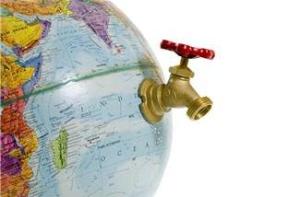 neglected. The quantity and the quality of water available are absolutely crucial for the future production of food. It will influence where and what type of food we can produce. It will define food security and world politics. Since 70% of fresh water use is for agricultural purposes, it is clear that water will soon be power.
 The Food Futurist Solutions - Anticipate, Adapt, Succeed