The future price of meat and fish: up

With a world population increasing strongly and an agricultural area that will not grow accordingly, the law of offer and demand clearly indicates that agricultural prices will increase in the future. This is true for agricultural commodities such as grains, but the increase will be even stronger for animal products, such as meat, poultry, dairy and fish.
This will be the result of an increasing and very likely quite aggressive competition between the need to feed people with the basic commodities, the need to feed farmed animals and possibly for some time the need to produce biofuels.
Since it takes more than one and even several kilograms of animal feed to produce one kilogram of meat, the feed conversion ratio (FCR) will affect by which factor the price of the various animal products will increase.
Efficient productions like chicken will be successful and will remain quite competitive pricewise against other sources of animal proteins, thanks to its low FCR, to its low water use and to the good agricultural value of its manure. In the aquaculture sector, efficient productions such us tilapia and pangasius have a bright future ahead, as they can help feed a large population for an affordable price. In general, aquaculture has the opportunity to fill the huge gap left by depleted wild fish stocks, although it will have to solve some issues in order to be successful (see my article titled “The lessons of intensive animal husbandry to aquaculture“). In terms of price, the scarcity of wild fish will make these quite expensive for the future.
Less efficient species such as pigs and beef cattle will see the price of their products increase relatively much more. Pigs also have the disadvantage of producing low quality manure, which will limit the level of intensification. However, pork plays an important role in some cultures, and therefore, it will still show a reasonable volume growth, with geographical variations.
A high FCR species such as beef cattle will probably undergo the most dramatic change. Higher feed costs, linked to a relatively high capital need will probably push a number of farmers to shift to other more efficient productions. Highly intensive systems such the feedlots will also undergo major changes, as regulations on the use of antibiotics and hormones will make them financially inefficient. Further, their high impact on the environment because of the manure will also work against them. I do not expect the 99-cent beef burger to be here for all that much longer, burgers will continue to exist, but just quite a bit more expensive. On the other hand, I can see good possibilities for specialty beef products, such as grass-fed beef, but customers will have to pay the right price for it. Grass is the animal feed that we all seem to underestimate, yet it covers vast areas of very often fragile soil, and cattle is one of the few species that can transform it into high value protein.
In the aquaculture sector, a carnivore species such as salmon will also meet its own limitations. Although, salmon feed has shifted from mostly fish oil and fishmeal to a much more complex mix of vegetal oils, this production will see its production costs rise strongly. I expect salmon to become a luxury product again.

Consumption per capita will decreaseWhat will a higher price mean?
There again, simple economics tell us that this will influence the level of consumption per capita. The price increase will moderate the level of consumption and the price differential between the type of protein, as well as health concerns, will cause a shift between the respective consumption of the different products. In Western countries, people consume quantities of animal products that are substantially higher than what they actually need, and this has led to many health issues. The decrease in consumption will help make people healthier, and reduce the burden of health costs in that part of the world.
In developing countries, the situation is different, as consumption trends show an increase of consumption of animal products, from rather low levels, though. In these countries, consumption per capita will increase, but will not reach the levels that Western countries have shown, simply because prices will be too high to get to such levels.
The decrease of consumption per capita that we will see in developed countries does not mean that the meat industry will get into trouble.  Less average consumption per capita in the West will be more than compensated by the growth in emerging countries, where population numbers are significantly higher, and this will lead to a higher global demand of animal products. The main change is that the consumers will be distributed geographically rather differently than they are today. This also means that production will be located in different areas than today.

Just as a teaser: if Western countries consumers were to reduce their meat consumption to just the necessary maintenance needs, it would free volumes enough to cover the maintenance needs of meat for the whole population of China!

Copyright 2009 The Happy Future Group Consulting Ltd.
Cod farming: difficult start, but bright future

Sometimes success stories do not happen at once. This is my feeling about cod farming. Cod products are in good demand, and unfortunately, wild stocks are in serious trouble, which leaves a huge opening in the market.
Farmed Cod - Courtesy of FiskeriforskningSo far, farmed cod producers have not delivered good financial results and opinions diverge according to whom you listen. Culprit seems to be the “market”, but this is generally a very vague and inaccurate explanation.

Feed companies initiated cod farming, as an extension of the feed business, but not as a standout business. Moreover, the volumes that have been planned initially answered to a production driven approach, and not to a market-driven approach. Production was set up for quite significant volumes, without building up a solid sales plan from an already established market position for cod products. If you read my previous articles “Be always market-driven” and “The consumer must be the focus point of value chains“, you can understand why such an approach delivered poor results.
Recently, I was browsing through the web site of one of the farming companies and, although they claim to have set up a value chain, they have not quite done so. Their value chain needs to integrate much more strongly the marketing/customer end, and I think that they need to rebalance their bargaining position with feed suppliers and customers, in order to obtain a fairer distribution of profits. Today, there are people making good money out of cod farming, but the farmers are not.
Cod filletOnce they refocus their marketing mix to the right countries and the right type of customers, which they will have to do with a reduction of production volumes, then they can grow the business with and for the cod market by being in the driver’s seat.

Considering the demand for white fish and the depletion of the supply of the natural competitor (wild cod), cod farming’s future can only be bright. It would not surprise me if, in the future, cod farming could surpass salmon farming in production volumes. But first, one step back.

Copyright 2009 The Happy Future Group Consulting Ltd.

If we are what we eat, what will we eat in the future?

The past 50 years have seen, at least in the Western world, the development of the consumption society. The emphasis has been on consuming always more, by having an apparently unlimited quantity of increasingly cheaper consumption goods available. This trend happened in the agriculture and food sectors just as well, and followed a rather simple patter, actually. Mass consumption has been coupled to mass production, thanks to intensification, technical and technological progress and, last but not least, marketing.

Junk foodTechnical progress improved yields and productivity, while marketing was aimed at creating more, and new, needs. Our food has become standardized, industrialized, and processed in a wide variety of forms. As the emphasis moved to lifestyle and convenience, which came along with the rise of mass distribution, cheap energy and suburbia, we lost the connection between ourselves, the origin of our food and nature. Food became just things you buy at the supermarket, already packed in plastic and cardboard.

Now, we have come to the realization that this high production of waste, be it packaging material, be it blemished product that do not look good anymore while still perfectly edible, be it the overproduction of manure and its minerals, or be it the massive use of antibiotics and pesticides is not sustainable. Of course, much progress has already done to reduce this waste and there is a growing trend towards organic and traceable, but at this stage it not clear yet whether this is a true change in our behavior or whether it has more to do with a social status and marketing issue.

However, what the current situation might be, the fact that we understand that we cannot keep on intensifying and wasting the way we did, will inevitably bring a more fundamental change in how we consume in the future.

Some people predict such changes as the astronaut diet made out of pills, the use of a computer to tell us what and how much of it we should eat based on our activity level, or the tissue culture to replace meat, and many other scenarios. Will any of those ever happen? Who knows?

Personally, I believe that food as a very strong psychological connotation. We associate food with experiences and, although there are differences between cultures, that emotional bond will stay.

Clearly, the consumption society with all its excesses is coming to its end, and maybe the current economic crisis, which also originated in the excess of having it all at any cost, could very well be the turning point.

The next evolution is probably going to be a balanced approach between consumption, which we need to some extent, and the necessity of preserving what keeps us alive. There will be different graduations of this balance between geographic regions, but sustainability is the only way forward, as I mentioned in my previous article (Sustainability: as natural as balance).

Intensification is showing its limitations, waste of manure and of packaging are also hitting a wall, energy is getting more expensive and makes the production and the transport of food more expensive, too. This will reshape how we want to consume our food, how and where it is produced, how it is presented to us.

Cattle feedlotWe still are in a society where some people get obese by eating lots of food as quickly as they can, while they have less physical activity than the previous generations, thanks to automation. That food is produced on intensive farms and feedlots where the animals grow and fatten as quickly as possible, as they eat lots of food, while not having much physical activity. Similarly, in our society meat producers use hormones to boost growth and carcass quality, while body builders and sport professionals use steroids and growth hormone to boost their performance. Interesting similarities, don’t you think? We are indeed what we eat.
So, in a conservation society, should we expect the farms to be led by the need to preserve? This almost sounds like the farms we had at the beginning of the twentieth century. I think that there will be some of it, but the efficiency of production as well as the efficiency of preserving the environment will be much better, thanks to new technologies. We will have high yields, and at the same time, we will have highly efficient systems to use water, to recycle waste and preserve the fertility of our soils and the balance of our oceans.

Copyright 2009 The Happy Future Group Consulting Ltd.

An example of profitable sustainable aquaculture

Here is an article (Sustainable Aquaculture: Net Profits) about a fish farm in Andalusia, Spain, which has a different angle than industrial intensive fish farms.

It refers to a number of arguments, such as feces contamination and lower densities, that I had mentioned in a previous article (The lessons of intensive animal husbandry to aquaculture). It also illustrates what I presented in Value chains are a great way to develop a niche, as they market their fish as the pata negra of sea bass at a premium price.

Of course, this farm is an example showing a very specific situation in a very specific environment, and providing seafood to the world population might require more intensive systems. Moreover, not everyone can afford to buy the pata negra category of food.

The lessons of intensive animal husbandry to aquaculture

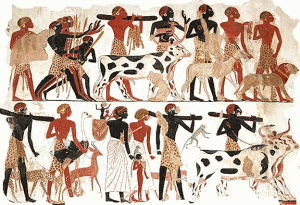
egyptian farmingThe domestication of animals for food production started thousands of years ago, and has gone through a slow evolution since then. In the last 50 years, we have intensified productions systems to a very high degree. Aquaculture, although not unusual in ancient times, has really experienced an economic boom only rather recently, and future growth predictions are quite optimistic.
The development of intensive animal husbandry has helped provide people with high nutritional value  products, and it also offered the possibilities to farmers to have a reasonable source of income. On the other side, it has brought a number of problems, many of which have not been solved and this has resulted in pressure to reduce the level of intensification.

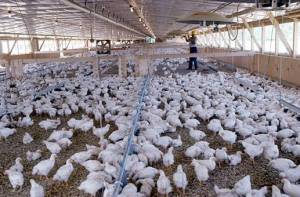
chicken farmWith high densities of animal in some regions, animal husbandry has had to deal with a number of health issues, such as not long ago avian flu and swine fever. The presence of large number of animals in limited areas has increased the “disease pressure” on farms and regions, making epizooties quite devastating, considering the amount of culling that health prevention measures require. This always takes a heavy economic toll, and not only on farmers. This has forced many countries to review their policies about intensive animal husbandry and downsized the sector.
To prevent diseases and mortality, intensive animal husbandry has made a widespread use of antibiotics, which also appeared to promote animal growth. Unfortunately, over time it has appeared that these antibiotics found their way into our bodies and ultimately into our drinking water reserves. The main threat that has arisen from the massive use of antibiotics is the emergence of bacteria resistance to these antibiotics, with the potential risk of making them ineffective, should bacteria become resistant to all of them. The result of this would be to bring us back to the pre-penicillin era with all the consequences that we know. Many countries have now addressed the problems surrounding the use of antibiotics and restricted their use to curative purposes.

Another strong impact on the environment has been the manure surpluses in intensive regions. Next to the odor problem, the excessive manure production has resulted in heavy pollution of the soil and of water reserves. Phosphates and heavy metals coming from the animal feed endangered the fertility of the soil. More mobile minerals, such as nitrates, have entered our drinking water, making it in many areas unsuitable for pregnant women and infants. Sadly, the intensive regions get in trouble because of a surplus of minerals that originate from raw materials produced in other parts of the world, while on the farms producing the feedstuffs, the minerals are not brought back. They have to be replaced by chemical fertilizers instead of the manure that would originate from the animals, such as in a closed system mixed farm.

Husbandry systems have evolved, too. After years of high degree of confinement, regulations have changed and are still changing to take animal welfare more into account. As examples, I could give the stop on tethering of sows and hen cage ban. I have no doubt that animal welfare will become a growing issue in aquaculture, too.

The use of feed and its constant quest to reduce production costs has brought the industry to use some raw materials that can be questionable. An example of this was meat and bone meal use, after the mad cow disease hit Britain in the mid 1990’s. Next to the possible transmission risks to humans, it has also raised some questions about whether herbivores should consume meat derivates.

Intensive animal husbandry has made meat, dairy and poultry very affordable to most consumers, at least in the Western countries. This has led to a shift in the diet from mainly starch to a much higher proportion of protein and fat. Unfortunately, this shift has had some negative effect on health. Animal products are high value sources of protein and fat, but excessive consumption has negative effects. While an annual consumption of 30 kg of meat per capita would do just fine, most Western countries have passed the level of 100kg. Of course, there are many discussions between the different parties involved about where the truth lies, but there are good indication that a good diet should include more fiber, more produce and less animal protein and fat.

Fish farmTherefore, above, I have tried to sum up the most noticeable results of intensification of land animal production. Clearly, there are lessons to be learned for the “new” aquaculture industry, and by this, I mean the intensive, high investment aquaculture. Most companies involved in this business have been inspired mainly by the evolution-and the success- in the chicken industry. They try to copy and adapt a similar model. Therefore, it is rather predicable that they will have to deal eventually with similar consequences.

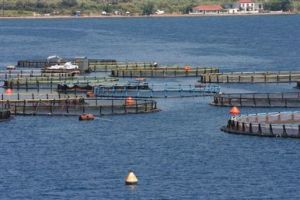
Fish farms have very high densities of animals. Even if the area at the sea level is rather limited, each farm goes quite deep, and the biomass they contain would make many chicken farms look like “small” operations. If you add to this that they are very exposed to the natural environment, as the pens are open nets, there is no wonder that they are very exposed to disease and disease spreading. The current situation in the Chilean salmon farming sector facing ISA just shows how sensitive these farms can be to diseases. My expectations is that aquaculture will be confronted to situations as bad as swine fever and avian flu, and they will have to revise their level of intensification, their location (including possible rotation of site with fallowing as a standard procedure). Further, navigation rules will be strengthened to reduce the possibility of cross-contamination from a marine zone to another.

Very likely, the sector will also further sharpen its veterinary procedures and increase their control on prevention and on medication.  About this part, it may seem that feces simply get flushed into the ocean, but that is not that certain. Feces always contain residues of medicines. The volume of feces produced is quite significant on such intensive fish farms and you can be sure that at some point, simply letting them go into the sea will not be allowed anymore. I foresee that fish pens will have feces collection systems in the future and the “manure” will have to find some use.

The feed industry is now diversifying it sources of raw materials to cope with the rising price of fish oil and fish meal, which is the result of higher demand from the fast growing aquaculture. They carry out lots of research to find the right profiles of oil to meet the fish flesh quality requirements (especially omega3) by using vegetal oil, but one can wonder whether this will be a sustainable approach in the long run. Maybe there will be a completely new industry to produce “farmed” fish oil and fish meal to meet the feed industry needs.

Copyright 2009 The Happy Future Group Consulting Ltd.

Food production: the balancing act

Since the beginning of times, feeding a population has always been about balance.

When mankind was still in the stage of hunting, fishing and gathering, survival was about keeping resources at a level that would allow the group to keep on feeding from its close environment.
When agriculture started, followed by the domestication of what became farm animals, the idea was clearly to have more control on the resources and insure that they would be available on a more regular basis. Of course, there were times when this did not happen, but the principle has remained.
For many centuries, agriculture was a local activity. Farmers would grow a diversified group of products that insured a sustainable balance at local level. The different products were a reflection of seasons and of land diversity. They also would offer different activities, and some revenue, through the different times of the year.
Their productions were part of a cycle. For instance, farm animals would eat crops coming from the farm to produce meat, milk, eggs which are all related to the reproduction cycle and the continuation of their species. What would not be digested, as well by the farm animals as by the local human population would return to the land as manure (usually mixed with a crop by-product such as straw to provide and insulating litter), fertilizing the next round of crops. So basically, what was extracted from the Earth was returning to it, thus insuring the continuity of the system, for as long as the climate would support it.
With the growth of world population and the increasing mobility and later globalization of markets, this very local and sustainable system has evolved. Products are sold far away from their area of production; many farms have specialized and replace the manure cycle by purchase of fertilizers. Animals are fed with raw materials originating from the over side of the world. Genetics, crop engineering, technical progress have also allowed yields to sharply increase as well as the speed of the production of foodstuffs, vegetal and animal. This has benefited mankind on the shorter term because it provided more food at relatively cheaper prices, so more accessible to a larger group. This has benefited trade and business, but it has brought its toll on the balance that is the cornerstone of any biologically related activity.
For example, intensive animal husbandry was developed in poor regions, allowing farmers to have a decent revenue in areas were they could not have stayed, but as the animals were fed with non-indigenous feedstuffs, they produced massive amounts of manure that were much higher than the local ground could process. This has led to loss of soil fertility, as a result of excess phosphates in the ground, among other things. Water resources have been polluted with high level of minerals, such as nitrates making it risky to use for infants and pregnant women. The exclusive use of chemical fertilizers in crop areas, as a result of the disappearance of a mixed farming also led to lower levels of organic matter (which is crucial to fix minerals and make them fully available for plants) and has caused some severe erosion of very fertile soils. While these problems were growing in the West as we were putting too much back on the land, on the other side of the world the opposite situation was happening with an exhaustion of soils to produce crops aimed for export only, which resulted in taking more out of those soils and not returning it in the right form. Further, these regions developed very often these commercial crops on land that had been won from ecosystems such has tropical forests, which have very sensitive soils to rain, erosion and oxidation of metals such as aluminum and iron.
By bringing the natural cycles out of balance, we have weakened the Earth from providing us optimally with what feeds us. Our future and our sustainability will depend of our ability to manage this balancing act. As usual, what seems a challenge can also offer new opportunities!

Copyright 2009 The Happy Future Group Consulting Ltd.

The challenge of feeding the world and preserving the planet

The world population is increasing at an amazing rate.
From 6 billion people on the planet in 2000, we will be 9 billion by 2050; an increase of 50%; and we were only 3 billion in 1960.

By looking how much damage has been made to the environment and the huge depletion of natural resources that we have created in the last 50 years (or last time the population grew by 3 billion), one can wonder how we will be able to feed, shelter, provide water and energy to the whole population in 40 years from now.
When it comes to feeding the world, the first question that comes to mind is where can we produce 50% more agricultural products on a land area that will decrease as a result of more area needed for urbanism (unless, we grow cities in height) and 50% more demand for drinking water than now. And these percentages are actually very conservative if we think that the emerging countries are seeing their standard of living increasing, which unfortunately also means that more resources are wasted than just the incremental growth of 50%.
We need to feed 3 billion people more who on average will tend to eat more animal protein at the expense of grain and legumes. This demand for animal protein means more competition between humans and farm animals for the grains and legumes. So, we have less land available to grow so much more food of vegetal and animal origin.
We could consider increasing the agricultural area, but this means more deforestation and a strong reduction of natural habitats. More agriculture will mean more use of energy and water, which will have a huge impact on our environment and the price of commodities. And I am not even taken in the picture the fact that we also want to feed our cars with agricultural product, bio-ethanol.
On the other side of things, we hear more and more calls to restore more balance our environment, to use our resources more carefully. And this is the challenge, if not the dilemma of the coming years: we have only one Earth and it is not expandable, while our population is exploding.
How will we be able to meet both targets? Personally, I do not have the answer to this, but I am sure of one thing: a dramatic change must come, either of our own free will or forced by Nature, and we need to anticipate for this as this will require an adaptability as mankind has not known for a long time.

Copyright 2009 The Happy Future Group Consulting Ltd.

The Ocean, not Mars is the next frontier

Sorry to crush George W.’s and Star Trek’s fans’ illusions, but I believe that colonizing oceans could offer more interesting possibilities than outerspace. Mars… well that’s another story…
OK, so, let’s start daydreaming!
First, a look at the scenery.
Close to 70% of the Earth is covered by water.
Most of that volume is left unexploited, with exception of fisheries, which unfortunately deplete stocks, mostly because there is no efficient plan to manage fish stocks in a sustainable manner.
The timid colonization efforts are limited to fairly coastal activities.

Natural resources
While on the land, it has become more and more difficult to extract metals and minerals, there is a vast hardly explored potential for these natural resources lying at the bottom of the sea. Many open-sky mines have been exploited to almost full potential. Drilling and mining at deeper and deeper levels have resulted in higher and higher costs. All things considered, it is probably cheaper to drill through a layer of (soft) water than hard rock, and there are areas known where metals are available on the surface of the oceans bottom.

Energy
Tremendous energy potential is available in and over the oceans.We have huge reserves of hydrogen in there. Of course, to produce it we will have to produce the necessary energy to split the water molecules. Using fossil fuel cannot be an option, as the gas emissions would defeat the purpose.
The great thing is that the energy needed can be found in the oceans themselves. Why not think of having large wind or solar farms located on oceans (probably not too far offshore), dedicated to splitting water and producing hydrogen and oxygen. The hydrogen could be used in fuel cells, and the oxygen could be used to allow the people involved in underwater activities and settlements to breathe.
Further, more electricity can be produce by using the strong currents to run through turbines.
It could be also interesting to consider the possibility to create floating solar energy farms.
It such a scenario, it is not unthinkable that all our energy needs for cars, factories and industries could come from clean emission-free electricity.

Water
Water, and especially clean drinking water will be one of the biggest challenges that mankind is going to face in the future.
Of course, there is plenty of water in the oceans, but the main problem will be to make it drinkable.
Considering that in the fantasy I am writing here, I envision human settlements on (or in?) the oceans, there will have to be drinking water available.
Next to desalinization, the other most obvious source of drinking water is collecting rain.

Capturing carbon
There are projects of using minerals to change the pH of the sea with the hope that this would help absorb CO2 much faster than it naturally currently happens. Although, this might be our last resort if we do not get our emission under control. The problem is that we have about no idea on what the side effects on the ecosystems might be, and that is a scary thought.
Here, I want to focus on more positive ways to use ecological methods.
On the land, we are losing more and more trees as a result of our need for more and more land, and therefore we are losing the natural capacity to capture CO2.
Then why not think of replacing these lost trees by cultivating the oceans and develop large vegetal populations, in other words, grow aquatic meadows and forests?
This must be done with care of course as the ocean life is a three dimensional thing with depth playing a significant role, while on land it looks more like two dimensional (limited depth/height significance).
Another area of attention when developing such vegetal populations is to make sure they do not get out of control and impact the oceans ecology as many other species with interact with them, creating complete ecological systems and food chains.

Developing a whole new aquaculture
Here, I use this term in its literary meaning, which is cultivating the water, not just restricting it to the production of a few commercial aquatic species, as it is the case today.We should be able to cultivate the water en develop it in a similar way as we did with agriculture, but also by learning from the mistakes we have made in agriculture.The only way that the current aquaculture farms can survive is to produce (cultivate) the foodstuffs it needs in the oceans as well. Keeping on doing as today has probably not that much future, as the need for fish meal, and mostly fish oil will exceed by far the current production possibilities, and exhausting the wild stocks used for that clearly could not work. Further, replacing these foodstuffs by vegetal protein and fat from agricultural crops will not work, either, because there will be too much competition from the needs for land-based animal productions and the needs for human food. Clearly, the only way to meet the increasing needs for seafood is to grow the foodstuff in the sea.
This opens a tremendous project of picking which foodstuffs to produce in the sea, how to manage them, how to combine the mix of production and ensuring the sustainability of this new aquaculture, and at the same time ensuring that the marine ecosystems recover and function properly as well.
This will require an aquaculture of plankton, of algae, of aquatic plants, of fish, of shellfish, of mammals en maybe more.
So far we have depleted the food chains in the sea, now is the time to restore them, next to increasing our ocean-based food supplies.

The challenges
Well, you will say: that sounds all very nice but is it realistic?
And I would answer, maybe it is not quite realistic today, but if we work on it, quite a few things named above can be achieved. Actually, some have already started.
The main challenge I see is to cope with the tremendous forces that oceans can unleash, such as currents, storms, waves and pressure in the depths; and we would need to build in a way that can deal with such forces, if we want to avoid disasters.
But you have to agree that there is lots of space available on our planet this way and it here right here “at home”.

Copyright 2009 The Happy Future Group Consulting Ltd.