
Although the title of this article many sound a contradiction in terms, agriculture (in which I include aquaculture as well) needs cities and vice-versa. Rural development is more than just agricultural activities; it is about creating and improving a cluster of many economic activities that are necessary for the proper functioning of a community.
As such, this should not be a surprise, because in the history of man, human settlements always have been linked to drinking water and sufficient food supplies. By developing agriculture, the very first “farmers” created the conditions for sedentarism, instead of continuous migrations. On these sedentary communities, other activities developed later to cover the needs of the locals. 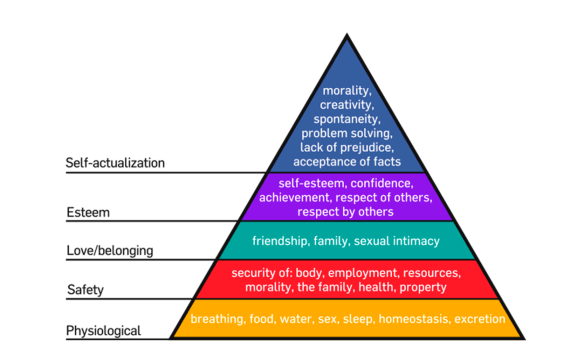 The hierarchy of the needs that we must fill can be easily identified according to the pyramid of Maslow: food and water, shelter and physical safety. Once this is achieved, adding other activities become more natural and simple.
This is why developing large urban centers is no guarantee of prosperity. Like all things in life, the key is about balance. Of course, over the last 150 years, the focus has been about growing the industrial capabilities and this has been the engine for a massive migration of population from the countryside to the cities. Although the conditions were far from stellar, many companies in the early industrial development were providing their employees with housing. Their ways may not always have been very social, but they were showing some level of social responsibility.
With the ups and downs of industries, cities have increasingly faced a problem of poverty, as the development did not include a sense of community anymore and company loyalty towards their employees disappeared as the workforce became expendable and factories could move to other countries.
This industrialization and urbanization have also affected the rural areas and the agricultural world. Many rural areas have faced and are still facing isolation and poverty. Although in many cases there have been many efforts made to improve this situation, the situation has not always improved.
Yet, we now see the challenges of feeding an ever-increasing population, we all recognize that we will need to cultivate more land and water, but this still does not seem to make things turn around.
In my view, the problem is that, too often, we restrict rural development to agricultural development, and by looking at this part in a separate way, instead of focusing on integrating agriculture in the development of the whole local economy, we just do not create strong enough chances of success. Having large urban centers with their problems on the one hand, and remote and depopulated rural areas with their problems on the other hand, should be the clear sign for all of us that our economic model is out of balance. There can be life outside a huge metropolis where everyone has become an anonymous person, resulting is a dislocated social fabric. What has made the success of our species has been our ability to act as groups. As isolated creatures, we probably would not have survived very long.
To rebuild the necessary social fabric in rural areas, we must create the conditions to have balanced and complementary activities. This is why, while some see the future of agriculture as urban farming, I believe that it has to be urbanizing the countryside, not with large impersonal cities, but with human size settlements where we can provide for all the needs. Isolated farmers with no direct connection with their markets and not getting the value for their products to make a decent living will look for alternatives. If we want more people to produce food, we must understand that they must make enough money to want to keep producing food. By creating a proper infrastructure around agricultural areas, we can create a more local market that will drive production. A profitable market for the farmers’ products also means more money in their pockets, which in turn means more spending power to develop demand for other business, be it for products or services. This is how we will be able to grow local economies and communities. This is not about a romantic or idealistic back to nature movement, or creating local farmers markets purely for marketing purposes, but this is a thorough and integrated process embracing modernity. In the current rural areas and probably in other regions, the future will about bringing the economy to the people before bringing people to the economy.
Copyright 2009 The Happy Future Group Consulting Ltd.

 There is a growing concern about environmental and health aspects of food production. About the environment, you can list very diverse things such as the depletion of wild fish stocks in the oceans, the interaction between aquaculture and wild fish stocks, manure and smell of intensive animal husbandry and impact of manure on soils and drinking water, deforestation of rainforest for ranching of beef or about growing GMOs (Genetically Modified Organisms). On the health side, consumers worry about food poisoning due to bacteria, such as E. Coli, listeria, campylobacter and salmonella, but also about residues of pesticides or antibiotics, as well as they worry about the use of hormones in animal productions. As the discussions get more animated in the US about the reform of health care and the cost of obesity, more and more people are wondering about whether the fast food diet is a proper one. Next to this, animal welfare is a growing concern by more and more consumers.
 This group will continue to be involved in mass production of commodities for global supplies, like this is the case today.
 This sector should undergo a strong growth and be build in a market-driven approach. These are the farmers that produce specialty products aimed at serving either a very specific segment of the retail or foodservice market.
 In emerging countries, the development of a local agriculture, and aquaculture, will be a key driver of economic development for under industrialized and/or under urbanized regions. It also will be a way of slowing down the migration of population to urban centers and limit social problems, by creating satisfying economic conditions and by securing food supplies locally. This farming will be about basic needs, before marketing.
 As such, criticism is not a bad thing as long as it is not done in bad faith with the only purpose to bring damage. There is nothing wrong with consumers being concerned about the quality of the food they eat, and about the way it is produced. Being worried about whether and how antibiotics or hormones are used, about the potential problems to the environment linked to intensive production is quite legitimate when you are rather ignorant of production techniques. After all, nobody has ever claimed that any industry was perfect, and business is always work in progress. It is utmost important for all of us to have watchdogs in order to make sure that we do not get into excesses that can lead to irreparable damage.
 In my opinion, the only proper way forward about information on agriculture and food is transparency. Only transparency can eliminate (or at least reduce to a minimum) negative publicity. Only by being candid and open about the way food is produced, can the agricultural community inform properly the public.
 This is an
 According to their numbers, weeds limit crop yields to such an extent that the world misses yearly the equivalent of 380 million of wheat a year, or in money $95 billion. My first reaction was that there is an untapped market for herbicides producers, but the article describes ways of getting rid of the weeds that do not require the use of chemicals.
 The Food Futurist Solutions - Anticipate, Adapt, Succeed