
 In order to understand what changes are ahead of us, we need to realize that opposite forces are engaged in shaping the world of the future. As we all know, accepting change is always a slow and sometimes a difficult process. There are those who see the possibilities and those who see the drawbacks. The first train was going, supposedly, to get cows stop giving milk, but we now know that cows love to watch trains passing by. Probably, the first caveman who drew a picture of an animal on the wall was considered by some as a great magician and probably by others as pure evil. As such, such a struggle is very useful, as on the one hand it shakes immobility and open new doors, and on the other hand it prevents us to rush into the unknown without thinking first.
Change is part of our lives and that will not change. The problem that we face about change is actually about the pace of change, more than over the change itself. Over the last century, this pace has just increased steadily, thanks to more and more efficient technology.
If we look back the lifespan of the oldest living person, which brings us back to the end of the nineteenth century, just take a minute to think of all the changes that have occurred since then. There was no car industry, no antibiotics, no commercial airlines, no TV, no internet or cell phones, no supermarkets, just to mention a few things that we take for granted nowadays.
Although such a change is dramatic and has affected the way we live today, it has been a process that has needed time. Usually, it is said that more than 60% of the products that exist today did not exist 10 years ago and if we extrapolate this to decade to come, we can expect some even more spectacular changes.
Innovation is in constant motion and technology helps us to conceive and to use much faster than by the past. Yet, it is interesting to see that even with such a pace of change, traditions still play a very important part in our lives. Even with lots of modern gadgets, most cultures keep their specific characteristics. Their respective values do not evolve as much as our “things“, these just become part of the culture. This is an important point when it comes to innovation: what you offer must meet a need, if it does not, it will either fail, or at best be a fad.
Having a look at the future, you must wonder what the underlying trends of innovation are since it started. I can see several major constant areas of innovation:
- Reducing physical labor.
- Helping us live better and longer.
- Increasing efficiency.
- Helping communication.
- Increasing mobility.
- Offering more leisure and entertainment.
- Making some people a little wealthier.
What could this mean for food production in the years to come?
 More technology to improve efficiency of water use, fertilizer use, animal feed use, land use, energy use (objective: zero waste).
- More mechanization, automation and robotising, especially in software more than hardware, working on precision (intelligent technology).
- Greater focus on health and natural solutions for food and for agriculture/aquaculture/fisheries (objective: zero residue and zero contaminants in water, air, soil, and food).
- Projects to repair environmental damage and include agriculture/aquaculture/fisheries in environmental management (restore and maintain sustainable food production).
- Policies, and politics, to increase food production (disease control, regulation, more government intervention at strategic level, incentives).
- Redistribution of markets with geographical shift of production and consumption areas.
- Shift from convenient to practical food solutions (bulk meal components).
- More education on agriculture, food and nutrition (balanced diets, food safety, traceability).
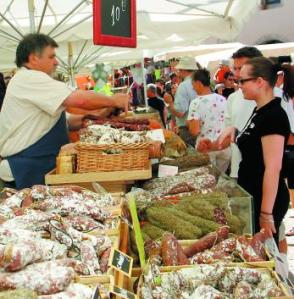
While such changes will come over time, consumers will still be looking for some level of tradition in foods. This can be about authenticity, regional specialties and recipes, or choosing to buy directly from farmers. Obviously, this is not a rational process, but it is more about the perception of “true” and “natural” production systems. After all, nostalgia is a constant of human emotions, too.
Copyright 2009 The Happy Future Group Consulting Ltd.
 A recent study from the UK concluded that organic foods are not nutritionally superior to “regular” foods. Of course, it did not take long for reactions to be published. The pro organics reject the protocol used and therefore the conclusions. The pro “industry” reacted satisfied. All of this is not surprising, and for a simple reason: people choose their foods greatly based on psychological reasons. Let’s face it the debate around organic food is largely about lifestyle and choices.

 What will a higher price mean?
 We must expect strategies about food supplies that will remind us of what we have seen about oil supplies. Politics are going to play an increasingly important role. After all, we can live without oil, but not without food. There will be aggressive moves from countries that are not self-sufficient, first friendly like the land purchases and leases, but there probably will be a point when this might not be enough and regional conflicts will happen. Some exporting countries will also take a more aggressive stance on prices and on availability, but they also will have to be aware that too much arrogance might end up in serious tensions.
 Inevitably, there will come a time when all apparent arable land will be in use for agricultural production, and there will be a need for more. Already today, we have a vast area of good agricultural land, which is inaccessible, because it is located under cities and roads. This is even more important as the prediction is that the world population will increasingly live in urban areas.
 With an increasing population that needs more food and more water to live, we can expect that water is going to become a highly strategic and needed resource. As climate changes, the current rain distribution and geographic availability of water is likely to change dramatically, too. This increasing competition between agricultural areas and urban areas will bring major changes on how we use water for both personal use and for food production. On the personal side, we certainly can expect that current bathroom systems to disappear, as they use too much water. Every time we flush a toilet tank, we actually waste the daily drinking water needs of a couple of people, and local water reserves are gradually depleted as well. Clearly, this has no future. Similarly, we can expect the legislation on water use for lawn sprinkling and car washing to change.
 More efficient irrigation systems will replace the old ones. Computerized systems are already in use in wine production, using sensors for humidity and temperature, to determine how much water the plants needs at the most optimal time of the day and deliver it at the exact spot. You can expect that such an optimization approach will prevail. The path that Monsanto follows with the production of genetically modified (GM) wheat that needs only a third of regular wheat varieties is quite interesting. The tricky part is the GM part, as on the contrary to natural “mutations”, such a process does not undergo natural selection, and therefore we do not know what possible side effects it might bring. Nonetheless, this is an attempt to deal with future water shortages. Hopefully, other less controversial solutions can be found that will deliver a similar result. Once again, we can shape our future through continuing innovation.
 Technical progress improved yields and productivity, while marketing was aimed at creating more, and new, needs. Our food has become standardized, industrialized, and processed in a wide variety of forms. As the emphasis moved to lifestyle and convenience, which came along with the rise of mass distribution, cheap energy and suburbia, we lost the connection between ourselves, the origin of our food and nature. Food became just things you buy at the supermarket, already packed in plastic and cardboard.
 We still are in a society where some people get obese by eating lots of food as quickly as they can, while they have less physical activity than the previous generations, thanks to automation. That food is produced on intensive farms and feedlots where the animals grow and fatten as quickly as possible, as they eat lots of food, while not having much physical activity. Similarly, in our society meat producers use hormones to boost growth and carcass quality, while body builders and sport professionals use steroids and growth hormone to boost their performance. Interesting similarities, don’t you think? We are indeed what we eat.
 The Food Futurist Solutions - Anticipate, Adapt, Succeed