Health and environment as growing drivers of food production

Health concerns will gain more importance in the future in the decision process of consumers when they buy their food.
More and more, we can hear and read about concerns and even rejection of the current production systems. Although this bad publicity is not always based on the most objective facts, it has been able to find a growing audience.

It must be true, it was in the newspaper

It must be true, it was in the newspaper

Since most consumers have little or no knowledge of agriculture and food, their only source of information is in the popular media. On the other side of the discussion, the agri-food industry is not getting through, because its message tends to be too defensive and too technical. Unfortunately for the industry, errors from the past (for example, the use of DDT) or cases from other industries (for example, tobacco) contribute to cast a shadow on its credibility. As I wrote my previous article “Less controversy thanks to transparency”, the agribusiness will achieve much more by opening up and having consumers visit their premises so that they can tell what they saw. They must organize more Open House days.

Therefore, for now, consumers have a certain perception of how food is produced, and it is not so relevant to argue whether this perception is correct or not. Perception simply is reality, and consumers act according to what they believe is true.
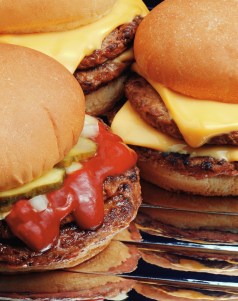
A little bit of this...There is a growing concern about environmental and health aspects of food production. About the environment, you can list very diverse things such as the depletion of wild fish stocks in the oceans, the interaction between aquaculture and wild fish stocks, manure and smell of intensive animal husbandry and impact of manure on soils and drinking water, deforestation of rainforest for ranching of beef or about growing GMOs (Genetically Modified Organisms). On the health side, consumers worry about food poisoning due to bacteria, such as E. Coli, listeria, campylobacter and salmonella, but also about residues of pesticides or antibiotics, as well as they worry about the use of hormones in animal productions. As the discussions get more animated in the US about the reform of health care and the cost of obesity, more and more people are wondering about whether the fast food diet is a proper one. Next to this, animal welfare is a growing concern by more and more consumers.
The answer to many of these worries has started to appear in the last few years with the growth of the organic market segment. When we see the growth and the performance of a retailer such as Whole Foods, there is no doubt that organic foods have a growing audience.

The concerns about the environment are forcing retailers, food service and businesses involved in the production chain of food to make changes. Some of the actions they have taken can be seen as marketing or PR, but they also have become mainstream. Just a look at how many restaurant and supermarket chains have already implemented sustainable seafood programs indicates how serious this change in consumer attitude is. Fast food chains are also actively working on reducing their environmental impact and set standards on where they source their meat, based on environmental concerns, such as no beef from ranches deforesting the Brazilian rainforest.
In the past, we have seen some examples of production methods that had to be abandoned, simply because no solution to cope with environmental problems could be found. This has been the case in The Netherlands where the level of intensification caused such manure surpluses and risks of animal disease to such a point that after many years of looking for viable technical solutions in vain, the government decided that the size of the national herds had to be reduced.
Similarly to what happened in Europe over the last decade, we can expect that much stricter rules in the use of antibiotics will be applied, and I expect a similar trend to a progressive elimination of the use of hormones in animal husbandry. About animal welfare, there should not be any surprise the day that only husbandry systems that allow enough “recreation” area for animals will be allowed. All of the above is going to have an impact on how and where food is produced. Systems will become less intensive, and progressively we will see more techniques to improve efficiency to compensate.
Past Food?

Past Food?

As I also had mentioned in another article (Future price of fish and meat: up), it is simple logic that with more people to feed, food is going to become more expensive. However, the relative prices of various food products also need to go along their relative health benefits. Today, it looks like only wealthy people can afford a healthy diet, as the price of “good” food is substantially higher than the price of what makes a nutritionally unbalanced meal. This clearly does not work in the direction of a healthier population at large.

The way consumers think will define the way we eat and produce our food. Many changes in consumption patterns, in production systems and in product offering are under way. I will get back later with more details on what my views are on this.

Copyright 2009 The Happy Future Group Consulting Ltd.

How much can the rule of 80-20 tell us about the future?

We all have heard about this rule across all industries, including agriculture and food. Eighty percent of the food would be produced on 20% of the farms and vice-versa. If it still applies in the future, it can indicate us how our food production and supplies will look like in the future. Of course, this is always a theoretical exercise, but it is quite convenient to elaborate on our thoughts.

As the population is expected to grow quite strongly in the coming decades, especially in urban areas, this could indicate two dominant trends:
• Further size increase of the largest farms and further industrialization of agriculture and food for global markets, although the number of farms in this segment would not increase strongly.
• Strong increase of the number of small farms involved in specific value chains and strongly linked with their local economy.

Industrial agriculture
Producing more, yet in a sustainable way. That is the challenge!This group will continue to be involved in mass production of commodities for global supplies, like this is the case today.
Yet, they will face an increased pressure to adapt to the requirements of sustainability, which technically is quite possible. New systems and more efficient technologies will be the pillars of its growth and development. They will have to find ways of reducing the amount of chemicals in crops and the amount of pharmaceuticals in animal productions
The requirements for capital will be quite high and the sector will be led by increasing larger corporations, by an increasing level of capital by large private investors and, last but not least, by some governments. This agriculture will innovate further and will be developed thanks to this capital. It will use automation and mechanization to reduce the dependence on labor. Mergers & acquisitions will continue in the agricultural sector and a few large blocks will remain, dominating their sectors.
Their mandate will be about more control the natural conditions of production and about reducing to a minimum their impact on air, water and soil, by using less polluting transport methods, water preservation, effluent treatment and soil preservation. They also will have to engage in maintenance of their environment.
The role of this type of agriculture will be to bring to market large amounts of affordable food for the masses, and should play an important role in strategies around food security, which is where corporations and government will interact on a regular basis.

Local food value chains
Closer to natureThis sector should undergo a strong growth and be build in a market-driven approach. These are the farmers that produce specialty products aimed at serving either a very specific segment of the retail or foodservice market.
This trend, which has been already initiated around concepts such as organic or authentic, will evolve into a more integrated local economy, and the initial concepts will probably become less differentiated as food production in general, be it industrial or traditional, will use more sustainable techniques.
Contrarily to the common belief, this agriculture will be developed thanks to very efficient techniques, but will be centered relatively more about labor and relatively less about capital. In this case, efficiency does not necessarily mean intensification.
We must not underestimate the significance of this part of the food production, as it will play an important role. However, we must not expect this type of agriculture to be the solution to feed the world, and this is not the purpose of the farmers involved in such food production chains.

This type of farming will grow in two different environments:

  •  In “developed” countries to serve a increasing, but aging, population more demanding about the origin and the production methods, and who is ready to pay a premium for the perceived better quality. The angle will be about quality, transparency, sustainability, traceability and as close to zero a use of chemicals and pharmaceuticals. In some areas, it could help strengthening a local economy and local communities.
  • Developing a local economy thanks to agriculture (Picture: FAO) In emerging countries, the development of a local agriculture, and aquaculture, will be a key driver of economic development for under industrialized and/or under urbanized regions. It also will be a way of slowing down the migration of population to urban centers and limit social problems, by creating satisfying economic conditions and by securing food supplies locally. This farming will be about basic needs, before marketing.

Copyright 2009 The Happy Future Group Consulting Ltd.

Less controversy thanks to transparency

The agribusiness and food industry come regularly in the media with some bad publicity. As such, it does not differ from other industries, as criticism comes with the territory.

What is unfortunate is that the agribusiness mostly responds to this in a rather defensive manner, either by attempting to bring rational scientific facts or by denying the facts that their opponents bring forward.

Criticism of food and food quality is not new. When I started my professional life, I had been lent a book about how food in general, and animal husbandry in particular, are perceived. The introduction of this book was a long complaint about the quality of bread, and by then (in the mid 80’s) the arguments presented sounded quite familiar to me. The funny part of it was that in fact this text was, according to the author, a report written in Ancient Egypt, some 3,000 years ago.

Although bad publicity and criticism are obviously no novelty when it comes to food, it seems that the industry has a hard time fighting this battle.

Some pressure is goodAs such, criticism is not a bad thing as long as it is not done in bad faith with the only purpose to bring damage. There is nothing wrong with consumers being concerned about the quality of the food they eat, and about the way it is produced. Being worried about whether and how antibiotics or hormones are used, about the potential problems to the environment linked to intensive production is quite legitimate when you are rather ignorant of production techniques. After all, nobody has ever claimed that any industry was perfect, and business is always work in progress. It is utmost important for all of us to have watchdogs in order to make sure that we do not get into excesses that can lead to irreparable damage.

Let’s also realize that only a tiny minority of people now work in agriculture and that most city residents have a very limited, if any, knowledge of how farms are operated. On the other hand, they have very strong, often idealistic and romantic, opinions on how they think farming should be, regardless of whether it is viable or if it can provide them enough food. Surveys with city kids have shown that many of them do not make any connection between eggs and hens, or between milk and cows and calves. For many, it is not even a clear fact that in order to get meat, one has to kill an animal.

Further, it is human nature to pick on the big guy, as we all love the story of David defeating Goliath. Moreover, bad news, the more sensational the better, always get more attention than good news, like the recent article published in Time. There is nothing like fear to get people glued to their TVs or reading reports in the papers or on internet. These psychological traits are quite difficult to deal with.

The problem with defensiveness, when dealing with bad publicity, is that it always brings the defendant in an awkward position. If this not handled properly, it can very easily come over as suspicious, which reinforces the poor impression.

Transparency creates trustIn my opinion, the only proper way forward about information on agriculture and food is transparency. Only transparency can eliminate (or at least reduce to a minimum) negative publicity. Only by being candid and open about the way food is produced, can the agricultural community inform properly the public.

Remember that issues around food production are highly emotional, as they deal with much more than just nutrition. This is why responding with rational arguments has so little effectiveness. First, emotional concerns must be dealt with as emotions, not merely with cold scientific facts. Only once the emotional connection has been established, it is possible to bring the communication to more rational aspects and facts.

The better informed the public is, the easier it is to also discuss and address issues that come along the way. Candour is only the first step, the clearly expressed will to always improve the way food is produced is absolutely necessary, and this is not about vague promises. It must come with an open agenda of issues that the industry knows about and is (and will be) addressing without complacency. A clear commitment to a plan of actions with defined time lines is the best way to create and restore trust with consumers. And the best way to score in this is by taking the initiative and the lead. The industry and this includes any participant in the production chain and its watchdogs, from breeding to retail, needs to make these decisions, instead of having to react to changes in legislation, which very often is the result of pressure from the public opinion.

Copyright 2009 The Happy Future Group Consulting Ltd.

Corn seen staying below $4 through 2014

Update on April 11 2011: Obviously forecasting is a difficult task!

For May 2011, Corn  is at $7.60/bu and Soybean at $ 13.84/bu

(Original article was of August 2009)

Here is a report about a research of the University of Missouri on some agricultural prices through 2014.

Prices are not seen increasing much, which tends to confirm an earlier report of the FAO.

Corn: $ 3.47/bushel in 2009/2010 to $3.98 in 2014/2015
Soybean: $9.44/bushel in 2009/2010 to $9.74 in 2014/2015
Nebraska direct steers (1,100-1,300 lbs.): $85.07 in 2009 to $100.05 in 2014
Twelve city wholesale broiler price: $.80/lb. in 2009 to $0.91 in 2014

USDA experiments with grain harvesting device

Here is a nice illustration of what I meant with my article “Innovation and tradition shape the future“.

New harvest method for same yields and better soil and moisture preservationThis is an article from WorldGrain.com describing the result of a test on a new harvesting system for grain carried out by the USDA. They tested the stripper header on millet and wheat.
The idea of this system is to strip away the grain and leave as long as possible a stubble, so that it protects the soil from erosion and enhances precipitation storage. So far results tend to indicate that yields are not affected by this harvesting method.
Just an example of using new technology and innovation to help improve a rather traditional method of getting organic matter in the soil.

Ecosystem-based management approach gains importance

Here is an article from fis.com illustrating what I had written in previous articles in this blog (enter “ecosystem” in the search window to have the list of these articles) and mentioned in my presentation Twelve trends for the future of food production.
It also illustrate my claim that for environmental organizations and industry need time has come to co-operate.
After all, food production is a biological process and so are our lives, so that is no wonder that we need to look at this issue in its broad and complete scope.

Ownership of food: the seeds of future conflicts

From an agriculture that mostly was producing locally for a local market with a straight forward production chain, the organization of food production has become more complex and structured over time. As we moved towards always more integration, traceability and globalized markets, the roles and bargaining positions of the different actors has changed.

bargaining power evolves

Facing the possibilities of more food riots in the future, if we are not in a position to make food affordable for all, we certainly can expect to see new power struggles emerge.

If we place ourselves in a scenario of food shortage, it is normal to assume that the power would be in the hands of whoever owns the food. But who is the owner, or better said who is actually in charge?

Is it the retailer? Is it the farmer? Is it the owner of the land on which the crops are grown? Is it the futures contract trader? Is it the seed supplier? Because without farmers, there is not much food in the stores; and without seeds, farmers cannot grow much food, and without food, no futures contracts to negotiate.

In the same way, who should decide where to the food would go? Does it belong to the country and the people who produce it, or does it belong to a corporation that prefers to sell it abroad? In a situation of shortage, this could lead to serious conflicts.
Corporations look primarily at markets and try to maximize their profit. That is their mandate.
Governments have a different look at things, as politicians want to have happy citizens, so that their position of power can continue. All they want is avoid social unrest.
Potentially, this can lead to new regulations and even to the possibility of nationalizations if companies and governments do not agree.

To get back to the example of seeds and genetics, there is a growing responsibility resting of the shoulders of breeding and genetic engineering companies. Not so long ago, let’s say a bit more than a century, there was much more genetic diversity in agricultural crops and farm animals. This diversity has shrunk quite significantly and we face the potential risk of not having the right genes available if we were to face a natural situation that would eradicate plants or animals as a result of inability to resist and to adapt to the new conditions these organisms must deal with. The genetic pool used to be a collective asset, but it has moved more and more into a private asset. About this, too, one can wonder who is in charge and who has ownership, and what could the consequences be.

As long as we are not facing any severe supply unbalance, the current situation will probably linger as it is a bit further, with the players having the most power trying to grow their position and influence other deciders to their advantage, but this kind of consensual vagueness about who is the owner of food will sooner or later cause some major shake-up.

Copyright 2009 The Happy Future Group Consulting Ltd.

The lurking menace of weeds – Farmers’ enemy #1

Here is quite an interesting article from the FAO about the cost of weeds in agriculture.

 the more weeds, the less yieldAccording to their numbers, weeds limit crop yields to such an extent that the world misses yearly the equivalent of 380 million of wheat a year, or in money $95 billion. My first reaction was that there is an untapped market for herbicides producers, but the article describes ways of getting rid of the weeds that do not require the use of chemicals.
Compared with the medical cost of obesity in the US of $147 billion a year, or the contribution of the US meat and poultry industry of $382 billion per year to the economy, or the TARP funds for the banks of $700 billion, or the estimated financial toxic assets losses worldwide of $4 trillion, the $95 billion does not seem that big a number after all.

Yet, 380 million tonnes wheat equivalent represent, according to the FAO, half of the 2009 expected world wheat production!

Assuming simplistically that with this wheat we would feed people only a diet of bread, this could feed decently more than 1 billion people! This is all the more amazing as the FAO currently estimates the number of hungry people in the world at 1 billion. Clearly, there should be some possible solutions if policies and politics were targeted at the right goals.

Always interesting to put numbers in a different perspective…

Asia faces food shortage by 2050 without major water reforms

Here is an article from Science Daily illustrating very clearly the issues I brought up in my earlier article “Managing water is paramount for the future of food production“.

According to Colin Chartres, Director General of the International Water Management Institute: “Asia’s food and feed demand is expected to double by 2050. Relying on trade to meet a large part of this demand will impose a huge and politically untenable burden on the economies of many developing countries. The best bet for Asia lies in revitalizing its vast irrigation systems, which account for 70 percent of the world’s total irrigated land”.

Innovation and tradition shape the future

Tradition in food can be quite resilientIn order to understand what changes are ahead of us, we need to realize that opposite forces are engaged in shaping the world of the future. As we all know, accepting change is always a slow and sometimes a difficult process. There are those who see the possibilities and those who see the drawbacks. The first train was going, supposedly, to get cows stop giving milk, but we now know that cows love to watch trains passing by. Probably, the first caveman who drew a picture of an animal on the wall was considered by some as a great magician and probably by others as pure evil. As such, such a struggle is very useful, as on the one hand it shakes immobility and open new doors, and on the other hand it prevents us to rush into the unknown without thinking first.

Change is part of our lives and that will not change. The problem that we face about change is actually about the pace of change, more than over the change itself. Over the last century, this pace has just increased steadily, thanks to more and more efficient technology.

If we look back the lifespan of the oldest living person, which brings us back to the end of the nineteenth century, just take a minute to think of all the changes that have occurred since then. There was no car industry, no antibiotics, no commercial airlines, no TV, no internet or cell phones, no supermarkets, just to mention a few things that we take for granted nowadays.

Although such a change is dramatic and has affected the way we live today, it has been a process that has needed time. Usually, it is said that more than 60% of the products that exist today did not exist 10 years ago and if we extrapolate this to decade to come, we can expect some even more spectacular changes.

Innovation is in constant motion and technology helps us to conceive and to use much faster than by the past. Yet, it is interesting to see that even with such a pace of change, traditions still play a very important part in our lives. Even with lots of modern gadgets, most cultures keep their specific characteristics. Their respective values do not evolve as much as our “things“, these just become part of the culture. This is an important point when it comes to innovation: what you offer must meet a need, if it does not, it will either fail, or at best be a fad.

Having a look at the future, you must wonder what the underlying trends of innovation are since it started. I can see several major constant areas of innovation:

  • Reducing physical labor.
  • Helping us live better and longer.
  • Increasing efficiency.
  • Helping communication.
  • Increasing mobility.
  • Offering more leisure and entertainment.
  • Making some people a little wealthier.

What could this mean for food production in the years to come?

  • high tech agriculture - photo BayerMore technology to improve efficiency of water use, fertilizer use, animal feed use, land use, energy use (objective: zero waste).
  • More mechanization, automation and robotising, especially in software more than hardware, working on precision (intelligent technology).
  • Greater focus on health and natural solutions for food and for agriculture/aquaculture/fisheries (objective: zero residue and zero contaminants in water, air, soil, and food).
  • Projects to repair environmental damage and include agriculture/aquaculture/fisheries in environmental management (restore and maintain sustainable food production).
  • Policies, and politics, to increase food production (disease control, regulation, more government intervention at strategic level, incentives).
  • Redistribution of markets with geographical shift of production and consumption areas.
  • Shift from convenient to practical food solutions (bulk meal components).
  • More education on agriculture, food and nutrition (balanced diets, food safety, traceability).

While such changes will come over time, consumers will still be looking for some level of tradition in foods. This can be about authenticity, regional specialties and recipes, or choosing to buy directly from farmers. Obviously, this is not a rational process, but it is more about the perception of “true” and “natural” production systems. After all, nostalgia is a constant of human emotions, too.

Copyright 2009 The Happy Future Group Consulting Ltd.