

Genetic engineering, that we just mentioned, and traditional breeding and will be increasing intertwined in the future, as they will join their respective areas of expertise into combined genetic improvement programs. Actually, we can expect that these two disciplines will be merged into only one unified science of DNA. We can expect to see an increased number of joint ventures and mergers between genetic selection companies and biotech companies in the future.
So far, genetic engineering has been mostly known to the public opinion thanks to the development of GMOs (genetically modified organisms), and this has been a very controversial area. Genetic engineering will move from a support activity to, for instance, herbicides, to address much more real problems and bring much more real solutions to the challenges of the agriculture of tomorrow. GMOs have served the sales of herbicides produced by the same companies quite well, but of course, this will plateau rather soon, and there will be a need for something else to impress the financial markets. It should not be a surprise to see these corporations specialize in biotech completely, and divest their chemicals “heritage” at some point in the future. The real problems to solve include a broad range of topics. They include technical performance and yields of plants and farm animals. Genetic engineering will help increase the efficiency in the conversion of nutrients and water. It will help plants and animals to have a stronger resistance to diseases, in order to avoid severe production losses. It will provide alternatives to antibiotics, to herbicides and pesticides. It will find ways for plants to absorb or fix the nitrogen of the air to reduce the use of mineral fertilizers. Another area of research will be influencing the quality of final agricultural products, in particular producing healthier foods, and have plants produce medicines.
To solve such problems, the people in charge of such programs will have a very heavy moral responsibility towards society, as the choices they will make will affect the longer term and our ability to survive. The success criteria will go much beyond the financial performance of these companies. This will be translated in the type of bonus packages that the executives will receive. One can wonder whether the correct structure for such companies is to be publicly traded, since stock markets tend to induce a very strong preference to the short-term financial performance. The reflection on such programs will need to go through a serious test of “what ifs”. As per now, money still is the main driver, especially in the arguments of the producing companies and countries. For instance, they reiterate that the decision of the European Union to limit the production and use of GMO will make food more expensive in these countries. Then let’s ask ourselves what if the EU is wrong in their decision? Well, production systems and agriculture would not change much; their food might indeed be more expensive than somewhere else. The people will buy smaller cars and travel less far for their vacation. This is not a very threatening situation if you ask me. What if the ones in favor of GMOs are wrong and the EU is right? The debate is indeed very emotional and political, but this is simply because we lack long term testing of the effects of GMOs to have certainty. This is why the GMO producers have such a hard time convincing their opponents.

A better understanding and predictability of long-term effects is paramount in agriculture and food production. Agriculture is not just about producing a particular crop, it is also about managing the total ecosystem that a field is. Actions in genetics need to guarantee the long-term balance of these ecosystems (in which weeds, although of no economic interest, are a part of), because once an ecosystem has been altered, it has been changed forever. Genetic improvement programs must ensure to preserve, in whichever form, genetic diversity and survival of vegetal and animal species, because once extinct, they are lost forever. Long-term fertility of soils is another highly critical part of the protection of our food supplies, because once sterile, the land is lost forever.
So, as you see, we are facing many challenges and genetics is a key element of our food systems. By shifting away of rather superfluous projects, even though they have been quite lucrative for the producers; and by focusing more on true improvement and sustainability of production systems thanks to technical breakthroughs, a combined breeding and genetic engineering will bring constructive solutions. All it will require from the stakeholders is vigilance.
Copyright 2009 The Happy Future Group Consulting Ltd.
 Inevitably, there will come a time when all apparent arable land will be in use for agricultural production, and there will be a need for more. Already today, we have a vast area of good agricultural land, which is inaccessible, because it is located under cities and roads. This is even more important as the prediction is that the world population will increasingly live in urban areas.
 Although some still try to resist and deny the obvious, this system is no longer sustainable and we must rethink what should drive our economy. In an earlier article, I made a reference of how previous generations used to be very cautious about what and how they consumed. The positive side of the last 60 years has been the incredible progress we have made in science, knowledge and technology, which offers possibilities unthinkable for the previous generations I was referring to. We understand our world and how it functions like never before. We have all the technological solutions to solve the climate issue, but the key is the will and the determination to change and to act. This cannot happen as long as we keep thinking the economy in terms of growth only. Growth will not go on for ever, simply because our space and our resources are limited. As there are more and more people needing more and more energy, food and other goods, the law of offer and demand will rule. Prices will inevitably go up and consumption will slow down. A new time has come. The priority must now be quality, not quantity, we must think about having enough, not having always more. This thinking is not a nostalgia to a past that also had its limitations. It is not about rejecting a market-based economy. It is about looking at the market that has always been here, but that has been pushed in the background for the easier approach of just producing more and selling it. What we will have to bring to market is not so much products as services. These services are the ones that are directly related to making all the natural and industrial cycles run harmoniously in a durable way. Just to name a few examples, I would mention all activities that are related to cleaning the damage we have caused, and recycling activities will become more and more important in our whole economy. In the same way, water treatment is going to be a crucial activity, even more so than it has been so far. Clean industries producing durable goods and services will prevail. This change will also make some jobs disappear and some appear or even reappear. As usual change always brings opportunities. It is to us to recognize them and to take them. The time has come to make the transition from this consumption society, based on wasting resources, and with no future, to a maintenance society, where wealth, and not growth, will be the economic success indicator. By acting today, we can ensure this process to happen in a smoother way than if we wait until we have no choice anymore.
 With an increasing population that needs more food and more water to live, we can expect that water is going to become a highly strategic and needed resource. As climate changes, the current rain distribution and geographic availability of water is likely to change dramatically, too. This increasing competition between agricultural areas and urban areas will bring major changes on how we use water for both personal use and for food production. On the personal side, we certainly can expect that current bathroom systems to disappear, as they use too much water. Every time we flush a toilet tank, we actually waste the daily drinking water needs of a couple of people, and local water reserves are gradually depleted as well. Clearly, this has no future. Similarly, we can expect the legislation on water use for lawn sprinkling and car washing to change.
 More efficient irrigation systems will replace the old ones. Computerized systems are already in use in wine production, using sensors for humidity and temperature, to determine how much water the plants needs at the most optimal time of the day and deliver it at the exact spot. You can expect that such an optimization approach will prevail. The path that Monsanto follows with the production of genetically modified (GM) wheat that needs only a third of regular wheat varieties is quite interesting. The tricky part is the GM part, as on the contrary to natural “mutations”, such a process does not undergo natural selection, and therefore we do not know what possible side effects it might bring. Nonetheless, this is an attempt to deal with future water shortages. Hopefully, other less controversial solutions can be found that will deliver a similar result. Once again, we can shape our future through continuing innovation.
 Technical progress improved yields and productivity, while marketing was aimed at creating more, and new, needs. Our food has become standardized, industrialized, and processed in a wide variety of forms. As the emphasis moved to lifestyle and convenience, which came along with the rise of mass distribution, cheap energy and suburbia, we lost the connection between ourselves, the origin of our food and nature. Food became just things you buy at the supermarket, already packed in plastic and cardboard.
 We still are in a society where some people get obese by eating lots of food as quickly as they can, while they have less physical activity than the previous generations, thanks to automation. That food is produced on intensive farms and feedlots where the animals grow and fatten as quickly as possible, as they eat lots of food, while not having much physical activity. Similarly, in our society meat producers use hormones to boost growth and carcass quality, while body builders and sport professionals use steroids and growth hormone to boost their performance. Interesting similarities, don’t you think? We are indeed what we eat.
 There are many discussions in scientific, economic and political circles about whether we have reached such a stage either regarding pandemics or regarding food supplies. The specter of pandemics recently raised its head with the “swine flu” originating from Mexico. Last year, there were severe disruptions of food supplies in some parts of the world, not as much as the result of an actual shortage, but as the result of prices skyrocketing and fears that food would run out.
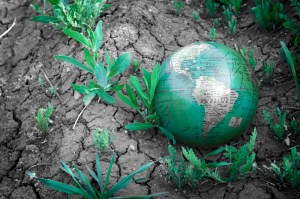 This is why, with a growing human population, agriculture and food production at large, managed in a sustainable manner, will become increasingly strategic in the future, and sensible management of water resources will be a key factor for the success of agriculture as well.
 The Food Futurist Solutions - Anticipate, Adapt, Succeed