The quiet revolution of food retailers

While many debates continue in the political and “parapolitical” world about many aspects of food production systems and the impact of human activity on the environment, retailers lead a quiet revolution. Without making the headlines, they gradually change the way their suppliers will do business in the years to come.

Such an evolution is certainly welcome, especially in a time where important decisions need to be made. Political leaders seem unable to reach any agreement on environmental issues, as the world could see at the late Climate Summit of Copenhagen. In the food sector, there are many discussions going on about sustainability and genetic engineering, to name the two hottest items, but the political class does not seem to generate clear and concrete action plans.

Just like what happened in the 1990s about food safety in Europe, retailers are taking the initiative to create momentum on the current issues. The problems that plagued the food industry in Europe, such as salmonella in poultry, the mad cow disease, or the dioxin in Belgian fat for chicken feed showed a number of weaknesses that needed to be addressed. In the case of BSE, UK retailers did not wait for British or European legislation to demand meat and bone meal-free feed for farm animals. As I was working for a company supplying the UK market with chicken meat, I can testify that these were dramatic times. Tough decisions had to be made on a very short notice that had serious financial consequences. By then, a couple of reasons made the retailers took the lead. First, the inability of the government to prevent and tackle the issues was creating a bit of a vacuum on leadership. Consumer confidence in their institutions was fading, and retailers were the only ones, true or not, perceived to take the proper actions to protect the public. The second reason was the fact that many retailers had their own private labels. In this case, the problem was not the supplier’s problem anymore because the supermarket chain could have risked serious PR damage if a food safety issues would have been associated with their brand.

This time, retailers are again in the position where they can present themselves as the consumers’ champions. Legislation is slow to move and make significant decisions. The involvement of interest groups adds to the infighting and delays decision-making.

To prepare for the future, they already have come out with plans and communication on how and where they want the food they sell to be produced, and they try to offer a choice to consumers. By doing so, the most active among them are setting new standards, and forcing the whole production and supply chain to think about the things to come.

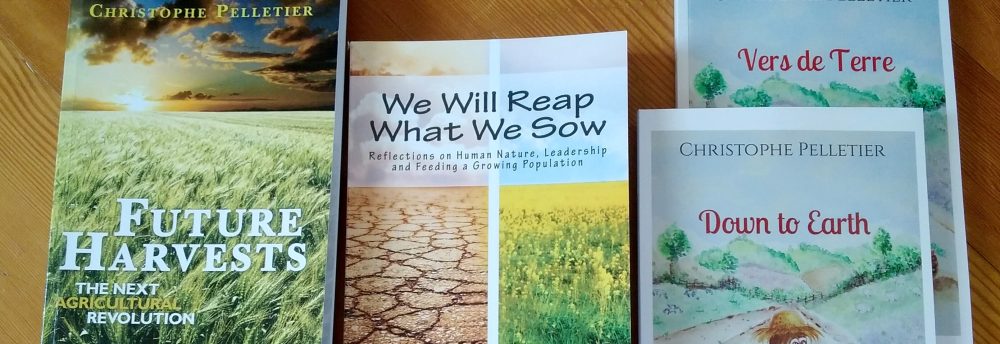
In previous blog posts, I have mentioned some of such initiatives, and in Future Harvests, I described the increasing leadership role of food retail in agricultural practices.

In particular, I mentioned the carbon footprint labelling on dairy products by Tesco, Wal-Mart’s Sustainability Index questionnaire to suppliers, and the seafood sustainability programs of many retailers. Marks & Spencer started their Plan A in 2007 with the objective of making their business more sustainable. To achieve this, they are involving their suppliers and the farmers producing for them to carry out the changes that M&S finds necessary for a better future.

More recently, new initiatives indicate that retailers are pursuing further on such initiatives. Wal-Mart came last week with their plan for sustainable agriculture. In the UK, Sainsbury let know last week that they were committing GBP40 million to invest in farming. Earlier this week, Carrefour unveiled their “Reared without GMO” program. In their stores in France, they will sell 300 food items labelled as being GMO-free, to offer consumer a choice based on transparent information. If Carrefour ventures into this, one can be sure that they do so because they already know that this will be good for their business. By gaining market share, it is very likely that their competitors will soon react by issuing similar programs. The EU Commission may be struggling to figure out how to deal with GMOs, but Carrefour says “Let the consumers tell us!” Vox populi, vox dei!

Of course, such initiatives do not please everyone. Today, I could read in a blog for a US magazine backed by the meat industry some interesting reactions about Carrefour’s new plan. Some readers were bringing up the typical arguments. Meat would be so expensive in Europe. Well, meat is quite affordable in France, even without GMOs, so think again! The other argument was about freedom of choice: people should be able to eat what they want. By labelling its food item, Carrefour does just that. French consumers are free to buy at Carrefour or somewhere else, and they have the right to choose what label they prefer. The freedom of choice is ironic coming from the US meat lobby, since American consumers do not have that freedom. Reared with GMOs is pretty much the only choice in the US. For now, that is. However, it is interesting to see on Carrefour’s press release that the pictures of fish, chicken and pork chops are exactly the same, regardless of whether they would be grown with or without GMOs.

In the 1990s, British and European consumers, and retailers, were challenging food industry practices because they were worried about their health and about the lack of transparency about food. Nowadays, in the USA, consumers are increasingly suspicious of their agribusiness, because they are worried about their health and the lack of transparency of the industry. Beef recalls because of E. coli, egg recalls because  of salmonella, spinach contaminated with manure are in the news on a (too) regular basis. They are also increasingly aware, and suspicious, of the relations between interest groups and their government agencies, and how this influences decisions on what they eat.

Retailers are now saying that they are not waiting for politicians to make decisions. They have defined their vision, they know what they want, and they are passing the message on to the suppliers. What would happen in agribusiness USA if Wal-Mart took a similar approach as Carrefour?

Copyright 2010 – The Happy Future Group Consulting Ltd.

Consumers shape food production systems

Although it is tempting to think that food production systems are created by agribusiness, they depend greatly on the choices and the attitude of consumers and society. For humans, food is not just about nutrition, but it is loaded with a high emotional content.

Consumer choices are highly irrational. To demonstrate this, here are some examples.

When the mad cow disease, or BSE, hit the UK in 1996, beef consumption dropped, but the behavior of consumers was odd. A leading retailer put British beef on sale at 50% off the normal price. They had their best weekend sales ever by then. When asked why they had bought beef, while there were concerns about health risks, some consumers gave answers such as “At that price it is worth taking the risk” or, even better, “ I will freeze it and eat it once the mad cow crisis is over”! At the same time, customers’ visits to the leading fast food chain drop sharply and beef burgers were not in demand, although their beef was from the Netherlands, a country free of BSE by then.

In Europe, mostly in France, consumers used to demand veal to be white. Not slightly pink, just plain white. To achieve this, calves were fed a milk powder diet, which kept them anemic. Yet, at some point, consumers denounced this technique as being against proper treatment of animals. The demand of white meat with a normal diet could not be reconciled. It took years before consumers finally understood that veal was supposed to be pink.

For most customers, white eggs are perceived as being from intensive cage production, while brown eggs are perceived as being more “natural”. Everyone with knowledge of the industry knows that the color of the shell has nothing to do with the nutritional quality of the egg. The belief that the egg color indicates a difference persists, though.

Some blind tests carried out between “industrial” and free-range chicken meat carried out in the Netherlands in the 1980s showed interesting results. When consumers were not told which was which, they could not clearly taste a difference, while when they knew which meat was from which production system, they overwhelmingly gave the preference to the free-range chicken.

Here, in Vancouver, there is a strong trend towards organic foods produced locally. Farmers markets flourish and the environmentally conscious consumers choose to buy their “natural” food on these markets. Ironically, many of them drive in their gas-guzzling SUVs to go there. So much for caring for the environment.

Who, with a rational mind, would choose to eat junk? Yet, junk food is quite a popular item in North America, and it has been a growing trend in many European and emerging countries as well.

In the case of tobacco, not a food, but an agricultural product nonetheless, the warning on the package is quite clear. Yet, some people decide to smoke.

The list could continue and I am sure that everyone has more examples of irrational behavior. Consumer demand (both the rational kind as the irrational one) determines what farmers and food companies produce and sell. In this regard, consumers also share a responsibility in what is produced, how it is produced, where it is produced and how it is distributed to them. Blaming retail or the agribusiness alone for the kind food systems that are in place is unfair.

Of course, it would be interesting to imagine what people would eat if they were rational, and what impact on our food production this would have. A rational diet would follow proper nutritional recommendation, and to this extent would follow the same principles as those used in animal nutrition. However, this would not have to be as boring a diet as what animals are fed. A rational diet does not need to be a ration. After, the human genius that is cooking would help prepare delicious rational meals. It would be like having the best of both worlds. The emotional, social and hedonistic functions of food would remain. The key would be about balance and moderation. If people were eating rationally, there would not be any diet-related illnesses. There would not be obesity. There also would be a lot less food waste. This would improve the level of sustainability of agriculture.

Will consumers become more rational in the future? I do not think so, but I believe that they will become better informed and more critical over time. Especially with the rise of social media, information circulates much faster and trends can gather momentum faster than in the past. More programs for healthier eating are currently running and action is taking place at many levels. In particular, schools are a place where much can be achieved. One can wonder how long the “lunch money and self-service system” will last. Having schools placing vending machines selling items that are highly unbalanced foods and leaving the decision over to kids to decide what they want to eat was of course a disaster waiting to happen. I cannot believe that anyone would expect kids to consciously making the choice of spending their lunch money on broccoli and mineral water. Kids will choose what they like best, not what is best for their health. They need adults for guidance.

Attitude towards food is changing all over the world. Currently, I can see two major trends growing. One is taking place in North America and the other is happening in emerging countries.

In North America, consumers are waking up and starting to question the way their food is produced. This is a major change compared with their attitude until a few years ago. When I moved to this part of the world in 1999, I was amazed by how easy consumers, and retailers, were for the food industry. Consumers simply seemed to consume without trying to know about production methods. Hormones, antibiotics or GMOs (genetically modified organisms) seemed to be accepted. This was a sharp contrast with what I had known in Europe, where all of the above was meeting strong resistance from consumers and retailers. What I currently see happening currently in North America reminds me strongly of what I had seen happen in Europe 20 to 30 years ago. The similarities are almost disturbing. Consumers are losing trust in government agencies, and retailers seem to be the ones to champion food quality, traceability and production methods. This will have much more profound consequences in the way food is produced in the USA and in Canada than the agribusiness seem to realize, or is willing to admit. The population is aging, the generations are changing and the values about food are shifting. The current opposition is not a short-term fad. Consumers will make different choices. Some food producers see that and are already adapting, but many producers still seem to think that opposition will pass. I believe that they are in for a surprise. The expressed plan of Wal-Mart to buy more from small and mid-size farms, to reduce waste, and to develop sustainable sources of agricultural products is a very clear signal that business is changing!

In emerging countries, consumers are changing their eating habits, too, but for a different reason. They now have better wages and more disposable income. The previous “”subsistence” diet made of mostly grain, such as rice, wheat or corn, are now including more animal protein, as well as fruit and vegetables. In these countries, consumers are not overly critical of their food production and distribution systems, but issues that arose in developed countries affect the way food is produced, especially in the area of food safety. These consumers probably would like to experience the same level of food security and affordability of food as in the West over the past 5 decades, but the growing population, and the financial markets will temper this trend. Food prices will be firm at best and they are more likely to increase in the future on an ongoing basis.

There is no doubt in my mind that consumers and retailers are increasingly going to put the emphasis on sustainability, health, food safety and transparency. This may sometimes lead to conflicting objectives with the need to produce more food globally. This does not need to be a problem, but this is why the world needs strong leaders to show the way towards meeting both the objectives of better food and of more food.

Copyright 2010 – The Happy Future Group Consulting Ltd.

Regaining the consumer’s trust

I read many blogs, articles and opinions about food on a regular basis. Yesterday, I came across an interesting blog post on Meatingplace.com. Yvonne Vizzier Thaxton, an authority in the US poultry industry, wrote the article, titled “Consumer trust” after she found out about a survey carried out by the Center for Food Integrity. Basically, the survey concluded that as farms were growing in size, consumers started to wonder if they still had the same values, and although small farms still have the public opinion’s trust, large-scale farms are looked at with suspicion.

That article brought me to think about trust, how it works, and what to do to win it back once it has been lost.

Instead of trying to figure out which group of the population to influence, as the author suggests, I prefer to go back to the basics. If I stop trusting someone, what would he/she have to do to convince me that he/she is trustworthy again? The empathic exercise is a much better way to find out what might work or not. In my opinion, that is exactly what the food sector should do first, instead of pushing the same message without much success.

First, people stops trusting when they are disappointed, when they feel betrayed or when they feel unsafe. By finding out which one of the above caused the loss of trust, and what more specific reasons made the public change their minds, the food sector will already make huge progress.

The second thing to keep in mind is regaining trust is even much more difficult than winning it in the first place. The baggage will stay in the way for a long time. Therefore, a lot of patience is required. There will be no quick fix. A cute video clip, well-thought press releases will not be enough. Far from it. Trust is not something that can be forced, it must be earned. Trust is the result of consistent and positive behavior that benefits the other party.

Once people have lost trust, per definition, they do not believe anything they hear from the distrusted party. In fact, they will hardly listen. Therefore, words will have little impact, unless they go along with actions that confirm that the message is true. If the food industry does not want to change and hopes that communication will be enough to change the public’s mind, nothing will change. When you want someone to prove to you that he/she is reliable, you want to see tangible proof that something is changing in your favor. The most powerful communication tool that really works for regaining trust is the non-verbal communication. The distrusted one must sweat to win trust back. This does not take away that verbal communication must continue. It will keep the relationship alive, but it will not be the critical part for turning around the situation.

Here is just an example to illustrate this. The US meat and poultry sector has undergone many recall procedures about bacterial contamination over the years, and at this day, this problem seems to continue. The industry takes measures to solve the problem, because such recalls are very costly, but as long as there will not be an obvious change in food safety, and recalls keep on happening, consumers will keep doubting how their meat is produced.

Food suppliers have no other choice than to listen to the consumers. The customer is always king. The customer is always right, even when he/she is wrong. A lot of this is about perception. Here is an example of the above. Last June, Greenpeace came with a ranking of Canadian retailers about their seafood procurement, and in particular about their sustainability score on seafood. Costco scored poorly, and their first reaction was to dismiss Greenpeace’s assessment, by basically saying that they are professionals who know what they do, and that they do not really need advice from Greenpeace. Yet, a few weeks later, Costco reorganized its seafood assortment from 15 species back to seven sustainably produced seafood species. That is successful non-verbal communication.

Regaining the consumers’ trust will require transparency, integrity, honesty, a lot of patience and communication, and most of all action towards change that meet the market’s demand. This does not mean that all consumers wishes can be met. After all, life is a continuous negotiation. Food producers and the public need to meet somewhere halfway. Market-driven always trumps production-driven.

Copyright 2010 – The Happy Future Group Consulting Ltd.

Since we cannot beat Nature…

It is convenient to paraphrase the saying “if you cannot beat them, join them”. This applies to our dealing with Nature just as well.

As a species, we have been very successful in conquering our environment and exterminating what threatens us. Actually, we have been successful up to a certain point. The very success that generated the current pace in human population increase brings the next challenge. Sustainability is just as much about the population increase as about how we use the resources. In 1950, there were “only” 2.5 billion humans on Earth. Compared with almost 7 billion today and the expected 9 billion in 2050, it sounds almost like a desert. How does this relate to sustainability? When 2.5 billion people behaved badly, from an environmental point of view, it had consequences, but there was room and time to correct the situation. When 7 or even 9 billion people consume, possibly waste precious resources, damage the environment and pollute beyond what is acceptable, the consequences are a lot more serious and a lot faster to hit back at us.

Sustainability is not just about production techniques, but it is at least as much about our attitude. Sustainability is even more a moral and behavioral necessity than one of a technological nature. The natural instinct when facing a problem is to look for the fastest and easiest way of solving it. This preference of the present tends to make us forget about the long-term effects of our actions. This behavior also tends to ignore how Nature works.

The first rule to remember is that Nature simply does not care whether we exist or not. Nature was there long before us, and it will be there after us, too. The calls to “save the planet” are in fact calls to save humanity. Nature is an open field where evolving life forms compete and fill the spaces left available. This is also what mankind has done since the beginning of its existence: compete, fight and conquer new habitats.

Nature does not care whether a particular species goes extinct. Only some people do. When a species disappears, others compete to take over the vacuum left, and life goes on. Nature is all about creating balances between species. This is why when a species’ population grows fast because of favorable conditions, it always becomes victim of its success. Even insects deplete food resources beyond what could have sustained them. When the food is gone, they simply die by the millions. As far as Nature is concerned, if climate changes, if the nitrate content of drinking water is too high, if soil is eroded, it does not matter. Let the best species win!

This ability of Nature to constantly adjust to changes in populations of life forms also explains why our efforts to kill threats in agriculture and food production will never be quite successful. Farmers may kill lots of pests and weeds thanks to chemicals, pharmaceuticals and now genetically engineered crops, they also create a vacuum for others or better organism to conquer. This is why we face antibiotic-resistant bacteria or herbicide-resistant weeds. This is simply the result of natural selection and evolution happening right before our eyes. Organisms mutate constantly and when a trait helps them survive some of our techniques and products, they thrive. The problem for us is that if forces us to find more specific treatment products as we go on, and this is getting more and more difficult. Are we going to have to fight ever increasingly resistant and strong superbugs, super bacteria and super weeds? If so, we are facing an uphill battle, because we are always at least one step behind new mutations and natural selection. It is not impossible for us to keep the upper hand, though, but the margin of error when looking for solutions will become thinner and thinner.

To stay ahead of the game, farmers and all the people involved in food production need to thinks like ecologists. Science and technology will be the basis for progress, but thinking only like chemists is too limiting. Managing ecosystems is one of the underlying principles of sustainability in food production. We will succeed only by understanding the big picture and thinking like chess players, and anticipate what the several following moves will be, as well from Nature’s side as from ours. We cannot make Nature checkmate, but Nature can do that to us.

The secret ingredient is long-term responsible thinking, even if this goes against the short-term interests of shareholders.

Copyright 2010 – The Happy Future Group Consulting Ltd.

What a game changer my book is!

Future Harvests has been published less than two weeks ago, and it is going to change my company rather profoundly.

What started as a blog on the side of The Happy Future Group Consulting Ltd. is now about to become the very core of my business.

Not only the book sales are already higher than I would have thought, the book is creating much interest for my other activities. The book has already been shipped not only to Canada or the USA, but also as far as South America, Asia and Europe. This is truly amazing.

The reactions to the announcement of the book’s publication have been amazingly enthusiastic and they made me feel like I had just produced something that many were waiting for. This is both very rewarding and very humbling, because working on solutions for future food supply to an increasing world population is a huge task. Since the publication, people with whom I never had contact before, from all around the world, have approached me, thanking me for having engaged in this venture.

New contacts are asking me to participate in conferences and to organize workshops and seminars for them. The CBC (Canadian Broadcasting Corporation) is interested in having me on one of their programs. Of course, the concrete discussions are still to come, but I have to admit that my Food Futurist is now showing incredible potential.

The part on policy making and strategy is getting more attention, too. This activity has the potential to become a solid business that will need to involve more people in my organization. I have already started to develop a plan for this. I can see interest coming from companies, professional associations and governments, not only in Western countries, but in many emerging countries, such as in South America, Southeast Asia, India, or Russia to name a few.

The first step that results from all of the above is for me to formalize the Food Futurist further into a more structured activity than it has been so far. This has started with my defining and posting the mission on all the business pages of the website. The mission is “To help our clients challenge today’s certainties, shape the future, and manage the transition with a targeted and practical action plan for the coming 10 years and beyond”.

The following step is going to be to develop business around this mission and the principle expressed in Future Harvests.

If you are interested in this, please do not hesitate to contact me. Talking is cheap. If you know people who would be interested, please pass it on to them.

As Humphrey Bogart’s character said in the movie Casablanca, “I think this is the beginning of a beautiful friendship”.

The sockeye salmon returns with some lessons

This could have been the third example, after canola and vines, of what I called earlier “Science being taken hostage”, but this story actually goes beyond just the tactical use of selected science.

The Fraser River sockeye salmon is returning in record numbers to British Columbia (BC) in Canada, the highest numbers in a century. This good news comes at a time when discussions about the disappearance of sockeye were reaching a climax. Last year, the number of returning sockeye salmon was very low and considered by some as alarming. Scientists, and pseudo-scientists, were presenting their own conclusions and they were debating about how the future looked.

Those who are not familiar with the salmon issue in BC need to know that for 20+ years, a war between environmentalists and salmon farmers have been waging. Although all the participants in this debate claim to base their statements on science, Nature is just throwing facetiously some oil on the fire. Environmentalists have accused salmon farms of being the cause for the (apparent) depletion of wild salmon stocks. Much of the accusations rested on research carried out by a local environmentalist who linked her sea lice counting and mortality of juvenile pink salmon to fish farms. Until last year, she seemed to have something of a case, as returns of pink salmons into BC rivers were low. Last year, though, the pink salmon returned in large numbers, which contradicted her theory. For years, the fish farming industry did what it had to do. It always denied any responsibility in the decreasing numbers of pink salmon, using the selected relevant science to support its case.

Ironically, when the pink salmon returned massively last year, salmon farmers were cheering the good news, but environmentalists had been rather discrete to express what should have delighted them. Maybe good news is not always good news. To make things more twisted and controversial, last year’s returns of sockeye salmon, which is a different species of Pacific salmon, were quite low. Although environmentalists never addressed any concern about salmon farms and sockeye numbers, they suddenly saw a connection. The debate became so animated that the Canadian Prime Minister himself decided to set up an inquiry about the disappearing Fraser River sockeye salmon. An inquiry commission was set up with the objective of reviewing with all parties involved the situation, and then present some conclusion. Of course, science(once again) must be the basis for the investigation. I can give you the summary of what the conclusion of the commission would have been, and still might be. “The ecology of salmon is complex and it was not possible to identify any culprit for the disappearance of sockeye salmon with certainty. The commission recommends a number of actions to be taken by all stakeholders in their respective fields of activity. The commission recommends the set up of a monitor group to report and address any new development that can lead to a better understanding and management of the sockeye population”. Something of that nature. The thing is that the life cycle of salmon is quite complex and involves a vast array of environmental conditions in the mountains, in the lakes and rivers and in the ocean. It takes 4 to up to 6 years for a sockeye to return to its birthplace and many events can take place on their route. The high return depends on how many eggs were laid, how many hatched, how many juvenile salmon survived in fresh water and later in salt water. The survival rate can depend on how much food they had available on their trip, or on the population of their natural predators. And all this may be the result of human activity, but also of natural causes. Fact is very few people really know, and can really know what happened. Yet, most of the participants claim to have the knowledge that explains a drop in the sockeye population. There just seems to be less knowledge available about why the population increased.

The whole controversy is not so much about science as it is about politics. In the highly polarized political world of BC, looking for consensus is obviously not enough fun. Fighting is where the joy is, even if it means that everyone may lose in the end. Let’s face it; it does not take a genius to figure out how to have a harmonious cohabitation of fisheries and aquaculture. Unfortunately, there is little action in that direction. Once the problem is solved, there would be nothing left to criticize. Being a critic is a remunerated job.

With the high numbers of fish coming back, a new claim appears: salmon farms are not causing any problem at all, without presenting any science-based proof of that. Of course, this conclusion is already challenged. Remember what I said about polarization. The controversy will go on, as time goes by and future returns will probably show lower levels again. Salmon farmers are not off the hook.

And this brings me to what goes beyond the discussion about science in the salmon debate. It illustrates several topics that I address in my book Future Harvests: sustainability and market orientation. With the high numbers of sockeye, the word out there is to catch as much as they can. I was talking with a fish broker last week. He told me that there is so much fishing activity in the plans that there is a shortage of ice and of totes to hold the fish in processing plants. A few weeks ago, the BC environmentalists denounced the certification of Fraser River sockeye as sustainable by the Marine Stewardship Council, claiming that the low return numbers of last year told a different story. Now, the numbers are so high that fishermen seem very eager to fish as much as possible and sustainability concerns have disappeared. It could be a good idea to take only what is possible to process and sell, and let the surplus of fish to swim back into the rivers and lay as many eggs as possible. This would help keeping high numbers for the return in 4-6 years from now. It would be rather sad to deplete the future stocks. Although fishermen have always criticized salmon farming companies for being driven by profit only, their attitude with the current situation follows pretty much that logic, though. With prices going down, I expect to hear soon some fishermen complain that there is too much sockeye. Question is who will get the blame this time?

This rush to catch that many fish illustrates the lack of market-oriented thinking. In fact, it could hardly be any more production driven. Fish brokers wonder where to sell all that fish. Simple economics tell that the price for salmon will fall. This has already started, and is likely to continue. Maybe saving more salmon to go reproduce in the rivers would have contributed to get better prices, too. In economics, this behaviour is known as the “preference of the present”. For instance, when you have a limited amount of water to cross the desert, you will choose to drink it up to satisfy your thirst, instead of rationing it and keep some for tomorrow.

Tonight, I will go for sushi!

Copyright 2010 – The Happy Future Group Consulting Ltd.

Is science being taken hostage? The “killer canola” example

In the debate between environmentalists and industry, science is a word that comes regularly in their arguments. However, scientific “evidence” seems to be used to support an agenda instead of making us all wiser.

The recent example of the “killer canola” that has been widely spread in the media over the past week illustrates the concerns we should have about the use of science for non-scientific purposes.

To sum up the story about canola, researchers from the University of Arkansas found herbicide-resistant genetic traits included in the plants through genetic engineering in canola growing in the wild in North Dakota. They even found traits from two different GMO producers. This does not exist in commercial varieties. They claimed that they demonstrated these GMO escaped into the USA.

Of course, all media, internationally, with a bias against GMOs jumped on the occasion to make their point about the risks of genetic engineering.

Very quickly, media favourable to the GMO industry, actually funded by that industry reacted to undermine the finding of the researchers. In particular, I enjoyed this column in AG Network. To counter the results of the researchers, the author claims that most scientists reject their theory. He names only two, one in the UK and one in Canada. Is a sample of two scientifically representative? I think not. He does not review the protocol of the research. Does that mean it was in order? I would tend to think so; otherwise, he would surely have attacked it. His main argumentation is about canola not being able to thrive in the wild; therefore, the “gene escape” is about a non-event, so let’s not talk about it anymore. Case closed.

What really disappoints me in this process is the bias. The opponents of GMO see this research as a proof of their point of view without really looking into the research and challenging it, or at least asking a few questions to the researchers. The proponents of GMOs, at least this one, elude the conclusions of the research by shifting the debate to the survival chances of wild canola. The real questions that arises from this survey is to find out how a genetic trait introduced by people (therefore, not the result of natural evolution and selection) can spread outside of our control (nature does not care about intellectual property), and what can be done to have more control on this. What all participants in this debate should do is to join their science and collaborate. It deserves the necessary attention.

The purpose of science is to help us understand our world so that we can take the proper measures to stay in control of what we created. If science tells us something that we do not like, that is too bad, but what we can learn is for our best interest. In the end, it would serve nobody to take chances with food security. The long-term interests must come before the short-term ones. The example of the canola is just one out of many. I could have chosen other food production sectors with similar cases.

Selectively picking the science that suits one’s agenda is not scientific. It does not serve anyone on the long run. On this blog, I posted a poll asking what should come first between morals and science. Although, this poll has no scientific value, it shows an interesting trend that I had not expected.

Copyright 2010 – The Happy Future Group Consulting Ltd.

Future Harvests – A preview of the book

My book, Future Harvests, is expected to be published before the end of August.

Here is a preview to give you a flavor of the content.

For a full view, please click on the thumbnails.


Here is a sample containing the table of contents and the preface of the book:


For the video trailers, please visit my YouTube channel.

Future Harvests – The book is coming soon!


The editing of my book “Future Harvests – The next agricultural revolution” is about completed. All that is left to do is developing the cover and start the publishing.

I have already received orders, even before the book is out. That is quite a good sign. And a great surprise for me.

If you wish to be updated automatically when the book is published, just subscribe in the sidebar window on the right.

To describe the topics addressed, I have posted three short promotional videos on YouTube. In previous articles (The fun of writing this book and The next agricultural revolution), I had already given an idea about the content of the book.

Video #1: The Fundamentals (duration 2:37) – Introduction to the background and fundamental principles mentioned in the book “Future Harvests – The next agricultural revolution” to achieve food security for 9 billion people in 2050. Topics such as demographics, the shift in economic power, the control of food  and food security strategies are reviewed. Sustainability, innovation, efficient market driven food production and strong leadership are required.

or click here if video does not appear

Video #2: The Actions (duration 2:12) – A short review of some of the actions mentioned in the book to achieve the objectives. Solving the water challenge, finding new land for production, urban farming, hydroponics, farming the desert, rebuilding fisheries and developing aquaculture further are all possibilities.

or click here if video does not appear

Video #3: The Questions (duration 3:08) – A sample of some of the questions raised in the book. They cover technology, land deals in Africa, improving yields, restoring soil fertility, change in consumer needs, organic farming, risks of conflicts, biofuels or meat are some of the topics presented.

or click here if video does not appear

If you know someone who could be interested by the topics on this page, please pass it on!

The fun of writing this book

Over the last few months, I have been working quite a bit on writing this book about the future of agriculture.

I must say that compiling in one book a wide range of topics that, without any doubt, will be part of the future of our food production has been an exhilarating experience.

From demographics in full motion to the latest in technology, we can envision many different scenarios to set up the most efficient food production possible, as local farmers, industry NGOs and governments will need to find optimal solutions with the land, the water, the labor force and the capital available to them. Water and soil will be of vital importance, and their proper management is essential for the stability of many countries.

In the future, there will be no room left for wastage and inefficiencies, or we all will be punished if we get complacent. Similarly, we will need to change our thinking and accept that solving future problems will not be about transferring a one-fit-all model to very diverse situations. We might have had the illusion that it once worked, but it actually did not. We will learn from the mistake of the past to perform better. Sustainability is not an option; it is the only choice, because per definition what is not sustainable is doomed.

As food is a necessity, and since when we share between 9 billion people there is less left for each of us than when we shared between 4 billion, efficiency will be paramount. This will affect food prices and social stability. Technology is necessary but it is not the panacea in itself. The most needed resource for the future is strong visionary leadership to help us develop the plan for the next decades.

Let’s prepare ourselves for a deep change and we must accept the idea that we might have futuristic farms run by robots, satellites and computers in some regions as well as local urban gardeners in the heart of the cities, where 70% of the world population is expected to live. We will have small organic farmers and we will have large industrial farms using genetically engineered crops, but we also will have large highly efficient semi-organic farms that will combine the best of both worlds. We still will have specialized farms as well as mixed operations. Hydroponics and aquaponics will grow substantially in the future.

Today’s diet will be revisited and excesses will be out of place. Should we become vegetarians or do we simply need to eat less meat? Will aquaculture live up to the expectation and become the main source of animal protein? You will find out in the book.

Countries will have to think on how to guarantee food security to their populations. If it is not done well, this challenging task might end up in serious conflicts. Foreign and private investment in land and farming will continue in Asia and Africa. If managed properly, they will bring much prosperity to these regions, but if not managed properly, then we can fear the worst.

All these topics and many more will be presented in the book and I hope that it will help readers to understand all the variables that are at play, as well as it will help them get a more objective view of many controversial topics such as GMOs, nanotechnology or in-vitro meat. Once readers will have finished the book, they will be able to figure out whether and how we can feed 9 billion people. Thanks to examples from all over the world in as diverse countries as Uganda, Kenya, the USA, China, Indonesia, India, Brazil, Argentina, France, The Netherlands, Cuba, Kazakhstan and many more, we discover a myriad of different situations and solutions that illustrate human ingenuity to produce food.

However, for now just a few more months of patience as I need to get through the process of publishing.