Global Food & Agriculture Futurist & Strategist | Keynote speaker | Comprehensive vision for the future of food and agriculture | Accurate foresight | Successful strategies | Thought leadership | No nonsense critical thinking
Do not worry. This is not a post about guilt. That is not my style. The post is about vulnerability.
As the holiday season is right around the corner, this is perhaps a good time to reflect on all the great work that food producers and distributors perform to provide us with food all year round. For all of us who are fortunate to be able to satisfy our hunger every day, we must make sure to not forget how fragile food security can be.
In the recent past, there have been more volatility and uncertainty about food production. The price of foods that we were used to find easily and quite affordable have shown some sever fluctuation. Food inflation is here and it hurts many households. The reasons vary.
It can be because of climatic events. The surge of the price of beef is an example of the result of drought in a number of regions that forced farmers to reduce production. Another example is what I saw in 2021 in British Columbia when an atmospheric river washed out many highways in mountain areas that had isolated Vancouver and seriously disrupted supplies to stores in most parts of the province. Shelves were empty, in particular for meat, eggs and dairy. There was a weird feeling in the stores and quantities were rationed per customers. The rationing still is in place for some of those products. Consumers are informed that they are not allowed to buy more than two pounds of butter or more than two trays of meat, for instance. Perhaps, this is a wise philosophy. At least, it has stopped some absurd and incredibly selfish hoarding behavior by some shoppers who would fill their carts and leave nothing for other customers.
It can be because of geopolitics and policies. Think here about how the conflict in Ukraine had affected the price of vegetable oils and grains. By then, many restaurants had stopped selling French fries and other deep-fried products to keep their meals affordable. EU policies are another example that affects the profitability and the type of productions that farmers are encouraged or mostly discouraged to produce.
It can be about diseases. Avian flu has affected availability and price of eggs and poultry meat. Remember that it even mobilized the US president to act on the price of eggs. The issue is still not resolved, far from that. It is not just animal diseases. Just remember how Covid affected trade and logistics. Shortages of flour, pasta and rice were common and took very long to be fixed. A lot of supplies were affected quite negatively. Store shelves were often empty or close to it. Diseases also affected plants, the most significant example was probably the Xylella fastidiosa bacterium that decimated olive trees in Europe a couple of years ago, resulting in a huge price increase of olive oil, and some fraud as well.
As you can see, it does not take much to disrupt food production and food availability. This is why we must be considerate about food production. This is not a warning to consumers only, although we are all consumers. This may sound surprising, but often, food producers seem to refer of consumers as if they were a totally different group from producers. This, as such, is also another sign of disconnection that we should eliminate. No, this warning is also for food producers who sometimes have a tendency to stunt nicely with statements about their products that can affect food security. Pushing for production systems that are inaccurately considered to “save the planet” can lead to negative results. Perhaps, some of you will start to believe that I have a fixation with EU food and agriculture policies, as I have mentioned it a few times lately. It is not a fixation. It is a reality and I am very concerned with EU food security down the road if they do not change their tune. There might be some signs that they are putting some water in their wine, though. Just let’s hope that they will put pragmatism before dogma. Perhaps, their change of mind about the 2035 mandate on electric cars is a sign. But it is not just the EU institutions that have influence. EU retailers, too, seem quite eager to profile themselves as virtuous by throwing all sorts of trendy buzzwords and making all sorts of statements to give themselves an aura of morality. It all sounds great but I suspect that it is more about marketing and to align themselves with the “flavor-of-the-month”-policies more than being actually effective decisions. If retailers truly cared about the planet and health, they probably should remove at least 80% of the items they sell.
Food production is very complex but it is not an intellectual exercise. It is about meeting the population’s needs for food, clothing and energy. That is quite practical and concrete. If we fail in achieving this goal, the only result will be chaos. Food security is all the difference between prosperity and unrest, between peace and war and eventually between life and death. That is why food security must be the #1 priority of any government. They make the policies that decide whether we use our resources wisely or inconsiderately. In another recent article on this blog, I discussed -playfully, yet seriously- whether Earth is maxed out or whether we can live in a world of plenty. It was an eye opener. In the end, the results of these policies and our future will be just of the same quality as our leaders. Just think about that when you choose your next leaders.
In the meantime, enjoy the holiday meals! And when you have time, just reflect on the title of this article.
I will be back in 2026.
Copyright 2025 – Christophe Pelletier – The Food Futurist – The Happy Future Group Consulting Ltd.
As usual, listen here to a Chrome AI-generated podcast type playback of this article:
The original non-AI generated article follows below:
The issue of food and climate is ongoing. There are many different views about what is perceived as damaging and what is perceived as sensible. The debate tends to be polarized, mostly by both extremes. I discussed that topic a long time ago in a chapter of my second book (We Will Reap What We Sow, 2012) and all I can say is that the answer is far from simple. Of course, some people think it is, and their answer aligns with their dogma. That is not necessarily helpful. Food is a complex issue. First, food choices are rarely rational and nutrition usually does not play a prominent role, even though everybody does a great job of rationalizing their choices. The thing is that people choose what they eat mostly based on emotional and psychological aspects. It can be societal issues. It can be what they have been used to eat since childhood. It can be cultural. It can even be a political statement or the expression of their belonging to a particular socioeconomic group. Every possible reason is out there.
Protein hype
The debate around animal versus plant is really mostly focused on protein. In my opinion, this is already the first flaw. Both animal products and plant products contain much more nutrients than just protein. Even within the protein category, different animal products and plant products present rather different profiles of amino acids, and essential amino acids in particular. Yet, the essential amino acid profile is what defines the quality of a protein. Unfortunately, the quality aspect of protein is often overlooked, which is quite a serious mistake. The focus is on quantity, hence the current protein hype that brings food suppliers come with all sorts of high-protein products. It is just marketing and has little to do with rational nutrition. If the focus was on rationality, it would be clear that, at least in developed countries, people eat on average already enough protein, generally speaking. They do not need more. They might need better protein, though. The best diet is one that provides the needed amount of protein, no more and no less. Eating more protein results in two drawbacks. One is that the excess calories (because people from developed countries already consume more calories than they really need) from protein end up adding to body fat, so it might not be such a healthy strategy after all. The second drawback is that the excess nitrogen (protein is the only nutrient group providing nitrogen) provided by a diet too rich in protein is going to be excreted through the kidneys in the urine, so basically eating too much protein leads to pee your wallet away in the toilet, so to speak.
Plant or animal: a misplaced feud?
All the surveys that I read show the same: the overwhelming majority of people consider animal products an essential part of a healthy nutrition. Only a couple of percents of the population from developed countries consider that people should not eat meat. That is their choice. Such a point of view is not based on biology. It is a doctrine, not a diet. The question is how much protein a person should eat, and how much from animal origin. This is a much healthier debate. There are different opinions about that one, but accepting the obvious -it is not either/or but and/and- allows for more constructive conversations.
Another absurdity of the polarization on the type of protein is that often the debate is presented as if there were only two categories of people: pure carnivores and vegans, and nothing in between. Wrong! Even meat lovers eat some foods of plant origin, too. Regular people, aka the overwhelming silent majority of consumers, eat a mix of animal products and plant products. This special blend has a name. It is called a meal! Here is the interesting part of a healthy diet: it combines all sorts of ingredients that all bring their share of nutrients to the body. They complement each other. Some bring essential amino acids, others bring essential fatty acids, others bring fiber, others bring minerals, vitamins, antioxidants and other micronutrients.
The entire human digestive tract -including teeth- shows that we have evolved into omnivores. Like it or not, this is the biological reality. Humans eat a bit of everything. The term flexitarian is just a hollow neologism created purely for marketing purposes to make believe there is another category and lure people. It did not get much traction for the simple reason that it is just hot air. People are not stupid. Omnivore is what counts for more than 95% of the population in developed countries. I may insist much on the developed country distinction in this article. The reason is simple: there are many people on Earth who unfortunately eat only what they can afford, not what would be best for them. They do not have that luxury. If and when, thanks to better economic prospects, they can afford more choice, be assured that they will increase their consumption of animal products. That has been the same pattern everywhere in the world before.
The talk about hybrid products
During the past couple of decades Some people have put a lot of effort into trying to convince us to give up meat by making all sorts of bogus claims about replacing all cows by 2030. Reality begged to differ. The cows are not going away. There is no reason why they should. Production systems have changed and they work towards reducing the issues linked to animal production, but animal products are here to stay. Actually, all forecasts from serious sources show that consumption of animal products will increase globally, mostly as a result of the growing world population. People in developing countries also want access to meat, dairy and eggs. And let’s face it, in these countries, they do not have the money to buy the novel tech foods, so forget those. That category is for the affluent westerners. And it has not done well. Plant-based fake meat is a failure. Just look at Beyond Meat. Only a few plant-based foods companies are doing fine and they are not in the investor-led tech sector. Since the tech plant-based fake meat cannot survive on its own, a new strategy has arisen. The idea is to bring people to eat less meat by replacing a part of the meat by protein from legumes (soybean and pea mostly). If you look at it, it comes down to incorporate the fake meat into real meat. As such, why not?
The only regions where they are now trying to sell their products is the EU and the UK, not so much as 100% plant-based fake meat, but as hybrid products. The danger of this approach is that it tends to be sneaky and people are starting to notice. It is interesting to note that this approach is mostly a European one. Opposite to that, in North America, the fake meat market is dead. Period. To my knowledge, the EU is the only region that so skillfully sabotages its food security, in particular in the sector of animal production. They do it partly for political reasons under pressure of environmental organizations and also partly because, I hate to say, EU leaders suffer from some sort of a moral superiority complex that leads them to impose standards that undermine the future of farming in the EU while they seem to think that the rest of the world would adopt those standards because, well, Europe says so. Good luck with that! The thing is that the EU is not even self-sufficient in plant protein and their regulations on those productions also weaken their farmers’ competitive position.
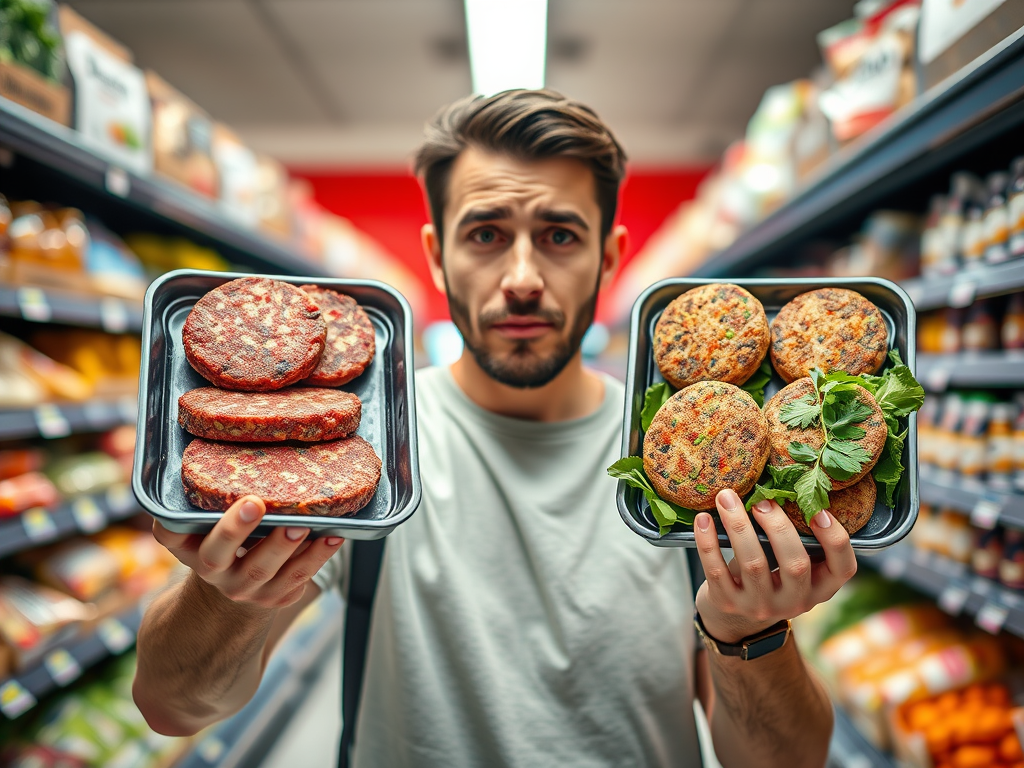
So, the tech companies, after realizing that they could not beat meat, have chosen a different approach. Let’s join the meat and have hybrid products. I understand the thinking, but I wonder if this might not have the opposite effects of what the plant-based protein industry and some EU politicians trying to force onto people think it will achieve. Let’s have a look at potential problems.
First problem is that hybrid products are tricky to identify, as their labeling and packaging mimic the pure meat products they want to replace. This sneaky -if not weaselly- approach might become more difficult now that the EU has passed legislation on labeling of non-meat products trying to pretend to be meat. I have seen -and tasted- this deception first hand.
An unpleasant discovery
Last year, I was visiting my family in France. As usual when I visit, they ask me to do the cooking. One of the meals was beef patties they had bought at a local supermarket, or so I thought. It was a product from France’s leading beef producer, so I did not pay much attention but as I was preparing the meal, I felt something was wrong. The color was strange. It was an unusual beautiful red. I have never seen such red beef because beef is never that color. Anyway, since my parents had bought it, I thought it had to be the real thing and shrugged it off. Then, in the frying pan, those patties were not behaving like normal beef patties, either. They would not brown nicely like the way I am used to. Further, they were rather bouncy and rubbery in texture. I could not really press them. Then, I served them and I had the same weird feeling when I stated to bite and chew on them. The texture was odd. Anyway, we had our meal. I was not very happy because it did not taste great but we moved on. It is only later that I found a journalist’s report about that beef brand, explaining that they also sold hybrid patties nicely colored with beat juice, and I will bet my shirt that it is exactly what I ate that day. This year, I visited my family again and I went to the supermarket. What I saw really disturbed me. The supermarket’s was selling its own label “Haché de Boeuf” (best translation would be “ground beef”) next to trays of “Haché Pur Boeuf” (Ground pure beef). There it was! I grabbed one of each to look at the labels. The Haché de Boeuf was not just beef. It contained 25% (a quarter!) pea protein isolate, plus a lengthy list of all sorts of weird ingredients, the types used in the plant-based fake meat. The Haché Pur Boeuf was indeed all beef with nothing weird added. I do not have a problem with supermarkets selling any kind of product they want but I have a huge problem with them selling something under a name that does not give any indication of ingredients that do not belong in what the name of the product suggests. Put it anyway you want, but Haché de Boeuf translates as ground beef and nothing else. Haché means ground and boeuf means beef. Haché de Boeuf should be beef and nothing else. Actually, they have done the opposite and created a new name for the original real thing. Ground beef is not longer Haché de Boeuf. It has become Haché Pur Boeuf. Of course, the average shopper can’t tell the difference between ground beef and ground beef unless they would become suspicious of everything, which they clearly should do. If you do not pay close attention, there is a chance that you are taking home something that is not what you think. I would not trust that supermarket anymore. What else do they sell under misleading names? Should the shopper become a food inspector? Well, perhaps yes.
Another example, also from France, of such a lack of transparency happens in bakeries. Due to the high price of butter, many bakers have switched to hybrid fat (butter mixed with fat of plant origin) products for croissants and other pastries simply because the production cost is lower than with only butter. In France, there are two categories of croissants: ” croissant au beurre” (croissant made with butter) and just “croissant” (made with fat of plant origin) which are the cheaper version. The problem is that the croissants made with the hybrid fat are labeled -and sold- in bakeries as “croissants au beurre”. It is perfectly legal but consumers are left to believe that the only fat source used is butter, and that is not the case. Almost all consumers are actually even unaware that these hybrid fat products exist. Those croissants are in between the two categories but sold for the price of the better croissant. Although legal, this feels like deception and that is not good for trust in food.
But, as I mentioned, the new EU legislation should prevent that in the future. Though, it is funny -and ironic- to see the reaction of the alt-protein sector to this new legislation. Of course, as you would expect, they find it unfair and unjustified. Everyone is a victim, and they in particular. They consider that fake imitations should be called meat or chicken or fish. When challenged, they reply by saying that people are not stupid (which I said earlier, too) and they claim that the people buying the fake products are well aware that it is not the real thing. So, if people know the difference, why wanting to call it like the real product it pretends to be? That does not make any sense, but there is a simple reason. The fake meat producers and their advocates know quite well that animal products have appeal and that theirs do not. Maybe, they should think about why that is. If people know the difference and it is not the same thing, why don’t they show real creativity and invent a brand new word for their products and fully differentiate themselves. The difference is what creates a loyal tribe. A few thousand years ago, the ones who developed tofu and tempeh created these very words, which did not exist before. Why can’t all those ego-inflated food tech people who were about to revolutionize food and agriculture and save the planet cannot think of something as simple as an original name, or is it because they could not really develop an original product, either, and cannot do any better than imitate something that has existed since the dawn of time instead? Frankly, that is their problem.
Hybrid products are not just in France. A few supermarket chains from The Netherlands and in Germany have also pledged to sell at least 60% of plant-based products. It has already been noticed that they also present confusing packaging that does not clearly inform the consumers about the true nature of the products. They are also already accused of green washing. From what I gather, the idea behind the claim of 60% (yes, why that magic number?) would be to meet GHG targets. I write this in the conditional and you should read it that way, too. I have not been able to find a reliable source to confirm this. Nonetheless, I do not think 60% is difficult to achieve considering all the products of plant origin they already sell. Here, think of fruit, vegetables, bread, legumes, rice, pasta and so on. I am sure you can also make up a list of plant-based products sold in supermarkets. That makes sense because the diet of the normal person I mentioned at the beginning of this article, being an omnivore, also eats at least 60% of foods that are of plant origin, next to the animal products. Further, having a product listed does not mean that it sells. The best example, especially with plant-based products in mind, is Beyond Meat. They were listed in all the restaurants, from global fast-food chains to independent eateries. They were listed in all supermarket chains, too. Yet, they masterfully flopped. Of course, the retailers do not present the 60% in that angle. They prefer to go along with the dogma of their politicians in power, and come with the usual meat-blaming rhetoric because it is risk-free and sounds so virtuous. So, will they label hybrid products clearly or will they deceive their customers? That is their choice. Trust has seriously eroded in about everything, and if they choose deception and misinformation, it will backfire on them. The winners in such a situation would be the specialized butcher shops, dairy shops and fishmongers. They are the ones with a quality-minded concept. That said, quality varies greatly and let’s face it, there are also products of animal origin that are of poor quality sold in stores. I could name quite a few that I would not touch with a 10-foot pole.
EU food producers and retailers must be careful about transparency. Consumers defense organizations are powerful in that part of the world. Messing around with the consumers will not do anyone any good. What a total violation of the idea of transparency and trust this is! It is actually ironic, as supermarkets over there are so keen to tell times and times over how transparent they are and how much they cherish creating trust. Generally speaking, if you go to France, my advice is to buy your meat at a butcher’s shop or on one of the many markets. The quality of many products I have seen in the supermarkets in France this past visit has disappointed me beyond my imagination. They really need to fix that situation.
Can hybrid products succeed?
Of course they can, but not with the same approach and attitude as the plant-based fake imitations used in the recent past. If they keep the same approach, the result will be the same. People are now well aware of tech foods and they associate them with ultraprocessed foods. So, my advice here would be, do not sell tech processed foods. Sell good old-fashioned wholesome foods. Sell healthy nutrition instead of tech “prowess”. It is cheaper, it requires less investment and no intellectual property for which all the failing food tech companies have been suing each other lately. In food, to succeed, short and long term, you have to offer nutritious foods.
When it comes to protein, legumes are in the spotlight. In their natural form,they offer protein but also carbohydrates, fats and fiber (which belongs to carbs), along with a whole range of micronutrients. Sooner or later, the question of whether building factories using energy to deconstruct the bean or the pea to extract just the 20-25% protein it contains is really worth it or sensible will arise. It is a good thing that farm animals are here to upcycle the by-products. Would it not make more sense to use the whole bean/pea as a wholesome unprocessed ingredient into a recipe with other wholesome ingredients? Be assured that this question will arise sooner or later, too. Ultraprocessed is out and ultraprocessed foods producers have a very hard time regaining trust from consumers, with one interesting exception: the meat-loving beefcakes on social media that hate fake meat products and yet love the protein powders that are probably made in the same plants as where the tech fake meat source their protein isolates. There are not that many companies producing those products, so just connect the dots!
At the beginning of the tech fake meat hype, a number of companies, mostly meat companies ventured in hybrid territory. It does not seem to have had much appeal. The question that producers need to ask themselves is: do people really want to that kind of blend? Do they want a highly processed product like a protein isolate invisibly mixed with a basic processed product like ground meat? When it comes to value for money, it is clear that quality will be a decisive criterion. Is hybrid the best or will it be the worst of both worlds? Success will depend on the consumers’ answer to that question. To succeed, the perceived quality of hybrid products will have to be at least the same as the perceived quality of the original animal product. If not, it will be an uphill battle. If the quality is perceived as at least equal, hybrid products will succeed, at least some will. And there might be some potential irony about this. If people like these products and want more of them, it might actually increase indirectly their consumption of animal products. I recently had a conversation with the CEO of a company that sells mushroom-based products that are used in hybrid products and he was claiming to be successful and mentioned that the growth of these hybrid infused meat products were actually strongly outpacing sales of pure plant-based category. It sounds that the main casualty of hybrid products might very well be the plant-based foods, not the animal products.
In 2019, I had posted two articles on this blog about what I saw ahead for both animal products and for plant-based products. I believe that my conclusions of then have materialized rather well. As far as hybrid products are concerned, I believe that quality will be key. I also believe that they will need to make ingredients recognizable to the eye. The impossibility for the consumer to see clearly what they eat will lead to failure. A long list of “mysterious” ingredients will do the same. Of course, the worst of the worst would be to keep trying to deceive consumers by not being transparent. The latter will kill your business in less time than it takes to flip a burger.
I also believe that if the conversation about animal and plant protein becomes more intelligent than during the last decade, people will think more about complementarity than opposing the two categories. In the UK, some organizations have recently launched a campaign to encourage people to eat more beans and other legumes. I believe that it is a good idea. However, beans may have a couple of inconveniences to overcome. If you use dry beans, it takes a bit of time to soak and cook them. It is not that complicated or particularly time consuming but I expect that to be a hindrance. The other possibility is to use canned beans. It is quite convenient. It is easy to store. It is already cooked and ready to use. The problem here is to make canned beans sexy again. It has an old-fashioned image and that might work against them. And then, there is the issue of flatulence. It is not the most exciting topic but it needs to be mentioned. There is a simple solution to this problem: add a little bit of baking soda in the beans.
Personally, next to meat, I am an avid consumer of beans, peas, chickpeas and lentils. Since I cook, I make a lot of dishes with beans, most of which also contain meat, but I also make salads, soups or dips with them. I love to cook and I enjoy making old traditional recipes from many parts of the world. From Chili con Carne to Snert (Dutch pea soup), Cassoulet (French bean and sausage, or even duck confit), Saucisses aux lentilles (sausages and lentilles), Couscous (welcome chickpeas!) or Feijoada (Brazilian dish pork and black beans), you name it and it comes on my table. Here you can see me with a big bag of beans on the thumbnail of a video I published in the past about meat consumption.
This is the beauty about cooking from scratch. You control what you put on your plate and then you eat simple, nutritious and wholesome foods. When you do that, there is a good chance that you will not suffer from micronutrient deficiency, which cannot be said of ultraprocessed products. Unfortunately, many people think that cooking is complicated and time-consuming. I know and understand the perception, but since I have been cooking since my student years about every day of my life -and I have had quite a busy one- I can assure you that it is a lot simpler and quicker than often believed. For instance, one of my household’s favorites is the veggie soup (yes, plants!) that I make with 6 to 8 different sorts of vegetables. I make a big pot at once and we have soup for almost a week. This shows that it doesn’t need to be a daily chore. Of course, convenience foods companies will not encourage people to cook, as it takes some of their business -and their nice margins- away. Convenience is not cheap.
And of course, last but not least, the price at the point of sale will be a decisive element of success or failure. The more processed the product will be, the cheaper it will have to be. Consumers will follow a simple thinking: plant foods and therefore hybrid products should be cheaper than meat. The value for money will be key. If consumers think that they are buying processed plants for the price of meat, they will not buy it. If in doubt, take a look at what it did to tech fake meat. People will not switch from pure meat if it is more expensive or even for the same price. If the price is the same, they will stick to the “real” or “pure” (pick you adjective) product. It is just simple psychology.
Next week: Communication: Humanity and Authenticity make for Effective Conversations
Copyright 2025 – Christophe Pelletier – The Food Futurist – The Happy Future Group Consulting Ltd.
There certainly is no lack of challenges on the path to feeding a growing world population, but a successful future does not just stop with food volumes. Beyond quantity, it is necessary to ensure that people eat balanced diets. Of course, this is true for those who are food insecure and need help to be able to access more food, but it just as true for the overweight and the obese. The health cost to society is high and is so the cost to the environment. Although excess calories end up as body fat and not in landfills, overweight and obesity should be looked at as food waste nonetheless. After all, body fat is food that has been produced but not consumed for any useful purpose. The problem is only getting bigger as rates of obesity are increasing among the population of emerging countries and are reaching alarming levels. It is not a Western countries’ problem anymore. It is a global one. There is no one particular cause to explain this trend, but it is a combination of lifestyle, example at home and education about the basics of nutrition. We are what we eat and we eat what we are. Diets are undoubtedly a reflection of society and its values.
One of the drivers of today’s economies is growth and too often this concept is restricted to quantitative growth. We must be honest and recognize that our food and agriculture systems still are greatly production driven. Although the idea of a market-driven approach is widely spread, the practice seems to differ, and it looks like it is only translated in marketing-driven instead, always with an underlying production-driven thinking. About all food sector and companies always look for ways to sell more volume. There is competition within any particular industry, but also between industries. For example, in the animal protein sector, poultry, pork, beef and fish are always trying to get a higher stomach share at the expense of one another. Usually, the main decision factor for consumer to make their purchase is the relative price of one type of protein versus the others.
The main message that consumers receive every day is: eat more of this or more of that. Then, it is only normal that they do just that. Why expect any other behaviour? The result is a value system of always more, without really thinking about how it all adds up, while it should be about always enough. Overconsumption leads to waste and to unbalanced diets. Waste is the number one enemy of sustainability, and educating the public about proper diet is actually an important weapon in fighting waste, but it is a difficult one. Although good habits are generally not any more difficult to adopt than bad habits, it seems that the latter group is more attractive. Changing eating habits is all about education. It starts at home and in school. Actually, it is rather easy to learn about the proper ratios between protein, fats and carbohydrates –both fast and slow ones- that are needed in a balanced diet. Information is everywhere, but unfortunately, the lack of education and therefore knowledge about nutrition results in many consumers having no idea how to read labels and how to compose proper meals. If our lifestyles and our needs have undergone major changes over the past five or six decades, physiology of digestion and nutritional metabolism have not changed much at all over the tens of thousands of years that humans have been roaming the planet. It would seem obvious that such an essential element of life should be common knowledge, but it is not. An interesting experiment is to ask people at random what the nutritional needs of an average human being are. Usually, people have an idea about how many calories a person should eat on a daily basis. When it comes to how many grams of protein and even more so fat, then the faces tend to turn blank. Another even more interesting experiment is to ask the same question to people working in food and agriculture. Just go ask how many calories, how many grams of protein and fat. It is an eye opener.
It is possible to make consumer behaviour change from harmful to healthy. There are lessons to be learned from the example of tobacco. To change, consumers need the proper incentives, but the bottom line is that people change only if they perceive the change to be an improvement. Since eating habits rest on powerful psychological triggers, the difficulty is in finding the right triggers and creating a perception of reward. Food producers have a critical role to play in this transformation, and it has to be a collective and collaborative effort with all other stakeholders as well.
Copyright 2017 – Christophe Pelletier – The Happy Future Group Consulting Ltd.
Although it is tempting to think that food production systems are created by agribusiness, they depend greatly on the choices and the attitude of consumers and society. For humans, food is not just about nutrition, but it is loaded with a high emotional content.
Consumer choices are highly irrational. To demonstrate this, here are some examples.
When the mad cow disease, or BSE, hit the UK in 1996, beef consumption dropped, but the behavior of consumers was odd. A leading retailer put British beef on sale at 50% off the normal price. They had their best weekend sales ever by then. When asked why they had bought beef, while there were concerns about health risks, some consumers gave answers such as “At that price it is worth taking the risk” or, even better, “ I will freeze it and eat it once the mad cow crisis is over”! At the same time, customers’ visits to the leading fast food chain drop sharply and beef burgers were not in demand, although their beef was from the Netherlands, a country free of BSE by then.
In Europe, mostly in France, consumers used to demand veal to be white. Not slightly pink, just plain white. To achieve this, calves were fed a milk powder diet, which kept them anemic. Yet, at some point, consumers denounced this technique as being against proper treatment of animals. The demand of white meat with a normal diet could not be reconciled. It took years before consumers finally understood that veal was supposed to be pink.
For most customers, white eggs are perceived as being from intensive cage production, while brown eggs are perceived as being more “natural”. Everyone with knowledge of the industry knows that the color of the shell has nothing to do with the nutritional quality of the egg. The belief that the egg color indicates a difference persists, though.
Some blind tests carried out between “industrial” and free-range chicken meat carried out in the Netherlands in the 1980s showed interesting results. When consumers were not told which was which, they could not clearly taste a difference, while when they knew which meat was from which production system, they overwhelmingly gave the preference to the free-range chicken.
Here, in Vancouver, there is a strong trend towards organic foods produced locally. Farmers markets flourish and the environmentally conscious consumers choose to buy their “natural” food on these markets. Ironically, many of them drive in their gas-guzzling SUVs to go there. So much for caring for the environment.
Who, with a rational mind, would choose to eat junk? Yet, junk food is quite a popular item in North America, and it has been a growing trend in many European and emerging countries as well.
In the case of tobacco, not a food, but an agricultural product nonetheless, the warning on the package is quite clear. Yet, some people decide to smoke.
The list could continue and I am sure that everyone has more examples of irrational behavior. Consumer demand (both the rational kind as the irrational one) determines what farmers and food companies produce and sell. In this regard, consumers also share a responsibility in what is produced, how it is produced, where it is produced and how it is distributed to them. Blaming retail or the agribusiness alone for the kind food systems that are in place is unfair.
Of course, it would be interesting to imagine what people would eat if they were rational, and what impact on our food production this would have. A rational diet would follow proper nutritional recommendation, and to this extent would follow the same principles as those used in animal nutrition. However, this would not have to be as boring a diet as what animals are fed. A rational diet does not need to be a ration. After, the human genius that is cooking would help prepare delicious rational meals. It would be like having the best of both worlds. The emotional, social and hedonistic functions of food would remain. The key would be about balance and moderation. If people were eating rationally, there would not be any diet-related illnesses. There would not be obesity. There also would be a lot less food waste. This would improve the level of sustainability of agriculture.
Will consumers become more rational in the future? I do not think so, but I believe that they will become better informed and more critical over time. Especially with the rise of social media, information circulates much faster and trends can gather momentum faster than in the past. More programs for healthier eating are currently running and action is taking place at many levels. In particular, schools are a place where much can be achieved. One can wonder how long the “lunch money and self-service system” will last. Having schools placing vending machines selling items that are highly unbalanced foods and leaving the decision over to kids to decide what they want to eat was of course a disaster waiting to happen. I cannot believe that anyone would expect kids to consciously making the choice of spending their lunch money on broccoli and mineral water. Kids will choose what they like best, not what is best for their health. They need adults for guidance.
Attitude towards food is changing all over the world. Currently, I can see two major trends growing. One is taking place in North America and the other is happening in emerging countries.
In North America, consumers are waking up and starting to question the way their food is produced. This is a major change compared with their attitude until a few years ago. When I moved to this part of the world in 1999, I was amazed by how easy consumers, and retailers, were for the food industry. Consumers simply seemed to consume without trying to know about production methods. Hormones, antibiotics or GMOs (genetically modified organisms) seemed to be accepted. This was a sharp contrast with what I had known in Europe, where all of the above was meeting strong resistance from consumers and retailers. What I currently see happening currently in North America reminds me strongly of what I had seen happen in Europe 20 to 30 years ago. The similarities are almost disturbing. Consumers are losing trust in government agencies, and retailers seem to be the ones to champion food quality, traceability and production methods. This will have much more profound consequences in the way food is produced in the USA and in Canada than the agribusiness seem to realize, or is willing to admit. The population is aging, the generations are changing and the values about food are shifting. The current opposition is not a short-term fad. Consumers will make different choices. Some food producers see that and are already adapting, but many producers still seem to think that opposition will pass. I believe that they are in for a surprise. The expressed plan of Wal-Mart to buy more from small and mid-size farms, to reduce waste, and to develop sustainable sources of agricultural products is a very clear signal that business is changing!
In emerging countries, consumers are changing their eating habits, too, but for a different reason. They now have better wages and more disposable income. The previous “”subsistence” diet made of mostly grain, such as rice, wheat or corn, are now including more animal protein, as well as fruit and vegetables. In these countries, consumers are not overly critical of their food production and distribution systems, but issues that arose in developed countries affect the way food is produced, especially in the area of food safety. These consumers probably would like to experience the same level of food security and affordability of food as in the West over the past 5 decades, but the growing population, and the financial markets will temper this trend. Food prices will be firm at best and they are more likely to increase in the future on an ongoing basis.
There is no doubt in my mind that consumers and retailers are increasingly going to put the emphasis on sustainability, health, food safety and transparency. This may sometimes lead to conflicting objectives with the need to produce more food globally. This does not need to be a problem, but this is why the world needs strong leaders to show the way towards meeting both the objectives of better food and of more food.
Copyright 2010 – The Happy Future Group Consulting Ltd.
With obesity on the rise in more and more countries and legions of diets with little results, if any, I had been thinking about writing something about proper nutrition and some of the key physiological mechanisms involved in human metabolism. It is a bit away from envisioning the future, although the fight against obesity will gain momentum in the years to come.
There are many misconceptions out there. For instance, we all have heard that carbohydrates are not good, fat is not good or meat is not good. This is total non-sense. Carbohydrates, fat and protein are good. Actually, they are indispensable to our health. What is bad is too much, especially too much of the nutritionally poor quality carbohydrates, fats and protein sources.
Obesity and overweight are increasing health issues. In the world there are about as many overweight people as they are people suffering from hunger: around one billion people in each group. What causes overweight? The answer is simple. A person gains weight when he/she ingests more calories than he/she burns. The cause can be either too rich a diet and/or not enough physical activity. In most cases, it is a combination of both. The source of unburned calories are metabolized into fat and stored in the fat tissues. This is a problem, because fat tissues are poorly irrigated with blood vessels. This makes the stored fat difficult to eliminate. The body will use calories coming from the meals before it uses the fat reserves. This is why it is so difficult to get rid of extra pounds. The only way to use the fat reserves is through long intensive physical activity.
Some might wonder why our body does not tell us when to stop eating. Actually the body does, through two physiological mechanisms. One is a mechanical mechanism. When the stomach is stretched, the nervous system sends the information to the brain that the stomach is full and the brain makes us stop eating. The other mechanism is biochemical, through the blood composition, the brain sensors can detect when we have ingested enough energy, and the brain makes us stop eating. We feel “full”.
This could make you think that we should never overeat because the brain would let us know on time. Theoretically, this is true but the modern lifestyle has found a way of deceiving the brain. The biochemical mechanism takes time to react. It needs to detect a glycaemia level high enough to act. When we eat food and beverages that are highly concentrated in energy, and therefore have a relatively small volume, we ingest more calories than we would need before the stomach gets stretched, and before the glycaemia level rises in the blood to the normal level. Such foods are generally low in fibre and high in fat, such as fried foods. Soft drinks are not filling and they contain many calories. You can imagine the result of a combo bacon cheeseburger-French fries-pop package meal! The carbohydrates that they contain pass in the blood almost instantaneously. One of the advantages of fibre-rich food, such as fruit and vegetables, is that they fill the stomach and contain relatively few calories per volume unit. This activates the mechanical nervous mechanism and limits our food intake much faster than foods with little fibre. Do not fool yourself! The little leaf of lettuce in your burger is not enough to protect you.
This brings me to talk about carbohydrates. There are two types of carbohydrates: the slow ones and the fast ones. The main representative of slow carbohydrate is starch. Starch is a long molecule that does not get into the blood stream as such. When we consume starch in bread, rice, pasta or potatoes, the starch gets cuts in a smaller component, called glycogen. The glycogen is stored in the liver where it waits for instructions from the brain to be released in the blood stream. This happens through a biochemical mechanism. The brain sensors detect a state of hypoglycaemia, and it orders the liver to release the glycogen. As long as our liver still has glycogen in store, we do not feel hungry. The system regulates itself smoothly. When we run out of glycogen, which is between 2 and 4 hours after the meal, we get into a hypoglycaemic state and we feel hungry. Usually it happens around 11.00 am and noon. That is why lunch exists! Same thing happens around 5.00 pm. Starch is good and necessary for us (as mentioned before, too much, on the other hand, is not).
The second group of carbohydrates, the fast ones, follows a different process. This group consists of what we call sugars, such as saccharose, fructose or glucose. When ingested, they do not get stored for later release, unlike starch. They flow into the bloodstream almost instantaneously and there are two possible scenarios. If our activity level is high enough when we consume them, they are burned to provide us with energy. If our activity level is too low for the amount we consume, our metabolism deals with the fast carbohydrates in only one manner: it transforms the sugars into fat that then get stored in the fat tissue. This is why drinking large amounts of pop or snacking on candy bars while sitting on your couch watching TV or playing video games will make you fat. There again, the rule is enough sugar to sustain yourself is good, too much consumption is bad.
About fat, I can tell a similar story. Within the amount necessary to allow all our functions to work properly, fats are fine. As their name indicates, essential fatty acids are indispensable. Even the dreaded cholesterol is an essential element for us. What is not good is to consume too much fat, and to consume too much of the less good ones. The length of the carbon chain, the level of saturation and the configuration of the molecules also affect your health. The excess of fat in your diet will end up as fat deposit in your body. This is why potato chips while watching TV will hurt you, too.
Protein is good, but with moderation as well. As for the other elements, too much protein can cause some problems, as protein stored in the intestine before release will not ferment, unlike fibre, but will undergo a rotting process, resulting in the production of harmful amines. The kidneys have also more work to do, and a long exposure to a diet too rich in protein may cause kidney problems.
So, what is the lesson from all of this? For me, it is that food one of the enjoyable things in life, as long as it is consumed with moderation (an incidental excess once in a while is fine, too; it means that you enjoy life) and it goes together with a healthy lifestyle. A person should have 7 hours of physical activity (the kind that makes you sweat) per week. Also, remember that the best is to not gain extra pounds in the first place, because the fat tissue is remarkably persistent.
Copyright 2010 – The Happy Future Group Consuting Ltd.
In the world of the many diets, the Mediterranean one has a special place. Although, the people of these countries have extensive meals, they never seem to get fat, and that is a great puzzle to the obesity-plagued America.
The specialists will tell you it is the garlic, and the olive oil, and the wine, etc… that all contain substances that help your metabolism and your health. And you know what? It is true. They all have very positive qualities, but there is so much more to explain why Mediterranean people do not get obese.
They have long and extensive but properly sized meals
With a meal that starts with a soup or a salad, you already start to fill your stomach with relatively low calorie food, so there is less room left for the higher calorie food. Our brain has two ways of getting the message that we have eaten enough. The mechanical message is a simple nervous transmission to the brain from the stomach, when this one is extended because of food intake. It is as if the stomach says: “I am full, stop sending food!” The second way is a biochemical one sending a message through blood content and pH that says: “there is enough fuel in the tank, you can stop now!”
The mechanical message is rather instantaneous, while the biochemical one has a lag. This is why the appetizer is so useful. If you start with a dish that is highly concentrated in calories, you will pass the amount of calories that you need before your stomach can say to the brain that it is full, and the excess calories will be stored in fat.
A three-course menu means that the portion of every course is smaller, and that contributes to less calorie intake. Who has a 9-oz (270 g) steak for dinner, except in North America?
When you have big meals, you do not snack
The other advantage of extensive meals is that you have enough calorie intake for another four hours, which in Mediterranean society is the time of the next meal. Therefore, they do not snack between meals. When you graze on snacks all day long, which by the way are all loaded with sugar and/or fat, you end up eating more calories than you would with two large better-balanced structured meals.
Snacking on a bag of chips or salted nuts or scooping from a bucket of ice cream while watching TV is not common in those countries.
They may drink wine, but they do not drink pop
Do not think that Mediterranean people drink wine like it is a medicine, but their consumption of soft drinks is much lower than it is in North America. They also tend to drink more water as part of the meal. This in terms of calories makes a quite a difference, too. My story of the mechanical and biochemical messages applies for this superbly; there is no mechanical message, and by the time the blood tells the brain, the subject will have drunk more than a pint (~ ½ litre) of a drink containing 10% of sugar. That is about three tablespoons of raw sugar. Try to eat that up straight!
The weather is warm and sunny
That is another difference with more northern countries. When the weather is warm, you eat less, because your body needs fewer calories for maintaining its temperature.
Moreover, in nice climates, people tend to drink more water and spend more time walking or riding their bikes, instead of driving around.
They cook their own meals
Another component of many Mediterranean countries is the fact that people tend to like cooking much more, probably because of much more diverse and fragrant possibilities that their cultures have developed. Further, eating in Mediterranean countries is much more a social happening than in Northern countries, and you do not serve guests with a frozen meal!
The advantage of cooking your own meal, next to the fact that it is cheaper, ids that you have the possibility of choosing the ingredients and you can decide yourself of how much you put in the recipe. This way, you can manage much better, the origin, the quality and the quantity of your calories.
When you buy ready meals, very often you do not have as much flexibility. Although the food industry has developed low sodium and low calorie meals, it has been quite good at using relatively high levels of salt, sugar and fat, because they are cheap ingredients.
Is everything fine under the sun, then?
Unfortunately, over the last decade, changes in lifestyle and especially the popularity of fast food with the younger generation is changing the picture somehow. The rate of obesity is increasing there, too. Maybe Mediterranean people will have to rediscover their own diet sometime in the future.
Copyright 2009 The Happy Future Group Consulting Ltd.
Last week a survey was published in the US about whether fast food customers were using nutritional information to make their choice. The result was that although they could read how many calories their meal would include, they did not choose for a healthier lower calorie meal.
Apparently, this was a shocker. It was not to me, and this for a couple of simple reasons. First, people do not go to a fast food restaurant to nibble on a knackebrod. Secondly, information disclosed is never enough to make people change their habits, especially if they have a craving for what they buy. Otherwise, why do some people still smoke when they can read in big letters on the pack that it will kill them?
Parents play a crucial role in getting good eating habits
If we want to make people change their eating habits, information is necessary, but by far not sufficient. When it comes to food, we are dealing with many complex issues that have to do with psychology and with taste and a behaviour that we have acquired at a very young and developed as we grow up in the environment that our parents have provided. Further, we all know how skillfully marketing has use these psychological “weaknesses”.
In the US, there is currently quite a debate on health care and obesity is one of the main issues. In many ways, our eating habits are a reflection of our life style and of our society, as I have mentioned in my article “If we are what we eat, what will we eat in the future?” Therefore, trying to induce a change in our eating habits can only succeed if we make broader changes in the way we live.
Next to information, what consumers need is education. Unless they have an understanding of what the data they get really means, how can we expect them to act upon it?
Teaching children about nutrition will help them eat properly
We need to teach children about the basics of nutrition and of metabolism as early as possible, and this education must include their parents, too. There is no big mystery behind what causes obesity, diabetes and other food excesses related ailments. It is quite easy to explain what functions the different food groups fill and how to compose healthy meals, as it is really just a matter of adding up and keeping the right proportions.
It would be highly useful to educate everyone about where food comes from and how it is produced. A program like “Know your food, know your farmer” introduced in the US is useful, but “Know your farming” is just as needed.
What parents also need to understand is that it is their duty to give their children a balanced diet, although it might mean that they, too, should have one, but most importantly, when it comes to decide what is on the table, the children do not dictate what they want simply based on what they like.
Education, though, goes much further than just parents and schools, and retailers, restaurants and the agribusiness need to co-operate more than they currently do, even though some are more active than others in this field. If we want to solve a society problem, the whole society must participate. It is rather interesting to see how the meat industry in the US is reacting to the proposal of a meat-free Monday in school cafeterias. I can understand the resistance to government intervention in telling how people should feed themselves, although when this leads to many health issues, one could argue that if the people cannot make the right choices, maybe someone else should set stricter rules to help them. I also can understand that such a meat-free Monday is a bit threatening to the meat industry, as it means (a tiny little) bit less business in the short-term and maybe quite a bit more if it meant that the next generation might cut on meat consumption. On the other hand, what the meat industry in developed countries needs to realize is that there are plenty of people in other countries who are longing for meat, and these new markets have more than the potential to replace the volumes lost in their domestic markets.
Another great source of information is consumers’ organizations, like the ones I know in Europe. They are independent and they provide many surveys and comparisons on consumer products. They have been very useful in helping consumers gain more awareness about what they consume. Unfortunately, such open and objective information is not directly available in all countries and this is a weakness in the fight for health.
Copyright 2009 The Happy Future Group Consulting Ltd.


 For most customers, white eggs are perceived as being from intensive cage production, while brown eggs are perceived as being more “natural”. Everyone with knowledge of the industry knows that the color of the shell has nothing to do with the nutritional quality of the egg. The belief that the egg color indicates a difference persists, though.
 Of course, it would be interesting to imagine what people would eat if they were rational, and what impact on our food production this would have. A rational diet would follow proper nutritional recommendation, and to this extent would follow the same principles as those used in animal nutrition. However, this would not have to be as boring a diet as what animals are fed. A rational diet does not need to be a ration. After, the human genius that is cooking would help prepare delicious rational meals. It would be like having the best of both worlds. The emotional, social and hedonistic functions of food would remain. The key would be about balance and moderation. If people were eating rationally, there would not be any diet-related illnesses. There would not be obesity. There also would be a lot less food waste. This would improve the level of sustainability of agriculture.
 Some might wonder why our body does not tell us when to stop eating. Actually the body does, through two physiological mechanisms. One is a mechanical mechanism. When the stomach is stretched, the nervous system sends the information to the brain that the stomach is full and the brain makes us stop eating. The other mechanism is biochemical, through the blood composition, the brain sensors can detect when we have ingested enough energy, and the brain makes us stop eating. We feel “full”.


 The Food Futurist Solutions - Anticipate, Adapt, Succeed