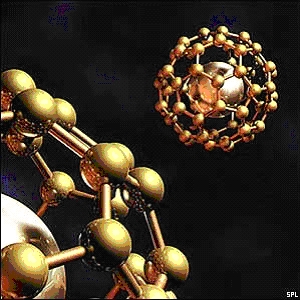
 Nanotechnology is the technology of building structures from atoms, molecules or molecular clusters to make materials and devices that have new properties. It is a new field in agriculture and food production, but it offers a wide variety of applications that can help overcome a number of problems we are facing today. They can help improve food safety, traceability, reduce the use of chemicals and reduce waste.
Thanks to nanotechnology, agriculture and food production will be able to use very efficient devices and sensors that can help make better and faster decisions.
For instance, in “Controlled Environment Agriculture”, which is an intensive hydroponics greenhouse system used in the USA, in the European Union and in Japan, nanotechnology is a great fit for the already sophisticated computerized management that optimizes growing conditions.
There is also a lot of potential for precision farming, in which nanoparticles can be used to store and release pesticides and herbicides in a targeted and controlled manner. Nano-clay capsules can store fertilizers and release them slowly, allowing only one application during the cycle of the crop, thus saving time and fuel to the farmer. This helps reducing the use of chemicals, too. Further, nanosensors can be used to measure crop growth, help diagnose diseases even before the farmer can visually notice them, or help him carry out microbiological tests and get results within an hour. The use of nanosensors also helps the farmer make better decisions and act effectively faster than today, as they can help him monitor soil moisture, temperature, pH, nitrogen availability, and in the future could open the path toward a remote farm surveillance system.
In the area of pest control, using nanocapsules is useful in the system called “Integrated Pest Management”. Not only, the problems can be identified earlier, but also plants can be treated much more effectively. Giving treatment to farm animals also can benefit from this technology, which is already used in human medicine.
Nanotechnology is already used for water treatment, and there seem to be many possibilities in that particular field to help solve existing environmental problems. For instance, the American firm Altairnano from Reno, NV produces lanthanum nanoparticles that have the ability to absorb phosphates in water, which offers interesting possibilities to reduce algae growth in ponds and rivers.
Similar applications of nanotechnology can be used to decontaminate soils and groundwater by using iron particles that help break down dioxins and PCBs into less toxic carbon compounds. They also can help remove arsenic from drinking water, a problem that occurs in many regions.
Agriculture is not the only field where this technology can bring benefits, but the food production industry is very interested by the possibilities, too. Some nanodevices can be used to tags food items. This can be of great use to ensure traceability and to help optimize the supply chain. Large retailers like Wal-Mart and Tesco are investigating such devices made out of silicon, but it appears to be too costly at this early stage. We can be sure that this will change in the future.
 Food packaging is an area with interesting potential, and there are new packaging materials in development. The nanotechnology helps reducing the risks of food contamination. Some systems reduce the ability for oxygen and gases to travel through the plastic wrap, which extends the shelf life of the product. Other food packaging systems are aimed at controlling the level of humidity, of oxygen, as well as reduce bacteria counts and eliminate any problems of odor and flavor. Antibacterial packaging using nanosilver particles is in development and the applications range from plastic cling wrap to plastic bags, containers, even teapots and kitchenware. Packaging containing nanosensors are made of carbon nanotubes or of titanium dioxide that can be activated by UV help detect microorganisms, toxic protein or food spoilage. The firm AgroMicron, from Hong Kong, has developed a spray which contains a luminescent protein that has been engineered to bind to the surface of microbes such as Salmonella and E. coli. When it is bound, it emits a visible glow, which allows the detection of contaminated food or beverages much more easily.
Developing “molecular food manufacturing” which consists of building food from component atoms and molecules is already a possibility that some are considering. Although such a development is far into the future, such a technology could allow a more efficient and sustainable food production in which less raw materials are consumed, and food that would be obtained would have a higher nutritional quality.
Nanotechnology obviously offers interesting possibilities for food production. Yet, some people express a number of concerns. This is what can bring the next controversy in the food business.
The problem is that nanotechnology in food is relatively new, and we know very little about the long-term effects of using these components. Moreover, because it is so young, food safety regulations are not properly written to deal with this, and the status of the nanoproducts is unclear. One of the concerns is that such particles are very active and very reactive because of their size; and by the nature of the chemicals that they are made of; they could bring health risks as well.
There are new very promising possibilities, but we must be vigilant and address the risks as well, and true progress is about to use this new technology, for our benefit.
Copyright 2009 The Happy Future Consulting Group Ltd.



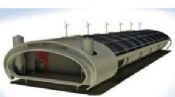 The design had to integrate all aspects of production, including efficiency, energy, sustainability and dealing with waste. It can produce its own energy from litter, and it is equipped with solar panel and wind turbines.
 This group will continue to be involved in mass production of commodities for global supplies, like this is the case today.
 This sector should undergo a strong growth and be build in a market-driven approach. These are the farmers that produce specialty products aimed at serving either a very specific segment of the retail or foodservice market.
 In emerging countries, the development of a local agriculture, and aquaculture, will be a key driver of economic development for under industrialized and/or under urbanized regions. It also will be a way of slowing down the migration of population to urban centers and limit social problems, by creating satisfying economic conditions and by securing food supplies locally. This farming will be about basic needs, before marketing.
 This is an
  The Food Futurist - Anticipate, Adapt, Succeed