How much can the rule of 80-20 tell us about the future?

We all have heard about this rule across all industries, including agriculture and food. Eighty percent of the food would be produced on 20% of the farms and vice-versa. If it still applies in the future, it can indicate us how our food production and supplies will look like in the future. Of course, this is always a theoretical exercise, but it is quite convenient to elaborate on our thoughts.

As the population is expected to grow quite strongly in the coming decades, especially in urban areas, this could indicate two dominant trends:
• Further size increase of the largest farms and further industrialization of agriculture and food for global markets, although the number of farms in this segment would not increase strongly.
• Strong increase of the number of small farms involved in specific value chains and strongly linked with their local economy.

Industrial agriculture
Producing more, yet in a sustainable way. That is the challenge!This group will continue to be involved in mass production of commodities for global supplies, like this is the case today.
Yet, they will face an increased pressure to adapt to the requirements of sustainability, which technically is quite possible. New systems and more efficient technologies will be the pillars of its growth and development. They will have to find ways of reducing the amount of chemicals in crops and the amount of pharmaceuticals in animal productions
The requirements for capital will be quite high and the sector will be led by increasing larger corporations, by an increasing level of capital by large private investors and, last but not least, by some governments. This agriculture will innovate further and will be developed thanks to this capital. It will use automation and mechanization to reduce the dependence on labor. Mergers & acquisitions will continue in the agricultural sector and a few large blocks will remain, dominating their sectors.
Their mandate will be about more control the natural conditions of production and about reducing to a minimum their impact on air, water and soil, by using less polluting transport methods, water preservation, effluent treatment and soil preservation. They also will have to engage in maintenance of their environment.
The role of this type of agriculture will be to bring to market large amounts of affordable food for the masses, and should play an important role in strategies around food security, which is where corporations and government will interact on a regular basis.

Local food value chains
Closer to natureThis sector should undergo a strong growth and be build in a market-driven approach. These are the farmers that produce specialty products aimed at serving either a very specific segment of the retail or foodservice market.
This trend, which has been already initiated around concepts such as organic or authentic, will evolve into a more integrated local economy, and the initial concepts will probably become less differentiated as food production in general, be it industrial or traditional, will use more sustainable techniques.
Contrarily to the common belief, this agriculture will be developed thanks to very efficient techniques, but will be centered relatively more about labor and relatively less about capital. In this case, efficiency does not necessarily mean intensification.
We must not underestimate the significance of this part of the food production, as it will play an important role. However, we must not expect this type of agriculture to be the solution to feed the world, and this is not the purpose of the farmers involved in such food production chains.

This type of farming will grow in two different environments:

  •  In “developed” countries to serve a increasing, but aging, population more demanding about the origin and the production methods, and who is ready to pay a premium for the perceived better quality. The angle will be about quality, transparency, sustainability, traceability and as close to zero a use of chemicals and pharmaceuticals. In some areas, it could help strengthening a local economy and local communities.
  • Developing a local economy thanks to agriculture (Picture: FAO) In emerging countries, the development of a local agriculture, and aquaculture, will be a key driver of economic development for under industrialized and/or under urbanized regions. It also will be a way of slowing down the migration of population to urban centers and limit social problems, by creating satisfying economic conditions and by securing food supplies locally. This farming will be about basic needs, before marketing.

Copyright 2009 The Happy Future Group Consulting Ltd.
Rabobank: Sourcing grains critical in animal feed-to-food chain

This is an article from World-Grain.com about a report from Rabobank on their outlook of a growth for meat of 50% between now and 2025 and its consequences on feed-to-food value chains.

Albert Vernooij, author of the Rabobank report ‘Changing Industry Landscapes’ says “The global feed-to-food value chain has switched from being supply driven with a long-term sustainable share for each link in the chain, to being demand driven. This is placing the retail and food service sectors in the leading positions, and farmers and abattoirs (slaughterhouses) have become the weaker links”.

Certainly the retail and food service, because they are the closest to the final consumer have the best position to connect to market demand, but I disagree with his statement that the value chains are demand driven. Most of meat products are commodities and retailers and food service companies buy at the lowest price a rather undifferentiated product. Most slaughterhouses and farmers are still purely production driven, or more accurately put, volume and cost driven, instead of being profit and niche driven. Only very few value chains are really market driven, although most are marketing driven, but that is not quite the same.

Cod farming: difficult start, but bright future

Sometimes success stories do not happen at once. This is my feeling about cod farming. Cod products are in good demand, and unfortunately, wild stocks are in serious trouble, which leaves a huge opening in the market.
Farmed Cod - Courtesy of FiskeriforskningSo far, farmed cod producers have not delivered good financial results and opinions diverge according to whom you listen. Culprit seems to be the “market”, but this is generally a very vague and inaccurate explanation.

Feed companies initiated cod farming, as an extension of the feed business, but not as a standout business. Moreover, the volumes that have been planned initially answered to a production driven approach, and not to a market-driven approach. Production was set up for quite significant volumes, without building up a solid sales plan from an already established market position for cod products. If you read my previous articles “Be always market-driven” and “The consumer must be the focus point of value chains“, you can understand why such an approach delivered poor results.
Recently, I was browsing through the web site of one of the farming companies and, although they claim to have set up a value chain, they have not quite done so. Their value chain needs to integrate much more strongly the marketing/customer end, and I think that they need to rebalance their bargaining position with feed suppliers and customers, in order to obtain a fairer distribution of profits. Today, there are people making good money out of cod farming, but the farmers are not.
Cod filletOnce they refocus their marketing mix to the right countries and the right type of customers, which they will have to do with a reduction of production volumes, then they can grow the business with and for the cod market by being in the driver’s seat.
Considering the demand for white fish and the depletion of the supply of the natural competitor (wild cod), cod farming’s future can only be bright. It would not surprise me if, in the future, cod farming could surpass salmon farming in production volumes. But first, one step back.

Copyright 2009 The Happy Future Group Consulting Ltd.

An example of profitable sustainable aquaculture

Here is an article (Sustainable Aquaculture: Net Profits) about a fish farm in Andalusia, Spain, which has a different angle than industrial intensive fish farms.

It refers to a number of arguments, such as feces contamination and lower densities, that I had mentioned in a previous article (The lessons of intensive animal husbandry to aquaculture). It also illustrates what I presented in Value chains are a great way to develop a niche, as they market their fish as the pata negra of sea bass at a premium price.

Of course, this farm is an example showing a very specific situation in a very specific environment, and providing seafood to the world population might require more intensive systems. Moreover, not everyone can afford to buy the pata negra category of food.

The consumer must be the focus point of value chains

The shopping cart: your ultimate target!Regardless which link in the value chain you represent, it is essential to always consider the “big picture”. In this picture, a key element is the end of the chain: the consumer.

As the final user, the consumer will always drive the activities and the profitability of the whole value chain. Although the interaction is left over to the retail sector, the consumer’s quality requirements will trickle down along all the links of the chain. If I take the example of meat for instance, what the consumer wants will have implications all the way back to genetics, and breeding companies know how critical it is for their survival to be able to anticipate these needs, as choices have to be made several years in advance. If you are a breeder, your end product is the consumer product, not just the animal that you produce. If you are a feed company, you do not simply produce feed for the farmer, you are an important element in the acceptance (or rejection) of your direct customer’s product. Your feed becomes eventually the consumer’s choice.

Understanding the consumer is what makes successful value chains, and there is very little acceptable concession from that statement. Many companies fail because they do not listen or understand the consumer market. Pretending to do so, with help from new product development, sleek communication or fancy marketing concepts may help for a while, but it will not stand the test of the consumer. This is why commodities always sell at market price: they do not represent anything to the consumer; therefore, the only differentiation with your competitor’s commodity is the price.

Your product will flow towards the consumer market, and your information must originate from there as well. When building a value chain, always spend time understanding the final link, because it is the strongest and most powerful link!

Copyright 2009 The Happy Future Group Consulting Ltd.

Animal feed: Innovation is the way to add value

Animal feed is one of the main costs in animal production. Therefore, any performance improvement that will come from the feed or from nutrition gives a competitive advantage.
Animal feedAs such, a feed mill is a rather simple process that feed producers know and master. To put it in simple terms, the recipe is prepared in a big kitchen blender. As a very standardized industrial process, the focus, for a given quality specification is to produce at the lowest cost possible. So, has feed become a commodity or are there ways of offering added value to farmers?
You can look at this at two levels: the feed itself and its usage.
Feed manufacturing itself can be incorporated in the production chain in different ways that will all have the same purpose: cutting cost. The feed company can be independent and market its own feed, or it can just produce as toll milling for a farmer or processing group, as this is already the case.
However, the true added value lies somewhere else: innovation. This plays already today and will increasingly be the strategic area of the future for feed companies. Innovation will continue to cover many areas, from biology, nutrition, to feed technology with the purposes of further improving feed efficiency, and provide raw materials that are more efficient.
In an age where availability of raw materials will become scarce, because of the competition between animal nutrition, human nutrition and possibly demand for biofuels, everything that will help saving and recycling resources will win. To achieve this, we will see new techniques to increase the digestibility of feed, to reduce the feed conversion ratio and create less manure, as well as improvement of the texture and other physical qualities of the feeds. We will see further innovations in the feed composition in order to have the animal use most of it, and for instance the use of enzymes will increase further. Other developments, such as a promising sesame seed extract that can help replicate omega-3 fatty acids in fish feed, can help reduce the dependence on scarce (and expensive) fish oil, and offer substitution possibilities with more types of vegetal oil. However, in this case fish would compete with other farm animals and humans for those oils, making them more expensive in the end. There is also the development of algae as a feedstuffs for farm animals. If successful will such algae be produced in ponds on in the sea, or will it  remain an incubator-based production? Who knows? But expect many new ideas to come to the market, as the fight for resources will become fiercer in the future.
Companies that will possess the latest scientific and technical knowledge, combined with a strong innovative capacity and the talent to locate and purchase the very best mix of raw materials will in fact own intellectual property. Nothing of the above is new, but the future changes will have more to do with the allocation of the different activities in the feed value chain itself. This intellectual property is what they might need to sell in the future, instead of a feed that customers do not always perceive as a differentiated product. Feed and nutrition might become two distinct products and maybe even distinct businesses. Could feed mills become franchises of nutrition and feed technology centers?

Copyright 2009 The Happy Future Group Consulting Ltd.

The lessons of intensive animal husbandry to aquaculture

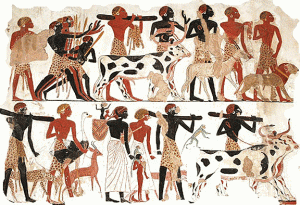
egyptian farmingThe domestication of animals for food production started thousands of years ago, and has gone through a slow evolution since then. In the last 50 years, we have intensified productions systems to a very high degree. Aquaculture, although not unusual in ancient times, has really experienced an economic boom only rather recently, and future growth predictions are quite optimistic.
The development of intensive animal husbandry has helped provide people with high nutritional value  products, and it also offered the possibilities to farmers to have a reasonable source of income. On the other side, it has brought a number of problems, many of which have not been solved and this has resulted in pressure to reduce the level of intensification.

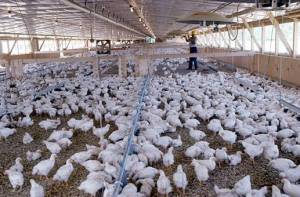
chicken farmWith high densities of animal in some regions, animal husbandry has had to deal with a number of health issues, such as not long ago avian flu and swine fever. The presence of large number of animals in limited areas has increased the “disease pressure” on farms and regions, making epizooties quite devastating, considering the amount of culling that health prevention measures require. This always takes a heavy economic toll, and not only on farmers. This has forced many countries to review their policies about intensive animal husbandry and downsized the sector.
To prevent diseases and mortality, intensive animal husbandry has made a widespread use of antibiotics, which also appeared to promote animal growth. Unfortunately, over time it has appeared that these antibiotics found their way into our bodies and ultimately into our drinking water reserves. The main threat that has arisen from the massive use of antibiotics is the emergence of bacteria resistance to these antibiotics, with the potential risk of making them ineffective, should bacteria become resistant to all of them. The result of this would be to bring us back to the pre-penicillin era with all the consequences that we know. Many countries have now addressed the problems surrounding the use of antibiotics and restricted their use to curative purposes.

Another strong impact on the environment has been the manure surpluses in intensive regions. Next to the odor problem, the excessive manure production has resulted in heavy pollution of the soil and of water reserves. Phosphates and heavy metals coming from the animal feed endangered the fertility of the soil. More mobile minerals, such as nitrates, have entered our drinking water, making it in many areas unsuitable for pregnant women and infants. Sadly, the intensive regions get in trouble because of a surplus of minerals that originate from raw materials produced in other parts of the world, while on the farms producing the feedstuffs, the minerals are not brought back. They have to be replaced by chemical fertilizers instead of the manure that would originate from the animals, such as in a closed system mixed farm.

Husbandry systems have evolved, too. After years of high degree of confinement, regulations have changed and are still changing to take animal welfare more into account. As examples, I could give the stop on tethering of sows and hen cage ban. I have no doubt that animal welfare will become a growing issue in aquaculture, too.

The use of feed and its constant quest to reduce production costs has brought the industry to use some raw materials that can be questionable. An example of this was meat and bone meal use, after the mad cow disease hit Britain in the mid 1990’s. Next to the possible transmission risks to humans, it has also raised some questions about whether herbivores should consume meat derivates.

Intensive animal husbandry has made meat, dairy and poultry very affordable to most consumers, at least in the Western countries. This has led to a shift in the diet from mainly starch to a much higher proportion of protein and fat. Unfortunately, this shift has had some negative effect on health. Animal products are high value sources of protein and fat, but excessive consumption has negative effects. While an annual consumption of 30 kg of meat per capita would do just fine, most Western countries have passed the level of 100kg. Of course, there are many discussions between the different parties involved about where the truth lies, but there are good indication that a good diet should include more fiber, more produce and less animal protein and fat.

Fish farmTherefore, above, I have tried to sum up the most noticeable results of intensification of land animal production. Clearly, there are lessons to be learned for the “new” aquaculture industry, and by this, I mean the intensive, high investment aquaculture. Most companies involved in this business have been inspired mainly by the evolution-and the success- in the chicken industry. They try to copy and adapt a similar model. Therefore, it is rather predicable that they will have to deal eventually with similar consequences.

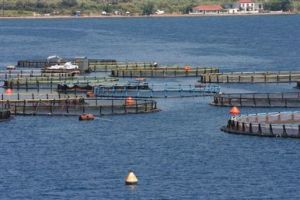
Fish farms have very high densities of animals. Even if the area at the sea level is rather limited, each farm goes quite deep, and the biomass they contain would make many chicken farms look like “small” operations. If you add to this that they are very exposed to the natural environment, as the pens are open nets, there is no wonder that they are very exposed to disease and disease spreading. The current situation in the Chilean salmon farming sector facing ISA just shows how sensitive these farms can be to diseases. My expectations is that aquaculture will be confronted to situations as bad as swine fever and avian flu, and they will have to revise their level of intensification, their location (including possible rotation of site with fallowing as a standard procedure). Further, navigation rules will be strengthened to reduce the possibility of cross-contamination from a marine zone to another.

Very likely, the sector will also further sharpen its veterinary procedures and increase their control on prevention and on medication.  About this part, it may seem that feces simply get flushed into the ocean, but that is not that certain. Feces always contain residues of medicines. The volume of feces produced is quite significant on such intensive fish farms and you can be sure that at some point, simply letting them go into the sea will not be allowed anymore. I foresee that fish pens will have feces collection systems in the future and the “manure” will have to find some use.

The feed industry is now diversifying it sources of raw materials to cope with the rising price of fish oil and fish meal, which is the result of higher demand from the fast growing aquaculture. They carry out lots of research to find the right profiles of oil to meet the fish flesh quality requirements (especially omega3) by using vegetal oil, but one can wonder whether this will be a sustainable approach in the long run. Maybe there will be a completely new industry to produce “farmed” fish oil and fish meal to meet the feed industry needs.

Copyright 2009 The Happy Future Group Consulting Ltd.

Value chains are a great way to develop a niche

In the food production world, just like in other business sectors, there are been two major successful strategies.
One is to produce a non-differentiated commodity at the lowest cost possible. The number of units compensates what is lost in margin per unit.
The other is to produce a limited and controlled volume, and to market it to people who will pay a premium for it as they see an added value in the product.
So far, nothing too revolutionary here.
Generally, other strategies seem to have failed, either because the niche started to expand too much and was losing its specificity. The product becomes something of a better commodity, but not a specialty anymore. More players start to enter the niche and very quickly, the margin per unit drops and so does profitability. The deathblow generally comes when people start to try to counter this decreasing margin by cutting costs in the wrong places, quality being the most obvious.
The mass commodity producers, who try to create an artificial differentiation, by creating an illusion of specialty, cause another type of failure. This marketing tactics usually fails because the difference is mostly an illusion and the customers realize that quickly.

Value chains are very useful for smaller producers who want to market a good superior product.
Often, they are local producers with limited resources. They know how to produce well, but they miss the marketing arm or the industrial arm of the value chain that they are in.
On the other hand, also at the local level, there are other businesses that have the other links of the chain, but that have no production of their own.
When these players join forces and truly collaborate to offer to the right type of customers the type of product that is right for them, the value chain can become very successful. In a previous article, there is a presentation of the Angus Beef story, which also started in such a way.
In order to be successful, a value chain needs a number of basic elements.
The product must indeed differentiate itself by recognizable and superior physical characteristics. Over time the mystique will be created, but do not expect to sell hot air for very long.
The partners need to indeed be partners and play together. This is a critical part of such a joint venture. The worst thing that can happen is a lack of commitment, or worse one of the partners trying to force his own agenda before the common interest. The most successful partnerships come from a balance of power between the parties involved, and also by the necessity of interdependence, as they all should miss – and not be able to easily replace – the other parts of the puzzle.
Another key element is the will to pursue, as very often, and mostly in the early stages, the progress will meet many setbacks. This discipline needs to be applied and someone must fill this role, to constantly enforce the quality specifications and all agreements that are need and made to make the value chain succeed.

Copyright 2009 The Happy Future Group Consulting Ltd.