Nobel Prize of Economics: Back to the basics

This year’s Nobel Prize of Economics to Elinor Ostrom and Oliver Williamson seems to have attracted more attention than previous years, and by reading the comments, I have the feeling that everyone saw signs of what they find important. I believe that the reason for this is that both recipients worked on broad subjects, that have become mainstream, thanks to the climate change issue and the Great Recession of 2008-2009.

The title in this week’s The Economist is “The bigger picture”, and the subtitle is “This year’s Nobel prize has rewarded the use of economics to answer wider questions”. This sounds to me like common sense having turned into some revolutionary concept for some people.

Per definition, economy is the management of natural and human resources to sustain human population. Therefore, it is the very essence of economy to address wider questions and the big picture indeed. To that extent, their receiving the Nobel Prize definitely makes a lot of sense, especially in a time when common sense (aka wisdom) has been widely forgotten and economy has been reduced to just money and profits. What we forgot in our drive for instant gratification is the long-term consequences, and the costs associated to those.

The definition of economy tells it all: it is about the Earth, money and people and it is sustainable. Well, this sounds a lot like the triple bottom line concept, doesn’t it?

Triple bottom line and sustainability are not ideological concepts, and those who try to make it so, are probably making as big a mistake as those who ignore them. Needless to say that reducing such concepts to PR and to marketing are even bigger mistakes, because such an approach only serves the short-term.

Economy, triple bottom line and sustainability are about just one thing: life and survival of our species; and that requires integrating the long-term vision of our societies. If we ignore the future, we will not have any. It is all back to the basics.

Copyright 2009 The Happy Future Group Consulting Ltd.

More action needed on food waste

Food waste is one of those topics that rarely make the headlines while the numbers that come out surveys are simply stunning.

40% of food production does not reach the plate

40% of food production does not reach the plate

Five years ago, the University of Arizona had published a report about the situation in the USA. Their estimate of food waste was almost that 50% of the food produced in the US never gets eaten. Although some losses are inevitable in the supply chain, their report estimated that 14% of the food bought but American households are thrown away, and even 15% of that amount is sent to garbage without even being opened. Not only, this is lost food that could have even eaten, but also the environmental impact of food waste is far from negligible. According to the University of Arizona research, cutting half of the food waste would reduce the environmental impact by 25%, because of reduced landfill use, soil depletion and application of fertilizers, pesticides and herbicides. Recent USDA studies indicate a level of 25% of food that never reaches a plate.

In the UK, research by the government’s waste reduction agency, WRAP, found that one third of all food bought in Britain is thrown away – of which half is edible! I read an amazing statement from Liz Goodwin, WRAP’s chief executive in a 2007 article from The Guardian: ‘If we stopped the amount [of food waste] that we could stop, it would be the same as taking one fifth of cars off the road.’  About a third of the food waste in the UK comes from households, food manufacturers account for about 20%, food service and restaurants for about 15%, and retailers just under 10%.

In Australia, it is estimated that food waste makes up half of that country’s landfill!

At the global level, estimates of food going wasted are that over half of the food produced globally is lost, wasted or discarded as a result of inefficiency in the human-managed food chain, finds a new study by the United Nations Environment Programme released in early 2009.

According to UNEP Executive Director Achim Steiner There is evidence within the report that the world could feed the entire projected population growth alone by becoming more efficient while also ensuring the survival of wild animals, birds and fish on this planet.” This statement is a nice illustration of what I was presenting in my article The transition from a consumption society towards a maintenance society.

Let’s check if this is correct:
Today’s food production being 100 with waste of 40%, means that we actually consume 60. FAO claims that food production needs to increase by 70% to meet the needs of the population in 2050. This means available food must be 60 x 1.70 = 102, compared with 100 gross production currently. With no waste, Achim Steiner statement sounds consistent and correct!

If this is not food for thought, I do not know what is. Nonetheless, this is definitely a part of what we need to address for the future of food supply.

Copyright 2009 The Happy Future Group Consulting Ltd.

Health and environment as growing drivers of food production

Health concerns will gain more importance in the future in the decision process of consumers when they buy their food.
More and more, we can hear and read about concerns and even rejection of the current production systems. Although this bad publicity is not always based on the most objective facts, it has been able to find a growing audience.

It must be true, it was in the newspaper

It must be true, it was in the newspaper

Since most consumers have little or no knowledge of agriculture and food, their only source of information is in the popular media. On the other side of the discussion, the agri-food industry is not getting through, because its message tends to be too defensive and too technical. Unfortunately for the industry, errors from the past (for example, the use of DDT) or cases from other industries (for example, tobacco) contribute to cast a shadow on its credibility. As I wrote my previous article “Less controversy thanks to transparency”, the agribusiness will achieve much more by opening up and having consumers visit their premises so that they can tell what they saw. They must organize more Open House days.

Therefore, for now, consumers have a certain perception of how food is produced, and it is not so relevant to argue whether this perception is correct or not. Perception simply is reality, and consumers act according to what they believe is true.
A little bit of this...There is a growing concern about environmental and health aspects of food production. About the environment, you can list very diverse things such as the depletion of wild fish stocks in the oceans, the interaction between aquaculture and wild fish stocks, manure and smell of intensive animal husbandry and impact of manure on soils and drinking water, deforestation of rainforest for ranching of beef or about growing GMOs (Genetically Modified Organisms). On the health side, consumers worry about food poisoning due to bacteria, such as E. Coli, listeria, campylobacter and salmonella, but also about residues of pesticides or antibiotics, as well as they worry about the use of hormones in animal productions. As the discussions get more animated in the US about the reform of health care and the cost of obesity, more and more people are wondering about whether the fast food diet is a proper one. Next to this, animal welfare is a growing concern by more and more consumers.
The answer to many of these worries has started to appear in the last few years with the growth of the organic market segment. When we see the growth and the performance of a retailer such as Whole Foods, there is no doubt that organic foods have a growing audience.

The concerns about the environment are forcing retailers, food service and businesses involved in the production chain of food to make changes. Some of the actions they have taken can be seen as marketing or PR, but they also have become mainstream. Just a look at how many restaurant and supermarket chains have already implemented sustainable seafood programs indicates how serious this change in consumer attitude is. Fast food chains are also actively working on reducing their environmental impact and set standards on where they source their meat, based on environmental concerns, such as no beef from ranches deforesting the Brazilian rainforest.
In the past, we have seen some examples of production methods that had to be abandoned, simply because no solution to cope with environmental problems could be found. This has been the case in The Netherlands where the level of intensification caused such manure surpluses and risks of animal disease to such a point that after many years of looking for viable technical solutions in vain, the government decided that the size of the national herds had to be reduced.
Similarly to what happened in Europe over the last decade, we can expect that much stricter rules in the use of antibiotics will be applied, and I expect a similar trend to a progressive elimination of the use of hormones in animal husbandry. About animal welfare, there should not be any surprise the day that only husbandry systems that allow enough “recreation” area for animals will be allowed. All of the above is going to have an impact on how and where food is produced. Systems will become less intensive, and progressively we will see more techniques to improve efficiency to compensate.
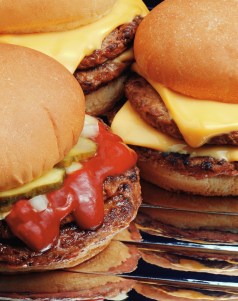
Past Food?

Past Food?

As I also had mentioned in another article (Future price of fish and meat: up), it is simple logic that with more people to feed, food is going to become more expensive. However, the relative prices of various food products also need to go along their relative health benefits. Today, it looks like only wealthy people can afford a healthy diet, as the price of “good” food is substantially higher than the price of what makes a nutritionally unbalanced meal. This clearly does not work in the direction of a healthier population at large.

The way consumers think will define the way we eat and produce our food. Many changes in consumption patterns, in production systems and in product offering are under way. I will get back later with more details on what my views are on this.

Copyright 2009 The Happy Future Group Consulting Ltd.
How much can the rule of 80-20 tell us about the future?

We all have heard about this rule across all industries, including agriculture and food. Eighty percent of the food would be produced on 20% of the farms and vice-versa. If it still applies in the future, it can indicate us how our food production and supplies will look like in the future. Of course, this is always a theoretical exercise, but it is quite convenient to elaborate on our thoughts.

As the population is expected to grow quite strongly in the coming decades, especially in urban areas, this could indicate two dominant trends:
• Further size increase of the largest farms and further industrialization of agriculture and food for global markets, although the number of farms in this segment would not increase strongly.
• Strong increase of the number of small farms involved in specific value chains and strongly linked with their local economy.

Industrial agriculture
Producing more, yet in a sustainable way. That is the challenge!This group will continue to be involved in mass production of commodities for global supplies, like this is the case today.
Yet, they will face an increased pressure to adapt to the requirements of sustainability, which technically is quite possible. New systems and more efficient technologies will be the pillars of its growth and development. They will have to find ways of reducing the amount of chemicals in crops and the amount of pharmaceuticals in animal productions
The requirements for capital will be quite high and the sector will be led by increasing larger corporations, by an increasing level of capital by large private investors and, last but not least, by some governments. This agriculture will innovate further and will be developed thanks to this capital. It will use automation and mechanization to reduce the dependence on labor. Mergers & acquisitions will continue in the agricultural sector and a few large blocks will remain, dominating their sectors.
Their mandate will be about more control the natural conditions of production and about reducing to a minimum their impact on air, water and soil, by using less polluting transport methods, water preservation, effluent treatment and soil preservation. They also will have to engage in maintenance of their environment.
The role of this type of agriculture will be to bring to market large amounts of affordable food for the masses, and should play an important role in strategies around food security, which is where corporations and government will interact on a regular basis.

Local food value chains
Closer to natureThis sector should undergo a strong growth and be build in a market-driven approach. These are the farmers that produce specialty products aimed at serving either a very specific segment of the retail or foodservice market.
This trend, which has been already initiated around concepts such as organic or authentic, will evolve into a more integrated local economy, and the initial concepts will probably become less differentiated as food production in general, be it industrial or traditional, will use more sustainable techniques.
Contrarily to the common belief, this agriculture will be developed thanks to very efficient techniques, but will be centered relatively more about labor and relatively less about capital. In this case, efficiency does not necessarily mean intensification.
We must not underestimate the significance of this part of the food production, as it will play an important role. However, we must not expect this type of agriculture to be the solution to feed the world, and this is not the purpose of the farmers involved in such food production chains.

This type of farming will grow in two different environments:

  •  In “developed” countries to serve a increasing, but aging, population more demanding about the origin and the production methods, and who is ready to pay a premium for the perceived better quality. The angle will be about quality, transparency, sustainability, traceability and as close to zero a use of chemicals and pharmaceuticals. In some areas, it could help strengthening a local economy and local communities.
  • Developing a local economy thanks to agriculture (Picture: FAO) In emerging countries, the development of a local agriculture, and aquaculture, will be a key driver of economic development for under industrialized and/or under urbanized regions. It also will be a way of slowing down the migration of population to urban centers and limit social problems, by creating satisfying economic conditions and by securing food supplies locally. This farming will be about basic needs, before marketing.

Copyright 2009 The Happy Future Group Consulting Ltd.

High-tech fish farm

Hawaii Oceanic Technology IncHere is an article from fis.com about another type of high tech fish farm with some nice futuristic design.

Hawaii Oceanic Technology Inc. has created the Oceansphere. “These elegant, self-sustaining and untethered semi-submerged floating pods are a revolution in open ocean aquaculture technology”, according to the fis.com article. The system is operated without the use of fossil fuels, which makes it environmentally quite acceptable.

As mentioned in the article, the company’s “plan is to demonstrate the feasibility of this technology and, as Jacques Cousteau said, farm the ocean as we farm the land.”

Wal-Mart’s 15 questions to suppliers on sustainability

Recently, Wal-Mart has sent a questionnaire to all their suppliers, including for food items, asking them to give answers to 15 questions about they actually do about sustainability.

I like this questionnaire, because it is simple, practical and straight to the point. Suppliers who have difficulties to figure out the answers definitely have quite some catching up to do, because this is not going away.

This is the first step to impose a change towards sustainable products, and we can expect that this document, although only the beginning, will soon become the standard for retailers, and therefore to industry. I believe that their approach will be much more effective than all the partisan talk that seems to create more division than help create a comprehensive plan for the general interest.

I recommend reading this article from GreenBiz, which explains quite well what the Wal-Mart questionnaire will concretely mean for suppliers.

Environmental performance on food labels

Here is an article about British supermarket chain Tesco starting a project on labelling the carbon footprint of milk products.

carbon footprint of your food at a glance!This is quite an interesting development, as it would allow consumers to make their purchase decision based on the environmental impact of what they buy. It also would make retailers and producers more aware of their own business decision, be it for sourcing products or choosing their markets.

Of course, an other very important next step will have to be consumer education about carbon footprint numbers and how to read them, but this learning process was also necessary with nutritional information.

I see this as a very good initiative to identify and segregate sensible products from the not so sensible ones. Very likely, we will see more labelling about environmental information in the future, and not just for food products, but all consumer products.

Kraft Foods reduces global plant water use by over 20%

Here is an illustration of what I wrote in two previous articles (Managing water is paramount for the future of food production and Sustainability: As Natural As Balance). Read the article about Kraft Foods at http://www.meatinternational.com/news/kraft-foods-reduces-global-plant-water-use-by-over-20%25-id1718.html

Rebuilding fisheries is a must for the future

Rebuilding fish stocks will be good for us allAs everyone knows, fish stocks have been depleted to levels that are not acceptable. This is the result of short-term thinking combined with highly efficient but stupid fishing methods. Not only fish is a high value food source, but oceans are complex ecosystems that we cannot afford to lose. Although aquaculture claims to be the way to compensate the supply of wild fish, this is only true within limits, as some aquaculture species are fed with fish meal and fish oil, and replacement of these products is also limited by the quantities that agricultural crops can supply, and consequently their price.

As one of the points that I mention in my presentation “Twelve trends for the future of food production” (under Presentations tab), we can expect that programs will be set up to rebuild wild fish stocks and bring the volumes back to levels with which sustainable fishing methods and quotas will help provide us with more secure supplies. This will be some sort of a stimulus plan for seafood with all stakeholders involved: government, fishermen, aquaculture industry, retailers, food service and consumers.

A recent report published by the Pew Charitable Trusts has reviewed the possibilities and the economic impact of rebuilding fisheries in the Mid-Atlantic Ocean, as well as the downside of doing nothing. A Canadian research has worked in a similar direction and tend to show that rebuilding fish populations is possible, citing a number of successful cases (see article).

All that comes out from these reports is that the situation, although quite serious, is far from lost, but it requires political will and organization to make it happen. This is exactly why all parties involved from whichever country concerned will have to act in a coordinated manner.

Copyright 2009 The Happy Future Group Consulting Ltd.

Future approach of genetics in agriculture

Where we will decide of our future...

Genetic engineering, that we just mentioned, and traditional breeding and will be increasing intertwined in the future, as they will join their respective areas of expertise into combined genetic improvement programs. Actually, we can expect that these two disciplines will be merged into only one unified science of DNA. We can expect to see an increased number of joint ventures and mergers between genetic selection companies and biotech companies in the future.

So far, genetic engineering has been mostly known to the public opinion thanks to the development of GMOs (genetically modified organisms), and this has been a very controversial area. Genetic engineering will move from a support activity to, for instance, herbicides, to address much more real problems and bring much more real solutions to the challenges of the agriculture of tomorrow. GMOs have served the sales of herbicides produced by the same companies quite well, but of course, this will plateau rather soon, and there will be a need for something else to impress the financial markets. It should not be a surprise to see these corporations specialize in biotech completely, and divest their chemicals “heritage” at some point in the future. The real problems to solve include a broad range of topics. They include technical performance and yields of plants and farm animals. Genetic engineering will help increase the efficiency in the conversion of nutrients and water. It will help plants and animals to have a stronger resistance to diseases, in order to avoid severe production losses. It will provide alternatives to antibiotics, to herbicides and pesticides. It will find ways for plants to absorb or fix the nitrogen of the air to reduce the use of mineral fertilizers. Another area of research will be influencing the quality of final agricultural products, in particular producing healthier foods, and have plants produce medicines.

To solve such problems, the people in charge of such programs will have a very heavy moral responsibility towards society, as the choices they will make will affect the longer term and our ability to survive. The success criteria will go much beyond the financial performance of these companies. This will be translated in the type of bonus packages that the executives will receive. One can wonder whether the correct structure for such companies is to be publicly traded, since stock markets tend to induce a very strong preference to the short-term financial performance. The reflection on such programs will need to go through a serious test of “what ifs”. As per now, money still is the main driver, especially in the arguments of the producing companies and countries. For instance, they reiterate that the decision of the European Union to limit the production and use of GMO will make food more expensive in these countries. Then let’s ask ourselves what if the EU is wrong in their decision? Well, production systems and agriculture would not change much; their food might indeed be more expensive than somewhere else. The people will buy smaller cars and travel less far for their vacation. This is not a very threatening situation if you ask me. What if the ones in favor of GMOs are wrong and the EU is right? The debate is indeed very emotional and political, but this is simply because we lack long term testing of the effects of GMOs to have certainty. This is why the GMO producers have such a hard time convincing their opponents.

More than one species, a whole ecosystem

A better understanding and predictability of long-term effects is paramount in agriculture and food production. Agriculture is not just about producing a particular crop, it is also about managing the total ecosystem that a field is. Actions in genetics need to guarantee the long-term balance of these ecosystems (in which weeds, although of no economic interest, are a part of), because once an ecosystem has been altered, it has been changed forever. Genetic improvement programs must ensure to preserve, in whichever form, genetic diversity and survival of vegetal and animal species, because once extinct, they are lost forever. Long-term fertility of soils is another highly critical part of the protection of our food supplies, because once sterile, the land is lost forever.

So, as you see, we are facing many challenges and genetics is a key element of our food systems. By shifting away of rather superfluous projects, even though they have been quite lucrative for the producers; and by focusing more on true improvement and sustainability of production systems thanks to technical breakthroughs, a combined breeding and genetic engineering will bring constructive solutions. All it will require from the stakeholders is vigilance.

Copyright 2009 The Happy Future Group Consulting Ltd.