
Consumers shape food production systems

Although it is tempting to think that food production systems are created by agribusiness, they depend greatly on the choices and the attitude of consumers and society. For humans, food is not just about nutrition, but it is loaded with a high emotional content.

Consumer choices are highly irrational. To demonstrate this, here are some examples.

When the mad cow disease, or BSE, hit the UK in 1996, beef consumption dropped, but the behavior of consumers was odd. A leading retailer put British beef on sale at 50% off the normal price. They had their best weekend sales ever by then. When asked why they had bought beef, while there were concerns about health risks, some consumers gave answers such as “At that price it is worth taking the risk” or, even better, “ I will freeze it and eat it once the mad cow crisis is over”! At the same time, customers’ visits to the leading fast food chain drop sharply and beef burgers were not in demand, although their beef was from the Netherlands, a country free of BSE by then.

In Europe, mostly in France, consumers used to demand veal to be white. Not slightly pink, just plain white. To achieve this, calves were fed a milk powder diet, which kept them anemic. Yet, at some point, consumers denounced this technique as being against proper treatment of animals. The demand of white meat with a normal diet could not be reconciled. It took years before consumers finally understood that veal was supposed to be pink.

For most customers, white eggs are perceived as being from intensive cage production, while brown eggs are perceived as being more “natural”. Everyone with knowledge of the industry knows that the color of the shell has nothing to do with the nutritional quality of the egg. The belief that the egg color indicates a difference persists, though.

Some blind tests carried out between “industrial” and free-range chicken meat carried out in the Netherlands in the 1980s showed interesting results. When consumers were not told which was which, they could not clearly taste a difference, while when they knew which meat was from which production system, they overwhelmingly gave the preference to the free-range chicken.

Here, in Vancouver, there is a strong trend towards organic foods produced locally. Farmers markets flourish and the environmentally conscious consumers choose to buy their “natural” food on these markets. Ironically, many of them drive in their gas-guzzling SUVs to go there. So much for caring for the environment.

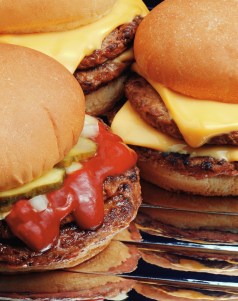
Who, with a rational mind, would choose to eat junk? Yet, junk food is quite a popular item in North America, and it has been a growing trend in many European and emerging countries as well.

In the case of tobacco, not a food, but an agricultural product nonetheless, the warning on the package is quite clear. Yet, some people decide to smoke.

The list could continue and I am sure that everyone has more examples of irrational behavior. Consumer demand (both the rational kind as the irrational one) determines what farmers and food companies produce and sell. In this regard, consumers also share a responsibility in what is produced, how it is produced, where it is produced and how it is distributed to them. Blaming retail or the agribusiness alone for the kind food systems that are in place is unfair.

Of course, it would be interesting to imagine what people would eat if they were rational, and what impact on our food production this would have. A rational diet would follow proper nutritional recommendation, and to this extent would follow the same principles as those used in animal nutrition. However, this would not have to be as boring a diet as what animals are fed. A rational diet does not need to be a ration. After, the human genius that is cooking would help prepare delicious rational meals. It would be like having the best of both worlds. The emotional, social and hedonistic functions of food would remain. The key would be about balance and moderation. If people were eating rationally, there would not be any diet-related illnesses. There would not be obesity. There also would be a lot less food waste. This would improve the level of sustainability of agriculture.

Will consumers become more rational in the future? I do not think so, but I believe that they will become better informed and more critical over time. Especially with the rise of social media, information circulates much faster and trends can gather momentum faster than in the past. More programs for healthier eating are currently running and action is taking place at many levels. In particular, schools are a place where much can be achieved. One can wonder how long the “lunch money and self-service system” will last. Having schools placing vending machines selling items that are highly unbalanced foods and leaving the decision over to kids to decide what they want to eat was of course a disaster waiting to happen. I cannot believe that anyone would expect kids to consciously making the choice of spending their lunch money on broccoli and mineral water. Kids will choose what they like best, not what is best for their health. They need adults for guidance.

Attitude towards food is changing all over the world. Currently, I can see two major trends growing. One is taking place in North America and the other is happening in emerging countries.

In North America, consumers are waking up and starting to question the way their food is produced. This is a major change compared with their attitude until a few years ago. When I moved to this part of the world in 1999, I was amazed by how easy consumers, and retailers, were for the food industry. Consumers simply seemed to consume without trying to know about production methods. Hormones, antibiotics or GMOs (genetically modified organisms) seemed to be accepted. This was a sharp contrast with what I had known in Europe, where all of the above was meeting strong resistance from consumers and retailers. What I currently see happening currently in North America reminds me strongly of what I had seen happen in Europe 20 to 30 years ago. The similarities are almost disturbing. Consumers are losing trust in government agencies, and retailers seem to be the ones to champion food quality, traceability and production methods. This will have much more profound consequences in the way food is produced in the USA and in Canada than the agribusiness seem to realize, or is willing to admit. The population is aging, the generations are changing and the values about food are shifting. The current opposition is not a short-term fad. Consumers will make different choices. Some food producers see that and are already adapting, but many producers still seem to think that opposition will pass. I believe that they are in for a surprise. The expressed plan of Wal-Mart to buy more from small and mid-size farms, to reduce waste, and to develop sustainable sources of agricultural products is a very clear signal that business is changing!

In emerging countries, consumers are changing their eating habits, too, but for a different reason. They now have better wages and more disposable income. The previous “”subsistence” diet made of mostly grain, such as rice, wheat or corn, are now including more animal protein, as well as fruit and vegetables. In these countries, consumers are not overly critical of their food production and distribution systems, but issues that arose in developed countries affect the way food is produced, especially in the area of food safety. These consumers probably would like to experience the same level of food security and affordability of food as in the West over the past 5 decades, but the growing population, and the financial markets will temper this trend. Food prices will be firm at best and they are more likely to increase in the future on an ongoing basis.

There is no doubt in my mind that consumers and retailers are increasingly going to put the emphasis on sustainability, health, food safety and transparency. This may sometimes lead to conflicting objectives with the need to produce more food globally. This does not need to be a problem, but this is why the world needs strong leaders to show the way towards meeting both the objectives of better food and of more food.

Copyright 2010 – The Happy Future Group Consulting Ltd.

Regaining the consumer’s trust

I read many blogs, articles and opinions about food on a regular basis. Yesterday, I came across an interesting blog post on Meatingplace.com. Yvonne Vizzier Thaxton, an authority in the US poultry industry, wrote the article, titled “Consumer trust” after she found out about a survey carried out by the Center for Food Integrity. Basically, the survey concluded that as farms were growing in size, consumers started to wonder if they still had the same values, and although small farms still have the public opinion’s trust, large-scale farms are looked at with suspicion.

That article brought me to think about trust, how it works, and what to do to win it back once it has been lost.

Instead of trying to figure out which group of the population to influence, as the author suggests, I prefer to go back to the basics. If I stop trusting someone, what would he/she have to do to convince me that he/she is trustworthy again? The empathic exercise is a much better way to find out what might work or not. In my opinion, that is exactly what the food sector should do first, instead of pushing the same message without much success.

First, people stops trusting when they are disappointed, when they feel betrayed or when they feel unsafe. By finding out which one of the above caused the loss of trust, and what more specific reasons made the public change their minds, the food sector will already make huge progress.

The second thing to keep in mind is regaining trust is even much more difficult than winning it in the first place. The baggage will stay in the way for a long time. Therefore, a lot of patience is required. There will be no quick fix. A cute video clip, well-thought press releases will not be enough. Far from it. Trust is not something that can be forced, it must be earned. Trust is the result of consistent and positive behavior that benefits the other party.

Once people have lost trust, per definition, they do not believe anything they hear from the distrusted party. In fact, they will hardly listen. Therefore, words will have little impact, unless they go along with actions that confirm that the message is true. If the food industry does not want to change and hopes that communication will be enough to change the public’s mind, nothing will change. When you want someone to prove to you that he/she is reliable, you want to see tangible proof that something is changing in your favor. The most powerful communication tool that really works for regaining trust is the non-verbal communication. The distrusted one must sweat to win trust back. This does not take away that verbal communication must continue. It will keep the relationship alive, but it will not be the critical part for turning around the situation.

Here is just an example to illustrate this. The US meat and poultry sector has undergone many recall procedures about bacterial contamination over the years, and at this day, this problem seems to continue. The industry takes measures to solve the problem, because such recalls are very costly, but as long as there will not be an obvious change in food safety, and recalls keep on happening, consumers will keep doubting how their meat is produced.

Food suppliers have no other choice than to listen to the consumers. The customer is always king. The customer is always right, even when he/she is wrong. A lot of this is about perception. Here is an example of the above. Last June, Greenpeace came with a ranking of Canadian retailers about their seafood procurement, and in particular about their sustainability score on seafood. Costco scored poorly, and their first reaction was to dismiss Greenpeace’s assessment, by basically saying that they are professionals who know what they do, and that they do not really need advice from Greenpeace. Yet, a few weeks later, Costco reorganized its seafood assortment from 15 species back to seven sustainably produced seafood species. That is successful non-verbal communication.

Regaining the consumers’ trust will require transparency, integrity, honesty, a lot of patience and communication, and most of all action towards change that meet the market’s demand. This does not mean that all consumers wishes can be met. After all, life is a continuous negotiation. Food producers and the public need to meet somewhere halfway. Market-driven always trumps production-driven.

Copyright 2010 – The Happy Future Group Consulting Ltd.

Involve in order to convince!

A couple of days ago, I came across the following quote: “Tell me and I will forget, show me and I may not remember, involve me and I will understand”.

I cannot confirm who the author is, as it has been attributed to brilliant thinkers such as Confucius, Aristotle, Benjamin Franklin or an unknown Native American. It does not really matter.

This quote brought me to start thinking about what it could mean for the agricultural and food sectors, as they are under fire on a regular basis. Why cannot it convince the public of its message(s)?

Opponents of agribusiness tell a lot about their opinions, they also show a lot of pictures, documents or footage of what they criticize, and they certainly are very active involving as many people as they can. The agriculture and food sector, including aquaculture, also tells a lot, shows some, but not enough about their daily operations, and they seem to have a hard time involving enough outsiders of the industry.

I read many blogs and articles from both sides and I regularly come across the “agri-food” authors wondering why the public is so difficult to convince. After all, the industry claims to have the scientific facts that prove its points. The industry is wondering whether the difference in communication effectiveness is linked to budget amounts or whether it has to do with the quality of the PR officers from both sides. I do not think that it has much to do with either. I have concluded that it comes from the ability to make people understand the story. Therefore, it has to do the ability to involve the public with the industry.

To involve the public, it is necessary to create an emotional connection first. This is critical and, unfortunately for the agribusiness, this appears to be a difficult area. Indeed, how to connect with people who have little, if any, connection with the agricultural world and who rarely get to see the reality by themselves. Media and internet are the channels where they find information. Opponents of agriculture have an easier job in the sense that they want to change the system. The worst that can happen to them if they fail is the status quo. They win nothing, but they lose nothing, either. The industry is the one that has the most to lose. Generally, this translates into a defensive approach, and that does not communicate well. Per definition, being defensive means having lost the initiative. Only the ones who have the initiative can lead, and only the ones who lead have followers.

Connecting emotionally means exactly what it says. Rational arguments do not work. At least not until the connection is made. The typical response of the agri-food sector is about bringing scientific facts, but how to convince people who 1) do not trust you, 2) who are worried about their food and 3) who do not have the scientific knowledge to comprehend these scientific facts? Cold scientific explanations will not work. All this does is creating distance. Not ideal when you need to connect.

I always like to make a comparison with parents of children that just had a nightmare. The children’s fears are not rational, but they are quite real, as you certainly can remember. Normal parents try to comfort the children. And how do they do that? They ask what the problem is. They listen. They empathize. They tell the children that they will go with them to the bedroom and show them that there is no green monster hiding under the bed. They will lie down on the floor and look under the bed. Then, they will take the child to have a look, and that is involving the child! This is how they connect emotionally, which allows them to switch to rational arguments and get the child to go back to sleep. Of course, they will not close the door and leave a little light so that the child does not feel thrown back at the green monster again. They empathize again.

Do you think that telling the child that there is no scientific evidence of green monsters would work, or that research has showed that nightmares are not real? And do you think that dismissing the child’s fear as unfounded and therefore about stupid would work, although that is pretty much the truth? Of course, it would not work, and the child would remain fearful and possibly lose trust in the parents in such a case.

If the agribusiness wants to win the public’s trust, it will have go look under the bed and, together with the public, take a peek at it. The public could hardly care less for the industry’s scientific facts, but it cares about being listened to and being empathized with. Interesting challenge, is it not?

Copyright 2010 – The Happy Future Group Consulting Ltd.

Insects on the menu

I came across a very interesting article from the French newspaper Le Monde, titled “Insects, the steak of the future”.

Photo: AFP/Mario Tama

The article reviews the potential of using insects as a food source to complement the traditional food production in order to meet the needs of the increasing world population.

Here are the main points.The nutritional quality of insects is high. They are a source of protein, fats, minerals (especially iron and zinc) and vitamins.

The production performance of insects out performs the one of traditional livestock, with a feed conversion ratio (number of kg of food to produce 1 kg of insect) ranging between 1 and 2.

There are already 1,400 species of insects consumed regularly in Africa, Asia and Latin America. Among the favorites, they name beetle larvae, ants, caterpillars, locusts, crickets, silkworm chrysalis, scorpions and spiders (although the two latter ones technically are not insects).

In most cases, insect consumption is the consequence of food shortage, but there is also a festive consumption of the bugs. The author mentions that in the old Roman Empire, caterpillars were a delicacy. Of course, in some Western countries, some restaurants offer insects at a premium price for a certain self-proclaimed sophisticated elite… After all, a lobster looks very much like a large aquatic bug.

However, trying to convince Western consumers to switch to insects and other bugs for their protein will be a tough call, especially when served in their original form. An possible alternative would be to process them into sausages and ground patties. There also could be the possibility to texture the protein in similar ways as it happens with soy.

Another interesting potential for insect is to use them as a raw material for animal feed. Bugs and worms can also be a good source of protein for poultry and pigs. After all, in nature, this was a regular part of their diet. Similarly, for many fish species, insects are a natural source of food. Currently, fish feed is made of increasingly expensive raw materials, such as fish meal, fish oil and vegetable oils, for which they compete with human consumption, or are used for feed destined to other farm animals.

There are talks about organizing the first congress on insect as a food source as early as 2012.

Copyright 2010 – The Happy Future Group Consulting Ltd.

Future Harvests – The book is coming soon!


The editing of my book “Future Harvests – The next agricultural revolution” is about completed. All that is left to do is developing the cover and start the publishing.

I have already received orders, even before the book is out. That is quite a good sign. And a great surprise for me.

If you wish to be updated automatically when the book is published, just subscribe in the sidebar window on the right.

To describe the topics addressed, I have posted three short promotional videos on YouTube. In previous articles (The fun of writing this book and The next agricultural revolution), I had already given an idea about the content of the book.

Video #1: The Fundamentals (duration 2:37) – Introduction to the background and fundamental principles mentioned in the book “Future Harvests – The next agricultural revolution” to achieve food security for 9 billion people in 2050. Topics such as demographics, the shift in economic power, the control of food  and food security strategies are reviewed. Sustainability, innovation, efficient market driven food production and strong leadership are required.

or click here if video does not appear

Video #2: The Actions (duration 2:12) – A short review of some of the actions mentioned in the book to achieve the objectives. Solving the water challenge, finding new land for production, urban farming, hydroponics, farming the desert, rebuilding fisheries and developing aquaculture further are all possibilities.

or click here if video does not appear

Video #3: The Questions (duration 3:08) – A sample of some of the questions raised in the book. They cover technology, land deals in Africa, improving yields, restoring soil fertility, change in consumer needs, organic farming, risks of conflicts, biofuels or meat are some of the topics presented.

or click here if video does not appear

If you know someone who could be interested by the topics on this page, please pass it on!

The vertical farm

Here is a think-out-of-the-box article about the “vertical farm”.

It is an interesting vision of a replacement of agricultural land, by indoor robot-tended hydroponic agriculture. They also envision the possibility of raising farm animals and developing aquaculture in the water used to grow the plants; and the fish waste would be used as fertilizer.

All of this would be grown in a 30-floor skyscraper located in the city, powered by the energy coming from city sewage, and the ground floor would be a food supermarket that would provide food for 50,000 people.

Such projects are under review in Abu Dhabi, South Korea, Seattle, WA and Las Vegas, NV.

It looks like science-fiction, yet there are some really interesting arguments in favor of such a development.

USDA launches nutritional web tools

This news is a beautiful confirmation of what I am announcing for the future (see my remarks in “Nutrition basics should be taught in school” and “The dining of the future“) about the need and the coming tools that will help people know more about agriculture, food and health, not only the educational tools, but also the software and/or website that will allow them to set up their own diet and make their own “educated” dining choices.

The article from Food Business News also mention what I have been telling all around and a number of comments that I have left on blogs from food organization and media such as Meatingplace that city people know very little about how food is produced and about their lack of understanding beyond the supermarket counter (read my comments in “Less controversy thanks to transparency” and in “Health and environment as growing drivers of food production“).

Health and environment as growing drivers of food production

Health concerns will gain more importance in the future in the decision process of consumers when they buy their food.
More and more, we can hear and read about concerns and even rejection of the current production systems. Although this bad publicity is not always based on the most objective facts, it has been able to find a growing audience.

It must be true, it was in the newspaper

It must be true, it was in the newspaper

Since most consumers have little or no knowledge of agriculture and food, their only source of information is in the popular media. On the other side of the discussion, the agri-food industry is not getting through, because its message tends to be too defensive and too technical. Unfortunately for the industry, errors from the past (for example, the use of DDT) or cases from other industries (for example, tobacco) contribute to cast a shadow on its credibility. As I wrote my previous article “Less controversy thanks to transparency”, the agribusiness will achieve much more by opening up and having consumers visit their premises so that they can tell what they saw. They must organize more Open House days.

Therefore, for now, consumers have a certain perception of how food is produced, and it is not so relevant to argue whether this perception is correct or not. Perception simply is reality, and consumers act according to what they believe is true.
A little bit of this...There is a growing concern about environmental and health aspects of food production. About the environment, you can list very diverse things such as the depletion of wild fish stocks in the oceans, the interaction between aquaculture and wild fish stocks, manure and smell of intensive animal husbandry and impact of manure on soils and drinking water, deforestation of rainforest for ranching of beef or about growing GMOs (Genetically Modified Organisms). On the health side, consumers worry about food poisoning due to bacteria, such as E. Coli, listeria, campylobacter and salmonella, but also about residues of pesticides or antibiotics, as well as they worry about the use of hormones in animal productions. As the discussions get more animated in the US about the reform of health care and the cost of obesity, more and more people are wondering about whether the fast food diet is a proper one. Next to this, animal welfare is a growing concern by more and more consumers.
The answer to many of these worries has started to appear in the last few years with the growth of the organic market segment. When we see the growth and the performance of a retailer such as Whole Foods, there is no doubt that organic foods have a growing audience.

The concerns about the environment are forcing retailers, food service and businesses involved in the production chain of food to make changes. Some of the actions they have taken can be seen as marketing or PR, but they also have become mainstream. Just a look at how many restaurant and supermarket chains have already implemented sustainable seafood programs indicates how serious this change in consumer attitude is. Fast food chains are also actively working on reducing their environmental impact and set standards on where they source their meat, based on environmental concerns, such as no beef from ranches deforesting the Brazilian rainforest.
In the past, we have seen some examples of production methods that had to be abandoned, simply because no solution to cope with environmental problems could be found. This has been the case in The Netherlands where the level of intensification caused such manure surpluses and risks of animal disease to such a point that after many years of looking for viable technical solutions in vain, the government decided that the size of the national herds had to be reduced.
Similarly to what happened in Europe over the last decade, we can expect that much stricter rules in the use of antibiotics will be applied, and I expect a similar trend to a progressive elimination of the use of hormones in animal husbandry. About animal welfare, there should not be any surprise the day that only husbandry systems that allow enough “recreation” area for animals will be allowed. All of the above is going to have an impact on how and where food is produced. Systems will become less intensive, and progressively we will see more techniques to improve efficiency to compensate.

Past Food?

Past Food?

As I also had mentioned in another article (Future price of fish and meat: up), it is simple logic that with more people to feed, food is going to become more expensive. However, the relative prices of various food products also need to go along their relative health benefits. Today, it looks like only wealthy people can afford a healthy diet, as the price of “good” food is substantially higher than the price of what makes a nutritionally unbalanced meal. This clearly does not work in the direction of a healthier population at large.

The way consumers think will define the way we eat and produce our food. Many changes in consumption patterns, in production systems and in product offering are under way. I will get back later with more details on what my views are on this.

Copyright 2009 The Happy Future Group Consulting Ltd.

The dining of the future

With the current development of software and technology on the one hand, and all the concerns that consumer express about food, health and environment, on the other hand, I believe that it is only a matter of time before we all can have the information and tools we need to make our own eating (and nutritional) choices.

Can I eat this?

May I eat this?

Today, we have nutritional information on all food items labels, but few of us use it much. This could soon change.
As many among us have computers at home, we can expect software to come on the market, and maybe even already installed with the computer at purchase, that will allow us to determine and set up our own diets.
Already numerous websites have interactive programs telling you, depending on your weight and life style, how many calories you should eat per day and other websites help you calculate the nutritional value of your meal if you enter the quantities of your menu’s components.

In animal nutrition, optimization programs to compose the feed ration by entering the nutritional value of the different possible ingredients and set limits to the level of inclusion of some ingredients based on nutritional and technical parameters have been in use for many years. Last, but not least, these programs also include the price of the different ingredients, so that the best-balanced “meal” that meets the nutritional needs can be composed at the lowest cost possible.

Therefore, it is just a matter of time before we all can have at home a system that will take into account, or weight, our age, our level of physical activity, our health risks and calculate for us what our meals could be made of and how much we should eat, depending on which menu combination we would like to have for that particular meal or day. The nutritional information could be either from a database or directly transferable from the nutritional value label present on the food packaging we bought.

Following the same idea, I expect most restaurants to present their menus with thorough nutritional information on the side, in a similar way as food labels show, with indication of health benefits or restrictions. There also would be the possibility for a customer to enter their personal information to have the meal tailor-made for them, with probably the relevant price adjustment when needed. All of the above includes of course the drinks as well, as they definitely can contribute to the overall nutritional value of the meal.

Any action encouraging healthier eating will be supported by the government and by health insurances, which should help accelerate the introduction of such programs.

As environment and sustainability are among the main concerns of consumers today, I expect food items in the retail and the dishes on restaurant menus to include environmental information, similar to the ones mentioned and appearing on the label shown in my article “Environmental performance on food labels“. Today, a number of restaurants have already joined programs setup by MSC (Marine Stewardship Council) to indicate they serve only sustainable seafood. Seafood is probably just the first item that will be followed with similar information and programs for other food sources.

We have entered the era of information, and we will eat accordingly.

Copyright 2009 The Happy Future Group Consulting Ltd.

Less controversy thanks to transparency

The agribusiness and food industry come regularly in the media with some bad publicity. As such, it does not differ from other industries, as criticism comes with the territory.

What is unfortunate is that the agribusiness mostly responds to this in a rather defensive manner, either by attempting to bring rational scientific facts or by denying the facts that their opponents bring forward.

Criticism of food and food quality is not new. When I started my professional life, I had been lent a book about how food in general, and animal husbandry in particular, are perceived. The introduction of this book was a long complaint about the quality of bread, and by then (in the mid 80’s) the arguments presented sounded quite familiar to me. The funny part of it was that in fact this text was, according to the author, a report written in Ancient Egypt, some 3,000 years ago.

Although bad publicity and criticism are obviously no novelty when it comes to food, it seems that the industry has a hard time fighting this battle.

Some pressure is goodAs such, criticism is not a bad thing as long as it is not done in bad faith with the only purpose to bring damage. There is nothing wrong with consumers being concerned about the quality of the food they eat, and about the way it is produced. Being worried about whether and how antibiotics or hormones are used, about the potential problems to the environment linked to intensive production is quite legitimate when you are rather ignorant of production techniques. After all, nobody has ever claimed that any industry was perfect, and business is always work in progress. It is utmost important for all of us to have watchdogs in order to make sure that we do not get into excesses that can lead to irreparable damage.

Let’s also realize that only a tiny minority of people now work in agriculture and that most city residents have a very limited, if any, knowledge of how farms are operated. On the other hand, they have very strong, often idealistic and romantic, opinions on how they think farming should be, regardless of whether it is viable or if it can provide them enough food. Surveys with city kids have shown that many of them do not make any connection between eggs and hens, or between milk and cows and calves. For many, it is not even a clear fact that in order to get meat, one has to kill an animal.

Further, it is human nature to pick on the big guy, as we all love the story of David defeating Goliath. Moreover, bad news, the more sensational the better, always get more attention than good news, like the recent article published in Time. There is nothing like fear to get people glued to their TVs or reading reports in the papers or on internet. These psychological traits are quite difficult to deal with.

The problem with defensiveness, when dealing with bad publicity, is that it always brings the defendant in an awkward position. If this not handled properly, it can very easily come over as suspicious, which reinforces the poor impression.

Transparency creates trustIn my opinion, the only proper way forward about information on agriculture and food is transparency. Only transparency can eliminate (or at least reduce to a minimum) negative publicity. Only by being candid and open about the way food is produced, can the agricultural community inform properly the public.

Remember that issues around food production are highly emotional, as they deal with much more than just nutrition. This is why responding with rational arguments has so little effectiveness. First, emotional concerns must be dealt with as emotions, not merely with cold scientific facts. Only once the emotional connection has been established, it is possible to bring the communication to more rational aspects and facts.

The better informed the public is, the easier it is to also discuss and address issues that come along the way. Candour is only the first step, the clearly expressed will to always improve the way food is produced is absolutely necessary, and this is not about vague promises. It must come with an open agenda of issues that the industry knows about and is (and will be) addressing without complacency. A clear commitment to a plan of actions with defined time lines is the best way to create and restore trust with consumers. And the best way to score in this is by taking the initiative and the lead. The industry and this includes any participant in the production chain and its watchdogs, from breeding to retail, needs to make these decisions, instead of having to react to changes in legislation, which very often is the result of pressure from the public opinion.

Copyright 2009 The Happy Future Group Consulting Ltd.