What future do you want?

What future do you wantUsually, when my customers contact me, their purpose is to have me tell them my vision of the future. Since the dawn of time, people have always had the secret hope that someone can tell them about their future. People have always sought to reduce uncertainty and looked for a more predictable future, be it in the stars, in a crystal ball, in cards or goat insides. If the purpose is the same, there are different attitudes and expectations when it comes to the future. I would identify four main types of requests.

Some are interested in what I would call Fantasy Future. Their expectation is not so much to have a realistic view of the future but they want to see a picture of unlimited possibilities. Their focus is primarily on the potential of new and as futuristic as possible technologies. They want to stimulate their imagination as much and as possible. Presentations that sound a bit like science-fiction fit quite well for such audiences. Whether such a future is actually possible and viable is secondary. Escaping from hard rational reality of day-to-day operations is a great way of getting new hopes, see new opportunities and building a dream about how thing might be. There is no real timelines for when that future might take place and it is fine, as it is not so important in this context.

Another form of future that is also in the realm of fantasy but more dangerous is what I call Wishful Thinking Future. For as much as with the Fantasy Future, it is clear that the predictions are quite speculative and the tone is more one of entertainment, those who tend towards Wishful Thinking Future have the tendency to think that, just because they believe in a particular scenario, it will and must happen, regardless of whether it makes any sense from a technological, practical or economic point of view. Usually, those who look at the future from the wishful thinking angle rarely do a thorough analysis of the actual possibilities and of how sensible their scenarios are. Quite often, they do not have the thorough set of skills and knowledge to carry out such an analysis. They seem more interested in pushing their dogma on others and they generally have a hidden agenda. The danger here is that it misleads and even possibly deceives the public. In the end, it is a major waste of time and money. Unfortunately, Wishful Thinking Future is much more common than one may think and unfortunately not that rare with some so-called influencers with some ego, and that is where the danger lies.

I enjoy some Fantasy Future once in a while. It is entertaining and, usually, the audiences that are interested are quite relaxed and curious. There is always a good energy in such meetings. However, I always present the futures scenarios in a very practical way to connect my story to the day-to-day activities of my clients. I also always present the limitations and what I think the odds of such scenarios are to actually concretize, so that my clients keep in mind what to expect. I do not engage and cannot stand the Wishful Thinking Future. Making people believe things that are not realistic, not possible or, worse, not true, is not in my DNA. I have exposed some non-sense quite a few times in the past, which is usually rather simple with the help of grade 6 math. Yet, I am always surprised how non-critical most people are and many fallacies get spread quickly and reach large numbers of people through social media. Fortunately, there are more alternatives to sketch a more sensible future. We live in a world where many one-eyed try to be king of the blind, I see my function to get my clients have 20/20 vision.

One approach towards realistic future scenarios is what I call the Likely Future. It is based on actual trends and historical patterns. The scenarios are the result of a rational analysis and usually such scenarios have a high probability to realize. In a sense, it is a cautious approach of the future. On the one hand, it takes into account facts and data and on the other hand the emotional and psychological aspects of human behaviour. It has little to do with fantasy and absolutely nothing with wishful thinking. It is based on verifiable facts and the scenarios can be discussed in a rational manner. It may not be the most exciting exercise but is creates the basis for the development of alternative scenarios and to assess their feasibility and assumptions by identifying areas of uncertainty. I wrote my first book, Future Harvests, with this approach in mind. What was the result? Pretty good because most of the issues that have now gone mainstream were all mentioned in the book, which I wrote in late 2009 and early 2010. Many other issues mentioned in the book certainly would deserve to get the same exposure but getting the message to the average person is a baby step process. Clearly, my approach of likely future works. I wanted to see whether the world could feed 9 billion people. I just wanted to get to either Yes or No, and I found the answer, and I also debunked a lot of myths and fallacies in the process. To me, the Likely Future is a good first step towards a strategy, but it is only a first step. By connecting such scenarios with resources, ambitions and desires for the future, it is possible to go to the next approach of the future, in my opinion the most interesting but also the most challenging: the Desirable Future.

The Desirable Future is really a lot of fun to investigate. It mixes the Likely future with the development of a vision. In this regard, it makes both brain hemispheres work. It combines a rational approach with strategy, creativity and leadership. By using the Likely Future as a basis, it aims at not taking the outcome as inevitable. It is a matter of finding out what will be if we act “normally” and then challenge it to deliver a better prospect. It leads towards a positive, collaborative and stimulating vision of the future. It is an extensive exercise that includes many disciplines and many stakeholders. Futurists mostly like to talk about technologies, but building the future depends much more on leadership and managing human nature than it does on technology, which will only offer tools to achieve future goals. Technology is only as good as the use we make of it, as I explained in a previous article. Earlier on, I mentioned both brain hemispheres having to work together, but the cooperation goes beyond what is inside. It calls for a collective approach. It requires enthusiasm and respect of others. It is about building a better world for all and not just for a few. There will not be a better world if a select few build a future for themselves only. The Desirable future is by far my favourite approach. It is energizing and an endless source of hope and happiness for me. This is why I sketched quite a few avenues about the Desirable Future in my second book, We Will Reap What We Sow, which was ahead of its time when I wrote it and still is (unfortunately?) and still will be for years to come (that’s fortunate for me!)

So, dear reader, what future are you most interested in? The answer is important because it will shape yours!

Copyright 2016 – Christophe Pelletier – The Happy future Group Consulting Ltd.

Transparency is a market-driven exercise

Among all the trends in food markets, transparency is a tough demand to meet. As such, it is only natural that consumers have questions about what they buy and want to be sure that they buy something they feel comfortable with. In times when the food economy was local with everyone knowing each other in small communities, the food supply chain seemed transparent. With the separation of rural areas and urban centres and the increasing distance, both geographical and relational, between consumers and the different links of the chain, the distance in trust increased, too. Add to this a few scandals through the years and the result is a feeling that something is broken in the world of food.

The renewed desire for transparency is nothing than a cry for trust. Since the personal relationship with suppliers in many cases no longer exists, trust cannot be just a matter of knowing the farmer, the baker or the miller. Today’s transparency is about verifiable facts. Today’s consumers, unlike their parents or grandparents, do not want to be told a story anymore. If they don’t trust you, they won’t believe you anyway. They are used to search online for everything, with more or less success when it comes to the truth, but they nonetheless want to find out for themselves and figure out on their own what to think. Today’s concept of transparency is replacing PR, which is a one-way push communication technique. Today’s consumers want a one-way pull information platform. That is all the difference. PR is obsolete, but most food producers still have not come to this realization.

The prospect of having to collect, update and disclose all information through the chain from DNA to retail store or restaurant seems a daunting task and for many food producers, it feels like an overwhelming request. It seems and feels that way because it is. It is rather close to some Herculean task. One of the questions I often get is how much do consumers want to know and should everything be available? My answer is that in theory, consumers want to know everything and so it all should be available indeed but in practice, it is somewhat different. Consumers do not really want to know everything about how their food is produced. Well, maybe some do but they are very few. Most consumers do not even read nutritional labels, so they won’t bother spending hours or more to learn everything about the bread or the chicken they just bought unless something serious triggers it. So, what do the large majority of consumers really want? They don’t want to know everything but they want you to be able to answer them any question they have. They want the certainty that, should they have a question about their food, they will get an answer, the truth and that nothing will be hidden from them. Transparency is much more about trust and truth than it is about hard data. Yet, the way to get there is through data and open access.

TransparencyThe amount of data that can be collected is huge and so is the task to set up your transparency system. However, regardless of how much data you collect and share, your transparency performance will always depend first on making transparency one of the pillars of your organization. By that, I mean have the genuine willingness to engage in a candid and honest interaction with your customers and consumers. Genuine, candid and honest are key words when it comes to transparency. People will sense if you are so indeed. If they sense the opposite, you will not gain trust and the perception of your company will further deteriorate. Consumers will forgive honest mistakes when you admit you made one and are willing to do what is needed to correct it, both inside your organization as towards your customers. Consumers will accept that you do not necessarily have all the answers ready but that you are willing to do the research and come back diligently to them with the information. Although immediate response has become an expectation in the digital world, people understand that sometimes a bit of time is needed. Although data is important for transparency, attitude is at least just as much. By being responsive and handling difficult conversations in a mature manner will get you a long way. In a transparency approach, there is no need for defensiveness. You open the doors and you get out of the way! Of course, the mix of transparency and data brings the issue of boundaries. There is a fine line between what is useful information for customers and what is critical information about the company and information that affect competitiveness. Consumers will understand that some information is sensitive enough to not be disclosed. In this process, too, it is essential to be genuine, candid and transparent as long as it is not an attempt to hide something. Remember, transparency is a tool to increase the consumer’s trust and loyalty!

Copyright 2016 – Christophe Pelletier – The Happy Future Group Consulting Ltd.

Future implications and consequences of the ChemChina-Syngenta deal

The purchase of Syngenta by ChemChina did not go unnoticed. Many commentators are trying to see all sorts of reasons and all sorts of consequences, mostly depending on whether there are pro or anti GMO (Genetically Modified Organisms). When it comes to China, the best approach in my opinion is to look at it in a very pragmatic manner, simply because the Chinese have been quite pragmatic over the years. Their approach of food and agriculture is the same as for all other economic activity. It is dictated by the need for the government to ensure social stability or at least prevent social unrest. They will do what is good for China, meaning what is good for the Chinese government. It is not aimed at pleasing any other country or the financial markets. They still follow the principle express by Deng Xiao Ping: “It does not matter whether the cat is black or white as long as it catches mice”.

In both Future Harvests and We Will Reap What We Sow, I was announcing such a move, simply because it makes sense when looking at the economic and demographic changes the world is going through. The purchase of Syngenta is a very good move for China because it kills several birds with the same stone.

The Chinese seed sector was –and still is- fragmented and far from effective. By bringing a heavy weight company like Syngenta in their market, they will establish a much stronger seeds and genetic business to meet the challenges of the future. Syngenta brings expertise that will help China speed up the learning curve and create a critical mass of production that will be able to meet some serious volumes. It will stimulate further consolidation in China and also stimulate innovation and progress for other Chinese seed producers, if they want to stay in business. I read many derogatory comments about China’s quality approach. It is amazing how many people are stuck in clichés from the past. China is improving in many areas and quality is one of them. There is a generation of entrepreneurs who are quite bright and competent leading businesses. It is quite clear to me that Syngenta is and will be a quality player in the future, under Chinese leadership. Those who think this deal is bad news for Syngenta’s employees will be disappointed. I believe the contrary. They will get many more challenges to tackle and their jobs will be more focused than they were before or would have been if it had been bought by a North American company.

The purchase of Syngenta sends a clear message that China wants to be in control of its seeds. By buying such production assets, China will not have to go on the market, or at least will be much less dependent, to buy seeds from outside. It will strengthen China’s bargaining position towards other seed suppliers. Thus, China will be in charge of strategic choices that are good for China’s agriculture instead of having to choose from suppliers who do not have China’s long-term food security at heart or who would try to impose their conditions to China.

Regarding the topic of GMO, the purchase of Syngenta certainly offers China access to the technology, but it is not the main reason for the purchase. What it does though, is to offer China the option of using genetic engineering technology if they consider it useful. If they choose to do so, they will approach the use of the technology as a resource that supports their food security goals only and they will develop the products they actually need, not the products other suppliers would want to sell them. Whether China will use GMO is up to China and nobody else. Trying to see the Syngenta purchase as a sign of China’s attitude towards GMO is in my opinion wishful thinking more than anything else. When it comes to seeds, they will not look at the cat’s color. They will focus on having one that catches mice.

Further towards the future, the Syngenta purchase will have other long-term effects, and outside of China, too. China will be a significant seed producer and supplier. With an organization like Syngenta, there is no reason why they should limit business to China. I expect to see China playing a much more important role in the seed market outside of its borders. In particular, I expect to see China eye the huge African seed market. China has been active for decades in Africa and contributes to many economic development projects. China does not interfere with African politics but focuses on how it can help Africa developing and playing a future role for China. Considering the potential of African agriculture and its significance for China’s future food security, the new Syngenta should be instrumental for future progress of agriculture in Africa. A side effect of such a strategy would reshuffle the cards of the world seed market and bring a new and different equilibrium. There is quite a bit of activity on the mergers’ side. Syngenta had been the object of interest from other potential buyers, especially Monsanto. DuPont and Dow already brought their agriculture activities’ together. BASF seems to be looking at reshaping its activities. Further consolidation and mergers will take place in the coming months and years. What will be the next big merger? I can think of two possible ones: BASF and Bayer or BASF and Monsanto. I also see the possibility of Monsanto not being considered a purchase candidate at all by anyone.

Copyright 2016 – Christophe Pelletier – The Happy Future Group Consulting Ltd.

Nature will reshape food value chains

The recent climatic events, in particular droughts, have attracted more attention on future challenges for food production, and rightly so. Unfortunately, the mainstream media cannot help presenting the as all gloom and doom. Certainly, there are very serious reasons for concerns, but solutions can be found. I wish the media would present more examples of positive actions to face and overcome the challenges.

It is not easy to deal with a changing environment, especially when it is impossible to predict accurately what the change will be. Predictions about temperature increases are useful but they are quite insufficient. An increase of 2 degrees on average will be different if the standard deviation is 1 degree or if it is 20 degrees. Other factors such as hours of sunlight and precipitations (including their nature, frequency and intensity) will impact agriculture at least as much as average temperatures. Changing climatic conditions will not only affect plant growth and development, but they will change the ecology of weeds and pests as well and that needs to be factored in future forecasts and models

Nature will reshape food value chainsA special attention on water is necessary. Without water, there is no life. Unfortunately, over the past few decades, wasting natural resources has been a bit of a way of life. The issue of food waste has finally received the attention it deserves, but the waste is not just about food. It is about all the inputs such as water, energy, money, time, and fertilizers. Water is still wasted in large quantities. Just compare how many liters a human being needs to drink compared by the amount of water that is flushed in bathrooms every day. Before the housing crash of 2008 a study in the US had estimated that lawn watering used three times as much water as the entire national corn production. But the issue of water is not just about waste. It is also about preserving water reserves. The late example of the drought in California illustrate what water scarcity may mean for food value chains. California is not only a major agriculture power house, but it exports a large part of the production outside of the state’s borders. The issue of water scarcity and the dwindling level of the Colorado River are not new for Californian agriculture. It has been known for a couple of decades that problems were coming. California produces a lot of water-rich fresh produce by means of irrigation. It actually has been exporting its water in the form of lettuce, spinach, melons, strawberries and citrus far away to places from where the water will never return to California. The water loop has been broken wide open and that is why, among other reasons, the system is not sustainable. If California can no longer supply its current markets, it will have to rethink its target markets. At the same time, other regions, that may not be competitive with California today, because externalities are never included in the cost of production, will eventually take over and replace the Golden State as suppliers for some productions. Unfortunately for the future, California is not the only region with a water problem. Saudi Arabia changed its food security policy a couple of years ago as the country leaders realized that trying to produce all its food would lead to a severe depletion of its available drinking water reserves. Instead of pursuing food self-sufficiency at all costs, the country chose to find other supply sources through international trade and through the purchase of farmland in foreign countries. The examples of California and Saudi Arabia demonstrate how natural –and demographic- conditions shape food value chains. The issue of water is not just about produce. Animal productions require usually more water than vegetal ones. In the future, water availability will surely affect where which kind of animal products are produced. New regions will arise and old traditional ones may review their strategies from volume-driven to higher margin specialty animal products market opportunities because of environmental constraints.

Climate change and water scarcity show how international trade can actually contribute to food security when done responsibly and with long-term vision. The prevailing model of producing where it is cheapest to produce without taking into account negative environmental externalities is facing its own contradiction and demise. The next model will be to produce not only where it is the cheapest to produce but where it is sustainable to do so. When water runs out, it is no longer possible to ignore the externalities of a production. When water becomes scarce, it gets more expensive. The law of supply and demand commands. When inputs get more expensive, several things happen. The economic model shifts. Priorities and externalities change, too. At first, producers try to find ways to increase efficiency and eliminate waste. The benefits outweigh the additional costs. Uncertainty stimulates innovation. New systems, or sometimes old ones that found a second youth, replace the current ones. If that does not work well enough, then producers start considering producing something else to ensure the continuity of their operation and find new business.

It is not the first time that our natural environment changes. Finding successful solutions to deal with it really are about our ability to adapt and to preserve our future, as it has been the case in the past. The challenges may be of a magnitude like never before, but so are our knowledge, our technical abilities and the tools present and future.

From an agricultural point of view, adapting to a new environment is about finding the type of production that thrives under new conditions. It may mean different areas of production for some species. In North America, there is already a shift for corn. Iowa has traditionally the main grower, but the corn production area is now expanding north. Minnesota is now producing more corn than in the past and so are the Canadian Prairies. Similarly, the production area for soybean is shifting north. Minnesota is growing an increasing volume of soybean and even in the province of Manitoba in Canada, soybean production attempts have been carried out since a few years.  It is the result of better production conditions and the development of new varieties that can adapt to new less favorable climatic conditions. Because of the local supply for soybean, the development of aquaculture with local soybean products for fish feed is now considered a long-term possibility in Minnesota among others. In Europe, corn production regions also saw a shift to the north for corn during the 1970-80s thanks to the development of new varieties, which largely contributed to the growth of dairy production in these new areas through the widespread use of corn silage. For the future, there is no doubt that genetics will contribute again to ensure food security. There is currently a lot of work done to develop varieties that can withstand droughts, floods or soil salinity. The ability to know the complete genome of species, to spot genes through gene markers, to be able to create new varieties that are less sensitive to diseases help speed up the development of crops that can thrive under future conditions. The recent developments in synthetic biology are quite interesting. Research conducted at the IRRI (International Rice Research Institute) on the development of rice varieties that can have a higher photosynthesis efficiency and thus higher yields could open new perspective for a more productive and more sustainable production.

Next to the development of better and more adapted seeds and genetic material, the development of new technologies that I described in a previous article will bring a number of effective solutions as well. In particular the rise of precision agriculture is certainly quite promising. The ability to deliver to the crops exactly what they need when they need it at the right time and at the right place in the right quantity will help reduce the environmental impact of agriculture while offering the possibility of delivering higher yields. Similarly, in animal production, there still is room to improve feed efficiency. It can happen through further genetic improvement, the use of more efficient feed ingredients and feed composition and through better farm management. The latter is definitely an essential facet of a better future for food production. Better and updated skills for food producers will help being more efficient, more productive and more sustainable at the same time.

An area that is often forgotten when it comes to the future of food is the functioning of markets. If demand for certain products, and in particular animal products, increases faster than supply, price will go up and there will differential increases between the different types of products. As most consumers, unlike what marketers sometimes tend to make believe, still choose what they eat depending on the price of foods, there will be shifts. Some productions will thrive while others will struggle.

As prices still will be an essential driver of the location of the various vegetal and animal productions, markets and environmental constraints will increasingly have a joint effect. In the future, the dominant economic model of producing where it is the cheapest to produce will evolve. As the pressure on water supplies, soil conditions and pollution issues will keep increasing, the model will include an increasing share of negative externalities. They are the long-term costs that are never factored in the production costs but that will affect future production economics. Externalities are the hidden side of sustainability and they will determine the future map of agriculture, as it will no longer be possible to ignore them. Choices will have to be made between short-term financial performance and the long-term ability of various regions to be able to produce, and to keep producing, the volumes and the quality specifications that are needed by the different food markets of the future.

A friend of mine told me a couple of years ago after a trip to Asia how she could see from the plane the large plantations of palm oil trees, and how they had replaced the jungle. She described her impression as the view resembled the strategic game of Risk to her. Yes, climate change and water availability in particular, will reshape food value chains because agriculture, regardless of it scale, is a strategic activity. It is about life and death. It is about peace and war. Future strategies for both global commodities as well as for local food value chains will integrate Nature’s new deal of precious resources and conditions of productions. Together with the geography of future consumption markets, world agriculture will readjust, relocate and the Earth will look different once again.

Copyright 2015 – Christophe Pelletier – The Happy Future Group Consulting Ltd.

Beyond just technology… the human factor

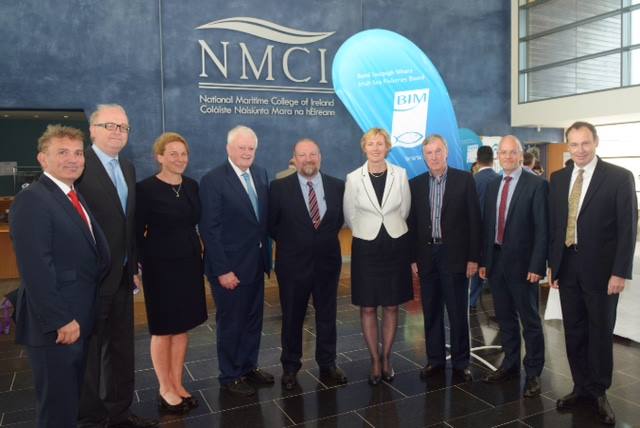
Early July the SeaFest 2015 event was held in Ringaskiddy, Co. Cork, Ireland. The Our Ocean Wealth conference was aimed at showing the potential of the sea as part of a successful economic development for Ireland. I had been invited by BIM (Bord Iascaigh Mhara, the Irish Seafood Development Agency) as a speaker and my presentation was about future technologies and how they will change seafood production, both in fisheries and aquaculture. One of my previous articles, “Robots, sensors, drones and big data are coming to the sea, too” had caught some attention.

From left to right: Joe Gill (Goodbody Stockbrokers), Susan Steele (SFPA), Kieran Calnan (BIM), Donal Maguire (BIM), Helen Brophy (UCD Smurfit Business School), Eddie Power (Green Isle Foods), Øyvind Oaland (Marine Harvest) and Yours Truly

From left to right:
Peter Marshall (RS Standards), Joe Gill (Goodbody Stockbrokers), Susan Steele (SFPA), Kieran Calnan (BIM), Donal Maguire (BIM), Helen Brophy (UCD Smurfit Business School), Eddie Power (Green Isle Foods), Øyvind Oaland (Marine Harvest) and Yours Truly (Photo: BIM)

The agricultural sector is currently implementing many new technologies at an amazing pace. The comparison with precision agriculture is quite useful for the seafood sector. The development of robotics, sensors, satellite imaging and analysis, unmanned vehicles such as drones and driverless tractors, data software, artificial intelligence and interconnected devices are already revolutionizing many sectors of food production and it is just the beginning. The picture of the future that I have in mind is amazing and the possibilities seem almost endless. Imagine if fishing vessels do not need operators anymore. Would they need to float or should they operate as submarines? What would the effect it be on their size, their shape and the way they fish? Imagine robots equipped with sensors replacing divers on fish farms, executing the current tasks and at the same time being able to inform about water quality and other production conditions, presence of contaminants or diseases. Imagine fish farms being connected to such robots and to global satellite and data collection systems making them move or change configuration to get to better production conditions or to avoid negative interaction with wild marine life, thus constantly optimizing production performance and reducing –maybe eliminating- long-lasting environmental impact. Carrying out an “Imagine Exercise” is not only useful but it is fun.

While the previous generation of automation was about adding muscle to operators, the new technologies are adding extensions to the operator’s senses and creating a nervous system. The muscle era was about strong, big and fast, but it required an operator. The nervous system era is about smart, adaptable, much faster, and decision and action will be taken without human intervention.

By combining the possibility to monitor production parameters with the ability to detecting faster than ever before the environmental impact of production activities, new technologies will play a prominent role in helping food production become more efficient and more sustainable. They will help reduce the use of resources and save money. The interconnection of databases for both production and environmental monitoring will allow many possibilities for forecasts, simulations and comparison of scenarios. They will be outstanding tools for decision making and policy making. New technologies are going to offer a platform for collaboration between all stakeholders, be it businesses, governments and NGOs. Similarly, as the data will be made available, all the links of food value chains will be able to access and exchange information like never before. The potential to reconnect consumers and producers is amazing. Transparency and interaction are the way of the future and the tools that are coming will make it so easy. The global village is going to be exactly that. Virtually, everybody will have the possibility to know about everything they need to know about everybody else. Just like in old-fashioned villages, keeping secrets will be quite difficult and social control will prevail. Just see the reactions to inappropriate statements on social media to realize that this trend is already on. Communication and behavior of food producers will have to adapt to this new form of relationship, because there always will someone watching and telling.

Adjusting to a new technological world is a necessity. Food producers need to approach the future with the right mind. After all, technology is only as useful and effective as those who use it. I like to illustrate that statement with the example of gun powder. When the Chinese invented it, they used it for fireworks and entertainment. When the Europeans discovered it, they decided for quite a different use: weapons and killing people. Current technologies and future ones will also depend on who will use it and how. In my work, I always wish to make my clients realize the importance of the human factor on the future outcome of technologies and innovation. The outcome will depend on the intentions behind the development and the use of technology, but even if the intentions are pure, the outcome will depend on the skill of the users. Continuous training is essential to get the most out of technology. As I wrote in my first book, Future Harvests, there are several recurrent drivers of innovation:

  • Reducing physical labor.
  • Helping us live better and longer.
  • Increasing efficiency.
  • Helping communication.
  • Increasing mobility.
  • Offering more leisure and entertainment.
  • Making some people a little wealthier.

However, these drivers are not sufficient by themselves. An essential part of successful innovation lies in its practical use. I always insist in my presentations on practicality of technology. Innovation is not an intellectual exercise. When it comes to business, innovation must actually fulfil one or more of the drivers mentioned above and it must also be financially viable and advantageous. In other words, to be adopted, innovation and technology must add value. Although they may be fun, cute and exciting, gadgets do not really belong in that category.

For the future, we need to look beyond just technology. Giving the proper importance to the human factor and focusing on the practical side of new developments are two essential aspects of success. This is why the second book I published, We Will Reap What We Sow, is subtitled “Reflections on Human Nature and Leadership and Feeding a Growing Population”. Getting people to do the right things right through clear vision and solid leadership is what will eventually make the difference between prosperity and trouble. A number of qualities will help a long way towards a successful future.

Curiosity will be an invaluable quality. Innovation is taking place is all areas and many innovations can offer useful applications. It is necessary to follow what is happening elsewhere. In the past, innovations came from the own sector. It is no longer the case. Now it happens in start-ups that have nothing to do with food. The potential lies in creating applications for a particular purpose. There is much to learn from other food sectors, but also from the military, the medical sector, the tech sector, and not just in Silicon Valley. Another essential quality will be pragmatism and openness. Disruptive technologies will bring disruptive solutions. Tomorrow’s way will be different, technologically and philosophically. It will be useful to regularly brainstorm and review how things should be if they were to be set up from scratch all over again, by using all the latest knowledge and also from the experience, successes and mistakes from the past. To tackle the challenges of the future effectively with new technologies, it will be crucial to be practical. Applications must serve a purpose and deliver the solutions to the problems we face. It is not an intellectual exercise. A spirit of collaboration will be one of the keys for future success. Nobody can solve future problems alone. Wanting to help others succeed and not being shy to ask for solutions to succeed will get us a long way. Even though we seem to live in a world where pointing fingers, blaming and punishing is the preferred choice to deal with problems, it is necessary to approach the future with a 180 degree angle and reward and praise those who do things right and solve problems.

Copyright 2015 – Christophe Pelletier – The Happy Future Group Consulting Ltd.

How can insects be a part of future food security?

Since the FAO published a report in May 2013 presenting insects as a possible source of food to meet future protein demand, the topic has become quite popular in the mainstream media. I wrote an article about this (Insects on the menu) in May 2010, in which I was giving some of my thoughts. I still think along the same lines.

In the last few weeks, I bumped into the insect story several times, purely by coincidence. I believe insects can play a role but I am getting a bit frustrated by the lack of specifics in all the talk about insects and worms.

Apparently insects would present many performance advantages compared with traditional meat productions. Aaron Dossey did a presentation at the IFT15 symposium organized by the Institute of Food Technologists. Here are the advantages of insects he mentioned as reported in the article from Science Daily of July 14 2015:

  1. Efficiency. They use less land, water, feed, energy and other resources than livestock.
  2. Environmentally friendly/clean. Insects create fewer greenhouse gases and are not contaminated with pesticides. They also do not have any hormones in their bodies.
  3. Prolific. They reproduce quickly so they can replace depleted resources.
  4. Biodiverse. There are millions of insect species, so it is easy to find a match to a location’s need.
  5. Nutritious. They have protein and Omega 3s, a class of essential fatty acids that help lower cholesterol.

All of this is nice but…

  1. How efficient? How much less land, water, feed and energy and other resources?
  2. Environmentally friendly as long as they do not massively invade it. How many fewer greenhouse gases? No hormones at all, really? Of course insects contain hormones. They are necessary for their physiology and development. So which hormones was he referring to?
  3. Yes they are prolific, which raises the issue of what would happen if insects escape from farms in large numbers. They are prolific but they are tiny, so it takes huge numbers to match the weight of a cow or pig or even a chicken. The real question to answer is how many tonnes of insect protein can a farm produce compared with other animal productions? What should be the size of an insect farm and how many farms should there be to meet future demand. Also what feed will the bugs eat to grow?
  4. Biodiversity may be nice, but what species would be production worthy when it comes to the mass production of volumes that would be comparable with other productions?
  5. They are not the only food sources of omega-3

Unless someone can quantify the above, the story remains rhetoric. If insects are to become a large-scale production along the lines of other animal proteins, it is necessary to single out the species that will be the most efficient, technically and economically. It is also necessary to sketch the design and the magnitude of farms. There are a number of companies that have been venturing in the insect business but most of them are tiny, in the grand scheme of world food security. Aaron Dossey’s company produces 25,000 lbs of insect powder per year. That is 12 tonnes, and he does not sell them to the hungry of Asia and Africa. Compared with the world average meat consumption per capita per year, 12 tonnes of meat represents the yearly consumption of 250 to 300 people. If insects represented 1% of the world average meat consumption per person, his production would feed only 25,000 to 30,000 people, or less than 0.0005%! Clearly, even to cover 1% of the average animal protein need as it is on average per today, the magnitude of the challenge to set up a significant production is huge. The other challenge to overcome is to make insect production economically competitive, be it for human consumption of for animal feed purposes. Most businesses offering insect products today are operating in a small niche, just because there is little industrial production. The dominant part of the insects and worms consumed are picked in nature by those who eat them, as those animals are usually consumed when there is a seasonal shortage of other protein sources. The niche businesses sell their insect products at prices that even many people in wealthy country could not afford on a frequent basis. The insect products are offered to consumers at prices reaching several hundreds of dollars per pound.  Presenting such foods as helping the world feeding itself, which means mostly helping the world’s poorest to be able to afford nutritious food is at best delusional if not even plain cynical. Insects and worms can be contributors to future food security only if they are affordable and competitive against the other meat sorts. That cannot happen if they are limited to the treat sector.

Another aspect of insects as food is their attractiveness, or lack of it. Insects and worms are much more common in Asia and Africa, where the largest part of the world population is and will be in the future. In Western countries, insects and worms are perceived as repugnant by most people. In terms of marketing, it would make more sense to focus on the Asian and African markets instead of trying to convince Westerners to eat lots of insects, just because of the respective levels of acceptance.

However, there is communication to do and lessons to learn from the past. I would name two. First, escargots, which are so popular under their French name, are an expensive item on menus. Escargots are never sold as “snails” because that sounds gross for most people. Everything sounds tastier in French. Try presenting insects under a French names and the Anglo-Saxon population might be more tempted. Snails used to be, just like insects and worms in Africa and Asia today, food that the French were going to pick on walls after a rain in times of food shortages. My second example is lobster. Lobster used to be considered a bottom feeder that was only for the poor, and so it was. Clearly, the image of lobster has changed a lot. The other lesson about lobster, and I would add shrimp, langoustine and many other ugly crustaceans, is that there are expensive delicacies that actually look a lot like insects, and they are actually rather close to insects in their body structures.

When it comes to human consumption, I wonder whether people will still be tempted to eat bugs if the economic situation keeps on improving in Asia and Africa. Not that long ago, China was in situation of near famine. Anything that contained protein was food. They were roasted rats for sell. In France, during the privations of World War II, rats – and cats- were used to replace pork in many deli specialties. There is a big difference between having to and wanting to. Has rat meat consumption increased in China since the economic boom? Do the French since WWII ended have been asking their butcher for rat pâté? I may be wrong, but I really think that when people, wherever in the world, have the choice, they will go for a juicy steak or some chicken before looking for bugs.

Then, there is the possibility of using insects and worms for animal feed. The advantage of animals compared with humans is that they eat to satisfy their hunger, but there is no psychological side to what is in animal feed, at least from the animal perspective. A trial to feed live insects to chickens just started in The Netherlands. It will be interesting to see the results. What I am wondering about this trial is why use live insects instead of dead ones. When I worked in animal husbandry, one of the things farmers worked on preventing was the possible invasion of insects in the houses, in particular because of the damage to insulation material. Further, I hope they make sure the insects will not escape, and that at least, should that happen, they are not using species that could cause damage in the neighbourhood. Also, I hope that the insects chosen have been screened on the health safety in terms of passing on diseases. Especially, after all the problems caused over the past years by avian flu and contamination by migratory birds, one can never be too cautious.

So what will be a good production system for large-scale production? I do not know yet, and I cannot find much information on how insect husbandry of the future may look like. However, I remember a TV program I saw some 25-30 years ago on the Dutch channel VPRO. I am not sure about the title of the program, but here is what it was about. The documentary was presenting an old fellow living as a hermit somewhere in the wild. He was using meat offal from his farm animals to attract flies, by storing them in a large tank. The flies were colonising the offal and bones and used them to lay their eggs. Later, the maggots hatched and when he found they were large and ripe enough, the hermit harvested the maggots and boiled them in a large caldron. He used that mass of cooked maggots as feed for his pigs and so he recycled the carcasses leftovers of the previous batch of pigs to produce the next one. I found that it was a pretty smart feeding and recycling system. Perhaps, it could be a solution for the future. In his system there was no waste. Of course, it sounds a bit like a porcine version of the movie Soylent Green.

For as much as I can see potential for insects and worms, I also see a huge lack of number crunching and comparative trials to figure out which species to produce and in which productions systems to provide an abundant and affordable of safe insect and worm food for both consumers and environment worldwide. The generality talk about bugs is cheap and does not help me envision how insects would play a prominent role in feeding the future.

Maybe a different approach of climate change conferences would help

The climate conference COP20 has ended in Lima. As usual, there was lots of hype and fear mongering beforehand. Then, after lots of false hope press releases and fun hobnobbing, the conclusion was exactly the same as usual and as expected: a few vague statements meaning about nothing and no agreement except the one to meet next year in Paris, because having to cancel two weeks in the City of Light… oh la la quel malheur!

As COP20 indicates, that was the 20th time that such a conference was organized, and that was the 20th time that the outcome and conclusion were so predictable. One can wonder why it is so difficult to make significant progress. Is there really a problem? If so, why is this charade going on and what do the world leaders waiting for. Well, maybe it is just because they have no vision for an alternative economic model. That could be a problem, indeed.

This repetitive failure is frustrating. Sometimes, I think that the conference participants should be locked in the conference center with no air conditioning (or maybe on at full blast is another option) and only 80% of the food and water necessary to make it through the duration of the event. It might be more stimulating. But I admit this is not a politically correct proposition. As an alternative I give you here an excerpt of my second book, We Will Reap What We Sow that I published in 2012. In this excerpt, I had written some of my thoughts about how to do it differently.

Here it is:

“The reason behind the resistance and the denial of climate change is actually very mundane. It is about money. Climate change is an incremental process. It takes years to show significant effects. Opposite to this, the effect of tougher legislation is immediate. The negative impact on costs and on jobs manifests quickly. The negative short-term impact is even more sensitive in a time of economic hardship. In such conditions, it becomes more difficult to gain acceptance for long-term sacrifices while there is no viable alternative to generate at least an equivalent profit and employment in the short term. Of course, subsidies can alleviate the pain and make the transition acceptable, but they are difficult to justify in times when government deficits take alarming proportions everywhere around the world.

The path of least resistance and the preference of the short-term prevail. The leaders choose not to be courageous. Such a conclusion is common, and it is a simplistic one. Is the failure to take courageous decisions only the responsibility of the leaders? To answer this question, one must wonder how many people in polluting industries would accept to sacrifice their jobs, their livelihoods to save the next generation. If there is no viable alternative, the answer will be a loud “No!” without the shadow of a doubt. Similarly, one can wonder if consumers would be willing to stop buying products that contribute to climate change. Would they give up their cars and switch to bicycles? Unless the alternative would be much more painful, it is likely that they would answer “No!” to that question, too. In the current economic model based on consumption, asking people to cut back on consumer goods to live lives that are more frugal would cause a deep recession.

Such a proposal will never receive the support of the political and business deciders, even if it would keep the world livable for the coming generations. The truth is that everybody is responsible for the problem, not just the leaders. Everybody enjoys the convenience and the comfort created by mass consumption. Very few would be willing to give it up voluntarily. The lack of political will, as it is called, showed by the world leaders is only a reflection of the collective inertia. While many people are contributing to the problem, nobody feels responsible for it. It is always someone else’s fault. Climate change can be seen as an illustration of Jean Paul Sartre’s quote “Hell is other people”. It is difficult to hope to see a solution to the problem as long as nobody is willing to acknowledge responsibility and take action so drastic that others will feel compelled to follow the example. The world leaders skillfully dodge their opportunity to state whether they think climate change is a problem or not. It would be nice to hear from the different countries how they feel about the issue. It would also make it easier to understand why they act the way they do. Climate change is a problem or it is not a problem. The leaders who think that climate change is not a problem should say so. Those who think it is should do the same. Of course, those who would state that it is a problem will have to develop their plan to show what they want to do about it.

Failure to do so would look strange. Another reason why talks about climate change make so little progress is the lack of vision for the future. The international conferences try to address greenhouse gases emissions without addressing the economic model of the consumption society at the same time. In such a model, where people are supposed to buy more and more goods that are cheaper and cheaper, that are made and delivered with massive amounts of energy and natural resources, there is simply no climate-friendly alternative. There will probably never be any climate-friendly alternative in the future, either. There is no point in being hypocritical and in trying to make believe that the economy can grow forever. It is not possible to increase the use of finite resources in a finite system indefinitely. It is physically impossible, but it is possible to deny it.

In this case, humanity will reap what it will have sowed. However, it is possible to debate and find out where the point of no return is. Even if some countries have higher emissions than others do, pointing fingers at them is not productive. Greenhouse gases emissions may be produced locally, but their effects extend much farther than the national borders. The solutions must be global and developed by all countries as a team. They need to have a vision and a plan to reduce the effects globally. As different sources of energy have different effects on the level of greenhouse gases emitted, the focus should be more on how to produce the required energy than on where the problem originates. The conferences should offer brainstorming sessions about solutions and concrete funding measures for cleaner energy production. The approach should be one of a global contest to offer systems that solve the problem. It would be interesting to change the discussion from one focusing on by how much which country should reduce greenhouse gases emissions into one focusing on developing a vision for energy production, both quantitative as qualitative. The next step is how to produce the amount of energy needed in the future while producing this energy below a global limit that all parties must define. Since money plays a central role in political decisions, it could be a good idea to organize a different type of conference. This time, the participants would have to present all the scenarios that would be possible if they did not consider the short-term economic consequences. It would be stimulating to hear how the problem can be solved from a technical point of view. The solutions would have to review all the possibilities for all industries, starting by the most polluting, to produce more with fewer emissions. Once this part would be completed, the next question would have to address how much these scenarios would cost, and to elaborate a plan that would fund the winning solutions. Nowadays, economic decisions seem to be based on the too-big-to-fail-bailout concept. Then, why not apply the same approach to humanity and climate? Pumping as much money as necessary to ensure the transition in order to create the energy production of the future and save humanity from much costlier consequences sounds reasonable. It would be interesting to compare it with the amount of money printed and the amount of debt created to alleviate the effect of the Great Recession of 2008 that still lingers in many regions today.”

Copyright 2014 – Christophe Pelletier – The Happy Future Group Consulting Ltd.


Robots, sensors, drones and big data are coming to the sea, too – Fishermen and aquaculturists: be prepared!

There is not a day that goes by without articles about new technologies in agriculture. I enjoy seeing the excitement because I believe it is will revolutionize how farmers produce food. When I started The Food Futurist in 2009, I saw right away that this was coming. I have to say that I am even happier to see the interest for all the drones, robots, driverless tractors and sensors as when I was telling about it in my presentations until probably just 18 months ago, the audience would look amused. They would love to hear my “Star Trek” story. That is how my topic was referred to. It was entertaining. They liked the story but they reacted as if I had a bit too much of imagination. For sure I never come short of that but to me, it was no fantasy. It was going to happen. And I do not see why it would not happen at sea just as well.

The arrival of new technologies is interesting far beyond simply the technological aspect. The possibilities are many if we decide to use them to their full potential, by linking them with each other and with the management of farms and of the environment.

Just like in agriculture, so far mechanization had been mostly about adding muscle to the operators. It was about performing physical tasks faster with less manual labor. The new technologies are of a different nature. They are about creating a nervous system. With the new technologies, the ability to monitor, collect data, analyze, make decisions will not only be faster, it has the potential to be autonomous, but under supervision of the farmer. It will provide more precise information, reduce the possibility of errors and will fix mistakes mush faster when they happen.

Just like on the land, new devices will be available. Satellites, drones and sensors will be able to be the eyes and the senses of the operator. Data processing software and artificial intelligence will be able to monitor in real time and 24/7 any event on the fish farm and in its environment. It will be able to report and initiate relevant actions. Robots will carry tasks that used to be done by the farmers. Fish robots are being developed. Fish robot MITFor instance, the Massachusetts Institute of Technology (MIT) has created a soft body fish robot. The development of such fish robots is aimed at carrying out research on fish schools in the oceans, but there is no reason why similar robots could not be made to swim between the fish on farms, to monitor them and to record and report information about proper feeding, fish growth and fish health. From a technical point of view, nothing stops us from adding biometrics software in the fish robot that could be used for ongoing sampling to estimate the size of the fish in production, and the size distribution as well. It would replace static cameras and the need to dive in the nets. The “vision” of robot fish would probably be better than the human eye. Of course, the information collected by the robot would be sent to the computer to continuously determine technical production results and readjust feeding and harvest schedules. Sensors inside and outside the nets would allow to monitor environmental conditions such as water quality, in particular oxygen content. Biosensors could monitor levels of plankton and risks of algae blooms as well as the presence or the level of pathogens. All that information would be linked to the computer and fed to the central nervous system assisting the farmer. Satellites and aerial drones can also help monitor events inside the pens and provide further production information to complement what originates from the fish robots. They also can give a bird’s eye view of the farm environment. This would work in two directions. One is the prevention of harmful events to enter the nets. The other is the monitoring of the environmental impact of farms to prevent any pollution or take corrective action at once. Sensors at the bottom of the ocean and aquatic drones could also take continuous sample of the environment around the farm to detect any potentially harmful component for the environment. This would help making fish farms more environmentally friendly. In such a design, the farm becomes part of the nervous system. It can be managed even from a distance. After all, some people have already built a number of houses that are connected in such a way these houses can send tweets to the owner to tell them of any event inside or outside, even if someone is at the door. It is also possible to think of linking the system to the nets and have the net size adjusting automatically to the production conditions inside and the need of the proper volume based on water quality data. The farms could also move –horizontally and/or vertically if needed, depending on water quality, but also to avoid harmful interaction with wild fish, which is always a contentious issue between fish farming and commercial fisheries. Such mobile cages already exist. With all these systems, the farmer could actually follow several sites, instead of one, at the same time on interactive screens and interact with the machine and the systems.

It gets even more interesting by looking from further away and higher up. By having robots and aquatic drones roaming the oceans, it will become easier to have a full monitoring of ocean ecology, environmental conditions, sources of pollution, stocks of the different seafood species and all other life forms present. It would make fisheries’ management easier and more effective. It would address sustainability issues both for fisheries and for aquaculture. It would not only help seafood producers, but it would provide fact-based support to make policies -locally and globally- and to manage an important part of food production in better harmony.

The use of new technologies does not stop at the farm or in the ocean, though. Seafood processing, like any other food production, is also going to use robots more and more. Quality will also be monitored through new technologies and reports will be produced automatically. Robotics and data collection will ensure production and quality system that can take corrective action automatically. By connecting all the data produced along the entire production chain, traceability and transparency will be improved further. If used well big data can help improve food quality, sustainability and cooperation between the different stakeholders. It will help manage more efficiently. It also will be a tool to increase trust in the way food is produced and allow a closer connection between producers and consumers.

Copyright 2014 – the Happy Future Group Ltd.

Precision is the future of agriculture and our future

By the end of last July, the InfoAg conference took place in St Louis, Missouri. Matt Waits, CEO of SST Software, a conference sponsor, introduced me before my presentation titled “Beyond the Farm of the Future”. In his brief introduction he told the audience that he strongly believes that precision agriculture is the future of agriculture. His statement resonated quite positively with me. I see only advantages in making agriculture more precise. Just for starters, per definition the opposite of precision agriculture would be an imprecise agriculture. That is already reason enough to become a supporter of precision agriculture.

The first reason why a precise agriculture is the way to go is the necessity to manage finite resources more efficiently. Precision agriculture means sustainability. The philosophy behind precision agriculture is to use only what is needed where it is needed when it is needed in the mount that is needed by crops. In practical terms, this means that every molecule of input in agricultural production has to be transformed into food and not end up in the environment. Precision agriculture reduces waste. When I was writing my first book on the future of agriculture in 2009, the estimated worldwide amount of nitrogen loss due to leaching was of about 50%. The example of nitrogen shows what reducing waste can mean. In an ideal world where nitrogen would be used much more efficiently, it could be possible theoretically to use only half of the nitrogen we have been using, or in other terms, the current amount of nitrogen used should help produce twice as much food. Considering that the FAO claims that between 2010 and 2050, agricultural output should increase by 70%, it means that in an ideally precise agriculture, the world could meet the demand for agricultural products by using 15% less nitrogen than it did in 2010, theoretically. Also considering that the production of chemical nitrogen fertilizers represents about half the use of fossil fuels in agriculture, the positive impact on the carbon footprint of agriculture would be substantial. Similar calculations can be done on other inputs, such as water and crop protection products. By bringing just the right quantities at the right time at the right place, the consumption of water and chemicals will be reduced substantially, too. As recent droughts have reminded us how precious water is, precision watering is also becoming more important than ever. Water is precious, but in many cases, its price has not emphasized this enough. The main reason for wasting is always the result of economics. If inputs appear cheap, the low price is always implicitly perceived as a sign of abundance and of negligible value. Such a perception goes against the reflex of sustainability. Our elders did not waste anything (candle bits, soap bits, socks, you name it). They were frugal simply because the cost of replacement was too high, and at least was higher than the cost of repairing and saving. When a government subsidies inputs to make them cheaper, the users end up wasting much more. It is sad because such subsidies always have a well-meant starting point. The idea is to make it affordable to poor farmers so that they can increase their production. The result is when the less poor ones get the subsidies, they do not see the new price as affordable anymore but they see it as cheap instead. Managing for sustainability really is about managing the fine line between affordable and cheap. That is not easy, because the difference is not just about the price of inputs; it is also about the financial situation of the subsidy’s recipient. Subsidies should not be aimed at just price, but at more at efficient use of inputs and should be based on achievable yields. If governments wish to spend money, it should not result in farmers overusing and wasting water and production inputs. That is counterproductive. These governments, which often are in developing countries where resources are scarce and access to inputs difficult, had better spend money on helping farmers being more precise. The math is simple: efficiency is the ratio output/input, and the difference between what comes out and what got in the field in the first place is what is wasted – or lost. A precise agriculture reduces the waste, and therefore increases the ratio. This means that precision is the way toward increased efficiency.

As I mention developing countries, here is another important point to bring up: precision agriculture is not just for large farms but can be implemented everywhere. The development of precision agriculture goes parallel with the development of new technologies. At first, it would seem that such technologies are too expensive for small and/or poor farmers. If the point of view were to be that every farmer should own all the precision equipment, the answer is: yes, it is only for the large and wealthy, but looking at precision agriculture from that angle would be rather dull. Satellite imagery, drones, sensors, robots and other big data software can also be shared. In the era of the cloud and social media which are all about sharing, so can new technologies. Just like ownership of agricultural machine has also been shared through equipment coops for instance, so can these new devices. After all, it does not matter so much who owns them, as long as those who need it to do a good job can have access to them. Mobile communications have changed how farmers everywhere can get the latest information on markets. Smart phones have become affordable to the point that there are about as many mobile phones as people on the planet. Similarly to mobile communications, precision agriculture will also become more affordable in the future. If precision agriculture tools can monitor, map and help make fast decisions on farms of tens – and even hundreds – of thousand acres, they just as well can look after an area of the same size even if it is divided between many farms. It is just a matter of management and coordination between farmers. In poorer regions, it could very well be that the authorities be the owner of the equipment and proactively communicate with farmers through extension services to help the groups of farms manage the region efficiently for higher output. Such tools will help developing agriculture, in a sustainable manner. The benefits will be many. It will help increase farmers revenues, create economic activity, enhance social stability and help reduce the waste of water, energy and all other inputs. It will pay off in the long run and actually probably in the not-so-long run at all. Agricultural development requires financing and investments. Precision agriculture is in my opinion a very good place to put money at work.

In the future, the key for these technologies will be to also help see the bigger picture, not just the field and not just production data. The potential for applications and interfaces seems almost endless. By connecting all the devices and allowing sharing information of all events taking place on farms, these technologies are going to help reconcile the interests of all stakeholders much more effectively than it has been the case in the past. By monitoring production parameters as well as environmental parameters, proactive action will help anticipate instead of reacting. Actions will be targeted timely. One of the difficulties to manage sustainability is one of timelines. It is possible to monitor financial performance on a second to second basis, even faster actually, in the case of financial markets where algorithms can execute millions of transactions in less than a second. Environmental impact does not manifest immediately. It takes decades to notice the impact of a particular type of activity. With this time discrepancy between financial performance and environmental performance, it is only logical that money has trumped environment, even though there is a price to pay some day. That is the dilemma of externalities: how to factor such externalities when the exact cost is unknown. The future generations of technologies to monitor and map agriculture and environment will bring solutions. Once the focus widens from the field to the level of regions, countries and the entire planet, then it is possible to envision monitoring systems for all resources, environmental impact of agriculture and production output. It is only logical to expect dynamic information systems that could look like Google Earth, but with many editions, such as, the aquifer status edition, the nutrient edition, the crop yield edition, the soil erosion/restoration edition, the pest edition, the contaminants edition, and so on and so on. With such dynamic systems, it will be possible to not only monitor but to also produce simulations and test different scenarios. It would become possible to have an idea of how long resources can last, depending on different production techniques. It could be possible to make estimates and develop policies to adapt agriculture timely and ensure that future practices will maintain sustainable production systems. With such tools, precision agriculture, it will possible to develop worldwide policies and strategies to coordinate agricultural production. It also will help make markets much more transparent, as such dynamic systems would take into account consumption demand, worldwide stocks and production updates. Such transparency will reduce risks of speculation as the system would present a continuous update on the most likely scenario. Let’s face it! The computers will eventually replace the market places or agricultural commodities.

I agree with Matt Waits, precision agriculture will be the agriculture of the future. I also believe that the technologies that agriculture will use will play a role at a much larger scale and beyond just agriculture to shape the way we deal with our planet and our societies. Precision agriculture will play a crucial role in ensuring food security and prosperity.

Copyright 2014 – The Happy Future Group Consulting Ltd.

Future rhymes with infrastructure

In all the talk about feeding 9 billion people by 2050, the issue of infrastructure receives too little attention. In my opinion, this is a mistake. Of course, building, repairing and maintaining roads, railways, bridges, waterways or warehouses may not appear as sexy as fantasizing about robots, drones and machines that exchange information, or fancy marketing concepts, but infrastructure is really the lifeblood of future food security. For as much as I enjoy presenting a futuristic vision of food and farming and talk about market niches of the future, I also find essential to remind my clients about the practical implications of future development for their very concrete daily activities. Infrastructure is definitely one of the important topics. Considering how much attention the topic of producing more to meet future demand has received over the past couple of years, and considering the good prices for agricultural commodities of the past few years, it is only normal that production volumes have been on the rise. It may sound obvious that logistics should grow in parallel with production volumes to be able to keep moving products. Unfortunately, when it comes to the big picture, the supply chain seems to be overlooked to some extent. One of the problems is that the agricultural world is still very much production-driven, and so is all the talk about the future of farming. As I presented in Future Harvests, there are plenty of possibilities to supply the world with more food. Although there will be challenges to overcome, the potential is there to meet the demand of 9 billion, and even for the 11 billion that the UN is forecasting for 2100. However, the key is to be able to bring the food to the consumers, and that is where action is badly needed. Post-harvest losses may be the clearest example of how important infrastructure is. Worldwide, the estimate is that about 20% of all the food that is produced is lost on the fields or between the farms and the consumers because of a deficient infrastructure. In particular, the lack of proper storage results in food that rots or gets spoilt by mold or vermin. The problem is especially serious for perishables. In particular in the case of produce, which is fragile and contains a lot of water, post-harvest losses may exceed 50% of the total production, as for instance it has been observed in India and Africa. Post-harvest losses also occur with non-perishables. In China, it has been estimated that the amount of wheat loss during transport because of a poor infrastructure amounts to the quantity that Canada exports. Since Canada is the world’s second largest exporter of wheat, this shows the magnitude of the problem. Brazil, which is one of the world’s agriculture powerhouses, also suffers from infrastructure issues. Most of the transport of agricultural commodities takes place on roads that are far from being well-paved. The result is twofold. Firstly, the poor road conditions cause the loss of significant amounts of grains between production areas and export terminals. Secondly, since road transport is the main way of transporting agricultural products, the cost of transport and the resulting carbon footprint of food supply are both higher than they could and should be if there were enough railroads and waterways to bring products to markets. A couple of years ago, I read a report about the comparison of the carbon footprint of beef production between countries and one of the surprising conclusions was that Brazil scored relatively high. Although the survey needed to be taken with a critical mind, the infrastructure situation of Brazil certainly was one of the reasons for its high footprint. The good news about Brazil is that the country recently launched an ambitious plan of $200 billion to fix its infrastructure. As its economy grows, this will be essential to secure the future. Infrastructure development is not just a matter for developing countries, though. In Canada, the shortage of rail capacity for grain transport has recently become an issue, as record crop volumes have difficulties to reach their destination. Not only is this a logistical problem, but it highlights the lack of forward thinking and of communication within the entire supply chain. Over the past few years there have been more than enough conferences in which many experts insist on the necessity to increase production, in particular though yields. The high prices of agricultural commodities of the past few years have been great incentives for farmers to do exactly that. And they certainly have delivered. Did some not pay attention? Perhaps. Unfortunately, the post-harvest links of the chain have not adjusted on time. This will be true for the US agriculture, too. American farmers are working hard on increasing yields and export possibilities are good on the long-term, but they will have to keep the ability to move enough volume to the final markets. Roads, railways and waterways need not only some revamping but also need to develop further to adjust with future volumes. In spite of all the talks about improving the American infrastructure during the deepest of the economic crisis following the financial disaster of 2008, not all that much has been done, really. Transportation infrastructure, as well as the energy grid, still needs some serious refreshment. Like anywhere else in the world, a healthy infrastructure will be the basis for a sustained economic prosperity. Beside the volume implications, a well-organized infrastructure also contributes to lower costs and improves the competitiveness of the value chains that benefit from it. In my opinion, there cannot be long-term prosperity or successful economic development without an adequate infrastructure. For the future, another area that is going to require solid planning and vision is the population boom that will take place in urban centers of Asia and Africa. Many of the mega-cities that will emerge in the coming 40 to 50 years hardly exist, yet. Nonetheless, they are coming. Urban planning that will address the challenges of these megalopolises is one thing, but organizing the supply of food, water and all other essential from production centers is another. The “unfortunate” thing about infrastructure is that it is a long-term investment. It is money that needs to be spent to get the economy flowing. The return is long-term. If done well, the positive financial return lies in economic development, more and better jobs and more people having more money to pay for goods and services as well as for taxes that can be used to ensure a good maintenance of the infrastructure. One of the issues is of course who finance infrastructure. Many stakeholders benefit from a good infrastructure. As I show in We Will Reap What We Sow, the FAO estimated the annual cost of fixing post-harvest problems in developing countries at $83 billion. Doing so provides so many upsides for all stakeholders from farms, businesses and government that the return for the entire system is actually higher than the $83 billion, and my calculation is quite conservative and cautious to say the least. There is more than enough money to fix the problem. What is $83 billion compared with the amounts spent since 2008 to bail out banks, to print money as massively as it has been done and to rescue the European countries that were in serious financial trouble? It is a drop in the ocean! Yet, fixing post-harvest losses is a painfully slow process. It is a matter of taking the right decision. How long will we accept not only to waste that food, but also all the water, the energy resources, the time and the money that have been used to produce it in the first place? Among the many projects that I have carried out, I would like to present one briefly here because it illustrates the importance of infrastructure. When I came to Canada, the previous management had signed an agreement with a First Nation community of the North Coast of British Columbia for the production of farmed salmon. When I inherited the project, I took a look at the agreement and I remember sending a memo of a page and a half that was actually a list of questions that had all to do with infrastructure. In a nutshell, how to transport fresh fish and deliver customers at least twice a week on the West Coast of the US from a remote island with no road connection, only a ferry every other week and highly unpredictable sea conditions? It was mostly unpredictable in the sense that the number of days the barge of some transport company involved in the project and run by someone who would prove later to be rather unreliable would be stuck for undetermined amount of time between that island and Vancouver where the dispatch center to our customers was. By then, nobody among those who shaped the agreement had the slightest clue about what answers to give to my questions. In the end, it all worked out fine and our customers never missed a delivery of fresh salmon. What it took was for yours truly to dive in the scrum and enjoy some Wild West type of action to get it all together, to bring materials in and send products and waste southbound using a tiny barge and connect with trucks on some unpaved wilderness road through the mountain ranges. By the way, 14 years later today and the unit is still running. That project could be a textbook case of why infrastructure is so important both to bring in stuff and take product away to consumers markets. Every time I hear or read about the need for farmers to have access to markets and of post-harvest losses in developing countries, I can totally relate to the complexity of how to set it all up. Producing without having the possibility to bring to customers is not economic development. It is economic suicide. In a business, be it a farm, a store or a manufacturing plant or any other, one rule is always true. And that is that money comes only from one end of the business: from sales. To get there, the business needs customers that they can actually serve properly in order to get paid and to retain them, because in the end, the customers are the ones who must pay for all the expenses of the business. It sounds obvious and yet it is forgotten too often. I am a strong advocate of a market-driven approach. The term market-driven already implies the value of infrastructure, as to be market-driven a proper and reliable supply chain is necessary. The other major advantage of being market-driven is that selling is easier because market-driven businesses offer what the market wants. Business is easier when all one has to do is to produce what is already sold. On the other end of the spectrum, production-driven is quite the opposite. It is the best recipe to end up painfully pushing production volumes at slashed margins and being depended on others to decide of the future of your business. For having been a market-oriented person in production-driven industries, I have seen the value of the market-driven approach. It requires a different mindset. It is about stepping out of the commodity markets rats’ race, and it is about implementing the necessary changes to deliver customers what they want while asking the price that you need. For the future, developing the agriculture of the future and being able to feed the world population will be about understanding the markets, finding the right customers and having the required infrastructure to bring to them, wherever and how far or close-by they may be, what they need. In my opinion, all agricultural development projects must start from the market end and be built backwards into adequate production volumes and structures. The organizations involved in such projects must bring in the marketing and the supply chain expertise to give local farmers the highest chances of success. All the technical and knowledge support is essential, too but they have to be aimed at supporting the implementation of the sales plan.

Copyright 2014 – The Happy Future Group Consulting Ltd.