
Feeding the world in 2050 – FAO coming summit

This question seems to keep many people busy, and this article sums up a number of conclusions drawn by the FAO about the subject.

The information that I find the most interesting is their estimate of the percentage of the world population living in cities, moving up from 49% today to 70% by 2050. Expressed in number of people living in rural areas, this means a drop from roughly 3.2 billion people today to roughly 2.9 billion people in 2050, or around 10% less! This clearly indicates that the future of food supply is not with small farms, but that large units will have to do most of the work in order to feed everyone.

When it comes to their estimate of a necessary increase of 70% of agricultural production to meet the food demand, I have some reservations about their expectations. I doubt that with such a tight supply, people will eat as much meat and animal products as they claim. I believe that money will talk and meat being more expensive that they expect, the diet will probably include relatively more vegetal products and relatively less meat than the numbers that they present.

As I showed at the end of my previous article titled “Price of fish and meat: up”, a healthy readjustment of the Western diet will free a lot of food to feed many more people. As per today, we already are much closer, theoretically, to be able to feed these 9 billion people than we think. I say theoretically because the main problems are:

  1. Guaranteeing access to food through proper infrastructure, which in large part rests on the shoulders of politicians, and
  2. Ensuring that people have enough money to pay for food.

For those who claim that we need three or even four Earths to deal with the problem, clearly, their assumptions are based on having the whole world on the American diet, but that will not happen. We have only one Earth and that will not change. Other things will, though.

The hot regions of the future

Food strategies for the world

Food strategies around the world

In this article, the term hot does not refer to climate, but to strategic and active food producing regions. Not only is the population growing, but also the demographics vary greatly between regions and this will change deeply where from and where to the trade is going. Here are, briefly, the main changes as I see them happening as we go forward.

The aging and increasingly health-conscious West will not show any increase in consumption per capita, and very likely it even will drop, as older people need less food than the youth and also because the shift from quantity to quality will continue. Of course, immigration policies in these countries might offset this somehow. The direct consequence of this is that suppliers are going to have to look for alternative markets for agricultural products. They should not have to worry too much, as there will be plenty of people to feed in other regions.

Asia, with about half of the world population is definitely a huge market, although it presents a great variety of conditions and situations.

The largest economy in the region, China, is developing a middle class with more disposable income. This results in a change of diet, with relatively more protein, especially animal protein than by the past. Although being the largest meat producing country in the world, China is struggling to feed its population, and I expect that it will remain a net food importer. Further, the country has major challenges to overcome when it comes to availability and quality of water. However, in the long run, the past one-child policy will affect the Chinese demographics and influence their need for food, as well as the dynamism of their economy at large, by the way.

The second largest economy, India, is very dependent on the monsoon for its food supplies, and climate will remain a challenge. They seem to struggle to be able to secure their self-sufficiency, rural development is still a challenge and poverty remains a concern to reach prosperity.

Emerging South Asian countries, on the other hand, for instance Vietnam, show a different picture. They have a young population and want to benefit of the economic momentum coming from China. They are actively developing agricultural and aquaculture production for export purposes, and they keep on this policy. Aquaculture is very active, as some of these countries have a very extensive shoreline, like for instance The Philippines.

Although food security in the region remains uncertain, and the scare of last year’s food price increase, some countries are trying to establish structures to protect from such risks. For instance, a number of ASEAN countries are trying to set up a rice cartel, some sort of an OPEC for rice, in order to have more control on the market and the prices. Of course, we will have to see if this will work as planned.

Another region that is showing booming demographics is the Arab world and the Middle East. Many countries in the region are wealthy thanks to oil, but also have the disadvantage to be located in desert areas. Attempts to increase food production have met their limits, and they do not guarantee food security. The main reason is the shortage of water and trying to grow more food would create a drinking water crisis. This is why some Arab countries are developing other strategies to “outsource” their food production like mentioned in the article “The Great Unseen Land Grab”. Other countries, like Qatar, are considering investing in food companies in order to secure their food supplies.

Some players are already making their moves

Some players are already making their moves

I expect stronger ties between the Middle East and former soviet republics. Russia, Ukraine and Kazakhstan are joining forces in the “Black Sea Wheat Pool”, another agricultural OPEC. Although we will see how this combination works. Another area that I see booming in the future is the Mediterranean region, which is the interface between Africa and Europe. Although immigration has been a hot issue in the past, there is a great potential for a win-win situation for both sides if managed properly. The idea of creating an Economic Zone around the Mediterranean has already been brought forward and considering the demographics of the region, it makes quite a lot of sense.

Africa, although plagued by many problems, be it natural, social, political, humanitarian or health, as a huge untapped potential. The plans of Arab and Asian countries to lease land on this continent and develop agriculture for their needs, could give the necessary impulse to develop African economies. I also believe that South Africa has the potential to be the driver of the economic surge for the continent.

Last but not least. South America and Brazil in particular, is going to play a major role in agricultural production. They have an amazing potential, but also many issues to solve, especially on the environmental and political level. Their position of producers of basic commodities as well as high value products like meat gives them a strategic role in the international food trade, and the upcoming merger between JBS and Pilgrim’s Pride in the US and between JBS and Bertin is another step in the creation of agribusiness giants, following the merger between Perdigao and Sadia.

Copyright 2009 The Happy Future Group Consulting Ltd.
Sustainability: A land of confusion?

The more I read and hear about sustainability, the more confused I get about what the people making statements about it really mean, if they mean anything at all.

Very clearly, everyone now goes sustainable or green or whichever other term they choose. It is almost as if sustainability is a completely new revolutionary concept. No, it is not. That was the way people lived for ages, before we started thinking that we did not have to live by Nature’s laws. Yes, in the old times people would repair their socks instead of throwing them away. What were they thinking?

Two things really worry me about the current sustainability approach. The first one is companies appointing one person in charge of sustainability. Can sustainability be a separate entity in an organization or has what should be our most basic thinking been so forgotten that someone needs to reinvent it? I do not think so. Sustainability is everyone’s concern and if there is a CSO (S for you know what), it should be the person at the very top, imposing sustainability thinking to every employee in the company. This topic is too important to delegate. The second one is how quickly businesses that have shown some serious deficiencies in the sustainability area now come out very quickly with all sorts of announcement and even certification proving how well they are doing. Of course, on the other hand, there are the market watchers claiming that some of these claims are not true.

For instance, I am getting more and more confused by how quickly, and almost on a weekly basis, restaurants and supermarkets are able to source sustainable seafood. As such, this is great news. Yet, it makes me even wonder if there indeed was an overfishing problem. Something just does not quite add up.

There are those who seem to reduce sustainability in food production to organic or to small farms, almost as if the Amish way, with all due respect for the Amish, is the only way forward. I disagree with this rather reductionist thinking. I believe that with all the technology that we currently have, we can be sustainable and modern.

Therefore, for those who, like me, are confused about what they hear and read, here are a few statements about how I think about the subject, and I hope that they are not confusing to you.

  1. Per definition, what is not sustainable has no future. Therefore, just do it, instead of talking how you would do it.
  2. Everything that continuously depletes a source of our basic essential needs is not sustainable. Think about it before depletion reaches the point of no return!
  3. Everything that continuously increases the level of harmful components in what we breathe, drink or eat is not sustainable. Think about it before increasing water, air, soil and food pollution!

It is just this practical.

Copyright 2009 The Happy Future Group Consulting Ltd.
Bringing cities to the countryside: Infrastructure will help rural development

Although the title of this article many sound a contradiction in terms, agriculture (in which I include aquaculture as well) needs cities and vice-versa. Rural development is more than just agricultural activities; it is about creating and improving a cluster of many economic activities that are necessary for the proper functioning of a community.

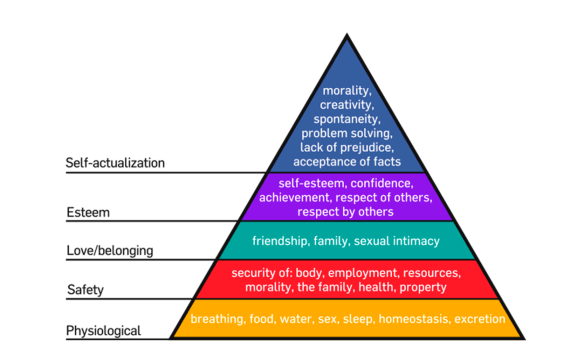
As such, this should not be a surprise, because in the history of man, human settlements always have been linked to drinking water and sufficient food supplies. By developing agriculture, the very first “farmers” created the conditions for sedentarism, instead of continuous migrations. On these sedentary communities, other activities developed later to cover the needs of the locals. Maslow's pyramid of needs - Picture WikipediaThe hierarchy of the needs that we must fill can be easily identified according to the pyramid of Maslow: food and water, shelter and physical safety. Once this is achieved, adding other activities become more natural and simple.

This is why developing large urban centers is no guarantee of prosperity. Like all things in life, the key is about balance. Of course, over the last 150 years, the focus has been about growing the industrial capabilities and this has been the engine for a massive migration of population from the countryside to the cities. Although the conditions were far from stellar, many companies in the early industrial development were providing their employees with housing. Their ways may not always have been very social, but they were showing some level of social responsibility.

With the ups and downs of industries, cities have increasingly faced a problem of poverty, as the development did not include a sense of community anymore and company loyalty towards their employees disappeared as the workforce became expendable and factories could move to other countries.

This industrialization and urbanization have also affected the rural areas and the agricultural world. Many rural areas have faced and are still facing isolation and poverty. Although in many cases there have been many efforts made to improve this situation, the situation has not always improved.

Yet, we now see the challenges of feeding an ever-increasing population, we all recognize that we will need to cultivate more land and water, but this still does not seem to make things turn around.

In my view, the problem is that, too often, we restrict rural development to agricultural development, and by looking at this part in a separate way, instead of focusing on integrating agriculture in the development of the whole local economy, we just do not create strong enough chances of success. Having large urban centers with their problems on the one hand, and remote and depopulated rural areas with their problems on the other hand, should be the clear sign for all of us that our economic model is out of balance. There can be life outside a huge metropolis where everyone has become an anonymous person, resulting is a dislocated social fabric. What has made the success of our species has been our ability to act as groups. As isolated creatures, we probably would not have survived very long.

To rebuild the necessary social fabric in rural areas, we must create the conditions to have balanced and complementary activities. This is why, while some see the future of agriculture as urban farming, I believe that it has to be urbanizing the countryside, not with large impersonal cities, but with human size settlements where we can provide for all the needs.  Isolated farmers with no direct connection with their markets and not getting the value for their products to make a decent living will look for alternatives. If we want more people to produce food, we must understand that they must make enough money to want to keep producing food. By creating a proper infrastructure around agricultural areas, we can create a more local market that will drive production. A profitable market for the farmers’ products also means more money in their pockets, which in turn means more spending power to develop demand for other business, be it for products or services. This is how we will be able to grow local economies and communities. This is not about a romantic or idealistic back to nature movement, or creating local farmers markets purely for marketing purposes, but this is a thorough and integrated process embracing modernity. In the current rural areas and probably in other regions, the future will about bringing the economy to the people before bringing people to the economy.

Copyright 2009 The Happy Future Group Consulting Ltd.

Wal-Mart’s Yiannas promotes food safety culture

This article reports of Mr. Yiannas (VP Food Safety at Wal-Mart) speaking at the Grocery Manufacturers Association’s Executive Conference in Colorado Springs, Colo., and his views on this topic.

It just shows that there is a new trend coming in the US, as I happened to describe in my article of yesterday (Health and environment as the drivers of food production). There are growing concerns from consumers and the retail will probably be the catalyst for change. Wal-Mart as the leading retailer is going to pave the way forward, just like it does on sustainability. This certainly is going to mean some deep changes in the way the suppliers will have to run their businesses.

Health and environment as growing drivers of food production

Health concerns will gain more importance in the future in the decision process of consumers when they buy their food.
More and more, we can hear and read about concerns and even rejection of the current production systems. Although this bad publicity is not always based on the most objective facts, it has been able to find a growing audience.

It must be true, it was in the newspaper

It must be true, it was in the newspaper

Since most consumers have little or no knowledge of agriculture and food, their only source of information is in the popular media. On the other side of the discussion, the agri-food industry is not getting through, because its message tends to be too defensive and too technical. Unfortunately for the industry, errors from the past (for example, the use of DDT) or cases from other industries (for example, tobacco) contribute to cast a shadow on its credibility. As I wrote my previous article “Less controversy thanks to transparency”, the agribusiness will achieve much more by opening up and having consumers visit their premises so that they can tell what they saw. They must organize more Open House days.

Therefore, for now, consumers have a certain perception of how food is produced, and it is not so relevant to argue whether this perception is correct or not. Perception simply is reality, and consumers act according to what they believe is true.
A little bit of this...There is a growing concern about environmental and health aspects of food production. About the environment, you can list very diverse things such as the depletion of wild fish stocks in the oceans, the interaction between aquaculture and wild fish stocks, manure and smell of intensive animal husbandry and impact of manure on soils and drinking water, deforestation of rainforest for ranching of beef or about growing GMOs (Genetically Modified Organisms). On the health side, consumers worry about food poisoning due to bacteria, such as E. Coli, listeria, campylobacter and salmonella, but also about residues of pesticides or antibiotics, as well as they worry about the use of hormones in animal productions. As the discussions get more animated in the US about the reform of health care and the cost of obesity, more and more people are wondering about whether the fast food diet is a proper one. Next to this, animal welfare is a growing concern by more and more consumers.
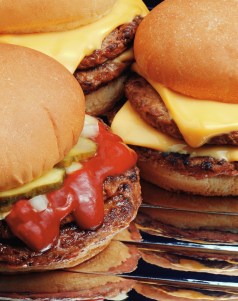
The answer to many of these worries has started to appear in the last few years with the growth of the organic market segment. When we see the growth and the performance of a retailer such as Whole Foods, there is no doubt that organic foods have a growing audience.

The concerns about the environment are forcing retailers, food service and businesses involved in the production chain of food to make changes. Some of the actions they have taken can be seen as marketing or PR, but they also have become mainstream. Just a look at how many restaurant and supermarket chains have already implemented sustainable seafood programs indicates how serious this change in consumer attitude is. Fast food chains are also actively working on reducing their environmental impact and set standards on where they source their meat, based on environmental concerns, such as no beef from ranches deforesting the Brazilian rainforest.
In the past, we have seen some examples of production methods that had to be abandoned, simply because no solution to cope with environmental problems could be found. This has been the case in The Netherlands where the level of intensification caused such manure surpluses and risks of animal disease to such a point that after many years of looking for viable technical solutions in vain, the government decided that the size of the national herds had to be reduced.
Similarly to what happened in Europe over the last decade, we can expect that much stricter rules in the use of antibiotics will be applied, and I expect a similar trend to a progressive elimination of the use of hormones in animal husbandry. About animal welfare, there should not be any surprise the day that only husbandry systems that allow enough “recreation” area for animals will be allowed. All of the above is going to have an impact on how and where food is produced. Systems will become less intensive, and progressively we will see more techniques to improve efficiency to compensate.

Past Food?

Past Food?

As I also had mentioned in another article (Future price of fish and meat: up), it is simple logic that with more people to feed, food is going to become more expensive. However, the relative prices of various food products also need to go along their relative health benefits. Today, it looks like only wealthy people can afford a healthy diet, as the price of “good” food is substantially higher than the price of what makes a nutritionally unbalanced meal. This clearly does not work in the direction of a healthier population at large.

The way consumers think will define the way we eat and produce our food. Many changes in consumption patterns, in production systems and in product offering are under way. I will get back later with more details on what my views are on this.

Copyright 2009 The Happy Future Group Consulting Ltd.

The dining of the future

With the current development of software and technology on the one hand, and all the concerns that consumer express about food, health and environment, on the other hand, I believe that it is only a matter of time before we all can have the information and tools we need to make our own eating (and nutritional) choices.

Can I eat this?

May I eat this?

Today, we have nutritional information on all food items labels, but few of us use it much. This could soon change.
As many among us have computers at home, we can expect software to come on the market, and maybe even already installed with the computer at purchase, that will allow us to determine and set up our own diets.
Already numerous websites have interactive programs telling you, depending on your weight and life style, how many calories you should eat per day and other websites help you calculate the nutritional value of your meal if you enter the quantities of your menu’s components.

In animal nutrition, optimization programs to compose the feed ration by entering the nutritional value of the different possible ingredients and set limits to the level of inclusion of some ingredients based on nutritional and technical parameters have been in use for many years. Last, but not least, these programs also include the price of the different ingredients, so that the best-balanced “meal” that meets the nutritional needs can be composed at the lowest cost possible.

Therefore, it is just a matter of time before we all can have at home a system that will take into account, or weight, our age, our level of physical activity, our health risks and calculate for us what our meals could be made of and how much we should eat, depending on which menu combination we would like to have for that particular meal or day. The nutritional information could be either from a database or directly transferable from the nutritional value label present on the food packaging we bought.

Following the same idea, I expect most restaurants to present their menus with thorough nutritional information on the side, in a similar way as food labels show, with indication of health benefits or restrictions. There also would be the possibility for a customer to enter their personal information to have the meal tailor-made for them, with probably the relevant price adjustment when needed. All of the above includes of course the drinks as well, as they definitely can contribute to the overall nutritional value of the meal.

Any action encouraging healthier eating will be supported by the government and by health insurances, which should help accelerate the introduction of such programs.

As environment and sustainability are among the main concerns of consumers today, I expect food items in the retail and the dishes on restaurant menus to include environmental information, similar to the ones mentioned and appearing on the label shown in my article “Environmental performance on food labels“. Today, a number of restaurants have already joined programs setup by MSC (Marine Stewardship Council) to indicate they serve only sustainable seafood. Seafood is probably just the first item that will be followed with similar information and programs for other food sources.

We have entered the era of information, and we will eat accordingly.

Copyright 2009 The Happy Future Group Consulting Ltd.

How much can the rule of 80-20 tell us about the future?

We all have heard about this rule across all industries, including agriculture and food. Eighty percent of the food would be produced on 20% of the farms and vice-versa. If it still applies in the future, it can indicate us how our food production and supplies will look like in the future. Of course, this is always a theoretical exercise, but it is quite convenient to elaborate on our thoughts.

As the population is expected to grow quite strongly in the coming decades, especially in urban areas, this could indicate two dominant trends:
• Further size increase of the largest farms and further industrialization of agriculture and food for global markets, although the number of farms in this segment would not increase strongly.
• Strong increase of the number of small farms involved in specific value chains and strongly linked with their local economy.

Industrial agriculture
Producing more, yet in a sustainable way. That is the challenge!This group will continue to be involved in mass production of commodities for global supplies, like this is the case today.
Yet, they will face an increased pressure to adapt to the requirements of sustainability, which technically is quite possible. New systems and more efficient technologies will be the pillars of its growth and development. They will have to find ways of reducing the amount of chemicals in crops and the amount of pharmaceuticals in animal productions
The requirements for capital will be quite high and the sector will be led by increasing larger corporations, by an increasing level of capital by large private investors and, last but not least, by some governments. This agriculture will innovate further and will be developed thanks to this capital. It will use automation and mechanization to reduce the dependence on labor. Mergers & acquisitions will continue in the agricultural sector and a few large blocks will remain, dominating their sectors.
Their mandate will be about more control the natural conditions of production and about reducing to a minimum their impact on air, water and soil, by using less polluting transport methods, water preservation, effluent treatment and soil preservation. They also will have to engage in maintenance of their environment.
The role of this type of agriculture will be to bring to market large amounts of affordable food for the masses, and should play an important role in strategies around food security, which is where corporations and government will interact on a regular basis.

Local food value chains
Closer to natureThis sector should undergo a strong growth and be build in a market-driven approach. These are the farmers that produce specialty products aimed at serving either a very specific segment of the retail or foodservice market.
This trend, which has been already initiated around concepts such as organic or authentic, will evolve into a more integrated local economy, and the initial concepts will probably become less differentiated as food production in general, be it industrial or traditional, will use more sustainable techniques.
Contrarily to the common belief, this agriculture will be developed thanks to very efficient techniques, but will be centered relatively more about labor and relatively less about capital. In this case, efficiency does not necessarily mean intensification.
We must not underestimate the significance of this part of the food production, as it will play an important role. However, we must not expect this type of agriculture to be the solution to feed the world, and this is not the purpose of the farmers involved in such food production chains.

This type of farming will grow in two different environments:

  •  In “developed” countries to serve a increasing, but aging, population more demanding about the origin and the production methods, and who is ready to pay a premium for the perceived better quality. The angle will be about quality, transparency, sustainability, traceability and as close to zero a use of chemicals and pharmaceuticals. In some areas, it could help strengthening a local economy and local communities.
  • Developing a local economy thanks to agriculture (Picture: FAO) In emerging countries, the development of a local agriculture, and aquaculture, will be a key driver of economic development for under industrialized and/or under urbanized regions. It also will be a way of slowing down the migration of population to urban centers and limit social problems, by creating satisfying economic conditions and by securing food supplies locally. This farming will be about basic needs, before marketing.

Copyright 2009 The Happy Future Group Consulting Ltd.

Less controversy thanks to transparency

The agribusiness and food industry come regularly in the media with some bad publicity. As such, it does not differ from other industries, as criticism comes with the territory.

What is unfortunate is that the agribusiness mostly responds to this in a rather defensive manner, either by attempting to bring rational scientific facts or by denying the facts that their opponents bring forward.

Criticism of food and food quality is not new. When I started my professional life, I had been lent a book about how food in general, and animal husbandry in particular, are perceived. The introduction of this book was a long complaint about the quality of bread, and by then (in the mid 80’s) the arguments presented sounded quite familiar to me. The funny part of it was that in fact this text was, according to the author, a report written in Ancient Egypt, some 3,000 years ago.

Although bad publicity and criticism are obviously no novelty when it comes to food, it seems that the industry has a hard time fighting this battle.

Some pressure is goodAs such, criticism is not a bad thing as long as it is not done in bad faith with the only purpose to bring damage. There is nothing wrong with consumers being concerned about the quality of the food they eat, and about the way it is produced. Being worried about whether and how antibiotics or hormones are used, about the potential problems to the environment linked to intensive production is quite legitimate when you are rather ignorant of production techniques. After all, nobody has ever claimed that any industry was perfect, and business is always work in progress. It is utmost important for all of us to have watchdogs in order to make sure that we do not get into excesses that can lead to irreparable damage.

Let’s also realize that only a tiny minority of people now work in agriculture and that most city residents have a very limited, if any, knowledge of how farms are operated. On the other hand, they have very strong, often idealistic and romantic, opinions on how they think farming should be, regardless of whether it is viable or if it can provide them enough food. Surveys with city kids have shown that many of them do not make any connection between eggs and hens, or between milk and cows and calves. For many, it is not even a clear fact that in order to get meat, one has to kill an animal.

Further, it is human nature to pick on the big guy, as we all love the story of David defeating Goliath. Moreover, bad news, the more sensational the better, always get more attention than good news, like the recent article published in Time. There is nothing like fear to get people glued to their TVs or reading reports in the papers or on internet. These psychological traits are quite difficult to deal with.

The problem with defensiveness, when dealing with bad publicity, is that it always brings the defendant in an awkward position. If this not handled properly, it can very easily come over as suspicious, which reinforces the poor impression.

Transparency creates trustIn my opinion, the only proper way forward about information on agriculture and food is transparency. Only transparency can eliminate (or at least reduce to a minimum) negative publicity. Only by being candid and open about the way food is produced, can the agricultural community inform properly the public.

Remember that issues around food production are highly emotional, as they deal with much more than just nutrition. This is why responding with rational arguments has so little effectiveness. First, emotional concerns must be dealt with as emotions, not merely with cold scientific facts. Only once the emotional connection has been established, it is possible to bring the communication to more rational aspects and facts.

The better informed the public is, the easier it is to also discuss and address issues that come along the way. Candour is only the first step, the clearly expressed will to always improve the way food is produced is absolutely necessary, and this is not about vague promises. It must come with an open agenda of issues that the industry knows about and is (and will be) addressing without complacency. A clear commitment to a plan of actions with defined time lines is the best way to create and restore trust with consumers. And the best way to score in this is by taking the initiative and the lead. The industry and this includes any participant in the production chain and its watchdogs, from breeding to retail, needs to make these decisions, instead of having to react to changes in legislation, which very often is the result of pressure from the public opinion.

Copyright 2009 The Happy Future Group Consulting Ltd.