Global Food & Agriculture Futurist & Strategist | Keynote speaker | Comprehensive vision for the future of food and agriculture | Accurate foresight | Successful strategies | Thought leadership | No nonsense critical thinking
Do not worry. This is not a post about guilt. That is not my style. The post is about vulnerability.
As the holiday season is right around the corner, this is perhaps a good time to reflect on all the great work that food producers and distributors perform to provide us with food all year round. For all of us who are fortunate to be able to satisfy our hunger every day, we must make sure to not forget how fragile food security can be.
In the recent past, there have been more volatility and uncertainty about food production. The price of foods that we were used to find easily and quite affordable have shown some sever fluctuation. Food inflation is here and it hurts many households. The reasons vary.
It can be because of climatic events. The surge of the price of beef is an example of the result of drought in a number of regions that forced farmers to reduce production. Another example is what I saw in 2021 in British Columbia when an atmospheric river washed out many highways in mountain areas that had isolated Vancouver and seriously disrupted supplies to stores in most parts of the province. Shelves were empty, in particular for meat, eggs and dairy. There was a weird feeling in the stores and quantities were rationed per customers. The rationing still is in place for some of those products. Consumers are informed that they are not allowed to buy more than two pounds of butter or more than two trays of meat, for instance. Perhaps, this is a wise philosophy. At least, it has stopped some absurd and incredibly selfish hoarding behavior by some shoppers who would fill their carts and leave nothing for other customers.
It can be because of geopolitics and policies. Think here about how the conflict in Ukraine had affected the price of vegetable oils and grains. By then, many restaurants had stopped selling French fries and other deep-fried products to keep their meals affordable. EU policies are another example that affects the profitability and the type of productions that farmers are encouraged or mostly discouraged to produce.
It can be about diseases. Avian flu has affected availability and price of eggs and poultry meat. Remember that it even mobilized the US president to act on the price of eggs. The issue is still not resolved, far from that. It is not just animal diseases. Just remember how Covid affected trade and logistics. Shortages of flour, pasta and rice were common and took very long to be fixed. A lot of supplies were affected quite negatively. Store shelves were often empty or close to it. Diseases also affected plants, the most significant example was probably the Xylella fastidiosa bacterium that decimated olive trees in Europe a couple of years ago, resulting in a huge price increase of olive oil, and some fraud as well.
As you can see, it does not take much to disrupt food production and food availability. This is why we must be considerate about food production. This is not a warning to consumers only, although we are all consumers. This may sound surprising, but often, food producers seem to refer of consumers as if they were a totally different group from producers. This, as such, is also another sign of disconnection that we should eliminate. No, this warning is also for food producers who sometimes have a tendency to stunt nicely with statements about their products that can affect food security. Pushing for production systems that are inaccurately considered to “save the planet” can lead to negative results. Perhaps, some of you will start to believe that I have a fixation with EU food and agriculture policies, as I have mentioned it a few times lately. It is not a fixation. It is a reality and I am very concerned with EU food security down the road if they do not change their tune. There might be some signs that they are putting some water in their wine, though. Just let’s hope that they will put pragmatism before dogma. Perhaps, their change of mind about the 2035 mandate on electric cars is a sign. But it is not just the EU institutions that have influence. EU retailers, too, seem quite eager to profile themselves as virtuous by throwing all sorts of trendy buzzwords and making all sorts of statements to give themselves an aura of morality. It all sounds great but I suspect that it is more about marketing and to align themselves with the “flavor-of-the-month”-policies more than being actually effective decisions. If retailers truly cared about the planet and health, they probably should remove at least 80% of the items they sell.
Food production is very complex but it is not an intellectual exercise. It is about meeting the population’s needs for food, clothing and energy. That is quite practical and concrete. If we fail in achieving this goal, the only result will be chaos. Food security is all the difference between prosperity and unrest, between peace and war and eventually between life and death. That is why food security must be the #1 priority of any government. They make the policies that decide whether we use our resources wisely or inconsiderately. In another recent article on this blog, I discussed -playfully, yet seriously- whether Earth is maxed out or whether we can live in a world of plenty. It was an eye opener. In the end, the results of these policies and our future will be just of the same quality as our leaders. Just think about that when you choose your next leaders.
In the meantime, enjoy the holiday meals! And when you have time, just reflect on the title of this article.
I will be back in 2026.
Copyright 2025 – Christophe Pelletier – The Food Futurist – The Happy Future Group Consulting Ltd.
Listen here to a Chrome AI-generated podcast type playback of the author’s article
The conversation about climate change focuses too much on its causes and not on what we must to do in the future. At least, that is how I feel about it. The whole science behind why climate change is happening is important. I will not argue about that, but tons of CO2 in the atmosphere or 1.5°C vs. 2°C remain abstract concepts in the minds of most people. It is necessary to translate the change into concrete actions. Of course, a lot of that is already happening but some very basic consequences need to be addressed with more force than has been the case so far. In this article, I will review three of these consequences that I consider as the most pressing, yet too often overlooked, consequences:
Warming means higher temperature, but looking at average numbers, such as for instance 1.5°C does not indicate the real problem. Certainly, the average temperature matters from a planetary point of view but we all experience temperature swings that are as unpredictable as severe. The swings are definitely not in the range of 1 or 2°C.
For instance, plants may have a great start in the spring and then comes frost that can destroy an entire harvest in orchards within a few hours, or a sudden heat wave fries crops and in particular vegetables. Heat affects farm animals, too. I can remember when I lived and worked in poultry processing in The Netherlands, we always had some episode in the summer of higher temperatures and high humidity that seriously affected the welfare of chickens. Our company always had to plan for lighter average weights in the summer as the chickens would not eat as much and would not grow much, either. The introduction of misting installations definitely alleviated some of the problem. At least, we did not have to deal with overnight deaths by heat suffocation of entire flocks of birds, but we certainly had less tonnage because of the heat. Heat had a cost. Less tonnage meant less revenue but also higher costs as overhead costs per kg would be same regardless of the number of birds.
Research on the cost of heat stress on dairy cows has determined that in 2020, heat had affected milk production by an estimated 50 million tons at a cost of US$ 13 billion, according to IFCN (International Farm Comparison Network). This tonnage represents roughly 5% of the 2024/25 world milk production. Their estimate for 2050 is of a production loss of 90 million tons (9% of today’s world production) for a value of US$ 90 billion.
There is only one species of warm-blooded animals that I can think of that likes to roast in the sun: people. Other species are much smarter and tell us what we will have to do. On a hot sunny day, animals look for shade.
Shade is going to be a very hot (could not help the intended pun here) topic for the future. Actually, it is already getting more and more on everyone’s mind. Many studies have shown that shade reduces the temperature at ground level by substantial numbers. In paved environments, such as cities, the temperature difference varies in the range of 10 to 15°C. On pastures, the numbers seem to be less, but still in a range of at least 5-10°C.
There is already research carried out on the benefit of shade and how to bring more shades to animals. For instance, France’s INRAE (French Institute for Agricultural and Environment Research) is looking at strategies to reintroduce trees on pastures and determine which tree species would be the most effective. Besides trees as a source of shade, there are already some combined cattle or sheep husbandry paired with solar production on grasslands, with some very positive effects. The farm produces cleaner energy and the shade not only improves the animals’ welfare but it also protects the grass from the heat and help providing the animals with feed. In a way, this is a win-win-win. Heat stress is not just affecting feed quantity but its quality as well. There are also farms that produce vegetables under solar panels for the same reason: the panels protect the plants from the hot rays of the sun. Shade is going to b part of the food landscape. Early, I mentioned orchards. I expect many regions, like the one where I live to use shade screens as a standard production method for fruit production.
For the future, heat stress will lead us to rethink production locations, genetics of plants and animals, the type of housing for animals (and for people, too), feeding systems and feeding programs for animals, water management systems and water supply and conservation strategies.
Heat stress and shade are also going to become part of urban landscape. I recently was in Valencia, Spain. Some parts of the cities had some drapes spread on poles to provide shade and they also had misters to cool down the people sitting on some city squares. Those systems were not all that effective if you ask me. The best place was to be in the old river bed, now turned into a park where the trees were offering the best cooling effect in town. Spain is used to heat but it does not make it less of a problem. The most pressing action will be needed in countries that used to be temperate and where cities -and countryside- are not prepared and not equipped to deal with the heat that is likely to hit in the not-so-distant future. Heat is not just about crops and farm animals. It is about people and their pets, too.
Water availability
It does sound corny to say, but it is true: water is life. With climate change, former “predictable” precipitation patterns are disappearing. It looks like there is either too much water falling at once or hardly any at all. Of course, this has an impact, especially when it happens in combination with temperature swings. Droughts have always affected harvest volumes of crops and pasture production. Beef is a good illustration of that about the last couple of years in North America. Although drought is not the only reason, its impact of forage availability has noticeably contributed to the reduction of beef herds, and supply does not meet demand as it used to. The result has been a major increase of the price of beef at consumer level. Here in Canada, the price in the supermarkets of prime cuts has about doubled in a year time, and the price of ground beef has increased by about 50%.
Climate change shows up on the grocery bills and it hurts many households. Beef is an example but consumers can see the impact of climate event on many products, not just meat but fruit and vegetables, too. As such, it is not new. In the course of my life, I have seen unusual weather patterns affect the prices of food, but it just seems that the frequency and the impact is getting higher. We will see, but we need to manage climate events better. Artificial intelligence will likely be a big part of that solution.
There is what we can do about production systems and with the kind of technologies we will have in our toolbox, but there is also what we cannot influence. For this very reason, it is clear that water availability is going to redraw the world food map. Certain productions will disappear from some regions and reappear somewhere else. For example, the Bordeaux wine region in France seem to be at risk of not being able to produce the great wines it used to produce. On the other hand, it seems that England might have some ideal climatic conditions to produce excellent wines. Another example can be the Midwest region of the US which is a major crop producer, corn and soybeans in particular. The region depends heavily on the Ogallala aquifer for irrigation, but this aquifer gets depleted much faster that it can replenish. Water management has become a hot topic and a number of farmers, in particular in the State of Kansas, have switched to sorghum as an alternative to corn for animal feed, as it requires less water than corn.
The politics of water are another aspect of water availability that we rarely hear. Yet, we should pay attention. For instance, in central western France, there are hefty -and violent- conflicts about water management. Farmers wanted to have a number of water basins build so that they could keep producing their regular crops by using that water for irrigation. The basins would be filed by the river system in the winter. This project has faced strong opposition and many clashes have taken place between demonstrators and the police. Another example of water conflict is the dam that Ethiopia is building on the Nile River, which is causing great concern and reaction from Egypt and Sudan that see a risk for their water supply abilities for the future. And let’s not forget that the populations of these three countries are expected to increase strongly in the coming decades. Another example is what happened between India and Pakistan during the 2025 conflict in the Kashmir region. India threatened to stop its rivers from flowing into Pakistan. As you can see, as it becomes scarce, competition for water will become fierce. Water is going to be a major strategic and geopolitical resource with the potential to create major crises and possibly wars.
Cities also need to have sensible water supply and water use plans in place. A few years ago, Cape Town had dire water supply issues. Mexico City also got some worries. Considering the regions where population is expected to grow the fastest, water is going to be a major cause for concern. The number of megacities that are forecast to be built in Asia and Africa should keep many people awake at night. New cities with multimillion inhabitants are going to have to rely -and to depend- on mostly local water sources and the question is whether they will be able to succeed. This will require major investment and astute planning for the future.
Diseases
As climate changes, so do the local environmental conditions for living organisms. Some regions that were inhospitable for some species might become better suited in the future and we can expect to see a change of ecosystems as a consequence. This can happen for all sorts of species, large or small to very small. I will give here a few examples to show the variety and the complexity of the impact of climate change on the possible spread of diseases.
In cattle, two different problems have appeared recently. One is in France. A number of cow herds have been infected with the lumpy skin disease, which is a disease propagated by flies and mosquitoes. It is a disease that was until now limited to Africa. Now, it is in the French Alps near Switzerland and other cases have been detected in the Pyrenees, not far from the French-Spanish border. There is no cure available and the infected herds are being culled. Just imagine if the disease spreads further what the consequences can be for perhaps all of Europe. The second example with cattle is in Mexico and the US. Cases of Mexican cows infected with the New World screwworm have been identified and immediately, the US closed its borders to Mexican beef. Although there might be some politico-commercial aspects at play, fact is that the screwworm is an ugly disease vector. It basically eats the flesh of the cattle, but it could do the same to people. Texas got rid of that pest in the past with some difficulties and they do not want to see it reappearing, for good reasons.
I just mentioned vectors, and vectors we need to closely monitor. Avian flu, also known as HPAI or H5N1, is very contagious and is carried by wild birds. Monitoring of migrating birds and their routes is essential to identify where the disease could be present and take proper action to protect avian farms. Climate affects the migration routes and old patterns are probably already obsolete. There are already some systems in place, but I believe that more is going to be needed. Here too, artificial intelligence might be a big part of the solution. That will require sensors in bird houses, on farms, in the vicinity of farms and everywhere possible on the likely migration routes. It will need to be a 24/7 alert system. The problem -and the solutions- are similar when it comes to the increase of the population of wild boars in many parts of the world. Full monitoring will be essential in the fight against ASF (African Swine Fever). It also will be essential to understand the ecology of diseases if we want to stay ahead of the game.
In the world of small and very small, just look at the spread of tiger mosquitoes in Europe. A large part of France has been colonized and it will not stop there. Tiger mosquitoes carry “traditionally” tropical diseases such as dengue fever, yellow fever, chikungunya or even zika. Climate will contribute to the spread of many new diseases, be they plant, animal or human diseases.
The name of the game for the future of health is PREVENTION, and that needs to be imprinted in everyone’s mind in big bold capital letters. Protecting the immune system of our plants and animals as well as ours will be on top of the priority list. Let’s hope that politics will not stand in the way. We need to protect all we can. Once that is done, we will have time to discuss if we like it or not. It will be just like with the oxygen mask in planes. Put it on yourself first and then help others. We will have to develop new vaccines and new medication. For agricultural purposes, the use of gene technology will also help make some of our crops and animals resistant to diseases. Monitoring, which I mentioned earlier will also be key to protect ourselves and our food production. A major component of prevention is anticipation. We have the technologies to be able to monitor, to run scenarios and to develop solutions. We must use them to their full potential. We need cures, because massive culling or production losses will not be an option with two billion more people on Earth in the coming 25 years. Remember, 25 years is only one generation.
Copyright 2025 – Christophe Pelletier – The Food Futurist – The Happy Future Group Consulting Ltd.
Listen here to a Chrome AI-generated podcast type playback of the author’s article
I was speaking recently at an event in Spain and by the end of my presentation, I had a slide on which I indicated which regions I saw as the winners of the future. The title and subtitle of the slide were:
“Winners: Conquerors
Bold, ambitious and determined fighters”
Being in Spain with many Europeans in the audience, I got the question of why I did not mention the EU among the winners. Fair question, and by the way, Canada, my second country of citizenship, did not appear among the winners, either.
About the case of the EU, I shared my concerns about EU policies which I find counterproductive. Although I find the idea of a Green Deal to make agriculture more sustainable a good idea full of good intentions, I do not have the same enthusiasm about the policies and means used to achieve improvements. I find the policies too much into the ideological and dogmatic and not enough into the practical and realistic, as I mentioned some time ago in one of my YouTube videos on the subject.
As the conversation was progressing with the audience, I lamented that the future would not be for the timid and that in particular that the EU does not seem to know how to stand up to the Putins and Trumps of this world. The EU has a leadership problem. Everyone can see that every day. I went as far as to say that if the EU does not wake up soon, it will end up being a museum. Apparently, this statement had impact. It obviously created a shock, and from a few one-on-one conversations I had later, it sounded like it was a useful shock. The argument of the quality of foods from the EU and their heritage was raised and I confirmed that I, for one, always appreciate these traditional products. Since we were in Spain, I mentioned one of my all-time favorites which is the Jamón Ibérico (I truly am a total fan). Every time I am in Europe I certainly love to go shopping on markets and I love the quality of the foods that I find.
My point about the EU turning into a museum was not that I do not consider the EU as a future winner because of its quality of foods. My point was because of the policies, EU farmers and producers are less competitive and will not be able to grow. The EU market share and influence will decrease because of such policies.
And this is a huge pity because European farmers are at the top when it comes to efficiency, high technical performance, low waste and, yes, product quality. European farmers and the associated industry are actually incredibly innovative and resourceful. Unfortunately, they often do not have access to the same amount of resources or of political support as in some other regions of the world. Personally, it really hurts my feelings when I see such top farmers being bought out and leave agriculture mostly for dogmatic reasons. Just imagine a company where the Human Resource Department would systematically get rid of its top performers for reasons that have nothing to do with performance. It would be stupid, wouldn’t it? Well, truth is that such idiotic actions actually happen in some companies, but that is another story. What is the result down the road? It is a leveling down of the sector, which follows by a weakened competitive position, a loss of market share, of presence and eventually of viability. And that is exactly what I fear is going to happen to EU food and agriculture.
The original European food and agriculture policies were about food security, which made a lot of sense after the harsh time of World War II. It is a good philosophy. It must never be removed for the top priority of the EU, or of any country that wants to play an influential role. I have been thinking of whether there ever was an economic powerhouse that did not have food security, and I cannot think of any. Often, it feels like the critics of food and agriculture take food for granted and do not even understand what it takes to bring it onto tables. My advice here is simple: do not ever take food for granted and make sure that those producing it can keep doing so!
For these reasons and to be among the winners, the EU must have bold, ambitious and determined food and agriculture policies. The food and agriculture sector must be vocal about this and must force every EU politician to answer a simple question: do they want to support their farmers or do they want to set them up to fail? It is either one. I cannot be both or neither. Just that simple. Further, the EU should also distantiate itself from the UN FAO goals of all sorts, most of which are more anchored in wishful thinking and ideology than they are in pragmatic reality. Fact is that most of them are lagging and will not be met on time. It is good to have goals, but when they are not realistic or attainable, they should see it as a duty to amend them and readjust goals and timelines. Just a look at the state of the European automobile industry is enough to see the damage that wrong policies, as I describe above, can generate. That nonsense simply must not happen to EU food and agriculture.
So, how to make the EU among the winners and avoid it to become a museum? Well, a couple of principles must be applied:
The EU must produce the quantity (and quality) of food that the EU consumers need, so that there is less need for imports. A market-driven approach is key. Unfortunately, all food and agriculture policies always seem built from a production-driven angle.
EU farmers and producers must be supported by their politicians, so that they are at least as competitive as their counterparts from third countries, which would make it easier for EU buyers to choose EU products first. Saying “choose EU” or “EU has the best food in the world” has about no impact with buyers. In the end, price always plays a major role and often is the major parameter. When it comes to competition, things are very simple: those who do not have a strong competitive position will lose. Like it or not, that is the way it is. And it is even more so with undifferentiated commodities for markets such as foodservice and processing industry for which the product is only an ingredient. For niches such as traditional products or regional specialties, it is possible for producers to protect their turf better, but such niches are not the lion’s share of consumption. Such niches will make a great museum, but what about the bulk of the EU market?
Nonetheless, there might be a silver lining about some of the policies. For example, The Netherlands have struggled with their nitrogen emissions reduction policies. After spending a few years persisting in error and wasting several billions of Euros with no result by buying out farmers and for those who could continue trying to force them into a rigid frame of rules telling them what is allowed and what is not, policymakers are rethinking the approach. Of course, anyone who understands farming knows that such rigid frames based on dos and don’ts simply do not work because agriculture is the opposite of rigid. It constantly faces changes, fluctuations and unexpected events. The Dutch farmers knew that. They wanted a more pragmatic and feasible approach, and opposed the policies but to no avail. Personally, I find essential to involve farmers to work on solutions fir a better agriculture. That was the topic of another video of mine. Farmers know the work. They know what works and what does not. Yet and too often, policymakers do not seem al that interested in listening to their input. That is a mistake.
In The Netherlands, the approach is now changing. Instead of imposing a script, the government now wants to focus on goals of nitrogen emissions reduction and leave it up to farmers to decide how they want to achieve the goals in the most effective manner. They will have to show progress and depending on the results might have to take corrective action if needed. To me, this makes sense. It is about results and that is all that matters. The how is secondary. Now, the thing is that elections are coming next month in The Netherlands and, depending on who wins, the new policies might be abandoned. We will see.
Copyright 2025 – Christophe Pelletier – The Food Futurist – The Happy Future Group Consulting Ltd.
I recently had the honour to be the keynote speaker at the 5th Aegean Economic Forum. Below you will find the video of the session dedicated to agriculture (my presentation starts at 23:45 and lasts until 26:00). This was the first time I had an assignment with a Turkish organization and I encourage you to watch the video if you have 2 hours available. It was an outstanding session and I was quite pleased to be involved with a group that focused on essential topics before focusing on first world problems and first world solutions, unlike it often is the case in North America or Europe. I have added the text of my presentation below the embedded video, and I have highlighted in bold letters my main messages.
Text of my presentation:
Tonight, I will quickly tell you what changes I see coming and what is needed to adapt to a different future.
We have gone a long way since the beginning of agriculture. For centuries, agriculture worked in local and closed systems at the level of a region. With the development of industrialization, we started to open the loops, and not just in agriculture. We actually created two problems, not just one. On the one hand we have depleted natural resources and on the other hand, we have created piles of waste. We went from a circular to a linear system.
To make it worse, we never looked at the long-term effects and costs of this linear system. We never included these externalities in the production costs. So, waste became an accepted part of consumption society. And we waste lots. In the case of agriculture, the number that comes back regularly is that 30 to 40% of the food produced never gets eaten.
The issue of food waste is twofold. In developed countries, it is a behavioural and organizational problem at consumer, retailer and restaurant level. In developing countries, the main cause is post-harvest, either rotting on the field or because of poor storage and logistics. It is an infrastructure and money problem.
Regardless of the causes, food waste is not just about food, it is about all the water, the energy, the money and the land used to produce, transport, process and sell it.
For consumers, it is about throwing away a third of their food budget. For a household spending 12% of its budget on food, it means that they voluntarily throw 4% of their budget in the garbage bin. That is rather silly, isn’t it? The total price tag of the wasted food alone amounts to about one trillion US Dollars worldwide. But beyond the money, let’s just think about what a third means.
A third of the world agricultural land is about 10 million km2 wasted (Added note: world arable land is about 14 million km2 and grasslands twice as much, so 10 million km2 is a conservative number, out of caution). This is 60% the area of Russia; it is the area of Canada or the Sahara; it is slightly bigger than the USA or China or Brazil; it is 2.5 times the size of the EU and 3 times the size of India. Because of waste, we need to put more land in production. So, indirectly, food waste is a significant source of deforestation.
Now, if we look at a third of the world population, we are talking about 2.6 billion people. It is almost the combined population of China and India, and more than twice the population of Africa.
Where else than by solving food waste, do we have 33% room for improvement in food and agriculture? It is only a behavioural, an organizational and an infrastructure investment issue. It is not rocket science. All it takes is money and discipline.
Right now, people are gathered at COP26. Unlike what they claim, what is at stake is not the planet, it is the biosphere, which is soil, water, organic matter, climate and of course life.
There is not only one food production system. There is a huge diversity of production systems and they do not pollute equally. There are huge differences between the different regions of the world. Even within one particular system, different farmers have different production and environment performances, and impacts. We need a targeted approach.
The proper way is to look at the different situations and through innovation and knowledge transfer level up the playing field and help producers improve. We must do more to help farmers succeed. They know the problems; they often know the solutions, but often lack the needed support. There is great potential in this field, especially with the introduction of new technologies.
Previous periods of modernization of agriculture were about adding muscle, first with animals, and then with machinery, it literally and figuratively was about adding horse power. The current transformation of food and agriculture is about adding a nervous system and synapses. Drones, satellite imaging, robotics, driverless vehicles, sensors, artificial intelligence and data collection are all extensions of the farmer’s senses and brain, but far beyond human capacities. The principle of precision agriculture is about taking the right action at the right time at the right place. This actually offers the best of all worlds. It helps producing the highest yields by using the very strict minimum of inputs. It helps reduce the use of fertilizers and pesticides; it helps reduce the amount of energy, therefore reduce greenhouse gases and it helps reduce the use of water. These technologies go beyond production alone. They also can help monitor the environment and help detect possible impact on the environment immediately. The main issue with implementing new technologies is their cost.
New technologies and precision are the ideal tools to address waste, simply because waste and efficiency are two sides of the same coin. When we reduce waste, we are more efficient, as we need less input for the same output. It really comes down to producing more with less.
In my opinion, there is no reason to sacrifice yields. Not everybody agrees. The USA think along the lines of increasing efficiency and producing more to meet future world demand. The EU, with its brand-new Farm to Fork policies seems to prefer to reduce production as the way to reduce greenhouse gases. Personally, I am surprised by the EU’s choice. The EU has a highly efficient agriculture, with some countries being the very top, and its carbon footprint is relatively low compared with many other regions of the world. Indeed, the EU, like all other regions, needs to reduce the use of inputs but in my opinion, the EU’s agriculture problem is not so much a carbon footprint one as it is a problem of distribution of productions, in particular a few areas having too high a density and concentration of intensive animal farms. They mostly need to rebalance animal farming and crops. The reason is, as I mentioned earlier, that loops that have been opened.
The future will be about repairing the damage done. We will have to replace the consumption economy, which is about quantitative growth -about “always more”- by a maintenance economy, which focuses on qualitative growth, or on “always enough”.
Closing the loops is about the biosphere, with a financial element on the side. It is about preserving and regenerating soil, water, organic matter, while mitigating climate and by including the externalities. This means changing the economic equation. The economy is a combination of three components: resources, labour and capital. Next to this economic equation, markets determine prices through supply and demand. The math for both the economic equation and the markets are influenced by policies which set the rules of the game through rewards and penalties, and future choices of the reward/penalty system will strongly influence how agriculture will be organized and how it will perform, because producers will choose what returns them the highest income. A change I expect is the implementation of taxes on some product categories and production systems, mostly because governments need more money. To some extent, it will also influence consumers’ choices although consumers are subject to many more stimuli to make their choices.
Setting new rules require thinking carefully about how they change externalities and therefore what the long-term consequences will be. It also means looking at the bigger picture. Climate change will affect the food world map. Some regions will not be able to keep producing what they produce today. They will have to choose for different crops and combinations thereof. Other regions will be more suitable to take over. Water availability will be a crucial factor in the future food map. How long can regions that produce and export large volumes of water-rich products to far away markets, from which the water will never return can continue to do so?
New strategies are required. It can be the adoption of new and better varieties that can resist drought. It can be the use of different production systems, such as the use of cover crops, the use of mulch and organic matter. It can be the development of plants that use fertilizers more efficiently or that have higher photosynthesis efficiency. It can be different irrigation systems and move to a crop-by-drop approach. It also can be production systems that reduce evapotranspiration, for instance by combining a low-level crop under a cover of trees. It also can be desalination of sea water for irrigation purposes.
The list of solutions is long but the redistribution of the world food map will have consequences far beyond the field. It will redefine geopolitics. All countries will have to rethink both old and new alliances. Feuds and partnerships combined with new natural conditions, and therefore trade, will affect food security.
It is also important to realize that food security, food sovereignty and self-sufficiency are different concepts. It is impossible for all countries to produce everything, simply because of different natural conditions. With more extreme climatic conditions, choices will have to be made. This is why I think that trade will be essential not only for food security, but also to mitigate the effect of climate change.
Until now, the economic model has been “to produce where it is cheapest to produce”. As such not a bad idea, except that it opened the loops and did not include externalities. True sustainability means closing the loops and including these externalities. In the future, the concept must evolve to “producing where it is the cheapest to produce sustainably”. And this word, sustainably, is going to make all the difference. It will affect availability; it will affect costs and it will affect prices. And as always when prices increase, it offers opportunities for alternatives and also for resourcefulness.
An example is urban farming and there are all sorts of projects. It is estimated that 20% of all food produced in the world is produced in urban areas. Next to food production, it also has a social function and can help mitigate some of the effects of climate change. The question is often to figure out how to organize urban farming. There can be community gardens, people can also use their balconies to grow food, or old buildings can be transformed into farms. In cities, the roof surface is huge and roofs can be an ideal location to set a garden. Actually, some supermarkets are already growing perishables such as tomatoes, lettuce and strawberries on their roofs and sell them day-fresh to the consumers visiting their stores.
On the consumer end, there is plenty of activity, too. Suppliers offer products with green claims, true or not by the way. There are campaigns of information as well as disinformation about the impact of various food groups. Protein is one of these areas, and the fight to meet the need for protein is on between animal farming and alternatives.
But what do consumers want? They want food to be available, affordable and safe. There is also strong demand for natural, although natural is a rather unclear term, and most of the time, it means “not artificial”. They want healthy foods, and the rise of obesity and diabetes reinforces this demand. Because of climate change, consumers have become more discerning or at least try to be about which products they consider responsible or which ones they see as harmful for the environment. Production methods will matter more and more and a good example of this is the growing concern for animal welfare. Another strong trend is authenticity, which is also an unclear term rooted in some nostalgia and often means that it must not be “industrial”, or at least not be perceived as such.
Other areas that consumers look for are value and values. Value is not new but it becomes more complex. It is rooted in perception and psychology, not to say ego and status. Values have become increasingly relevant with the presence of social media. Consumers buy from suppliers that are aligned with their values. They are keen on knowing the food producers’ views on their role in society and environment. For a food producer, this can be tricky, as often it will take only one word or message that goes against the consumer’s values and they decide to stop buying. Social media have made people extra sensitive and touchy and bad publicity spreads like fire on social media platforms. This is a new dimension that food producers need to consider very carefully. Social media can make you and can break you in a heartbeat.
Transparency is important. Most suppliers see it has providing consumers with every bit of information but this is a herculean task and one can wonder if this is the right approach. Let’s face it, only very few consumers want to know everything from beginning to end about the history of the product they buy. Transparency is not so much about information as it is about trust. They want to know enough about the producer to feel confident buying the product. They want to have the assurance that the producer has nothing to hide and will answer honestly all questions. The food producer’s business needs to be on display as if it were behind a clear –transparent- window where consumers can look at anything they want in complete freedom.
Traceability is a cousin to transparency. It is essential to trace the source of a problem, should one arise, but it must be much more than that. It must be a proactive tool. Knowing why something went wrong is nice but it is after the facts. A good traceable quality assurance system is what producers need. This is where new technologies – “the nervous system”- can be useful by allowing a full online in real time quality control that has the ability to flag any deviation and stop the production line immediately. Having a proactive system that will prevent quality issues to be sent to the customer will spare many frustrations and save lots of money.
But next to better production methods and new technologies, one area that needs to improve in the future is to help people eat better. It should be the moral duty of food producers to take good care of their customers. In this area, we are still in an era of marketing-driven business, which is about having consumers buy more. It will have to change from quantity to quality, and the promise will have to be kept, indeed. An advantage of social media is that it will expose those who make false claims and false promises. Consumer information is going to be another front for suppliers. A system like NutriScore is drawing more and more criticism. It seems to have become a marketing tool and is no longer a true nutrition tool. If it does not get fixed, it will lose all credibility and in fact reinforce the feeling that the industry is always trying to deceive consumers.
So, what segments can be the winners of the future?
The points I have presented before, such as quality, clean, healthy, authentic will do very well. Foods and recipes that are rooted in nostalgia and tradition have great potential. This is especially true in mature markets that I see evolve into a mosaic of niche quality specialties. Of course, because not everybody is wealthy, there still will be a large market for low-cost staple foods sharply priced, but with increased standards about health, environment and ethics.
Over the last few years, perhaps the most disputed battlefield has been protein. Animal farming is being challenged. A lot of investor money flocks to tech protein alternatives. Plant-based imitation meat and seafood has received a lot of publicity. Many claims have been made about their potential. So far, they come short of those claims. The segment has room to grow but it will not replace animal farming. Performance on the stock markets is poor and the investors’ money is now moving somewhere else. I see better potential for smaller private producers with a low profile, catering to the need of consumers with wholesome products instead of high-tech meat imitations. If the stigma is currently on meat, the next category to be demonized will be ultra processed foods. Investors have also moved into what used to be called lab meat, a product that still struggles to find its name. Although they make regular claims about readiness to deliver large market quantities and being price competitive, it is still not really clear whether it will happen on a large scale. Other alternative protein sectors include the use of bacteria to produce specific protein. Perhaps, it will have some potential for animal feed, but more surely in the medical field. And of course, there are insects. There has been a lot of publicity but success is slow to materialize. One problem is the price. Just like all the other alternative proteins, they are not price-competitive with animal products. Producers of insects try to push it in Western countries’ markets but this is not the right place. There, people do not want to eat bugs. Westerners like soft and meaty. That is why lobster and shrimp are in demand. They are large aquatic insects really, but their look does not matter because they contain lots of flesh. Crickets don’t. It is that simple. I see insects having more potential for animal feed, if it can be price competitive.
The protein fight is useful. It has put animal farming on the spot and forced producers to find solutions to reduce their environmental impact, and it works. The sector has already come with innovations to reduce its methane emissions, and although there still is a lot of work ahead, the improvements are getting noticed. This is the beauty of the fight between industry and environmentalists. As long as the industry does not feel threatened, the initial reaction is always : “no, it costs too much”, but when the industry sees that it will lose business and it will cost them dearly, they are actually amazingly innovative, fast and cost efficient.
Perhaps anecdotal is the fact that Bill Gates, who has been an investor in alternative protein and a man behind the claim that it would replace animal farming in a decade, which is not going to happen, has now invested in a cow milk producer (Note: the company’s name is “Neutral”) that gets the milk from farms where new technologies are being used to reduce methane emissions. He is pragmatic and he is moving on. Others will follow him.
As animal products are concerned, all the forecasts for the long term show a further increase of consumption. In particular, poultry is by far the biggest winner. Aquaculture could do very well, too, if consumer prices become more affordable. You are in an area with great potential for the production of fish, shellfish, crustaceans and seaweed.
To conclude,
Feeding a population of 10 billion individuals is a huge challenge. It will require changes in the way we produce and in the way we consume.
My main concern is that the conversation has become more and more polarized and intolerant. Instead of opposing systems and points of views, we need to listen and think carefully. Nothing is black and white and there is no one-fit-all solution. There is no silver bullet that will solve the problems so that we do not have to change. Instead, we will solve the problems through a combination of many solutions. Some will be of a technical nature but technology is only as good as how we use it. Technology is not only about high-tech, and innovation is not only about technology. The key is the way we think, and we need to be flexible with thoughts and ideas.
Pragmatism will be essential. Whatever works is good, even if it is sometimes goes against our prejudices. Remember what Deng Xiao Ping said when he changed the course of China 40 years ago. “It does not matter if the cat is white or black, as long as it catches mice”.
Our attitude will make all the difference. I expect that we are going to rediscover old wisdom and that many solutions will come from the past but in a modern jacket, as it is already happening. Money will make a difference, too. There is plenty of it around. All it will take is some effort.
Succeeding will also require humility and cooperation. Nobody knows everything and nobody can solve all the problems on their own. Engaging in a positive and constructive dialogue is what will shift the conversation from a sterile win-lose debate into a win-win vision.
You can read more about my thoughts and views about the future of food and farming on my website blog and my books.
I thank you for your attention and I wish you a fruitful session.
Copyright 2021 – Christophe Pelletier – The Happy Future Group Consulting Ltd.
Listen here to a Chrome AI-generated podcast type playback of the original article
The coronavirus has taken our world by storm. There has been little time to react and it will take more time to adapt. In a matter of days, our economy and societies have undergone an acid test like they had not in a long time. Important questions, many of them existential, have had to be asked. Perhaps, the most personal and intrusive one is to decide what is essential and what is non-essential, and by what, the question really has come down to who is and is not essential. This one is rather traumatic, because for many it has meant that they lost their jobs, part or all of their income, with all the implications about their livelihoods, security, sense of purpose and future.
Those who know me know that I look at many things through Maslow’s pyramid of needs. To me, the current troubled times that we are going through and how people cope -or not- with it, is very much the same as revisiting Maslow’s pyramid. Until a few months ago, the world economy seemed to run on all cylinders and although a recession seemed to be overdue, as one tends to happen every decade or so, there was very little that indicated that the economy would slow down drastically. The stock markets where like a fun fair. Then, everything freezes over. The topic of essential vs. non-essential sent us right back to the pyramid. All of a sudden, the lower layers of the pyramid took precedence. Physical security and security of food and shelter became obvious again, and the more superficial matters had to step back a bit.
Not only did many household budgets take a painful hit, store shelves were often scarcely filled. This pandemic has shown that our economic model is really built around quantitative growth and abundance, but should conditions change drastically, it is not as agile and resilient as we may have liked to think all this time, especially when nobody really wants to have inventories. Empty shelves did not remain empty for just a couple of days but it took more like a couple of weeks for some products to reappear in satisfactory quantities, and some items have hardly reappeared at all even a couple of months into this crisis. Shelves were empty, and yet farmers dumped their products, in particular dairy farmers literally pouring milk down the drain. An outrageous food waste has been taking place, in a time where food banks are overwhelmed and can get enough to help the ones in need. There is some thinking to do about connecting the links of the value chains, because it shows very little value and does not behave like a chain, either.
The small pop-and mom shops actually did rather well in this mayhem. They adapted quickly to ensure social distancing. They took orders for pick up and for delivery, and actually prepared them without errors. Most of all, they showed no disruption of supplies. The small meat store had meat and the baker had bread. They may be a bit more expensive than supermarkets, but the value of not wasting time and risking contamination to find only half of what is on your shopping list outweighs the slight price uptick. Grocery chains did not perform anywhere this level of service. At least, here I am talking about the part of the world where I live. Online ordering, pick and delivery have been subpar, and that is for those who actually were able to set up something. Orders were incorrectly filled and even after so many weeks, it is rather cumbersome.
A look at what flew off the shelves is quite revealing and a confirmation of our revisiting Maslow’s pyramid. Remember the trendy times from before the Corona Wars? Yes, it feels like an eternity but in fact it was not that long ago. When it came to food, many of us had been convinced that the good old-fashioned foods that previous generations, all the way back to the early times of agriculture, had become about irrelevant, that farming was going to be revolutionized, mostly by people without any background in agriculture. Cows were farting and that was unacceptable to some billionaires, as clearly the debonair ruminants were up to kill us with their gasses. I wrote my thought about that in previous articles. We had to give up animal products altogether. Sure. Then, the virus came and we stopped flying around in planes, we have to work from home and forget about morning and evening commute, our factories had to shut down and our energy use dropped dramatically. Then, all climate monitoring showed the same thing: greenhouse gasses emissions dropped significantly and the quality of our air improved, and all of that with the same numbers of cows and farm animals. Understand me well, some animal farming systems will need to change dramatically to adapt to a climate friendly approach of agriculture. We were supposed to all become vegetarians and vegans, and yet the most striking thing I could see in grocery stores was that meat, dairy and eggs were about all gone. People hoarded the recently forbidden fruit and apparently were proud to do so. With most of the staple animal products gone, what was left in the stores, then? Well, the sections with plant-based animal products surrogates were still aplenty even though the shelf space for those is usually rather small. No shortage of soy- and pea protein burgers, but no ground beef. No butter except the fancy expensive more “natural” ones, but plenty of margarine on the shelves. No milk today, but lots of soy and almond milk. No regular eggs, but no shortage of the expensive ones produced with special feed, supposedly healthier for us. On the protein side, consumers left massively the higher layers of Maslow’s pyramid, forgot the trendy products and hypes of all sorts to rush back to the basics.
Other categories that showed an amazing comeback are flour and pasta. What a change of heart! Here, too, consumers went back to the basics. Baking and cooking have been among the most popular activities during the pandemic lockdown. What happened to carbs and gluten? Weren’t they supposed to be the incarnation of all evils? Weren’t they supposed to make us fat and sick, to a point where self-proclaimed sometimes questionable dieticians and marketers worked really hard to convince us to not buy any of those staple products but instead choose for the much more expensive gluten-free alternatives that would fill their pockets? Well, not only the pasta, flour and baking sections in the stores were desperately empty because the staples products were back in favour, but the amazing part was that the shelves with gluten-free and other carb-alternative diet products were left about untouched. Flour is back, and so is bread and baked goods because 1) they are fun to make, 2) they are cheap to make and 3) they are good for you, of course with moderation that is. That is the stuff I am advocating on my other blog, “The Sensible Gourmet”. Take a look at it is you have time and you will see the many advantages of preparing food yourself. Baking and cooking are so much more than just that. They are an act of love and they are a unique way of connecting people and generations. This is what we are witnessing here. The need for social contact and love, the second layer from the bottom in Maslow’s pyramid is as popular as the bottom layer about basic physical needs. Baking is just a trip back to grandma’s kitchen. It is a reminder of our childhood and the atmosphere of grandma’s kitchen and the complicity that it brought around the stove. It is a reminder of the happy moments of tasting warm dough and making a mess with chocolate cream. In the current uncertain times, it is a safe haven where love and comfort bring us a badly needed protection from a harsh reality.
But the journey into nostalgia is not only limited in the kitchen. The poorly agile supply chain to large grocery stores and empty shelves showed that food supply is not a given. This has not gone unnoticed and if baking and cooking are popular right now, so is gardening. People transform their lawns into veggie gardens and those living in apartments buy and grow herbs, tomatoes or strawberries in pots on balconies to find some sense of food security. Empty shelves and long distances bring a reflection of where food should be coming from. There is a renewed attention for local food production, this time not some much as a trendy phenomenon, but for food security reasons, which in turn is becoming trendy. As usual with such issues, the conversation is more about a philosophical “we-should” approach but nobody really addresses the important part, which is how to make it work financially and for the local producers to be competitive, especially when many consumers are going through a violent financial crunch. Other questions would be to figure out who the farmers would have to be and where they should farm, as there used to be a lot of farming around cities, but the farms got bought, paved and developed in the past, so they will never come back. Urban farming could be a possibility, but so far, except some fancy expensive greens or massive subsidies, urban farms hardly survive. As someone who has a garden, I can tell you that growing your own food has advantages. I do not have to worry about residues, as I do not spray any chemicals. I also can tell you that the cost of a seed is much lower than buying produce from a store, but the untold reality about gardening is that to have a garden, you need to buy one and that if you look at it from an economic point of view and were to calculate your cost as if it were a commercial operation, you will have to include the price of the land on which you have your garden. Nonetheless, gardening is a great hobby. Personally, I find it very soothing to work the ground and take care of the plants with nobody around. It probably feels like a bubble or a cocoon and I can imagine that this is also part of the renewed interest about gardening.
So here we are. We revisited Maslow’s pyramid of needs. We took a trip back in time to grandma’s kitchen and garden. Grandma (at least both mine who were born in early 1900s) knew scarcity. She knew the value of things and would never waste anything. She would not throw food away, as it was too precious, and the same thing is true about everything, being bits of candle, bits of soap, water or old socks that would be repaired. About this, it was interesting to see a run on sewing machines in France recently, as they were on ad. Grandma knew what sustainability meant, even without a university degree on the subject. It was engrained in the way they were raised. Other things that my grandmas used to telling me to do were to always cover my mouth and nose when sneezing, wash my hands after touching things from others, in particular money. Sounds familiar? After all, they had grown up in a time when there were not many vaccines, tuberculosis and long ailments were shortening many lives and they also had been through the Spanish flu.
The coronavirus has hit abruptly and showed we do not really have a contingency plan or a preparedness plan, another problem has been lingering for some time. Climate change could have even much more devastating effects and although we have been warned times and times over, our actions to adjust have been very meek. Perhaps the virus should bring us to think about the next crisis and how to absorb the shock, if we really can or want to.
The current crisis has led us to look for more security but will we learn from it and will it last? The question is what this will mean for the future? How will retailers adapt, if they do? How will supply chain adapt? How will food producers manage a transition to a 5-foot economy, as the Dutch government calls it? How will farmers and food producers find the work force of the future? What products should have priority in the future of food and agriculture, and will the marketing realign along grandma’s lifestyle or will we feel compel to revert as soon as possible to the pre-coronavirus times? These are critical questions to ensure that we will keep having food supplies secure and affordable. I will come back on these questions in future articles.
Copyright 2020 – Christophe Pelletier – The Happy Future Group Consulting Ltd.
Listen here to a Chrome AI-generated podcast type playback of the original article
Here is a topic that I have started to address quite a long time ago, long before it got popular with the bobos. Actually, it became popular only after the mainstream media got knowledge of the UN FAO views on insects as a source of food for people in the future.
Yuk vs. Yum
The main thing I hear regularly about insects and worms is the “yuk” effect. Yuk is mostly a western countries’ issue. In Asia and Africa, insects and worms are actually quite popular. I can understand that crawlies might not look as appetizing as a steak, but I always like to bring some perspective by showing other foods considered delicacies in western countries that are not all that different from insects, such as lobster, shrimp or snails. People are willing to pay a steep price for those. There is a difference, though: the flesh ratio of lobster, shrimp, langoustines, snail, crab and similar creatures is much higher than that of crickets, for instance. It is also true that Westerners prefer meatiness, while many Asian cultures like crunchy and having to chew and suck the flesh out of the shell or off the bones. Nonetheless, insects are not all that bad. Worms are actually much meatier than insects and why would they not follow the path of snails. As you may know, I was born and raised in France, which is often viewed as a country of snail eaters. It is true to same extent, but here is some history about snails as food in France. First thing to realize is that snails were eaten commonly in times where other animal proteins were not abundant and expensive. Those who could not afford meat would look for alternatives. Snails were one option. Another was… guess… frogs found in ponds! But the French would not eat just any snail. After all, they were French and therefore discriminating about food.Two types of snails were popular because of their meatiness: the “Petit Gris” (Little Grey) and the Escargot de Bourgogne (Burgundy Snail), the latter being rather big and meaty. As you probably know, the British would be disgusted at the idea of eating snails (the “yuk” thing), until the wealthier decided that it was fashionable to eat “escargots” instead. Yes, it tastes much better when you say it in French. So maybe all that needs to happen is for the snobs, bobos and other hipsters to decide to eat exotic insects and worms in the language of their (the insects’ and worms’, not the snobs’) country of origin. And they already do but it is a small niche. I can find some insects around but the price per pound is even higher than caviar, so no thank you! That is what frustrates me about many of those start-ups. And understand me well, I am all for innovation and entrepreneurship. I believe money should be the reward for a job well done, not the end for just a promise that has not yet materialized. Despite all their nice claims to save the world, the environment and being so incredibly responsible about everything, they are actually interested primarily in trying to score financially and be sold to a large corporation that will be willing to overpay for their shares based often on a concept that still needs to prove itself, but after all why not. But to do that, they actually lock themselves in small niches in such a way that there are only two ways to move forward: one is to stick to high margin pricing and have little growth possibilities, the other is to slash the prices to get more volume moving but often transforming the specialty into a commodity. What other reason would there be to focus on Western markets that say “yuk!” while there is a huge potential in Asia and Africa but for lower margins? You guessed it: pleasing the shareholders who want sell their shares and cash in as soon as possible.
Anyway, human nutrition is only part of the equation. Just like snails were an alternative for lean times in France, the consumption of insects and worms in parts of today’s world are also an alternative to other animal protein too expensive to buy. You can bet that when given a choice, many insects and worm eaters will choose for a juicy steak. Human consumption of food is not all that much led by sound rational nutrition. If we were all rational with food we would 1) eat balanced meals, 2) we would not overeat day after day to get ourselves in debilitating diseases and 3) we would not waste some much food. So, we are not rational, and that is the main difference between human food and animal nutrition (except for pets, for which we have decided to introduce the same irrationality with the same consequences for our furry friends). Animal nutrition is all about meeting properly the nutritional needs of the animals, never let them overeat and not waste any feed because it just costs money to the farmer. Actually, animal nutrition should be an example for humans in many respects. The difference between humans and cows, pigs, chickens and fish is that the animals do not put any psychology in their food. They eat to live and they do not live to eat… mostly. This is why I have said for years that I think insects have their highest potential as an ingredient for animal feed, well, as long as the price is competitive with other alternatives.
Here are some clues why feeding insects and worms to animals makes perfect sense. First, here is some wisdom from anglers. What bait do they use when they go fishing for trout for instance? They use a decoy that looks like a fly, because they practice fly fishing, and they use the fly because fish eat flies, and other insects! It is just this simple. Fish feed producers are currently going this road. Another example is about a customer of mine when I used to work in the poultry business. He was from the UK and when the “mad cow” disease hit in the UK in 1996, discussions turned about eliminating meat and bone meal from animal feed, as the suspect reason of transmission was the use of contaminated meat and bone meal produced in rendering plants containing sheep infected with scrapie, a disease. Meat and bone meal was used because it has a high protein content, good nutritional value and it worked fine for many years. Nonetheless after the mad cow crisis, meat and bone meal had to be removed and my customer told me with a straight face (remember that he was the managing director of a poultry company) that there was no reason to put meat and bone meal in chicken feed because chickens are vegetarians. Isn’t that a disaster to have disconnected people from Nature (I wrote an article a long time ago about this topic)? Chickens are vegetarians. Yeah, right. Anyone who has seen chickens roaming around a farm yard will tell you that they eat worms and insects. They are not vegetarian at all. Actually, in spite of many claims of people opposed to animal farming and meat, it is difficult to find a species of monogastric (one-stomach species, like humans, pigs or poultry) that does not consume animal protein. Usually, all the species that they mention as being vegetarians are polygastrics (digestive tract consisting of several stomachs, like ruminants) which have the ability that monogastrics do not have to eat grass and other cellulose-rich materials and being able to transform them into meat and milk as I mentioned in my article about “cow farts”. Anyway, back to my friend (because we became good friends –we are still in touch from time to time after 20 years or so) from the UK and his vegetarian chickens, I replied that not only chicken do eat worms and insects but worms process dead material, kind of like a rendering plant. Well, that was a bit awkward and the real reason came up. It was much better to tell me that his customer would not want chicken meat from animals fed with meat and bone meal and that it was final, and that he needed me to go along with that. Although not quite rational, that was a better reason than the bogus vegetarian chicken argument. His customer, a leading UK retailer had strong views about animal feed. Among their arguments was that feeding ruminants, which are vegetarian from nature, with animal protein was comparable to cannibalism; or that using fish meal could be acceptable only the day they would see a cow grabbing a fish out of the water to eat it. Such arguments were partly emotional of course, but had some rooting in good old-fashioned common sense, which I would never blame anyone for using. So, use good common sense and also solid factual science to feed yourself. It is not mutually exclusive and it does not stop anyone from being a true gastronome. You can take me as an example of that, as it is another brand of mine, The Sensible Gourmet!
Copyright 2020 – Christophe Pelletier – The Happy Future Group Consulting Ltd.
Last week, the UN had a message. We must take unprecedented action if we want to avert a catastrophe because of rising temperatures. The tone is pessimistic, and we all should be, too. We have had warning after warning and let’s face it, we have not done much to really address the challenge. It kind of reminds me that episode from The West Wing https://www.youtube.com/watch?v=-RzF-Wg2g-k (the interesting bit starts at time point 1:00). It is not that concerns about modern technology and so-called progress are new. We knew long before there even were COP conferences, the Kyoto agreement or Al Gore’s Inconvenient truth. Sixty years ago, In 1958, the American (ironic isn’t it, considering the current US views on climate change) movie The Unchained Goddess was already warning about what was coming (see it here https://www.youtube.com/watch?v=x1ph_7C1Jq4 – duration 55 minutes). Sixty years ago, I was not born yet. All that time, we have chosen to not think about it and mortgage the future (possible bankrupt it) for the sake of short-term fun and I guess trying to be cool in some way.
The thing with procrastination is that the longer we wait to take action (and we already have procrastinated more than long enough), the steeper the hill on which we will have to fight the battle. The longer we wait, the more expensive it will be, but I suppose we all think it is someone else who will pay. I consider highly likely that the consequence of that will be a triple bottom line crisis: environmental, social/human and financial (The 1929 Great Depression will look like a holiday camp in comparison). That is my prediction. I am thrifty and cautious on predictions but history tells me that I tend to have a talent for predictions.
There has been and there is no shortage of conferences. You know those places where the self-proclaimed elite meet in obscenely luxurious surroundings enjoying a good time with plenty of good food and drinks. I wrote in an article a few years ago that the “deciders” (who never really decide anything that involves their accountability and commitment) should carry out their negotiations in a locked room without food, water and energy and be released only when they have done their work. I still think it is a good idea, although I have absolutely no expectations that it will ever happen. Well, except when Mother Nature is going to take charge of that.
The question now is: are we going to take unprecedented action? The answer is easy: NO. The obvious clue is that the news lived for about 3 days on the media websites and was not even the main headline. It gives a feeling of humankind is on the brink of extinction, but there are more important news. Perhaps. Clearly, not many people really care. Now that the economic crisis of 10 years ago seems to be a thing of the past (psst: beware it is coming back) and gas prices have been back to lower levels than a decade ago (psst again: they are rising again), car manufacturers have focused their production on the gas guzzlers again. Bigger cars that satisfy the fragile egos of males with insecurity issues in the downtown area is what sells. Well it sells because smaller, more efficient cars do not generate enough margin in comparison, and therefore are not going to be produced. Have you noticed how cars never get mentioned as a problem for climate change? No! Cars are fine and the more they consume, the better it seems to be, not to mention the decisions from the USA to pretty much eliminate anything that tried to alleviate the problem. Apparently, the real problem is agriculture and especially the cows. Those damn cows have been sneakily waiting their hour to take their revenge and finally free eradicate humankind by farting. OK, I will drop the cheap sarcasm. It is true that agriculture contributes to the problem, but I resent agriculture being singled out this simplistically. I will get back about this in a next article.
Agriculture is like most industries. It has evolved from mixed systems in which its by-products where reused and recycled on the farms. As one of my teacher at the Agricultural University used to say: animal production has moved from making high-value protein and fat from cheap food scraps to making cheap fat and protein from high-value feed ingredients. The loops have been open and food production moved from a circular system into a linear one in which by-products are considered useless and thrown away and replaced at the input area by their “replacement” produced with much resources and energy. The good news in this is since we knew how to have a circular food and agriculture, we can revert to it. The only problem is… $$$. The industrialization of agriculture led to much more affordable foods, just like most other industries that enjoy the so-called consumption society, which is actually a transaction society. Sellers do not really care if you even actually use their products. They just want you to buy again and again. This economic system is purely production-driven and linear: large volumes from large capacity units to keep costs low. The problem is this picture is that never ever are the collateral long-term costs taken in the cost break down. These negative externalities, as they are called, are never factored in the accounting and of course never addressed at the quarterly financial reports. There is no true circular economy without factoring externalities in the costs. Here is a note for the young readers, if you have been reading this far without falling asleep with my drivel: you, my poor friends, are the ones who are going to foot the bill of externalities that your parents and grandparents are leaving behind. They are the lucky ones because they have lived in obscene abundance on credit and you are the ones who will pay the interest. Unfortunately for you, Mother Nature (from whose bank the interest will come) does not do bailouts. She does not do politics or BS either. She does not print currency. Mother Nature is a ruthless accountant that believes not in liberalism or socialism or whatever dogma humans have invented to give a meaning to their lives. Mother Nature only lives by immutable laws of physics. Mother Nature is kind, though because she sends us message after message to warn us. We, on the other end, we act like squatters who do not even look in the mailbox to go through the unpaid bill reminders or threats of eviction notices. I hate to bring it to the young ones, but your life is going to be quite different than what you parents and grandparents have enjoyed. I am not a spring chicken anymore, but not really old (at least, that what I like to tell myself), and I am sure that I am going to face a very different world in the coming decades. For me, too, the good times are going to fade out. At least I will have had some. I suppose I could complain that it is not fair to me because I live quite a simple and frugal life and my environmental footprint is low. It won’t matter because life is not fair, and that is a fact of life. If everyone were like me, Wall Street would crash in less time than it takes to type “Wall Street”. I spend very little. I drive about 5,000 km per year and walk or bike every time I can. I repair instead of replacing every time I can, although it is not easy. Yep, I know how to repair socks, believe it or not, and I do it when it is needed. I cook all my meals and as you can see on my good food page, I eat quite well. I have a garden that produces a large chunk of my produce yearly needs. I can and preserve the summer surpluses. I make my own bread, and I also make my own wines. I have a little vineyard out of which I am going to make 6 different types this year. I have a small car because I need one, since I live in a rural area, but it unlike my neighbors who seem to need big engines, my little mules runs a gentle 5 liters/100 km (or if you prefer 47 miles per gallon). Speaking of fossil fuel, I am also the only one in the neighborhood who uses a broom instead of a gas-engine blower and uses a push mower instead of a gas-engine lawn mower, and the funny thing is that I do the job faster than my neighbors and much more quietly, which is a bonus. Another bonus is that it keeps me fit. I have a six-pack while my neighbors have beer kegs.
My point, I suppose, is that a good life is not about lots of stuff and/or being so afraid of missing out on something that you need to be addicted to consumption. Actually, the issue is not so much about consumption as it is about excesses, and the always more, as I have mentioned in previous articles (do a search in the window on top of this page), while we should strive to always enough. When you have enough, you are good every time. If you never have enough, perhaps it is time to reflect about why that is so.
Excessive consumption is only the visible part of the problem. The other –hidden- part is waste. And how wasteful are human beings. The amounts of resources, water, energy and food that are wasted are staggering. Earlier, I was mentioning my little car and my neighbors’ thirsty vehicles. On a same trip, at the same speed, I am sure that they consume between 2 and 3 times as much gas as I do. The extra gas consumption does not add anything to the outcome of the trip. Though, the result is that I use fewer resources, emit fewer gases than they do per mile, and most importantly of all: I spend between half and a third of the dollars at the pump. I have more money left for other things. Frugal pays off, big dividends.
A large part of the waste is truly a behavioral problem. Technology may help, but if behavior and attitude towards waste do not change at the same time, do not expect technology to save us. It won’t. Only WE can save ourselves, technology won’t, other people won’t. It comes down to the quote from Ghandi “Be the change you want to see in the world”. We want technology for a simple reason: we do not want to change because we are lazy and lack self-discipline.
Food waste has become a mainstream topic. I addressed it in my two books but it was before the UN addressed it. Sad that such a large organization with their resources could not figure that out before an independent guy like me working from his home office. I even had estimated the cost right. Can you imagine? Anyway and even with the higher profile the issue has received, they are a few waste issues that I never read about.
Obesity is presented as a health issue. It is, but it is also a major waste issue as well. Over consumption of calories that end up being stored in body fat are wasted calories. They serve no purpose, since the overweight people never really benefit from them, or when they die, the fat is buried under ground or cremated. Totally wasted calories that never fulfilled their purpose. In a world where, like in developed countries, people consume twice their nutritional needs in calories, fats and protein, feeding 9 or 10 billion people is not feeding 9 or 10 billion people; it is feeding 18 to 20 billion!
Other waste topic, I never read about (but I suspect I will in a few months from now) is also about fat: the fat in the meat that consumers cut off and throw away. The sad thing about fat in meat is that it requires much more energy for an animal to grow fat in its tissue than it requires to grow muscle. For the biochemists among you, the difference is fat requires two times as many ATP (Adenosine Tri Phosphates) to fix the same amount of fat than it does for muscle. ATP is the fuel used in mitochondria, the microscopic power plants inside our cells. Roughly, throwing fat away cost twice as much as throwing lean meat.
And what to say about food recalls? Food that is unfit for consumption gets destroyed and all the resources used along the entire value chain to produce have been wasted. It represents a lot more than just the tonnage of food that must go to destruction. I suspect the reason why we never connect the dots between the links of entire value chain is just because the different links of the chain are active within their own area. In a linear system, collateral waste and externalities are always someone else’s problem. In a circular system, it is everyone’s problem. It creates very different dynamics in terms of co-responsibility and solidarity and also willingness to act.
I hate waste, and in particular food waste. I am very rigorous in how I manage the foods I have at home. Unfortunately, it happens sometimes that something goes bad. It is rare, but it happens and it ticks me off beyond belief. Ask my wife about that! When that happens, I always cut out just what is not edible at all but no more than that. I will pinch little crumbs of bread out where the mold is and I eat the rest. Sometimes it does not taste great, but if I screwed up, it is only fair that I get some punishment for it. It never made me sick. All in all, I do not think that I waste even a pound of food a year, so I guess I am doing fine. Further, any organics, such as potato peels or even egg shells all end up in the compost that I use in my veggie garden. In town, we have a yard waste collection schedule from the municipality, but I hardly ever use it. I recycle all I can.
My conviction to meet the “unprecedented” efforts to curb the effect of climate change is to live a good but simple life. There is nothing that frustrates me more than those who oppose action on environment and jobs. They are not mutually exclusive. Actually they can work together, but the rules and laws need to change and integrate the externalities. Unfortunately, I do not see government leaders or business leaders even trying to get this done. After all, it is easier to pass it onto the next generation.
Trying to keep up with the Joneses or impress one’s little social circle with stuff is not my thing. Actually, moderation helps appreciate things better. Much better. Instead of wasting money on always more stuff, I prefer to buy quality stuff that lasts and to buy only when I need something. If I don’t need it, why should it clutter my home while not fulfilling any function? That is pretty stupid if you ask me. A long time ago, I posted on this blog an article titled “We will change or eating habits, one way or another”. You can be sure that sustainability, especially with a world population growing, is about “we will become frugal, one way or another”. Sustainability and excess do not match well. Be assured that Moderation is a key word if we want a prosperous future, and prosperity really is about inner harmony and happiness. Prosperity is not about more stuff; that is for empty people. The other key word for the future –and that is in stark contrast with our current philosophy of economy and of life is: Humility. How do we move from a world where so many of us use social media as their own narcissistic issue of People magazine in which they take center stage as self-proclaimed I-am-the center-of-the world-look at me? I venture for some time on Twitter and I left. I did not even try Facebook as soon as I got the form asking for personal information on my screen, and I think it was the smart thing to do.
So, will we make it? I believe the answer is the same as the one I gave to a journalist who was asking me if I thought we could feed the world in 2050: “Yes we can but it will take a terrifying crisis before we do what it takes”. I ended up Future Harvest with “we can but will we?” and We Will Reap What We Sow takes it from there. The cover has two halves: a prosperous farm field and a devastated barren land. I see many more signs that we are heading towards the latter, not the former. Maybe there is hope, though. Today, the Great Pumpkin said that he did not think climate change was a hoax after all.
Copyright 2018 – Christophe Pelletier – The Happy Future Group Consulting Ltd.
There certainly is no lack of challenges on the path to feeding a growing world population, but a successful future does not just stop with food volumes. Beyond quantity, it is necessary to ensure that people eat balanced diets. Of course, this is true for those who are food insecure and need help to be able to access more food, but it just as true for the overweight and the obese. The health cost to society is high and is so the cost to the environment. Although excess calories end up as body fat and not in landfills, overweight and obesity should be looked at as food waste nonetheless. After all, body fat is food that has been produced but not consumed for any useful purpose. The problem is only getting bigger as rates of obesity are increasing among the population of emerging countries and are reaching alarming levels. It is not a Western countries’ problem anymore. It is a global one. There is no one particular cause to explain this trend, but it is a combination of lifestyle, example at home and education about the basics of nutrition. We are what we eat and we eat what we are. Diets are undoubtedly a reflection of society and its values.
One of the drivers of today’s economies is growth and too often this concept is restricted to quantitative growth. We must be honest and recognize that our food and agriculture systems still are greatly production driven. Although the idea of a market-driven approach is widely spread, the practice seems to differ, and it looks like it is only translated in marketing-driven instead, always with an underlying production-driven thinking. About all food sector and companies always look for ways to sell more volume. There is competition within any particular industry, but also between industries. For example, in the animal protein sector, poultry, pork, beef and fish are always trying to get a higher stomach share at the expense of one another. Usually, the main decision factor for consumer to make their purchase is the relative price of one type of protein versus the others.
The main message that consumers receive every day is: eat more of this or more of that. Then, it is only normal that they do just that. Why expect any other behaviour? The result is a value system of always more, without really thinking about how it all adds up, while it should be about always enough. Overconsumption leads to waste and to unbalanced diets. Waste is the number one enemy of sustainability, and educating the public about proper diet is actually an important weapon in fighting waste, but it is a difficult one. Although good habits are generally not any more difficult to adopt than bad habits, it seems that the latter group is more attractive. Changing eating habits is all about education. It starts at home and in school. Actually, it is rather easy to learn about the proper ratios between protein, fats and carbohydrates –both fast and slow ones- that are needed in a balanced diet. Information is everywhere, but unfortunately, the lack of education and therefore knowledge about nutrition results in many consumers having no idea how to read labels and how to compose proper meals. If our lifestyles and our needs have undergone major changes over the past five or six decades, physiology of digestion and nutritional metabolism have not changed much at all over the tens of thousands of years that humans have been roaming the planet. It would seem obvious that such an essential element of life should be common knowledge, but it is not. An interesting experiment is to ask people at random what the nutritional needs of an average human being are. Usually, people have an idea about how many calories a person should eat on a daily basis. When it comes to how many grams of protein and even more so fat, then the faces tend to turn blank. Another even more interesting experiment is to ask the same question to people working in food and agriculture. Just go ask how many calories, how many grams of protein and fat. It is an eye opener.
It is possible to make consumer behaviour change from harmful to healthy. There are lessons to be learned from the example of tobacco. To change, consumers need the proper incentives, but the bottom line is that people change only if they perceive the change to be an improvement. Since eating habits rest on powerful psychological triggers, the difficulty is in finding the right triggers and creating a perception of reward. Food producers have a critical role to play in this transformation, and it has to be a collective and collaborative effort with all other stakeholders as well.
Copyright 2017 – Christophe Pelletier – The Happy Future Group Consulting Ltd.
In my opinion, the food and agriculture sector does not receive enough praise for its performance. Over the past four decades, the world population increased by 80%, which means that farmers have been able to supply food for an additional 3.3 billion people during that same period. Unfortunately, the number of hungry people has remained about stable, around a billion people. Every person who is hungry is a hungry person too many. There cannot be any discussion about that, and there still is a lot of work to be done. This is no small feat. Clearly, there is plenty of room for improvement, especially when you consider that about a third of the food produced is wasted but that means that the potential to supply future food demand is there.
Image created by Paula Nettleton Source: Educational Materials Center (EMC), Central Michigan University
The discussions about meeting future food demand always tend to focus on production volumes. Of course that is the minimum requirement but to meet all other challenges, it is necessary to broaden the scope beyond volumes. Production is only half the equation. The other half is consumption. There is a lot of work to help consumption patterns contribute to a balanced future between supply and demand. The ongoing increase of obesity and diabetes are at least as worrying as hunger because of the negative health, environmental and economic consequences. One of the most important roles in the future for the food and agriculture sector will be to help people feed themselves properly. There is a need for this and it goes far beyond a marketing exercise. The basis for success will have to be education about nutrition and home economics. There already is action in these areas but it will be necessary to move towards a collaborative education, centred on physiological needs and how any particular food product contributes –or not- to healthy meals. The purpose will not have to be about enticing consumers to eat more volumes but to make educated decision and pick the right ingredients. Changing the focus from always more to always enough will also require a change in which foods to produce and what their future physical and organoleptic qualities will have to be. It also will change the dynamics of markets and on which criteria farmers get paid. Collaborative education will have to be carried out by and with full involvement of all stakeholders. It will have to place human physiological needs as the primary focus. Consumer well-being will have to come first, before particular interests and before volume.
Making future food and agriculture sustainable requires that we address both production and consumption. Waste and excess do not fit in a sustainable future. Food waste is only a part of the total picture. When food is wasted, all the inputs required, such as water, energy, fertilizers, crop protection and money, are all wasted in the process. Overconsumption is not a sustainable strategy either. It takes a lot of resources to produce all the excess calories and protein than end up producing nothing else than excess human body fat. Until the rise of mass consumption, our grandparents knew what sustainability meant. It was about saving and about moderation. These two concepts vanished from the moment that consumption goods became so cheap that and consumers lost touch with scarcity and long-term negative effects, also known as negative externalities. It would be an eye opener to quantify these externalities and include them in the cost structure of consumer products. The consumer price and/or the producer margin would look different! Although it is quite a difficult exercise to quantify the externalities, just carrying it out would give some good insights about the limitations of the current economic model and in which areas it needs to change. Such a calculation would help rethink many of the existing financial incentives that drive the economics of food and agriculture, in particular many subsidies that find their origin in times where the objectives were quite different than the ones of the future. For example, health issues related to food should be considered as externalities. Many governments have calculated estimates of the cost generated by these two diseases. If society were to be able to quantify what part of the amount should be factored in food, as well as lifestyle and distributed between the entire chain from farm to patient, and to try to estimate the relative part of responsibility between the different links of that chain, it certainly would give a good indication of how to look at future economics of a healthy and satisfied society. The price of food would change but the key would be to have it change in a way that helps a better nutrition and better health while keeping good food affordable.
Copyright 2017 – Christophe Pelletier – The Happy Future Group Consulting Ltd.
Another year just started. It is always a good time to reflect a bit. As I have focused my activities for quite a few years on how the future of food and agriculture can be shaped, I regularly come across a number of the same little flaws that, in my opinion, delay the progress we can make towards a prosperous future.
Although the expression “keep it simple” is well-known, it seems that we have a hard time doing exactly that. I am amazed by the number of situations in my work in which I meet incredibly complicated set-ups. It is almost as if we have an almost masochistic tendency to make our lives more difficult than they need to be. Let me be clear, food production is a very complex system, but why make it even more complicated than it is? Too often, the problem is that food producers carry to much old baggage within their systems. Problems happen and innovations bring solutions. Unfortunately, it often results in adding layer after layer of old baggage. Keep it simple! Once in a while, just imagine how you would set up your production if you were starting with no past history and were setting processes and systems anew with all the latest technology, knowledge and experience. Then de-clutter! It makes life a lot easier.
Common sense is one of the things I would like to see more often. I remember a customer of mine who always enjoyed to say “With Christophe, if it makes sense he will deliver it; if does not make sense, he will say no” I know I have sometime frustrated some of my customers but I always took the time to explain how persisting in error would only result in bigger problems later and they actually always praised my no non-sense style. Remember that food production is not an intellectual exercise but a practical one. A customer will not reward you for your being intellectually stimulated, but for your reliability, consistency and honesty.
For the New Year, I also wish for more critical thinking. In these times of information oversupply and even fake news, it is quite easy to be misled. Sometimes it is accidental, sometimes it is intentional. Nonetheless, it always pays off to never assume and to double check. I pay special attention to numbers. Simple calculations help verify whether claims are true or not. I am amazed by how often I see numbers presented to the public that do not add up. Some numbers look spectacular and get attention, but that is no reason not to do the math again, just to make sure.
Another wish of mine is to see more listening and empathy, and less shouting and fighting in the debate about food. Too many arguments about this topic are a bit too Pavlovian for my liking. People are not rational, but they are always logical with themselves. It pays off to find out the logic and to have candid conversations. More than fighting about who is right and who is wrong, I prefer to see a focus on improving food production in a collaborative manner. Of course, it is easier said than done but he pays off because in the end, regardless of who is wrong or right, the customer is always right. The key for such a successful exercise is to use both our brain hemispheres and help our interlocutors do the same. How we will improve food and agriculture is really a balancing act between the emotional and the rational.
Another item on my list is humility. Every day, Nature and chance bring new challenges and sometimes opportunities. It is essential to stay on our toes. It does not take much for problems to happen and it is necessary to never slip into complacency. In particular, always beware of good times. It is always tempting to see successes be the result of one’s qualities and systems and setbacks as being caused by outside factors. It is tempting but it is rarely that simple. Adversity is the true test. An area of excessive ambition that humours me is when it comes to feed the world. I gently smile at statements such as “Insects will feed the world”, “Aquaculture will feed the world”, “So and so country or continent will feed the world”, etc… I smile because it sounds like we could feed the 10 billions of 2050 several times over. I say humour because it is more about excessive enthusiasm than a lack of humility. We will feed 10 billions –and I really believe that- through the combination of many foods and many production systems all over the world. There is no magic bullet. It will take dedication, work, innovation, market orientation and visionary leadership. It is a never-ending exercise.
Copyright 2017 – Christophe Pelletier – The Happy Future Group Consulting Ltd.
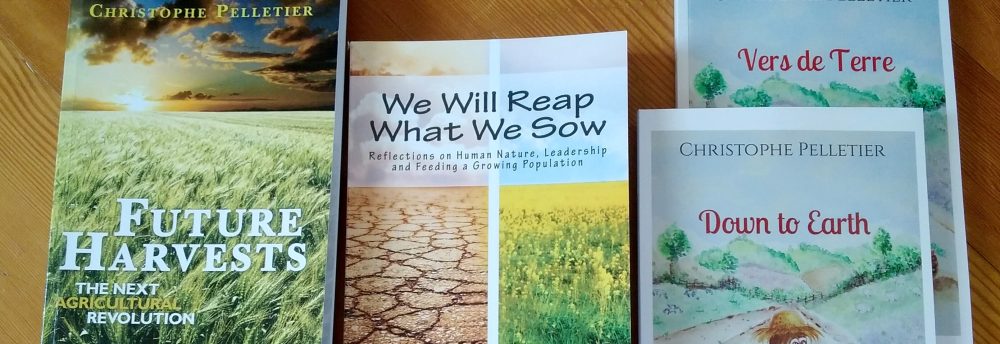

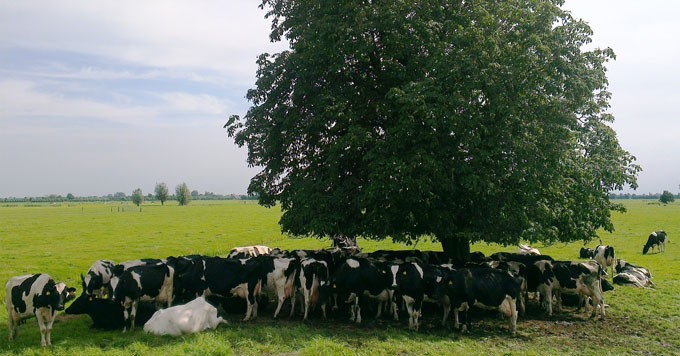


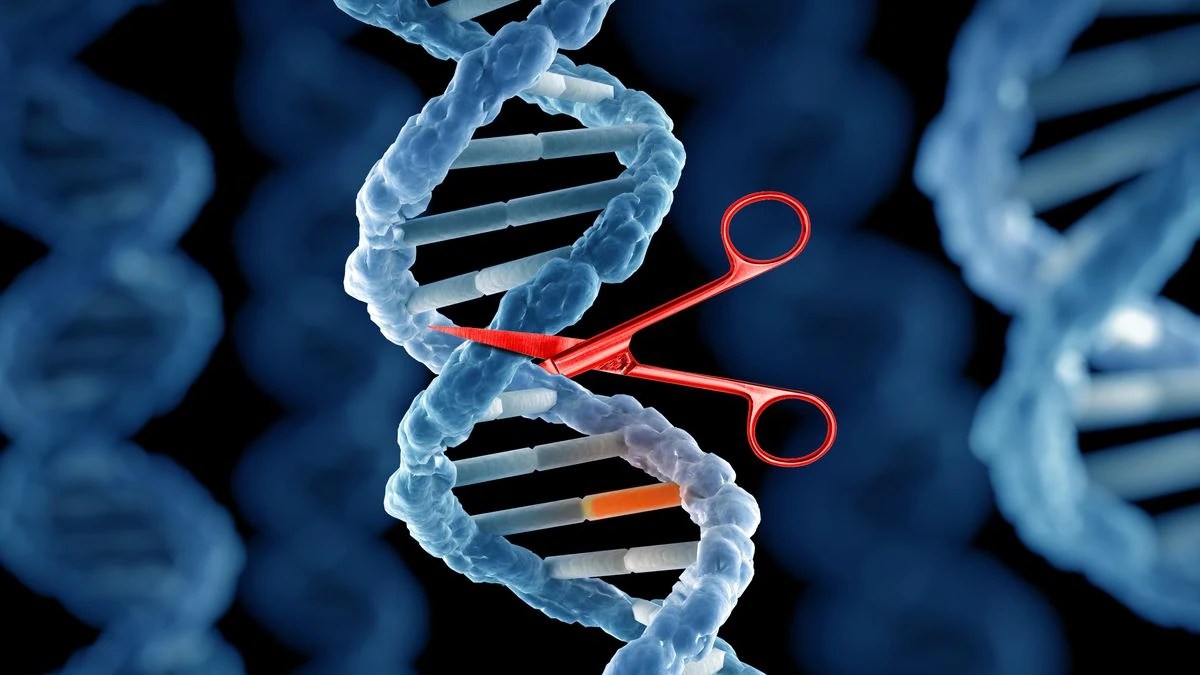


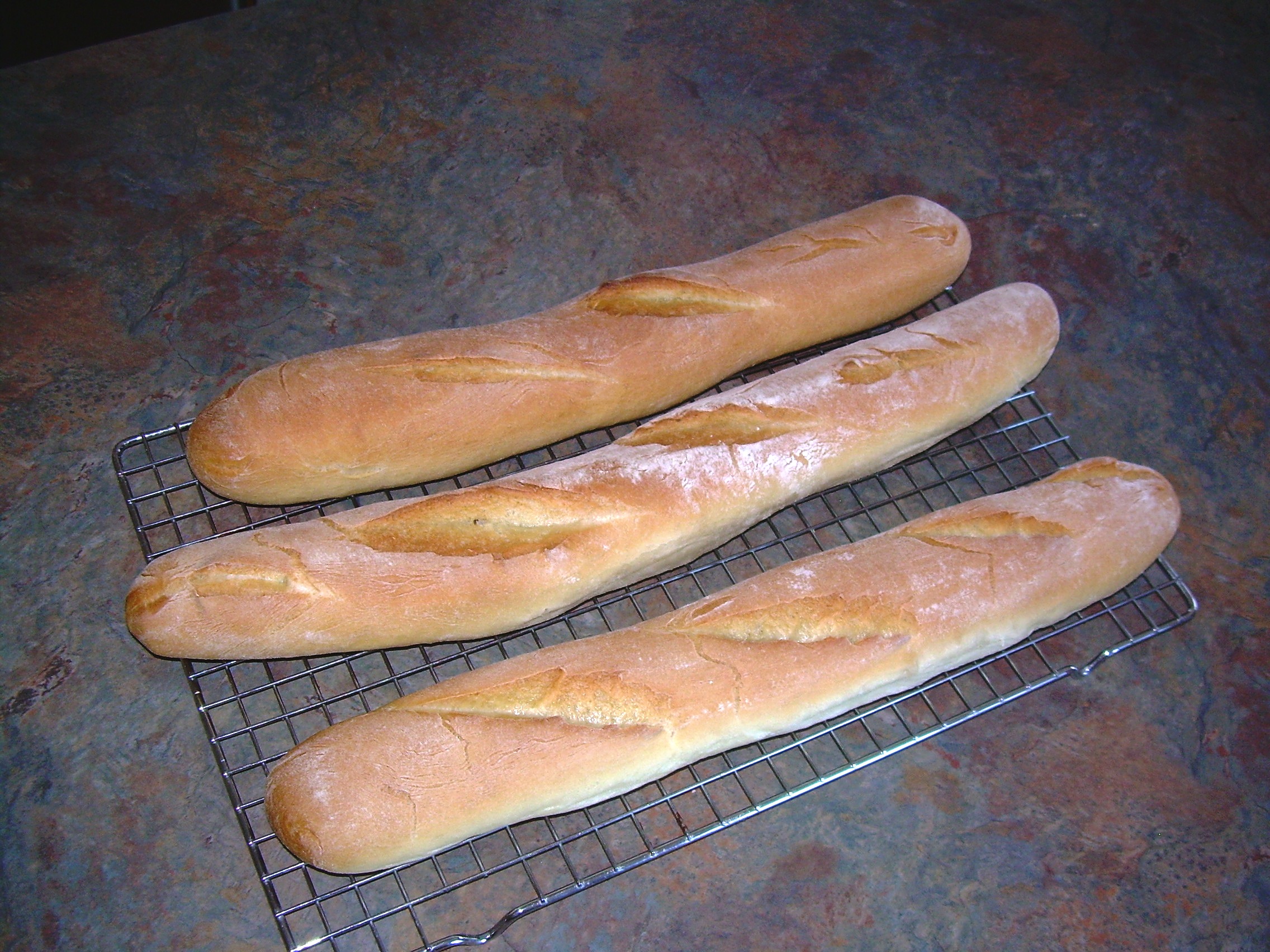

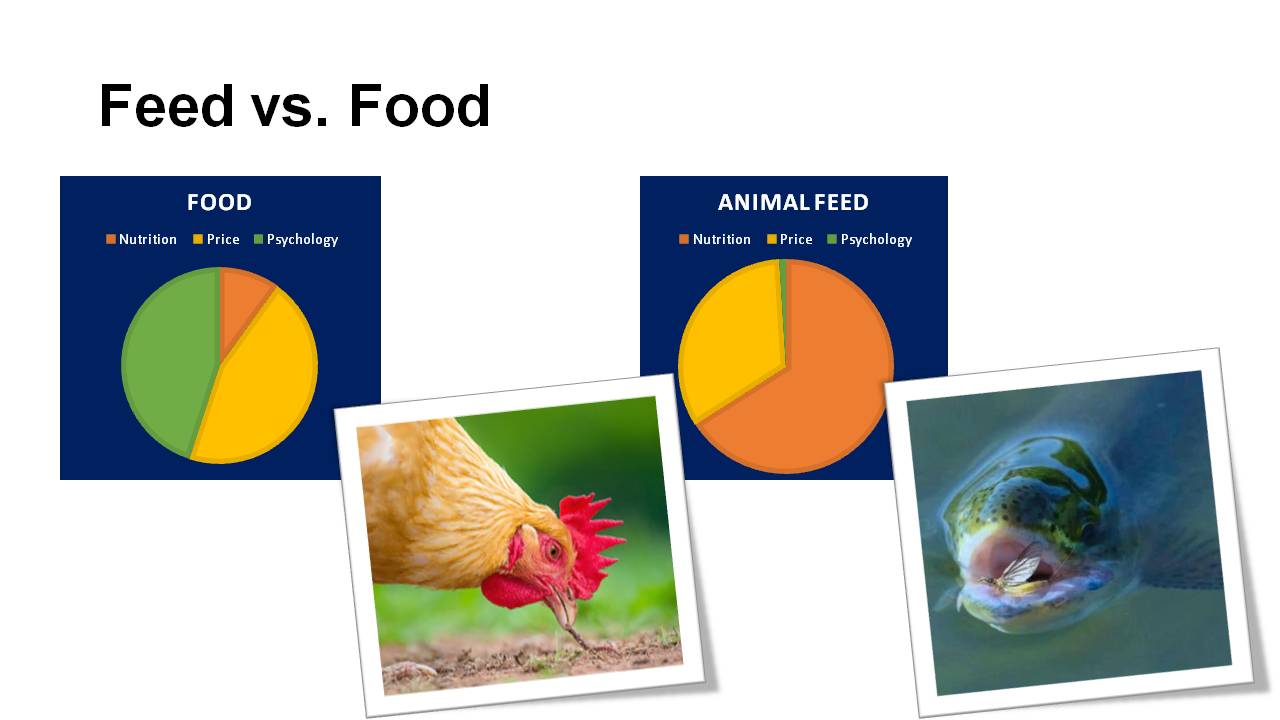
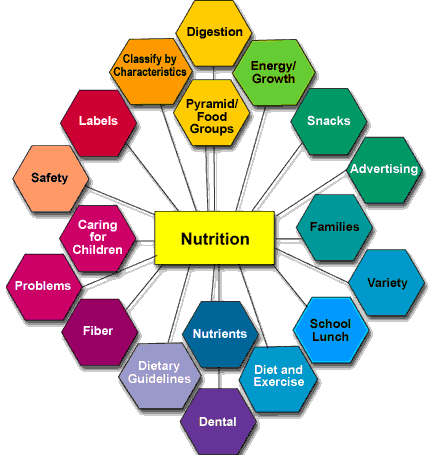
 The Food Futurist Solutions - Anticipate, Adapt, Succeed