
Last week, BioScience published an article based on the research of a group of researchers from the CSIC (Consejo Superior de Investigaciones Científicas), the Spanish High Council for Scientific Research.
They present their views on the potential of marine aquaculture to provide enough food for the growing world population. The authors of the report do not see fisheries as a significant option anymore, as the wild fish stocks are depleted, and the amount of time to replenish the stocks will be too long for fisheries to be able to meet the needs of the population. Aquaculture has gradually compensated the demand for fish that fisheries were not able to supply, and half of the seafood consumed today already originate from aquaculture. It is the fastest growing food supply activity and the projections for future growth are very strong. The researchers think that marine aquaculture could multiply its production by a factor 20 by 2050 and thus would play a major role in providing the world population with animal protein.
They bring up some interesting facts about agriculture and land animal farming. For instance, it takes 10 times more water per calorie to produce meat than it does to produce grains. Further, animal meat products represent only 3.5% of food production, but they consume 45% of the water used in agriculture. Considering demand for meat is expected to increase by 21% between 2005 and 2015, and will keep on increasing, this will only exacerbate this situation.
Another point that this group raises is the global nitrogen-use efficiency in animal productions. According to their sources, it is slightly more than 10% for land animals (5% for beef and 15% for pork), which makes their production a major source of nitrogen inputs to the environment. In contrast, marine animals have much greater nitrogen-use efficiency, at about 20% for shrimp and 30% for fish. Therefore, marine aquaculture culture releases two to three times less nitrogen to the environment than livestock production does.
From an environmental point of view, the idea of shifting the production of animal protein from the land where it uses scarce resources such as land and water, to the ocean where space and water are no limitations anymore sounds very sensible. From a nutritional point of view, replacing meat and dairy by seafood that is rich in healthy components such as omega-3 fatty acids is quite attractive, too.
They also notice that the land available for agriculture is shrinking, due to soil degradation and urbanism. Further, there is a growing scarcity of fresh water and increased competition for water as well. Therefore, activities on land do not offer the potential to grow all that much more food to feed the growing population. Even freshwater aquaculture faces these limitations. Freshwater aquaculture currently 57% of total aquaculture, therefore there is an untapped potential with marine aquaculture, as it does not use fresh water.
Of course, the main challenge to execute such a development of marine aquaculture production is to find the proper quality and quantity of feed. The researchers do not see the use of fishmeal and fish oil as an option anymore as they predict that the species used to make these products will not be able in sufficient quantities. Replacement by protein and oils from agriculture crops is an option for the short-term, but as aquaculture volumes would increase, the competition for these ingredients with meat production will make them too expensive, and for the reasons explained above, depending on land agriculture to feed marine species will face crop production limitations. Therefore, they prefer to envision a total new approach of aquaculture feeds, and recommend developing a new feed chain based on aquatic ingredients, such planktons, microalgae and seaweed. This approach makes sense, but the time lines to develop such a supply source and the cost of production of such an “aquatic” feed still need to be investigated. Several “seaweed farms” in production in China show interesting results and they seem to promise a strong potential of production for feed.
Another development that they expect is offshore aquaculture. Aquaculture operations located in coastal areas, although they are easier to access and generally in quieter waters, are very often located in zones where there are local issues to deal with, such as interaction with wild fish or recreational activities. Moving offshore can reduce these issues.
As you can see, developing the future of aquaculture is not simply a matter of growing fish in pens, but it requires a broader thinking that includes not only the oceans but agriculture on land, too. The future of food will require from us the ability to manage the whole planet!
Copyright 2010 – The Happy Future Group Consulting Ltd.

 There is a growing concern about environmental and health aspects of food production. About the environment, you can list very diverse things such as the depletion of wild fish stocks in the oceans, the interaction between aquaculture and wild fish stocks, manure and smell of intensive animal husbandry and impact of manure on soils and drinking water, deforestation of rainforest for ranching of beef or about growing GMOs (Genetically Modified Organisms). On the health side, consumers worry about food poisoning due to bacteria, such as E. Coli, listeria, campylobacter and salmonella, but also about residues of pesticides or antibiotics, as well as they worry about the use of hormones in animal productions. As the discussions get more animated in the US about the reform of health care and the cost of obesity, more and more people are wondering about whether the fast food diet is a proper one. Next to this, animal welfare is a growing concern by more and more consumers.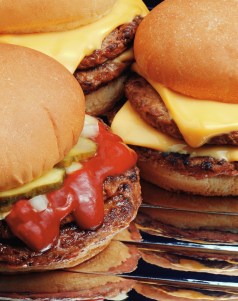
 In order to understand what changes are ahead of us, we need to realize that opposite forces are engaged in shaping the world of the future. As we all know, accepting change is always a slow and sometimes a difficult process. There are those who see the possibilities and those who see the drawbacks. The first train was going, supposedly, to get cows stop giving milk, but we now know that cows love to watch trains passing by. Probably, the first caveman who drew a picture of an animal on the wall was considered by some as a great magician and probably by others as pure evil. As such, such a struggle is very useful, as on the one hand it shakes immobility and open new doors, and on the other hand it prevents us to rush into the unknown without thinking first.
 More technology to improve efficiency of water use, fertilizer use, animal feed use, land use, energy use (objective: zero waste).
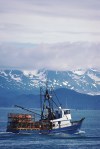 As everyone knows, fish stocks have been depleted to levels that are not acceptable. This is the result of short-term thinking combined with highly efficient but stupid fishing methods. Not only fish is a high value food source, but oceans are complex ecosystems that we cannot afford to lose. Although aquaculture claims to be the way to compensate the supply of wild fish, this is only true within limits, as some aquaculture species are fed with fish meal and fish oil, and replacement of these products is also limited by the quantities that agricultural crops can supply, and consequently their price.
 The Food Futurist Solutions - Anticipate, Adapt, Succeed