Global Food & Agriculture Futurist & Strategist | Keynote speaker | Comprehensive vision for the future of food and agriculture | Accurate foresight | Successful strategies | Thought leadership | No nonsense critical thinking
Do not worry. This is not a post about guilt. That is not my style. The post is about vulnerability.
As the holiday season is right around the corner, this is perhaps a good time to reflect on all the great work that food producers and distributors perform to provide us with food all year round. For all of us who are fortunate to be able to satisfy our hunger every day, we must make sure to not forget how fragile food security can be.
In the recent past, there have been more volatility and uncertainty about food production. The price of foods that we were used to find easily and quite affordable have shown some sever fluctuation. Food inflation is here and it hurts many households. The reasons vary.
It can be because of climatic events. The surge of the price of beef is an example of the result of drought in a number of regions that forced farmers to reduce production. Another example is what I saw in 2021 in British Columbia when an atmospheric river washed out many highways in mountain areas that had isolated Vancouver and seriously disrupted supplies to stores in most parts of the province. Shelves were empty, in particular for meat, eggs and dairy. There was a weird feeling in the stores and quantities were rationed per customers. The rationing still is in place for some of those products. Consumers are informed that they are not allowed to buy more than two pounds of butter or more than two trays of meat, for instance. Perhaps, this is a wise philosophy. At least, it has stopped some absurd and incredibly selfish hoarding behavior by some shoppers who would fill their carts and leave nothing for other customers.
It can be because of geopolitics and policies. Think here about how the conflict in Ukraine had affected the price of vegetable oils and grains. By then, many restaurants had stopped selling French fries and other deep-fried products to keep their meals affordable. EU policies are another example that affects the profitability and the type of productions that farmers are encouraged or mostly discouraged to produce.
It can be about diseases. Avian flu has affected availability and price of eggs and poultry meat. Remember that it even mobilized the US president to act on the price of eggs. The issue is still not resolved, far from that. It is not just animal diseases. Just remember how Covid affected trade and logistics. Shortages of flour, pasta and rice were common and took very long to be fixed. A lot of supplies were affected quite negatively. Store shelves were often empty or close to it. Diseases also affected plants, the most significant example was probably the Xylella fastidiosa bacterium that decimated olive trees in Europe a couple of years ago, resulting in a huge price increase of olive oil, and some fraud as well.
As you can see, it does not take much to disrupt food production and food availability. This is why we must be considerate about food production. This is not a warning to consumers only, although we are all consumers. This may sound surprising, but often, food producers seem to refer of consumers as if they were a totally different group from producers. This, as such, is also another sign of disconnection that we should eliminate. No, this warning is also for food producers who sometimes have a tendency to stunt nicely with statements about their products that can affect food security. Pushing for production systems that are inaccurately considered to “save the planet” can lead to negative results. Perhaps, some of you will start to believe that I have a fixation with EU food and agriculture policies, as I have mentioned it a few times lately. It is not a fixation. It is a reality and I am very concerned with EU food security down the road if they do not change their tune. There might be some signs that they are putting some water in their wine, though. Just let’s hope that they will put pragmatism before dogma. Perhaps, their change of mind about the 2035 mandate on electric cars is a sign. But it is not just the EU institutions that have influence. EU retailers, too, seem quite eager to profile themselves as virtuous by throwing all sorts of trendy buzzwords and making all sorts of statements to give themselves an aura of morality. It all sounds great but I suspect that it is more about marketing and to align themselves with the “flavor-of-the-month”-policies more than being actually effective decisions. If retailers truly cared about the planet and health, they probably should remove at least 80% of the items they sell.
Food production is very complex but it is not an intellectual exercise. It is about meeting the population’s needs for food, clothing and energy. That is quite practical and concrete. If we fail in achieving this goal, the only result will be chaos. Food security is all the difference between prosperity and unrest, between peace and war and eventually between life and death. That is why food security must be the #1 priority of any government. They make the policies that decide whether we use our resources wisely or inconsiderately. In another recent article on this blog, I discussed -playfully, yet seriously- whether Earth is maxed out or whether we can live in a world of plenty. It was an eye opener. In the end, the results of these policies and our future will be just of the same quality as our leaders. Just think about that when you choose your next leaders.
In the meantime, enjoy the holiday meals! And when you have time, just reflect on the title of this article.
I will be back in 2026.
Copyright 2025 – Christophe Pelletier – The Food Futurist – The Happy Future Group Consulting Ltd.
As usual, listen here to a Chrome AI-generated podcast type playback of this article:
The original non-AI generated article follows below:
The issue of food and climate is ongoing. There are many different views about what is perceived as damaging and what is perceived as sensible. The debate tends to be polarized, mostly by both extremes. I discussed that topic a long time ago in a chapter of my second book (We Will Reap What We Sow, 2012) and all I can say is that the answer is far from simple. Of course, some people think it is, and their answer aligns with their dogma. That is not necessarily helpful. Food is a complex issue. First, food choices are rarely rational and nutrition usually does not play a prominent role, even though everybody does a great job of rationalizing their choices. The thing is that people choose what they eat mostly based on emotional and psychological aspects. It can be societal issues. It can be what they have been used to eat since childhood. It can be cultural. It can even be a political statement or the expression of their belonging to a particular socioeconomic group. Every possible reason is out there.
Protein hype
The debate around animal versus plant is really mostly focused on protein. In my opinion, this is already the first flaw. Both animal products and plant products contain much more nutrients than just protein. Even within the protein category, different animal products and plant products present rather different profiles of amino acids, and essential amino acids in particular. Yet, the essential amino acid profile is what defines the quality of a protein. Unfortunately, the quality aspect of protein is often overlooked, which is quite a serious mistake. The focus is on quantity, hence the current protein hype that brings food suppliers come with all sorts of high-protein products. It is just marketing and has little to do with rational nutrition. If the focus was on rationality, it would be clear that, at least in developed countries, people eat on average already enough protein, generally speaking. They do not need more. They might need better protein, though. The best diet is one that provides the needed amount of protein, no more and no less. Eating more protein results in two drawbacks. One is that the excess calories (because people from developed countries already consume more calories than they really need) from protein end up adding to body fat, so it might not be such a healthy strategy after all. The second drawback is that the excess nitrogen (protein is the only nutrient group providing nitrogen) provided by a diet too rich in protein is going to be excreted through the kidneys in the urine, so basically eating too much protein leads to pee your wallet away in the toilet, so to speak.
Plant or animal: a misplaced feud?
All the surveys that I read show the same: the overwhelming majority of people consider animal products an essential part of a healthy nutrition. Only a couple of percents of the population from developed countries consider that people should not eat meat. That is their choice. Such a point of view is not based on biology. It is a doctrine, not a diet. The question is how much protein a person should eat, and how much from animal origin. This is a much healthier debate. There are different opinions about that one, but accepting the obvious -it is not either/or but and/and- allows for more constructive conversations.
Another absurdity of the polarization on the type of protein is that often the debate is presented as if there were only two categories of people: pure carnivores and vegans, and nothing in between. Wrong! Even meat lovers eat some foods of plant origin, too. Regular people, aka the overwhelming silent majority of consumers, eat a mix of animal products and plant products. This special blend has a name. It is called a meal! Here is the interesting part of a healthy diet: it combines all sorts of ingredients that all bring their share of nutrients to the body. They complement each other. Some bring essential amino acids, others bring essential fatty acids, others bring fiber, others bring minerals, vitamins, antioxidants and other micronutrients.
The entire human digestive tract -including teeth- shows that we have evolved into omnivores. Like it or not, this is the biological reality. Humans eat a bit of everything. The term flexitarian is just a hollow neologism created purely for marketing purposes to make believe there is another category and lure people. It did not get much traction for the simple reason that it is just hot air. People are not stupid. Omnivore is what counts for more than 95% of the population in developed countries. I may insist much on the developed country distinction in this article. The reason is simple: there are many people on Earth who unfortunately eat only what they can afford, not what would be best for them. They do not have that luxury. If and when, thanks to better economic prospects, they can afford more choice, be assured that they will increase their consumption of animal products. That has been the same pattern everywhere in the world before.
The talk about hybrid products
During the past couple of decades Some people have put a lot of effort into trying to convince us to give up meat by making all sorts of bogus claims about replacing all cows by 2030. Reality begged to differ. The cows are not going away. There is no reason why they should. Production systems have changed and they work towards reducing the issues linked to animal production, but animal products are here to stay. Actually, all forecasts from serious sources show that consumption of animal products will increase globally, mostly as a result of the growing world population. People in developing countries also want access to meat, dairy and eggs. And let’s face it, in these countries, they do not have the money to buy the novel tech foods, so forget those. That category is for the affluent westerners. And it has not done well. Plant-based fake meat is a failure. Just look at Beyond Meat. Only a few plant-based foods companies are doing fine and they are not in the investor-led tech sector. Since the tech plant-based fake meat cannot survive on its own, a new strategy has arisen. The idea is to bring people to eat less meat by replacing a part of the meat by protein from legumes (soybean and pea mostly). If you look at it, it comes down to incorporate the fake meat into real meat. As such, why not?
The only regions where they are now trying to sell their products is the EU and the UK, not so much as 100% plant-based fake meat, but as hybrid products. The danger of this approach is that it tends to be sneaky and people are starting to notice. It is interesting to note that this approach is mostly a European one. Opposite to that, in North America, the fake meat market is dead. Period. To my knowledge, the EU is the only region that so skillfully sabotages its food security, in particular in the sector of animal production. They do it partly for political reasons under pressure of environmental organizations and also partly because, I hate to say, EU leaders suffer from some sort of a moral superiority complex that leads them to impose standards that undermine the future of farming in the EU while they seem to think that the rest of the world would adopt those standards because, well, Europe says so. Good luck with that! The thing is that the EU is not even self-sufficient in plant protein and their regulations on those productions also weaken their farmers’ competitive position.
So, the tech companies, after realizing that they could not beat meat, have chosen a different approach. Let’s join the meat and have hybrid products. I understand the thinking, but I wonder if this might not have the opposite effects of what the plant-based protein industry and some EU politicians trying to force onto people think it will achieve. Let’s have a look at potential problems.
First problem is that hybrid products are tricky to identify, as their labeling and packaging mimic the pure meat products they want to replace. This sneaky -if not weaselly- approach might become more difficult now that the EU has passed legislation on labeling of non-meat products trying to pretend to be meat. I have seen -and tasted- this deception first hand.
An unpleasant discovery
Last year, I was visiting my family in France. As usual when I visit, they ask me to do the cooking. One of the meals was beef patties they had bought at a local supermarket, or so I thought. It was a product from France’s leading beef producer, so I did not pay much attention but as I was preparing the meal, I felt something was wrong. The color was strange. It was an unusual beautiful red. I have never seen such red beef because beef is never that color. Anyway, since my parents had bought it, I thought it had to be the real thing and shrugged it off. Then, in the frying pan, those patties were not behaving like normal beef patties, either. They would not brown nicely like the way I am used to. Further, they were rather bouncy and rubbery in texture. I could not really press them. Then, I served them and I had the same weird feeling when I stated to bite and chew on them. The texture was odd. Anyway, we had our meal. I was not very happy because it did not taste great but we moved on. It is only later that I found a journalist’s report about that beef brand, explaining that they also sold hybrid patties nicely colored with beat juice, and I will bet my shirt that it is exactly what I ate that day. This year, I visited my family again and I went to the supermarket. What I saw really disturbed me. The supermarket’s was selling its own label “Haché de Boeuf” (best translation would be “ground beef”) next to trays of “Haché Pur Boeuf” (Ground pure beef). There it was! I grabbed one of each to look at the labels. The Haché de Boeuf was not just beef. It contained 25% (a quarter!) pea protein isolate, plus a lengthy list of all sorts of weird ingredients, the types used in the plant-based fake meat. The Haché Pur Boeuf was indeed all beef with nothing weird added. I do not have a problem with supermarkets selling any kind of product they want but I have a huge problem with them selling something under a name that does not give any indication of ingredients that do not belong in what the name of the product suggests. Put it anyway you want, but Haché de Boeuf translates as ground beef and nothing else. Haché means ground and boeuf means beef. Haché de Boeuf should be beef and nothing else. Actually, they have done the opposite and created a new name for the original real thing. Ground beef is not longer Haché de Boeuf. It has become Haché Pur Boeuf. Of course, the average shopper can’t tell the difference between ground beef and ground beef unless they would become suspicious of everything, which they clearly should do. If you do not pay close attention, there is a chance that you are taking home something that is not what you think. I would not trust that supermarket anymore. What else do they sell under misleading names? Should the shopper become a food inspector? Well, perhaps yes.
Another example, also from France, of such a lack of transparency happens in bakeries. Due to the high price of butter, many bakers have switched to hybrid fat (butter mixed with fat of plant origin) products for croissants and other pastries simply because the production cost is lower than with only butter. In France, there are two categories of croissants: ” croissant au beurre” (croissant made with butter) and just “croissant” (made with fat of plant origin) which are the cheaper version. The problem is that the croissants made with the hybrid fat are labeled -and sold- in bakeries as “croissants au beurre”. It is perfectly legal but consumers are left to believe that the only fat source used is butter, and that is not the case. Almost all consumers are actually even unaware that these hybrid fat products exist. Those croissants are in between the two categories but sold for the price of the better croissant. Although legal, this feels like deception and that is not good for trust in food.
But, as I mentioned, the new EU legislation should prevent that in the future. Though, it is funny -and ironic- to see the reaction of the alt-protein sector to this new legislation. Of course, as you would expect, they find it unfair and unjustified. Everyone is a victim, and they in particular. They consider that fake imitations should be called meat or chicken or fish. When challenged, they reply by saying that people are not stupid (which I said earlier, too) and they claim that the people buying the fake products are well aware that it is not the real thing. So, if people know the difference, why wanting to call it like the real product it pretends to be? That does not make any sense, but there is a simple reason. The fake meat producers and their advocates know quite well that animal products have appeal and that theirs do not. Maybe, they should think about why that is. If people know the difference and it is not the same thing, why don’t they show real creativity and invent a brand new word for their products and fully differentiate themselves. The difference is what creates a loyal tribe. A few thousand years ago, the ones who developed tofu and tempeh created these very words, which did not exist before. Why can’t all those ego-inflated food tech people who were about to revolutionize food and agriculture and save the planet cannot think of something as simple as an original name, or is it because they could not really develop an original product, either, and cannot do any better than imitate something that has existed since the dawn of time instead? Frankly, that is their problem.
Hybrid products are not just in France. A few supermarket chains from The Netherlands and in Germany have also pledged to sell at least 60% of plant-based products. It has already been noticed that they also present confusing packaging that does not clearly inform the consumers about the true nature of the products. They are also already accused of green washing. From what I gather, the idea behind the claim of 60% (yes, why that magic number?) would be to meet GHG targets. I write this in the conditional and you should read it that way, too. I have not been able to find a reliable source to confirm this. Nonetheless, I do not think 60% is difficult to achieve considering all the products of plant origin they already sell. Here, think of fruit, vegetables, bread, legumes, rice, pasta and so on. I am sure you can also make up a list of plant-based products sold in supermarkets. That makes sense because the diet of the normal person I mentioned at the beginning of this article, being an omnivore, also eats at least 60% of foods that are of plant origin, next to the animal products. Further, having a product listed does not mean that it sells. The best example, especially with plant-based products in mind, is Beyond Meat. They were listed in all the restaurants, from global fast-food chains to independent eateries. They were listed in all supermarket chains, too. Yet, they masterfully flopped. Of course, the retailers do not present the 60% in that angle. They prefer to go along with the dogma of their politicians in power, and come with the usual meat-blaming rhetoric because it is risk-free and sounds so virtuous. So, will they label hybrid products clearly or will they deceive their customers? That is their choice. Trust has seriously eroded in about everything, and if they choose deception and misinformation, it will backfire on them. The winners in such a situation would be the specialized butcher shops, dairy shops and fishmongers. They are the ones with a quality-minded concept. That said, quality varies greatly and let’s face it, there are also products of animal origin that are of poor quality sold in stores. I could name quite a few that I would not touch with a 10-foot pole.
EU food producers and retailers must be careful about transparency. Consumers defense organizations are powerful in that part of the world. Messing around with the consumers will not do anyone any good. What a total violation of the idea of transparency and trust this is! It is actually ironic, as supermarkets over there are so keen to tell times and times over how transparent they are and how much they cherish creating trust. Generally speaking, if you go to France, my advice is to buy your meat at a butcher’s shop or on one of the many markets. The quality of many products I have seen in the supermarkets in France this past visit has disappointed me beyond my imagination. They really need to fix that situation.
Can hybrid products succeed?
Of course they can, but not with the same approach and attitude as the plant-based fake imitations used in the recent past. If they keep the same approach, the result will be the same. People are now well aware of tech foods and they associate them with ultraprocessed foods. So, my advice here would be, do not sell tech processed foods. Sell good old-fashioned wholesome foods. Sell healthy nutrition instead of tech “prowess”. It is cheaper, it requires less investment and no intellectual property for which all the failing food tech companies have been suing each other lately. In food, to succeed, short and long term, you have to offer nutritious foods.
When it comes to protein, legumes are in the spotlight. In their natural form,they offer protein but also carbohydrates, fats and fiber (which belongs to carbs), along with a whole range of micronutrients. Sooner or later, the question of whether building factories using energy to deconstruct the bean or the pea to extract just the 20-25% protein it contains is really worth it or sensible will arise. It is a good thing that farm animals are here to upcycle the by-products. Would it not make more sense to use the whole bean/pea as a wholesome unprocessed ingredient into a recipe with other wholesome ingredients? Be assured that this question will arise sooner or later, too. Ultraprocessed is out and ultraprocessed foods producers have a very hard time regaining trust from consumers, with one interesting exception: the meat-loving beefcakes on social media that hate fake meat products and yet love the protein powders that are probably made in the same plants as where the tech fake meat source their protein isolates. There are not that many companies producing those products, so just connect the dots!
At the beginning of the tech fake meat hype, a number of companies, mostly meat companies ventured in hybrid territory. It does not seem to have had much appeal. The question that producers need to ask themselves is: do people really want to that kind of blend? Do they want a highly processed product like a protein isolate invisibly mixed with a basic processed product like ground meat? When it comes to value for money, it is clear that quality will be a decisive criterion. Is hybrid the best or will it be the worst of both worlds? Success will depend on the consumers’ answer to that question. To succeed, the perceived quality of hybrid products will have to be at least the same as the perceived quality of the original animal product. If not, it will be an uphill battle. If the quality is perceived as at least equal, hybrid products will succeed, at least some will. And there might be some potential irony about this. If people like these products and want more of them, it might actually increase indirectly their consumption of animal products. I recently had a conversation with the CEO of a company that sells mushroom-based products that are used in hybrid products and he was claiming to be successful and mentioned that the growth of these hybrid infused meat products were actually strongly outpacing sales of pure plant-based category. It sounds that the main casualty of hybrid products might very well be the plant-based foods, not the animal products.
In 2019, I had posted two articles on this blog about what I saw ahead for both animal products and for plant-based products. I believe that my conclusions of then have materialized rather well. As far as hybrid products are concerned, I believe that quality will be key. I also believe that they will need to make ingredients recognizable to the eye. The impossibility for the consumer to see clearly what they eat will lead to failure. A long list of “mysterious” ingredients will do the same. Of course, the worst of the worst would be to keep trying to deceive consumers by not being transparent. The latter will kill your business in less time than it takes to flip a burger.
I also believe that if the conversation about animal and plant protein becomes more intelligent than during the last decade, people will think more about complementarity than opposing the two categories. In the UK, some organizations have recently launched a campaign to encourage people to eat more beans and other legumes. I believe that it is a good idea. However, beans may have a couple of inconveniences to overcome. If you use dry beans, it takes a bit of time to soak and cook them. It is not that complicated or particularly time consuming but I expect that to be a hindrance. The other possibility is to use canned beans. It is quite convenient. It is easy to store. It is already cooked and ready to use. The problem here is to make canned beans sexy again. It has an old-fashioned image and that might work against them. And then, there is the issue of flatulence. It is not the most exciting topic but it needs to be mentioned. There is a simple solution to this problem: add a little bit of baking soda in the beans.
Personally, next to meat, I am an avid consumer of beans, peas, chickpeas and lentils. Since I cook, I make a lot of dishes with beans, most of which also contain meat, but I also make salads, soups or dips with them. I love to cook and I enjoy making old traditional recipes from many parts of the world. From Chili con Carne to Snert (Dutch pea soup), Cassoulet (French bean and sausage, or even duck confit), Saucisses aux lentilles (sausages and lentilles), Couscous (welcome chickpeas!) or Feijoada (Brazilian dish pork and black beans), you name it and it comes on my table. Here you can see me with a big bag of beans on the thumbnail of a video I published in the past about meat consumption.
This is the beauty about cooking from scratch. You control what you put on your plate and then you eat simple, nutritious and wholesome foods. When you do that, there is a good chance that you will not suffer from micronutrient deficiency, which cannot be said of ultraprocessed products. Unfortunately, many people think that cooking is complicated and time-consuming. I know and understand the perception, but since I have been cooking since my student years about every day of my life -and I have had quite a busy one- I can assure you that it is a lot simpler and quicker than often believed. For instance, one of my household’s favorites is the veggie soup (yes, plants!) that I make with 6 to 8 different sorts of vegetables. I make a big pot at once and we have soup for almost a week. This shows that it doesn’t need to be a daily chore. Of course, convenience foods companies will not encourage people to cook, as it takes some of their business -and their nice margins- away. Convenience is not cheap.
And of course, last but not least, the price at the point of sale will be a decisive element of success or failure. The more processed the product will be, the cheaper it will have to be. Consumers will follow a simple thinking: plant foods and therefore hybrid products should be cheaper than meat. The value for money will be key. If consumers think that they are buying processed plants for the price of meat, they will not buy it. If in doubt, take a look at what it did to tech fake meat. People will not switch from pure meat if it is more expensive or even for the same price. If the price is the same, they will stick to the “real” or “pure” (pick you adjective) product. It is just simple psychology.
Next week: Communication: Humanity and Authenticity make for Effective Conversations
Copyright 2025 – Christophe Pelletier – The Food Futurist – The Happy Future Group Consulting Ltd.
As the next year is around the corner, it is a good time for me to present in a video what I see as my top five hot items that will keep the food and agriculture world busy for 2025.
To help you go directly to one particular item, here are the video timelines for the five topics:
Listen here to a Chrome AI-generated podcast type playback of the original article
With this post, I am going to start a new format on this blog. Since a growing number of people now prefer videos or audio to reading, I will post here the videos that I shoot, accompanied by the transcript of the video. I will try to make the videos relatively short, so that they can fit within the current level of attention span of most readers and viewers. You will tell me if this has been a good idea. My videos will also take a slightly more opiniated tone that my previous works. You can see all of my past videos on my YouTube channel.
To launch this new format, here is a topic that I have presented at conferences before, and that has been well received. I explain why emotions come first when communicating with the public. I also explain that beliefs always trump facts and science and why it is essential to focus first on the emotions of consumers to have an effective connection and gaining the public’s trust.
You know in agriculture there is one topic that comes back regularly in the conversation and it is how to connect and how can we really get the consumers listen to us and every time.
I’ve been involved in those conversations and I met the same problem.
The problem is that the industry of course is basically production-driven. It’s a technical activity and they always go back to the science and to the facts. I always tell them: you know beliefs always trump facts; beliefs always trump science. If the facts you present, even if they’re totally true, but it goes against the beliefs of the people who listen to you, they will say: Nah, I don’t believe that and that’s it. And then, you do not succeed.
So, how can you really get the message across? And what I say all the time is you have to connect you must not focus only on communicating; you must connect. Not connecting like it is on social media, I follow you and you follow me. That’s not connecting just teenage dreams.
To me, connecting means that you have to really get at the same level; and when we deal with issues, especially resistance in agriculture, we basically deal with emotional issues. That’s always the thing: people are all emotions but [we bring up] “the science says” or “the facts are”
The problem is that when you deal with emotions, you cannot talk about science and facts; you cannot bring the discussion at a rational level as long as you have not basically helped the other person process their emotions as long as you have not connected at that emotional level.
There is one thing that I’ve written in my second book and I give an example. I say imagine you have a child who has a nightmare and he’s screaming. The parents are coming in the bedroom and say: ok, what’s going on? and the child is all screaming and he say: there is a green monster under my bed and he wants to eat me.
Then, I say, here is exactly what you must do and what you must not do. What good parents would do is, well, they take the child in their arms. They would try to comfort him; they try to make him feel safe, bring a feeling that, you know, we’re here for you, don’t worry. If the monster comes, then we’re going to deal with the monster and then you basically ask the kid: ok what happened exactly? Now where is the monster? where is the monster? and says it is under my bed.
OK, and then, bit by bit, through questions you help the child to get the story out, and then you’re going to go and have a look under the bed. First, you can say: OK I’m going to have a look under the bed, you stay here you’re safe here let me have a look!
And then you can say: OK, I don’t see anything. You can take a stick, you know, a broomstick and under the bed and the child will see that the broomstick passes through and through under the bed and there is nothing probably and then, bit by bit, you’re going to be able to bring the child. Even, if you want. you say OK let’s have a look together under the bed and then that’s how you bring basically that very high emotional situation into a more rational one, bit by bit and then the child is going to realize there is no green monster under the bed. Then he’s going to feel safer, but it’s very possible that he doesn’t want to go in in the bed, or you can say: OK we’re going to leave the light on, or okay you come and sleep with us tonight. And tomorrow, we’ll have a good look at that and we’ll make sure that you know there is no monster at all. That’s the right way to do things. It’s connecting at the emotional level and, bit by bit, know making the child realize that it was just mostly in his in his head and it’s not real.
What unfortunately in my opinion the industry in food agriculture but all industries do is basically say to the child: “well, science has demonstrated that there are no such thing as green monsters living under children’s beds and eating them, so go back to bed because there is no reason for you to worry!”
But when you do that well what’s going to happen well your child is going of course he’s going to scream and to not trust you anymore. What do you expect? If you treat the emotions of a child that way, he is not going to trust you anymore. Unfortunately, because it’s not just about children having nightmares, in the industry if we want to really connect with consumers, if we really want to regain that trust, we have to connect first at that emotional level and only once we have done that, and bit by bit brought the conversation bit by bit, bit by bit, back to more a rational level, then we will be able to pass our message.
But, if we want to fight emotions with science and with facts, [if it is about] the message of the industry versus the emotions of the public, you will never win, so forget it! Don’t spend your money on PR on communication if that’s what you want to do. No, you have to have a little bit of empathy and you have to really help the consumers understand what you’re doing. You have to basically take the fear away but you have to do it bit by bit, both at emotional level and at the rational level.
Copyright 2024 – Christophe Pelletier – The Food Futurist – the Happy Future Group Consulting Ltd.
Since today is Black Friday, it is no surprise that in these times of concern for the climate and the environment, people come with their takes on this big sales promotion day.
I found two interesting articles about the topic. One is from The Netherlands and the other from France. I find these articles interesting because they seem to connect to what I have mentioned in some of my previous articles about a new economic model and how economy and ecology compare.
It focuses on the sectors of fashion, furniture, and electronics, or more precisely on what they call the wegwerpmaatschappij, or in English the throw away society, being all about products that have a cheap price tag but do not last and end up in no time in the landfills. The article hints toward moving away from fast fashion and fast furniture and at looking at buying better products of much higher quality. It is interesting to notice that while food and agriculture are often presented as the source of all evils, they are not mentioned in this article. Yet, there certainly is a lot to say about food waste, overconsumption, crappy, unnecessary and useless products. Anyway, I will let you read it and as there is a chance you cannot read Dutch, just translate the page with Google and you will find the content.
It describes a difference of opinion between the Minister of Finance and the Minister for Ecological Transition. The latter criticizes Black Friday, presenting it as a symbol of hyperconsumption. He is not wrong although there are also people who take advantage of the Black Friday discounts and offers to buy products that they actually need. Even though we buy and consume way more than we should, and therefore waste of lot of resources to produce these items, sometimes purchases are about necessary stuff. There is a risk in brushing everything with the same brush. The Minister of Economy is, of course focused on the GDP (Gross Domestic Product) and does not fancy the idea of refraining from buying stuff (the essence of GDP) all the much. Anyway, they bicker at each other. In the conversation, other aspects are brought in, such as online sales versus brick-and-mortar stores. Online sales are a regular pet peeve of French governments, and Amazon in particular, or anything that has to do with American corporations. Overconsumption is overconsumption, and cheap crap is cheap crap, regardless of where you buy it. Nonetheless, this is an interesting article to read, as it shows the struggle of how to reconcile economy and environment. Both the Dutch and the French articles touch the concept of quantitative growth vs. qualitative growth, and the need of always enough vs. always more, about which I wrote earlier on this blog.
Justre to recap my articles on the subject, here are the links:
Listen here to a Chrome AI-generated podcast type playback of the original article
Grocery shopping has undergone deep changes over the last 100 years and, like anything else, it will do the same in the future. The current Covid-19 pandemic is contributing to this evolution. Regardless of whether it will be over soon or not, one thing is sure: it has forced us to make adjustments and in a way, the virus has just accelerated changes that were already in the works. Here is how I see what to expect.
First of all, Covid-19 has changed how we live, and therefore how we shop. Online retail was growing but then it became almost a necessity for grocery stores to jump on board and engage in online sales. It was not always smooth. It took time for many outlets to organize taking orders, preparing them and get the orders ready for pick-up or for delivery. There was a lack of staff. The staff was not trained properly and there were all sorts of logistics issues to fix. Without getting in details, stores have been able to get a better presence online and ensured a better and smoother service over time, and rightly so, because many people have discovered the convenience of shopping at the time of their choice, not having to drive to the store, not having to be in the herd, which was already a pain in the neck before the pandemic, and not having to wait in line to check out. It saves them time and stress. These are the main reasons why I expect online grocery sales to stay and grow further. The offering and the navigability of online stores will have to improve as for now, it is still a tedious experience. The execution of orders is still a challenging area. More staff is needed and at the moment, this part of the business is the busiest and currently the largest employment opportunity at Wal-Mart. Amazon has also hired large numbers of new staff. Yes, it takes time and manpower to fill orders. It is nothing new. I used to do that part at my parents butcher’s shop. I used to prepare orders and deliver them to the customers who required it. Of course, my parents’ store was a relatively small operation and our phone and my brain (and my legs and arms, too) were all it took to get things done. The volume of business of modern grocery store is such that it could just be a family thing. My point is that preparing orders and executing them is nothing new and actually not all that complicated, and it is a pillar of good customer care.
Here is where I see more changes in the future. Having to manage so many new people to fill order –or to be personal shoppers to put it in fancier words- is a complex task. Such staff is usually paid little, not particularly motivated and always looking for better job opportunities, not to mention they can get sick or absent. Of course, the numbers and he economics will have to adapt, but I believe that in the future, order filling staff will be replaced by robots, connected to order software. The robots will manage orders, prepare and pack them. There are already robot waiters in some restaurants, so it is not so far-fetched. The robots also will be connected with the warehouse and the inventory management software. They will re-order for the warehouse, ensure first in first out, eliminate loss and waste and know exactly where to pick what and complete the entire job much more efficiently than humans and that on a 24/7 basis, and not require being unionized. I believe that corporations will like that.
Another area where I see potential for change is the sharing of online platforms. French retailer Carrefour offered that possibility to small retailers who had to close because of the Covid -19 lockdown in France. Thus, small stores did not have to venture and spend on developing their own online presence, which could have been challenging, not to mention stressful considering the circumstances. Further, cashing in fees for a online platform can be a business, too. What Carrefour offered is in fact the same as large online retailers like Amazon and Alibaba have done for independent sellers for years now. It is also not all that different from an EBay type of concept. Sharing of online platform will be a way of making the jump for small stores and from, there they will decide whether to keep using such platforms or build their own.
Order pick-up will certainly be a solution of choice for quite some time. Home delivery will have to evolve further, simply because it can be costly, except for outlets that can offer free deliveries for a minimum purchase amount, which is already the case. Deliveries might also be carried out by driverless vehicles in the future, such as Kroger has been testing for some time. Of course, there is always the possibility for restaurant delivery organizations to make the move to help retailers. After all, many of them want to be listed on the stock market and that will mean the necessity for them to keep growing always more and that will mean going beyond restaurants as per today. Here, the key will be to drop their fees. What these organizations charge for meal deliveries is rather brutal for pop-and mom restaurants and volume will have to take over fee based on bill percentage.
Retail will evolve further and there is no shortage of possibilities. Although everyone claims to collect data and know their customers, I think that it is more something in the realm of talk than actual effective execution. I have loyalty cards but I never get any shopping advice. My shopping news is either through the generic flyer that I find in my mail box like all other shoppers. And if I take a look online to see what is attractive, I have the exact same online flyer, as the paper one, with absolutely nothing specific or special about my own particular needs. I thought they would know what I buy and don’t buy and help me accordingly, but no, none of that ever happens and I do not have the feeling that is in the works. Hello, retailers! One the most daunting thing that shoppers go through is to make the bloody weekly shopping list. What do we need? What are we going to eat? What do they have on ad for us? Should we buy at retailer A or retailer B? No answer to any of that ever comes my way. If your retailer sends you personal shopping lists and tips, specific nutrition and menu tips you are lucky, and I am not. But I doubt it because I have never met anyone who did get of shopping tips. Retailers like Amazon do give some shopping tips and online ads also appear when I browse on Internet, but as far as I am concerned, they tend to miss the mark about every time. Perhaps, my being a frugal person makes me one of those difficult individuals to influence and to get to buy stuff but I really think that shopping tips should be a lot more on target than they are. I also believe that to improve this situation, it would be much better to have a voluntary and active participation from the shoppers themselves by having them giving more inputs about their needs and wants, although this of course enters the slippery area of online privacy, but you aill have to admit that it is a lot easier to serve customers well when they are in a position of telling you what they are exactly looking for. And in these times of “Internet of Things” why not combine store information with producer information and process it in a virtual product information and shopping advice system where people can make choices based on their values, their needs and all relevant information they need to make their decision, in a totally transparent manner? With such a system, why not even include a virtual tour of farms and packing facilities and show people where their food comes from and how it is produced and by whom? It could be accessible at home, could make use of VR helmet and could be consulted at a convenient time, not in the stressful rush of the in-store shopping with others breathing in their necks, especially if shoppers do not wish to go inside the store again.
Yet, as I show in this picture below, data servers and supermarket aisles look surprisingly similar. Every purchase and consumption is a transaction that goes way beyond money and product. It is a transaction between data – and therefore lifestyle choice, personal choices and values – versus the price shoppers pay. Why not include it in the shopping experience, then? I believe the answer is in the area of business thinking. In spite of the many claims, it is still a primarily production-driven, volume-driven cost-obsessed model, and not enough of a service-minded customer-oriented value-obsessed model. Of course, there is no reason why this would not change and anyway, the former model I mention is pushing for some positive innovations, such as cashierless stores where you can come in buy and leave without going through the tedious checkout lines or the even so much more fun do-it-yourself checkout where half the people I see seem helplessly stuck unable to figure out which button to press.
With what I just described, one could easily wonder why to have large supermarkets anymore. Why should the corporation spend all that money in prime –therefore expensive- locations, with fancy stores with light and all sorts of amenities, while in the future, most of the shopping might actually be just a warehouse order filling activity. This is an even more relevant question for staple foods and undifferentiated commodities? Since commodities are really mostly about low cost, then retailers keep your costs down and focus on specialties and value for the store experience. I see several areas for which this would make sense. Non-perishables should be in the warehouse and not take much space in the shopping area real estate. But perishables are another game. First, they are perishable products and they have to receive special care to avoid loss and waste. Second, people like to use their senses to purchase perishables. They like to touch them, to see them and inspect them, and to smell them. Perishable shopping is still a highly sensory activity, and it quite personal. Some people like their meat lean and others prefer a marbled one. People like to take a look at the produce to make sure it is not damaged, bruised or blemished or that it is ripe. They like to make sure it is fresh. Some people like baked goods to be well-baked and others prefer when it is on the paler side. Color is an important factor. For all these reasons, leaving the choice to underpaid staff who do not know the customers and do not care overly for them is quite a bit risky in terms of customer satisfaction, and I am not even talking about cases of mistakes such as delivering bacon instead of the ordered pork tenderloin I heard of at the beginning of the pandemic and the early times of packing orders for curbside pick-up. No, perishables will require special attention and my guess is that personal service will be high on the list.
When it comes to produce, I expect another evolution. Produce is delicate and with too high waste along the supply chain and in the store. Local production may have its advantages in term of sustainability, in particular when it involves truck road transport, but it makes a lot of sense about freshness and waste reduction. Just like the fruit and veggies that I get from my garden, picking fresh ripe produce just on time makes a world of difference. Just ask my wife about how it tastes compared with what we used to buy from thousands of kilometers away. In such a quality approach of perishable retail, why not get them locally. Urbanisation push produce farmers further way and yet, there is an amazing acreage that can be used to grow produce in cities, and interestingly enough a lot of that acreage is on top of supermarket, malls and warehouses. So why not build greenhouses on top of the store and sell the produce superfresh downstairs?
If you have to point of sale, it is much easier than being an urban farmer looking for customers. The store is there, people come to buy all sorts of things, just add the produce from the roof farm. Actually that is what a number of retailers have already started. France’s Carrefour, again, is one of them, but Benelux’s Ahold Delhaize has been working on the same thing and I am sure other will come and offer freshly picked local (roof) lettuce, leafy greens and tomatoes and strawberries.
Quality of products and quality of service will be the top demands and the old concept of small butcher, baker, greengrocer store will be the answer, although with a modern touch and with help of technology. I expect future supermarkets to be just that. They will be markets, like in the old days and they will be super, as they will wow their customers with prime shopping environment, prime products and prime personal service. A side advantage of this will also be that it reduces the use of packaging and has the potential to require no plastic whatsoever. After all, the purpose of plastic packaging has been to replace human labour by allowing self-service.
Copyright 2021 – Christophe Pelletier – The Happy Future Group Consulting Ltd.
Listen here to a Chrome AI-generated podcast type playback of the original article
Here is a topic that I have started to address quite a long time ago, long before it got popular with the bobos. Actually, it became popular only after the mainstream media got knowledge of the UN FAO views on insects as a source of food for people in the future.
Yuk vs. Yum
The main thing I hear regularly about insects and worms is the “yuk” effect. Yuk is mostly a western countries’ issue. In Asia and Africa, insects and worms are actually quite popular. I can understand that crawlies might not look as appetizing as a steak, but I always like to bring some perspective by showing other foods considered delicacies in western countries that are not all that different from insects, such as lobster, shrimp or snails. People are willing to pay a steep price for those. There is a difference, though: the flesh ratio of lobster, shrimp, langoustines, snail, crab and similar creatures is much higher than that of crickets, for instance. It is also true that Westerners prefer meatiness, while many Asian cultures like crunchy and having to chew and suck the flesh out of the shell or off the bones. Nonetheless, insects are not all that bad. Worms are actually much meatier than insects and why would they not follow the path of snails. As you may know, I was born and raised in France, which is often viewed as a country of snail eaters. It is true to same extent, but here is some history about snails as food in France. First thing to realize is that snails were eaten commonly in times where other animal proteins were not abundant and expensive. Those who could not afford meat would look for alternatives. Snails were one option. Another was… guess… frogs found in ponds! But the French would not eat just any snail. After all, they were French and therefore discriminating about food.Two types of snails were popular because of their meatiness: the “Petit Gris” (Little Grey) and the Escargot de Bourgogne (Burgundy Snail), the latter being rather big and meaty. As you probably know, the British would be disgusted at the idea of eating snails (the “yuk” thing), until the wealthier decided that it was fashionable to eat “escargots” instead. Yes, it tastes much better when you say it in French. So maybe all that needs to happen is for the snobs, bobos and other hipsters to decide to eat exotic insects and worms in the language of their (the insects’ and worms’, not the snobs’) country of origin. And they already do but it is a small niche. I can find some insects around but the price per pound is even higher than caviar, so no thank you! That is what frustrates me about many of those start-ups. And understand me well, I am all for innovation and entrepreneurship. I believe money should be the reward for a job well done, not the end for just a promise that has not yet materialized. Despite all their nice claims to save the world, the environment and being so incredibly responsible about everything, they are actually interested primarily in trying to score financially and be sold to a large corporation that will be willing to overpay for their shares based often on a concept that still needs to prove itself, but after all why not. But to do that, they actually lock themselves in small niches in such a way that there are only two ways to move forward: one is to stick to high margin pricing and have little growth possibilities, the other is to slash the prices to get more volume moving but often transforming the specialty into a commodity. What other reason would there be to focus on Western markets that say “yuk!” while there is a huge potential in Asia and Africa but for lower margins? You guessed it: pleasing the shareholders who want sell their shares and cash in as soon as possible.
Anyway, human nutrition is only part of the equation. Just like snails were an alternative for lean times in France, the consumption of insects and worms in parts of today’s world are also an alternative to other animal protein too expensive to buy. You can bet that when given a choice, many insects and worm eaters will choose for a juicy steak. Human consumption of food is not all that much led by sound rational nutrition. If we were all rational with food we would 1) eat balanced meals, 2) we would not overeat day after day to get ourselves in debilitating diseases and 3) we would not waste some much food. So, we are not rational, and that is the main difference between human food and animal nutrition (except for pets, for which we have decided to introduce the same irrationality with the same consequences for our furry friends). Animal nutrition is all about meeting properly the nutritional needs of the animals, never let them overeat and not waste any feed because it just costs money to the farmer. Actually, animal nutrition should be an example for humans in many respects. The difference between humans and cows, pigs, chickens and fish is that the animals do not put any psychology in their food. They eat to live and they do not live to eat… mostly. This is why I have said for years that I think insects have their highest potential as an ingredient for animal feed, well, as long as the price is competitive with other alternatives.
Here are some clues why feeding insects and worms to animals makes perfect sense. First, here is some wisdom from anglers. What bait do they use when they go fishing for trout for instance? They use a decoy that looks like a fly, because they practice fly fishing, and they use the fly because fish eat flies, and other insects! It is just this simple. Fish feed producers are currently going this road. Another example is about a customer of mine when I used to work in the poultry business. He was from the UK and when the “mad cow” disease hit in the UK in 1996, discussions turned about eliminating meat and bone meal from animal feed, as the suspect reason of transmission was the use of contaminated meat and bone meal produced in rendering plants containing sheep infected with scrapie, a disease. Meat and bone meal was used because it has a high protein content, good nutritional value and it worked fine for many years. Nonetheless after the mad cow crisis, meat and bone meal had to be removed and my customer told me with a straight face (remember that he was the managing director of a poultry company) that there was no reason to put meat and bone meal in chicken feed because chickens are vegetarians. Isn’t that a disaster to have disconnected people from Nature (I wrote an article a long time ago about this topic)? Chickens are vegetarians. Yeah, right. Anyone who has seen chickens roaming around a farm yard will tell you that they eat worms and insects. They are not vegetarian at all. Actually, in spite of many claims of people opposed to animal farming and meat, it is difficult to find a species of monogastric (one-stomach species, like humans, pigs or poultry) that does not consume animal protein. Usually, all the species that they mention as being vegetarians are polygastrics (digestive tract consisting of several stomachs, like ruminants) which have the ability that monogastrics do not have to eat grass and other cellulose-rich materials and being able to transform them into meat and milk as I mentioned in my article about “cow farts”. Anyway, back to my friend (because we became good friends –we are still in touch from time to time after 20 years or so) from the UK and his vegetarian chickens, I replied that not only chicken do eat worms and insects but worms process dead material, kind of like a rendering plant. Well, that was a bit awkward and the real reason came up. It was much better to tell me that his customer would not want chicken meat from animals fed with meat and bone meal and that it was final, and that he needed me to go along with that. Although not quite rational, that was a better reason than the bogus vegetarian chicken argument. His customer, a leading UK retailer had strong views about animal feed. Among their arguments was that feeding ruminants, which are vegetarian from nature, with animal protein was comparable to cannibalism; or that using fish meal could be acceptable only the day they would see a cow grabbing a fish out of the water to eat it. Such arguments were partly emotional of course, but had some rooting in good old-fashioned common sense, which I would never blame anyone for using. So, use good common sense and also solid factual science to feed yourself. It is not mutually exclusive and it does not stop anyone from being a true gastronome. You can take me as an example of that, as it is another brand of mine, The Sensible Gourmet!
Copyright 2020 – Christophe Pelletier – The Happy Future Group Consulting Ltd.
Listen here to a Chrome AI-generated podcast type playback of the original article
My previous article about what consumers know about food is only part of the equation. What is as important is to know what they want to know and why. When it comes to knowledge of food, consumers can be divided into three main groups. There are those who know about food and most are always interested to learn more. Then, there is the (large) group of people who do not know. Some are willing to learn. Usually, they are confused by all the contradictory points of views that they hear or read and they just do not know who they should believe. This open-minded sub-group gathers people from all walks of life. They may have their biases but they are willing to change their minds. Another sub-group among those who do not know much about food gathers people who do not know and do not care as long as their food is safe, tastes good to them and has the right price. Then there is the third group, the difficult group of those who think they know but don’t. Usually, they are not willing to learn because, well, they already know it all and they are certainly not looking forward to have their certainties challenged. This group can be divided into two sub-groups, too: those who think they have the monopoly of science and those who think they have the monopoly of morals.
In this article, I will focus on the people who have the willingness to learn about food. What would be the point of trying to spend time if that willingness was not there? Also, all I can tell is my personal experience when meeting with people who are asking questions about food and where it is all going. Actually, I always found that the conversations I have had with people asking me about food and agriculture went quite well. I guess the secret for that is to not try to force people into any conclusion. Let them decide for themselves. People do not like being told what they should know and believe. It is a very normal reaction, and that is why so-called “educating” the consumer will never really achieve much. Just have a relaxed talk without any particular agenda other than to listen and respect each other’s point of view.
Further, even though marketing experts always like to define specific areas of attention, the mapping of consumers is not all that useful when it comes to the food conversation. Of course people are concerned about health, environment, origin of product, production methods, etc… When you look at what consumers want to know, it really comes down to two main issues. One is “How do I know that my food won’t make me sick -or worse?”, and the other one is “Can I trust the food producer?” These two issues are quite interconnected and not easy to address for food suppliers. The first issue, which really comes down to the topic of food safety is work in progress. There has never been full absolute food safety in the past and it will not be possible to guarantee that in the future, either. A large part of food safety issues actually happen in the consumers’ homes because of poor food handling. Many consumers do not know the basics of proper food handling. But even at the producer’s level, no production system is immune. Problems happen just as well with industrial production as with farmers’ market type of food. It happens with large producers just as it happens with small producers. This is where the issue of trust plays an important role. Consumers want to know which suppliers they can trust for food that does not contain anything harmful or/and weird. In previous posts, I have raised the issue of trust many times and mentioned how difficult it is to earn. Why do some food producers earn trust and others not? It has been the idea of brands since day one: the consumer can recognize the producer easily and know that the product is reliable every time. In our world flooded with information, rumours and stories of all sorts, and with a reach like never before, this is not sufficient anymore. If the question of how to earn trust is often difficult to answer, another way of looking at it is to do what I like to do when I cannot get an answer: to look at it from the opposite angle. The question then becomes what makes consumers not trust a producer? I am sure that you can make a list of reasons very quickly. Here I can give you a few: not knowing the producer, bad or unknown reputation, unreliable quality, regular problems, hiding information, not answering questions, lying to the customer, saying one thing and doing another, etc… It has a lot to do with quality of the product and quality of the communication, and consumers want to know what the quality of both is.
Traceability and transparency address those concerns to some extent. They are certainly helping by creating a much required communication and openness. However, the question remains whether food suppliers are on the same wave length as what consumers want to know. Traceability and transparency are not new concepts. They were part of my dealings with my customers some 25 years ago, and I still have the same reservations today as I had by then. I can state without any doubt that traceability is essential but I would like to see it become a proactive tool, instead of about just recording history. I remember telling one of my customers by then that I thought that traceability in order to be able to explain on rather short notice what went wrong was really short changing the customer. With today’s mass digitalization, which makes getting the information about the records even quicker, I believe that my point has become even more important. Traceability cannot just be about finding out the cause of a problem after the customer has found out. I always have considered that the customer can never be the quality control of a supplier. If producers have traceability systems that allow them to tell within moments what went wrong, then the system has to be able to prevent the problem from happening. The traceability system has to be connected with the quality assurance system. With the rise of sensors, internet of things, data collection software and artificial intelligence, the traceability system must become the frame for quality assurance and the high-tech devices will have to allow a real time 100% quality control on physical, chemical and biological quality criteria. It will have to be able to shut down the production line as soon as a deviation from the quality standard occurs. Traceability will move from “writing history” to “making (clean) history”. There are already a lot of possible quality defects that are prevented from being sent to consumers but it has to be even better in the future. Ideally, the objective must become zero recall, because even if recalls help prevent problems from getting worse, their incidence is creating a feeling of insufficient safety.
Regarding transparency, I believe that there is a disconnect between what food producers are doing and what consumers are looking for. Of course, the best way to be fully transparent is to put every bit of data and information in the system. From a consumer’s point of view, what is transparency really about? Do you know anyone who wants to check every detail of the production of what s/he buys? Consumers might be interested to know from which farm their food comes from. They might be interested in knowing the farmer’s name and see pictures. Will they want to be interested in digging as far as to know when chickens were born and when, what feeds they ate during their life and where the feeds came from and what they were made of and where the ingredients used for the feed came from and when they were produced, or would they really be interested in knowing the genealogy of the chickens and look up for where the parents and grandparents were raised, or have the production details in the slaughterhouse? I doubt it. In my opinion, the highest value of transparency for consumers is that the food producer has it and is willing to show everything if questions arise. In other words, the producer is not trying to hide or misrepresent anything. After all transparent means exactly that: you can see for yourself through the window and you do it without having someone telling you what and where to look. More than the content of information presented, it is the food producer’s attitude that matters. The role of social media also amplifies the need for transparency, but it also may contain some pitfalls for producers. A recent survey by Deloitte shows that Millennials and GenZ assess producers by their values a lot and that their loyalty will be to the values and not to the brand. I believe that values are going to be a critical aspect of how consumers choose from whom they will buy their food, and anything else. The combination of social media with heightened sense of individualism (some would say narcissism) and yet at the same time a strong trend towards polarization and tribalism around sets of values and beliefs means that food producers will have to navigate skillfully in the future.
Copyright 2019 – Christophe Pelletier – The Happy Future Group Consulting Ltd.
Listen here to a Chrome AI-generated podcast type playback of the original article
Perhaps it is a case of multiple copy-and-paste events but I was surprised to read and hear recently in several occasions something that intrigued me. According to some research, millennials would know a lot more than their parents and previous generations about food and how it is produced. It surprised me because I wish I could bump into millennials who know something about food. Actually I wish I could bump into people from any generation that would have some significant knowledge of food and agriculture. I also disagree with those who claim that people have never known as little about food and agriculture as nowadays, but those have their own hidden agenda.
The main reason marketers are interested in the millennials is that this group has much more money than previous generations, or at least that is the thinking. Since the world population has more than tripled since 1950, representing an increase of more than 5 billion people, it is no surprise that millennials represent a financial force. However, one should look at the average individual financial situation of a millennial compared with previous generations. If the group has more money as a whole but less on an individual basis, their consumption pattern might not be as expected. Also, it would be wise to compare between regions as the boost might be different depending on whether they live in emerging countries or mature developed countries.
So, have I been sleeping too much lately or do I meet the wrong people? Or is it a matter of confusing terms as it seems to happen more and more. Do millennials have more knowledge about food, or is it perhaps that they have access to more information? As Einstein supposedly said, “Information is not knowledge” and this might be truer more than ever in today’s world where we are constantly buried in information, some of it being accurate and most of it being not so, sometimes by accident and sometimes on purpose. It would be good to think about several concepts that we tend to consider synonyms while they are quite different: data, information, fact, knowledge, truth and wisdom. I will try to explain the difference by using a very food and agriculture related metaphor.
Imagine data as a field of potatoes. There are plenty of plants and potatoes in the field and you are going to harvest. All you do is to collect all the potatoes from the field and eventually bring them to a place where you will sort out what you have harvested. At that stage, potatoes are just like data. It is raw units without any processing of any sort. All you can tell at this stage is how many potatoes you have, what they are and what the total volume is.
Once the potatoes have been harvested, you are going to look at them in more detail. You are going to sort out the small ones from the larger ones. You are going to sort out the ones that may have been damaged or are not proper to send to market. Depending on the criteria that are useful for you, you are going to distribute your potatoes into small groups according to various qualities and uses. Each group or package has a particular relevance. You want to make these groups in such a way that they are useful, practical and to make something good out of each group. Each group contains information that either your customers if you sell the potatoes or the person who cooks will use to decide what to do with the potatoes. Are they for mashing, for frying, for sautéing, for baking, etc…?
Once the potatoes have been sorted out, you have information and that information could fit on a label. If the label is accurate, anyone using the group of potatoes will have some knowledge of what the bag contains, but they will not have all the knowledge. Will other users know when the potatoes have been harvested, what variety they are, how they have been produced and by whom and if they are safe to eat? Here is why regulations, traceability and transparency increase the amount of information to the user who will use the batch of potatoes. As long as the information is correct, it equates to some knowledge. If the information in incomplete, so is the knowledge. If the information is incorrect, it is neither knowledge nor truth and can lead to wrong decisions by the user. If the information is incorrect on purpose, it is deception and even fraud (think about the case of horse meat that was labelled as beef in Europe a couple of years ago, the numerous cases of fraudulent fish names or the fact that many honey pots might contain more corn fructose syrup than honey but labelled as if it were all pure honey). Here is a case for information vs. misinformation vs. disinformation vs. deception and lies.
So imagine that the gossip mill now says that your potatoes have been contaminated by some disease or some creatures roaming in your field. How can you tell and how can the user of your potatoes tell? You grew the potatoes and you sorted them out, so you can tell if there were signs of disease, such as for instance black spots. You grow potatoes and you know what kind of disease of defect that may mean. How do you know and how do you translate the information (presence of black spots) into the knowledge of what the cause is? You know from experience, and that is exactly the difference between information and knowledge. Experience can be your own or someone else’s that you consult on the problem at hand. You and they have gathered experience into knowledge. Experience links information and facts into knowledge and understanding. Acquiring knowledge is a learning process. Reading information is not. So, what will happen with the person at home buying a bag of potatoes and finding black spots? If they do not have the experience, their imagination can go wild and they will enter their interpretation into the gossip mill (aka as social media). Many people without knowledge will forward the posting. Since they have no knowledge of potatoes they will not know if they should or not blow life in the gossip, but since something “weird” happened, how could they resist the urge to share and they will forward the information to the larger community and add their own comments such as “ew!!” , “gross!!”, “unacceptable!!”, “shame!!” or even “boycott Christophe’s potatoes because they are weird and probably not naturally grown, etc…” and that is how a simple little problem can spin out of control and how ignorance and basic human nature attraction for gossip will change the fate of my growing potatoes.
Information is one thing and knowledge is another, but what about the truth? If I come with facts to explain what the deal is with my potatoes, two things can happen: people will believe me or they will not. Trust is an essential part in having customers believing the explanation. If people do not trust me, there is a good chance that they will not believe me. If they trust me, that is not a guarantee that they necessarily will trust me. Trust is always difficult to earn. It is difficult to earn the first time. It is incredibly easy to lose. To regain a second time, it is much more difficult than it was the first time. Trust depends on other people’s beliefs and it depends on the ability to convince. But when you take the broader picture of the gossip mill, in which other people will bring arguments against my explanation, there is competition for trust, whom do they trust more, me and my explanation or the social media mob? People do not necessarily trust those with knowledge, they trust those they believe. That can be dangerous. After all, it is easy to have an opinion. Everyone can have one on everything. having an opinion is not the same as to be an expert. No knowledge is required to have an opinion. usually, all it takes for people to give their opinion is to believe they know. Perhaps, this is the worst when it comes to information: people who think they know but don’t. I come across quite a few of those. Beliefs always weigh more than facts, and that is why facts alone are not helpful when it comes to telling the true story about the potatoes. Being disappointed by my potatoes would not be a rational experience. It would be experienced by the users as a breach of confidence in the produce and the supplier. The first step is to connect at that emotional level of the disappointment. Only by connecting emotionally is it possible to gradually bring the conversation to more rational aspects. The other important part in regaining trust is to make sure to not disappoint again. People accept one mistake but they do not take well the same mistake when it is made again.
So, do the younger generations know about their food is produced? They may truly think that they do, but that is not the same as actually knowing. I also have mixed feelings about opposing generations. It is likely that millennials have different concerns, different values and different beliefs than their parents and grandparents. Yet, I have the strong feeling that I see more variation within a generation than I see between generations. Millennials may be exposed to a lot of information, but do they sort out the information in a rational way or do they simply choose the information coming from people they believe or who share the same values? I believe (I won’t be bold as to say I know) that the latter prevail. The difference may not be that one generation knows more about food and agriculture but that they are more concerned about it. That is not the same and it has little to do with knowledge. I also suspect that the concern is not just about food but it is more of an existential concern in times of uncertainty. It always seems that people are more critical about their food when they are pessimistic about the future. When everything goes well, those concerns do not seem to weigh as much.
What effect it will have on future food and agriculture depends largely on whom future consumers decide to believe. Psychology plays a very important part in food choices and I do not expect that to change any time soon. It has advantages but also disadvantages. Is it wise to think this way? Wisdom is the ability to discern the truth from beliefs to make the right decisions. The future will tell if wisdom will go in parallel with information.
Copyright 2019 – Christophe Pelletier – The Happy Future Group Consulting Ltd.
Listen here to a Chrome AI-generated podcast type playback of the original article
Over the past year, there has been quite a bit of talk about alternative proteins and in particularly the so-called plant-based products. Let’s face it; the hype (which I already mentioned in my previous article about cow farts) has been very well organized to inflate what has been going on in the markets. Probably, it is part of the culture of “disruptive” tech start-ups. They are quite good at using social media, making the wildest claims about how they are all going to change the world. When it comes to food, what will happen before you know it is that there will be no need for farms anymore. Just take a look at Sci-Fi movies and it is there! Yeah, right. The problem, well one of the problems, I have with this is that I have heard it before. Actually, I heard similar things before today’s disruptors were even born. In the 1970s, after the Apollo programs, we would not eat traditional foods anymore. No, our meals were going to be contained in pills. Yeah, right. It did not happen. Around the turn of the century, we had the new economy, not just a new economy, but the new economy thanks to dotcoms and internet. The old economy was history, for ever. Yeah, remind me how the dotcom bubble burst and how a few years later the old economy demonstrated it was still alive and kicking through its Great Recession. More recently, we all heard that Amazon was going to “disrupt” retail so much that brick and mortar retailers were going to go down. Yes, Wal-Mart was finished. Not. Actually, Wal-Mart is doing quite fine and for a simple reason. Solid businesses follow what is happening in their markets and they make the proper changes. And that is exactly what happened with most retailers around the world. They went digital and they started to sell online and deliver to customers. Similarly, e-books were going to kill paper books and online diplomas were to mean the end of universities. Well, paper books and bookstores certainly have had difficult times but they did a nice comeback. And universities are still very much alive, while the MOOCs are the ones that seem to have left the building. There is more to life than digital versions of the original products and services. Silicon Valley and co suffer of a good dose of hubris. Maybe, they should attend to that before it might become their demise some day.
The thing with so-called disruption is that the only businesses that actually get disrupted (in the true sense of the word, not the trendy sense) are the ones that are asleep and not paying attention. They would have died anyway. The businesses that are awake adapt. That is pretty basic business stuff. Since I got started about disruption, I would just say that I do not like that term because as I mentioned earlier, it is taken in its new trendy meaning, which really means nothing else than innovation and change, but those words are too mundane. I will agree that disruption sounds more dangerous. It makes you feel like a rebel and a threat. Yeah, isn’t it something that we all fantasize over when we are kids, being a tough rebel?
Let me be clear, I am all for innovation and for having implemented changes in a number of businesses; I know that it is a constant of life, but I am interested in change that is a natural evolution toward real improvement. I am much less interested in gadgets and made-up hypes that have as primary goal to fill the pockets of a few. I guess I am not easily impressed and it is not because something is the flavor of the month that I forget about my good old well rooted-in critical mind.
So let’s go back to the plant-based protein products. First, they are nothing new, even if the current business owners want to make us believe that their products are jewels of high-tech. If so, how come that so many companies are going in the very same market on such short notice? The answer is simple, those products are not difficult to replicate. Plant-based alternatives are not new and they have been around for a couple of millennia for some of them such as tofu, koftas and falafel. Soy burgers have been around since the 1930s, really becoming mainstream in the 1980s.
What makes the current ones so different? Honestly, not that much at all. So why the hype? For two reasons mostly. One is the use of social media which are great tools to inflate whatever message you have and that so many people are willing to relay for you without even knowing what they are talking about. But it makes them feel part of the tribe for as long as it lasts. The other one is that this time big money has been invested in those companies and wants to cash in big, so they are putting their resources and their relationships at work to reach that goal. When your product is the talk of the day every day in every media outlets, it sounds like it has taken over the world. It’s just good old-fashioned smoke and mirror tactics. Just find out which billionaires and venture capitalists have put money in these companies and you will realize that it is a beautiful exercise in investor-driven social-media-led push marketing for a production-driven commodity business. Here in Canada, we have seen the exact same pattern with cannabis stocks after the country legalized cannabis sales a year ago. A lot of hype was aimed at having money buying stocks so that the founders could make great capital gains. It almost sounded that because of the new legislation, every Canadian would splurge on pot, either breathing it or eating and drinking it. Yeah right. As if making something legal would inevitably turn people into addicts. Pot users could already find all they needed before the legalization, as is the case everywhere in the world. So, the market was already well defined. Nonetheless, cannabis stocks shoot up like rockets because when greed kicks in people get gullible. Actually, I suspect greed is as addictive as drugs. Early investors sold on time with big fat capital gains and one year later, the share price of cannabis stocks are stagnating to low levels again. I expect something similar to happen with plant-based protein stocks. It is already kind of happening already, especially with Mr. Big Bucks-who-blames-cows-for-farting-for personal-gain having sold his Beyond Meat stocks quite conveniently before they started to stumble.
What is ahead for plant-based meat alternatives?
The first thing to think about is what those products are. What do they mimic? They mimic beef burgers mostly and sausages to some extent. They do not look as much like fresh beef burgers as they do the basic sad frozen ones. My point here is that they look like cheap commodities. And the thing about looking like a commodity is that it makes your product a commodity. The fact that so many other companies can replicate similar product in such a short period of time just confirms that it is a commodity and certainly not a niche specialty. The first rule for a niche to resist competition is that the product/service is quite difficult to replicate and match. Clearly, that basic first rule does not apply here. The only product that escapes the commoditization risk is the plant-based shrimp. Shrimps are a commodity but there is such a shortage of seafood compared with demand, shrimp prices are high and should remain high for a while. Imitation shrimp profit margins should be more resilient.
The second thing that comes to mind is the price of plant-based protein products. I can give here only what I can see in the stores around where I live in Canada. The regular price for a half-pound package of plant-based burger is CAD7.99 (that’s CAD15.98 per lbs). That is about twice the regular price of a pound of ground beef, but I can buy ground beef on ad for CAD3.99 and even from time to time CAD2.99. The price gap is quite big, and that will have to change if the plant-based burgers want to gain substantial market share. I believe this is starting to happen with a Canadian brand of plant-based burgers advertising last week at CAD4.99 for half a pound (that’s down 40% from the regular price) and this week the American brand was for sale at CAD5.99 for half a pound (25% down from regular price). Price drop has to be compensated by additional volumes to achieve profit margin goals. Here a word of advice to the CEO of that American company who expressed not being interested in hearing about his competitors (weird statement but what the heck, who can you fear when you think you are God): pay attention to your competitors because they want to take a slice of the pie and possibly your entire pie with it; their growth will not be your growth. Prices start to show some action and the big meat companies who are about to enter have not made their mark yet. That is going to be fun, because the hype created this idea that the market potential is huge and they are ramping up to produce large volumes. The meat and poultry industry has a long history of overcapacity, oversupply and profit margin destruction. I suspect that they will bring some of that experience in the plant-based imitation meat. I think things are going to be interesting. Prices are going to go down and raw materials (soybeans and peas) probably will increase in price to match demand. Prices down plus costs up is the perfect equation for squeezed margins, both for plant-based and animal protein by the way. The ones who will benefit the most are the crop farmers to some extent, but mostly the producers of protein isolates (the raw material used to produce the imitation burgers), the highest margin will be in the health and wellness protein supplement sector, basic low-cost plant-based burgers should well because of attractive pricing, and perhaps the consumers to some extent.
But for consumers, a couple of other things will play a role. One of them is perception. Do they like the product? And with perception comes value. Will the perceived value be higher than the price gap between the imitation product and the original beef? Perception is not just about the product but also about the company. So far, producers are perceived as small start-ups, which is often translated by consumers as small, brave and pure. If they knew actually how much big money and Big Agriculture is behind, I wonder how that would affect perception, and this time will come because, after all, are we not in a transparent food system by now as all food corporation like to claim?
Plant-based burgers producers brag about the many places where they have their products offered to consumers, but being on the menu of a restaurant is not the same as having consumers actually buying it, but they present it as it were, and stock markets react accordingly. There has been a lot of buying out of curiosity because of the hefty social-media hype but the perception is a different story. I have read many reviews and I cannot see any significant trend one way or another. There are those who praise the product and there those who trash it. Online reviews are notorious for the amount of fake reviews and I am sure there are plenty of those on both sides for obvious hidden agenda reasons. Fact is however that only after a few weeks in the trial, the Canadian restaurant chain Tim Hortons removed the plant-based burgers from its locations except in British Columbia and Ontario. Plant-based burgers “opponents” mention a number of characteristics they do not like: high price, highly processed products, high sodium content, long list of ingredients and some ingredients they can hardly read and have no idea what they are. I will make a mention of sodium content here. In the stores around my place, I can find only one Canadian brand and one American brand. I compared the sodium content of their products with regular potato chips. Here are the numbers: potato chips 230 mg sodium for 50 g product, Canadian brand imitation burger 540 mg sodium for 113 g (that’s 239 mg Na per 50 g of product – slightly more than the potato chips!!); and American imitation burger 340 mg sodium for 113 g product (that’s 150 mg Na per 50 g of product – that’s two thirds of the potato chips sodium content). Why don’t they add sodium and let people decide how much salt they want to put on their burger? I know the answer to that question but I will let you figure it out. I rarely buy potato chips but when I do, I buy the half sodium ones, which are lower in sodium than even the American imitation burger. You can make the same comparison with what you find in your stores and draw your own conclusions.
The third thing to expect is the push back from the animal protein producers, and that has already started. There are many fights about definition of meat and dairy. Let’s face it, the producers of plant-based products know very well that if they advertise to carnivores with an herbivore undertone, it will not work very well, so they try to make their products look more carnivore-like. There are also fights about environmental claims about benefits of plant-based vs. animal protein, many of them unsubstantiated. Altogether, plant-based products keep many lawyers busy. The fact that there many legal battles does not bode well. In France, there is an old saying: “better a poor agreement than a good lawsuit”. It will be interesting to see how that will translate for the future of plant-based. Of course, bold statements such as the plant-based sector bring the US meat and dairy sectors to complete collapse by 2030 is not a great way to make friends. Plus, please refer to the beginning of my article for why existing businesses are much more resilient that newcomers tend to think, but hey they have to attract investors’ money after all so no claim is bold enough.
Regardless of all the fights and arguments, the market will decide and as usual markets will decide on price and value. The value will be about money but also about health and environmental aspects as well. The question, though, will be whether the price differential will be worth it. I indicated prices earlier. In terms of potential market share, from reliable sources I have found it sounds like plant-based might represent 2% of the protein market in 2020 and perhaps reach 10% in 2030 in the USA. To gain more market share, plant-based imitation meat products would probably need to be offered at half the price they are now at least, everything remaining equal, further. If they don’t adjust their pricing, they will be happy to amount to 5%. Also and because the market could be crowded, plant-based protein producers will have to differentiate themselves from the competition and the characteristics that I mentioned earlier will weigh more, and so will the use of GMO ingredients or not play a role. Of course, there is a good chance that, as usual with the food industry, they all will try to differentiate themselves the same way, thus shifting their universe a bit to the right but all offering more or less the same.
If going plant-based protein is more efficient than meat, and it is because it removes one layer in the food chain, then it would only be logical that plant-based be cheaper both in price and in cost, but it’s not because unfortunately most “future of food” products are not meant to cater the hungry poor. So, here is another price to keep in mind: the price for a pound of cooked beans, peas, chickpeas and lentils is around CAD0.99 per pound. If you wish to switch to vegetarian, using the wholesome grain in the first place without industrial processing is quite a financially attractive proposition and I believe that they will be winners for the future from a global perspective, not just the US market with its First World solutions for First World problems. The thing is that the First World does not seem to know about cooking anymore, in spite of trendy flashy kitchens. The market will also decide which businesses succeed and which ones fail. Start-ups little gods or not, the percentage of failure remains the same as ever: about 75% of businesses do not make it longer than 3 years. Often, the reason is ignoring competition and not understanding that it takes much more than production methods to win over customers. As for the animal protein sector, what will be the consequences? I have written a few articles about the subject (do a search on meat and protein in the search bar on the right hand side of this page to get the list of articles). I will simply finish with a chart that show past consumption and estimates of animal protein consumption for the future based on UN FAO data and you will see that animal protein are really not expected to suffer from competition of alternative protein sources.
There will be plenty of room for everybody: animal protein, plant protein, processed or wholesome, as well as traditional products and all sorts of innovative alternatives. There is no need for cockiness, belligerent statements and inexact claims. The markets and future economics will sort out the winners. In the end, we all have to work together and the key will be about producing and consuming sustainably. Production systems will change. That is normal. And it is going to take the efforts of all 10 billion people and their food choices, not just from food producers.
Copyright 2019 – Christophe Pelletier – The Happy Future Group Consulting Ltd.
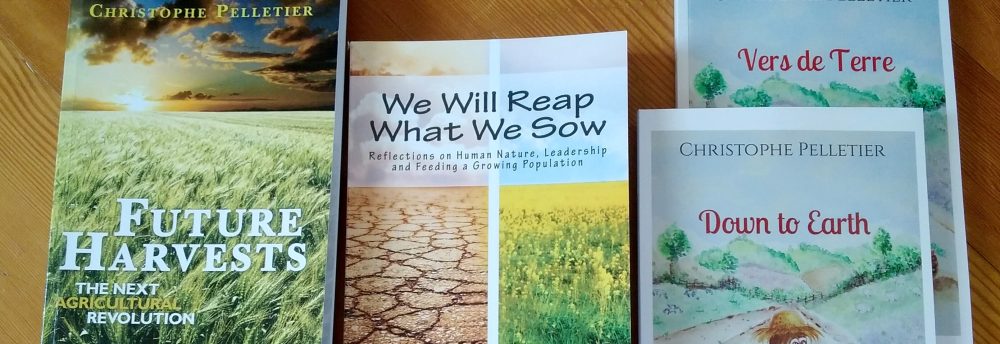

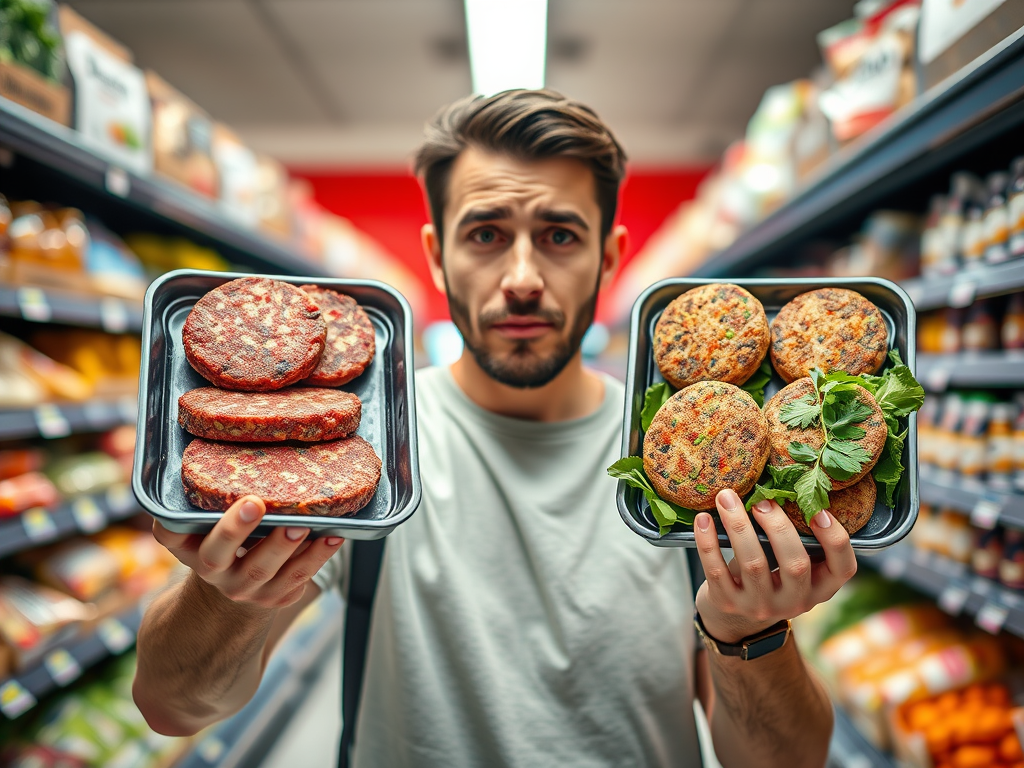




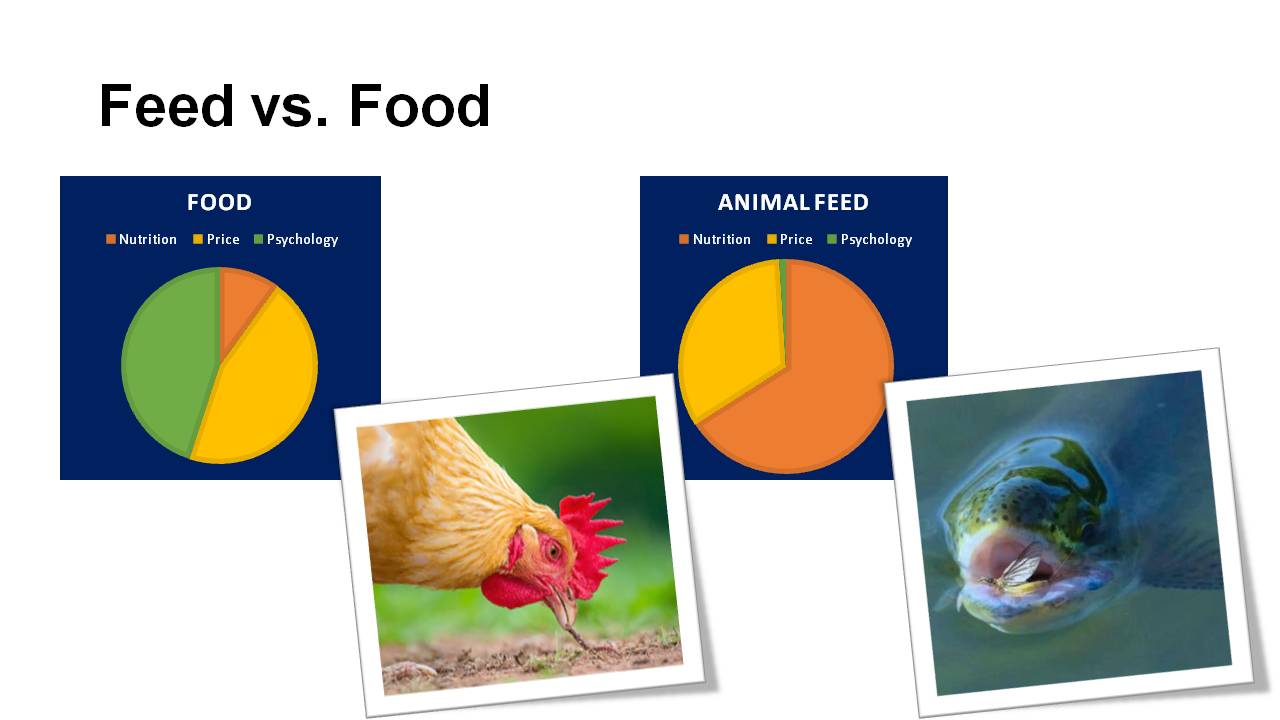


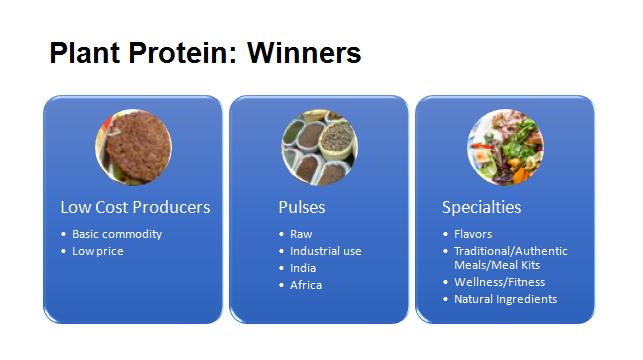

 The Food Futurist Solutions - Anticipate, Adapt, Succeed