246. How AI Will Transform the Role of Advisors in the Future

Listen here to a Chrome AI-generated podcast type playback of the author’s article

Over the past year, artificial intelligence has made tremendous progress. I remember sharing my frustrations about a year ago, but today, not only am I a regular user of AI, but I have to admit that the quality of the work it does is top notch.

So, how do I see AI impacting the work of advisors in the future? Well, I can see a number of areas where AI is going to be a game changer with profound consequences on the work of advisors, consultants or extension services.

First of all, why should clients pay advisors and consultants when they can have the same quality delivered by AI for a fraction of the cost and a fraction of the time? I often read posts and articles warning you that if you do not use AI, you will be replaced by people who do. That is true, but in reality, the shift goes beyond the competitors. If you do not use AI, you certainly will be at a disadvantage, but that is not the worst that can happen. The true concern is not so much competitors as the clients using AI for tasks that they used to outsource to you. If advisors use AI for some parts of their assignments, clients can do it just as well. Let’s face it, learning how to prompt is not that difficult. If an advisor can do it, be assured that so can the client. The client becomes the competitor for some tasks. It is not even about competition; it is about a market that will not longer exist, simply because it has no longer any reason to exist.

What will be the activities that advisors and consultants used to provide that will soon be obsolete? Everything that has to do with compiling information, conceptualization, knowledge and data will be the first to go. The bulk of reports, surveys and research will shift to AI. I used to see many similar reports that were passed to different clients and sold at retail price, thanks to word processing. This is going to be history very soon.

– Competence –

So, if advisors are not needed anymore to do their “traditional” work, what will be left for them to do? This is where the views about AI of a couple of years ago will change dramatically. I remember by then, a report from Harvard University showing that highly skilled consultants were showing less improvement by using AI than the less talented ones. That sounded like consultants would use AI and, miracle, even the mediocre ones could fool the rest and seem like high performers. I never bought that sort of thinking. To me, that already sounded like AI had the potential to simply replace them. Period. And that is what will happen. Using AI to try to look good is a weak strategy. Everyone can see that everyday on LinkedIn. There, the number of posts obviously generated with AI published everyday is amazing. But since it is AI, the natural question is to wonder whether the person publishing the post truly has the competences they claim to have, or is AI actually the one with the competences? When you start wondering about that, you are already questioning the real level of expertise of that person. This is where the top quality of the advisor of the future appears: competence! In the future, only talented advisors wil survive. Keep aside posts that have not been proofread while showing obvious errors, which is a reputation killer right away, it is interesting to look at comments. Competence (or lack hereof) appears right there. Can (or does) the person answer the questions asked or reply intelligently to comments or not? Then, you have your answer. Personally, I like to comment on posts, sometimes because I want to know more, and sometimes because I like to challenge a bit.

– Adding value –

Competence is one thing, but the advisor of the future will need to show more than just that. The key to survive as an advisor in a future with AI, is going to be able to deliver added value, and to demonstrate what it is and how much it is, in a tangible manner. The future role of advisors will not be anymore knowledge transfer (although that will always be an asset), but the core of the advice of the future will be in the know-how.

Farewell theoretical concepts alone! Welcome practical ability for execution!

This has been my philosophy since Day 1, so I like this idea. I would even go as far as to see the remuneration of advisors shift from flat fees for a project to a two-part system. A base fee, and a variable “bonus” linked to the actual performance improvement that the advisor will generate.

Adding value requires to understand the business of the client and especially what the specific needs for improvement are. It is truly a market-driven business-to-business approach. Successful advisors will be those who can “embed” themselves in the client’s operations, understand what works and what does not, and understand what should be happening but does not. AI is not just about technology. It is about having a tool to better help clients. It is a tool to support the human side of a business. Of course, some advisors are actually in that position. They are already doing quite well, and will keep doing so, as long as they do what is needed to stay sharp.

Copyright 2025 – Christophe Pelletier – The Food Futurist – The Happy Future

245. Is EU food and agriculture about to become a museum?

Listen here to a Chrome AI-generated podcast type playback of the author’s article

I was speaking recently at an event in Spain and by the end of my presentation, I had a slide on which I indicated which regions I saw as the winners of the future. The title and subtitle of the slide were:

“Winners: Conquerors

Bold, ambitious and determined fighters”

Being in Spain with many Europeans in the audience, I got the question of why I did not mention the EU among the winners. Fair question, and by the way, Canada, my second country of citizenship, did not appear among the winners, either.

About the case of the EU, I shared my concerns about EU policies which I find counterproductive. Although I find the idea of a Green Deal to make agriculture more sustainable a good idea full of good intentions, I do not have the same enthusiasm about the policies and means used to achieve improvements. I find the policies too much into the ideological and dogmatic and not enough into the practical and realistic, as I mentioned some time ago in one of my YouTube videos on the subject.

As the conversation was progressing with the audience, I lamented that the future would not be for the timid and that in particular that the EU does not seem to know how to stand up to the Putins and Trumps of this world. The EU has a leadership problem. Everyone can see that every day. I went as far as to say that if the EU does not wake up soon, it will end up being a museum. Apparently, this statement had impact. It obviously created a shock, and from a few one-on-one conversations I had later, it sounded like it was a useful shock. The argument of the quality of foods from the EU and their heritage was raised and I confirmed that I, for one, always appreciate these traditional products. Since we were in Spain, I mentioned one of my all-time favorites which is the Jamón Ibérico (I truly am a total fan). Every time I am in Europe I certainly love to go shopping on markets and I love the quality of the foods that I find.

My point about the EU turning into a museum was not that I do not consider the EU as a future winner because of its quality of foods. My point was because of the policies, EU farmers and producers are less competitive and will not be able to grow. The EU market share and influence will decrease because of such policies.

And this is a huge pity because European farmers are at the top when it comes to efficiency, high technical performance, low waste and, yes, product quality. European farmers and the associated industry are actually incredibly innovative and resourceful. Unfortunately, they often do not have access to the same amount of resources or of political support as in some other regions of the world. Personally, it really hurts my feelings when I see such top farmers being bought out and leave agriculture mostly for dogmatic reasons. Just imagine a company where the Human Resource Department would systematically get rid of its top performers for reasons that have nothing to do with performance. It would be stupid, wouldn’t it? Well, truth is that such idiotic actions actually happen in some companies, but that is another story. What is the result down the road? It is a leveling down of the sector, which follows by a weakened competitive position, a loss of market share, of presence and eventually of viability. And that is exactly what I fear is going to happen to EU food and agriculture.

The original European food and agriculture policies were about food security, which made a lot of sense after the harsh time of World War II. It is a good philosophy. It must never be removed for the top priority of the EU, or of any country that wants to play an influential role. I have been thinking of whether there ever was an economic powerhouse that did not have food security, and I cannot think of any. Often, it feels like the critics of food and agriculture take food for granted and do not even understand what it takes to bring it onto tables. My advice here is simple: do not ever take food for granted and make sure that those producing it can keep doing so!

For these reasons and to be among the winners, the EU must have bold, ambitious and determined food and agriculture policies. The food and agriculture sector must be vocal about this and must force every EU politician to answer a simple question: do they want to support their farmers or do they want to set them up to fail? It is either one. I cannot be both or neither. Just that simple. Further, the EU should also distantiate itself from the UN FAO goals of all sorts, most of which are more anchored in wishful thinking and ideology than they are in pragmatic reality. Fact is that most of them are lagging and will not be met on time. It is good to have goals, but when they are not realistic or attainable, they should see it as a duty to amend them and readjust goals and timelines. Just a look at the state of the European automobile industry is enough to see the damage that wrong policies, as I describe above, can generate. That nonsense simply must not happen to EU food and agriculture.

So, how to make the EU among the winners and avoid it to become a museum? Well, a couple of principles must be applied:

  1. The EU must produce the quantity (and quality) of food that the EU consumers need, so that there is less need for imports. A market-driven approach is key. Unfortunately, all food and agriculture policies always seem built from a production-driven angle.
  2. EU farmers and producers must be supported by their politicians, so that they are at least as competitive as their counterparts from third countries, which would make it easier for EU buyers to choose EU products first. Saying “choose EU” or “EU has the best food in the world” has about no impact with buyers. In the end, price always plays a major role and often is the major parameter. When it comes to competition, things are very simple: those who do not have a strong competitive position will lose. Like it or not, that is the way it is. And it is even more so with undifferentiated commodities for markets such as foodservice and processing industry for which the product is only an ingredient. For niches such as traditional products or regional specialties, it is possible for producers to protect their turf better, but such niches are not the lion’s share of consumption. Such niches will make a great museum, but what about the bulk of the EU market?

Nonetheless, there might be a silver lining about some of the policies. For example, The Netherlands have struggled with their nitrogen emissions reduction policies. After spending a few years persisting in error and wasting several billions of Euros with no result by buying out farmers and for those who could continue trying to force them into a rigid frame of rules telling them what is allowed and what is not, policymakers are rethinking the approach. Of course, anyone who understands farming knows that such rigid frames based on dos and don’ts simply do not work because agriculture is the opposite of rigid. It constantly faces changes, fluctuations and unexpected events. The Dutch farmers knew that. They wanted a more pragmatic and feasible approach, and opposed the policies but to no avail. Personally, I find essential to involve farmers to work on solutions fir a better agriculture. That was the topic of another video of mine. Farmers know the work. They know what works and what does not. Yet and too often, policymakers do not seem al that interested in listening to their input. That is a mistake.

In The Netherlands, the approach is now changing. Instead of imposing a script, the government now wants to focus on goals of nitrogen emissions reduction and leave it up to farmers to decide how they want to achieve the goals in the most effective manner. They will have to show progress and depending on the results might have to take corrective action if needed. To me, this makes sense. It is about results and that is all that matters. The how is secondary. Now, the thing is that elections are coming next month in The Netherlands and, depending on who wins, the new policies might be abandoned. We will see.

Copyright 2025 – Christophe Pelletier – The Food Futurist – The Happy Future Group Consulting Ltd.

The trust challenge

Lately, the topic of trust seems to receive more attention. In my opinion, it is a good thing, as I personally consider it one of the biggest challenges the food and agriculture sector is going to have to face in the future. Actually, trust is not going to be an issue for food and agriculture only. It will for about all areas of society. Trust is eroding in about everything, from businesses to politics, non-profit sector, media and even social media and technology such as artificial intelligence. I have addressed it in a number of conferences in the course of this year already.

Today’s world is filled with anxiety and considering all the environmental, societal and geopolitical pressures, it is only natural to expect this anxiety to only increase over time. I thought I would share some thoughts, and some ideas to restore some trust, on my YouTube channel. Here are two videos that I have made recently. I hope you will enjoy them.

Copyright 2025 – Christophe Pelletier – The Food Futurist – The Happy Future Group Consulting Ltd.

Seven qualities for a prosperous future

In this video, I present 7 qualities that I truly consider essential for a successful and prosperous future for food and agriculture, as they are effective weapons to overcome the many challenges that humanity faces. If the video does not appear, click on this link

The 7 qualities that I review are:

  1. Curiosity
  2. Critical Thinking
  3. Pragmatism
  4. Flexibility/Adaptability
  5. Collaboration
  6. Realism
  7. Humility

#Future #food #agriculture #success #futureoffood #futureoffarming

Copyright 2025 – Christophe Pelletier – The Food Futurist

Just passed 50 videos on my YouTube Channel

Here is a list of the videos that I have published on my YouTube Channel over the past 14 months. They covered a wide array of topics.  I have also created five playlist in which I have regrouped similar topics:

  1. Opinions
  2. Communication about food and agriculture
  3. Q&A with viewers
  4. The Food Divide
  5. Business tips

Please feel free to browse, as you might find some of interest to you.

Five main communication mistakes when explaining to the public https://youtu.be/j7OJ0dUpi14

Three major mistakes alternative protein producers are making https://youtu.be/wgwmDUKLDjA

The main mistake the animal product industry is making https://youtu.be/xytUvEzLW1o

The food and agriculture sectors need to be more proactive than reactive https://youtu.be/_A0TG_2Nwh8

A year after my first video about AI in food and agriculture https://youtu.be/7yAJ6rlqVec

The Food Divide Part 2: Are we biological entities or legal entities? Which one is it? https://youtu.be/c9y-XU92GOw

The Food Divide Part 1: opposed perceptions that have their roots beyond food and agriculture https://youtu.be/c95QhZmD9MQ

When you look at it, artificial intelligence is like cooking: quality is paramount https://youtu.be/0pWldTqcJP8

EU Green Deal: good intentions, nasty side effects https://youtu.be/AiLyM0_M5mA

For a successful future of agriculture, we must involve farmers a lot more than we do https://youtu.be/agZ_CVb8QOA

Let’s plan production to meet the world’s future needs https://youtu.be/-jbtn-w-uYA

My rant about COP29 https://youtu.be/GBCj21QWImM

When looking at the future, we need to mention the world population growth and its impact more often https://youtu.be/HRuQ87bti-s

Like it or not, emotions come first when connecting with the public and consumers! https://youtu.be/5nrTyqIpWas

15 Years of The Food Futurist https://youtu.be/fiFLtwjDX5o

Q&A with The Food Futurist – Episode 10: Three questions about technology https://youtu.be/V0KfrENYiCM

Q&A with The Food Futurist – Episode 9: What does The Food Futurist eat? https://youtu.be/2Lx3NKQuX3U

Q&A with The Food Futurist – Episode 8: Can regenerative agriculture succeed? https://youtu.be/AXMDUh962wk

AI in the future of food value chains | A quick review of where changes will take place https://youtu.be/YucqCGcU6To

Mon humble hommage aux Agriculteurs https://youtu.be/ybVwtIQaMKg

Q&A with The Food Futurist – Episode 7: Protein alternatives and alternative proteins https://youtu.be/nS0VMyaYEFI

Q&A with The Food Futurist – Episode 6: Three frustrations, three satisfactions, three wishes https://youtu.be/Gk-EvHkrGow

Q&A with The Food Futurist – Episode 5: Which of my books do I prefer? https://youtu.be/ruPJyLHQBhU

Q&A with The Food Futurist – Episode 4: Should we eat less meat in the future? Start by taking a look at your diet! https://youtu.be/xc2ATdpzLHk

Happy Holidays from The Food Futurist https://youtu.be/-cQbiN1tphU

Q&A with The Food Futurist – Episode 3: Can we have guilt-free foods? https://youtu.be/Du4hBGmpqRc

Q&A with The Food Futurist – Episode 2: Can we feed the world in the future? https://youtu.be/V-McXzhI8V8

Q&A with The Food Futurist – Episode 1: Optimistic or pessimistic about the future? https://youtu.be/LrPQKviJz0Y

Clips sample https://youtu.be/j-wBkx5jS0s

Future food consumption regions and diets https://youtu.be/ppiM7LJOA6o

Future technological innovation in agriculture https://youtu.be/FFZaaLpPHGQ

The Food Futurist | Bloopers https://youtu.be/fSVC5gDoVWQ

Introducing The Food Futurist https://youtu.be/45gRgztUVk8

My take on cows… and people https://youtu.be/9x6yEuq72Y8

The importance of closing back the loops https://youtu.be/vu2Q-x1OOPA

Efficiency vs Intensification https://youtu.be/GEX4PQN0iog

Food fights are good. Really. https://youtu.be/Ft7OCYZTbE0

The food waste problem is not going away https://youtu.be/9vKQWBueTCc

The future of food and agriculture has roots in the past https://youtu.be/t8Sy3qcu9pM

My Top 5 hot items for 2025

As the next year is around the corner, it is a good time for me to present in a video what I see as my top five hot items that will keep the food and agriculture world busy for 2025.

To help you go directly to one particular item, here are the video timelines for the five topics:

  • Geopolitics 00:17
  • The economy 05:10
  • Investments 14:11
  • Artificial intelligence 9:34
  • Diseases 12:18

Like it or not, emotions come first when connecting with the public and consumers!

Listen here to a Chrome AI-generated podcast type playback of the original article

With this post, I am going to start a new format on this blog. Since a growing number of people now prefer videos or audio to reading, I will post here the videos that I shoot, accompanied by the transcript of the video. I will try to make the videos relatively short, so that they can fit within the current level of attention span of most readers and viewers. You will tell me if this has been a good idea. My videos will also take a slightly more opiniated tone that my previous works. You can see all of my past videos on my YouTube channel.


To launch this new format, here is a topic that I have presented at conferences before, and that has been well received. I explain why emotions come first when communicating with the public. I also explain that beliefs always trump facts and science and why it is essential to focus first on the emotions of consumers to have an effective connection and gaining the public’s trust.


You know in agriculture there is one topic that comes back regularly in the conversation and it is how to connect and how can we really get the consumers listen to us and every time.

I’ve been involved in those conversations and I met the same problem.

The problem is that the industry of course is basically production-driven. It’s a technical activity and they always go back to the science and to the facts. I always tell them: you know beliefs always trump facts; beliefs always trump science. If the facts you present, even if they’re totally true, but it goes against the beliefs of the people who listen to you, they will say: Nah, I don’t believe that and that’s it. And then, you do not succeed.

So, how can you really get the message across? And what I say all the time is you have to connect you must not focus only on communicating; you must connect. Not connecting like it is on social media, I follow you and you follow me. That’s not connecting just teenage dreams.

To me, connecting means that you have to really get at the same level; and when we deal with issues, especially resistance in agriculture, we basically deal with emotional issues. That’s always the thing: people are all emotions but [we bring up] “the science says” or “the facts are”

The problem is that when you deal with emotions, you cannot talk about science and facts; you cannot bring the discussion at a rational level as long as you have not basically helped the other person process their emotions as long as you have not connected at that emotional level.

There is one thing that I’ve written in my second book and I give an example. I say imagine you have a child who has a nightmare and he’s screaming. The parents are coming in the bedroom and say: ok, what’s going on? and the child is all screaming and he say: there is a green monster under my bed and he wants to eat me.

Then, I say, here is exactly what you must do and what you must not do. What good parents would do is, well, they take the child in their arms. They would try to comfort him; they try to make him feel safe, bring a feeling that, you know, we’re here for you, don’t worry. If the monster comes, then we’re going to deal with the monster and then you basically ask the kid: ok what happened exactly? Now where is the monster? where is the monster? and says it is under my bed.

OK, and then, bit by bit, through questions you help the child to get the story out, and then you’re going to go and have a look under the bed. First, you can say: OK I’m going to have a look under the bed, you stay here you’re safe here let me have a look!

And then you can say: OK, I don’t see anything. You can take a stick, you know, a broomstick and under the bed and the child will see that the broomstick passes through and through under the bed and there is nothing probably and then, bit by bit, you’re going to be able to bring the child. Even, if you want. you say OK let’s have a look together under the bed and then that’s how you bring basically that very high emotional situation into a more rational one, bit by bit and then the child is going to realize there is no green monster under the bed. Then he’s going to feel safer, but it’s very possible that he doesn’t want to go in in the bed, or you can say: OK we’re going to leave the light on, or okay you come and sleep with us tonight. And tomorrow, we’ll have a good look at that and we’ll make sure that you know there is no monster at all. That’s the right way to do things. It’s connecting at the emotional level and, bit by bit, know making the child realize that it was just mostly in his in his head and it’s not real.

What unfortunately in my opinion the industry in food agriculture but all industries do is basically say to the child: “well, science has demonstrated that there are no such thing as green monsters living under children’s beds and eating them, so go back to bed because there is no reason for you to worry!”

But when you do that well what’s going to happen well your child is going of course he’s going to scream and to not trust you anymore. What do you expect? If you treat the emotions of a child that way, he is not going to trust you anymore. Unfortunately, because it’s not just about children having nightmares, in the industry if we want to really connect with consumers, if we really want to regain that trust, we have to connect first at that emotional level and only once we have done that, and bit by bit brought the conversation bit by bit, bit by bit, back to more a rational level, then we will be able to pass our message.

But, if we want to fight emotions with science and with facts, [if it is about] the message of the industry versus the emotions of the public, you will never win, so forget it! Don’t spend your money on PR on communication if that’s what you want to do. No, you have to have a little bit of empathy and you have to really help the consumers understand what you’re doing. You have to basically take the fear away but you have to do it bit by bit, both at emotional level and at the rational level.

Copyright 2024 – Christophe Pelletier – The Food Futurist – the Happy Future Group Consulting Ltd.

Fifteenth anniversary of The Food Futurist… now to the next fifteen years!

When I started The Food Futurist blog in May 2009, I just wanted to present my thoughts on the future of food and agriculture, as I was far from convinced by the narratives of let’s say official and influent sources. I also wanted to refocus my activities on food and agriculture, but had no clear and definite idea of what it should be, by then.

What an amazing journey this has been! Fifteen years of being invited to share my thoughts and bring a vision to many clients. I am proud of these fifteen years of accurate predictions, spot-on foresight and effective strategies

Thank you to all of you who have hired me during these years! I am very grateful for the opportunities you gave me and for the lasting relationships that have come from our collaboration.

However, this anniversary is only just that, an anniversary. Life goes on and all the challenges and possibilities that are emerging on our road to the future are confirmation that the material I produce is just as relevant and necessary as ever.

Full of energy and determination, I am looking forward to the next fifteen years of collaboration with you to develop more practical solutions that work and help you build a prosper and thriving future of food and agriculture.

Here is a short video I posted on my YouTube Channel, in which I talk a bit further on the next 15 years.

I am a techno-realist who focuses on the essential stuff

Listen here to a Chrome AI-generated podcast type playback of the original article

Recently, I accidentally came across someone’s self-description as a techno-utopian. Although it sounds cute, this concept does not really appeal to me. It lacks something I always look for in tech and what my clients always appraciate in my work: the essential stuff. Nonetheless, I felt compelled to look up the definition of utopia in the dictionary.

Utopia: an imagined place or state of things in which everything is perfect.

Then, right away it put things into place. “Imagined” is fine with me. Probably because as anyone who knows me would tell you that I have no shortage of imagination, and often just a little too much of it. The way I look at it, there cannot be enough of it. After all, imagination would not be imagination if we gave it boundaries and limits. The very core of imagination is that we can think of anything. In my work, I have been asked many times to brainstorm about how to use something new and what applications, even silly ones, it can offer.

The second part of the definition is a bit more of a problem. “Perfect” can simply not be defined. Nobody knows what it means. Being a perfectionist comes down to chase an illusion. In the meantime, some things need to actually happen. I understand and love excellence and the drive to always improve. I don’t care all that much for perfect. Clearly, I am not and never will be a utopian of any sort. I tried to think and find anything utopian that ever became reality… and I could not find anything. On the other hand, dystopia… Utopian thinking sounds great. Who wouldn’t want a perfect world, whatever that might mean? What’s not to like about utopian thinking? It sounds great, it doesn’t challenge anyone or hurt their feelings. It is totally risk-free and makes you look really nice, but more in a Miss Universe pageant sort of way, after a while. At some point, it’s time to come down teh cloud and start to actually solve real problems. When it comes to the future of food and agriculture, we better focus on adapting and improving, and certainly technology has an important role to play, but there is a time to dream and there is a time to achieve actual progress. During my professional life, I have heard time and time over about the many silver bullets that were going to fix all the problems. After almost 40 years of working in the food and agriculture sector, I am still waiting for any of such bullets. Actually, I still hear about the same problems. Yet, there have been many changes, many innovations and many ideas. Lots of things have happened and yet, I believe that we all can agree that despite all of that, our world is in more dire situation today than it was 40 years ago. If technology is the panacea, why don’t we succeed to solve problems, might you ask?

A large part of the answer lies in the fact that solutions are not solely of a technical or technological nature. That’s the mistake number 1 made by the tech people, and the techno-utopians. There is no shortage of technical and technological solutions, and there have never been. Actually, we have had all the necessary technologies available to fix our problems for quite some time. Of course, there is always room for better ones. We always can and must improve, as I mentioned earlier. So, what’s stopping us?

Well, it’s not technology or innovation. The dreamers and the visionaries have done quite well. No, what is stopping us is something I have discovered early in my professional life. Here is a quick flashback. When I started my career, if there was a hard-nosed all-rational science and tech believer and aficionado, that would have been me. I love the hard and cold facts of exactness. Subjective and more emotional stuff would not even be on my radar screen. It’s simply was not factual. Then, my career moved in the direction of sales and management. Then, I discovered that actually nothing happens unless it aligns with the subjective and emotional stuff. Facts, science and technology don’t make it if there don’t align with beliefs, values and the personal interests (usually those of a financial nature) of the users. Ha! There is the main hurdle!

The thing is, tech is more comfortable that jobs require dealing with people. Things don’t disagree. they don’t show anger and don’t challenge you. In tech, you’re in control. It feels rather safe. When dealing with people, you have to deal with differences of opinions, pushback, personal issues, negative emotions, even aggression and fights. It’s a lot more challenging and personal. Most people prefer the tech bubble to the real world. I understand why.

The limitation to solving problems is not technological. It actually plays at two main levels. The first one is the systemic level. If we don’t change the systems, actually meaning changing the way we think, technology is not going to break through. The second level is money, pure and simple. The numbers need to add up to succeed. As I said, technologically speaking we have all the tools we need. The problem is that often, it is not economically viable. It is not viable for several reasons. One is that it is indeed not economical. Another reason is that the math does not include externalities (the long-term costs and/or benefits) and the math is skewed, but nonetheless, the numbers do not look attractive on the short-term. Another reason is that the perceived value of the solution does not match its price tag.

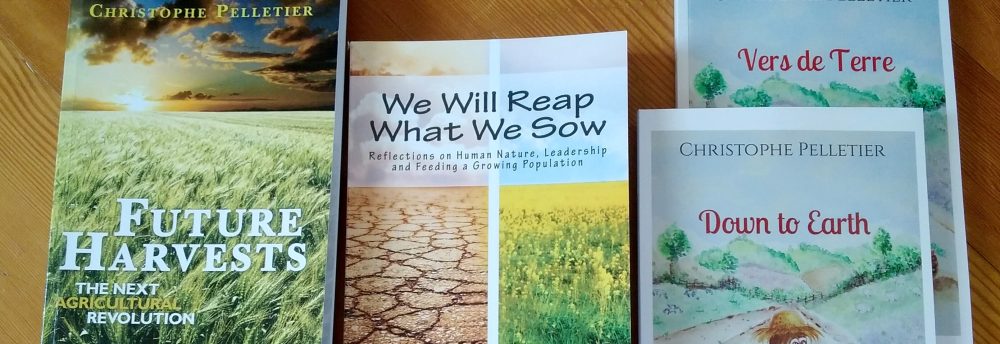
Here is where my self-description in the title of this post comes to life. I focus on the essential stuff, not just the “beauty” of technologies and innovations. In 2015, I wrote a post on this blog about why technology is much more that just the technical part. My second book, We Will Reap What We Sow, focuses specifically on human nature and how it can influence how our future will look like. I always take the human dimension in my analysis, simply because if people don’t buy the story, it does not happen. They don’t adopt the technology, don’t see the point of changing the ways of the present, and the system stays the same in its main lines. Same thing with the money. If there is no financial advantage, they do not adopt the new technology. This is particularly important when it comes to business-to-business. I like to categorize technologies into two groups: tools and gadgets. In a business-to-business environment, tech has to be a tool, meaning the tool user must have an advantage in using the technology. It either saves time or saves money, and ideally both. If not, even the most wonderful utopian tool in the world will end in the “museum of great ideas that never succeeded”. Next to the tools, there are the gadgets. Those are different. It is not as much about savings as it is about emotional aspects. Money is less important. From what I just described, to me agtech are tools. Foodtech could be tools, but most are really gadgets, especially when it comes to consumer products. Many novel foods do not come close to have the same nutritional qualities as the existing category of foods that they aim to replace. And then, they are surprised that the hype is short-lived, because there is a little something that tech people overlook: consumers are not completely stupid and the large majority can tell when they see nonsense.

I guess you might tell me that I am wrong when I say that tech people neglect the financial side. Well, yes and no. There are two groups involved in tech.

One group consists of let’s say the tech geeks who want to build a business. They are totally focused on the technical aspects. They neglect the human side of the business and overlook the need to get to profitability. Often, they have about zero understanding of business management and of marketing. They assume that because they develop something that looks great in their eyes, it should succeed. Unfortunately, not everyone looks at things through the same lens. Further, they tend to not think beyond their little bubble and have no idea of what possible problems they might create, but that’s the tech modus operandi: “Promise anything to get funding, think of consequences later”.

The other group consists of the investors. Those are really focused on the money. Their understanding of technology varies greatly, which is why they sometimes invest in total dogs. The weakness of the investing community is that they love money so much, they expect high and fast return. Food and especially agriculture do not show that kind of dynamics. Usually, it is a long slow process and the returns are often modest. Of course, there are sometimes lucrative niches but they are rare and once the niche is full, the potential for further growth is rather limited, and they get stuck. I guess the investing community must have come to that realization, as the level of investments in agtech and foodtech is dropping, as showed in these graphs I found on Agfunder. They speak for themselves. And it is not just agtech and food tech. Wall Street has started ditching ESG investments, too. Obviously, utopians don’t generate value, and the real world eventually focuses on the essential stuff.

Of course, raising interest rates play a role, as suddenly free money is no longer available.

Yes, utopia is still a long way away, but that is the very nature of utopia. Cute fairy tales populated with unicorns (as you probably know, a term used for successful start-ups) are nice but they are just that: fairy tales. Saying the you believe that technology is going to solve all the problems does not necessarily make it so. Beliefs and reality are two very different things. To me, the techno-utopian discourse sounds too much like what sect members very diligently like to tell around without exerting hardly any critical thinking. Realistic aspects seem to be optional in this approach. Many see themselves as evangelists (see the connection with pseudo-religion now?). It is so lame, it is actually ineffective, except for the select few (“the sect leaders”) who fill their bank accounts by using the gullible and the naive who relay their message. But that’s what the influencer concept is all about, and it works. In a way, I see techno-utopians as followers, and techno-realists as precursors. In psychology, it is known that two basic needs of human beings are attachment and authenticity, and these two needs tend to go against each other. The balance between the two is difficult to find and failing to do so has psychological consequences. Followers give the preference to attachment . Precursors choose for authenticity and attachment comes from the authentic self. I can find myself in this description.

Understand me well, I like making money. In my professional life, I have turned around business operations in six countries, so you can trust me for being financially quite sharp. I also know that it did not happen by telly cute fairy tales or wishful thinking. It happened with stark business realism.

The techno-realist in me is totally insensitive to fairy tales and hypes of all sorts. I guess I still have that hard-facts no-nonsense part of me inside, but paired with my sense for human nature and financial rigor, I used both my cerebral hemispheres, not just half. I can spot what has potential to work and what doesn’t. And I have in the past. Very quickly, I will list the most significant cases of where I did not share the utopian naivety here, and for which history proved me right.

Vertical farming. I always saw more potential for low-tech vertical farming. I have never been impressed with tech vertical farming for a few simple reasons. The fixed costs are so high, it can work only for specific niches with high-end restaurants for fancy greens. Problem is only a small share of consumers eat in high-end restaurants, and that the world can not be fed on arugula and basil only. There have been enough bankruptcies in the sector for me to rest my case.

Blockchain. I have never seen blockchain as taking over the way the tech world was trying to convince us. Frankly, the benefits were rather marginal, all the more so that many businesses still don’t have a clear idea of what traceability and transparency really mean for consumers, despite what they think. But the development of artificial intelligence could revert the situation by providing a much more dynamic and practical tool. AI can definitely boost the development of very useful super-ledgers.

Tech plant-based fake meat imitations. To me, everything has been wrong with that stuff since day 1, and probably even before. OK, I’ll admit the Silicon Valley billionaires have done excellent PR to create the hype, but as the saying goes “you can fool some of the people some of the time, but you cannot fool all the people all the time”, and as I said, consumers are not completely stupid. That has been one of the main mistakes, but I cannot think of anything that those companies may have done right. It has been such a demonstration of incompetence in all areas, I won’t comment any further. Substitutes for meat have potential, but the ones that succeed are mostly low-tech local businesses run by humble people, and that makes a world of difference.

Lab meat. Although I have always considered it can have some potential for certain applications, I still don’t think it will be near the kind of volumes they think and I have always doubted their timelines. When I was writing my first book, Future Harvests, in 2009, I had a conversation with some of the Dutch pioneers. By then, I was told that lab burgers would hit the store shelves in five years. We are now 15 years later and not any noticeable volume of lab burger in sight in the stores. Recently, I heard the claim that it will be in the stores in 10 years from now. I’ll be waiting to see. Further, still the same story about the cost reduction coming soon. It is always “soon”. “Soon” is a euphemism for “no commitment on when” and for buying time and keeping on living on the investors’ money. And time passes by. I also love the term “parity”. What does it even mean? Parity with which product? If they want to price it at parity with meat, just have them do so. Change the price and see if it sells. Further, stories like Upside Foods and their chicken lab meat just contribute to undermine any credibility that is left. No wonder, the money does not flow all that much anymore in that category.

Although still in development, precision fermentation is another sector that creates some buzz. It is the current flavor of the month, taking over from plant-based and lab meat in the spotlight, as interest has faded in these two catgories. “Precision” sounds good, doesn’t it? Actually, the term is PR, something the lab/cell/cultured meat still has not been able to find, yet. As such, precision fermentation is not even particularly new. I find people in that sector rather frustrating. As everybody else who promotes alternative protein, they are obsessed with the claim to replace animal farming, and farming altogether. For starters, animal products are not just protein, they are so much more. Yet, even the animal farming sector prefers to reduce itself to protein, as they are terrified at the idea of having t talk about fat, while with the right choice of feed ingredients they could provide top notch essential fatty acids profiles in their products. The foodtech sector doesn’t even know what the production volumes of dairy, meats and eggs are. They have no clue of how much production capacity would be required to replace animal farming and how much it would cost to build. If they did, the fairy tales would collapse in no time. Considering the level of funding they already need for rather minor volumes, they are in for a surprise. Other source of frustration for me is that I never get straight answer to simple questions, such as “are you profitable?”, “what is your cost compared with the animal product you claim to replace” how much can you produce per year with your current production unit?” Sorry but “several thousands of tonnes” is not an answer. Is it 3,000 tons or is it 30,000 tons? I don’t know. Apparently, neither do they. Perhaps, I have not met the right people. About the claim tech proteins require hardly any land, they finally very reluctantly admit that to feed the microorganisms, they need sugar and lots of it, and just as reluctantly they finally admit that it is not all that sustainable. Yep, that sugar has to come from intensive specialized agriculture. ironical, isn’t it? Anyway, I’ll give them the benefit of the doubt, but it does not sound all that utopian after all. One problem they will face is the fact that they produce only molecules. For liquid products such as milk or eggs, the challenge is easier. There is no particular need to texture the protein. Nonetheless, albumin is not egg. You have to add the yoke. Using an old cooking test with a New York City fancy 3-star Michelin restaurant as a reference is not the best way to appeal to the overwhelming majority of the population who can’t afford to go in such a restaurant. Limiting themselves to albumin and telling there is cholesterol in the yoke as a reason why people should eat only egg white is not going to work with consumers. Try to live without any cholesterol at all and then let me know how that worked out! Once again, consumers are not stupid and they know if the novelty is comparable with the original thing or not. Same thing with milk proteins (casein, beta-lactoglobulin and lactoferrin). They are not milk. Milk contains and provides many other nutrients. Those who claim eggs and milk will be replaced are just following the same path as the plant-based meat imitations. That said, I see a lot more potential for these molecules as ingredients. Nothing new here. It has already been happening in dairy and with egg products for quite some time. There is also good potential, from a profitability point of view, in the sectors of health and wellness. Those are more niche markets but with good volumes and good prices. But trying to go after low price commodities like eggs in the shell and generic milk and cheese, will prove much more challenging. There is probably also some serious potential as a source of protein for animal feed, especially with an eye on essential amino acids profiles. Also, I see some possibilities in the fish feed sector. That’s the irony of protein alternatives. They have more chances of success in the animal feed sector to produce animal products, and that is fine. Every shift is useful.

Insects. That’s another development for which I saw much better prospects as animal feed ingredient than for human consumption, especially in Western countries. Anyway, I wrote about that on this blog years ago.

GMO herbicides and weed resistance. I was describing 15 years ago in Future Harvests, that mono-usage of the likes of Roundup Ready GMOs were going to end with massive issues of weed resistance. That’s exactly what happened. Anyone with basics in biology and understanding of how organisms mutate and adapt to their environment could have figured out that one. If you want to follow the matter, just check what the same groups of people who produced that mess are now working on in the area of biological herbicides with all the (should I say utopian) promises that goes with the need for funding. I don’t expect a smooth process.

So, as you can see a bit of a long story, why techno-utopian may sound nice but it works as long as it is talk. Although imagining new options and alternative is absolutely necessary, it is even more necessary to give it a serious reality check in the real world. That’s why I will never stop at imagining a future, I want to confront it with realism because that is where the action really is. Recently, I posted a video on my YouTube channel in which I answer questions about technology from viewers. The three questions are:

  • whether technology the solution for the future
  • which technologies will solve our problems
  • if I agree with the people who say that food tech is a distraction that does not solve any problem
 

Copyright 2024 – Christophe Pelletier – The Food Futurist – The Happy Future Group Consulting Ltd.

Introducing two new services: Regaining Trust – Second Opinion

It is just a month away from the 15th anniversary of The Food Futurist. In the course of these years, it has become increasingly clear to me that some areas need more attention and effective action for the food and agriculture sector to remain successful. Indeed, the future of food and agriculture is not just about what cute robots will do in the future and what funky foods scientists will figure out. It is much broader than that. It is about making the right things happen. In the end, it is not just about producing foods, but it is to produce them in ways that have a future, and also to sell them to increasingly critical and discerning consumers. This milestone anniversary seems like just the perfect opportunity for me to reflect and reshuffle my services to some extent. By doing this exercise, I have decided to introduce two new areas of services by May 1st 2024. These are areas where many organizations miss opportunities. These are also two areas in which I am quite qualified, for having delivered strong performance in my professional career.


The first one is centered on Regaining Trust

It is no secret that trust is eroding in many areas. It happens with politics, with traditional media and even with some social media outlets, and it happens with food producers, especially the larger companies. One of the challenges that many food and agriculture organizations have been facing for decades is the loss of trust from consumers. The reasons why are many. Some are justified and some are not. Regardless of that, the loss of trust is a challenge that is becoming more and more difficult to overcome. In my career, I have had to deal with this problem in many occasions, but I always found ways of breaking the vicious circle of mistrust. In my opinion, the difficulty for organizations is not so much that people distrust some food producers, as it is to find the right way of addressing the issue and of truly creating a connection for a further conversation. PR does not work all that much anymore, simply because about everyone knows how it sounds and spot the communication exercise in action, which further erodes trust. Also, the timing is too often wrong and it makes the connection much more difficult. As a practitioner of martial arts for many years, I also see attempts to regain trust much more as an exercise in strength as one in flexibility and agility, and that is usually a losing tactic.

As a teaser, here are the pillars that we will use to build the tailor-made programs. You need to Relate

R: Respect

E: Empathy

L: Listening

A: Authenticity

T: Truth/Transparency

E: Exchange

    Trust is essential for an organization in order to have a solid future. In this respect, I believe that it fits very well with the activities of The Food Futurist.


    The second area of service will be Second Opinion

    From what I have seen during my professional life, I believe that this is the kind of service that most organizations need. The number of strategic errors or implementation planning missteps that happen every day is there to prove that getting a second opinion is not a luxury, but in fact can prevent many costly mistakes.

    Sometimes, it is about getting things done in some rush to meet a deadline. Sometimes it is about an excess of optimism and self-confidence. Sometimes it is the lack of a new eye. You name it. There are many reasons why an organization overlooks some details, or is becoming somehow blind out of habit, or is too eager to jump an anything that looks like a trend out of fear of missing out. An independent and objective second opinion can save many headaches.

    I see this service quite useful for established businesses, but also for young companies, and also for investors who might benefit from a second opinion before risking their money in the wrong concept.

    This service, too, deals with the future and as such fits quite well with the activities of The Food Futurist. The format and scope of this service will be adaptable and tailor-made for the specific needs of the client.

    Copyright 2024 – Christophe Pelletier – The Food Futurist – The Happy Future Group Consulting Ltd.