Here is an article by Bernd Meerpohl of Big Dutchman on poultry husbandry systems of the future. Not surprisingly, he did not present any revolutionary new developments for year 2034, but I miss some aspects that I believe will be important for the future.
Markets will be different, just because the consumers will not be located in the same as now. Different markets with different needs will mean further evolution in breeding strategies. We will deal with energy and environment in a different light, and this will affect production systems. Climate control, lighting systems, transportation, distance between producers and consumers, bird catching and bird processing, packaging systems will all evolve because of the need to preserve energy, food and water, as well as increase efficiencies.
Tag Archives: Water
World Nutrition Forum: The future starts now
Here is an article reporting about the World Nutrition Forum held recently in Austria.
It presents the future of animal productions quite along the same lines as I think.
Efficiency, innovation and location will become the key components for the future.
Efficiency will act as a “natural selection” between the species farmed, as an increasing need for protein combined with a limited volume of feedstuffs and water will decide what productions can grow the most and which ones might not be able to do so. Poultry is definitely a winner thanks to its low feed conversion ratio and to its relatively high water use efficiency, pork is uncertain, and cattle will have the toughest time, although cattle is the only production that can transform cellulose into animal products, so the production systems will likely change and offer a different kind of future for beef.
Location of production will follow the location of the consumer markets. With a population increasing strongly, as well as their standard of living is improving, Asia will become a very active production area. This probably will also be the result of a need to reduce transport costs, as well financially as environmentally speaking.
Innovation, as I have mentioned in previous articles, will be a key driver for the future of animal feed and of animal productions. I am quite glad to read that the industry is fully aware of this need, and also that they see their future in “creating value” more than just “cutting costs”.
Although the conclusions of this forum are quite encouraging and positive, the next step might be the challenging one: how to turn these great ideas into systems that will work and will ensure the long term future of the production side as well as of the consumption side? It will all be in the proper planning and execution that this will succeed.
Managing water is paramount for the future of food production
 With an increasing population that needs more food and more water to live, we can expect that water is going to become a highly strategic and needed resource. As climate changes, the current rain distribution and geographic availability of water is likely to change dramatically, too. This increasing competition between agricultural areas and urban areas will bring major changes on how we use water for both personal use and for food production. On the personal side, we certainly can expect that current bathroom systems to disappear, as they use too much water. Every time we flush a toilet tank, we actually waste the daily drinking water needs of a couple of people, and local water reserves are gradually depleted as well. Clearly, this has no future. Similarly, we can expect the legislation on water use for lawn sprinkling and car washing to change.
Food production will become more and more focused on water efficiency. The main themes will be about taking what we need, but no more, and about collecting, conserving and recycling water. This will bring us to rethink our crop production, the watering systems we use and develop systems aimed at collecting and conserving water.
Our choice of crops will get under review. Some plants have such high needs for water that their production systems will have to be altered, or maybe even we will have no other choice of limiting them to small selected areas. The use of combined crop productions on the same field is likely to gain some popularity back, as this is a way of saving water and protecting the plants and the soil from excessive evaporation. This, of course, will mean a different look on yields and on harvesting systems.  More efficient irrigation systems will replace the old ones. Computerized systems are already in use in wine production, using sensors for humidity and temperature, to determine how much water the plants needs at the most optimal time of the day and deliver it at the exact spot. You can expect that such an optimization approach will prevail. The path that Monsanto follows with the production of genetically modified (GM) wheat that needs only a third of regular wheat varieties is quite interesting. The tricky part is the GM part, as on the contrary to natural “mutations”, such a process does not undergo natural selection, and therefore we do not know what possible side effects it might bring. Nonetheless, this is an attempt to deal with future water shortages. Hopefully, other less controversial solutions can be found that will deliver a similar result. Once again, we can shape our future through continuing innovation.
Food processing, such as slaughterhouses or washing stations for produce, uses large amounts of water. In these sectors, too, new more efficient systems will have to be designed to reduce water use, and they will have to guarantee to meet hygiene and food safety standards. Water treatment and recycling have already been in use for years and they will continue to gain market share.
Next to the above, which is mostly in the hands of individuals and companies, there is a need for political action to address water shortages and water quality issues that expand far beyond the local operations. A number of agricultural areas suffer from drought on a regular basis, such as Australia and some parts of Canada. Other areas have seen the flow of rivers drop dramatically, like for instance the Yang Tse River in China, which has more and more difficulties to reach the sea. In other areas, such in the Arabic Peninsula, the countries realize that traditional irrigation systems are meeting some serious limitations because of the competition between need for drinking water and need for irrigation. Some very interesting projects are in the works to offer alternatives. For example, there are studies to consider the use of floating islands covered with solar panels in order to produce on the spot the energy necessary to desalinize seawater, therefore providing these areas with water that does not originate from underground reserves.
These problems affect the availability, the quality of the water and strongly affect the environment. Failure to address and more importantly to solve such problems properly would have catastrophic consequences for large populations. A balanced plan to offer the availability to water for people, agriculture and industries is absolutely necessary.
Copyright 2009 The Happy Future Group Consulting Ltd.
If we are what we eat, what will we eat in the future?
The past 50 years have seen, at least in the Western world, the development of the consumption society. The emphasis has been on consuming always more, by having an apparently unlimited quantity of increasingly cheaper consumption goods available. This trend happened in the agriculture and food sectors just as well, and followed a rather simple patter, actually. Mass consumption has been coupled to mass production, thanks to intensification, technical and technological progress and, last but not least, marketing.
 Technical progress improved yields and productivity, while marketing was aimed at creating more, and new, needs. Our food has become standardized, industrialized, and processed in a wide variety of forms. As the emphasis moved to lifestyle and convenience, which came along with the rise of mass distribution, cheap energy and suburbia, we lost the connection between ourselves, the origin of our food and nature. Food became just things you buy at the supermarket, already packed in plastic and cardboard.
Now, we have come to the realization that this high production of waste, be it packaging material, be it blemished product that do not look good anymore while still perfectly edible, be it the overproduction of manure and its minerals, or be it the massive use of antibiotics and pesticides is not sustainable. Of course, much progress has already done to reduce this waste and there is a growing trend towards organic and traceable, but at this stage it not clear yet whether this is a true change in our behavior or whether it has more to do with a social status and marketing issue.
However, what the current situation might be, the fact that we understand that we cannot keep on intensifying and wasting the way we did, will inevitably bring a more fundamental change in how we consume in the future.
Some people predict such changes as the astronaut diet made out of pills, the use of a computer to tell us what and how much of it we should eat based on our activity level, or the tissue culture to replace meat, and many other scenarios. Will any of those ever happen? Who knows?
Personally, I believe that food as a very strong psychological connotation. We associate food with experiences and, although there are differences between cultures, that emotional bond will stay.
Clearly, the consumption society with all its excesses is coming to its end, and maybe the current economic crisis, which also originated in the excess of having it all at any cost, could very well be the turning point.
The next evolution is probably going to be a balanced approach between consumption, which we need to some extent, and the necessity of preserving what keeps us alive. There will be different graduations of this balance between geographic regions, but sustainability is the only way forward, as I mentioned in my previous article (Sustainability: as natural as balance).
Intensification is showing its limitations, waste of manure and of packaging are also hitting a wall, energy is getting more expensive and makes the production and the transport of food more expensive, too. This will reshape how we want to consume our food, how and where it is produced, how it is presented to us.
 We still are in a society where some people get obese by eating lots of food as quickly as they can, while they have less physical activity than the previous generations, thanks to automation. That food is produced on intensive farms and feedlots where the animals grow and fatten as quickly as possible, as they eat lots of food, while not having much physical activity. Similarly, in our society meat producers use hormones to boost growth and carcass quality, while body builders and sport professionals use steroids and growth hormone to boost their performance. Interesting similarities, don’t you think? We are indeed what we eat.
So, in a conservation society, should we expect the farms to be led by the need to preserve? This almost sounds like the farms we had at the beginning of the twentieth century. I think that there will be some of it, but the efficiency of production as well as the efficiency of preserving the environment will be much better, thanks to new technologies. We will have high yields, and at the same time, we will have highly efficient systems to use water, to recycle waste and preserve the fertility of our soils and the balance of our oceans.
Copyright 2009 The Happy Future Group Consulting Ltd.
Sustainability: As Natural As Balance
With the increasing awareness about climate change and our endangered environment, sustainability has become a widespread concept through all industries and the food value chains have embraced it like everyone else.
Yet, I do not quite understand why sustainability seems to be such a “revelation”, or even almost a revolutionary idea. Sustainability is the way that our societies have lived for thousands of years, probably because scarcity of goods made conserving and recycling a necessity of survival. Only over the last 50 years or so have we seemed to forget about it, because of our consuming frenzy and the abundance of goods that we thought to be about infinite.
To put the importance, and the obvious need for sustainability, let’s just look at its definition. What is not sustainable disappears. There is no need for any further philosophical or political discussion. Survival can (note that I only say can) come only from sustainability. All processes in nature that deal with life are all about recycling of organic matter in one form or another, and about balance. If the environment is favorable for a particular species, you will see this species thrive and its population grow quite strongly, to the point that it exceeds its abilities to provide for itself in its original ecosystem. Then, it starts to use more and other resources that nature can replace at the natural pace and this always results in a strong reduction of the population, as the weakest cannot find food and perish, or as the population density helps the spreading of diseases much faster than it would otherwise. Does this sound somehow familiar?
 There are many discussions in scientific, economic and political circles about whether we have reached such a stage either regarding pandemics or regarding food supplies. The specter of pandemics recently raised its head with the “swine flu” originating from Mexico. Last year, there were severe disruptions of food supplies in some parts of the world, not as much as the result of an actual shortage, but as the result of prices skyrocketing and fears that food would run out.
Are we about to run out of food? Malthus was warning about such a risk in the early nineteenth century, but since then, the world population has increased far further than he estimated was possible. Today, we probably are not in that dire a situation, yet the main food supply issue is more one of distribution between geographic regions. Some parts of the world are underfed while others die of all sorts of ailments related to overfeeding. This is more a matter of politics than purely of agricultural (including seafood) potential.
Sustainability is about allowing nature to do its work at its own pace. This is all about staying in balance and keeping natural cycles complete their courses. Since you cannot live without eating much more than 2 months, you cannot live without drinking for much more than 2 days and you cannot live without breathing for much more than 2 minutes, these cycles can be reduced to just a few critical areas for life:
- The cycle of air, necessary to remove, or to help nature remove the contaminants, so that air remains breathable.
- The cycle of water, necessary to remove, or to help nature remove, the contaminants that can make it undrinkable.
- The cycle of soils, necessary to preserve the fertility of the soils, and thus allow a continuous agricultural/livestock production to feed people.
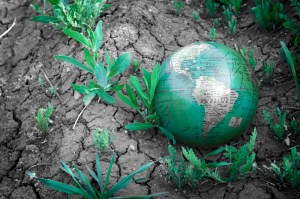 This is why, with a growing human population, agriculture and food production at large, managed in a sustainable manner, will become increasingly strategic in the future, and sensible management of water resources will be a key factor for the success of agriculture as well.
Copyright 2009 The Happy Future Group Consulting Ltd.
The lessons of intensive animal husbandry to aquaculture
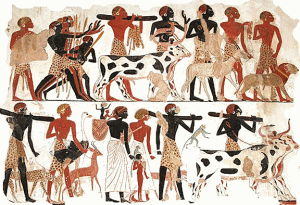 The domestication of animals for food production started thousands of years ago, and has gone through a slow evolution since then. In the last 50 years, we have intensified productions systems to a very high degree. Aquaculture, although not unusual in ancient times, has really experienced an economic boom only rather recently, and future growth predictions are quite optimistic.
The development of intensive animal husbandry has helped provide people with high nutritional value products, and it also offered the possibilities to farmers to have a reasonable source of income. On the other side, it has brought a number of problems, many of which have not been solved and this has resulted in pressure to reduce the level of intensification.
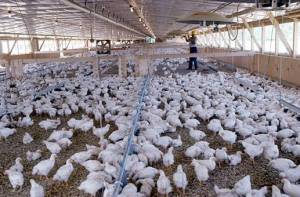 With high densities of animal in some regions, animal husbandry has had to deal with a number of health issues, such as not long ago avian flu and swine fever. The presence of large number of animals in limited areas has increased the “disease pressure” on farms and regions, making epizooties quite devastating, considering the amount of culling that health prevention measures require. This always takes a heavy economic toll, and not only on farmers. This has forced many countries to review their policies about intensive animal husbandry and downsized the sector.
To prevent diseases and mortality, intensive animal husbandry has made a widespread use of antibiotics, which also appeared to promote animal growth. Unfortunately, over time it has appeared that these antibiotics found their way into our bodies and ultimately into our drinking water reserves. The main threat that has arisen from the massive use of antibiotics is the emergence of bacteria resistance to these antibiotics, with the potential risk of making them ineffective, should bacteria become resistant to all of them. The result of this would be to bring us back to the pre-penicillin era with all the consequences that we know. Many countries have now addressed the problems surrounding the use of antibiotics and restricted their use to curative purposes.
Another strong impact on the environment has been the manure surpluses in intensive regions. Next to the odor problem, the excessive manure production has resulted in heavy pollution of the soil and of water reserves. Phosphates and heavy metals coming from the animal feed endangered the fertility of the soil. More mobile minerals, such as nitrates, have entered our drinking water, making it in many areas unsuitable for pregnant women and infants. Sadly, the intensive regions get in trouble because of a surplus of minerals that originate from raw materials produced in other parts of the world, while on the farms producing the feedstuffs, the minerals are not brought back. They have to be replaced by chemical fertilizers instead of the manure that would originate from the animals, such as in a closed system mixed farm.
Husbandry systems have evolved, too. After years of high degree of confinement, regulations have changed and are still changing to take animal welfare more into account. As examples, I could give the stop on tethering of sows and hen cage ban. I have no doubt that animal welfare will become a growing issue in aquaculture, too.
The use of feed and its constant quest to reduce production costs has brought the industry to use some raw materials that can be questionable. An example of this was meat and bone meal use, after the mad cow disease hit Britain in the mid 1990’s. Next to the possible transmission risks to humans, it has also raised some questions about whether herbivores should consume meat derivates.
Intensive animal husbandry has made meat, dairy and poultry very affordable to most consumers, at least in the Western countries. This has led to a shift in the diet from mainly starch to a much higher proportion of protein and fat. Unfortunately, this shift has had some negative effect on health. Animal products are high value sources of protein and fat, but excessive consumption has negative effects. While an annual consumption of 30 kg of meat per capita would do just fine, most Western countries have passed the level of 100kg. Of course, there are many discussions between the different parties involved about where the truth lies, but there are good indication that a good diet should include more fiber, more produce and less animal protein and fat.
 Therefore, above, I have tried to sum up the most noticeable results of intensification of land animal production. Clearly, there are lessons to be learned for the “new” aquaculture industry, and by this, I mean the intensive, high investment aquaculture. Most companies involved in this business have been inspired mainly by the evolution-and the success- in the chicken industry. They try to copy and adapt a similar model. Therefore, it is rather predicable that they will have to deal eventually with similar consequences.
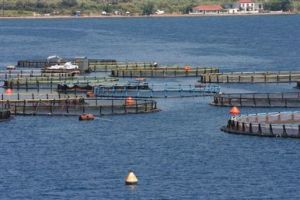
Fish farms have very high densities of animals. Even if the area at the sea level is rather limited, each farm goes quite deep, and the biomass they contain would make many chicken farms look like “small” operations. If you add to this that they are very exposed to the natural environment, as the pens are open nets, there is no wonder that they are very exposed to disease and disease spreading. The current situation in the Chilean salmon farming sector facing ISA just shows how sensitive these farms can be to diseases. My expectations is that aquaculture will be confronted to situations as bad as swine fever and avian flu, and they will have to revise their level of intensification, their location (including possible rotation of site with fallowing as a standard procedure). Further, navigation rules will be strengthened to reduce the possibility of cross-contamination from a marine zone to another.
Very likely, the sector will also further sharpen its veterinary procedures and increase their control on prevention and on medication. About this part, it may seem that feces simply get flushed into the ocean, but that is not that certain. Feces always contain residues of medicines. The volume of feces produced is quite significant on such intensive fish farms and you can be sure that at some point, simply letting them go into the sea will not be allowed anymore. I foresee that fish pens will have feces collection systems in the future and the “manure” will have to find some use.
The feed industry is now diversifying it sources of raw materials to cope with the rising price of fish oil and fish meal, which is the result of higher demand from the fast growing aquaculture. They carry out lots of research to find the right profiles of oil to meet the fish flesh quality requirements (especially omega3) by using vegetal oil, but one can wonder whether this will be a sustainable approach in the long run. Maybe there will be a completely new industry to produce “farmed” fish oil and fish meal to meet the feed industry needs.
Copyright 2009 The Happy Future Group Consulting Ltd.
Recycling and cleaning: the economic drivers of tomorrow?
Here is an article I wrote a little more than a year ago.
With an increasing population, years of throwaway goods consumption, landfills full of garbage, the pollution of our drinking water reserves and a deteriorating of our air and atmosphere, there is no doubt that our survival will largely depend on our ability to clean and to recycle the waste we produce.
The recycling business has already been developing for quite some years already and the next step should be an increasing part of their products and services as the main source of raw materials for many industries.
What indeed would be the point of trying to get resources in more and more difficult conditions and at higher and higher costs and with more and more energy use while we are sitting on a mountain of metals, plastics, glass, wood, paper, etc… Those are available in many places literally in the open air. The raw materials for the raw materials industries are there. All it takes it to sort them all.
This potentially offers many jobs opportunities as the value of this waste will increase as a result of a growing population’s demand. More machinery will also become necessary to handle this waste in a faster and more importantly safer manner. Images of kids browsing on landfills in order to get a miserable income to feed their siblings and parents are not acceptable, and I bet that one day they will do this in better conditions and for decent wages, as we will have grown from a waste gathering approach to a structured and systematic waste treatment and recycling.
Down this chain, new industries will develop in the area of processing the sorted waste. Some will have as a function to clean, others to recover the main raw material, and others to transform it into semi-finished products or even reprocessed into finished goods. Most of such industries already exist, either as active waste processors or as goods producers that will over time have to adapt and just change the origin of their raw materials and use recycled products instead of “first production” raw materials.
The other main area of need is water treatment. More and more of our water reserves are being polluted by increasing industrial activity and by more intensive agriculture and animal husbandry. In many areas, water is no longer suitable for infants as the mineral content has reached dangerous level.
The level of pollution has created a strategic need to insure health and safety, and thus preserve the sustainability of the populations depending on these water supplies.
A growing need is in sight for water treatment facilities, either for large scale centralized ones as also for smaller scale even individual local solutions. Further, industries will need to provide us with more solutions on how to use less water. There already are many systems on the market to reduce water use in kitchens and toilets. Although, these systems have brought some solutions and relief, more must be done.
Just to name one example, I would like to make you think on how ridiculous, and therefore unacceptable, the amount of water that we flush in the bathroom every time compared with the amount of liquid we produce when we visit those premises. Clearly, this is out of balance, and imagine that by saving a gallon of flush water a day, we save more than our individual need for drinking water!
Copyright 2009 The Happy Future Group Consulting Ltd.
Food production: the balancing act
Since the beginning of times, feeding a population has always been about balance.
When mankind was still in the stage of hunting, fishing and gathering, survival was about keeping resources at a level that would allow the group to keep on feeding from its close environment.
When agriculture started, followed by the domestication of what became farm animals, the idea was clearly to have more control on the resources and insure that they would be available on a more regular basis. Of course, there were times when this did not happen, but the principle has remained.
For many centuries, agriculture was a local activity. Farmers would grow a diversified group of products that insured a sustainable balance at local level. The different products were a reflection of seasons and of land diversity. They also would offer different activities, and some revenue, through the different times of the year.
Their productions were part of a cycle. For instance, farm animals would eat crops coming from the farm to produce meat, milk, eggs which are all related to the reproduction cycle and the continuation of their species. What would not be digested, as well by the farm animals as by the local human population would return to the land as manure (usually mixed with a crop by-product such as straw to provide and insulating litter), fertilizing the next round of crops. So basically, what was extracted from the Earth was returning to it, thus insuring the continuity of the system, for as long as the climate would support it.
With the growth of world population and the increasing mobility and later globalization of markets, this very local and sustainable system has evolved. Products are sold far away from their area of production; many farms have specialized and replace the manure cycle by purchase of fertilizers. Animals are fed with raw materials originating from the over side of the world. Genetics, crop engineering, technical progress have also allowed yields to sharply increase as well as the speed of the production of foodstuffs, vegetal and animal. This has benefited mankind on the shorter term because it provided more food at relatively cheaper prices, so more accessible to a larger group. This has benefited trade and business, but it has brought its toll on the balance that is the cornerstone of any biologically related activity.
For example, intensive animal husbandry was developed in poor regions, allowing farmers to have a decent revenue in areas were they could not have stayed, but as the animals were fed with non-indigenous feedstuffs, they produced massive amounts of manure that were much higher than the local ground could process. This has led to loss of soil fertility, as a result of excess phosphates in the ground, among other things. Water resources have been polluted with high level of minerals, such as nitrates making it risky to use for infants and pregnant women. The exclusive use of chemical fertilizers in crop areas, as a result of the disappearance of a mixed farming also led to lower levels of organic matter (which is crucial to fix minerals and make them fully available for plants) and has caused some severe erosion of very fertile soils. While these problems were growing in the West as we were putting too much back on the land, on the other side of the world the opposite situation was happening with an exhaustion of soils to produce crops aimed for export only, which resulted in taking more out of those soils and not returning it in the right form. Further, these regions developed very often these commercial crops on land that had been won from ecosystems such has tropical forests, which have very sensitive soils to rain, erosion and oxidation of metals such as aluminum and iron.
By bringing the natural cycles out of balance, we have weakened the Earth from providing us optimally with what feeds us. Our future and our sustainability will depend of our ability to manage this balancing act. As usual, what seems a challenge can also offer new opportunities!
Copyright 2009 The Happy Future Group Consulting Ltd.
The challenge of feeding the world and preserving the planet
The world population is increasing at an amazing rate.
From 6 billion people on the planet in 2000, we will be 9 billion by 2050; an increase of 50%; and we were only 3 billion in 1960.
By looking how much damage has been made to the environment and the huge depletion of natural resources that we have created in the last 50 years (or last time the population grew by 3 billion), one can wonder how we will be able to feed, shelter, provide water and energy to the whole population in 40 years from now.
When it comes to feeding the world, the first question that comes to mind is where can we produce 50% more agricultural products on a land area that will decrease as a result of more area needed for urbanism (unless, we grow cities in height) and 50% more demand for drinking water than now. And these percentages are actually very conservative if we think that the emerging countries are seeing their standard of living increasing, which unfortunately also means that more resources are wasted than just the incremental growth of 50%.
We need to feed 3 billion people more who on average will tend to eat more animal protein at the expense of grain and legumes. This demand for animal protein means more competition between humans and farm animals for the grains and legumes. So, we have less land available to grow so much more food of vegetal and animal origin.
We could consider increasing the agricultural area, but this means more deforestation and a strong reduction of natural habitats. More agriculture will mean more use of energy and water, which will have a huge impact on our environment and the price of commodities. And I am not even taken in the picture the fact that we also want to feed our cars with agricultural product, bio-ethanol.
On the other side of things, we hear more and more calls to restore more balance our environment, to use our resources more carefully. And this is the challenge, if not the dilemma of the coming years: we have only one Earth and it is not expandable, while our population is exploding.
How will we be able to meet both targets? Personally, I do not have the answer to this, but I am sure of one thing: a dramatic change must come, either of our own free will or forced by Nature, and we need to anticipate for this as this will require an adaptability as mankind has not known for a long time.
Copyright 2009 The Happy Future Group Consulting Ltd.
The Ocean, not Mars is the next frontier
Sorry to crush George W.’s and Star Trek’s fans’ illusions, but I believe that colonizing oceans could offer more interesting possibilities than outerspace. Mars… well that’s another story…
OK, so, let’s start daydreaming!
First, a look at the scenery.
Close to 70% of the Earth is covered by water.
Most of that volume is left unexploited, with exception of fisheries, which unfortunately deplete stocks, mostly because there is no efficient plan to manage fish stocks in a sustainable manner.
The timid colonization efforts are limited to fairly coastal activities.
Natural resources
While on the land, it has become more and more difficult to extract metals and minerals, there is a vast hardly explored potential for these natural resources lying at the bottom of the sea. Many open-sky mines have been exploited to almost full potential. Drilling and mining at deeper and deeper levels have resulted in higher and higher costs. All things considered, it is probably cheaper to drill through a layer of (soft) water than hard rock, and there are areas known where metals are available on the surface of the oceans bottom.
Energy
Tremendous energy potential is available in and over the oceans.We have huge reserves of hydrogen in there. Of course, to produce it we will have to produce the necessary energy to split the water molecules. Using fossil fuel cannot be an option, as the gas emissions would defeat the purpose.
The great thing is that the energy needed can be found in the oceans themselves. Why not think of having large wind or solar farms located on oceans (probably not too far offshore), dedicated to splitting water and producing hydrogen and oxygen. The hydrogen could be used in fuel cells, and the oxygen could be used to allow the people involved in underwater activities and settlements to breathe.
Further, more electricity can be produce by using the strong currents to run through turbines.
It could be also interesting to consider the possibility to create floating solar energy farms.
It such a scenario, it is not unthinkable that all our energy needs for cars, factories and industries could come from clean emission-free electricity.
Water
Water, and especially clean drinking water will be one of the biggest challenges that mankind is going to face in the future.
Of course, there is plenty of water in the oceans, but the main problem will be to make it drinkable.
Considering that in the fantasy I am writing here, I envision human settlements on (or in?) the oceans, there will have to be drinking water available.
Next to desalinization, the other most obvious source of drinking water is collecting rain.
Capturing carbon
There are projects of using minerals to change the pH of the sea with the hope that this would help absorb CO2 much faster than it naturally currently happens. Although, this might be our last resort if we do not get our emission under control. The problem is that we have about no idea on what the side effects on the ecosystems might be, and that is a scary thought.
Here, I want to focus on more positive ways to use ecological methods.
On the land, we are losing more and more trees as a result of our need for more and more land, and therefore we are losing the natural capacity to capture CO2.
Then why not think of replacing these lost trees by cultivating the oceans and develop large vegetal populations, in other words, grow aquatic meadows and forests?
This must be done with care of course as the ocean life is a three dimensional thing with depth playing a significant role, while on land it looks more like two dimensional (limited depth/height significance).
Another area of attention when developing such vegetal populations is to make sure they do not get out of control and impact the oceans ecology as many other species with interact with them, creating complete ecological systems and food chains.
Developing a whole new aquaculture
Here, I use this term in its literary meaning, which is cultivating the water, not just restricting it to the production of a few commercial aquatic species, as it is the case today.We should be able to cultivate the water en develop it in a similar way as we did with agriculture, but also by learning from the mistakes we have made in agriculture.The only way that the current aquaculture farms can survive is to produce (cultivate) the foodstuffs it needs in the oceans as well. Keeping on doing as today has probably not that much future, as the need for fish meal, and mostly fish oil will exceed by far the current production possibilities, and exhausting the wild stocks used for that clearly could not work. Further, replacing these foodstuffs by vegetal protein and fat from agricultural crops will not work, either, because there will be too much competition from the needs for land-based animal productions and the needs for human food. Clearly, the only way to meet the increasing needs for seafood is to grow the foodstuff in the sea.
This opens a tremendous project of picking which foodstuffs to produce in the sea, how to manage them, how to combine the mix of production and ensuring the sustainability of this new aquaculture, and at the same time ensuring that the marine ecosystems recover and function properly as well.
This will require an aquaculture of plankton, of algae, of aquatic plants, of fish, of shellfish, of mammals en maybe more.
So far we have depleted the food chains in the sea, now is the time to restore them, next to increasing our ocean-based food supplies.
The challenges
Well, you will say: that sounds all very nice but is it realistic?
And I would answer, maybe it is not quite realistic today, but if we work on it, quite a few things named above can be achieved. Actually, some have already started.
The main challenge I see is to cope with the tremendous forces that oceans can unleash, such as currents, storms, waves and pressure in the depths; and we would need to build in a way that can deal with such forces, if we want to avoid disasters.
But you have to agree that there is lots of space available on our planet this way and it here right here “at home”.
Copyright 2009 The Happy Future Group Consulting Ltd.
 The Food Futurist - Anticipate, Adapt, Succeed