
Although it may sound like a bit of semantics, the difference between these two terms is quite important when it comes to agriculture and food production.
 Since WWII, much progress has been made to increase food production, such as genetic improvement, production techniques and mechanization, use of fertilizers, chemicals and pharmaceuticals, the development of animal nutrition, and of course government incentives. This has resulted in our ability to produce more efficiently and face a previous doubling of the world population. It has helped reduce costs and made food more affordable to more, although unfortunately not to all.
The main driver behind this evolution has been to shift from a mostly labor intensive food production to a mostly capital intensive one, and this why it had to become intensive. The labor force moved to urban centers where they could find jobs in manufacturing and later in services. Thanks to mechanization, less people were needed to work on farms. This has led to a sharp drop of the population active in agriculture from above 50% of all actives to less than 5% in Western countries within 30 years. Moreover, as the standard of living increased, labor costs increased and made a labor-intensive approach too expensive to fit in the type of society that we created, and the only, apparent, solution has been to further intensify and mechanize.
The strong development of manufacturing that went along with the rise of the consumption society increased the standard of living and the disposable income. In the same time, in constant currency, food became relatively cheaper and much more affordable. This led to a change of diet from mostly starch-based to protein-based, and we have seen recently a similar trend in emerging countries.
Clearly, all of this has improved the quality of life, maybe a little too much too fast though. Intensification has brought its share of problems as well, as it always does with progress. For instance, I can mention soil erosion and loss of organic matter, soil fertility and ground water quality affected by manure (especially minerals) surpluses, reduced genetic diversity and possibly lessened resistance to diseases, to name a few. Of course, for each of the problems, we come with a solution mostly based on technology, which usually fits in and reinforces intensification.
Unfortunately, Nature does not work that simply. All it needs is time to process and eliminate problems through its cycles in the soil and in the water. Nature can handle quite a lot, but it can handle only that much. This is where the difference between intensification and efficiency becomes obvious.
Intensification tends to continuously load and overload the system, which is why we hear so much talk about sustainable agriculture nowadays. Food production cannot be sustainable if it does not allow its natural environment to process and eliminate the contaminants. Similarly, Nature cannot replenish on its own what we take out, unless we create the conditions for this.
Efficiency, on the other hand, integrates performance and sustainability. It allows having a high production, not so much by using massive amounts of water, fertilizer, energy or other production inputs, but by using them when needed where need and just as much as needed. This way, we can grow plants or animals with the minimum amount of waste and respect the ecosystem. Efficiency also comes from optimization, and to this extent, efficiency and intensification go hand in hand, up to that particular point when any incremental input does not produce more in the same proportion. More importantly, once we produce beyond the optimum, we take the chance of creating a stress. This is very clear in animal production, when densities exceed a certain point, the animals’ organism defence becomes weak and makes them vulnerable to diseases.
Copyright 2009 The Happy Future Group Consulting Ltd.

 There is a growing concern about environmental and health aspects of food production. About the environment, you can list very diverse things such as the depletion of wild fish stocks in the oceans, the interaction between aquaculture and wild fish stocks, manure and smell of intensive animal husbandry and impact of manure on soils and drinking water, deforestation of rainforest for ranching of beef or about growing GMOs (Genetically Modified Organisms). On the health side, consumers worry about food poisoning due to bacteria, such as E. Coli, listeria, campylobacter and salmonella, but also about residues of pesticides or antibiotics, as well as they worry about the use of hormones in animal productions. As the discussions get more animated in the US about the reform of health care and the cost of obesity, more and more people are wondering about whether the fast food diet is a proper one. Next to this, animal welfare is a growing concern by more and more consumers.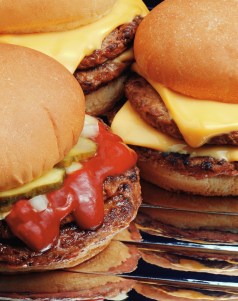
 This group will continue to be involved in mass production of commodities for global supplies, like this is the case today.
 This sector should undergo a strong growth and be build in a market-driven approach. These are the farmers that produce specialty products aimed at serving either a very specific segment of the retail or foodservice market.
 In emerging countries, the development of a local agriculture, and aquaculture, will be a key driver of economic development for under industrialized and/or under urbanized regions. It also will be a way of slowing down the migration of population to urban centers and limit social problems, by creating satisfying economic conditions and by securing food supplies locally. This farming will be about basic needs, before marketing.
 This is an
 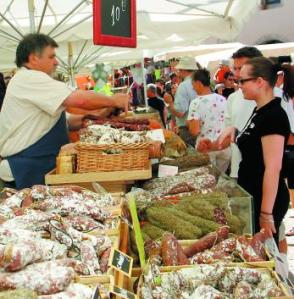 In order to understand what changes are ahead of us, we need to realize that opposite forces are engaged in shaping the world of the future. As we all know, accepting change is always a slow and sometimes a difficult process. There are those who see the possibilities and those who see the drawbacks. The first train was going, supposedly, to get cows stop giving milk, but we now know that cows love to watch trains passing by. Probably, the first caveman who drew a picture of an animal on the wall was considered by some as a great magician and probably by others as pure evil. As such, such a struggle is very useful, as on the one hand it shakes immobility and open new doors, and on the other hand it prevents us to rush into the unknown without thinking first.
 More technology to improve efficiency of water use, fertilizer use, animal feed use, land use, energy use (objective: zero waste).

 Inevitably, there will come a time when all apparent arable land will be in use for agricultural production, and there will be a need for more. Already today, we have a vast area of good agricultural land, which is inaccessible, because it is located under cities and roads. This is even more important as the prediction is that the world population will increasingly live in urban areas.
 Technical progress improved yields and productivity, while marketing was aimed at creating more, and new, needs. Our food has become standardized, industrialized, and processed in a wide variety of forms. As the emphasis moved to lifestyle and convenience, which came along with the rise of mass distribution, cheap energy and suburbia, we lost the connection between ourselves, the origin of our food and nature. Food became just things you buy at the supermarket, already packed in plastic and cardboard.
 We still are in a society where some people get obese by eating lots of food as quickly as they can, while they have less physical activity than the previous generations, thanks to automation. That food is produced on intensive farms and feedlots where the animals grow and fatten as quickly as possible, as they eat lots of food, while not having much physical activity. Similarly, in our society meat producers use hormones to boost growth and carcass quality, while body builders and sport professionals use steroids and growth hormone to boost their performance. Interesting similarities, don’t you think? We are indeed what we eat.
 The Food Futurist Solutions - Anticipate, Adapt, Succeed