
Sustainability is a bit like quality: everyone talks about it but few give a clear definition when it comes to practical and concrete specifications. Just as importantly, leadership is badly needed to transform the talking into effective action.
 As long as the lawmakers remain slow to bring up the change and the clarity to give clear directions, we will need the leadership of some of the most influential players in consumer markets to get things moving.
Even environmental organizations and sustainability bodies have some difficulties to agree with each other. For example Greenpeace does not seem to think that the guidelines from the Marine Stewardship Council offer solid enough guarantees that products brought to market according to these guidelines truly are sustainable. Clearly, this is an area in continuous evolution and the ideal concept is still in the making.
The consumer themselves are both still under informed as well as overwhelmed by all sorts of contradictory messages to know clearly which choices to make, therefore some decide of what to buy either based on philosophical or on financial reasons.
Similarly, many businesses are trying to find their green way as they can, but there again the lack of a strong regulatory frame and the uncertainty of the return on the green investment do not help them. The result is that, although the awareness about sustainability among businesses has grown substantially over the last few years, many companies have taken rather timid steps so far, limiting their actions to the least costly possible and the most PR and marketing-driven. They claim to go green, they communicate a lot about it, but the progress is slow.
Yet, some companies take more initiative, show leadership and push to make the whole supply chain evolve to sustainable production systems. A very active sector in this area is the retail. Retailers in the UK such as Tesco or Waitrose, in Canada with Loblaw’s and Overwaitea Food Group, and of course especially Wal-Mart in the USA have definitely made their choice. They clearly understand that the future cannot be anything but sustainable and they are demanding that their suppliers now come with products that meet the requirements of tomorrow. Last month Wal-Mart demanded from all their suppliers to “develop comprehensive programs to promote sustainability and transparency – or else contemplate a future without Wal-Mart as a customer” (read article).
Tesco is now indicating the carbon footprint of milk products on the labels (see article “Environmental performance on food labels”); Waitrose, Loblaw’s and Overwaitea are going for sustainable fish products, adopting for example the SeaChoice specifications as their guideline. Wal-Mart stores have already implemented a number of measures to reduce their carbon footprint by reducing the energy consumption, and they have already have made some of their suppliers introduce different product presentation. For example, they were the first to demand laundry detergent to be more concentrated and packed in smaller containers. This saved water, it saved energy used to transport useless water, and it saved plastic used for the jugs and for the pallets on which the product was transported. Today, concentrated laundry detergent in smaller jugs is the standard. Without Wal-Mart pushing for the change, we probably still would use the old product in the old packaging.
Copyright 2009 The Happy Future Group Consulting Ltd.
 Having the ability to change location has several advantages. It allows finding areas where water quality is better as this varies with seasons and climate conditions. It also can allow farms to move away from the routes of wild fish and substantially reduce risks of disease and parasite contamination and spreading. Being closer to consumers market also has the advantage of reducing the amount of transportation and have the fish brought to market faster, therefore fresher, theoretically.
 According to their numbers, weeds limit crop yields to such an extent that the world misses yearly the equivalent of 380 million of wheat a year, or in money $95 billion. My first reaction was that there is an untapped market for herbicides producers, but the article describes ways of getting rid of the weeds that do not require the use of chemicals.
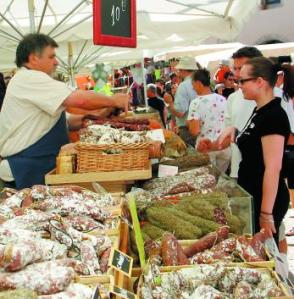 In order to understand what changes are ahead of us, we need to realize that opposite forces are engaged in shaping the world of the future. As we all know, accepting change is always a slow and sometimes a difficult process. There are those who see the possibilities and those who see the drawbacks. The first train was going, supposedly, to get cows stop giving milk, but we now know that cows love to watch trains passing by. Probably, the first caveman who drew a picture of an animal on the wall was considered by some as a great magician and probably by others as pure evil. As such, such a struggle is very useful, as on the one hand it shakes immobility and open new doors, and on the other hand it prevents us to rush into the unknown without thinking first.
 More technology to improve efficiency of water use, fertilizer use, animal feed use, land use, energy use (objective: zero waste).
 A recent study from the UK concluded that organic foods are not nutritionally superior to “regular” foods. Of course, it did not take long for reactions to be published. The pro organics reject the protocol used and therefore the conclusions. The pro “industry” reacted satisfied. All of this is not surprising, and for a simple reason: people choose their foods greatly based on psychological reasons. Let’s face it the debate around organic food is largely about lifestyle and choices.

 What will a higher price mean?
 With an increasing population that needs more food and more water to live, we can expect that water is going to become a highly strategic and needed resource. As climate changes, the current rain distribution and geographic availability of water is likely to change dramatically, too. This increasing competition between agricultural areas and urban areas will bring major changes on how we use water for both personal use and for food production. On the personal side, we certainly can expect that current bathroom systems to disappear, as they use too much water. Every time we flush a toilet tank, we actually waste the daily drinking water needs of a couple of people, and local water reserves are gradually depleted as well. Clearly, this has no future. Similarly, we can expect the legislation on water use for lawn sprinkling and car washing to change.
 More efficient irrigation systems will replace the old ones. Computerized systems are already in use in wine production, using sensors for humidity and temperature, to determine how much water the plants needs at the most optimal time of the day and deliver it at the exact spot. You can expect that such an optimization approach will prevail. The path that Monsanto follows with the production of genetically modified (GM) wheat that needs only a third of regular wheat varieties is quite interesting. The tricky part is the GM part, as on the contrary to natural “mutations”, such a process does not undergo natural selection, and therefore we do not know what possible side effects it might bring. Nonetheless, this is an attempt to deal with future water shortages. Hopefully, other less controversial solutions can be found that will deliver a similar result. Once again, we can shape our future through continuing innovation.
 The Food Futurist - Anticipate, Adapt, Succeed