
With a world population increasing strongly and an agricultural area that will not grow accordingly, the law of offer and demand clearly indicates that agricultural prices will increase in the future. This is true for agricultural commodities such as grains, but the increase will be even stronger for animal products, such as meat, poultry, dairy and fish.
This will be the result of an increasing and very likely quite aggressive competition between the need to feed people with the basic commodities, the need to feed farmed animals and possibly for some time the need to produce biofuels.
Since it takes more than one and even several kilograms of animal feed to produce one kilogram of meat, the feed conversion ratio (FCR) will affect by which factor the price of the various animal products will increase.
Efficient productions like chicken will be successful and will remain quite competitive pricewise against other sources of animal proteins, thanks to its low FCR, to its low water use and to the good agricultural value of its manure. In the aquaculture sector, efficient productions such us tilapia and pangasius have a bright future ahead, as they can help feed a large population for an affordable price. In general, aquaculture has the opportunity to fill the huge gap left by depleted wild fish stocks, although it will have to solve some issues in order to be successful (see my article titled “The lessons of intensive animal husbandry to aquaculture“). In terms of price, the scarcity of wild fish will make these quite expensive for the future.
Less efficient species such as pigs and beef cattle will see the price of their products increase relatively much more. Pigs also have the disadvantage of producing low quality manure, which will limit the level of intensification. However, pork plays an important role in some cultures, and therefore, it will still show a reasonable volume growth, with geographical variations.
A high FCR species such as beef cattle will probably undergo the most dramatic change. Higher feed costs, linked to a relatively high capital need will probably push a number of farmers to shift to other more efficient productions. Highly intensive systems such the feedlots will also undergo major changes, as regulations on the use of antibiotics and hormones will make them financially inefficient. Further, their high impact on the environment because of the manure will also work against them. I do not expect the 99-cent beef burger to be here for all that much longer, burgers will continue to exist, but just quite a bit more expensive. On the other hand, I can see good possibilities for specialty beef products, such as grass-fed beef, but customers will have to pay the right price for it. Grass is the animal feed that we all seem to underestimate, yet it covers vast areas of very often fragile soil, and cattle is one of the few species that can transform it into high value protein.
In the aquaculture sector, a carnivore species such as salmon will also meet its own limitations. Although, salmon feed has shifted from mostly fish oil and fishmeal to a much more complex mix of vegetal oils, this production will see its production costs rise strongly. I expect salmon to become a luxury product again.
 What will a higher price mean?
There again, simple economics tell us that this will influence the level of consumption per capita. The price increase will moderate the level of consumption and the price differential between the type of protein, as well as health concerns, will cause a shift between the respective consumption of the different products. In Western countries, people consume quantities of animal products that are substantially higher than what they actually need, and this has led to many health issues. The decrease in consumption will help make people healthier, and reduce the burden of health costs in that part of the world.
In developing countries, the situation is different, as consumption trends show an increase of consumption of animal products, from rather low levels, though. In these countries, consumption per capita will increase, but will not reach the levels that Western countries have shown, simply because prices will be too high to get to such levels.
The decrease of consumption per capita that we will see in developed countries does not mean that the meat industry will get into trouble. Less average consumption per capita in the West will be more than compensated by the growth in emerging countries, where population numbers are significantly higher, and this will lead to a higher global demand of animal products. The main change is that the consumers will be distributed geographically rather differently than they are today. This also means that production will be located in different areas than today.
Just as a teaser: if Western countries consumers were to reduce their meat consumption to just the necessary maintenance needs, it would free volumes enough to cover the maintenance needs of meat for the whole population of China!
Copyright 2009 The Happy Future Group Consulting Ltd.
 Technical progress improved yields and productivity, while marketing was aimed at creating more, and new, needs. Our food has become standardized, industrialized, and processed in a wide variety of forms. As the emphasis moved to lifestyle and convenience, which came along with the rise of mass distribution, cheap energy and suburbia, we lost the connection between ourselves, the origin of our food and nature. Food became just things you buy at the supermarket, already packed in plastic and cardboard.
 We still are in a society where some people get obese by eating lots of food as quickly as they can, while they have less physical activity than the previous generations, thanks to automation. That food is produced on intensive farms and feedlots where the animals grow and fatten as quickly as possible, as they eat lots of food, while not having much physical activity. Similarly, in our society meat producers use hormones to boost growth and carcass quality, while body builders and sport professionals use steroids and growth hormone to boost their performance. Interesting similarities, don’t you think? We are indeed what we eat.
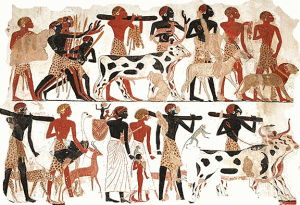 The domestication of animals for food production started thousands of years ago, and has gone through a slow evolution since then. In the last 50 years, we have intensified productions systems to a very high degree. Aquaculture, although not unusual in ancient times, has really experienced an economic boom only rather recently, and future growth predictions are quite optimistic.
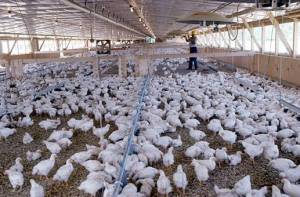 With high densities of animal in some regions, animal husbandry has had to deal with a number of health issues, such as not long ago avian flu and swine fever. The presence of large number of animals in limited areas has increased the “disease pressure” on farms and regions, making epizooties quite devastating, considering the amount of culling that health prevention measures require. This always takes a heavy economic toll, and not only on farmers. This has forced many countries to review their policies about intensive animal husbandry and downsized the sector.
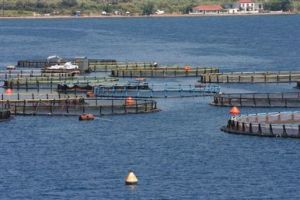 Therefore, above, I have tried to sum up the most noticeable results of intensification of land animal production. Clearly, there are lessons to be learned for the “new” aquaculture industry, and by this, I mean the intensive, high investment aquaculture. Most companies involved in this business have been inspired mainly by the evolution-and the success- in the chicken industry. They try to copy and adapt a similar model. Therefore, it is rather predicable that they will have to deal eventually with similar consequences.
 The Food Futurist Solutions - Anticipate, Adapt, Succeed