Feeding the world in 2050 – FAO coming summit

This question seems to keep many people busy, and this article sums up a number of conclusions drawn by the FAO about the subject.

The information that I find the most interesting is their estimate of the percentage of the world population living in cities, moving up from 49% today to 70% by 2050. Expressed in number of people living in rural areas, this means a drop from roughly 3.2 billion people today to roughly 2.9 billion people in 2050, or around 10% less! This clearly indicates that the future of food supply is not with small farms, but that large units will have to do most of the work in order to feed everyone.

When it comes to their estimate of a necessary increase of 70% of agricultural production to meet the food demand, I have some reservations about their expectations. I doubt that with such a tight supply, people will eat as much meat and animal products as they claim. I believe that money will talk and meat being more expensive that they expect, the diet will probably include relatively more vegetal products and relatively less meat than the numbers that they present.

As I showed at the end of my previous article titled “Price of fish and meat: up”, a healthy readjustment of the Western diet will free a lot of food to feed many more people. As per today, we already are much closer, theoretically, to be able to feed these 9 billion people than we think. I say theoretically because the main problems are:

  1. Guaranteeing access to food through proper infrastructure, which in large part rests on the shoulders of politicians, and
  2. Ensuring that people have enough money to pay for food.

For those who claim that we need three or even four Earths to deal with the problem, clearly, their assumptions are based on having the whole world on the American diet, but that will not happen. We have only one Earth and that will not change. Other things will, though.

Health and environment as growing drivers of food production

Health concerns will gain more importance in the future in the decision process of consumers when they buy their food.
More and more, we can hear and read about concerns and even rejection of the current production systems. Although this bad publicity is not always based on the most objective facts, it has been able to find a growing audience.

It must be true, it was in the newspaper

It must be true, it was in the newspaper

Since most consumers have little or no knowledge of agriculture and food, their only source of information is in the popular media. On the other side of the discussion, the agri-food industry is not getting through, because its message tends to be too defensive and too technical. Unfortunately for the industry, errors from the past (for example, the use of DDT) or cases from other industries (for example, tobacco) contribute to cast a shadow on its credibility. As I wrote my previous article “Less controversy thanks to transparency”, the agribusiness will achieve much more by opening up and having consumers visit their premises so that they can tell what they saw. They must organize more Open House days.

Therefore, for now, consumers have a certain perception of how food is produced, and it is not so relevant to argue whether this perception is correct or not. Perception simply is reality, and consumers act according to what they believe is true.
A little bit of this...There is a growing concern about environmental and health aspects of food production. About the environment, you can list very diverse things such as the depletion of wild fish stocks in the oceans, the interaction between aquaculture and wild fish stocks, manure and smell of intensive animal husbandry and impact of manure on soils and drinking water, deforestation of rainforest for ranching of beef or about growing GMOs (Genetically Modified Organisms). On the health side, consumers worry about food poisoning due to bacteria, such as E. Coli, listeria, campylobacter and salmonella, but also about residues of pesticides or antibiotics, as well as they worry about the use of hormones in animal productions. As the discussions get more animated in the US about the reform of health care and the cost of obesity, more and more people are wondering about whether the fast food diet is a proper one. Next to this, animal welfare is a growing concern by more and more consumers.
The answer to many of these worries has started to appear in the last few years with the growth of the organic market segment. When we see the growth and the performance of a retailer such as Whole Foods, there is no doubt that organic foods have a growing audience.

The concerns about the environment are forcing retailers, food service and businesses involved in the production chain of food to make changes. Some of the actions they have taken can be seen as marketing or PR, but they also have become mainstream. Just a look at how many restaurant and supermarket chains have already implemented sustainable seafood programs indicates how serious this change in consumer attitude is. Fast food chains are also actively working on reducing their environmental impact and set standards on where they source their meat, based on environmental concerns, such as no beef from ranches deforesting the Brazilian rainforest.
In the past, we have seen some examples of production methods that had to be abandoned, simply because no solution to cope with environmental problems could be found. This has been the case in The Netherlands where the level of intensification caused such manure surpluses and risks of animal disease to such a point that after many years of looking for viable technical solutions in vain, the government decided that the size of the national herds had to be reduced.
Similarly to what happened in Europe over the last decade, we can expect that much stricter rules in the use of antibiotics will be applied, and I expect a similar trend to a progressive elimination of the use of hormones in animal husbandry. About animal welfare, there should not be any surprise the day that only husbandry systems that allow enough “recreation” area for animals will be allowed. All of the above is going to have an impact on how and where food is produced. Systems will become less intensive, and progressively we will see more techniques to improve efficiency to compensate.
Past Food?

Past Food?

As I also had mentioned in another article (Future price of fish and meat: up), it is simple logic that with more people to feed, food is going to become more expensive. However, the relative prices of various food products also need to go along their relative health benefits. Today, it looks like only wealthy people can afford a healthy diet, as the price of “good” food is substantially higher than the price of what makes a nutritionally unbalanced meal. This clearly does not work in the direction of a healthier population at large.

The way consumers think will define the way we eat and produce our food. Many changes in consumption patterns, in production systems and in product offering are under way. I will get back later with more details on what my views are on this.

Copyright 2009 The Happy Future Group Consulting Ltd.

CNN: In-vitro meat – Would lab-burgers be better for us and the planet?

Quite the future!Here is an article I found on CNN about in-vitro meat. Of course at this stage there is no way of knowing whether this has a future or not.

There are some interesting arguments brought up in this article, that can make some think that in-vitro meat is a possible alternative. Yet, they do not mention anything about the cost of producing meat in such conditions, but my guess is that it will not be cheap, and certainly not cheaper than the lesser meat cuts it is supposed to replace; and the production cost of in-vitro meat is probably its main challenge for future marketing purposes.

My view is that animal protein will become much more expensive in the future (see my previous article “The future price of meat and fish: up”), and that Westerners do not need to eat as much meat as they currently do, anyway.

The irony is that in-vitro meat has the support of some environmentalists, while it depicts a situation where humans would almost not be in touch with nature anymore when it comes to meat. So much for natural food!

I will leave it up to you to decide what to think.

The future price of meat and fish: up

With a world population increasing strongly and an agricultural area that will not grow accordingly, the law of offer and demand clearly indicates that agricultural prices will increase in the future. This is true for agricultural commodities such as grains, but the increase will be even stronger for animal products, such as meat, poultry, dairy and fish.
This will be the result of an increasing and very likely quite aggressive competition between the need to feed people with the basic commodities, the need to feed farmed animals and possibly for some time the need to produce biofuels.
Since it takes more than one and even several kilograms of animal feed to produce one kilogram of meat, the feed conversion ratio (FCR) will affect by which factor the price of the various animal products will increase.
Efficient productions like chicken will be successful and will remain quite competitive pricewise against other sources of animal proteins, thanks to its low FCR, to its low water use and to the good agricultural value of its manure. In the aquaculture sector, efficient productions such us tilapia and pangasius have a bright future ahead, as they can help feed a large population for an affordable price. In general, aquaculture has the opportunity to fill the huge gap left by depleted wild fish stocks, although it will have to solve some issues in order to be successful (see my article titled “The lessons of intensive animal husbandry to aquaculture“). In terms of price, the scarcity of wild fish will make these quite expensive for the future.
Less efficient species such as pigs and beef cattle will see the price of their products increase relatively much more. Pigs also have the disadvantage of producing low quality manure, which will limit the level of intensification. However, pork plays an important role in some cultures, and therefore, it will still show a reasonable volume growth, with geographical variations.
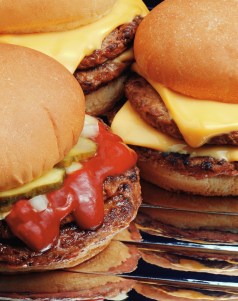
A high FCR species such as beef cattle will probably undergo the most dramatic change. Higher feed costs, linked to a relatively high capital need will probably push a number of farmers to shift to other more efficient productions. Highly intensive systems such the feedlots will also undergo major changes, as regulations on the use of antibiotics and hormones will make them financially inefficient. Further, their high impact on the environment because of the manure will also work against them. I do not expect the 99-cent beef burger to be here for all that much longer, burgers will continue to exist, but just quite a bit more expensive. On the other hand, I can see good possibilities for specialty beef products, such as grass-fed beef, but customers will have to pay the right price for it. Grass is the animal feed that we all seem to underestimate, yet it covers vast areas of very often fragile soil, and cattle is one of the few species that can transform it into high value protein.
In the aquaculture sector, a carnivore species such as salmon will also meet its own limitations. Although, salmon feed has shifted from mostly fish oil and fishmeal to a much more complex mix of vegetal oils, this production will see its production costs rise strongly. I expect salmon to become a luxury product again.

Consumption per capita will decreaseWhat will a higher price mean?
There again, simple economics tell us that this will influence the level of consumption per capita. The price increase will moderate the level of consumption and the price differential between the type of protein, as well as health concerns, will cause a shift between the respective consumption of the different products. In Western countries, people consume quantities of animal products that are substantially higher than what they actually need, and this has led to many health issues. The decrease in consumption will help make people healthier, and reduce the burden of health costs in that part of the world.
In developing countries, the situation is different, as consumption trends show an increase of consumption of animal products, from rather low levels, though. In these countries, consumption per capita will increase, but will not reach the levels that Western countries have shown, simply because prices will be too high to get to such levels.
The decrease of consumption per capita that we will see in developed countries does not mean that the meat industry will get into trouble.  Less average consumption per capita in the West will be more than compensated by the growth in emerging countries, where population numbers are significantly higher, and this will lead to a higher global demand of animal products. The main change is that the consumers will be distributed geographically rather differently than they are today. This also means that production will be located in different areas than today.

Just as a teaser: if Western countries consumers were to reduce their meat consumption to just the necessary maintenance needs, it would free volumes enough to cover the maintenance needs of meat for the whole population of China!

Copyright 2009 The Happy Future Group Consulting Ltd.