Here is an illustration of what I wrote in two previous articles (Managing water is paramount for the future of food production and Sustainability: As Natural As Balance). Read the article about Kraft Foods at http://www.meatinternational.com/news/kraft-foods-reduces-global-plant-water-use-by-over-20%25-id1718.html
Tag Archives: Industry Future
CNN: In-vitro meat – Would lab-burgers be better for us and the planet?
 Here is an article I found on CNN about in-vitro meat. Of course at this stage there is no way of knowing whether this has a future or not.
There are some interesting arguments brought up in this article, that can make some think that in-vitro meat is a possible alternative. Yet, they do not mention anything about the cost of producing meat in such conditions, but my guess is that it will not be cheap, and certainly not cheaper than the lesser meat cuts it is supposed to replace; and the production cost of in-vitro meat is probably its main challenge for future marketing purposes.
My view is that animal protein will become much more expensive in the future (see my previous article “The future price of meat and fish: up”), and that Westerners do not need to eat as much meat as they currently do, anyway.
The irony is that in-vitro meat has the support of some environmentalists, while it depicts a situation where humans would almost not be in touch with nature anymore when it comes to meat. So much for natural food!
I will leave it up to you to decide what to think.
Future approach of genetics in agriculture

Genetic engineering, that we just mentioned, and traditional breeding and will be increasing intertwined in the future, as they will join their respective areas of expertise into combined genetic improvement programs. Actually, we can expect that these two disciplines will be merged into only one unified science of DNA. We can expect to see an increased number of joint ventures and mergers between genetic selection companies and biotech companies in the future.
So far, genetic engineering has been mostly known to the public opinion thanks to the development of GMOs (genetically modified organisms), and this has been a very controversial area. Genetic engineering will move from a support activity to, for instance, herbicides, to address much more real problems and bring much more real solutions to the challenges of the agriculture of tomorrow. GMOs have served the sales of herbicides produced by the same companies quite well, but of course, this will plateau rather soon, and there will be a need for something else to impress the financial markets. It should not be a surprise to see these corporations specialize in biotech completely, and divest their chemicals “heritage” at some point in the future. The real problems to solve include a broad range of topics. They include technical performance and yields of plants and farm animals. Genetic engineering will help increase the efficiency in the conversion of nutrients and water. It will help plants and animals to have a stronger resistance to diseases, in order to avoid severe production losses. It will provide alternatives to antibiotics, to herbicides and pesticides. It will find ways for plants to absorb or fix the nitrogen of the air to reduce the use of mineral fertilizers. Another area of research will be influencing the quality of final agricultural products, in particular producing healthier foods, and have plants produce medicines.
To solve such problems, the people in charge of such programs will have a very heavy moral responsibility towards society, as the choices they will make will affect the longer term and our ability to survive. The success criteria will go much beyond the financial performance of these companies. This will be translated in the type of bonus packages that the executives will receive. One can wonder whether the correct structure for such companies is to be publicly traded, since stock markets tend to induce a very strong preference to the short-term financial performance. The reflection on such programs will need to go through a serious test of “what ifs”. As per now, money still is the main driver, especially in the arguments of the producing companies and countries. For instance, they reiterate that the decision of the European Union to limit the production and use of GMO will make food more expensive in these countries. Then let’s ask ourselves what if the EU is wrong in their decision? Well, production systems and agriculture would not change much; their food might indeed be more expensive than somewhere else. The people will buy smaller cars and travel less far for their vacation. This is not a very threatening situation if you ask me. What if the ones in favor of GMOs are wrong and the EU is right? The debate is indeed very emotional and political, but this is simply because we lack long term testing of the effects of GMOs to have certainty. This is why the GMO producers have such a hard time convincing their opponents.

A better understanding and predictability of long-term effects is paramount in agriculture and food production. Agriculture is not just about producing a particular crop, it is also about managing the total ecosystem that a field is. Actions in genetics need to guarantee the long-term balance of these ecosystems (in which weeds, although of no economic interest, are a part of), because once an ecosystem has been altered, it has been changed forever. Genetic improvement programs must ensure to preserve, in whichever form, genetic diversity and survival of vegetal and animal species, because once extinct, they are lost forever. Long-term fertility of soils is another highly critical part of the protection of our food supplies, because once sterile, the land is lost forever.
So, as you see, we are facing many challenges and genetics is a key element of our food systems. By shifting away of rather superfluous projects, even though they have been quite lucrative for the producers; and by focusing more on true improvement and sustainability of production systems thanks to technical breakthroughs, a combined breeding and genetic engineering will bring constructive solutions. All it will require from the stakeholders is vigilance.
Copyright 2009 The Happy Future Group Consulting Ltd.
Poultry husbandry of the future
Here is an article by Bernd Meerpohl of Big Dutchman on poultry husbandry systems of the future. Not surprisingly, he did not present any revolutionary new developments for year 2034, but I miss some aspects that I believe will be important for the future.
Markets will be different, just because the consumers will not be located in the same as now. Different markets with different needs will mean further evolution in breeding strategies. We will deal with energy and environment in a different light, and this will affect production systems. Climate control, lighting systems, transportation, distance between producers and consumers, bird catching and bird processing, packaging systems will all evolve because of the need to preserve energy, food and water, as well as increase efficiencies.
World Nutrition Forum: The future starts now
Here is an article reporting about the World Nutrition Forum held recently in Austria.
It presents the future of animal productions quite along the same lines as I think.
Efficiency, innovation and location will become the key components for the future.
Efficiency will act as a “natural selection” between the species farmed, as an increasing need for protein combined with a limited volume of feedstuffs and water will decide what productions can grow the most and which ones might not be able to do so. Poultry is definitely a winner thanks to its low feed conversion ratio and to its relatively high water use efficiency, pork is uncertain, and cattle will have the toughest time, although cattle is the only production that can transform cellulose into animal products, so the production systems will likely change and offer a different kind of future for beef.
Location of production will follow the location of the consumer markets. With a population increasing strongly, as well as their standard of living is improving, Asia will become a very active production area. This probably will also be the result of a need to reduce transport costs, as well financially as environmentally speaking.
Innovation, as I have mentioned in previous articles, will be a key driver for the future of animal feed and of animal productions. I am quite glad to read that the industry is fully aware of this need, and also that they see their future in “creating value” more than just “cutting costs”.
Although the conclusions of this forum are quite encouraging and positive, the next step might be the challenging one: how to turn these great ideas into systems that will work and will ensure the long term future of the production side as well as of the consumption side? It will all be in the proper planning and execution that this will succeed.
Photos from AgriVision 2009 – Feeding the globe in 2050
Here is a link on a photo report published in World Poultry about the recent AgriVision 2009 held in the Netherlands.
Their objective was to answer the question of how to feed the world population by 2050, which is the basis of my own quest.
They seem to have come to rather optimistic conclusions. This is good news, but that will require the proper leadership as well from the world of politics as from the business world.
Cod farming: difficult start, but bright future
Sometimes success stories do not happen at once. This is my feeling about cod farming. Cod products are in good demand, and unfortunately, wild stocks are in serious trouble, which leaves a huge opening in the market.
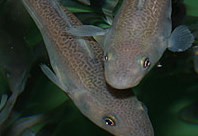 So far, farmed cod producers have not delivered good financial results and opinions diverge according to whom you listen. Culprit seems to be the “market”, but this is generally a very vague and inaccurate explanation.
Feed companies initiated cod farming, as an extension of the feed business, but not as a standout business. Moreover, the volumes that have been planned initially answered to a production driven approach, and not to a market-driven approach. Production was set up for quite significant volumes, without building up a solid sales plan from an already established market position for cod products. If you read my previous articles “Be always market-driven” and “The consumer must be the focus point of value chains“, you can understand why such an approach delivered poor results.
Recently, I was browsing through the web site of one of the farming companies and, although they claim to have set up a value chain, they have not quite done so. Their value chain needs to integrate much more strongly the marketing/customer end, and I think that they need to rebalance their bargaining position with feed suppliers and customers, in order to obtain a fairer distribution of profits. Today, there are people making good money out of cod farming, but the farmers are not.
 Once they refocus their marketing mix to the right countries and the right type of customers, which they will have to do with a reduction of production volumes, then they can grow the business with and for the cod market by being in the driver’s seat.
Considering the demand for white fish and the depletion of the supply of the natural competitor (wild cod), cod farming’s future can only be bright. It would not surprise me if, in the future, cod farming could surpass salmon farming in production volumes. But first, one step back.
Copyright 2009 The Happy Future Group Consulting Ltd.
Managing water is paramount for the future of food production
 With an increasing population that needs more food and more water to live, we can expect that water is going to become a highly strategic and needed resource. As climate changes, the current rain distribution and geographic availability of water is likely to change dramatically, too. This increasing competition between agricultural areas and urban areas will bring major changes on how we use water for both personal use and for food production. On the personal side, we certainly can expect that current bathroom systems to disappear, as they use too much water. Every time we flush a toilet tank, we actually waste the daily drinking water needs of a couple of people, and local water reserves are gradually depleted as well. Clearly, this has no future. Similarly, we can expect the legislation on water use for lawn sprinkling and car washing to change.
Food production will become more and more focused on water efficiency. The main themes will be about taking what we need, but no more, and about collecting, conserving and recycling water. This will bring us to rethink our crop production, the watering systems we use and develop systems aimed at collecting and conserving water.
Our choice of crops will get under review. Some plants have such high needs for water that their production systems will have to be altered, or maybe even we will have no other choice of limiting them to small selected areas. The use of combined crop productions on the same field is likely to gain some popularity back, as this is a way of saving water and protecting the plants and the soil from excessive evaporation. This, of course, will mean a different look on yields and on harvesting systems.  More efficient irrigation systems will replace the old ones. Computerized systems are already in use in wine production, using sensors for humidity and temperature, to determine how much water the plants needs at the most optimal time of the day and deliver it at the exact spot. You can expect that such an optimization approach will prevail. The path that Monsanto follows with the production of genetically modified (GM) wheat that needs only a third of regular wheat varieties is quite interesting. The tricky part is the GM part, as on the contrary to natural “mutations”, such a process does not undergo natural selection, and therefore we do not know what possible side effects it might bring. Nonetheless, this is an attempt to deal with future water shortages. Hopefully, other less controversial solutions can be found that will deliver a similar result. Once again, we can shape our future through continuing innovation.
Food processing, such as slaughterhouses or washing stations for produce, uses large amounts of water. In these sectors, too, new more efficient systems will have to be designed to reduce water use, and they will have to guarantee to meet hygiene and food safety standards. Water treatment and recycling have already been in use for years and they will continue to gain market share.
Next to the above, which is mostly in the hands of individuals and companies, there is a need for political action to address water shortages and water quality issues that expand far beyond the local operations. A number of agricultural areas suffer from drought on a regular basis, such as Australia and some parts of Canada. Other areas have seen the flow of rivers drop dramatically, like for instance the Yang Tse River in China, which has more and more difficulties to reach the sea. In other areas, such in the Arabic Peninsula, the countries realize that traditional irrigation systems are meeting some serious limitations because of the competition between need for drinking water and need for irrigation. Some very interesting projects are in the works to offer alternatives. For example, there are studies to consider the use of floating islands covered with solar panels in order to produce on the spot the energy necessary to desalinize seawater, therefore providing these areas with water that does not originate from underground reserves.
These problems affect the availability, the quality of the water and strongly affect the environment. Failure to address and more importantly to solve such problems properly would have catastrophic consequences for large populations. A balanced plan to offer the availability to water for people, agriculture and industries is absolutely necessary.
Copyright 2009 The Happy Future Group Consulting Ltd.
If we are what we eat, what will we eat in the future?
The past 50 years have seen, at least in the Western world, the development of the consumption society. The emphasis has been on consuming always more, by having an apparently unlimited quantity of increasingly cheaper consumption goods available. This trend happened in the agriculture and food sectors just as well, and followed a rather simple patter, actually. Mass consumption has been coupled to mass production, thanks to intensification, technical and technological progress and, last but not least, marketing.
 Technical progress improved yields and productivity, while marketing was aimed at creating more, and new, needs. Our food has become standardized, industrialized, and processed in a wide variety of forms. As the emphasis moved to lifestyle and convenience, which came along with the rise of mass distribution, cheap energy and suburbia, we lost the connection between ourselves, the origin of our food and nature. Food became just things you buy at the supermarket, already packed in plastic and cardboard.
Now, we have come to the realization that this high production of waste, be it packaging material, be it blemished product that do not look good anymore while still perfectly edible, be it the overproduction of manure and its minerals, or be it the massive use of antibiotics and pesticides is not sustainable. Of course, much progress has already done to reduce this waste and there is a growing trend towards organic and traceable, but at this stage it not clear yet whether this is a true change in our behavior or whether it has more to do with a social status and marketing issue.
However, what the current situation might be, the fact that we understand that we cannot keep on intensifying and wasting the way we did, will inevitably bring a more fundamental change in how we consume in the future.
Some people predict such changes as the astronaut diet made out of pills, the use of a computer to tell us what and how much of it we should eat based on our activity level, or the tissue culture to replace meat, and many other scenarios. Will any of those ever happen? Who knows?
Personally, I believe that food as a very strong psychological connotation. We associate food with experiences and, although there are differences between cultures, that emotional bond will stay.
Clearly, the consumption society with all its excesses is coming to its end, and maybe the current economic crisis, which also originated in the excess of having it all at any cost, could very well be the turning point.
The next evolution is probably going to be a balanced approach between consumption, which we need to some extent, and the necessity of preserving what keeps us alive. There will be different graduations of this balance between geographic regions, but sustainability is the only way forward, as I mentioned in my previous article (Sustainability: as natural as balance).
Intensification is showing its limitations, waste of manure and of packaging are also hitting a wall, energy is getting more expensive and makes the production and the transport of food more expensive, too. This will reshape how we want to consume our food, how and where it is produced, how it is presented to us.
 We still are in a society where some people get obese by eating lots of food as quickly as they can, while they have less physical activity than the previous generations, thanks to automation. That food is produced on intensive farms and feedlots where the animals grow and fatten as quickly as possible, as they eat lots of food, while not having much physical activity. Similarly, in our society meat producers use hormones to boost growth and carcass quality, while body builders and sport professionals use steroids and growth hormone to boost their performance. Interesting similarities, don’t you think? We are indeed what we eat.
So, in a conservation society, should we expect the farms to be led by the need to preserve? This almost sounds like the farms we had at the beginning of the twentieth century. I think that there will be some of it, but the efficiency of production as well as the efficiency of preserving the environment will be much better, thanks to new technologies. We will have high yields, and at the same time, we will have highly efficient systems to use water, to recycle waste and preserve the fertility of our soils and the balance of our oceans.
Copyright 2009 The Happy Future Group Consulting Ltd.
Alternative raw materials for animal feed
Here is an article from World Poultry, titled “Saving costs with alternative ingredients” about research from Provimi on alternative feed ingredients that illustrate quite well my previous article about innovation as the way to add value in animal feed.
 The Food Futurist Solutions - Anticipate, Adapt, Succeed