Listen here to a Chrome AI-generated podcast type playback of the author’s article
The conversation about climate change focuses too much on its causes and not on what we must to do in the future. At least, that is how I feel about it. The whole science behind why climate change is happening is important. I will not argue about that, but tons of CO2 in the atmosphere or 1.5°C vs. 2°C remain abstract concepts in the minds of most people. It is necessary to translate the change into concrete actions. Of course, a lot of that is already happening but some very basic consequences need to be addressed with more force than has been the case so far. In this article, I will review three of these consequences that I consider as the most pressing, yet too often overlooked, consequences:
Heat stress
Warming means higher temperature, but looking at average numbers, such as for instance 1.5°C does not indicate the real problem. Certainly, the average temperature matters from a planetary point of view but we all experience temperature swings that are as unpredictable as severe. The swings are definitely not in the range of 1 or 2°C.
For instance, plants may have a great start in the spring and then comes frost that can destroy an entire harvest in orchards within a few hours, or a sudden heat wave fries crops and in particular vegetables. Heat affects farm animals, too. I can remember when I lived and worked in poultry processing in The Netherlands, we always had some episode in the summer of higher temperatures and high humidity that seriously affected the welfare of chickens. Our company always had to plan for lighter average weights in the summer as the chickens would not eat as much and would not grow much, either. The introduction of misting installations definitely alleviated some of the problem. At least, we did not have to deal with overnight deaths by heat suffocation of entire flocks of birds, but we certainly had less tonnage because of the heat. Heat had a cost. Less tonnage meant less revenue but also higher costs as overhead costs per kg would be same regardless of the number of birds.
Research on the cost of heat stress on dairy cows has determined that in 2020, heat had affected milk production by an estimated 50 million tons at a cost of US$ 13 billion, according to IFCN (International Farm Comparison Network). This tonnage represents roughly 5% of the 2024/25 world milk production. Their estimate for 2050 is of a production loss of 90 million tons (9% of today’s world production) for a value of US$ 90 billion.
There is only one species of warm-blooded animals that I can think of that likes to roast in the sun: people. Other species are much smarter and tell us what we will have to do. On a hot sunny day, animals look for shade.
Shade is going to be a very hot (could not help the intended pun here) topic for the future. Actually, it is already getting more and more on everyone’s mind. Many studies have shown that shade reduces the temperature at ground level by substantial numbers. In paved environments, such as cities, the temperature difference varies in the range of 10 to 15°C. On pastures, the numbers seem to be less, but still in a range of at least 5-10°C.
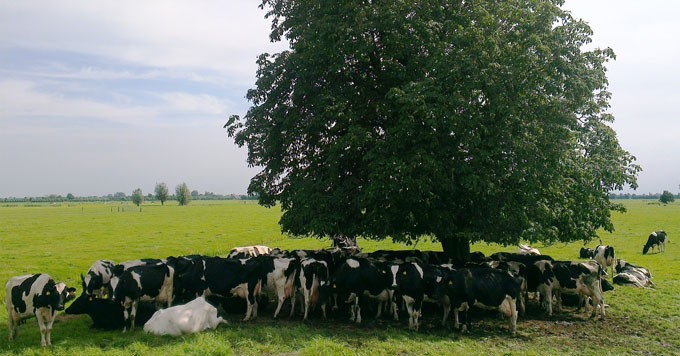
There is already research carried out on the benefit of shade and how to bring more shades to animals. For instance, France’s INRAE (French Institute for Agricultural and Environment Research) is looking at strategies to reintroduce trees on pastures and determine which tree species would be the most effective. Besides trees as a source of shade, there are already some combined cattle or sheep husbandry paired with solar production on grasslands, with some very positive effects. The farm produces cleaner energy and the shade not only improves the animals’ welfare but it also protects the grass from the heat and help providing the animals with feed. In a way, this is a win-win-win. Heat stress is not just affecting feed quantity but its quality as well. There are also farms that produce vegetables under solar panels for the same reason: the panels protect the plants from the hot rays of the sun. Shade is going to b part of the food landscape. Early, I mentioned orchards. I expect many regions, like the one where I live to use shade screens as a standard production method for fruit production.

For the future, heat stress will lead us to rethink production locations, genetics of plants and animals, the type of housing for animals (and for people, too), feeding systems and feeding programs for animals, water management systems and water supply and conservation strategies.
Heat stress and shade are also going to become part of urban landscape. I recently was in Valencia, Spain. Some parts of the cities had some drapes spread on poles to provide shade and they also had misters to cool down the people sitting on some city squares. Those systems were not all that effective if you ask me. The best place was to be in the old river bed, now turned into a park where the trees were offering the best cooling effect in town. Spain is used to heat but it does not make it less of a problem. The most pressing action will be needed in countries that used to be temperate and where cities -and countryside- are not prepared and not equipped to deal with the heat that is likely to hit in the not-so-distant future. Heat is not just about crops and farm animals. It is about people and their pets, too.
Water availability
It does sound corny to say, but it is true: water is life. With climate change, former “predictable” precipitation patterns are disappearing. It looks like there is either too much water falling at once or hardly any at all. Of course, this has an impact, especially when it happens in combination with temperature swings. Droughts have always affected harvest volumes of crops and pasture production. Beef is a good illustration of that about the last couple of years in North America. Although drought is not the only reason, its impact of forage availability has noticeably contributed to the reduction of beef herds, and supply does not meet demand as it used to. The result has been a major increase of the price of beef at consumer level. Here in Canada, the price in the supermarkets of prime cuts has about doubled in a year time, and the price of ground beef has increased by about 50%.

Climate change shows up on the grocery bills and it hurts many households. Beef is an example but consumers can see the impact of climate event on many products, not just meat but fruit and vegetables, too. As such, it is not new. In the course of my life, I have seen unusual weather patterns affect the prices of food, but it just seems that the frequency and the impact is getting higher. We will see, but we need to manage climate events better. Artificial intelligence will likely be a big part of that solution.
There is what we can do about production systems and with the kind of technologies we will have in our toolbox, but there is also what we cannot influence. For this very reason, it is clear that water availability is going to redraw the world food map. Certain productions will disappear from some regions and reappear somewhere else. For example, the Bordeaux wine region in France seem to be at risk of not being able to produce the great wines it used to produce. On the other hand, it seems that England might have some ideal climatic conditions to produce excellent wines. Another example can be the Midwest region of the US which is a major crop producer, corn and soybeans in particular. The region depends heavily on the Ogallala aquifer for irrigation, but this aquifer gets depleted much faster that it can replenish. Water management has become a hot topic and a number of farmers, in particular in the State of Kansas, have switched to sorghum as an alternative to corn for animal feed, as it requires less water than corn.
The politics of water are another aspect of water availability that we rarely hear. Yet, we should pay attention. For instance, in central western France, there are hefty -and violent- conflicts about water management. Farmers wanted to have a number of water basins build so that they could keep producing their regular crops by using that water for irrigation. The basins would be filed by the river system in the winter. This project has faced strong opposition and many clashes have taken place between demonstrators and the police. Another example of water conflict is the dam that Ethiopia is building on the Nile River, which is causing great concern and reaction from Egypt and Sudan that see a risk for their water supply abilities for the future. And let’s not forget that the populations of these three countries are expected to increase strongly in the coming decades. Another example is what happened between India and Pakistan during the 2025 conflict in the Kashmir region. India threatened to stop its rivers from flowing into Pakistan. As you can see, as it becomes scarce, competition for water will become fierce. Water is going to be a major strategic and geopolitical resource with the potential to create major crises and possibly wars.
Cities also need to have sensible water supply and water use plans in place. A few years ago, Cape Town had dire water supply issues. Mexico City also got some worries. Considering the regions where population is expected to grow the fastest, water is going to be a major cause for concern. The number of megacities that are forecast to be built in Asia and Africa should keep many people awake at night. New cities with multimillion inhabitants are going to have to rely -and to depend- on mostly local water sources and the question is whether they will be able to succeed. This will require major investment and astute planning for the future.
Diseases
As climate changes, so do the local environmental conditions for living organisms. Some regions that were inhospitable for some species might become better suited in the future and we can expect to see a change of ecosystems as a consequence. This can happen for all sorts of species, large or small to very small. I will give here a few examples to show the variety and the complexity of the impact of climate change on the possible spread of diseases.
In cattle, two different problems have appeared recently. One is in France. A number of cow herds have been infected with the lumpy skin disease, which is a disease propagated by flies and mosquitoes. It is a disease that was until now limited to Africa. Now, it is in the French Alps near Switzerland and other cases have been detected in the Pyrenees, not far from the French-Spanish border. There is no cure available and the infected herds are being culled. Just imagine if the disease spreads further what the consequences can be for perhaps all of Europe. The second example with cattle is in Mexico and the US. Cases of Mexican cows infected with the New World screwworm have been identified and immediately, the US closed its borders to Mexican beef. Although there might be some politico-commercial aspects at play, fact is that the screwworm is an ugly disease vector. It basically eats the flesh of the cattle, but it could do the same to people. Texas got rid of that pest in the past with some difficulties and they do not want to see it reappearing, for good reasons.
I just mentioned vectors, and vectors we need to closely monitor. Avian flu, also known as HPAI or H5N1, is very contagious and is carried by wild birds. Monitoring of migrating birds and their routes is essential to identify where the disease could be present and take proper action to protect avian farms. Climate affects the migration routes and old patterns are probably already obsolete. There are already some systems in place, but I believe that more is going to be needed. Here too, artificial intelligence might be a big part of the solution. That will require sensors in bird houses, on farms, in the vicinity of farms and everywhere possible on the likely migration routes. It will need to be a 24/7 alert system. The problem -and the solutions- are similar when it comes to the increase of the population of wild boars in many parts of the world. Full monitoring will be essential in the fight against ASF (African Swine Fever). It also will be essential to understand the ecology of diseases if we want to stay ahead of the game.

In the world of small and very small, just look at the spread of tiger mosquitoes in Europe. A large part of France has been colonized and it will not stop there. Tiger mosquitoes carry “traditionally” tropical diseases such as dengue fever, yellow fever, chikungunya or even zika. Climate will contribute to the spread of many new diseases, be they plant, animal or human diseases.
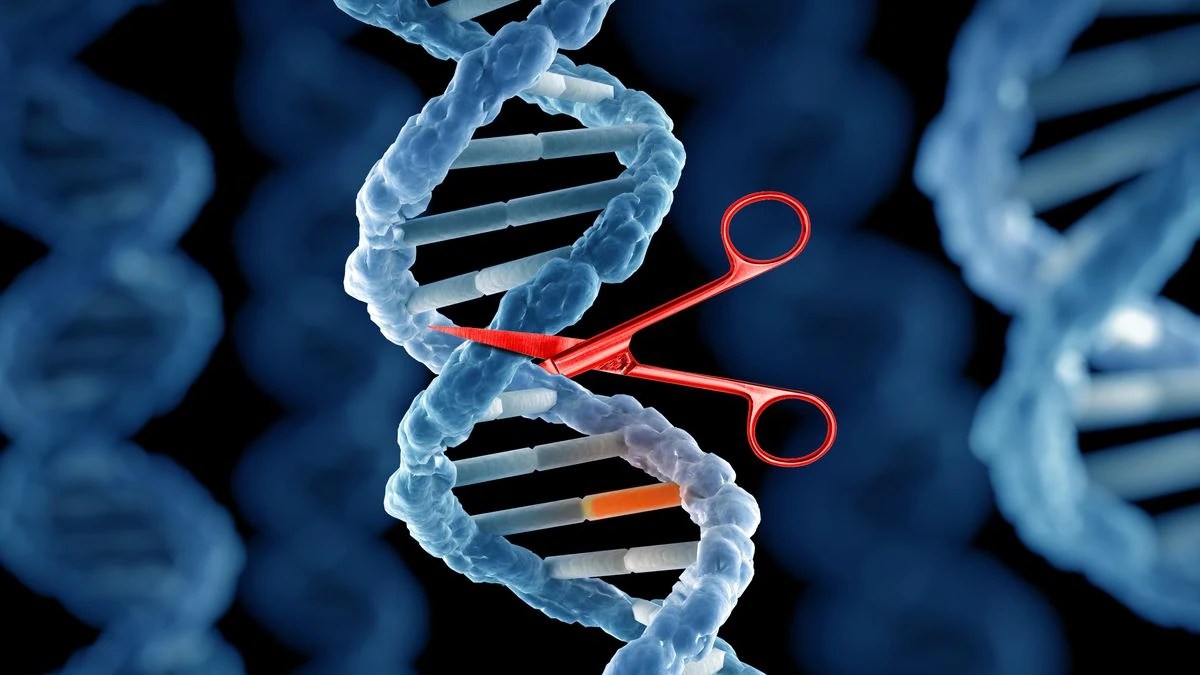
The name of the game for the future of health is PREVENTION, and that needs to be imprinted in everyone’s mind in big bold capital letters. Protecting the immune system of our plants and animals as well as ours will be on top of the priority list. Let’s hope that politics will not stand in the way. We need to protect all we can. Once that is done, we will have time to discuss if we like it or not. It will be just like with the oxygen mask in planes. Put it on yourself first and then help others. We will have to develop new vaccines and new medication. For agricultural purposes, the use of gene technology will also help make some of our crops and animals resistant to diseases. Monitoring, which I mentioned earlier will also be key to protect ourselves and our food production. A major component of prevention is anticipation. We have the technologies to be able to monitor, to run scenarios and to develop solutions. We must use them to their full potential. We need cures, because massive culling or production losses will not be an option with two billion more people on Earth in the coming 25 years. Remember, 25 years is only one generation.
Copyright 2025 – Christophe Pelletier – The Food Futurist – The Happy Future Group Consulting Ltd.
 The Food Futurist Solutions - Anticipate, Adapt, Succeed