The transition from a consumption society towards a maintenance society

The days of our consumption society are numbered. We are going to have to find another economic system to prosper in the future as it is part of solving the climate change and CO2 emission issue. Over the last 60 years, all our economy has been based in encouraging consumer demand for goods that have been produced with relatively very cheap energy, very cheap raw materials and as cheap labour as possible, with as cheap credit as possible. This has lead us where we are, which is a group of very wealthy nations wasting very precious resources, to the point of exhaustion and suffocation. If well maintained, Earth will last longAlthough some still try to resist and deny the obvious, this system is no longer sustainable and we must rethink what should drive our economy. In an earlier article, I made a reference of how previous generations used to be very cautious about what and how they consumed. The positive side of the last 60 years has been the incredible progress we have made in science, knowledge and technology, which offers possibilities unthinkable for the previous generations I was referring to. We understand our world and how it functions like never before. We have all the technological solutions to solve the climate issue, but the key is the will and the determination to change and to act. This cannot happen as long as we keep thinking the economy in terms of growth only. Growth will not go on for ever, simply because our space and our resources are limited. As there are more and more people needing more and more energy, food and other goods, the law of offer and demand will rule. Prices will inevitably go up and consumption will slow down. A new time has come. The priority must now be quality, not quantity, we must think about having enough, not having always more. This thinking is not a nostalgia to a past that also had its limitations. It is not about rejecting a market-based economy. It is about looking at the market that has always been here, but that has been pushed in the background for the easier approach of just producing more and selling it. What we will have to bring to market is not so much products as services. These services are the ones that are directly related to making all the natural and industrial cycles run harmoniously in a durable way. Just to name a few examples, I would mention all activities that are related to cleaning the damage we have caused, and recycling activities will become more and more important in our whole economy. In the same way, water treatment is going to be a crucial activity, even more so than it has been so far. Clean industries producing durable goods and services will prevail. This change will also make some jobs disappear and some appear or even reappear. As usual change always brings opportunities. It is to us to recognize them and to take them. The time has come to make the transition from this consumption society, based on wasting resources, and with no future, to a maintenance society, where wealth, and not growth, will be the economic success indicator. By acting today, we can ensure this process to happen in a smoother way than if we wait until we have no choice anymore.

Copyright 2009 The Happy Future Group Consulting Ltd.

Sustainability: As Natural As Balance

With the increasing awareness about climate change and our endangered environment, sustainability has become a widespread concept through all industries and the food value chains have embraced it like everyone else.

Yet, I do not quite understand why sustainability seems to be such a “revelation”, or even almost a revolutionary idea. Sustainability is the way that our societies have lived for thousands of years, probably because scarcity of goods made conserving and recycling a necessity of survival. Only over the last 50 years or so have we seemed to forget about it, because of our consuming frenzy and the abundance of goods that we thought to be about infinite.

To put the importance, and the obvious need for sustainability, let’s just look at its definition. What is not sustainable disappears. There is no need for any further philosophical or political discussion. Survival can (note that I only say can) come only from sustainability. All processes in nature that deal with life are all about recycling of organic matter in one form or another, and about balance. If the environment is favorable for a particular species, you will see this species thrive and its population grow quite strongly, to the point that it exceeds its abilities to provide for itself in its original ecosystem. Then, it starts to use more and other resources that nature can replace at the natural pace and this always results in a strong reduction of the population, as the weakest cannot find food and perish, or as the population density helps the spreading of diseases much faster than it would otherwise. Does this sound somehow familiar?

The soil that feeds usThere are many discussions in scientific, economic and political circles about whether we have reached such a stage either regarding pandemics or regarding food supplies. The specter of pandemics recently raised its head with the “swine flu” originating from Mexico. Last year, there were severe disruptions of food supplies in some parts of the world, not as much as the result of an actual shortage, but as the result of prices skyrocketing and fears that food would run out.
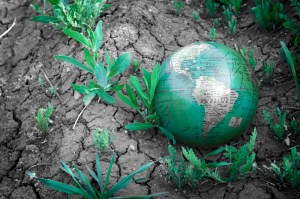
Are we about to run out of food? Malthus was warning about such a risk in the early nineteenth century, but since then, the world population has increased far further than he estimated was possible. Today, we probably are not in that dire a situation, yet the main food supply issue is more one of distribution between geographic regions. Some parts of the world are underfed while others die of all sorts of ailments related to overfeeding. This is more a matter of politics than purely of agricultural (including seafood) potential.

Sustainability is about allowing nature to do its work at its own pace. This is all about staying in balance and keeping natural cycles complete their courses. Since you cannot live without eating much more than 2 months, you cannot live without drinking for much more than 2 days and you cannot live without breathing for much more than 2 minutes, these cycles can be reduced to just a few critical areas for life:

  1. The cycle of air, necessary to remove, or to help nature remove the contaminants, so that air remains breathable.
  2. The cycle of water, necessary to remove, or to help nature remove, the contaminants that can make it undrinkable.
  3. The cycle of soils, necessary to preserve the fertility of the soils, and thus allow a continuous agricultural/livestock production to feed people.

Agricultural challenges aheadThis is why, with a growing human population, agriculture and food production at large, managed in a sustainable manner, will become increasingly strategic in the future, and sensible management of water resources will be a key factor for the success of agriculture as well.

Copyright 2009 The Happy Future Group Consulting Ltd.

Animal feed: Innovation is the way to add value

Animal feed is one of the main costs in animal production. Therefore, any performance improvement that will come from the feed or from nutrition gives a competitive advantage.
Animal feedAs such, a feed mill is a rather simple process that feed producers know and master. To put it in simple terms, the recipe is prepared in a big kitchen blender. As a very standardized industrial process, the focus, for a given quality specification is to produce at the lowest cost possible. So, has feed become a commodity or are there ways of offering added value to farmers?
You can look at this at two levels: the feed itself and its usage.
Feed manufacturing itself can be incorporated in the production chain in different ways that will all have the same purpose: cutting cost. The feed company can be independent and market its own feed, or it can just produce as toll milling for a farmer or processing group, as this is already the case.
However, the true added value lies somewhere else: innovation. This plays already today and will increasingly be the strategic area of the future for feed companies. Innovation will continue to cover many areas, from biology, nutrition, to feed technology with the purposes of further improving feed efficiency, and provide raw materials that are more efficient.
In an age where availability of raw materials will become scarce, because of the competition between animal nutrition, human nutrition and possibly demand for biofuels, everything that will help saving and recycling resources will win. To achieve this, we will see new techniques to increase the digestibility of feed, to reduce the feed conversion ratio and create less manure, as well as improvement of the texture and other physical qualities of the feeds. We will see further innovations in the feed composition in order to have the animal use most of it, and for instance the use of enzymes will increase further. Other developments, such as a promising sesame seed extract that can help replicate omega-3 fatty acids in fish feed, can help reduce the dependence on scarce (and expensive) fish oil, and offer substitution possibilities with more types of vegetal oil. However, in this case fish would compete with other farm animals and humans for those oils, making them more expensive in the end. There is also the development of algae as a feedstuffs for farm animals. If successful will such algae be produced in ponds on in the sea, or will it  remain an incubator-based production? Who knows? But expect many new ideas to come to the market, as the fight for resources will become fiercer in the future.
Companies that will possess the latest scientific and technical knowledge, combined with a strong innovative capacity and the talent to locate and purchase the very best mix of raw materials will in fact own intellectual property. Nothing of the above is new, but the future changes will have more to do with the allocation of the different activities in the feed value chain itself. This intellectual property is what they might need to sell in the future, instead of a feed that customers do not always perceive as a differentiated product. Feed and nutrition might become two distinct products and maybe even distinct businesses. Could feed mills become franchises of nutrition and feed technology centers?

Copyright 2009 The Happy Future Group Consulting Ltd.

Biofuels may be a non issue

Biofuels is a topic that divides many people. To some, it is a solution to reduce dependence on oil, and to others it is an insane idea.
I do not think that biofuels will be a discussion topics for very long, and here is why.
Very likely, the future of cars will be electricity. Inevitably, at some point oil prices will rise again to very painful levels and stay there. This is what will make alternative energy sources economically interesting, even without government subsidies.
One of the major opposition to the electric car is being handled in a very smooth way by the Obama administration. General Motors and Chrysler were strong opponents of the electric car, and helped send it to the landfill for a while, but neither company is around anymore. The Obama administration just put an end to the outdated automobile gas guzzler model once and for all, with the new regulations on gas mileage and car emissions. Fact is that an important page has been turned for good.
Just realize that if all US cars have a similar mileage as their Europeans counterparts, the gasoline use would reduce to substantial amounts, in the vicinity of an equivalent of 80-100 million cars less (old US mileage standards). Normally, this should make the price of oil drop, therefore reducing the need for biofuels. And when oil prices increase again, then electricity will take over.
Other signs that biofuels do not have that much of a future is the lack of excitement from the investment community for it. Wind energy attracts investors (for instance think of Boone Pickens’s energy plan). Solar energy attracts investors. But biofuels? The main party that seems to be pushing for it is Brazil, for internal reasons mostly.
The fundamentals do not look good for biofuels, either. They score negatively on all three bottom line criteria.
As such, this is good news for food supplies. If biofuels made out of edible grains do not have much of a future, the situation is different when it comes to biofuels made out of cellulose. These probably have a decent future, as they do not compete with human consumption, and can be a good way of using and recycling materials that further would be of little interest.

Copyright 2009 The Happy Future Group Consulting Ltd.

Financial markets and food prices

food protest in MexicoLast year, we have had a flavor of things to come when the prices of oil and of agricultural commodities skyrocketed, creating inflation and in many places food related riots, even in Western countries’ supermarkets.
On the contrary to the “official” version that the media were presenting us about population increase, emerging countries economies growing, the spike in price was not all that linked to supply and demand of the commodities.
What was exploding was the demand for future contracts for these commodities, and that is demand for contracts on paper. Many players who were trading these future contracts were investment banks, financial institutions and private investors, mainly hedge funds. These people are not physically involved in the trade of the commodities. I cannot remember any oil tanker with a bank’s name on it, nor on trucks transporting corn or wheat.
Wall Street-NYSEMoreover, such transactions were highly leveraged. For oil, I have seen numbers varying between 11 to 22 times leverage. This means that the demand was artificially boosted on paper by people who are not physical buyers of the commodity they trade, but who want to create a momentum in the market so that the prices of the contracts increase significantly, with as only goal to take as much profit on the paper transaction as possible.
This would not be bad if the futures prices were not becoming the “official price” in the real economy. We have seen the result: strong inflation and social unrest for very fictive reasons, because we were not close to actual shortages.
Future contracts had been introduced as a tool for the producers of commodities to fix a price in advance for their production. As such, this is a very good system that offers more security, and especially more market predictability to producers.
The problem is that these futures contracts have now become an investment product that is not connected anymore to the real market numbers. They live a life of their own and they are priced by the market on paper with high leverage levels, but they can directly influence the prices of goods to consumers, and therefore skew the economic situation.
At some point in time, governments shut down a number of markets for basic commodity, in particular in India.
For the future, we can expect that a drop in the US dollar will encourage financial investors to “hedge” against inflation by rushing into futures markets; therefore, they will create inflation by giving the impression that there is a strong surge in demand for commodities. For investors (or more accurately I should say speculators), commodities have now become currencies, they do not represent actual products and the investors do not link them to the consequences that will hit the real economy because of that.
This will translate in major inflation, which combined with a very slow economic recovery could cause two recessions back to back, or extend this one much longer. In such a scenario, especially the USA will be hit quite hard.
Unfortunately, it probably will take much longer for governments to see how this loophole works and to act firmly to regulate the futures market. We might have a bumpy ride ahead of us.

Copyright 2009 The Happy Future Group Consulting Ltd.

Always be market-driven!

This is always the right approach, even when the market is good. The alternative, being production-driven will only bring you gloom eventually.
A very recent and now famous example to illustrate this is the construction industry in the USA. Agricultural products tend to follow similar cycles and this story is just a reminder of the recurrent mistakes that occur.

The reason why they got into trouble is because they forgot to be market-driven. As their market was good, and easy, they became overconfident and instead of being business people, they actually became speculators. They assumed that the market was to never change, that the only way would be up, and they built more and more houses without having any contract at all, as they thought that there always would be buyers.
By ignoring how markets function, they created their own demise. First, markets always fluctuate; they never go up in a straight line, so they had to prepare for a downturn. Secondly, they ignored the simple law of supply and demand. By taking demand for granted, they did not anticipate the possibility of ending up with more offering than the market would absorb. And thirdly, they did not produce according to what they could sell, but they produced an inventory; that is the production-oriented error.
Of course, the number of mortgage defaults and foreclosures is pushing prices of houses down, but this is by far not the only reason why houses in the US are losing so much value. The inventories of unsold newly built houses are huge and the market will have to absorb the surplus.
By not being market-driven, the builders have brought themselves in a working capital crunch. Their accounts payable are going up (yes they have to pay their bills) and their accounts receivable are not coming in fast enough because of the inventories. So, in order to pay the bills and not get into bankruptcy, they have to move the inventories. Profit becomes second to cash. This is why they are selling much cheaper than they had speculated. If only they had been market-driven…
The US builder story is just a superb illustration of the advantage of being market-driven, but this is actually a very common story. Especially when a market is good, companies tend to think that this is the normal state of affairs. Add to this a normal dose of greed and then you have the perfect recipe for a disaster to happen.
Know your market and do not let yourself drag into overconfidence!

Copyright 2009 The Happy Future Group Consulting Ltd.

The Great Unseen Land Grab

Interesting article from The Economist on how some countries are already organizing and securing their food supplies for the future. Major political-economic chess game in the running.

Buying farmland abroad – Outsourcing’s third wave

It connects quite well with my previous article about Jim Rogers buying land in Canada and Brazil.

And it also connects well with the move made by the Canadian investment firm Sprott Asset Management to secure a land lease of a million acres in partnership with First Nations on the Canadian prairies to grow crops as an investment in agricultural commodities.

Mergers in agribusiness are building strategic economic blocks of tomorrow

Only yesterday, two major mergers took place in the agribusiness world.
In Brazil, Sadia and Perdigao will now form the world’s largest poultry producer, as the new company is larger than Tyson Foods. That is not nothing.
In Canada, Viterra, formerly Saskatchewan Wheat Pool is acquiring the Australian ABB Grain.
As there is a growing awareness that agricultural commodities will play an increasing economic role, we certainly can expect more of such mergers & acquisitions.
With larger and more powerful players in the agribusiness, we will see a lot of strategic realignment and shift to gain more control in teh food production chains.
This will not only have an impact at corporate levels as well among suppliers as among the distribution and the retail, but this will also reshape the world map of the politics of food.

We saw two possible strategies here, although of course not new. One is the creation of a national giant in an emerging country with great ambitions as a major economic player in general and in agriculture in particular. The other is a multinational player specialized in their own specific industry, but now active in two very critical production areas.

Copyright 2009 The Happy Future Group Consulting Ltd.

Jim Rogers Buys Land, Starts Farming in Brazil and Canada

From CNBC, March 3, 2009
See full article and video on http://www.cnbc.com/id/29477080

Commodities are still the best play for the long term, legendary investor Jim Rogers told CNBC, confessing that he has been buying farmland himself.
“We’re still going to eat, probably; we’re still going to wear clothes, probably. Farmers cannot get loans for fertilizers right now. So the supplies of everything are going to continue to be under pressure,” Rogers said.
He is the director of two funds which are buying greenfield land in Brazil and existing farms in Canada and starting to farm it. The funds are clearing the land, fertilizing it, irrigating it and hiring farmers and, Rogers said, some day will probably sell the land but that is a remote prospect.
“If I’m right, agriculture is going to be one of the greatest industries in the next 20 years, 30 years.
“Food inventories are at their lowest in 50 years, Rogers said, while the oil and mining sectors are also good bets.
“Even if demand goes flat or down, as it did in the 30s, as it did in the 70s, you can still have a nice market,” he told CNBC.Despite the recent rally, gold is still a good opportunity if investors choose the right time and way to get in, according to Rogers.
“I own some gold, of course I own some gold. If gold goes down, I’ll buy more,” he said. “The IMF is trying to sell their gold and if they do then they’ll drive the price of gold down a lot. If they do … that’ll be the last opportunity to buy gold in a long, long time.”
“You can buy coins, you can buy the real stuff, you can buy ETFs and ETNs on the exchanges, you can buy mining companies if you know what you’re doing…,” he added.
Earlier this year, Rogers said he liked the Swiss franc and the yen but gave up the Swiss currency. “I stopped buying the Swiss franc when the Swiss (central) bank bailed out UBS. I still hold the yen.”
Asked whether the current collapse in commodities prices worries him, he said: “You’re supposed to buy when they’re collapsing. I expect to own commodities for years, for a long time.”