The past 50 years have seen, at least in the Western world, the development of the consumption society. The emphasis has been on consuming always more, by having an apparently unlimited quantity of increasingly cheaper consumption goods available. This trend happened in the agriculture and food sectors just as well, and followed a rather simple patter, actually. Mass consumption has been coupled to mass production, thanks to intensification, technical and technological progress and, last but not least, marketing.
 Technical progress improved yields and productivity, while marketing was aimed at creating more, and new, needs. Our food has become standardized, industrialized, and processed in a wide variety of forms. As the emphasis moved to lifestyle and convenience, which came along with the rise of mass distribution, cheap energy and suburbia, we lost the connection between ourselves, the origin of our food and nature. Food became just things you buy at the supermarket, already packed in plastic and cardboard.
Now, we have come to the realization that this high production of waste, be it packaging material, be it blemished product that do not look good anymore while still perfectly edible, be it the overproduction of manure and its minerals, or be it the massive use of antibiotics and pesticides is not sustainable. Of course, much progress has already done to reduce this waste and there is a growing trend towards organic and traceable, but at this stage it not clear yet whether this is a true change in our behavior or whether it has more to do with a social status and marketing issue.
However, what the current situation might be, the fact that we understand that we cannot keep on intensifying and wasting the way we did, will inevitably bring a more fundamental change in how we consume in the future.
Some people predict such changes as the astronaut diet made out of pills, the use of a computer to tell us what and how much of it we should eat based on our activity level, or the tissue culture to replace meat, and many other scenarios. Will any of those ever happen? Who knows?
Personally, I believe that food as a very strong psychological connotation. We associate food with experiences and, although there are differences between cultures, that emotional bond will stay.
Clearly, the consumption society with all its excesses is coming to its end, and maybe the current economic crisis, which also originated in the excess of having it all at any cost, could very well be the turning point.
The next evolution is probably going to be a balanced approach between consumption, which we need to some extent, and the necessity of preserving what keeps us alive. There will be different graduations of this balance between geographic regions, but sustainability is the only way forward, as I mentioned in my previous article (Sustainability: as natural as balance).
Intensification is showing its limitations, waste of manure and of packaging are also hitting a wall, energy is getting more expensive and makes the production and the transport of food more expensive, too. This will reshape how we want to consume our food, how and where it is produced, how it is presented to us.
 We still are in a society where some people get obese by eating lots of food as quickly as they can, while they have less physical activity than the previous generations, thanks to automation. That food is produced on intensive farms and feedlots where the animals grow and fatten as quickly as possible, as they eat lots of food, while not having much physical activity. Similarly, in our society meat producers use hormones to boost growth and carcass quality, while body builders and sport professionals use steroids and growth hormone to boost their performance. Interesting similarities, don’t you think? We are indeed what we eat.
So, in a conservation society, should we expect the farms to be led by the need to preserve? This almost sounds like the farms we had at the beginning of the twentieth century. I think that there will be some of it, but the efficiency of production as well as the efficiency of preserving the environment will be much better, thanks to new technologies. We will have high yields, and at the same time, we will have highly efficient systems to use water, to recycle waste and preserve the fertility of our soils and the balance of our oceans.
Copyright 2009 The Happy Future Group Consulting Ltd.
 There are many discussions in scientific, economic and political circles about whether we have reached such a stage either regarding pandemics or regarding food supplies. The specter of pandemics recently raised its head with the “swine flu” originating from Mexico. Last year, there were severe disruptions of food supplies in some parts of the world, not as much as the result of an actual shortage, but as the result of prices skyrocketing and fears that food would run out.
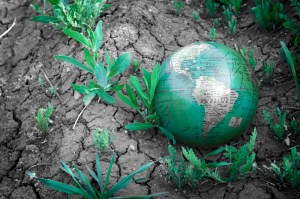 This is why, with a growing human population, agriculture and food production at large, managed in a sustainable manner, will become increasingly strategic in the future, and sensible management of water resources will be a key factor for the success of agriculture as well.
 Regardless which link in the value chain you represent, it is essential to always consider the “big picture”. In this picture, a key element is the end of the chain: the consumer.
 Here is a funny coincidence, as I wrote about innovation as the way forward for the animal feed industry, today I found this article about innovation in the chicken market in order to drive chicken consumption and improve profitability.
 As such, a feed mill is a rather simple process that feed producers know and master. To put it in simple terms, the recipe is prepared in a big kitchen blender. As a very standardized industrial process, the focus, for a given quality specification is to produce at the lowest cost possible. So, has feed become a commodity or are there ways of offering added value to farmers?
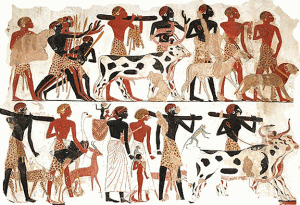 The domestication of animals for food production started thousands of years ago, and has gone through a slow evolution since then. In the last 50 years, we have intensified productions systems to a very high degree. Aquaculture, although not unusual in ancient times, has really experienced an economic boom only rather recently, and future growth predictions are quite optimistic.
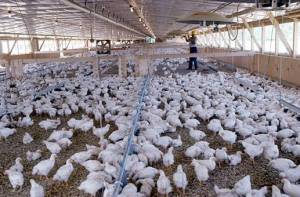 With high densities of animal in some regions, animal husbandry has had to deal with a number of health issues, such as not long ago avian flu and swine fever. The presence of large number of animals in limited areas has increased the “disease pressure” on farms and regions, making epizooties quite devastating, considering the amount of culling that health prevention measures require. This always takes a heavy economic toll, and not only on farmers. This has forced many countries to review their policies about intensive animal husbandry and downsized the sector.
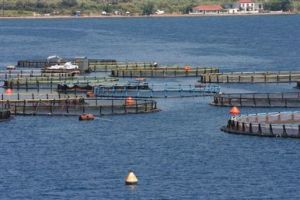 Therefore, above, I have tried to sum up the most noticeable results of intensification of land animal production. Clearly, there are lessons to be learned for the “new” aquaculture industry, and by this, I mean the intensive, high investment aquaculture. Most companies involved in this business have been inspired mainly by the evolution-and the success- in the chicken industry. They try to copy and adapt a similar model. Therefore, it is rather predicable that they will have to deal eventually with similar consequences.
 The Food Futurist Solutions - Anticipate, Adapt, Succeed