
Future Harvests has been published less than two weeks ago, and it is going to change my company rather profoundly.
 What started as a blog on the side of The Happy Future Group Consulting Ltd. is now about to become the very core of my business.
Not only the book sales are already higher than I would have thought, the book is creating much interest for my other activities. The book has already been shipped not only to Canada or the USA, but also as far as South America, Asia and Europe. This is truly amazing.
The reactions to the announcement of the book’s publication have been amazingly enthusiastic and they made me feel like I had just produced something that many were waiting for. This is both very rewarding and very humbling, because working on solutions for future food supply to an increasing world population is a huge task. Since the publication, people with whom I never had contact before, from all around the world, have approached me, thanking me for having engaged in this venture.
New contacts are asking me to participate in conferences and to organize workshops and seminars for them. The CBC (Canadian Broadcasting Corporation) is interested in having me on one of their programs. Of course, the concrete discussions are still to come, but I have to admit that my Food Futurist is now showing incredible potential.
The part on policy making and strategy is getting more attention, too. This activity has the potential to become a solid business that will need to involve more people in my organization. I have already started to develop a plan for this. I can see interest coming from companies, professional associations and governments, not only in Western countries, but in many emerging countries, such as in South America, Southeast Asia, India, or Russia to name a few.
The first step that results from all of the above is for me to formalize the Food Futurist further into a more structured activity than it has been so far. This has started with my defining and posting the mission on all the business pages of the website. The mission is “To help our clients challenge today’s certainties, shape the future, and manage the transition with a targeted and practical action plan for the coming 10 years and beyond”.
The following step is going to be to develop business around this mission and the principle expressed in Future Harvests.
If you are interested in this, please do not hesitate to contact me. Talking is cheap. If you know people who would be interested, please pass it on to them.
As Humphrey Bogart’s character said in the movie Casablanca, “I think this is the beginning of a beautiful friendship”.
 This group will continue to be involved in mass production of commodities for global supplies, like this is the case today.
 This sector should undergo a strong growth and be build in a market-driven approach. These are the farmers that produce specialty products aimed at serving either a very specific segment of the retail or foodservice market.
 In emerging countries, the development of a local agriculture, and aquaculture, will be a key driver of economic development for under industrialized and/or under urbanized regions. It also will be a way of slowing down the migration of population to urban centers and limit social problems, by creating satisfying economic conditions and by securing food supplies locally. This farming will be about basic needs, before marketing.
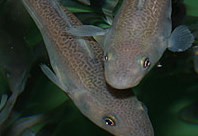 So far, farmed cod producers have not delivered good financial results and opinions diverge according to whom you listen. Culprit seems to be the “market”, but this is generally a very vague and inaccurate explanation.
 Once they refocus their marketing mix to the right countries and the right type of customers, which they will have to do with a reduction of production volumes, then they can grow the business with and for the cod market by being in the driver’s seat.
 Regardless which link in the value chain you represent, it is essential to always consider the “big picture”. In this picture, a key element is the end of the chain: the consumer.
 The Food Futurist Solutions - Anticipate, Adapt, Succeed