
Health concerns will gain more importance in the future in the decision process of consumers when they buy their food.
More and more, we can hear and read about concerns and even rejection of the current production systems. Although this bad publicity is not always based on the most objective facts, it has been able to find a growing audience.

It must be true, it was in the newspaper
Since most consumers have little or no knowledge of agriculture and food, their only source of information is in the popular media. On the other side of the discussion, the agri-food industry is not getting through, because its message tends to be too defensive and too technical. Unfortunately for the industry, errors from the past (for example, the use of DDT) or cases from other industries (for example, tobacco) contribute to cast a shadow on its credibility. As I wrote my previous article “Less controversy thanks to transparency”, the agribusiness will achieve much more by opening up and having consumers visit their premises so that they can tell what they saw. They must organize more Open House days.
Therefore, for now, consumers have a certain perception of how food is produced, and it is not so relevant to argue whether this perception is correct or not. Perception simply is reality, and consumers act according to what they believe is true.
 There is a growing concern about environmental and health aspects of food production. About the environment, you can list very diverse things such as the depletion of wild fish stocks in the oceans, the interaction between aquaculture and wild fish stocks, manure and smell of intensive animal husbandry and impact of manure on soils and drinking water, deforestation of rainforest for ranching of beef or about growing GMOs (Genetically Modified Organisms). On the health side, consumers worry about food poisoning due to bacteria, such as E. Coli, listeria, campylobacter and salmonella, but also about residues of pesticides or antibiotics, as well as they worry about the use of hormones in animal productions. As the discussions get more animated in the US about the reform of health care and the cost of obesity, more and more people are wondering about whether the fast food diet is a proper one. Next to this, animal welfare is a growing concern by more and more consumers.
The answer to many of these worries has started to appear in the last few years with the growth of the organic market segment. When we see the growth and the performance of a retailer such as Whole Foods, there is no doubt that organic foods have a growing audience.
The concerns about the environment are forcing retailers, food service and businesses involved in the production chain of food to make changes. Some of the actions they have taken can be seen as marketing or PR, but they also have become mainstream. Just a look at how many restaurant and supermarket chains have already implemented sustainable seafood programs indicates how serious this change in consumer attitude is. Fast food chains are also actively working on reducing their environmental impact and set standards on where they source their meat, based on environmental concerns, such as no beef from ranches deforesting the Brazilian rainforest.
In the past, we have seen some examples of production methods that had to be abandoned, simply because no solution to cope with environmental problems could be found. This has been the case in The Netherlands where the level of intensification caused such manure surpluses and risks of animal disease to such a point that after many years of looking for viable technical solutions in vain, the government decided that the size of the national herds had to be reduced.
Similarly to what happened in Europe over the last decade, we can expect that much stricter rules in the use of antibiotics will be applied, and I expect a similar trend to a progressive elimination of the use of hormones in animal husbandry. About animal welfare, there should not be any surprise the day that only husbandry systems that allow enough “recreation” area for animals will be allowed. All of the above is going to have an impact on how and where food is produced. Systems will become less intensive, and progressively we will see more techniques to improve efficiency to compensate.
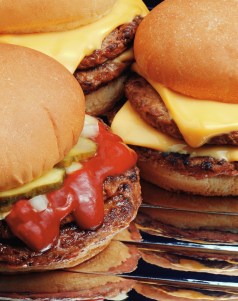
Past Food?
As I also had mentioned in another article (Future price of fish and meat: up), it is simple logic that with more people to feed, food is going to become more expensive. However, the relative prices of various food products also need to go along their relative health benefits. Today, it looks like only wealthy people can afford a healthy diet, as the price of “good” food is substantially higher than the price of what makes a nutritionally unbalanced meal. This clearly does not work in the direction of a healthier population at large.
The way consumers think will define the way we eat and produce our food. Many changes in consumption patterns, in production systems and in product offering are under way. I will get back later with more details on what my views are on this.
Copyright 2009 The Happy Future Group Consulting Ltd.
 This group will continue to be involved in mass production of commodities for global supplies, like this is the case today.
 This sector should undergo a strong growth and be build in a market-driven approach. These are the farmers that produce specialty products aimed at serving either a very specific segment of the retail or foodservice market.
 In emerging countries, the development of a local agriculture, and aquaculture, will be a key driver of economic development for under industrialized and/or under urbanized regions. It also will be a way of slowing down the migration of population to urban centers and limit social problems, by creating satisfying economic conditions and by securing food supplies locally. This farming will be about basic needs, before marketing.
 Here is an
  Having the ability to change location has several advantages. It allows finding areas where water quality is better as this varies with seasons and climate conditions. It also can allow farms to move away from the routes of wild fish and substantially reduce risks of disease and parasite contamination and spreading. Being closer to consumers market also has the advantage of reducing the amount of transportation and have the fish brought to market faster, therefore fresher, theoretically.
 In order to understand what changes are ahead of us, we need to realize that opposite forces are engaged in shaping the world of the future. As we all know, accepting change is always a slow and sometimes a difficult process. There are those who see the possibilities and those who see the drawbacks. The first train was going, supposedly, to get cows stop giving milk, but we now know that cows love to watch trains passing by. Probably, the first caveman who drew a picture of an animal on the wall was considered by some as a great magician and probably by others as pure evil. As such, such a struggle is very useful, as on the one hand it shakes immobility and open new doors, and on the other hand it prevents us to rush into the unknown without thinking first.
 More technology to improve efficiency of water use, fertilizer use, animal feed use, land use, energy use (objective: zero waste).
 What will a higher price mean?
 So far, farmed cod producers have not delivered good financial results and opinions diverge according to whom you listen. Culprit seems to be the “market”, but this is generally a very vague and inaccurate explanation.
 Once they refocus their marketing mix to the right countries and the right type of customers, which they will have to do with a reduction of production volumes, then they can grow the business with and for the cod market by being in the driver’s seat.
 Technical progress improved yields and productivity, while marketing was aimed at creating more, and new, needs. Our food has become standardized, industrialized, and processed in a wide variety of forms. As the emphasis moved to lifestyle and convenience, which came along with the rise of mass distribution, cheap energy and suburbia, we lost the connection between ourselves, the origin of our food and nature. Food became just things you buy at the supermarket, already packed in plastic and cardboard.
 We still are in a society where some people get obese by eating lots of food as quickly as they can, while they have less physical activity than the previous generations, thanks to automation. That food is produced on intensive farms and feedlots where the animals grow and fatten as quickly as possible, as they eat lots of food, while not having much physical activity. Similarly, in our society meat producers use hormones to boost growth and carcass quality, while body builders and sport professionals use steroids and growth hormone to boost their performance. Interesting similarities, don’t you think? We are indeed what we eat.
 The Food Futurist Solutions - Anticipate, Adapt, Succeed