In business, as in life in general, anticipation is key to successfully overcoming problems and even to survival. For as important as it is, I have always been surprised by how little organizations work on anticipating.
As you may have noticed, “anticipate” is the first word of the motto I have added on this website. In this article, we will review why anticipation is such an essential asset, why traditional analysis always comes short of what is needed, and how to use anticipation as a strategic tool for a successful future.
Anticipation is essential
It is actually easy to understand the importance of anticipation. Here are just a few examples that illustrate what difference anticipation really makes.
Anyone who spends time on the road will know the importance of anticipating. It really is all about paying attention at what happens all around. Anticipating other road users’ behavior can mean the difference between having an accident or not. The trick here is to understand that road safety is not just about you as a driver. Accidents happen to good drivers, too. All it takes for things to go wrong is just a moment of distraction. Reacting can help but there is a major difference between reacting and anticipating: anticipation is about acting timely to prevent the accident, while reacting is about action after the situation changed. In other words, reacting is about acting late and anticipation is about acting early. Once, a professional chauffeur told me that they always look two cars ahead, while most drivers only focus on the car just in front of them. The reason is that they can anticipate and have that one car buffer in-between, and of course its reaction time. That way, the professional will adapt timely and smoothly, thus leaving their customers unaware of what might have been a potentially dangerous situation.
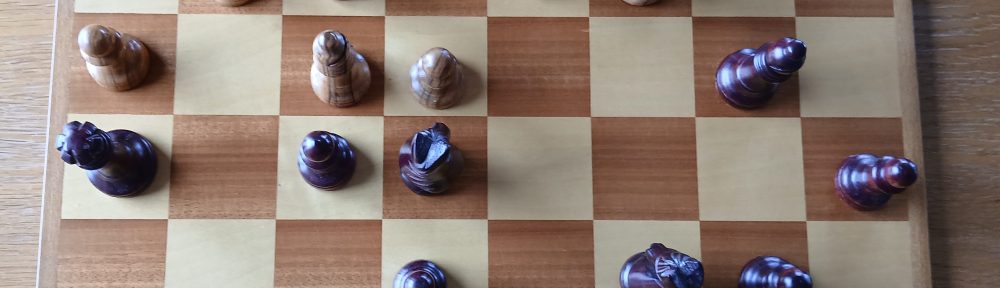
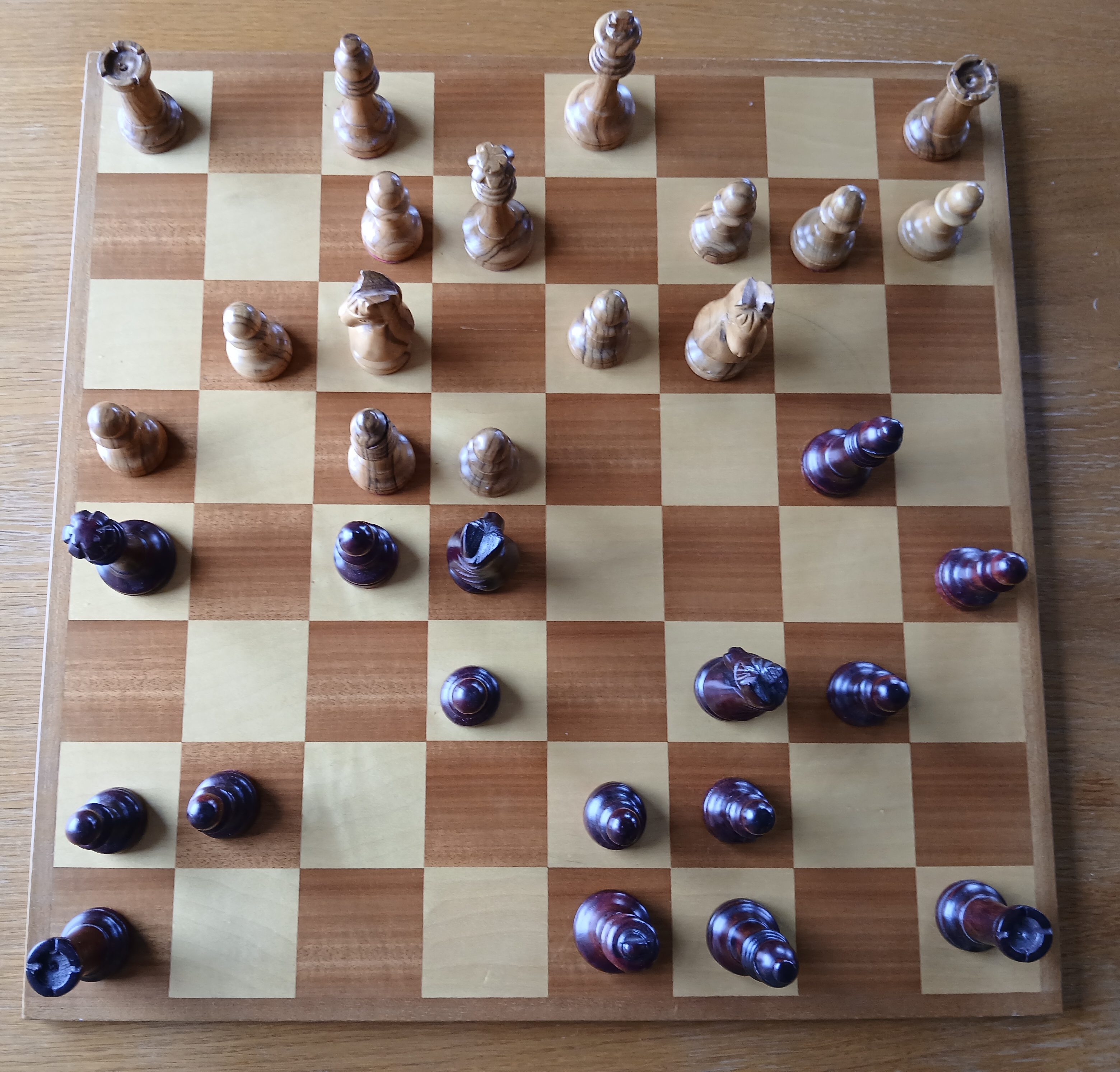
Another shining example of the importance of anticipation is the game of chess. The very essence of the game, beyond strategy, is to foresee what will happen in the coming moves, not just your own moves but also envision what the other player’s moves are going to be and process all of these possibilities in scenarios and decide accordingly which move to choose, not only to attack or defend but also to deceive and bring the other player to make a mistake. The better players are the ones who can see the greatest number of moves ahead.
Another great school for anticipation is the practice of martial arts. I have always enjoyed that practice. The one thing I have learned, in particular with jiu-jitsu, is exactly what I wrote above about the difference between anticipating and reacting. In a fight, it is essential to “read” opponents and to counter before their moves gather any momentum. Once they have momentum, it is about impossible to stop the strike and it certainly costs a lot more energy to manage it than if you “nip it in the bud”. Another lesson from martial art is that when the momentum has passed its peak, that is the time to regain the initiative and use that slowing momentum against your adversary. All that requires that “sixth sense” and the feeling for when to act. I always have had a knack for anticipation, but the practice of martial arts truly changed me for the better. Within a couple of weeks after beginning the practice of judo when I was 13, I had gained self-confidence and the ability to manage all sorts of situations that I would not have been able to do before that, and that has stayed with me until this day.
These examples are great illustrations that can be used for business. In business, there are the things you can control and the things that you cannot control. For the latter group, businesses that are good at anticipating will do much better than those that are not. This is also true for the former group but the difference is that, since it is about what you can control, there is a bit more time to act than when events are totally out of your control. The food and agriculture sector is particularly exposed to parameters they cannot control. Just think at climate events, diseases or geopolitics.
The shortcomings of traditional analysis
Being myself quite an analytical individual, I am all for analysis, but I am not a fan of the work of most analysts. I suspect that the reason for that is my ability to anticipate. For me, most analyses come short of what is needed to move forward.
When I worked in the corporate world, I was always impressed by the ability of business analysts to process the information and present it in visual charts. Yet, I always felt that something was missing. I still have the same frustration today when I see reports from analysts. It is good quality work but what to do with it beyond the very short term? They write history and a bit of the present, and sometimes venture in the very near future by extrapolating ahead but I always miss the bigger picture. They do not make history, but I suspect that they do not see that as their job as analysts.
What moves will the other chess players make? That appears very rarely in the analysts’ work. And, then, what is the strategy to counter or deal with the next moves and how to successfully execute them? That is about never to be found in their analyses.
Another weakness that I find with that kind of work has to do with the short-term orientation of our business world. The present comes before the future, and the short term comes before the long term. Of course, it is essential for a proper analysis to follow current affairs and new trends, but there is a difference between doing exactly that and choosing to jump on any news or trend just because of the fear of missing out or the fear of not appearing to be on top of the latest hype. The problem with that is that analyses become rather shallow, tend to just parrot what the buzz of the day is and lose track of the bigger picture. If it were not enough of a shortcoming as such, just add a blind trust in artificial intelligence and then, we have got a mash of short-term stories, often incomplete if not inaccurate, becoming the official discourse.
I am not confident in such an approach of analysis. When it comes to trends and the future, I always like to make the distinction between what I call the white caps on the surface of the ocean and the deep undercurrents. The latter are really what will shape the long term. Deep undercurrents are not affected by white caps and neither are they by all the boaters floating around on the surface. All it takes for the white caps to change is for the wind to turn, to die down or to become stronger. By chasing white caps, we turn into chickens with no heads. The result of that headless state is that we do not really build a future. At best, we build a few businesses, most of which will fail within a decade. If I look back at all the “futures of food” that I heard of and that were supposed to revolutionized food and agriculture and totally changed the world of food in my 17 years of The Food Futurist, I just smile. I can do that because most of them have been failures for the very reasons that I explained in many of my writings and keynote addresses.
To me, the FOMO (fear of missing out), that seems so important to the consultants and analysts who are just in search of new assignments or customers, is just a major symptom of incompetence and eventually leads to a waste of time, money and energy. To build a future that is actually better, competent professionals do not experience FOMO. They do not get distracted by nonsense from social media. Although they notice all that short-term noise, they just stay focused on the real and important stuff.
How to get better at anticipation?
Perhaps, the best way to sum it up is to put it in terms of the game of chess: look at the entire board, not just at your king or queen. All the pawns and pieces can and will play a role in the end. The entire board is a good analogy for the big picture. In my example of road traffic, the same is true. Look at all the other road users and their behavior. The example of martial arts is also quite valid. Do not just focus on the fists or the feet. Watch the entire body language, see what the opponents are preparing, how they move, in which direction they place their body.
To get better at anticipation, look at the entire picture and connect the dots. I am always surprised to see how often organizations are oblivious to their “outside world”. That is the drama of silo thinking, and it is more common than most will admit. I have lost the count of how many times I have insisted on the importance of being curious, of paying attention to what happens in other businesses, in other industries or in other places, and to know what has happened in the past and the lessons learned. I cannot emphasize enough how essential being curious is, not only to be able to anticipate but also to be able to find solutions that work, to adapt and to succeed.
For these reasons, I always shape my presentations around the big picture and connecting dots. My audiences love that and I like the way they react when they realize that I opened their eyes, even when sometimes they would prefer that I did not mention what trigger the click in their heads. This is also the reason why I offer my program of 360 vision for organizations that want to have a look at the entire board to build a better future.
Copyright 2026 – Christophe Pelletier – The Food Futurist – The Happy Future Group Consulting Ltd.
Discover more from The Food Futurist Solutions - Anticipate, Adapt, Succeed
Subscribe to get the latest posts sent to your email.

 The Food Futurist Solutions - Anticipate, Adapt, Succeed